 Faverolles chickens are distinguished by their attractive, dignified appearance. But their beauty isn't their only virtue. They've earned many positive reviews.
The breed was developed in Faverolles, France (according to other sources, in the town of Faverolles). The breed's base is the local Houdan and Mantes breeds, with Brahma, Dorkin, and Cochin breeds used for improvement.
Having rapidly gained popularity in various European countries and the USA in the second half of the nineteenth century, the breed was valued as a meat productThanks to the work of English breeders, Faverolles chickens have also become an ornamental, even show, breed thanks to their improved plumage color and exterior. The breed's meat qualities have been fully preserved.
Since 1912, the Faverolles fanciers' club in Germany has conducted extensive breeding work to improve the breed's egg production. However, the German version of the Faverolles, called Lachsüner (meaning salmon-colored chicken), differs slightly in characteristics from the English and French varieties.
By the way, the breed received the name Faverolles in 1866, based on the place of its origin. It has been known in Russia since the 19th century.
Content
Distinctive features of the breed
Description of appearance
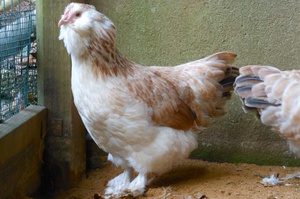
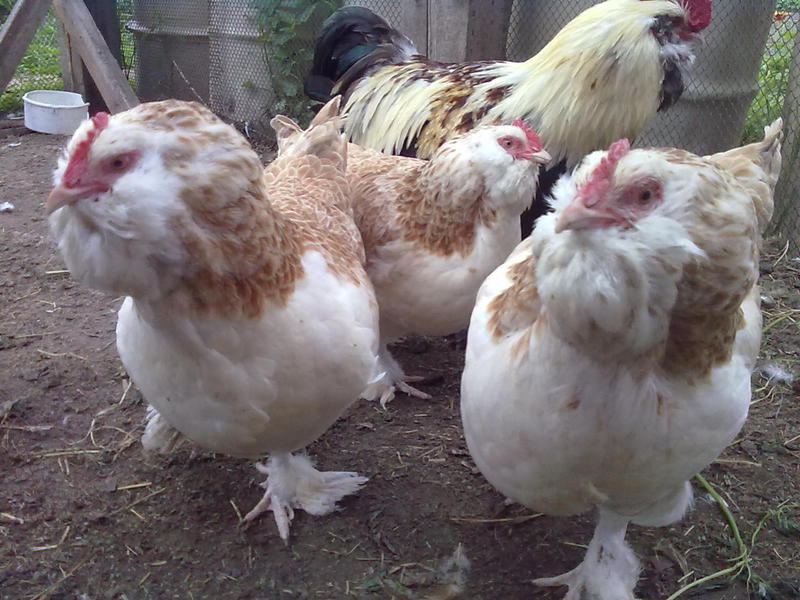
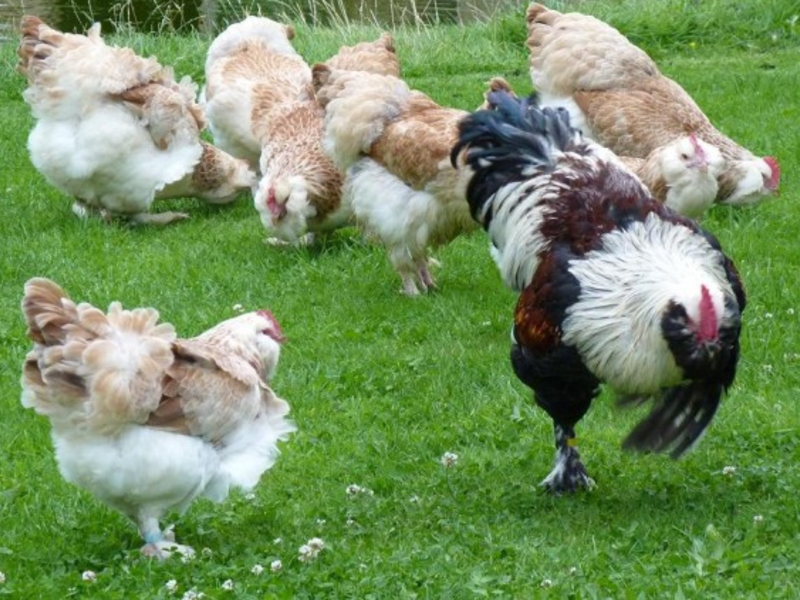
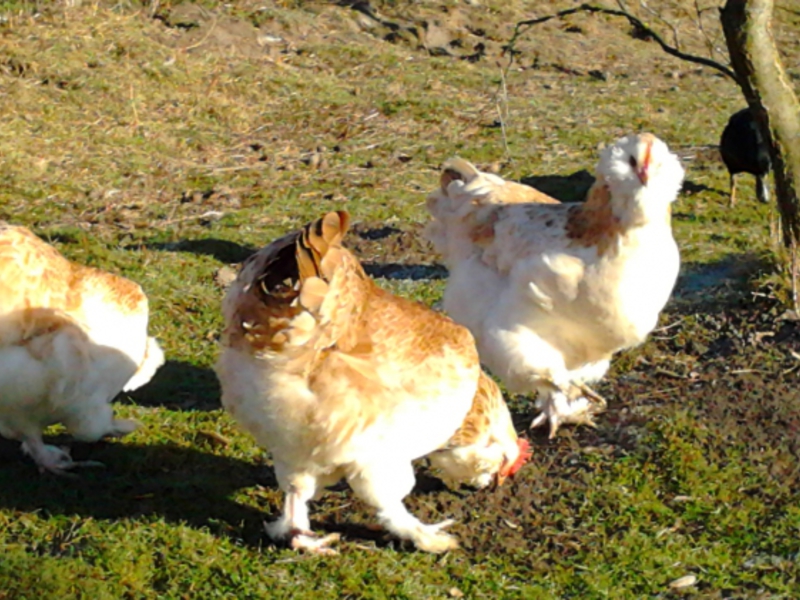
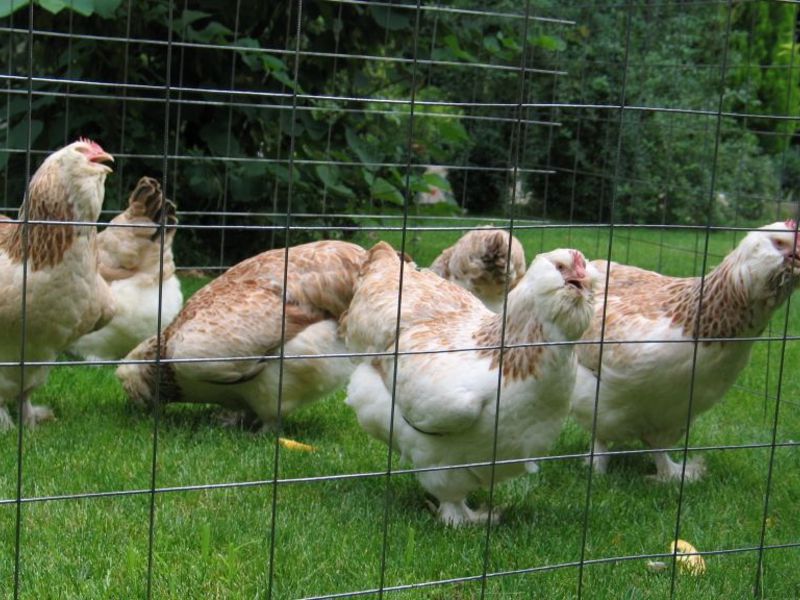
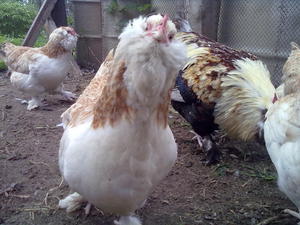 The first thing that catches your eye when looking at a Faverolles hen or rooster is luxurious plumage on the legs and distinctive sideburns. The coloring of the breed's representatives is so beautiful that these birds are sometimes bred specifically for ornamental purposes and for participation in exhibitions.
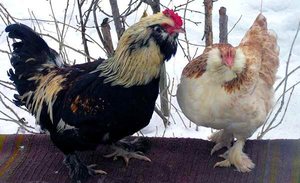
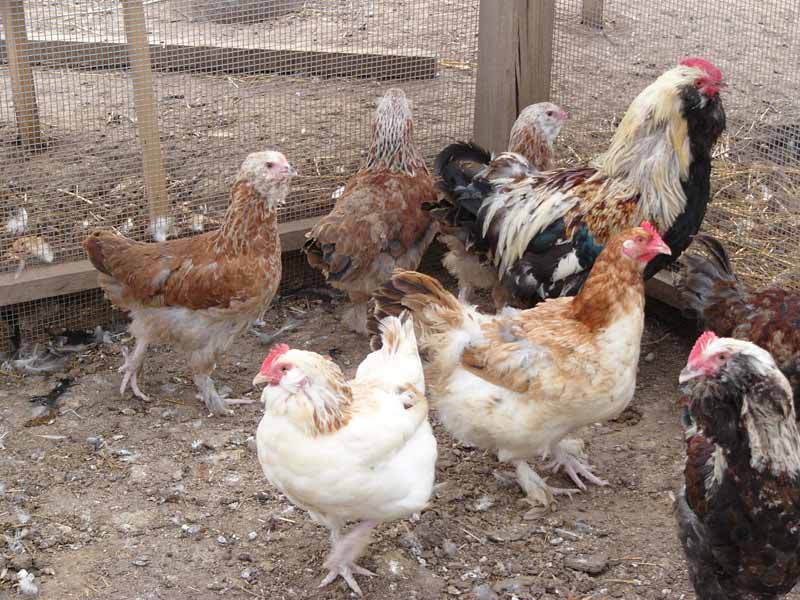
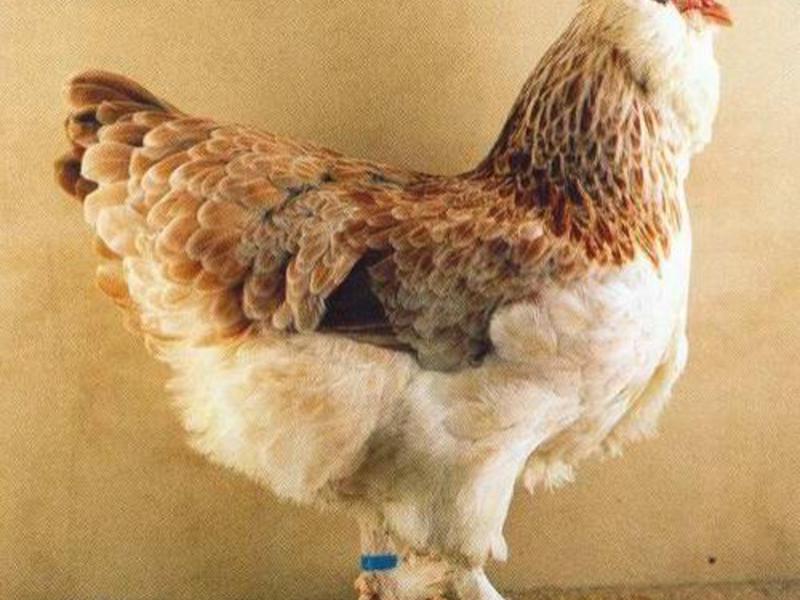
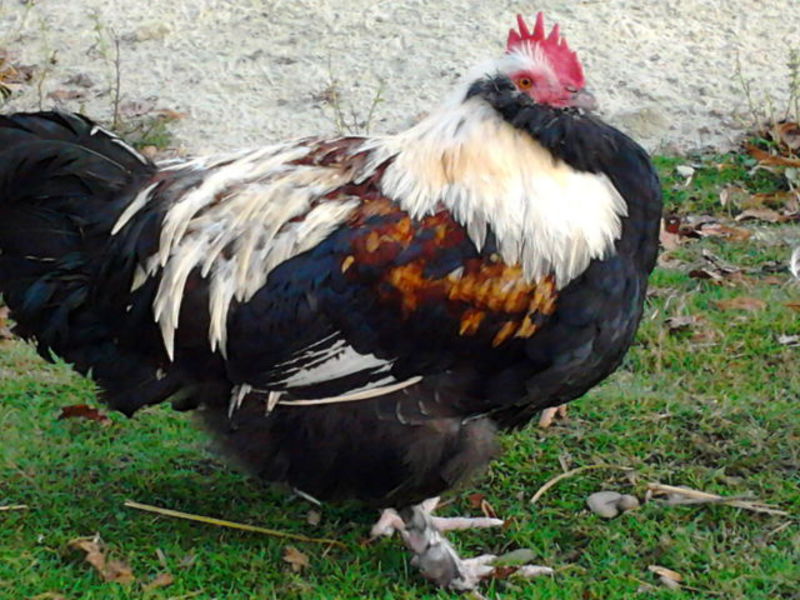
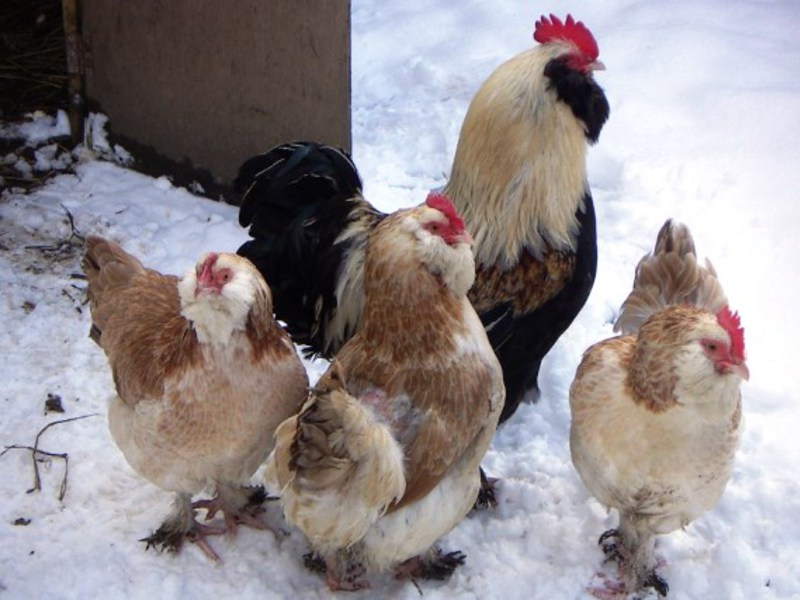
Plumage coloration may vary in detail, but the primary color is salmon. White backs and flight feathers, combined with black plumage on the belly, chest, and tail, are characteristic of males. Females, on the other hand, have lighter feathers on the chest and belly, and reddish hues on the neck, back, and wings.
In addition to the salmon color, Faverolles can be found in white, black, blue and ermine colors.
Roosters have a red face and orange eye colorHens are visually perceived as having a denser build than roosters and have a large belly.
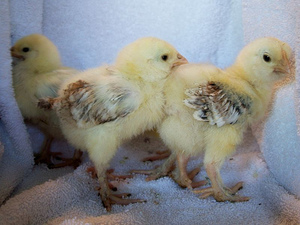
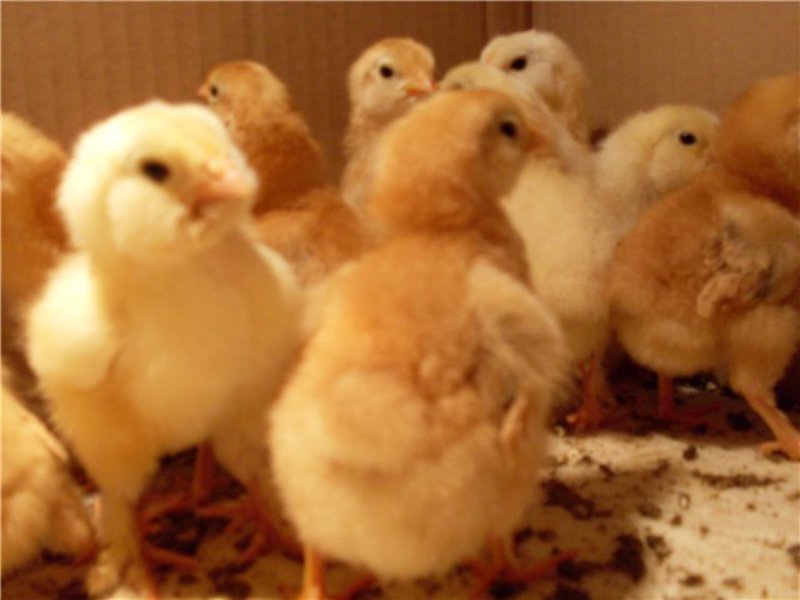
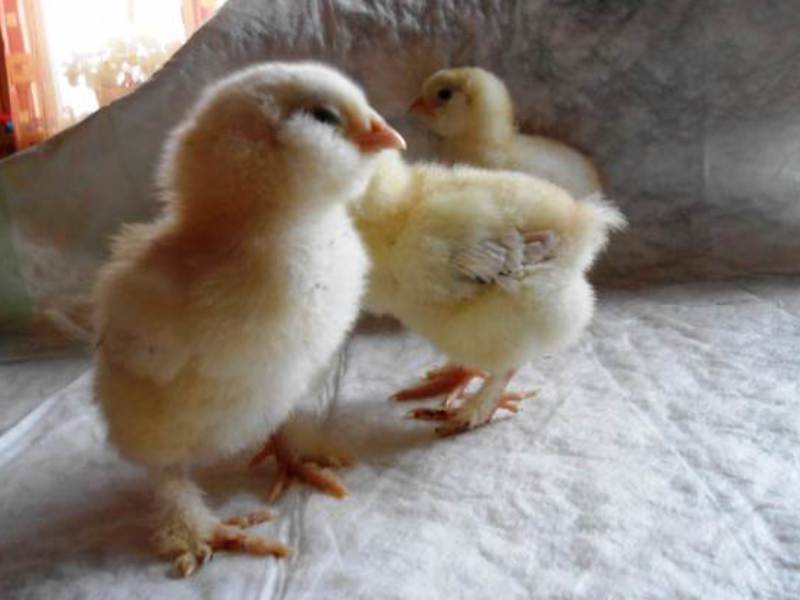
Faverolles chickens are also beautiful; they can be distinguished from each other at two months of age. However, the chick's gender can be determined by its plumage as early as ten days old (or at least by the end of the second week). Hens have reddish wings, while cockerels have dark gray wings. Here are some characteristic features of Faverolles:
 Wings set high and held close to the body;
- Beard-covered earrings;
- White skin;
- A large mane, harmoniously flowing from the short neck into the luxurious plumage of the back;
- Strong, well developed legs;
- Large size, slightly elongated body;
- Short tail, slightly raised;
- Short and strong beak;
- A small, flat head with feathers in the form of a beard and sideburns;
- The presence of 5 toes on each paw;
- A simple, upright comb with evenly distributed teeth, leaf-shaped and small in size.
 Wings set high and held close to the body;
Eat a number of signs, which appear in some birds and are unacceptable if purebred Faverolles are to be selected:
- Thin neck;
- Lack of breed-specific hair;
- Narrow and/or short body;
- Large comb;
- Long tail;
- Weak or very short figure;
- Absence of the fifth toe on the paws;
- The presence of a lush frill in the neck area.
- Sparse sideburns or beard.
Indicators
 Originally a meat breed, the Faverolles were grown for restaurants and were often prized for their taste above other chicken products. Weighing 2.8-3.4 kg, these birds were distinguished by their fine bones and robust breast and hindquarters. The tender, juicy meat boasts a subtle, pleasant aroma and, according to gourmets and chefs, is reminiscent of a fine pheasant. Unlike other chicken breeds, the skin is hairless, meaning the carcasses require no additional processing.
Nowadays, farms produce birds weighing up to 4-5 kg (roosters) and 3.5 kg (hens). There is a modern German version of the Faverolles breed, in which birds weigh only 1 kg and egg production is 120 eggs per yearEach egg of such a chicken weighs 40 g.
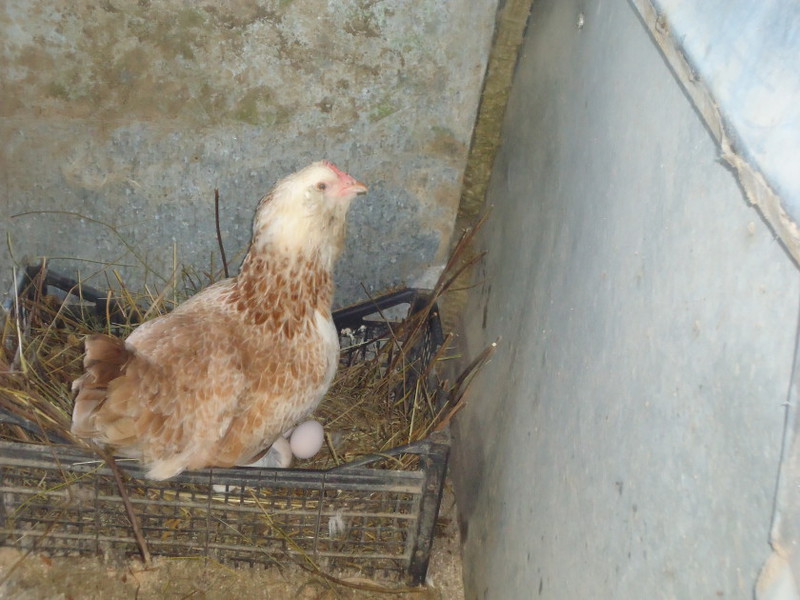
Egg production is comparable to other general-purpose breeds. Eggs weighing up to 60g and above are large. Moreover, a Faverolle hen can lay up to 160-180 eggs per year with a relatively low feed intake in her first year of life. In her second year, however, she will produce 130 eggs. Salmon Faverolles (Lachsüner) can lay eggs in cold weather. The eggshells are yellow or brown.
Thanks to their lush and abundant plumage and small comb size, the birds are resistant to cold and frostbite.
For successful breeding work, roosters must be selected exclusively with red-brown spots in the neck areaFaverolles cockerels can be crossed with non-pedigree hens to produce meat chickens.
Character and habits of chickens
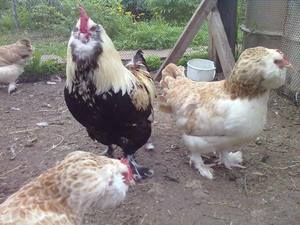 Faverolles are remarkably calm and balanced, even phlegmatic, one might even say. Their ability to stand in one place for long periods, curiously observing their surroundings, is simply mesmerizing to the casual observer.
Faverolles are very tame, trusting, and good-natured chickens. This allows them to get along well with other poultry. At the same time, Faverolles are strong birds and capable of being active. Faverolles are very easily tamed and adapt to a specific routine. They know their owners well and quickly become attached to them.
The trustfulness and good nature of chickens, according to their owners, attract the attention of children, who enjoy playing with them.
Keeping and breeding Faverolles chickens
When breeding and caring for this breed, it's important to combat the birds' tendency to overeat. Overfeeding causes chickens to become overweight and gain weight quickly. As a result, the meat loses its flavor. Furthermore, the birds become less active and are at risk of premature death from obesity. Therefore, it's important to monitor not only the balance of their feed but also the amount of food they consume. Mild underfeeding is preferable to overfeeding. The diet should include:
- Proteins;
- Protein;
- Grains (corn, wheat, oats);
- Roots;
- Grass (also nettle, chickweed, clover, dandelions);
- Vitamin flour.
Waste from the hosts' table is allowed (low-fat!).
Faverolles should be fed with dry food - wet food residues on the wattles cause damage to each other when the hens try to peck them.
Volume of compound feed distribution (the basis of the diet) within 150-155 g per day per individual; in a diet to combat incipient obesity, the portion should not exceed 80 g.
Despite their easygoing nature, to avoid losing their breeding integrity, Faverolles should be kept separate from other birds. However, due to their calm nature, a low fence is sufficient to isolate them. They will not attempt to climb this fence. Even if the owner doesn't strictly monitor the breed's purity, they should still be protected from breeding with roosters of other breeds, otherwise, the productivity of the offspring will decrease.
To reduce the incidence of disease, birds require a large area for free-range feeding; cage housing is contraindicated for this breed due to their large size. With a larger area, chickens have a better chance of obtaining natural minerals and vitamins, and their need for synthetic feed additives will be reduced.
Birds are resistant to coldFaverolles can be walked outdoors in frosty weather, but they do not tolerate excess moisture well. Dry bedding is essential for keeping Faverolles. However, during cold weather, egg production may decrease slightly.
The first egg collection can be obtained from hens that are six months old, but if owners want to hatch chicks from these eggs, an incubator will be required. Unfortunately, Faverolles hens have lost the ability to incubate eggs and care for their young.
Purchasing chickens
 Due to the growing popularity of this breed among domestic producers and chicken owners, a number of breeders are now raising this breed. In particular, Ulyanovsk firm Ecoferma73.Ru sells such chickens at a low price.
Not far from Moscow (20 km from the Moscow Ring Road along the Nosovikhinskoe Highway) there is a farm where you can buy excellent quality materials: young birds, adult birds, or Faverolles eggs.
To keep Faverolles chickens at home, it is enough to buy five or six females and one rooster, but it is not recommended to buy all the young from one seller, otherwise there is a risk of losing the purity of the breed.
By the way, Faverolles chickens are not cheap, but their price is justified by their consumer qualities.
By the way, silver Colombian Faverolles develop somewhat faster than their other counterparts.
Conclusion
Although in Russian private and farm households chickens of this breed are still are quite rareThey deserve attention and undoubtedly have potential for wider adoption. However, these chickens may not be suitable for large farms, as the slow growth of Faverolles chickens is a negative factor. While the slow growth rate is debatable, many believe that chickens of this breed grow quite quickly. In any case, for farmers and homesteaders, these chickens will be a magnificent acquisition and a true asset.
Leave your feedback and comments:
Interesting little hens, so shaggy! No wonder they stay warm in winter. They're quite easygoing. They don't lay a lot of eggs, of course, but they're perfect for meat.
Faverolles... This is my dream, I really want to buy them... they are beautiful and suit our climate, the meat is good.
It's best to look for materials (chickens, young animals, eggs) from European suppliers. Faverolles are sold in Germany to Russia, and ours imports them regularly.