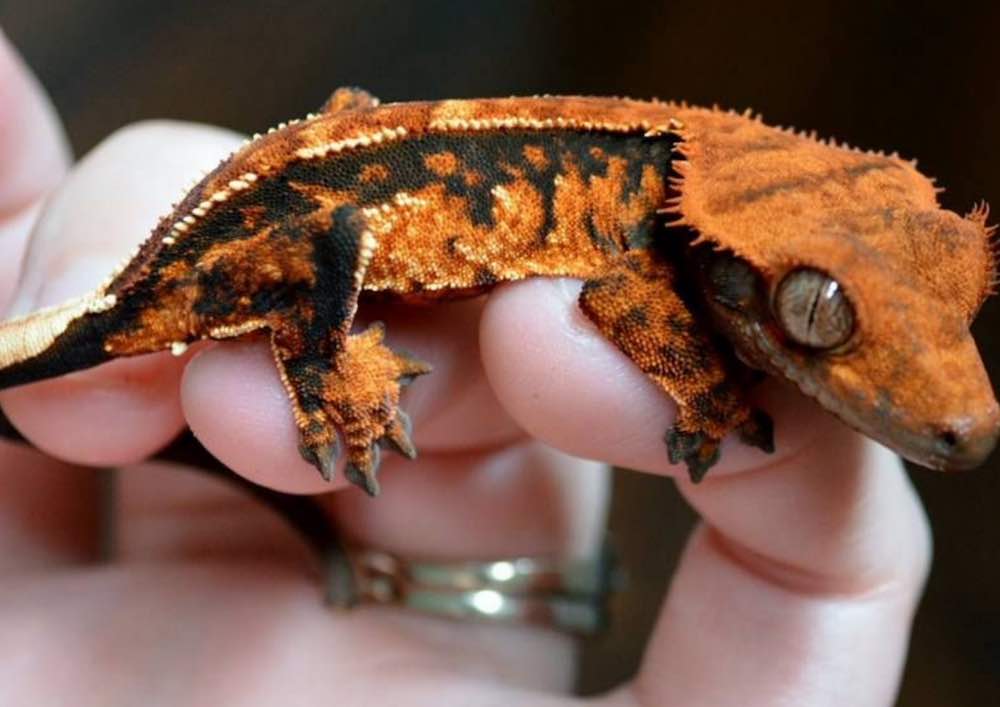
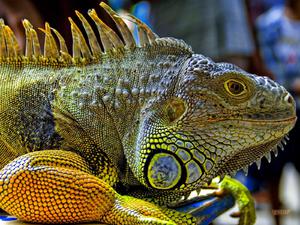
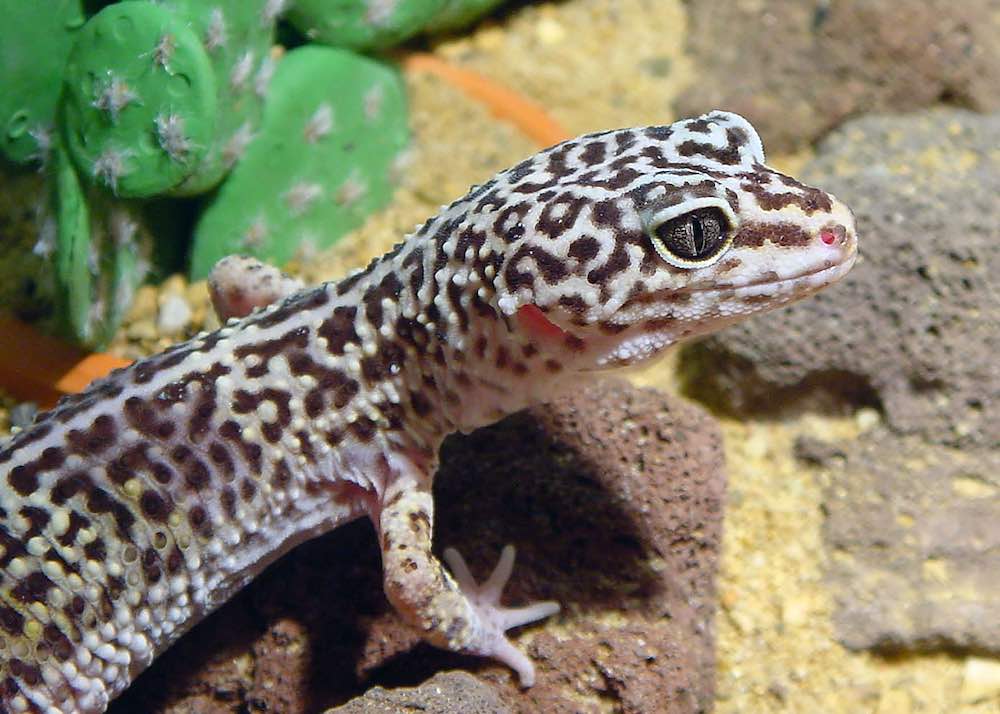
The gecko is a small, agile lizard found in deserts, tropical forests, canyons, and mountains. This reptile's body is covered in scales; in the wild, these scales protect the gecko from predators. Its spotted coloration helps it hide in sand or rocks.
Geckos come in a variety of colors: yellow, green, beige, turquoise, red, and blue. They can also change color, which helps them survive and adapt to their environment. Some gecko species camouflage themselves as leaves and move stealthily along the ground, making them difficult to spot in the wild.
This animal comes in a variety of sizes, from 3 to 35 centimeters, and in a variety of colors, depending on the species. Geckos have many hairs on their feet, allowing them to walk on vertical surfaces, including ceilings. All geckos have five toes, which are widely spaced. When threatened, they can shed their tails and grow a new one; their tails also serve as fat storage. Geckos have large, lidless eyes and possess excellent vision. Many species of these lizards are easy to care for and suitable for home keeping.
Content
What types of geckos are there?
The vertebrate lizard family contains 600 species, grouped into 80 genera, of varying sizes, colors, and even shapes.
Here are the most popular types:
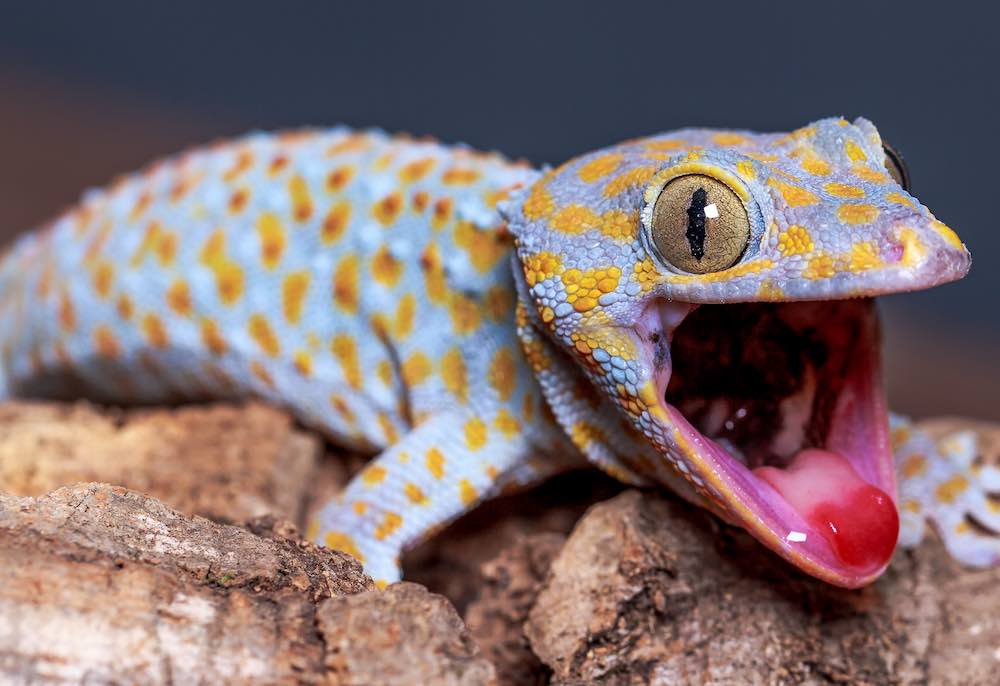
- Tokay geckoA huge reptile, weighing up to 300 grams and reaching up to 35 centimeters in length. It produces a "to-ki"-like call, hence its name. It is most often olive-colored with white markings, but blue geckos of this species are also sometimes found. These reptiles are rarely chosen for home keeping because they require a large terrarium. Furthermore, they are not the friendliest species—they can hiss, protest loudly, and be aggressive toward strangers.
- Skink geckoAn exotic reptile with a beautiful yellow-gray coloring and a small tail, it is nocturnal. The gecko is medium-sized: it weighs no more than 25 grams, and its body is usually no more than 10 cm. At night, its eyes glow ruby or green.
- Eublephars, or leopard geckosOne of the most beloved species in terrariums due to its low maintenance and non-aggressive nature. Read more here.
- The prehensile-tailed geckoA tiny lizard with a body length of up to 9 cm and a long tail, it has a nondescript brown-gray-green coloration. This agile and nimble animal is accustomed to living in packs, climbing trees, and hunting small insects. These geckos are friendly and do well in captivity, and they are also diurnal.
- Crested geckoA medium-sized animal, up to 20-23 cm, with a triangular head and a variety of colors. It loves fruit, especially bananas, and has spikes above its eyes.
How to keep a gecko at home
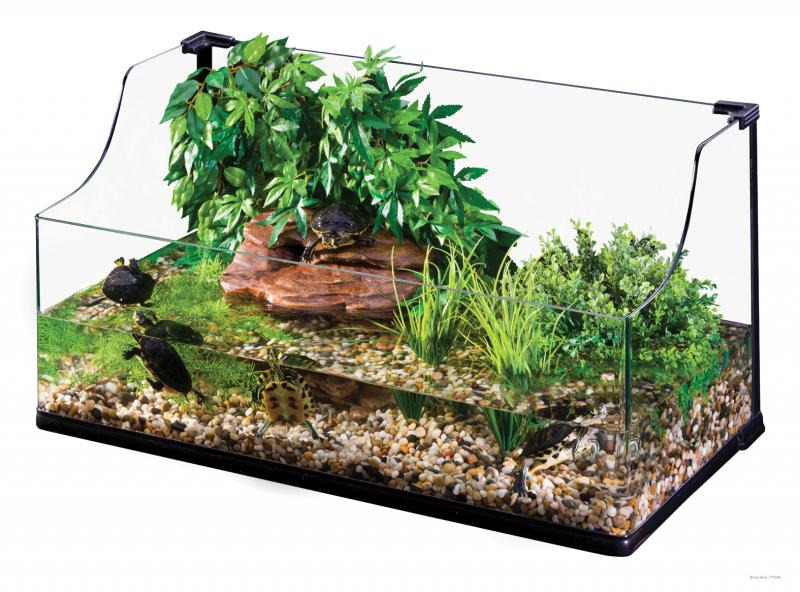
To keep a gecko, you need a vertical or horizontal terrarium. The former is suitable for geckos that naturally climb trees, while the latter is better for those living in the desert. The terrarium should have a lid (such as a mesh one) to ensure good ventilation.
Add some bedding to the bottom (at least 8 and no more than 10 centimeters, as geckos will dig burrows). This will retain heat and moisture.
The filler can be:
- stones, plants (for desert and steppe geckos);
- branches (for animals that climb trees);
- coconut flakes;
- soil for plants;
- cypress mulch;
- cut paper;
- large pieces of gravel.
When choosing substrate, keep in mind that your gecko may eat some of it. Therefore, the gravel should be large enough to prevent the lizard from swallowing it. The substrate should be changed regularly.
The recommended temperature is 30 to 33 degrees Celsius during the day, and 6 to 8 degrees cooler at night. Diurnal geckos also need access to ultraviolet light. Keep in mind that low temperatures will make the animal inactive and ill, while overheating will also lead to illness and even death. To maintain a temperature gradient, place an infrared lamp in the terrarium and turn it on for 12 hours during the day.
The recommended humidity is 65 to 90%, so the terrarium should be regularly misted with dechlorinated water. This is especially important for the gecko's skin shedding. An automatic mister can be used. It's also important to provide ventilation and regularly clean/wash the terrarium, but do not use chemicals.
The average aquarium size for a medium-sized gecko is 20-40 liters. They don't need a lot of space. However, if you have several geckos, allow for an additional 20 liters for each. Just keep in mind that males should never be housed together.
The enclosure must have hiding places, as well as a place for the gecko to hide while sleeping. Such structures are available at pet stores.
Read also, How to make a terrarium yourself.
What to feed a pet lizard at home
Geckos are voracious predatory pet lizards. They can eat a lot, and the excess is stored in their tail as fat.
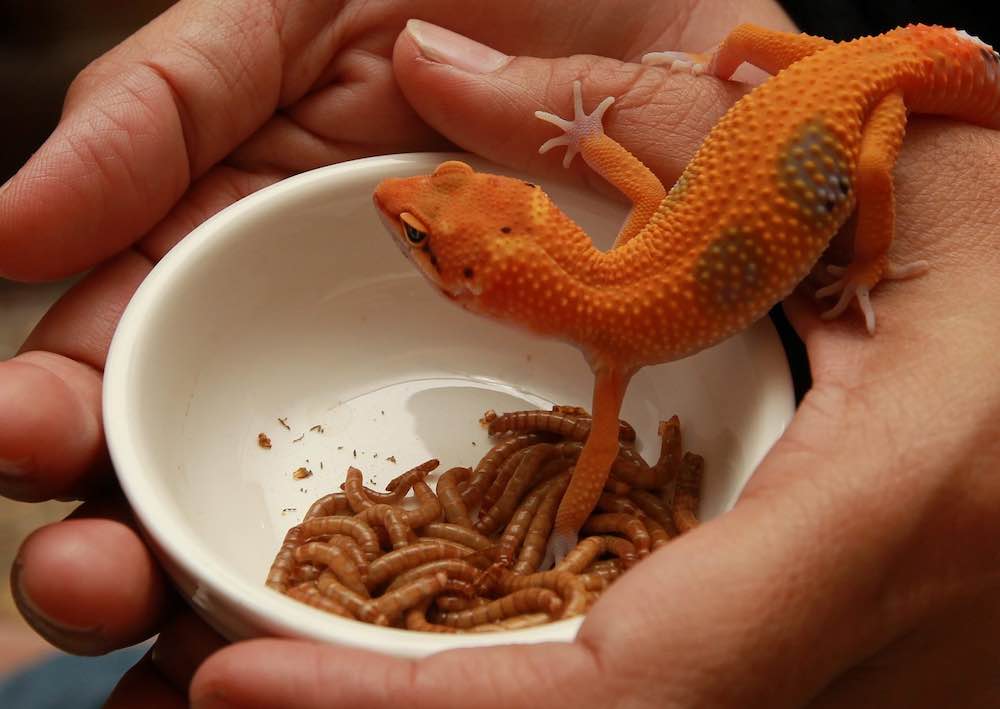
Here's what geckos eat:
- worms;
- cockroaches;
- small midges;
- larvae;
- cicadas;
- scorpions (some species);
- butterfly caterpillars;
- large species - frogs, mice, chicks and bird eggs, young snakes.
Young geckos are fed protein-rich food 5-6 times a week. They are usually given live cockroaches, crickets, and some insect larvae. It's important that the larvae are no longer than the width of your pet's head. Make sure any surviving insects aren't left in the aquarium; they should be removed immediately.
Before introducing insects to your gecko, they need to be fed (approximately 24 hours beforehand). These insects cannot be caught outdoors; they must be purchased from pet stores.
Additionally, reptiles (especially young ones) need supplements, primarily calcium and vitamin D3. Without these, the animal can develop rickets. Be sure to provide water in the terrarium, placing it in the cool part of the tank. The gecko can also bathe in this water. Note that the water should be dechlorinated (not tap water).
How long does a gecko live at home?
The average lifespan of a gecko is 5-10 years, although some can live up to 12. It all depends on the species, as well as their care and diet.
Tips and nuances
Here are the basic tips for owners of this reptile:
- The price of reptiles varies widely depending on the species. On average, a small reptile costs 5,000 to 7,000 rubles. It's best to buy them from specialized stores.
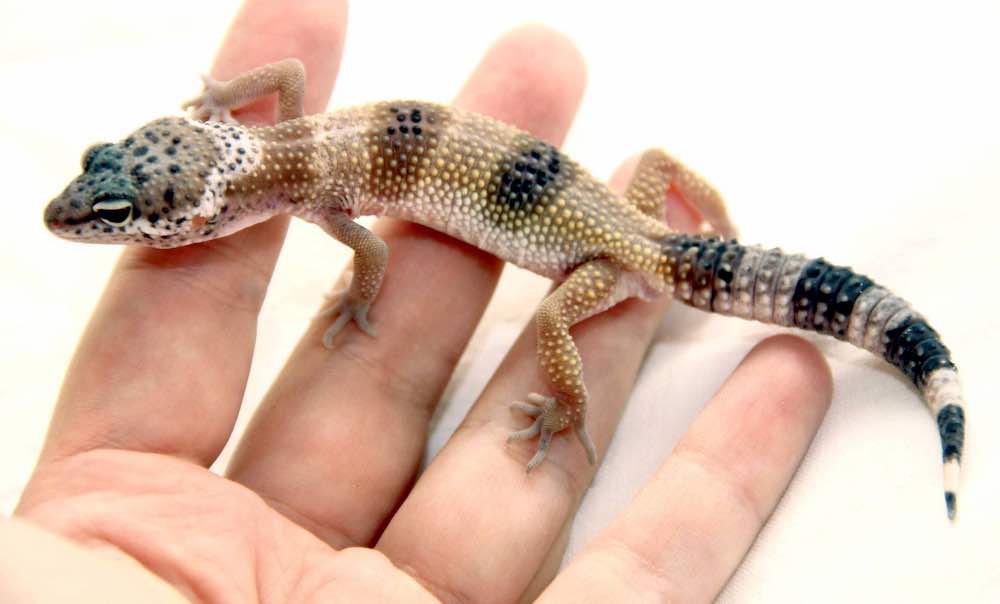
- Don't handle young geckos—they don't like it. Adults can be handled, but be very careful: they may run away and hide. Never pick them up under the belly; only by the upper body. Wash your hands thoroughly before handling.
- Geckos are fragile and can easily “lose” their tail if you pull on it.
- Reptiles shed their skin every 4-6 weeks. Don't help them shed their skin, even if the animal appears sick. Maintaining adequate humidity in the aquarium is key. You can place a container of wet sphagnum moss inside, cutting a passageway on the side for the gecko.
- Geckos are very clean creatures and defecate in a corner away from their hibernation area. Therefore, their terrarium needs to be cleaned regularly.
Be sure to provide a balanced diet, including vitamins, and always have access to water. Lethargy and a thinning tail are signs that your gecko is unwell.
Geckos are unable to heat themselves. Therefore, it is important to install a heating point in the terrarium.
If you plan to breed geckos, you can add 2-3 females to one male.
The vast majority of reptiles are oviparous and can mate at any time of year except winter.
It's not always possible to house geckos of different species together, especially if they belong to different weight categories. The weaker reptile may be considered prey.
Geckos are easy-to-care-for creatures; many species are perfect for home keeping. These vibrant, exotic lizards with their unique coloring, the ability to shed their tails, and the ability to walk on the ceiling make ideal pets. The key is to provide them with a terrarium appropriate for their particular species, a balanced diet, and to avoid disturbing them during shedding periods and handling them sparingly.
Read more about keeping lizards.