Measuring a dog is a simple matter. There are many reasons for this procedure, so measurements are taken in different ways. There are often situations where you can take a small dog with you, but not a large one. So how do you determine which category a dog belongs in? You need to measure its size in one place or another.
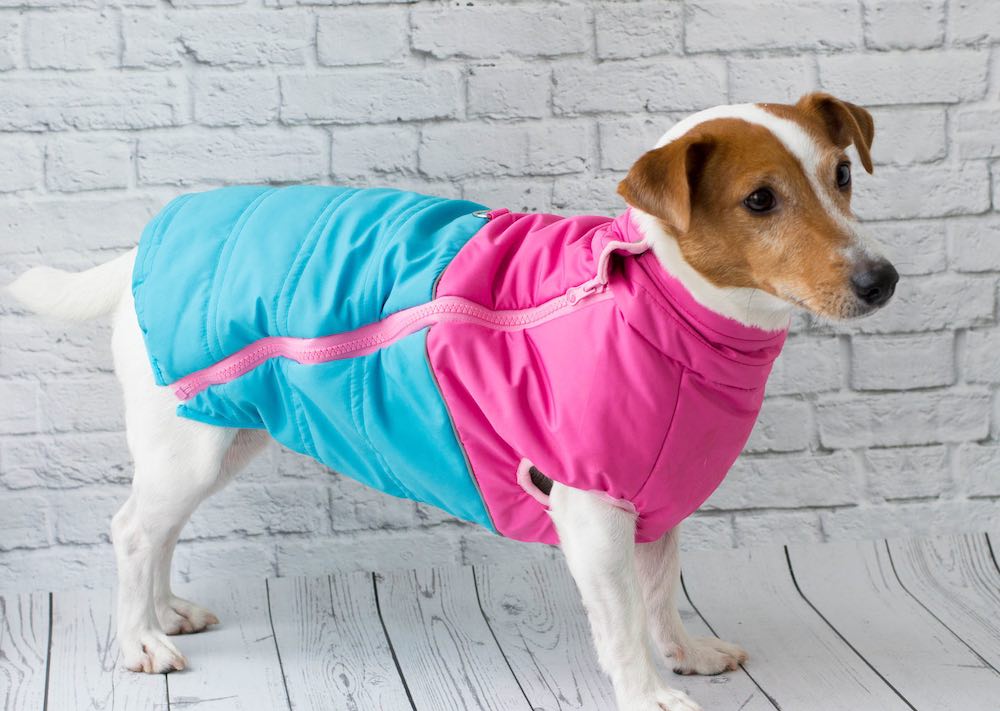
Pets, other than stray dogs, are often given clothing to wear in cold weather; clothing is produced in specific sizes for this purpose. To avoid making a mistake when purchasing, measurements are taken beforehand. Of course, a dog may resist this procedure, but it's not difficult to convince it to stand still.
Content
How are dogs measured?
Dogs are generally classified as small (up to 28 cm), medium (28-60 cm), and large (over 60 cm). Height varies by breed and gender: males are usually slightly larger than females. Furthermore, a dog's size can fluctuate with changes in diet, health, and lifestyle. By regularly measuring your pet, you can spot any unwanted changes and adjust your care accordingly.
There are several reasons for measuring a dog:
- purchase of clothing, footwear and other equipment;
- upcoming vaccination;
- purchasing a "carrier" for small dogs;
- establishing compliance of the dog's development with generally accepted standards;
- preparation for exhibitions and competitions.
It's well known that there are fairly strict standards describing the average sizes of dogs of a given breed. While, for example, human heights can vary significantly, for dogs, standards allow for deviations of only 3 cm. Only mixed-breed dogs and "middle-class" terriers are exempt from this rule.
Depending on the measurement purposes, the procedure is performed in one way or another.
Read also, How to fatten up a dog after exhaustion.
At the withers
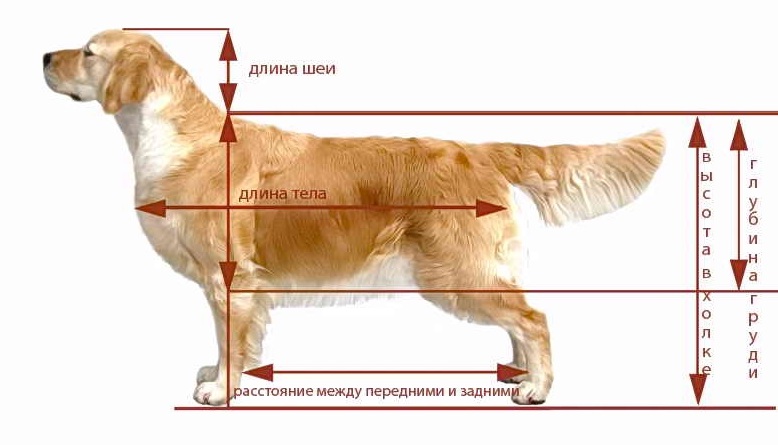
A dog's height at the withers is perhaps the most frequently measured height. This measurement most clearly indicates the animal's classification into a particular breed group. The height at the withers is the distance (usually in centimeters) from the surface the dog is standing on to the point where the neck and shoulder blades meet. Thus, the withers are the highest point on the animal, not counting the head.
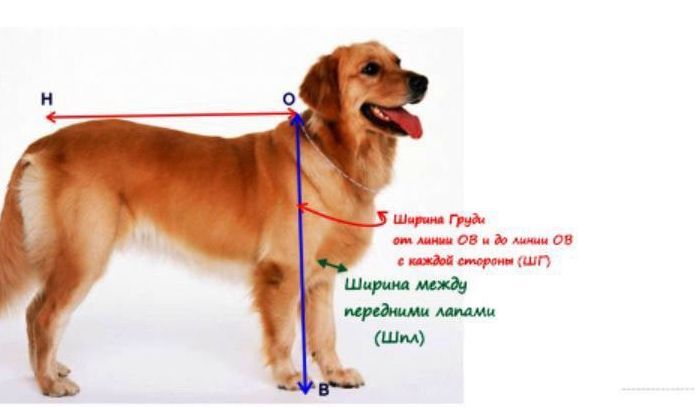
It's unlikely you'll have a professional stadiometer at home, so amateur dog handlers use improvised means. Using a tape measure can somewhat distort the results; dog handlers believe that a measuring stick provides the most accurate readings. It's customary to take at least three measurements at intervals of a couple of minutes, then calculate the arithmetic mean.
If you don't have a special tool, two long rulers will suffice, but you'll also need an assistant, especially if the dog refuses the procedure. After coaxing the dog with a treat or a favorite toy, place it on a flat surface (table, floor), and the assistant tries to hold it still.
It's best if the dog is positioned against a wall. It should stand upright, keep its head up, and not tense up. All four paws should be pressed against the surface, with their paws positioned approximately shoulder-width apart.
One ruler is placed strictly horizontally on the animal's back, and the other is placed perpendicularly, directly at the withers. The only important thing is to determine the exact location of this point (sometimes popularly called the "scruff"). Fortunately, there are no nerve endings in this area, so small dogs (and even cats) can be carried by the scruff.
To accurately determine the location of the withers:
- Place your palms on the animal's shoulders and press them against them.
- With a confident movement, without rushing, run your palms over the skin towards the head until 1-3 folds are formed.
- Move your hands to your shoulder blades.
- Observe the formation of a fold: it is considered the scruff and is located directly above the withers.
It is worth saying that in short-haired breeds the withers are easily visible with the naked eye.
If you're measuring against a wall, you can mark it with a pencil, then measure from the surface where the dog is standing to the mark. Don't use a tailor's tool for this: a metal ruler will give the most accurate readings.
For the harness
Measuring a dog for a harness is not difficult, but it's crucial to choose the correct size to avoid causing the animal distress. The harness itself is exceptionally comfortable: unlike a traditional collar, it optimally distributes the load on the dog's body, minimizing the risk of injury.
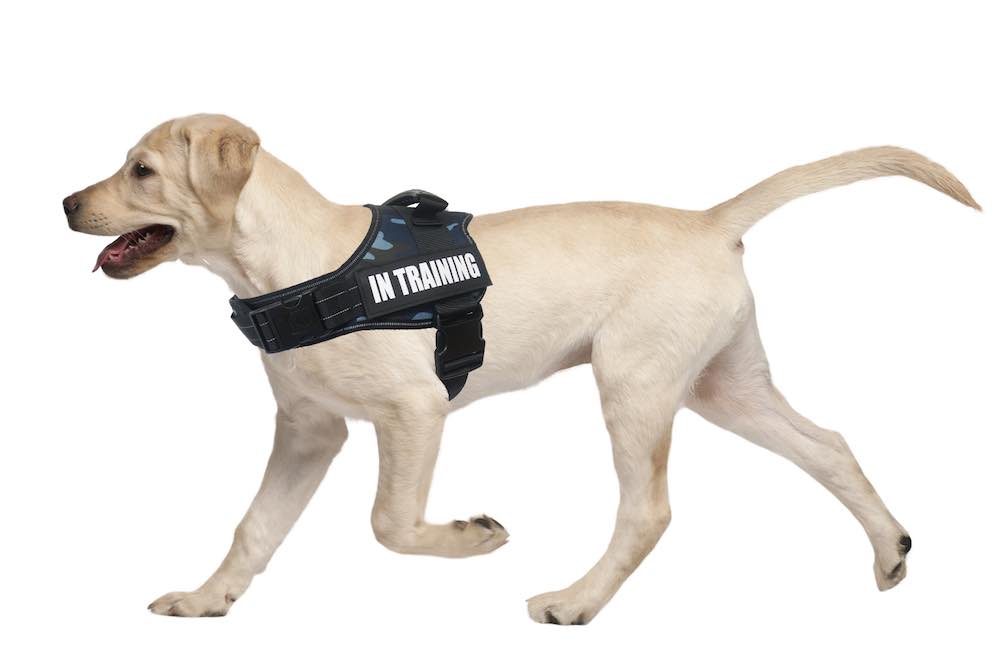
There are different types of harnesses:
- walking;
- riding;
- towing;
- with a handle;
- harness vests;
- corrective;
- medical;
- exhibition.
When choosing a harness, the dog's breed and age are important. If the harness isn't properly sized, it can do more harm than good, whether it's too tight or too loose. When measuring your dog to select a harness, it's important to understand that the harness should fit snugly around the animal's body; only then will it properly distribute the load on the skeleton. When using a harness, the straps must remain stationary; moving, sagging, or, especially, digging into the skin will harm the animal. If you measure your dog correctly at home, there's no need to take it to the store.
As in other cases, measurements are taken at least three times, after which the average value is calculated:
- Determine the volume of the animal's neck (If there is a collar, take measurements directly under it.) The front point is the keel, the back point is the edge of the shoulder blades located above the front legs.
- Measure the chest circumference. To do this, take a sewing tape measure and wrap it around the widest part of the dog's chest (just behind the front legs). Add 2 cm to this measurement (1 cm is sufficient for the smallest dogs): the owner's palm should fit between the harness and the dog's body.
Although commercially available harnesses are designed in such a way that the size can be slightly adjusted with straps, it is advisable not to make a significant error in measurements.
Since specialized harnesses (such as sled harnesses) are equipped with additional straps, purchasing them requires, in addition to the two measurements described, also determining the animal's back length. To do this, use a ruler or the same measuring tape to measure the distance from the front edge of the shoulder blades to the base of the tail.
To buy clothes
Purchasing clothes and shoes requires essentially the same measurements.
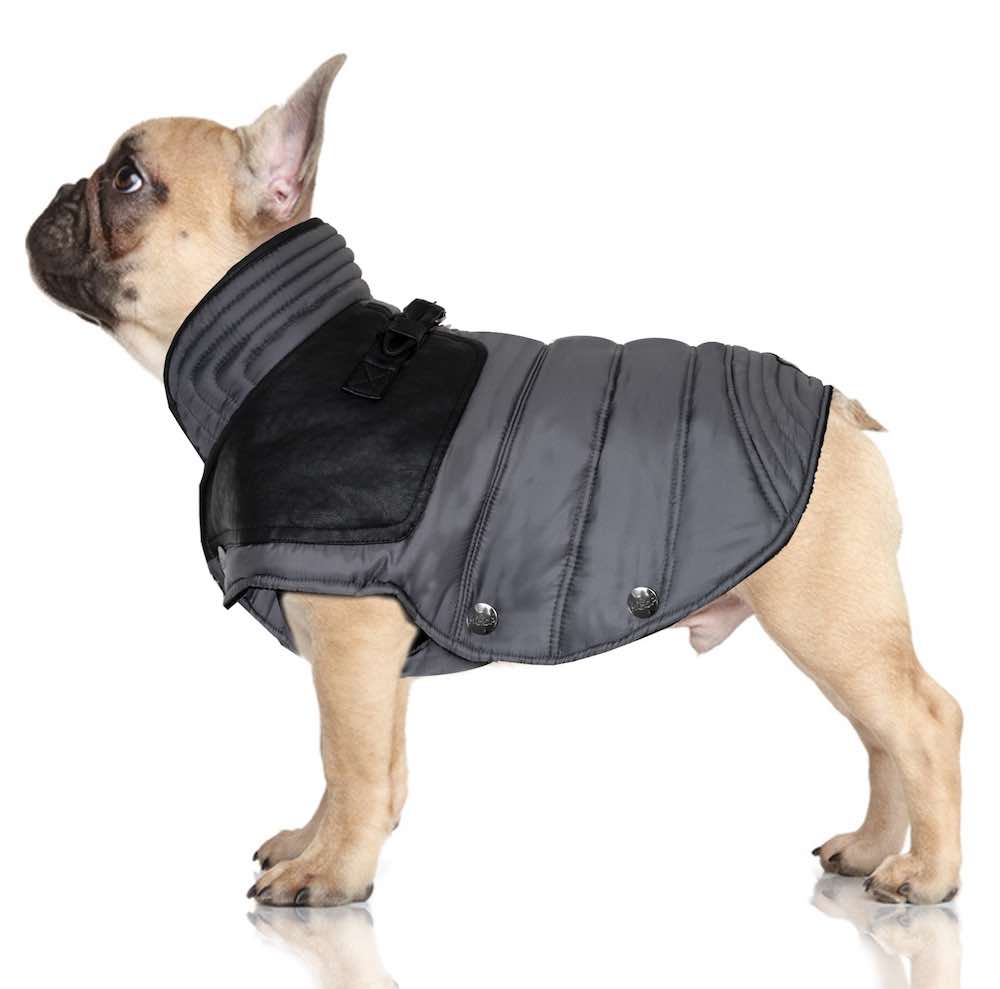
During the measurement process:
- the dog is placed straight, without any distortions;
- girths are measured at the widest points;
- When in doubt, choose a size slightly larger rather than smaller, especially if we are talking about a jacket rather than a tight sweater;
- When buying clothes for a male, it is desirable that the belly is slightly exposed.
Read also, How to train a dog to wear clothes.
When preparing to buy clothes for your dog, it is useful to take the same measurements as for a harness, but the most important ones are:
- Back length. With the dog standing upright, measure the distance between the tip of the collar and the tip of the tail. Since some play may occur when selecting clothing, precise measurements are not necessary: a standard tailor's tape measure or a tape measure will do. When comparing this measurement with those in the sizing charts, use the larger measurement as a guide.
- Chest circumference. To determine this, stretch a flexible tape under the front paws: you can immediately use a tailor's "centimeter".
It's also a good idea to measure your neck circumference—the circumference at its widest part. Add 2 cm to this measurement.
There are size charts for dog clothing, but they're often tailored to specific manufacturers, so it's best to use universal charts. These charts provide two or three measurements and, for general estimates, cover most common breeds.
For convenience, separate tables have been created for large, medium, and small breed dogs. Special tables have been developed for pets with non-standard body shapes. Clothing sizes are designated by a set of Latin letters and numbers, such as A0, B2, TM1, and others.
There are also alternative designations not related to the dog breed:
- XS – extra small;
- S – small;
- M – medium;
- L – large;
- XL – extra large.
The series continues up to size XXXXXXL (6XL). Size XS is suitable for animals weighing approximately 1.5 kg, M – approximately 3.5 kg, XL – 7 kg, and 6XL – 40 kg.
In the modern world, dogs are not only clothed but also shoed, no matter how absurd this process may seem to those not involved in dog breeding. Footwear became necessary due to the fact that city roads and sidewalks began to be coated with harsh chemicals in winter. Even in summer, shoes are sometimes necessary to protect paws from cuts when walking on grass. To select dog shoes, the length and width of the paws are measured. To do this, the dog stands on a piece of paper and traces the perimeter of the paw print. When determining the length, the animal's claws are also taken into account. Half a centimeter is added to both the length and width measurements. Since front paws are often slightly larger than the back paws, it is recommended that measurements be taken for them. The results are compared with table sizes, which, however, may also vary among different pet shoe manufacturers. Boot sizes are usually designated by numbers (from 0 to 10), and sock sizes by letters (S, M, L, etc.).
Tips and nuances
Cynologists recommend using a soft and flexible tape measure when taking measurements, so nothing is easier than a 1.5 m long tailor's tape measure, but it should be checked periodically.
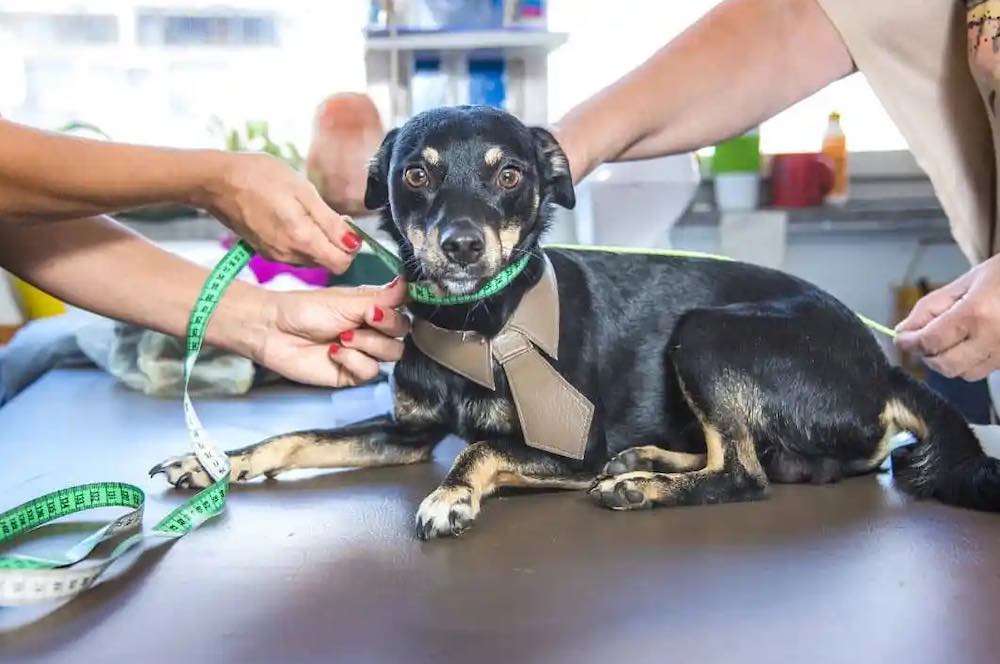
Only when accurately measuring the height at the withers should a long metal ruler be used. An "upgrade" can be made by attaching two parallel bars to it, making one movable. Even better, use a metal square of sufficient size.
If the dog is acting restless, it is better to postpone the measurements: it will not allow you to obtain accurate values anyway.
Professionals require many more measurements to determine the "quality" of a breed: indexes of format, bone density, leg length, massiveness, long head, etc. Hobbyists should not delve into this material.
When comparing measurements for clothing purchases with data tables, keep in mind their relative nature: tables don't take into account the characteristics of a particular animal. Consulting the salesperson is always helpful.
Read also, How to stop a dog from marking in the apartment.