You don't need to wash a hamster very often. However, the very concept of washing for this pet is rather arbitrary. Hamsters are very clean animals and only get very dirty through carelessness or accident. They easily remove ordinary dirt from their bodies themselves, causing little trouble for their owners. They spend a lot of time grooming and combing their fur, just as much as a domestic cat. Hamsters clean themselves up to five times a day, while also cleaning their home.
Hamsters, both in the wild and at home, tend to use clean sand as a cleaning agent. Even if something happens and your pet gets very dirty, it's best to avoid bathing them; bathing itself is quite dangerous for these rodents. Wet wipes can be used to remove stubborn dirt, reserving bathing for the most extreme cases.
Content
Can I bathe a hamster?
Bathing a hamster the same way you would a child or even a kitten is not recommended: frequent contact with water significantly shortens the life of this rodent. Hamsters are not adapted to being submerged in water, even up to their necks. Unlike other pets, their fur is not very thick, and its unique feature is that it does not repel water.
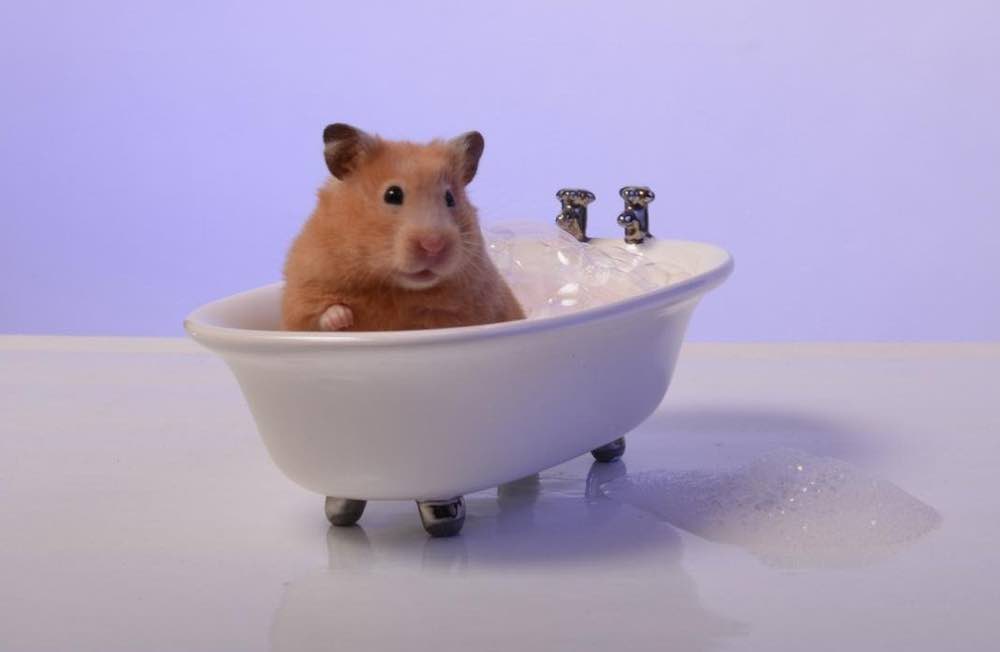
Contact with water can also cause hair loss. When submerged in water, a hamster's hair absorbs a lot of liquid, and after a forced bath, it takes a long time to warm up. Its skin isn't particularly durable either: contact with water significantly increases the risk of damage.
Being typically land animals, hamsters are completely unable to float, much less swim. If accidentally submerged in water, and there's no way to position themselves so as to expose their snout, a hamster quickly dies. Drowning isn't the only culprit: even if the hamster has something to breathe, the risk of subsequent death is high.
This is associated with rapid hypothermia, which can lead to pneumonia, as well as a weakened immune system. Detergents, often not specifically designed for animals but intended for humans, also have no beneficial effect. Knowing that water is contraindicated, even when forced to bathe under the owner's supervision, the animal becomes extremely nervous, struggles, and experiences severe stress, which can lead to heart failure.
In extreme cases, bathing can lead to such a severe nervous breakdown that the animal will refuse food and water, hide from humans, and even attempt to kill itself. Owner tactics, such as rapid drying with a hair dryer, only make matters worse: the hamster is terrified of this electrical device, and excessively hot air increases the risk of injury.
The problem is that, while trying to escape from its owner's grasp, a hamster can fall onto the floor or into a bathtub full of water. Both scenarios can cause damage to internal organs, leading to the pet's death. Due to the high risks, before deciding to bathe your hamster in water, it's important to carefully consider whether the benefits outweigh the risks.
Hamsters are bathed in water if:
- He's contaminated with foods that could be harmful to his health (honey, sauces like mayonnaise, sweet jam, etc.). If the hamster licks these foods off his fur, he could become poisoned and sick.
- The "dirt" turned out to be household chemicals (synthetic detergents, disinfectants, paint, cosmetics, etc.). Ingestion of these can lead not only to illness but also to the rapid death of the animal.
- The hamster was attacked by mites or other parasites, a yeast or fungal infection, etc.
If nothing like this has happened, it's best to avoid preventative bathing. Avoid washing hamsters if they emit unpleasant odors: most often, these odors aren't caused by a specific problem (hamsters thoroughly clean their fur themselves), but by their surroundings (old bedding, stale food, etc.).
In this case, the hamster's home should be cleaned: change the litter, wipe the dishes, wash the entire cage and accessories.
If the unpleasant odor is indeed coming from the animal, it should be taken to the veterinarian, but certainly not bathed. It's important to keep in mind that during estrus, females naturally have a much stronger and more unpleasant odor than usual.
How to properly wash a hamster
Washing a hamster in water is difficult, so if this becomes necessary, it's best to have someone help. The room should be draft-free, and the water should be at a comfortable temperature (30-35°C).
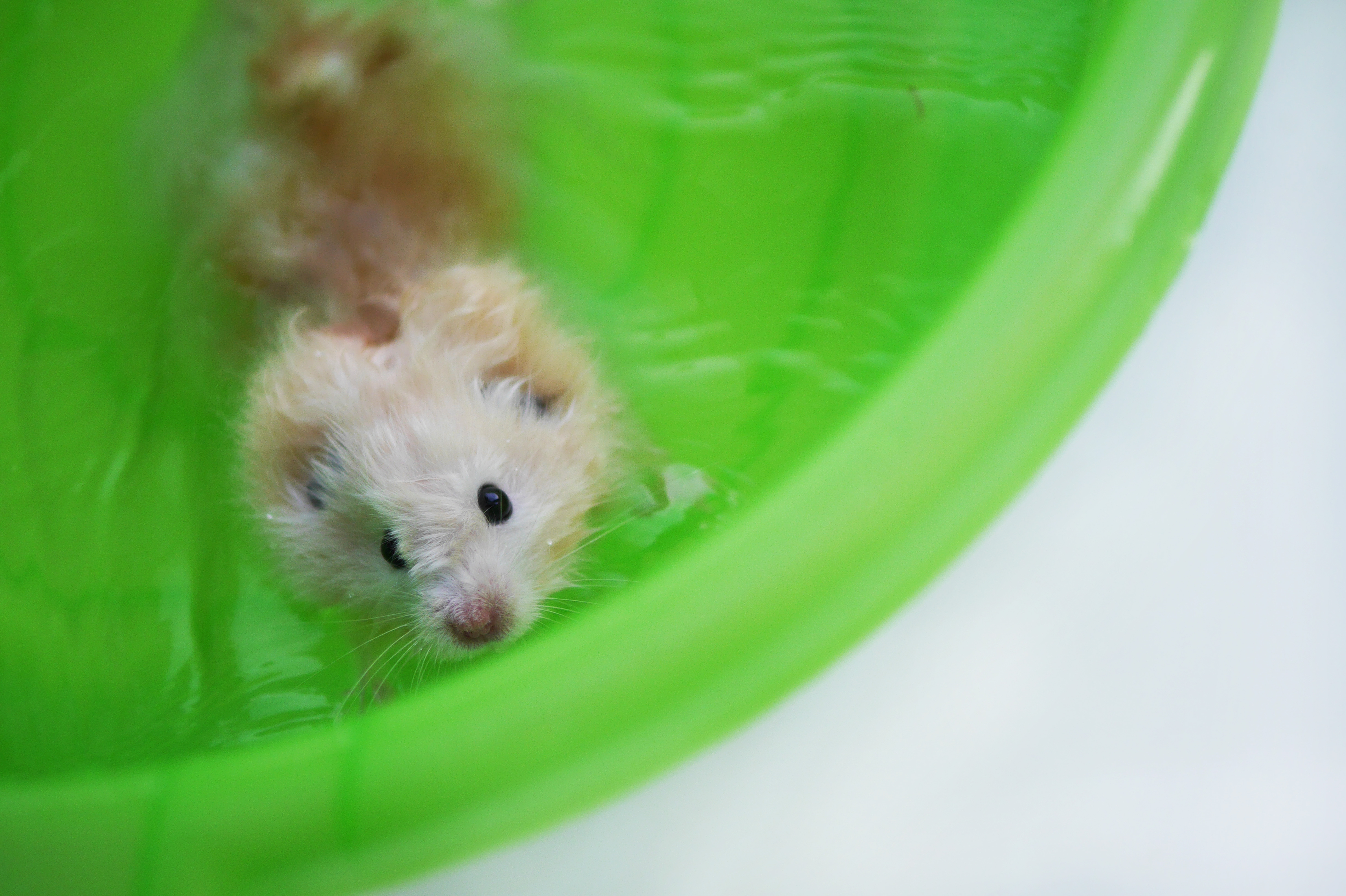
Washing an animal in water is a risky procedure; it consists of the following steps:
- Preparing for a bath. First, test your pet's reaction to water and try to acclimate it to the bath. Pick up the hamster and bring it closer to the water. If your pet is terrified, skip the bath altogether: simply wash the animal with wet hands and cotton pads, without submerging it.
- If there's no particular fear, prepare towels in advance in addition to a bath of water. Shampoo is usually not necessary unless prescribed by a veterinarian; in that case, a special solution for small rodents is needed. Place a cloth on the bottom of the bathtub to prevent slipperiness.
- After placing the hamster in a small tub of water, gently wash it by hand, gradually wetting each new section of its fur. Avoid areas such as the ears and eyes, and only wash the entire head as a last resort. A brush is used if the pet isn't afraid of it.
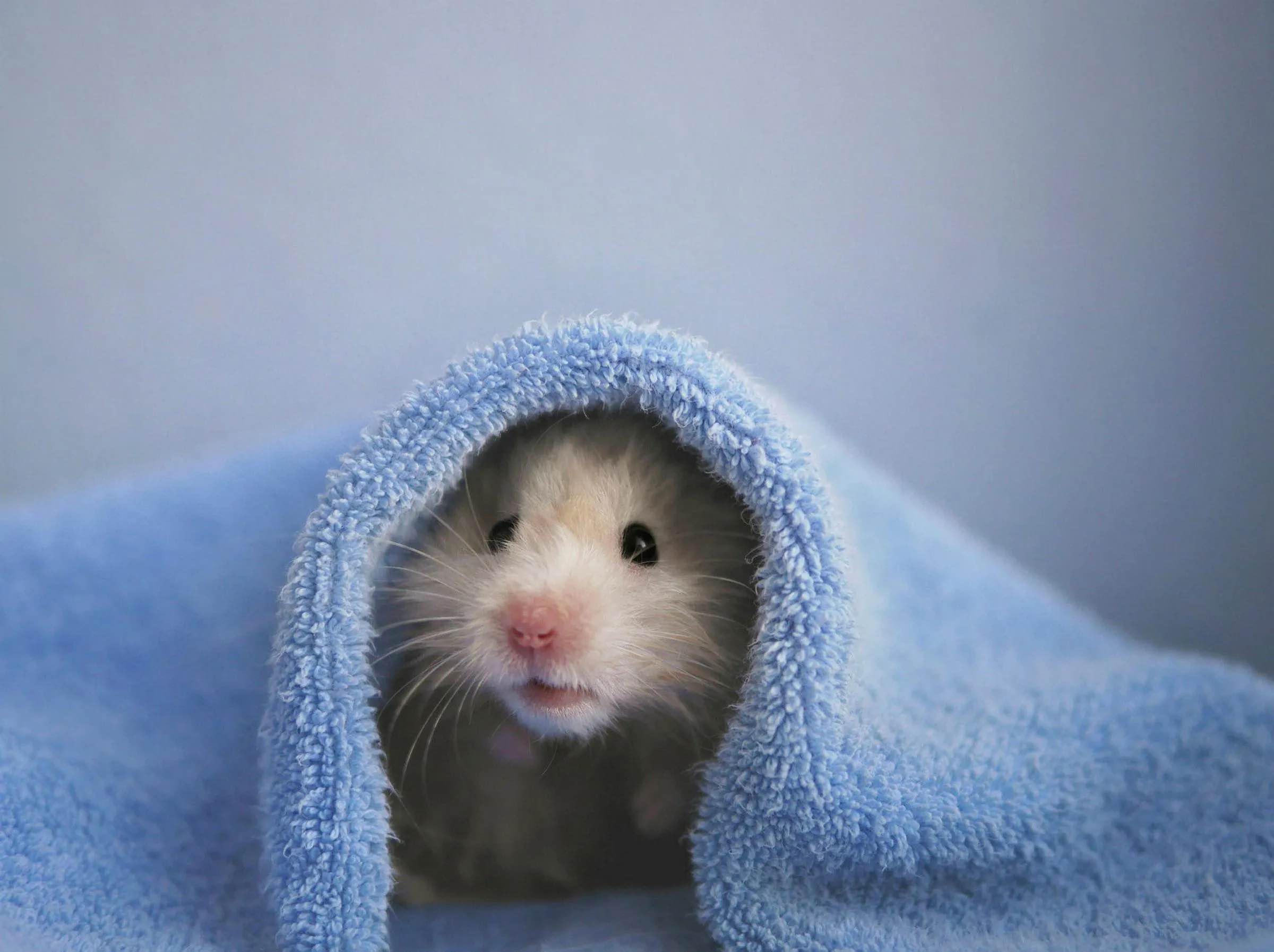
- Drying after a bath involves thoroughly drying the hamster with a soft, dry towel. The towel is moved along the coat, after which the animal is wrapped in the towel and kept there until completely dry. If the hamster becomes overly restless, it can be given its usual treats.
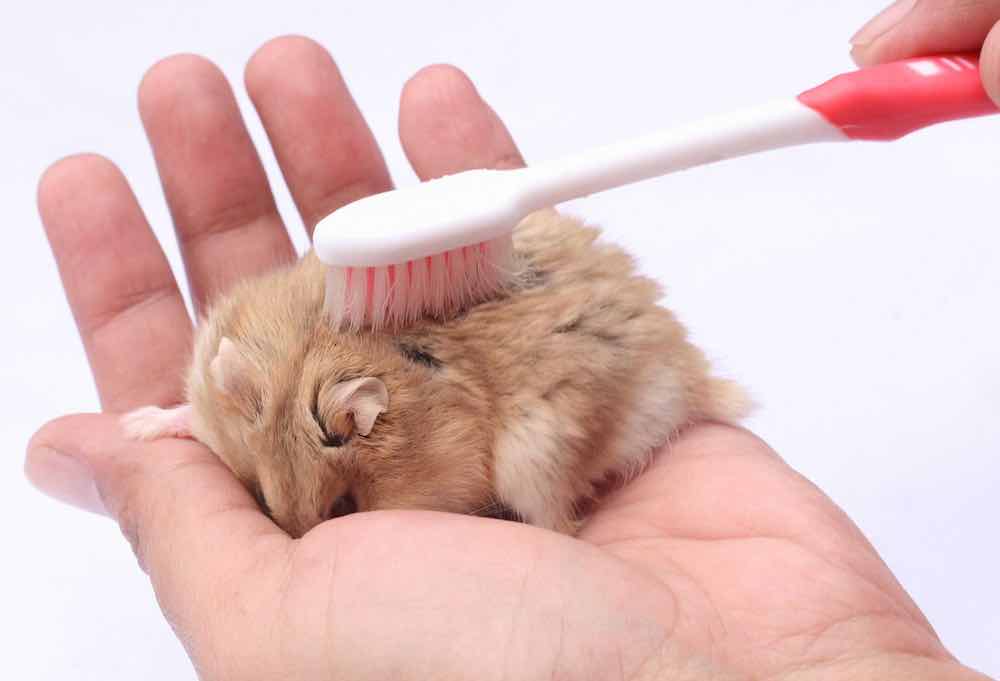
If immersion in water is unavoidable, brush the hamster with a damp toothbrush. Regular combs are also suitable for removing dirt stuck in the fur. Sometimes, nail scissors are also needed to trim away any dirty hair, including those stuck to chewing gum and similar objects.
Bathing hamsters in clean sand is much safer. It doesn't harm the animal, and the pet enjoys it much more than the water it loathes. Pet stores sell special sand designed specifically for hamsters: it has an optimal granulometric composition and is free of fine dust. Essentially, the owner only needs to place a container of sand in the cage; the hamster will do the rest. However, don't leave the container of sand in the cage for long periods of time; otherwise, it will quickly become a latrine.
Cotton pads and wet wipes are considered alternative methods for cleaning pets' fur. However, these wipes are impregnated with fragrances and alcohol, the smell of which may not be to everyone's liking. Therefore, it's better to use simple cotton pads, moderately moistening them with water and wiping your pet's fur.
How often can you wash a hamster?
If we're talking about water treatments, they should be done as infrequently as possible, only in the most extreme cases. This applies not only to using a bathtub full of water but even to wet brushes: water negatively affects the condition of the animal's coat. Sand baths, on the other hand, can be given daily, as hamsters enjoy playing in the sand. However, veterinarians advise moderation here too: no matter how special the sand, it still contains fine particles (or, in other words, dust). Dust particles can be inhaled, so even frequent sand bathing is undesirable. The recommended dose is once or twice a week.
Read also, What to feed a hamster.
Tips and nuances
Before bathing your hamster, carefully read the literature on the topic. During the procedure, calm the animal as much as possible.
To accustom your pet to water, you can drip water from a pipette onto its back little by little over the course of several days.
When deciding to bathe your hamster, you should not only ensure that the animal doesn't panic. You should also fill the bath with enough water so that even if the hamster accidentally slips from your hands, it can stand on its paws and stick its muzzle out into the air. A 2-3 cm layer of water is usually sufficient.
Cold water is dangerous, but hot water is even more so. Hamsters have naturally weak hearts, with a pulse rate of at least 180-200 beats per minute. Water that's too hot significantly increases this rate, leading to a heart attack.
Human shampoos are contraindicated for hamsters: they rinse poorly from the skin, and the animal will lick off any remaining detergent. Ingestion can cause poisoning. Inappropriate acidity also plays a significant role: the pH of human shampoo is unsuitable for rodents and can irritate their skin. Regular soap, including laundry soap, is even worse. If you can't find a hamster-specific detergent at your local pet store, you can purchase one designed for rabbits and other rodents. In any case, using detergents requires thorough rinsing without leaving any residue.
After bathing, carefully monitor the animal's condition for several days: illness is very likely during this time.
Bathing a hamster is far from essential and should only be done in extreme cases. These animals are capable of keeping themselves clean, and if they accidentally get heavily soiled, it's best to find a method other than water to remove it.
Read also How to determine the sex of a hamster.