Transporting aquarium fish home from the store is easy: a few specimens placed in a small jar or plastic bag will easily survive a two-hour journey. However, there are some exotic species for which even placing them in a net for a few seconds is extremely stressful, sometimes resulting in death. Transporting a large aquarium with fish to a new apartment, let alone to a new city, is much more challenging. After all, the fish themselves will need more than just one jar, and transporting their home—a glass aquarium holding even 3-4 buckets—is no easy task. Serious aquarists often have several aquariums, each holding 200 liters or more. But no problem is unsolvable; you just need to follow a few simple rules.
Content
How to transport an aquarium with fish: general rules
Transporting aquarium fish can be done by land, sea, or air. The same applies to aquariums, but if they hold more than 4-5 buckets, air transport is unlikely, and large aquariums with fish are rarely transported by rail. Therefore, the optimal vehicle for transporting a fish "house" is a suitable-sized car or truck. It's important to choose not only the shortest route but also pay attention to the condition of the road surface: shaking creates the risk of both damaging the aquarium and causing significant stress to its inhabitants.
Experienced aquarists know a number of unwritten rules regarding transporting their pets over short and long distances. Following these rules almost 100% guarantees the safety and health of your fish.
Here are the basic requirements:
- Only strong, healthy fish, preferably young ones, should be transported. An experienced owner knows the condition of each pet and is unlikely to take a fish with only 2-3 months left to live to its new home.
- Fish no longer than 4 cm tolerate transport best. The recommended stocking density for transport is 5-6 specimens measuring 2-2.5 cm per 1 liter of water. Never house juveniles and adults, or predators and peaceful fish in the same container.
- The fish are not fed either before the journey or during transportation: the last meal is arranged 24-36 hours before departure.
- To stimulate intestinal cleansing, a couple of hours before departure, the fish are transferred to clean water with a temperature 2-3 degrees lower than usual.
- Fish are fished into jars (bags) for transporting at the last moment, after filling the containers halfway or, at most, 2/3 full with water from the aquarium containing the fish.
- The best containers are those with translucent walls, and the glass should be shaded if possible to reduce the risk of frightening the fish. Large fish should be transported in 3-5 liter jars; for smaller fish, soft-sided plastic bags are best. The bags containing the fish should be placed in the box so they don't roll around and remain stationary.
- It is advisable, especially before a long journey, to fill the containers with oxygen after moving the fish into the bags and tie them tightly.
Naturally, it is necessary to maintain the temperature regime throughout the entire route and, most difficultly, provide the fish with oxygen.
If we are talking about transporting not just a few specimens, but an entire aquarium, preparation for the trip consists of the following stages:
- Cleaning the aquariumAs usual, use a siphon to remove bottom debris, drain at least half the water (having prepared the necessary amount of fresh water at the new location in advance), and remove filters, sprayers, and other equipment from the aquarium. Rinse and store them in bags.
- Fish catching. Before removing the soil, it's a good idea to catch the fish using nets (this is easiest to do at night) and temporarily place them in a small container filled with old water, after first filling the transport containers with the same water. The fish are transferred to these containers immediately before departure.
- Packaging of plantsAquarium flora is carefully removed from the substrate and water column. Plants are placed in bags with a small amount of water, each individually wrapped in porous paper. The bags are tightly sealed. It is important to avoid severe hypothermia and overheating of the plants during transport (temperature range: 12-30 degrees Celsius).
- Soil removalTo help the aquarium's biological balance settle more quickly in its new location, transport the substrate without rinsing, placing it in a convenient container and lightly filling it with water.
- Aquarium cleaningWhen cleaning the walls, do not use any detergents.
The aquarium is then carefully packed, ensuring its integrity during transport. The type of boxes, cloths, and other materials (foam, rubber, etc.) used depends on the size of the tank and the method of transport.
How to transport fish long distances in a car
Transporting an aquarium with fish is easier in a car, but they are transported separately: the fish in a small container of water, and the washed and packaged aquarium in the car or trunk. In cities, it's easy to find a moving company to help, but most aquarists prefer to prepare for transport themselves. The aquarium is packed in durable and sturdy materials such as corrugated cardboard or foam, then placed in a box or wooden crate, which is secured in the car to prevent movement and excessive shaking. As for its inhabitants, the optimal packaging for long-distance shipping is multi-layer polyethylene bags placed in foam boxes, or better yet, insulated bags. The spaces between the bags are filled with, for example, crumpled newspapers.
While cooler bags (thermocontainers) reliably solve the problem of temperature fluctuations, fish may not have enough oxygen on a long journey. Nowadays, in large cities, it's possible to fill the empty space in containers with pure oxygen, which will last for at least 5-6 hours. If the trip is long, you'll need to at least pump air at stops. Aquarium compressors powered by the car's electrical system are available for this purpose; otherwise, a rubber bulb pump and a sprayer with a hose will do the trick. Experienced aquarists also use anesthesia (sedating the fish during transport to conserve oxygen), but in this case, you have to accept the possibility that some fish will die.
How to transport aquarium fish on a train
Transporting a large aquarium by rail is impossible. The only thing you can fit on a train is a tank that holds a couple of buckets, so transporting the fish themselves is the only option. If the train's journey is only a few hours, there won't be any problems; just be careful not to overcrowd the tank.
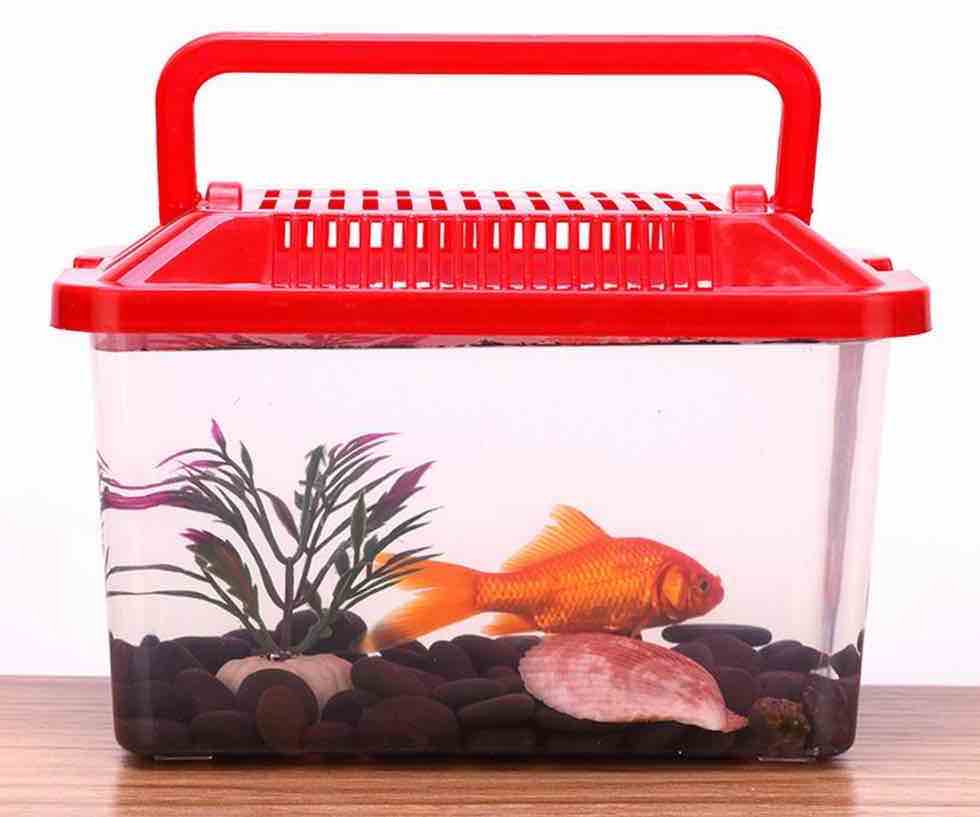
It's a good idea to bring a compressor (most trains have electrical outlets) or at least a spray bottle with a spray nozzle. A rubber volleyball bladder would also work. However, moderate shaking helps oxygenate the water (the lid should be removed or at least slightly ajar, of course). You can oxygenate a separate, fish-free jar without a compressor by vigorously shaking it with the lid closed. Labyrinth fish (macropods, gourami, goliuses, etc.) are often transported short distances in a damp cloth.
Another problem arises during long-distance transport, over 12-14 hours: ammonia poisoning, which is produced during the fish's life cycle. In a small volume of water, the maximum permissible concentration (MPC) can easily be exceeded. Therefore, before such a journey, it's recommended to fast your pets for up to 3-4 days. Most fish tolerate this easily; only goldfish are constantly hungry, but transporting them is perhaps the most challenging due to their large size and increased oxygen requirements.
The temperature in the train car is quite comfortable, but to be on the safe side, it's best to use cooler bags on trains as well. You can make a decent insulated box yourself using a cardboard box and 2-3 cm thick foam. Pet stores also sell special bags designed specifically for transporting aquarium fish. There are even breathable bags that fish can live in for 5-7 days, but they're hard to find and quite expensive.
Transporting aquarium fish in winter
Transporting aquarium fish in winter is more difficult than in summer, but only because of the risk of hypothermia. This applies to fish being outdoors: a train car is quite warm, and a car can easily maintain any desired temperature. Generally, 16-18 degrees Celsius is sufficient for transport. For safety, use heating pads or plastic bottles filled with warm water, and wrap the fish containers in blankets.
As for being outside, this can be a problem if you have to be out in the bitter cold for even 10-15 minutes. The simplest "device" in this case is a wide-mouth thermos with a capacity of 1.5-2 liters. It maintains a comfortable temperature for at least 3-4 hours.
Read also, How to choose an aquarium.
Tips and nuances
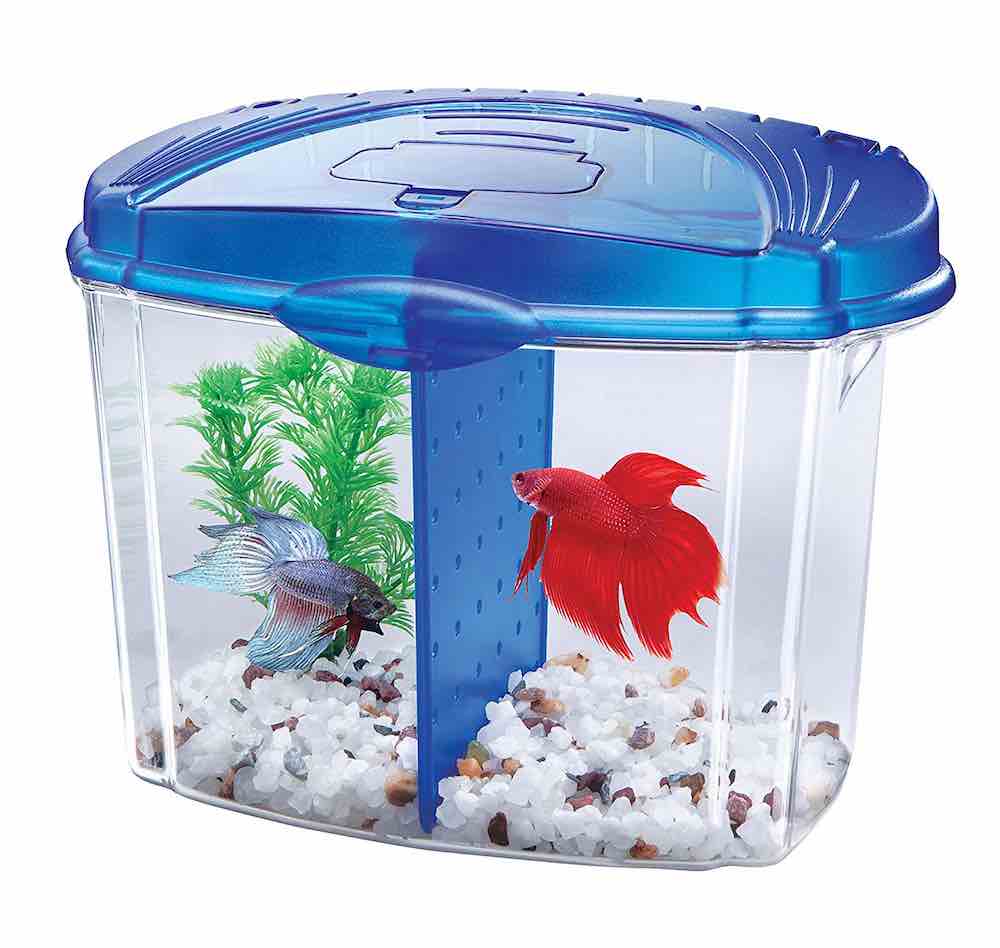
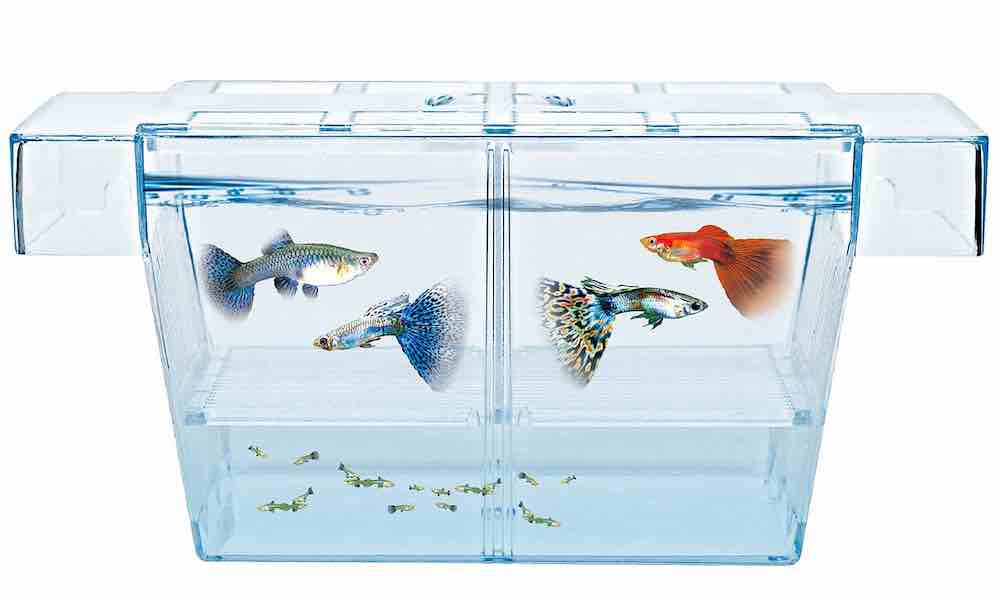
When transporting fish of different species, it's best to separate them into separate containers. The simplest option is plastic bottles with a capacity of 0.6-1.5 liters: they fit into a box or suitcase. Finding square-section bottles will also solve the packing issue. Even the smallest bottle can accommodate a couple of 4-centimeter fish. It's best to separate fish individually during transport; if they die, losses will be minimal.
There are various recommendations for fish stocking density, depending on both size and species. For example, if the journey takes 10-12 hours, it's generally accepted that the maximum stocking density is 300 g of fish per 1 liter of water, but this is debatable. In any case, an air pump should be readily available.
Transporting labyrinth fish is both easier and more difficult than other fish. They can breathe atmospheric air; in fact, they require it. Therefore, it's important to ensure sufficient oxygen above the water.
"Oxygen" tablets are convenient but dangerous: they're easy to use, but the slightest overdose can kill fish. They usually contain hydroperite, a hydrogen peroxide-based substance that's a powerful oxidizer.
Aquarium plants in a container with fish are completely inappropriate during transportation: in the dark, they consume oxygen.
When moving, don't throw away old water. At least some of it should be collected in separate water bottles to help the aquarium's biological balance settle more quickly in its new location. However, water from transport containers should never be poured into the aquarium, as it accumulates significant toxic substances during the journey.
Transporting an aquarium is a challenging task. To ensure your fish stay alive and healthy, it's important to follow simple transportation guidelines, ensuring they have the right temperature and sufficient oxygen during the journey.
Read also, Why do fish die in aquariums?.