For dogs
How to train a dog to use a chain 

It's best not to chain a dog: that's the opinion of serious zoologists. After all, a dog isn't just an animal; it's also man's best friend. How can you say a friend is chained? Indeed, city dogs living in high-rise buildings rarely know what a chain is: the most that restricts their freedom is a leash during walks. In private homes, however, dogs on heavy chains are common: historically, dogs not only live in a specially constructed kennel but are often permanently tied to it. Still, it's worth recognizing that chaining is an extreme measure. A dog kept permanently on a leash becomes vicious and unfriendly, which can eventually affect its relationship with its owners. Moreover, such a dog isn't a very reliable guard dog: after all, while leashed, it won't be able to fully control the movements of thieves or other ill-wishers within the yard.Read more
How to brush your cat's teeth at home
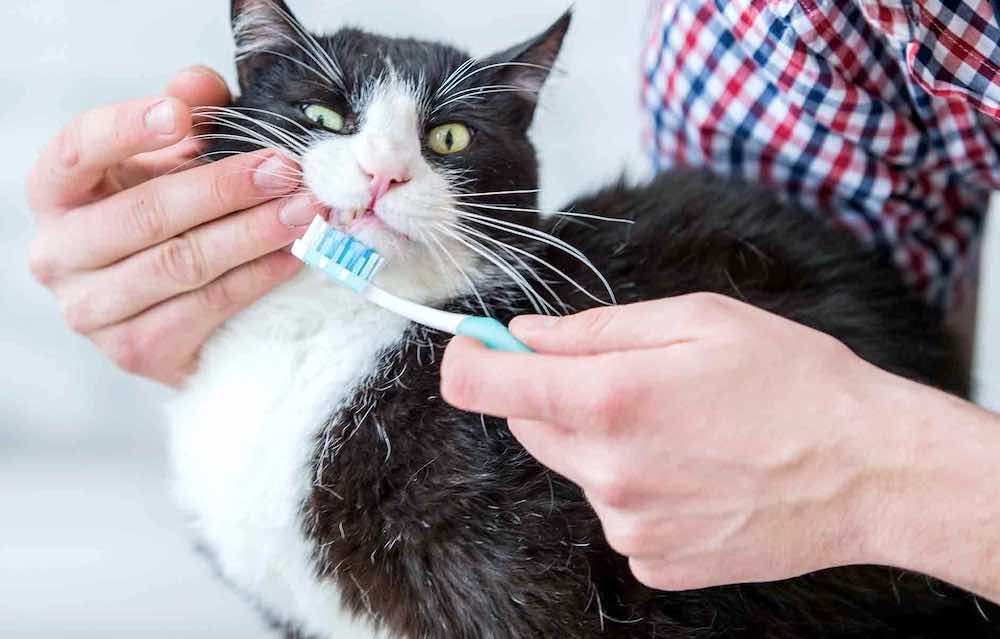
Cat owners often wonder about their pet's oral hygiene. In the wild, animals take care of their own teeth and don't suffer from dental problems, but this isn't the case for domestic cats. Experts say brushing cats' teeth is both possible and necessary. After all, our furry friends suffer just as much from tartar buildup and gum inflammation. This is due to their diet and lifestyle, which is fundamentally different from that of wild cats. The needs of domestic and wild animals also differ. Today, we'll explore the importance of dental hygiene for cats, learn how to brush your beloved cat's teeth at home, and also learn how to train your whiskered friend to accept these procedures. Do I need to brush my cat's teeth? Cats don't really need bathing or claw trimming, but their ears and teeth are vulnerable areas. When should you be concerned? If the enamel on your pet's teeth has turned yellow, partially darkened, and inflammation has appeared in the gums - they swell, turn red, and there is an unpleasant odor from the mouth.Read more
How to teach a puppy or adult dog to lie down

"Down" is one of the most basic commands dogs can learn, along with "sit," "stay," and "speak." These commands help establish a bond between the animal and its owner. It's best to start teaching a puppy this command no earlier than three months of age. Training methods can be varied, including rewards (treats, verbal praise) and coercion (pressure on the withers). Training can be done outdoors or indoors: the main thing is to keep the environment clean and free from distractions. Method one: training a puppy with a treat. Perform this exercise when the dog is sitting or standing. Take a treat in your hand and hold it to the dog's nose, but allow it to nibble on it. To do this, make sure your palm is facing down, otherwise the dog may snatch the food from your hand. Say "Down," and then gradually lower your hand with the treat in an arc, downwards and forwards. The easiest way to get to the treat is to lie down, i.e., follow your command. When this happens, give the dog the treat and reinforce your success with praise.Read more
How to train a cat to wear a harness

As a rule, felines absolutely hate being walked on a leash, especially since the urban jungle is completely unsuitable for these pets. Simply taking a cat for a walk isn't an option – they're often afraid of people, cars, and the frantic pace of modern life. Special devices, such as a harness, can help. Without one, a walk is no fun for either the animal or the owner. Cats wearing harnesses are increasingly common at veterinary clinics, at shows, and on public transportation. Let's find a harness for your cat, learn how to use it, and discover how to accustom your pet to this convenient feline device. Do I need to walk my cat? Unlike dogs, cats don't necessarily need to be walked – it's not required by necessity or the specifics of their living conditions. Domestic cats happily spend most of their lives within four walls. They're quite content to curiously watch the birds and the changing seasons from the window. However, cats aren't always eager to participate in all of this. A measured, calm way of life suits them quite well.Read more