 When spring arrives, a wide variety of birds can be found among the multi-voiced flocks. Among them is the small but very playful greenfinch. Its trill is always ringing, awakening nature from its slumber. These small creatures with their bright plumage are amazing and charming!
In ancient times, people called this bird a canary for its beautiful voice. However, it is not related to the nightingale, and its roots lie in the order Passeriformes.
Description of the common greenfinch
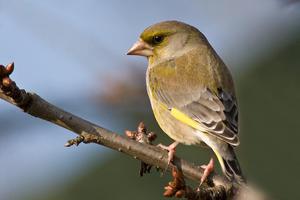
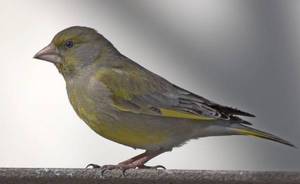
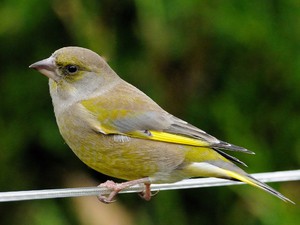
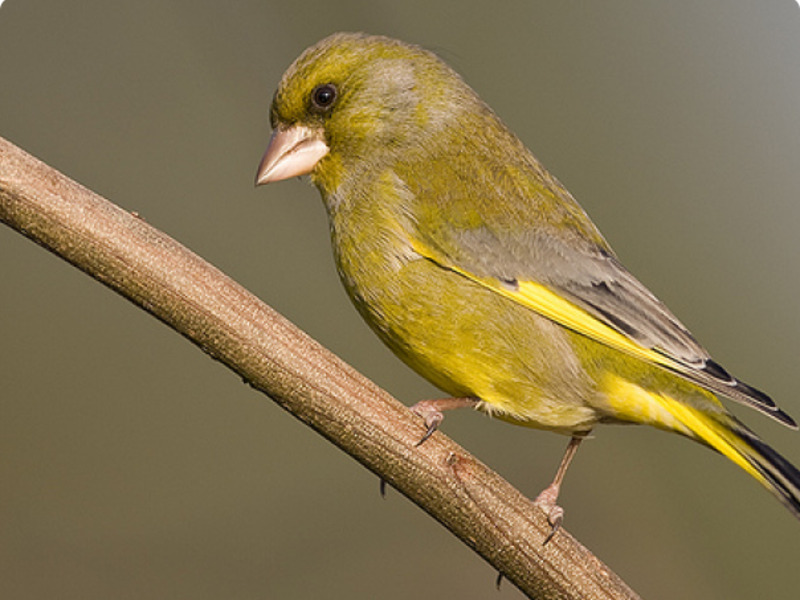
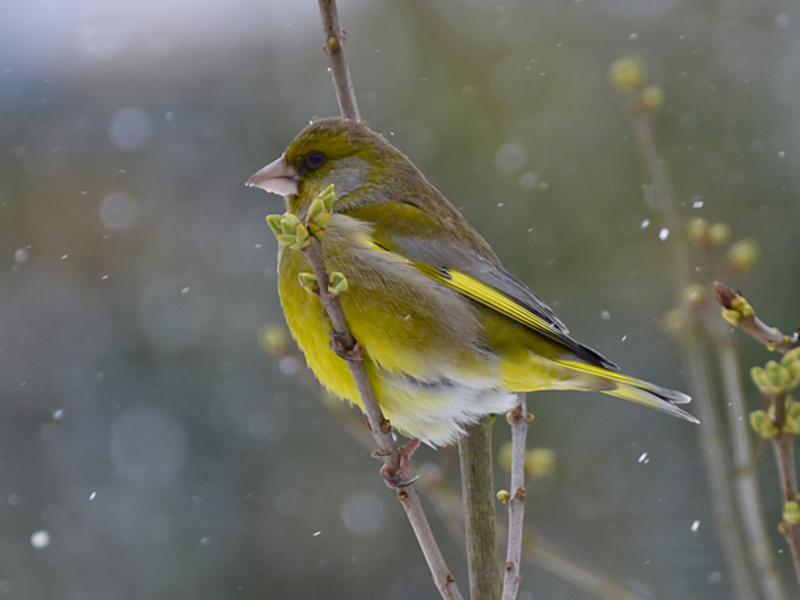
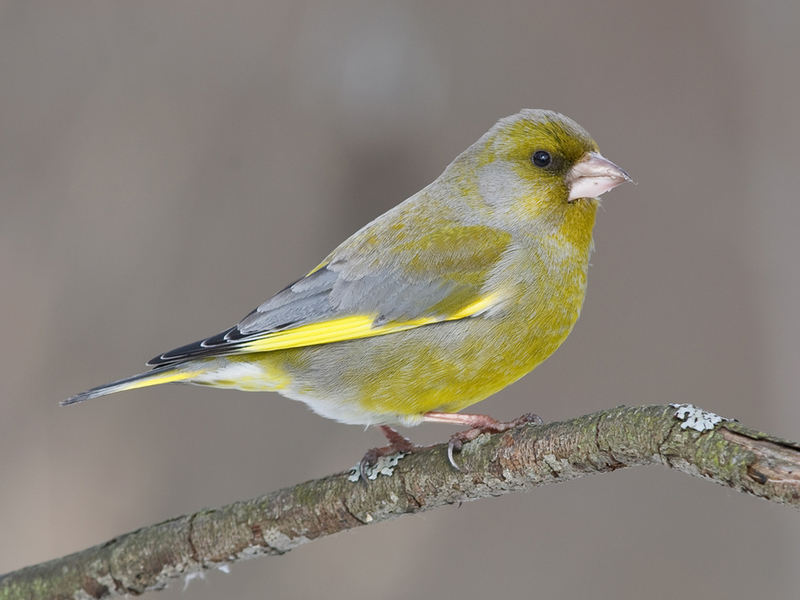
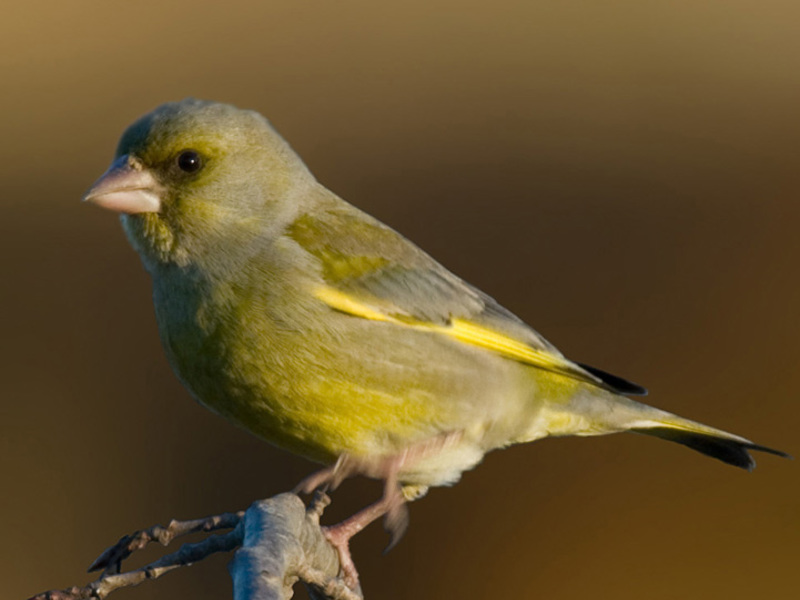
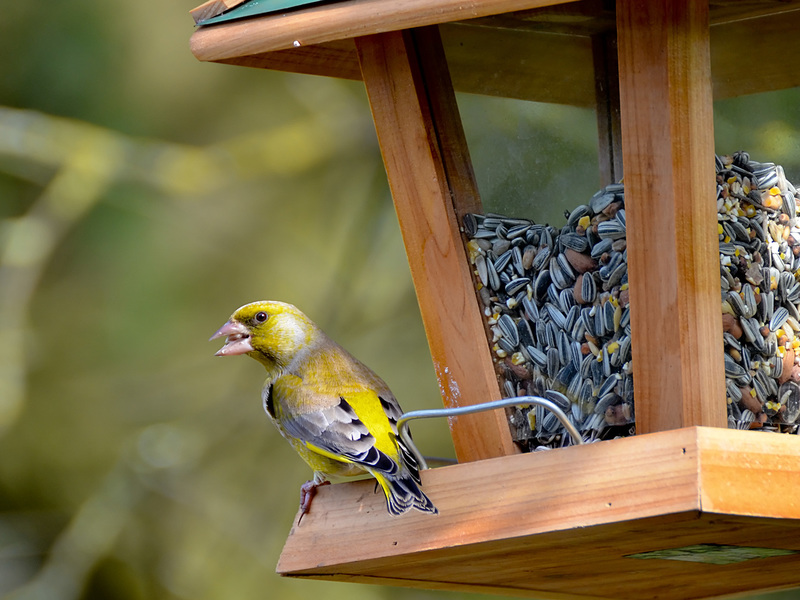
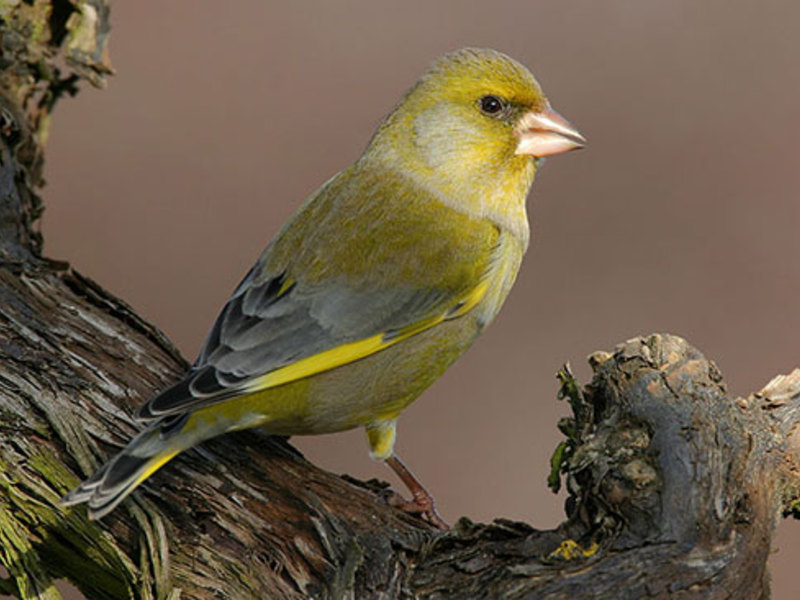
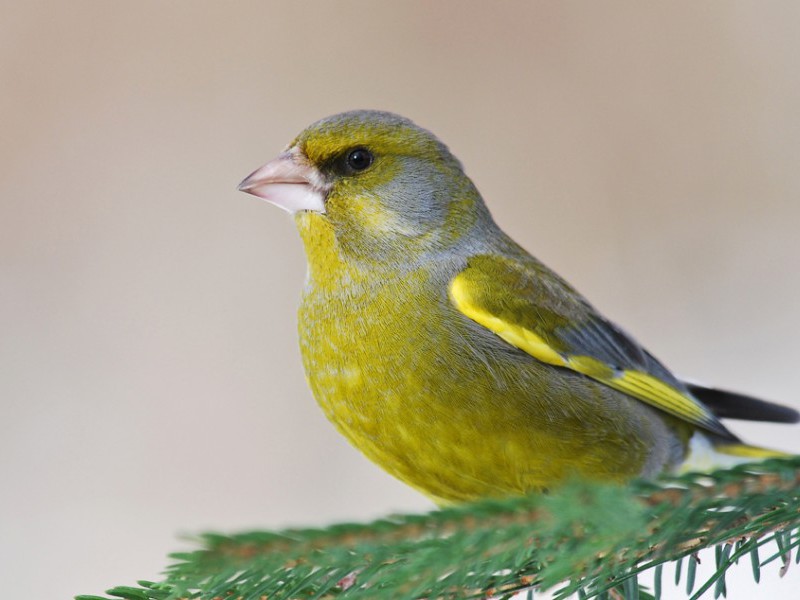
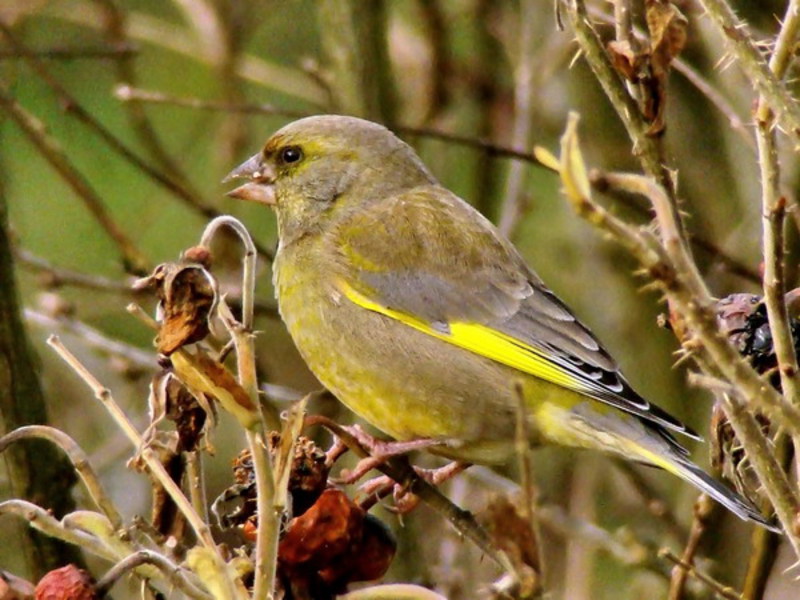
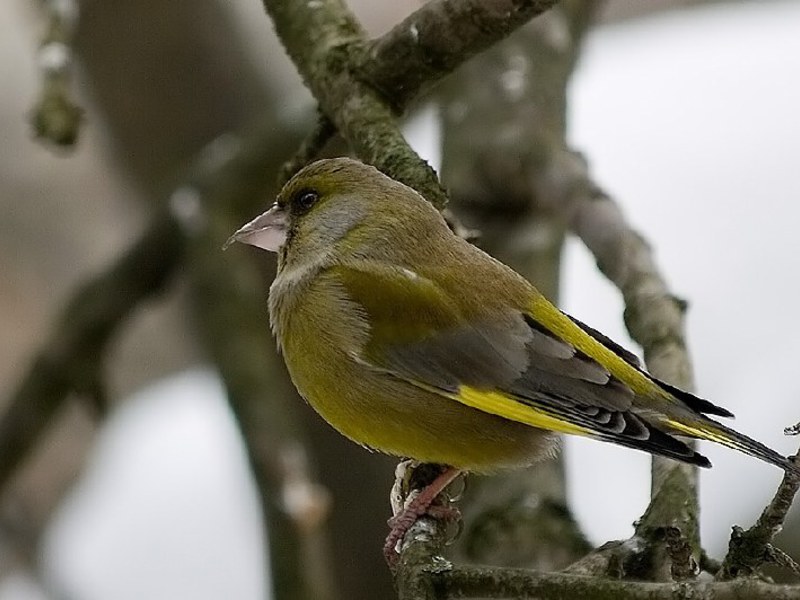
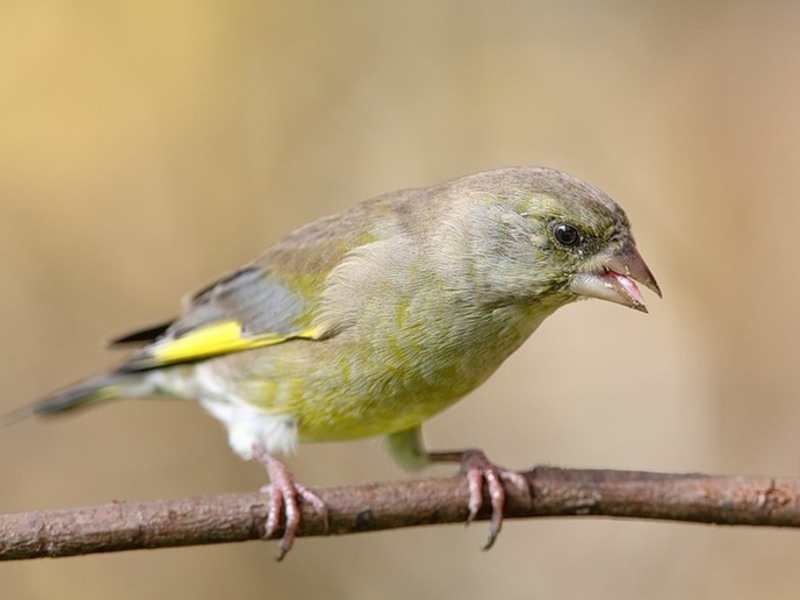
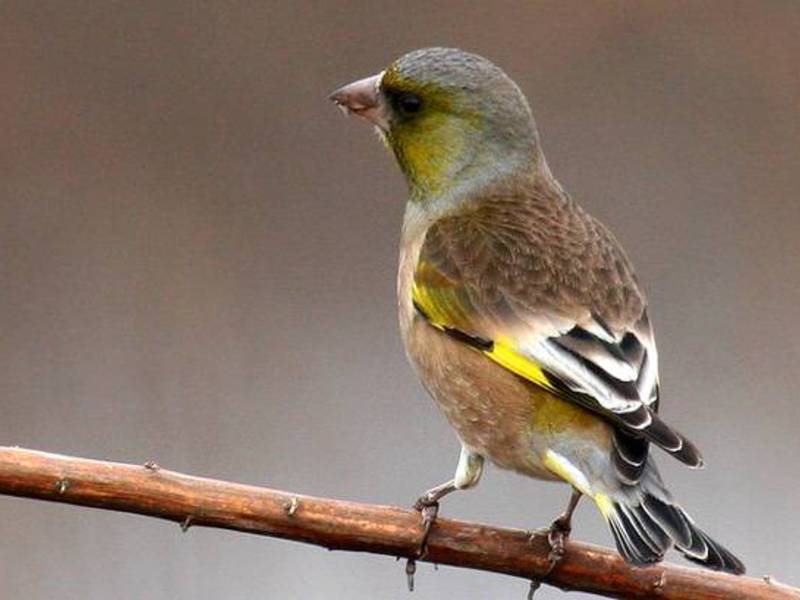
Ornithologists took the bird to the genus of goldfinches of the finch familySeveral species of this bird are found in the wild. It is known that the common greenfinch got its name from its distinctive appearance: yellow-green plumage, highlighted by yellow edges on the wings.
This bird is small in size, slightly larger than a sparrow. It can be immediately distinguished from others by its appearance, which has the following characteristics:
- Large head.
- Thick light beak.
- Dark, short and narrow tail.
- The tips of the feathers are yellowish.
- The eyes are dark.
- Dense and long body.
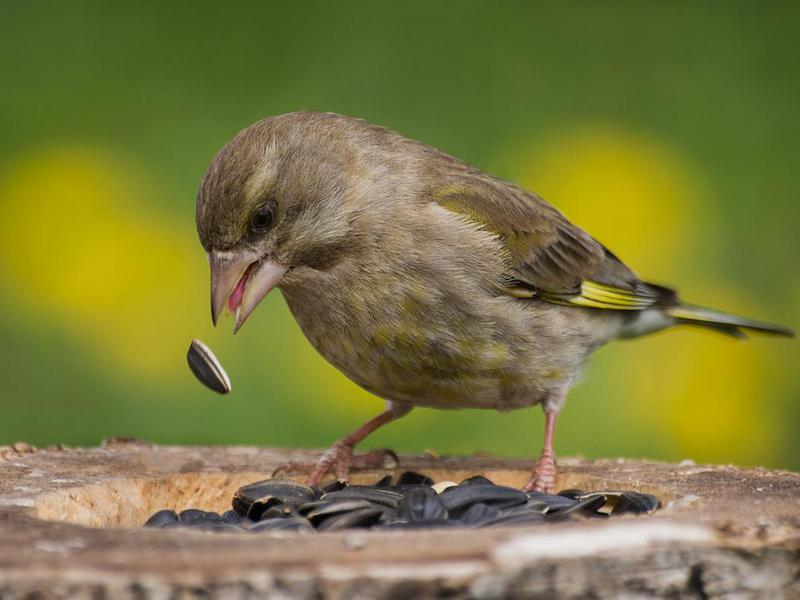
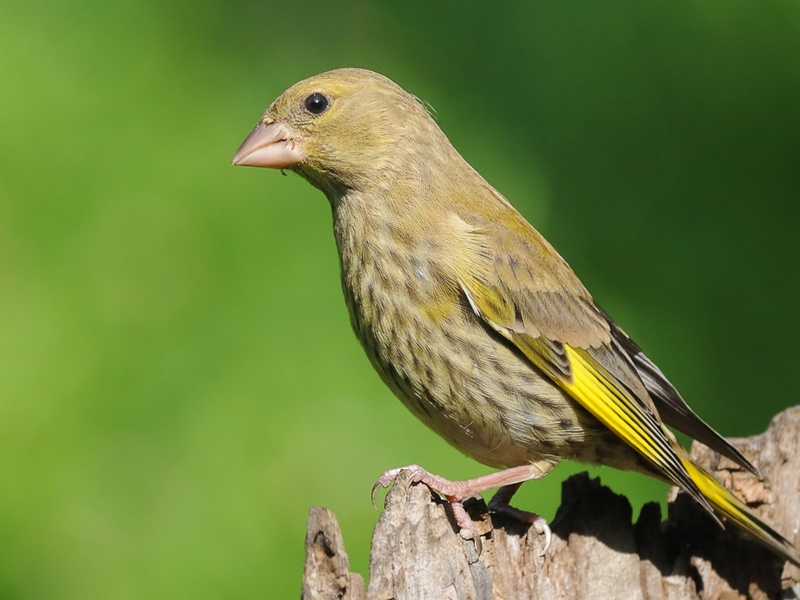
The plumage color is also interesting: a faded brown-gray color with a slight olive tint. This bird weighs only 25-35 grams, but the body length is 18 centimeters.
There are eight subspecies of the common greenfinch. They were once introduced from Europe to South America and Austria. They inhabit sparse and small forests, and can often be seen in parks. Common greenfinches are migratory.
Song of the Common Greenfinch
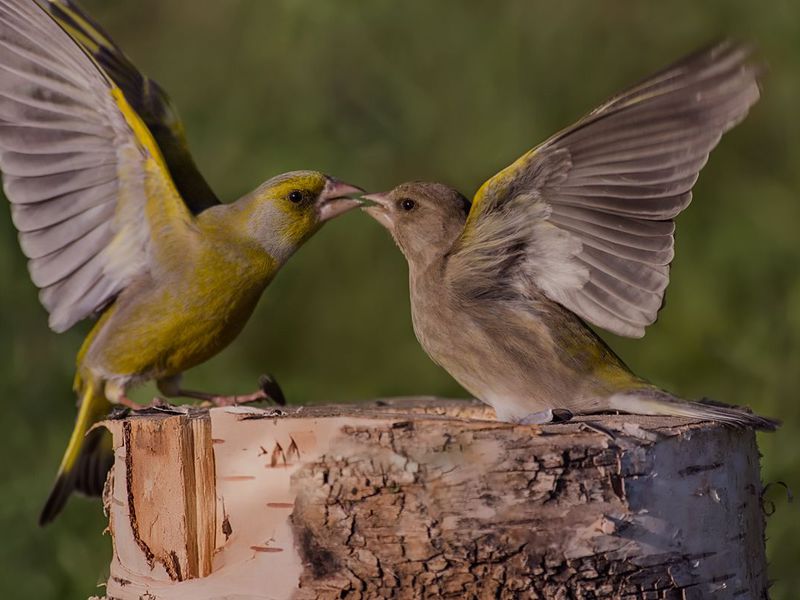
 This bird's song is intriguing, beginning in early spring. However, it only becomes active in April and May, when the mating season begins. The song consists of alternating high-pitched trills and chirps. These songs are slow and monotonous. The male begins this singing early in the morning. sits on the tallest tree and begins to loudly emit its melody, sometimes rising into the air to show off the beauty of its plumage. These birds also call to each other with a soft whistle when feeding.
Nutrition and reproduction of greenfinches
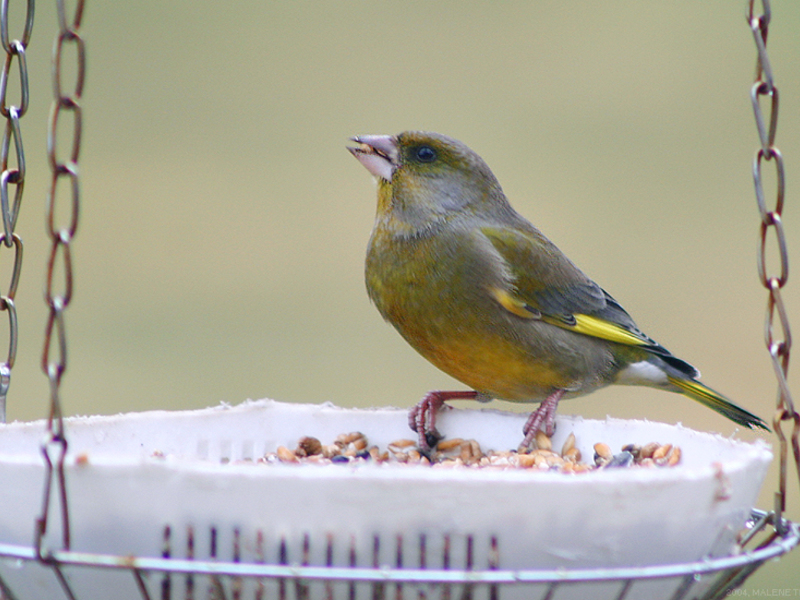
Greenfinches are unpretentious in their diet. They feed primarily on wheat sprouts, seeds of various plants and grasses, tree buds, and occasionally insects. They have to shell large seeds first. A favorite delicacy of this bird is juniper berries.
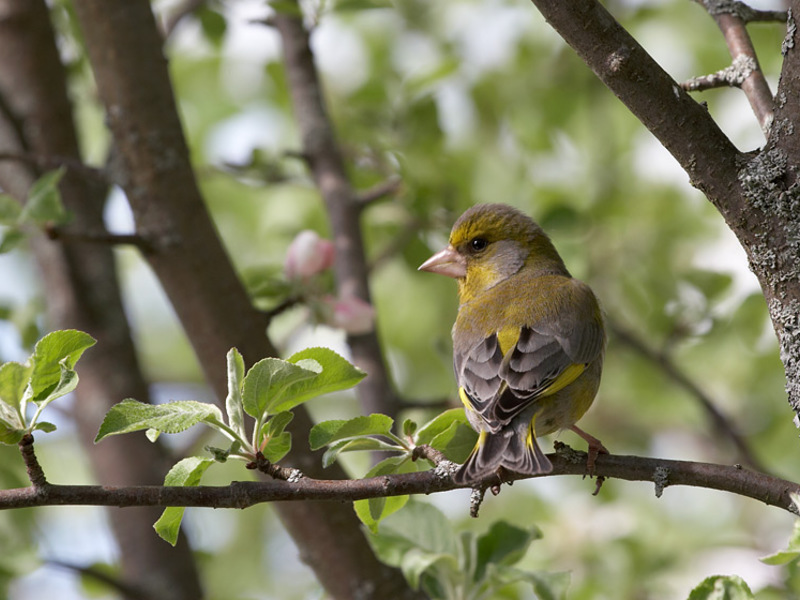
In the spring, the greenfinch begins to worry about its offspring. Females usually build nests in trees. They try to build them as far away from humans as possible. Therefore, the nest is usually located 6 meters from the ground. The nest itself looks resembles a bowl made of grass, thin twigs, moss and various roots.
The female typically lays 4 to 6 light-gray eggs with brown spots in this nest. She will sit on them for about two weeks. During this time, the male provides food for the female, and once the chicks hatch, he will also provide food for them. After three weeks, the female begins building a new nest, and the male continues to care for the chicks.
Migrations and nomadism of greenfinches
 In early spring, greenfinches begin to trill, and they begin preparing for migration. Spring migration for these birds begins in March. In summer and autumn, these birds gather in small flocks and search for food on the outskirts of cities, fields, and vegetable gardens.
But the main migration occurs in the fall. The most active months for migration are September and OctoberIt's rare to encounter a flock that continues its migration in winter. These birds choose wintering grounds where food is plentiful.
Habitat of greenfinches
Greenfinches are widespread. They can be found across almost the entire Eurasian continent. However, if this bird lives in northern regions where winters are very harsh, it flies south to survive the cold. This bird is known to can live in the following areas:
- Northern Iran.
- Central Asia.
- Western regions of Africa.
- Afghanistan.
During migration, greenfinches undergo a molt, which lasts approximately 90 days.
Enemies of greenfinches
In the wild, this little bird is always in danger. Greenfinches' main enemies are crows, which don't even spare their young. Crows can mercilessly attack nests, destroying them so completely that they sometimes prevent the chicks from hatching.
Keeping greenfinches in captivity
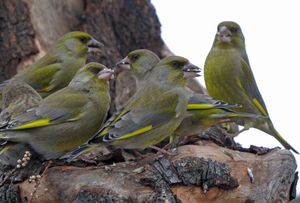 Greenfinches in Russia called "forest canaries"They received this name not only for their melodic and ringing song, but also for their forest lifestyle. Greenfinches have never been caught specifically for cage keeping. However, the birds themselves are so trusting that they easily fall into traps set specifically for catching other birds.
This bird is easy to tame, as its sedentary lifestyle allows it to be handled, which it quickly becomes accustomed to. A greenfinch will never thrash or race around in its cage in captivity. If a male is trapped, some will begin to sing as soon as they are placed in the cage, while others can start singing in 2-3 months.
It's best to keep them in pairs in a cage, but they can also be kept in a cage with other peaceful birds. They never quarrel with other birds and are quiet, calm, and peaceful. They can be fed various grain mixtures, small pieces of fruit, seeds, and berries. However, remember to always have fresh water available, which is essential for proper digestion.
The average lifespan of a greenfinch is 8 years, but everything will depend, of course, on their living conditions. If properly cared for, greenfinches in captivity can live up to 12 years.
But these little forest canaries are not always appreciated by people, because their singing can even be annoyingBut its beautiful plumage makes this bird stand out on the street, as it always needs human support.
 Natalia
1 comment