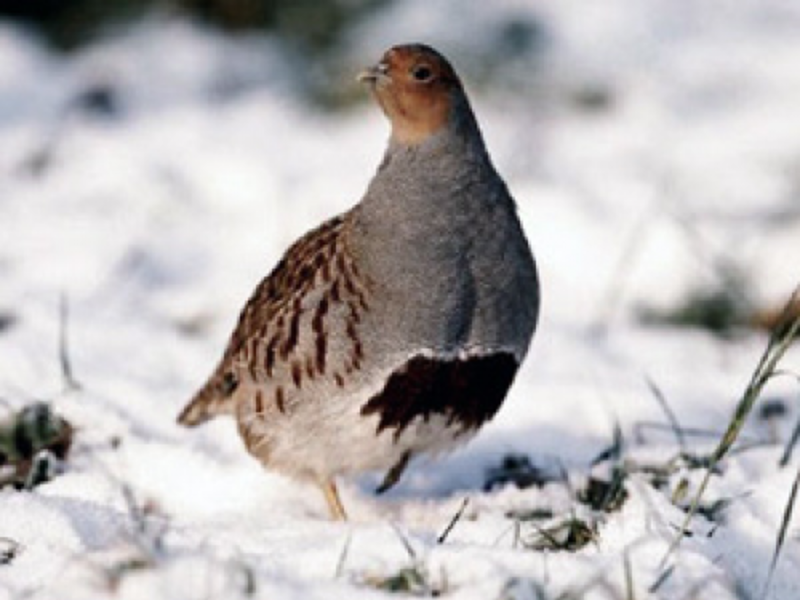
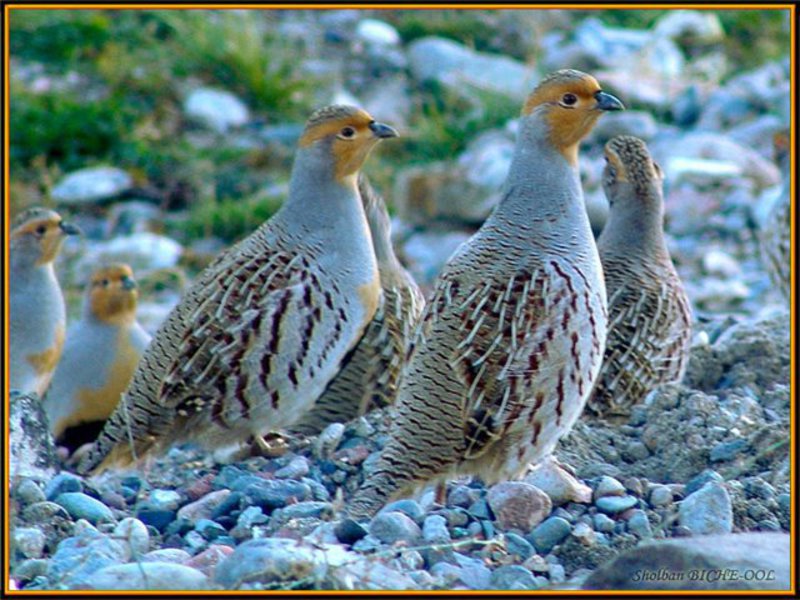
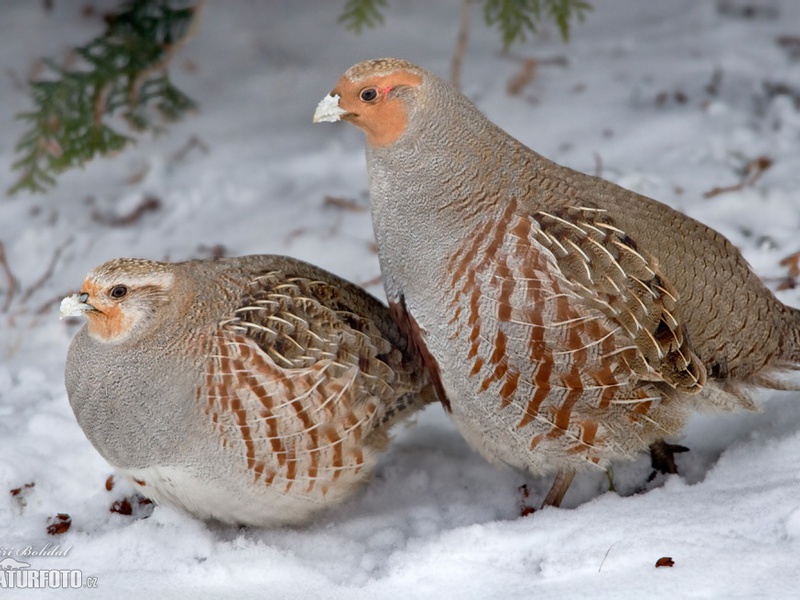
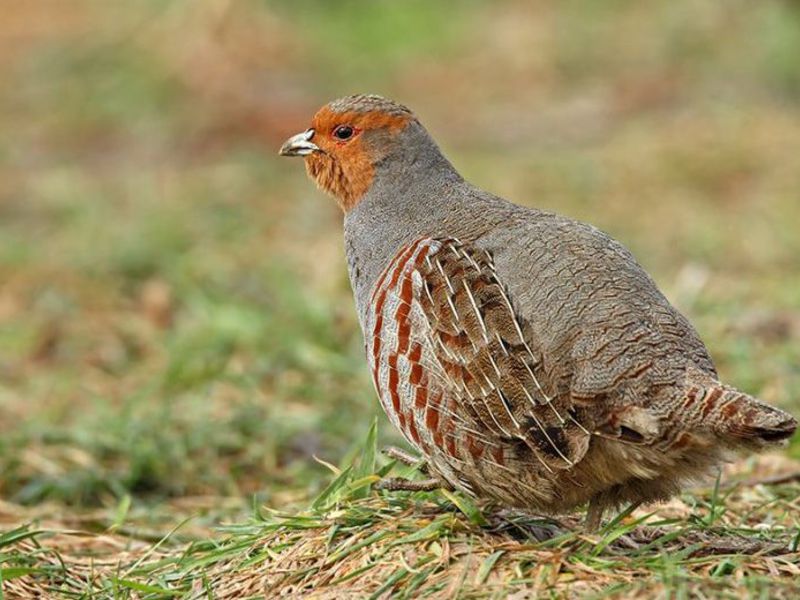
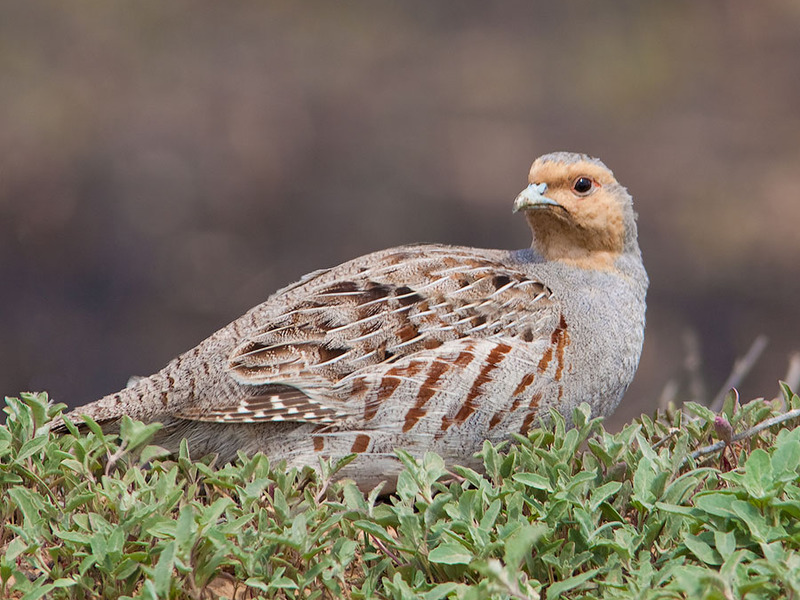
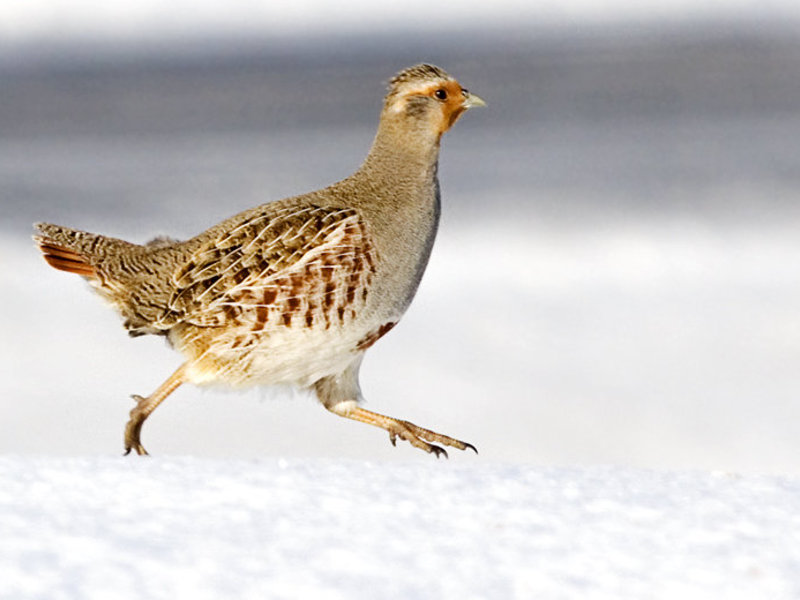
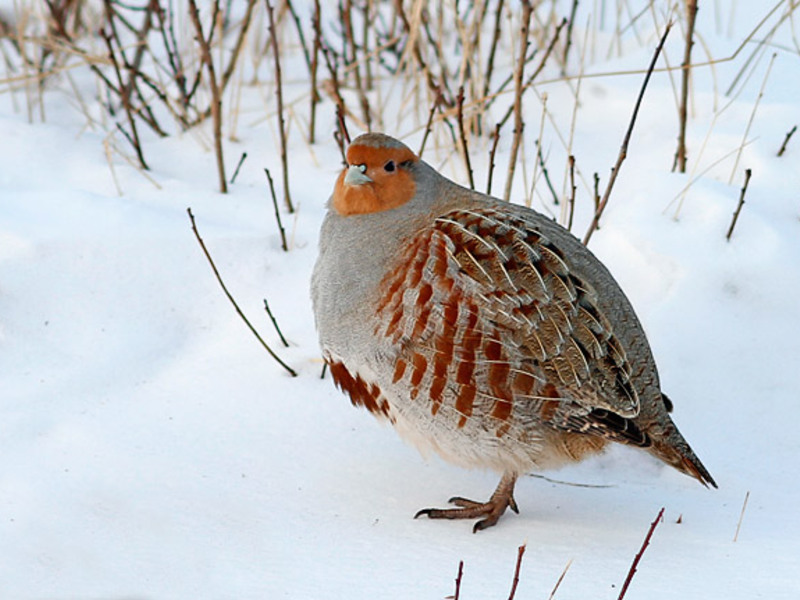
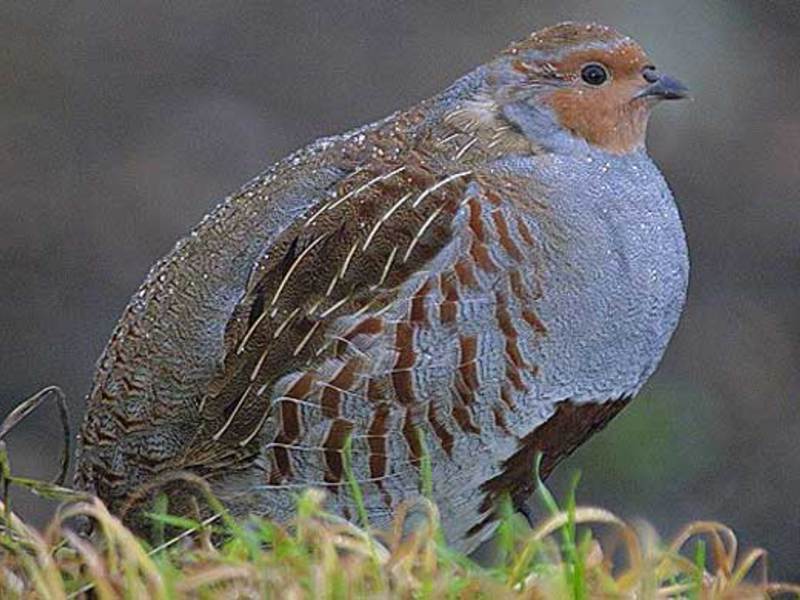
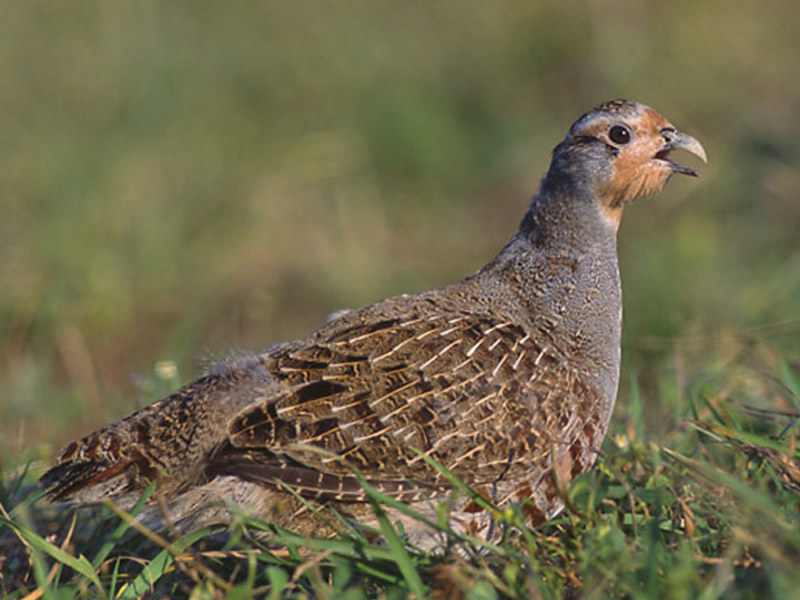
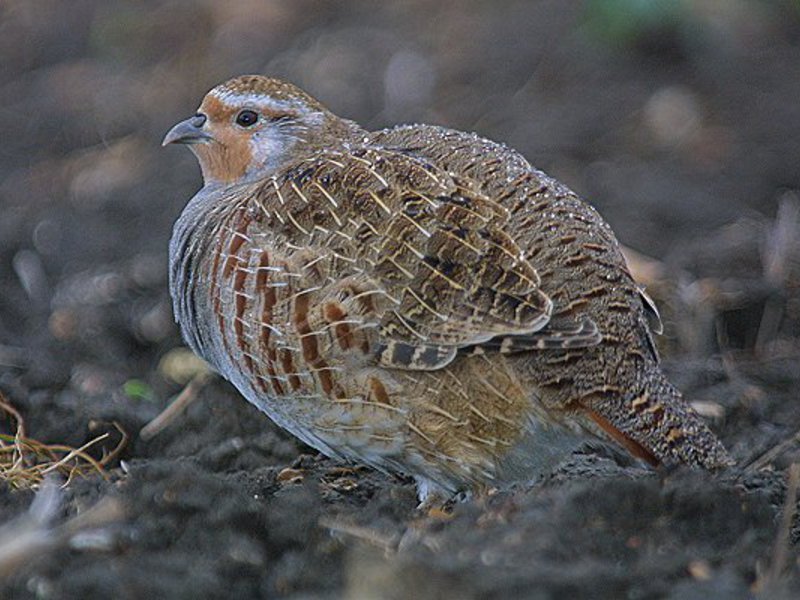
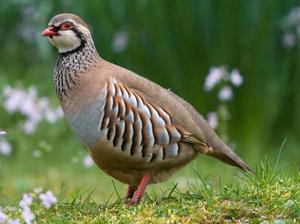
 The grey partridge resembles a small chicken, reaching approximately 30 cm in length and weighing approximately 400 grams. It rarely flies, only when threatened or when replenishing its food supply. It spends most of its time on the ground, where dense vegetation of grasses and shrubs provides protection from predators. The partridge has well-developed leg muscles, allowing it to run quickly and overcome obstacles with ease.
What does the bird look like?
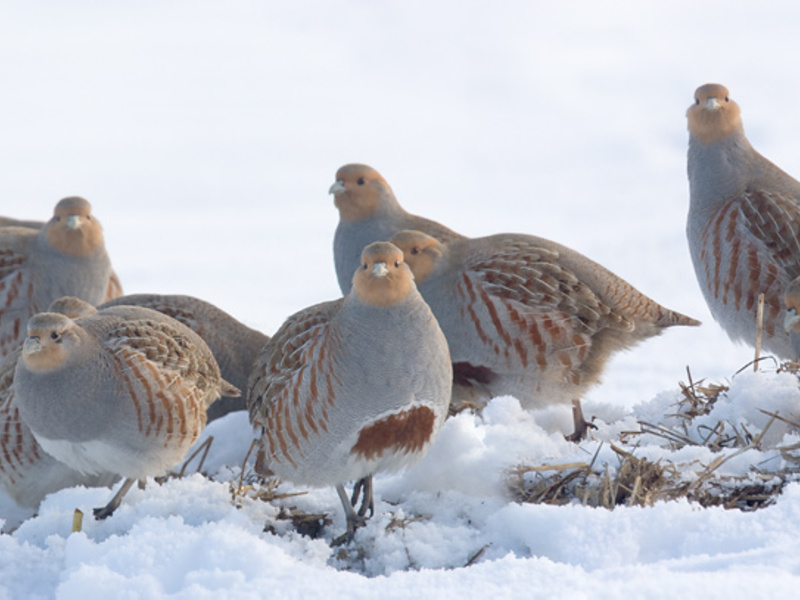
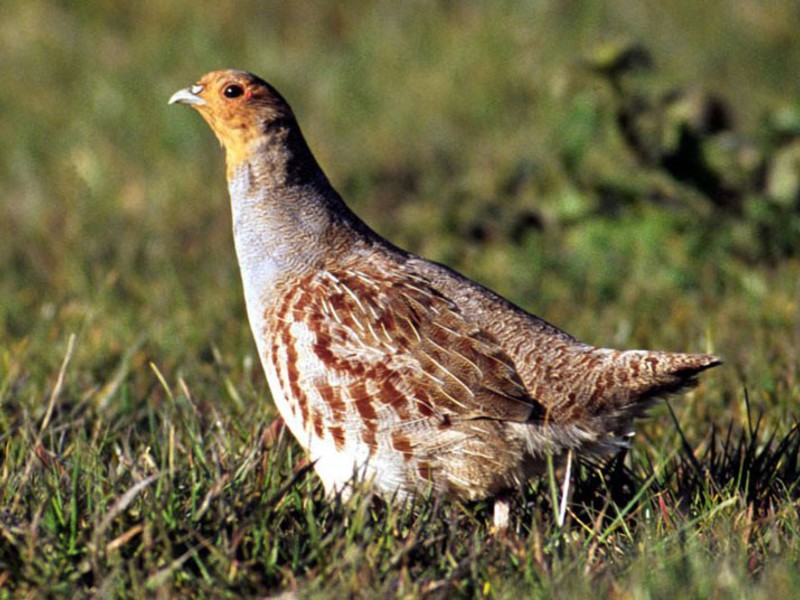
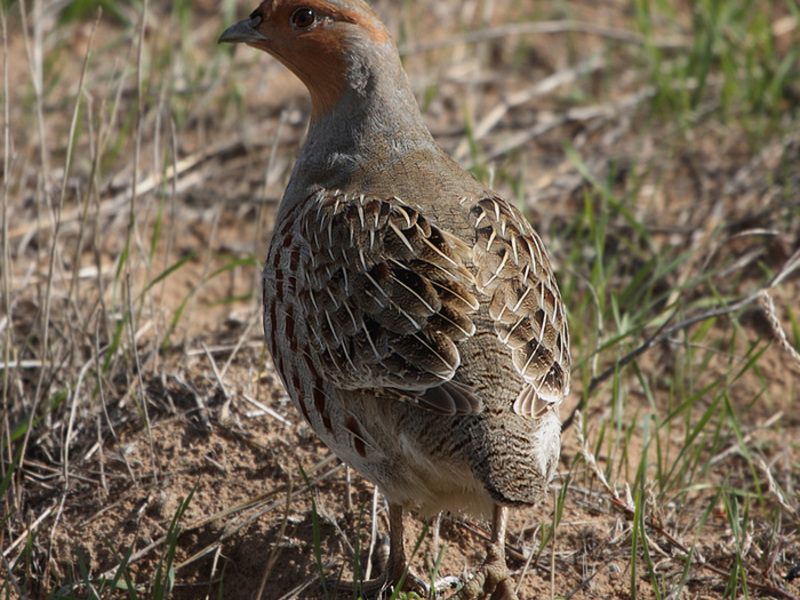
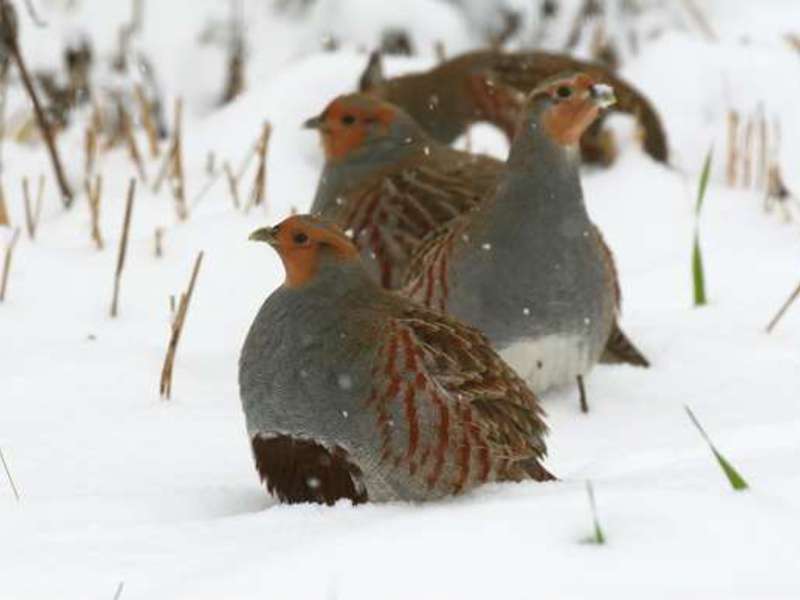
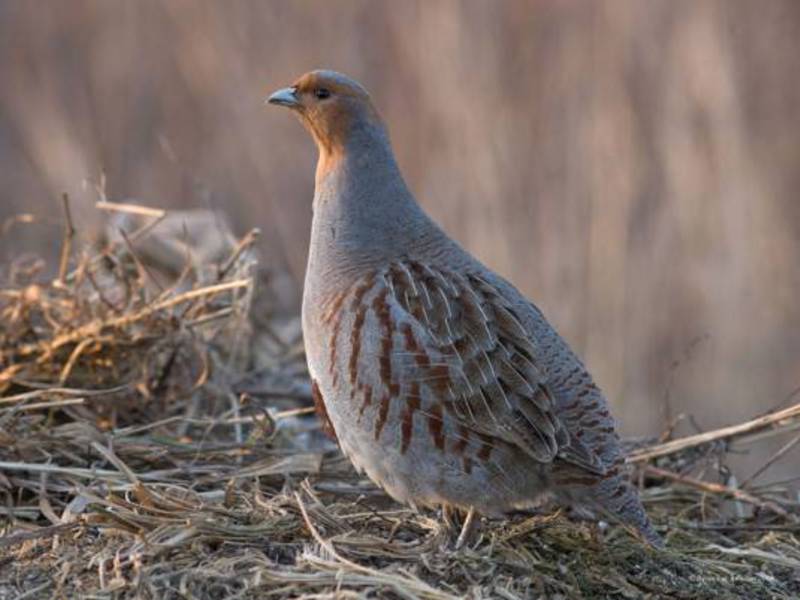
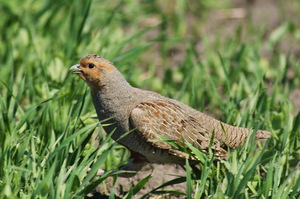
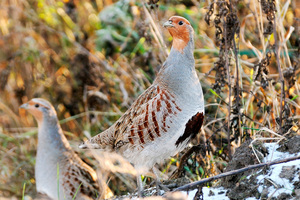
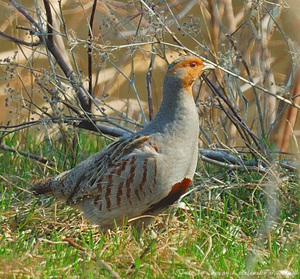
As the name suggests, the bird's plumage is greyish, so its appearance is quite modest. Only the abdomen is painted whiteThe back, wings, and tail are gray. Adults have a brown horseshoe-shaped spot on their abdomen. Young females lack this distinctive feature. Sexual characteristics are poorly defined: the female is slightly smaller and has duller plumage than the male. The spot appears when the female reaches sexual maturity and is ready to breed. Males and females can be distinguished by their tails; in summer, females develop reddish feathers.
The head of both sexes is brownish-brown, with a more intense dark coloration on the crown and nape. The entire plumage of the partridge is patterned with small specks and spots.
Habitats
The partridge is found over a wide area:
- From northern Portugal and the coast of England to the Altai Mountains. These birds no longer inhabit beyond the Ob River.
- To the north, partridges live as far as the White Sea.
- In the south and east they live up to the borders of Iran and Asia Minor.
 Grey partridges build a nest in open areas of fields, steppes or meadowsThey prefer open spaces with shrubs, ravines, and wide gullies. Sometimes flocks of partridges come to feast on oats, millet, or potatoes, which are abundant on farms.
In autumn, grey partridges migrate to forest-steppe areas, preferring landscapes with dense weeds and nesting on forest edges, avoiding dense thickets. Tall grass and shrubs provide them with shelter from predators.
Grey partridge - sedentary birdIts entire life is spent in roughly the same territory. Only a lack of food forces it to leave its familiar areas and go in search of food. Such migrations are not easy for it; forced displacements turn the grey partridge into a very shy bird.
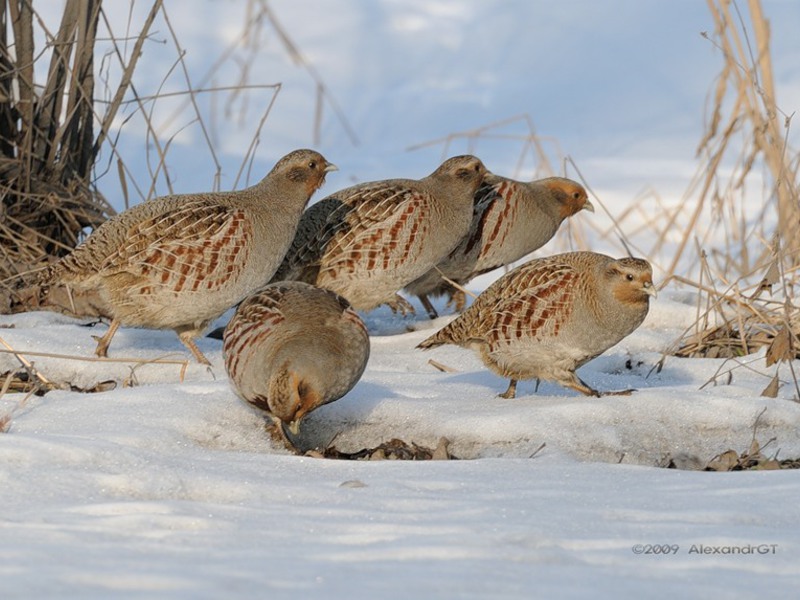
In winter and autumn, they lead a gregarious lifestyle. In spring, during the breeding season, grey partridges pair off. Each pair has its own nesting area.
Classification
There are three species in the genus of grey partridges:
- Gray,
- Bearded,
- Central Asian.
The grey partridge and bearded partridge are very similar in appearance, which is why they are often lumped together. These species have fallen victim to hunting and agriculture, leaving only a few left.
The Central Asian partridge lives on the vast territory of the Tibetan PlateauIts plumage is significantly different from that of its relatives: the front of its head is white with two distinctive bright black spots, and its chest is striped darkly. The bird's population is stable, and its numbers are not declining.
Nutrition
 During the summer, the bird feeds primarily on plant matter. Autumn is harvest time, so partridges migrate to grain fields, then move on to beet and corn fields, where they also feast on sunflower and flax seeds. Weed seeds are also consumed. In late autumn, they feed on fruits and grains found in meadows, steppes, or weeds. Juveniles feed exclusively on insects.
Flocks of partridges make early morning feeding flightDuring the day and evening, birds hide in places inaccessible to predators, such as thickets.
Reproduction
Grey partridges are monogamous. The male takes an active part in raising the young. The mating season is accompanied by a distinctive call that carries over a wide area. The partridges use this call to attract the attention of their peers and also to take flight.
The nest is a small depression in the ground. The birds place plants at the bottom of the hole. The nest is about 20 cm in diameter and approximately 7 cm deep. The nest is built in May. The chicks hatch in early June. The pair builds their nest in a secure location, hidden from predators. They build it in dense thickets, tall grass, or forest edges. The clutch consists of 10-25 grayish-brown eggs. The eggs have pointed and blunt ends. The female lays eggs at intervals of one day. She incubates the eggs for approximately 23 days, leaving only briefly to feed. The male remains nearby at all times, guarding the female and the clutch. In case of danger, both leave the nest, but always return after the danger has passed.
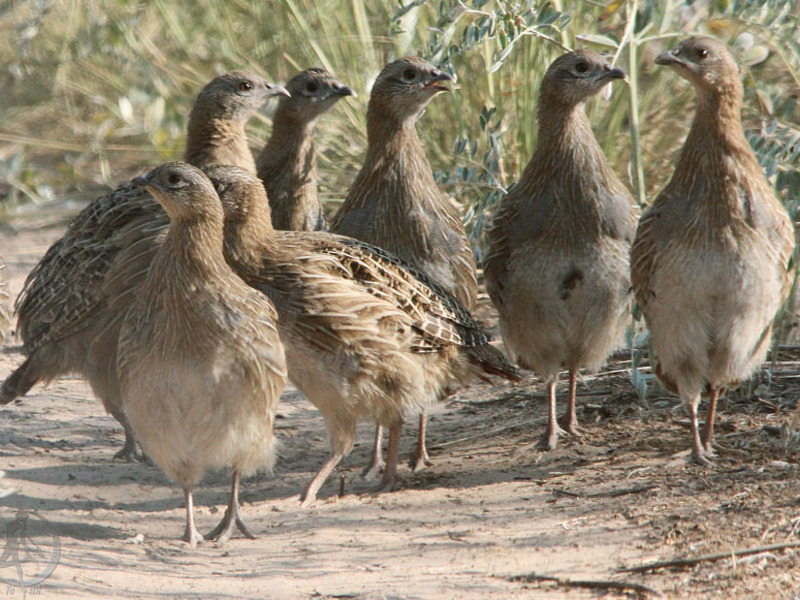
The offspring hatch in one day. and immediately begin to lead an active lifestyle, even before they have time to dry off. They can already follow their parents for distances of up to 200 meters. The chicks reach adult size by the age of one and a half months.
At one week old, they can fly briefly, and by 14 days, they can cover long distances in the air. If one parent dies, the other parent takes over the care of the family. If both parents die, the entire brood is cared for by another family, which is always ready to welcome new members.
When the family is threatened, they react in different ways: they may take flight, fly a short distance, and then descend. If a predator threatens, the family members take off and break into groups, then hide in the bushes. When the predator retreats, the male regroups the chicks.
Enemies of the partridge
 The natural enemies of the bird are: kites, gyrfalcons, owls, foxes, ferrets, arctic foxes, manuls and many others. Therefore, the partridge's lifespan is short—it barely survives to four years of age.
The grey partridge is widespread across a fairly large area, remaining at home for the winter because it does not tolerate forced migrations well. It nests in dense grass and bushes, hiding from predators. Raising its numerous offspring falls to both parents; the chicks grow quickly and become strong, as otherwise the population would quickly collapse due to the partridge's many enemies.