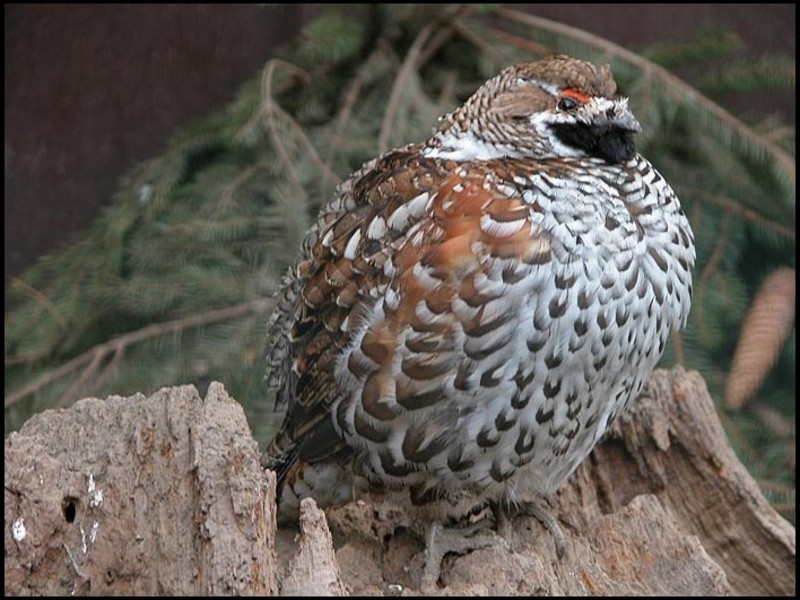
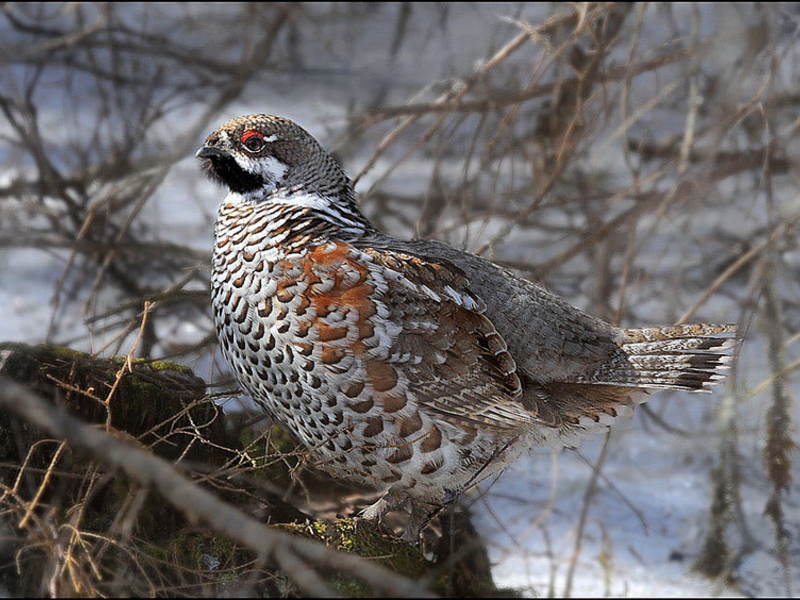
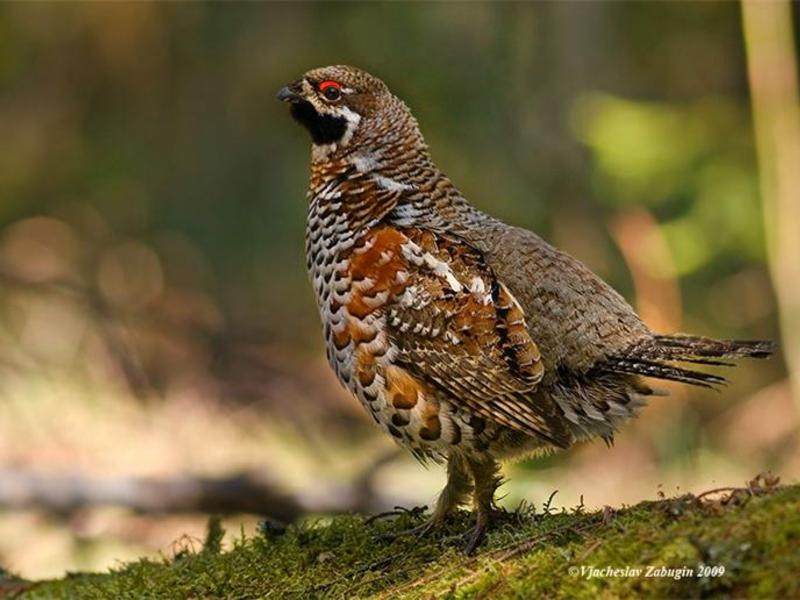
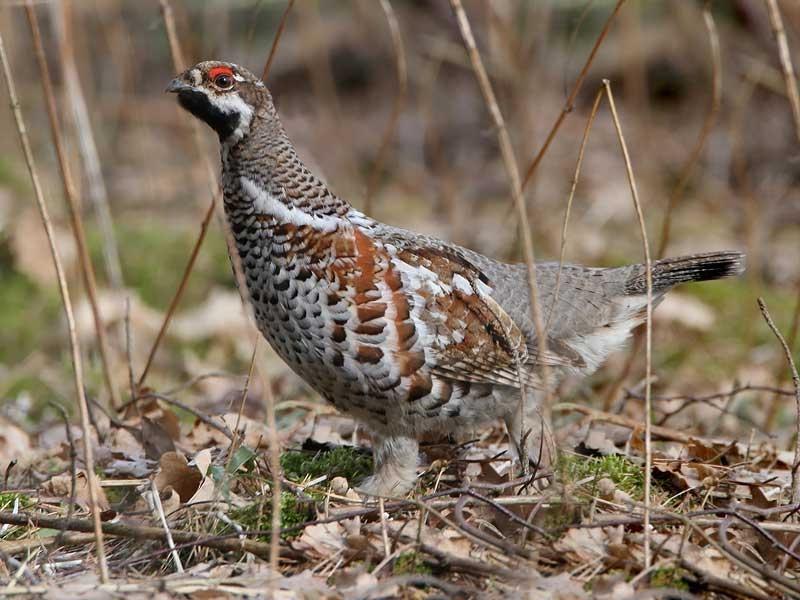
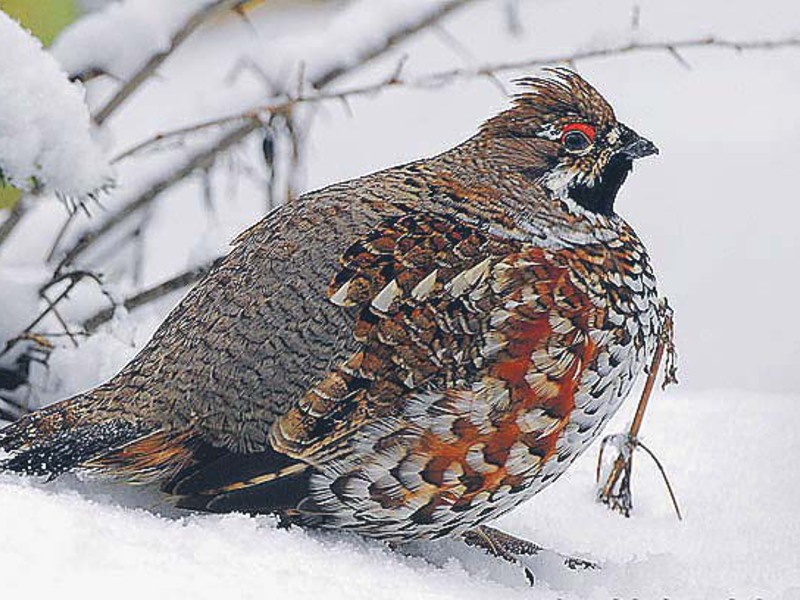
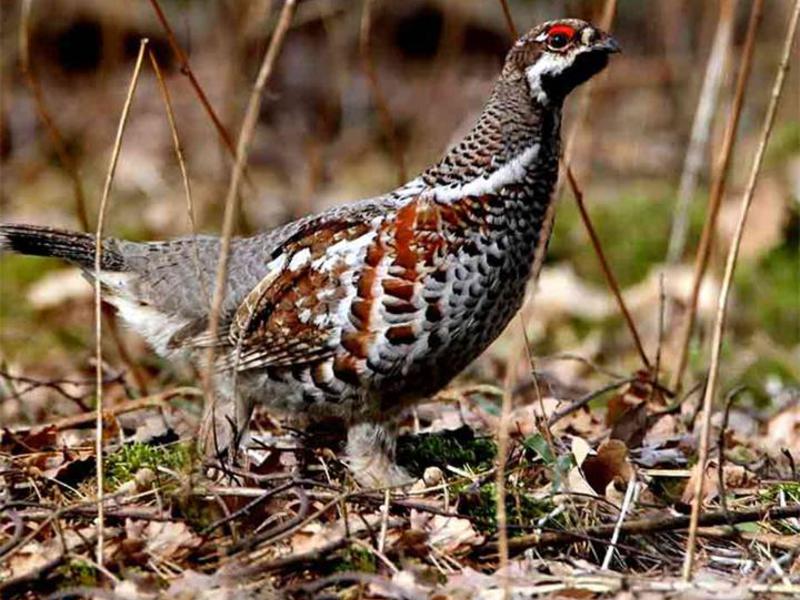
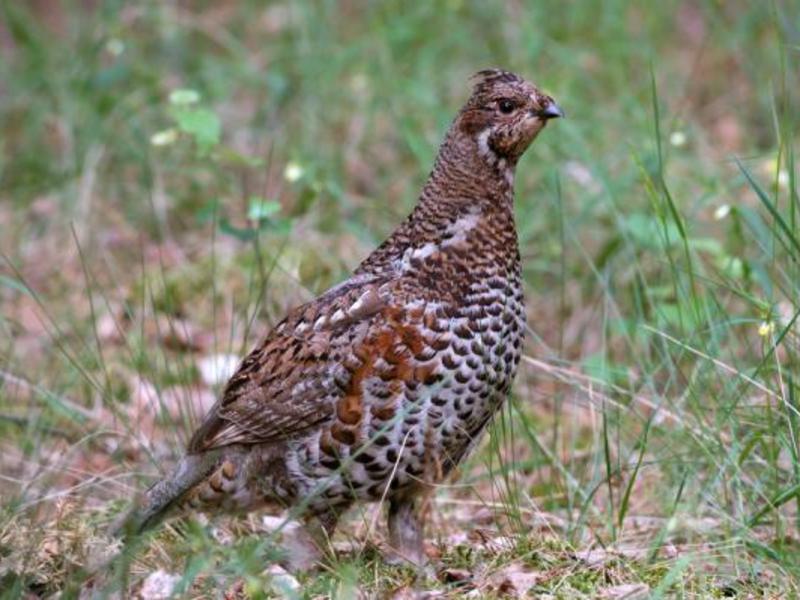
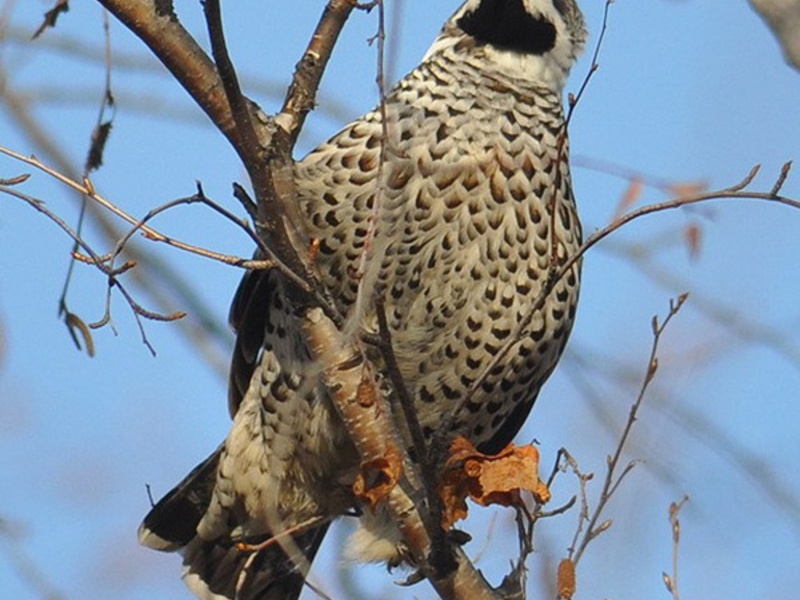
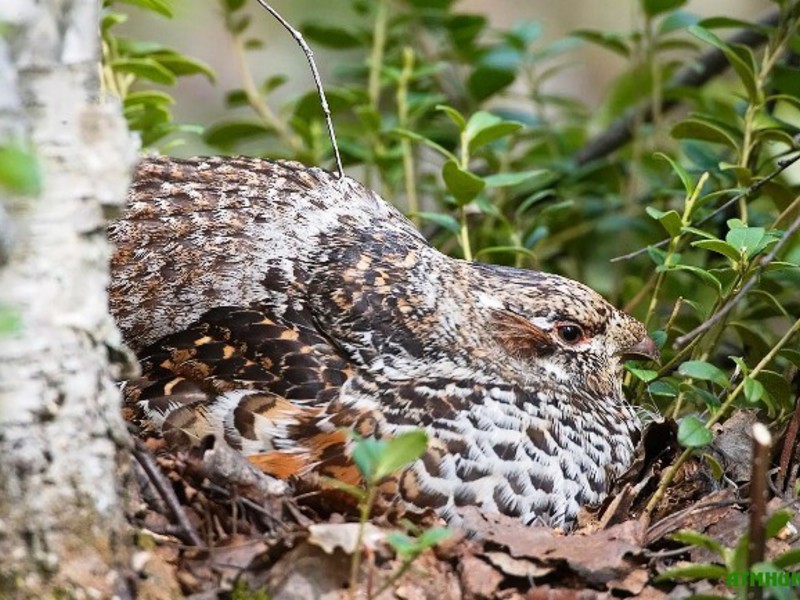
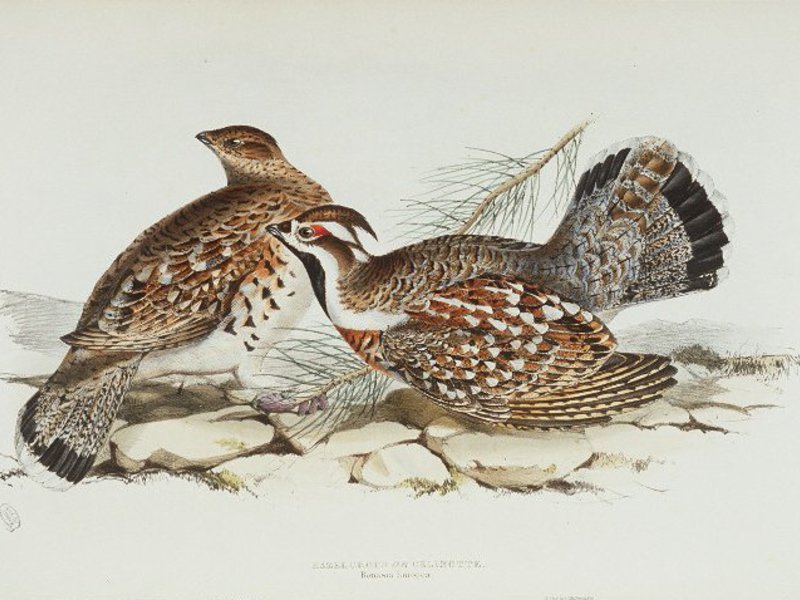
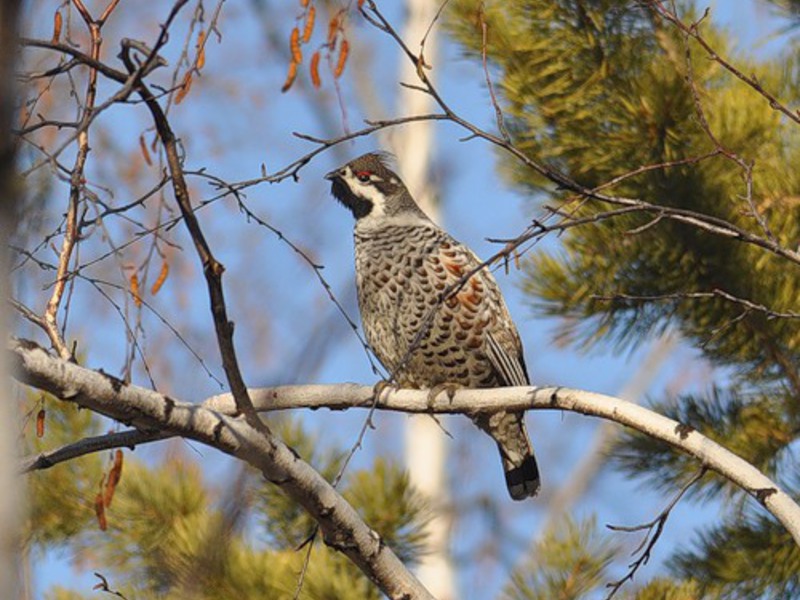
 The hazel grouse is a well-known forest bird found throughout Eurasia. It is currently protected by the state and is listed on the IUCN Red List of Threatened Species.
The hazel grouse is known to belong to a separate genus, Bonasa, which is part of the grouse family. This bird is small, slightly larger than a pigeon. Its weight can range from 300 to 500 grams.
Content
General characteristics
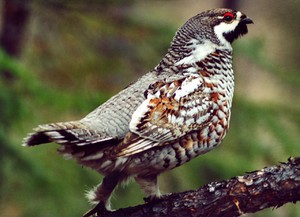
The plumage is a rufous-gray color with slight ripples across the body, while the chest and belly are black with white edges. The male differs from the female in that he also has a black spot on his throat.
As soon as this bird is disturbed a little, then the feathers on his head immediately begin to rise short crestWhen a hazel grouse takes flight, its black tail, edged with a small white stripe, immediately catches the eye. It begins its flight noisily, but lands very quietly, practically soundlessly.
Hazel grouse usually live in pairs, but in late summer, small flocks begin to gather. Spring is the time for the males to sing, flying from tree to tree, attracting the attention of females. However, he never forgets to be cautious.
Distribution of hazel grouse
The hazel grouse is widespread, but prefers to nest in forests. It can be found in the following areas:
- Europe.
- Asia.
- North Africa.
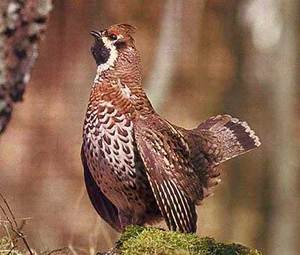 The hazel grouse is not afraid of the cold at all., so they easily establish themselves even within the Arctic Circle. In the northeast, this bird's habitat is confined to large river valleys, but flocks are isolated from each other. In the east, they have not spread beyond the Sea of Okhotsk and the islands of Hokkaido and Sakhalin, but have spread throughout the forests of China, Altai, Mongolia, and even southern Western Siberia.
In the south, hazel grouse can be found not only in forests but also along black riverbeds, which are rich in shrubs. In the west, however, they inhabit only Polish forests, as well as the Alps, Carpathians, Rhodopes, Jura, Vosges, Ardennes, and Black Forest.
Judging by the fact that he does not choose his habitats and any specific living conditions in them, hazel grouse is unpretentious, and will thrive in any type of forest, regardless of its location. However, this bird prefers moist areas, such as well-drained forest soil, a nearby stream, or a river floodplain. However, it's quite rare to encounter this bird in city parks.
The hazel grouse is not tied to any particular tree: it can live perfectly well in spruce or bamboo trees, in thickets of wild grapes or bird cherry, in willow thickets, in rose hips, larch, alder or other trees.
Types of hazel grouse
There are several species and subspecies of hazel grouse:
- Hazel grouse.
- Severtsov's hazel grouse.
- Collared grouse.
The common hazel grouse is the most common bird in Northern Europe and SiberiaIt prefers to settle either in forests located in river floodplains or in coastal thickets.
The Severtsov's hazel grouse is very similar to the first species. This species was discovered in the 19th century by the explorer N.M. Przhevalsky. It differs only in its darker plumage. This bird inhabits southeastern China and the Tibetan Plateau.
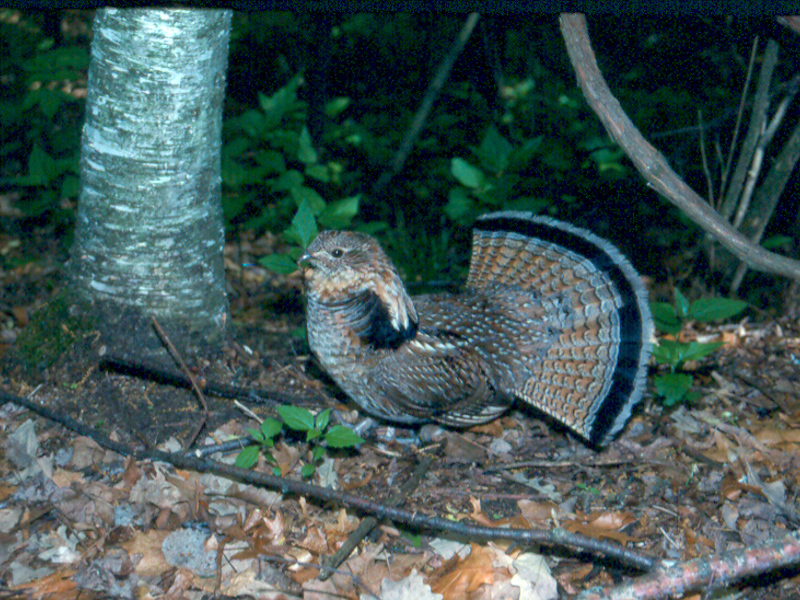
The ruffed grouse, considered the largest of all species of this bird, inhabits North America. This beautiful and colorful bird gets its name from the tufts of elongated feathers that grow along the sides of its neck, like a ruff. When attempting to attract a female during mating season, these bright, shiny black-blue feathers, which can also have a reddish tint, begin to puff out this ruff.
The most common species is the common hazel grouse, therefore It has 14 subspecies:
- Amur.
- Nominal.
- Kolyma.
- Siberian.
- Alpine.
- Other.
Hazel grouse nutrition
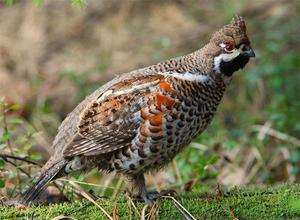 The hazel grouse's diet depends on the season. In spring and summer, it feeds on green parts of different plants and flowers, as well as insects and seeds. In the fall, it feasts on berries and small pieces of fruit. In winter, it has to make do with the remains of shoots, buds from various trees and shrubs, and twigs. Among trees, this bird prefers birch, alder, hazel, poplar, willow, and rowan, as they provide food even in winter. This bird also enjoys berries, such as lingonberries, northern blueberries, and cranberries.
In the spring, hazel grouse get their vitamins from fir needles. In the summer, insects are added to this bird's diet:
- Beetles.
- Ants.
- Grasshoppers.
- Caterpillars.
- Insect larvae.
If hazel grouse live in the taiga, then they happily enjoy pine nuts.
Reproduction of hazel grouse
Males select and defend nesting territories. These birds are remarkable for their ability to form long-term and faithful pair bonds. Mating begins at age one. In early spring, the mating ritual begins, which includes trilling, a display of flight, postures, and flights designed to attract a female. The female responds to all these actions with a short but resonant trill.
After mating, the female begins to build its nest, choosing a variety of places:
- Not to the ground.
- In a shelter near the roots of fruits.
- Under a pile of branches.
- In the core of old stumps.
The female lays small, yellowish, speckled eggs, ranging in number from 7 to 9, in a shallow hole lined with dry plants. The female not only lays the eggs but also sits on them for 20 days, leaving only to forage. By the end of May, the chicks hatch, and the female leads them from the nest into the forest. On the second day, the chicks flutter above the ground, and on the third, they are already pecking at food.
Hazel grouse lifestyle
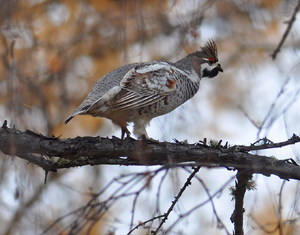 Hazel grouse live in flocks and are considered sedentary birds. This bird is active appears at dawn and before sunset, and they spend the rest of their time in trees. In summer, they can spend entire days foraging.
In winter, its behavior changes slightly, although this bird is well adapted to harsh winters: at this time, its plumage becomes denser, protecting it from the cold. They move little, preferring to stay in pairs, which they form in the fall. However, they still sometimes suffer from cold and hunger. Hazel grouse roost in trees in winter, descending to the ground only to burrow into the snow to hide from the cold. They emerge from snowdrifts only in the morning to search for food. Snowdrifts not only help them hide from the cold and enemies, but also allow their body heat to thaw their crops, where food may be hidden.
The holes in the snowdrifts are located one from the other at a distance of 2 to 8 metersTo make a hole like this, the hazel grouse first presses down the snow with its body weight and then begins digging. Every 20 centimeters, it breaks through the snow ceiling and looks around. Sometimes the bird makes five such holes before settling in for the night. The bird uses its legs to dig, but can later use lateral movements of its wings to help.
A snow drift can take many different forms:
- Rectilinear.
- Zigzag.
- Horseshoe.
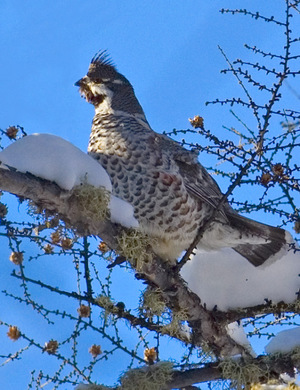 The hazel grouse sometimes spends time in the snow 19 hours a dayThis bird has been known to spend up to 23 hours in snowdrifts. It dives into the snowdrift in the same spot every time. This spot is easy to find in winter, as there is usually a lot of bird droppings around the burrow.
When the burrow is finished, the hazel grouse presses its head into the entrance with snow. The temperature in this burrow remains at 4-5 degrees Celsius. However, if the temperature suddenly rises, the hazel grouse immediately punches a hole in the ceiling, and the temperature drops immediately. When the weather warms, the hazel grouse immediately leaves its burrow to prevent its plumage from getting wet. During a thaw, when the snow turns into a solid crust, the bird can no longer burrow and often dies.
But this is not the only reason why hazel grouse die; predators often destroy them. The following enemies live near this bird:
- Marten.
- Sable.
- Fox.
- Wolverine.
- Ermine.
- Goshawk.
Hunters also cause great damage, for whom hazel grouse are sources of tasty meat, and also an excellent bait for catching fur-bearing predators. Hunting them is currently prohibited, and in some areas where the bird's population is sharply declining, forests are being planted specifically to create a safe and favorable habitat for them.