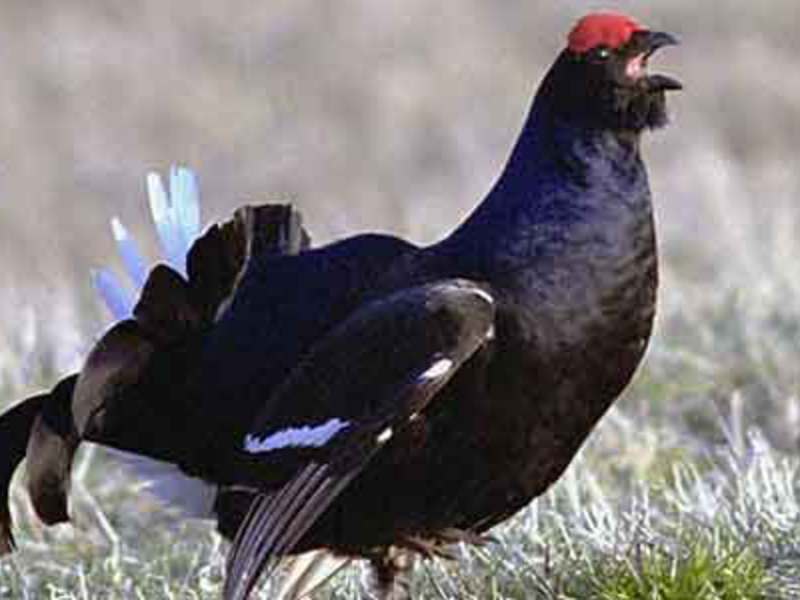
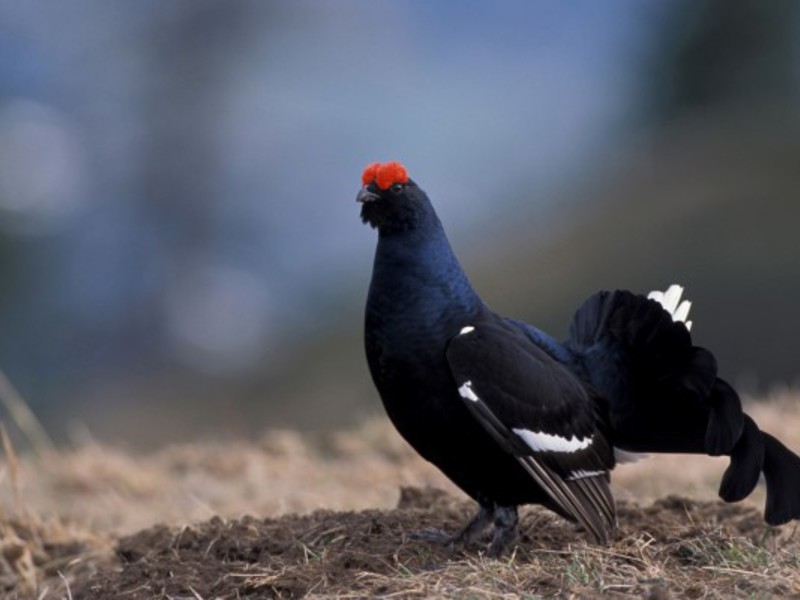
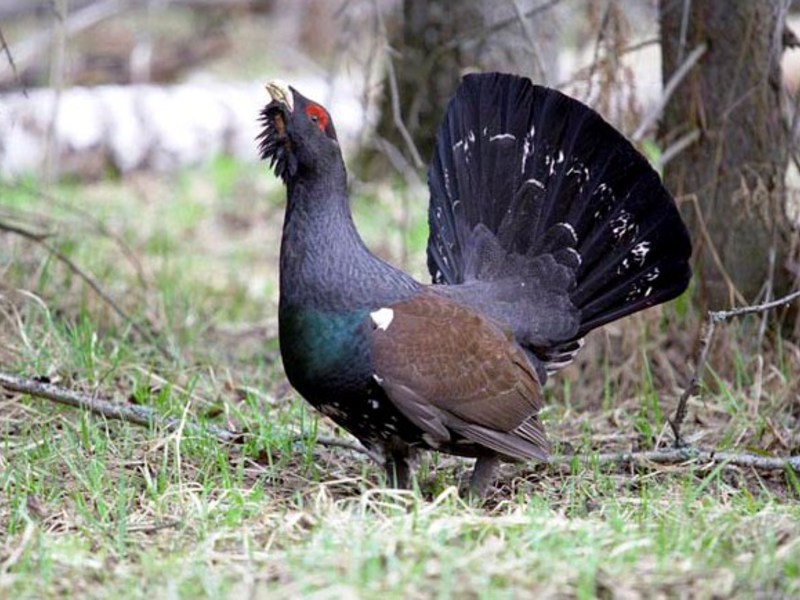
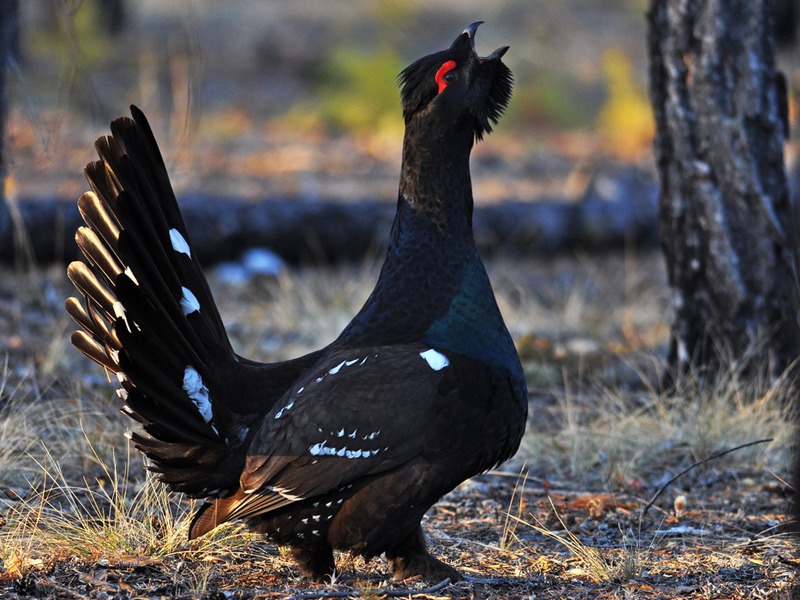
 A favorite of hunters, the black grouse lives in the forests of North Africa and Eurasia. Hunters call this large bird "black grouse," "birch grouse," "field rooster," and "black grouse." The female also has affectionate names: "black grouse," "field grouse," "hazel grouse," and "sorceress."
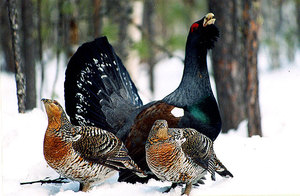
The sexes of this species are completely different from each other. The relatively small female is brown with a rufous tint and black speckles. She has a straight tail and white undertail coverts. She can weigh up to one kilogram.
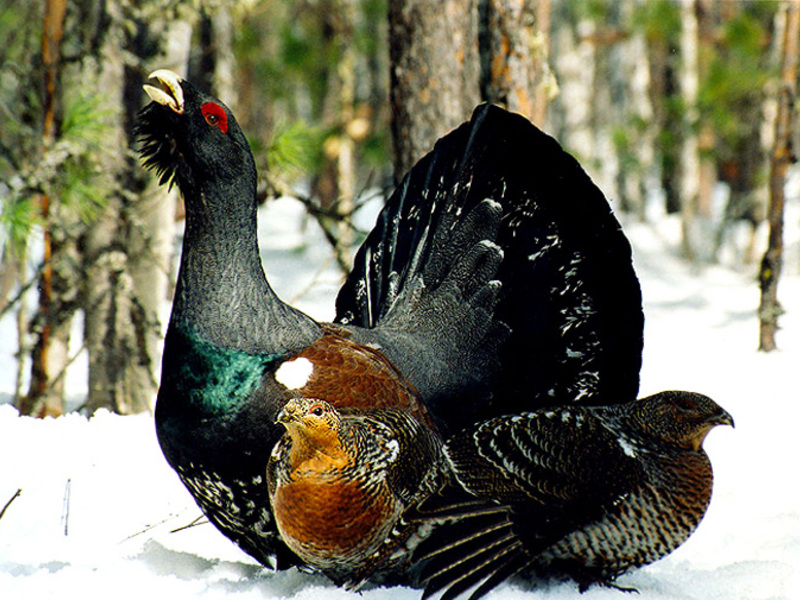
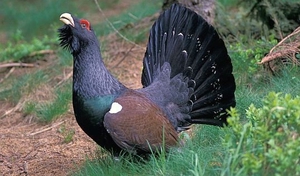
The black grouse is often confused with the wood grouse. They can be distinguished in flight. The female wood grouse is distinguished from other birds by its white underwings, which are visible only when the wings are spread.
Appearance, habitat, photo
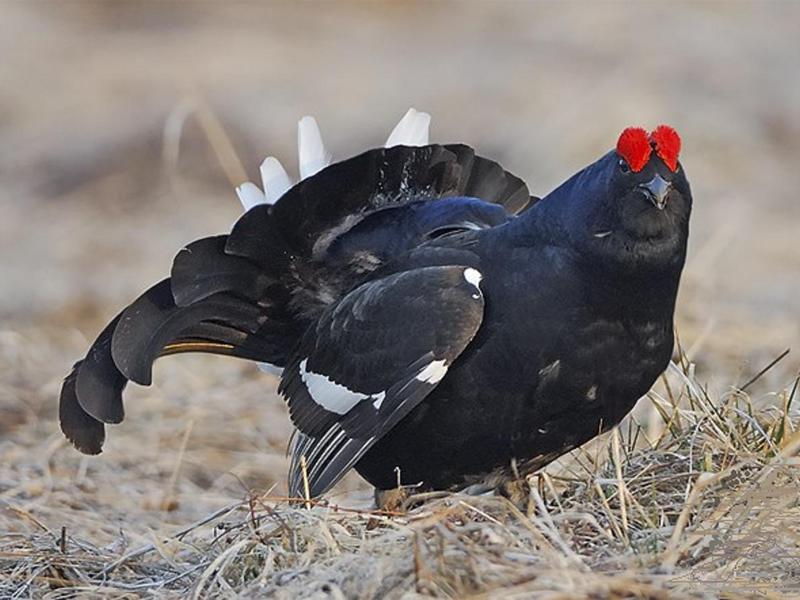
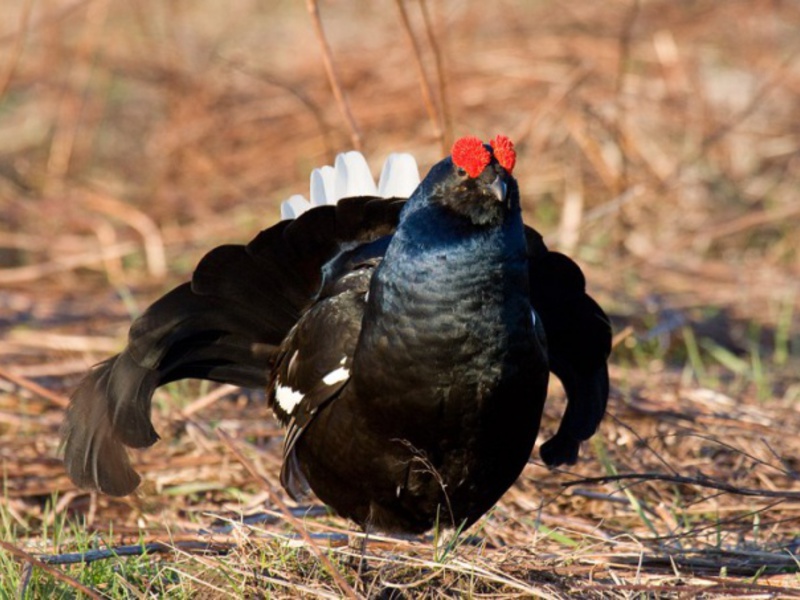
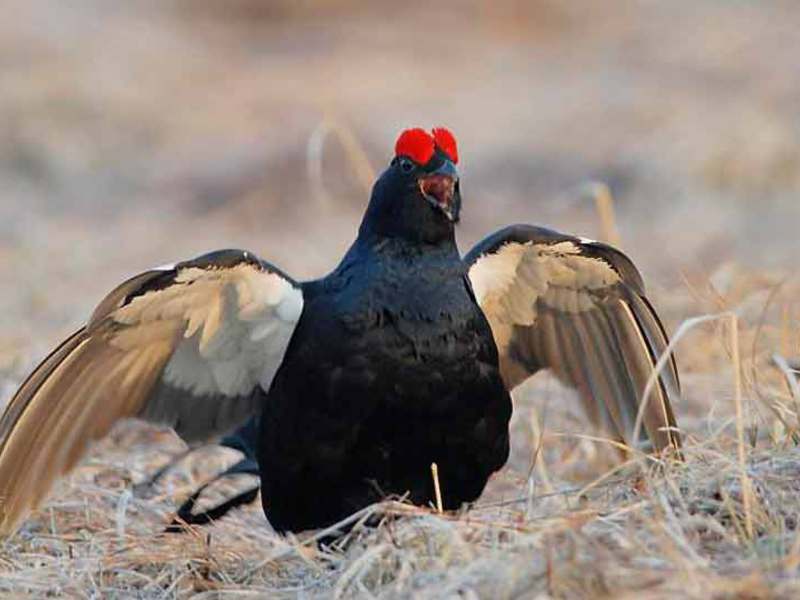
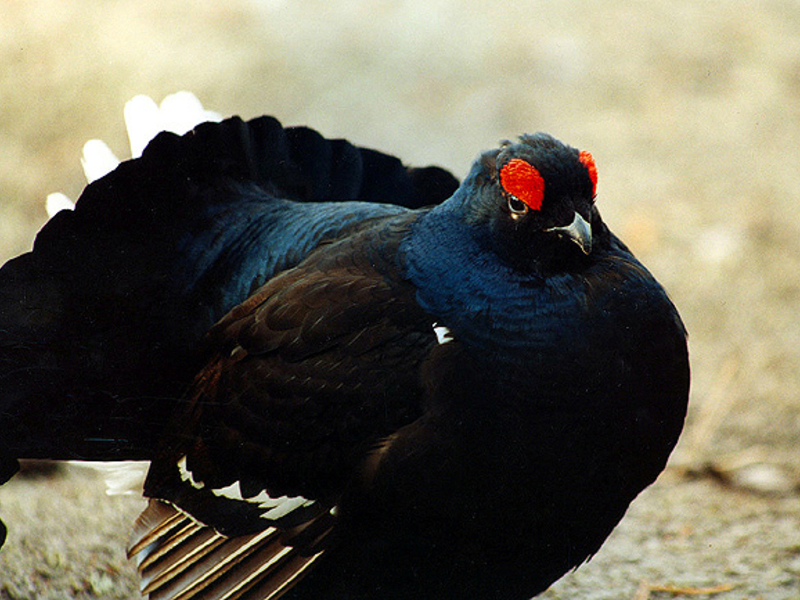
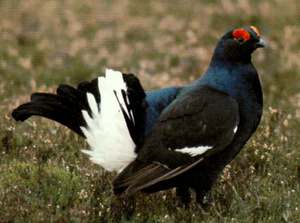
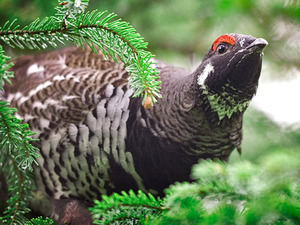
The appearance of a noble male differs:
- black plumage with a blue-green tint;
- bright red eyebrows;
- lyre-shaped tail;
- white "mirror" on the wings;
- weighing up to one and a half kilograms and measuring 60 cm;
- small head;
- short and strong beak;
- long feathers on the wings.
Many people recognize the black grouse's call. During the mating season, it makes a long, loud, gurgling sound. Females cackle, drawing out the notes at the end of their song.
Types of black grouse
On the territory of Russia several species of black grouse live there, but only two are the most famous:
- The black grouse, which lives throughout almost the entire country, right up to the Arctic Circle.
- The Caucasian black grouse lives in the Caucasus. It differs from the black grouse in its smaller size, strongly curved tail, and scant plumage. This bird is endangered, so it is listed in the Red Book.
The largest representative is the sage grouse, which lives in South America, reaching 75 cm in size and weighing four kilograms.
Habitat in the wild
 Birds prefer to inhabit birch forests located near bodies of water. They can be found in open areas, undergrowth, or areas overgrown with shrubs.
In nature black grouse are very active They roam in mixed flocks, which can number up to 200 individuals. The birds are most active in the morning or before sunset during the warmer months. During the day, they perch on branches and bask in the sun.
Black grouse are sedentary. They fly only when necessary. The rest of the time, they walk on the ground, where they move quickly even in the densest brush. This is where they find food and breed. They rest on marshy hummocks, under bushes, on the ground, or on thin branches. While searching for food, they cling tightly to a branch, sometimes even hanging upside down.
Black grouse take off noisily and quickly. Their flight is swift and maneuverable, reaching speeds of up to 100 km/h. Black grouse, especially black grouse, have excellent vision and hearing. They are known for their cautious behavior. If threatened, the birds can fly dozens of kilometers.
On frosty days, black grouse emerge from their meadows they only come out to feed for a couple of hoursWhile under the snow, the birds can clearly hear the movements of a lynx and the leaps of a hare. If they hear the crunch of a hunter's skis or the footsteps of a stalking fox, they quickly emerge from the snow, take flight, and disappear. With the arrival of spring, black grouse flock to their lekking grounds. Flocks gradually disperse.
Nutrition
Black grouse feed primarily on plant matter. During the warmer months, their diet includes:
- berries and juicy leaves of rose hips, blueberries, bilberries, bird cherry;
- sedge seeds;
- buds of alder, aspen, willow.
From animal food birds feed on small beetles and insects, which they primarily feed to their chicks. To maintain normal gastrointestinal function, they peck at hard seeds and small stones.
In the fall, black grouse migrate to fields where grain crops were grown. In winter, they feed on birch catkins and buds, and sometimes peck at thin twigs. In extreme cases, they may feed on juniper berries, cones, and pine needles. The birds fill their crops with frozen food and return to the nest, where the food thaws.
Reproduction
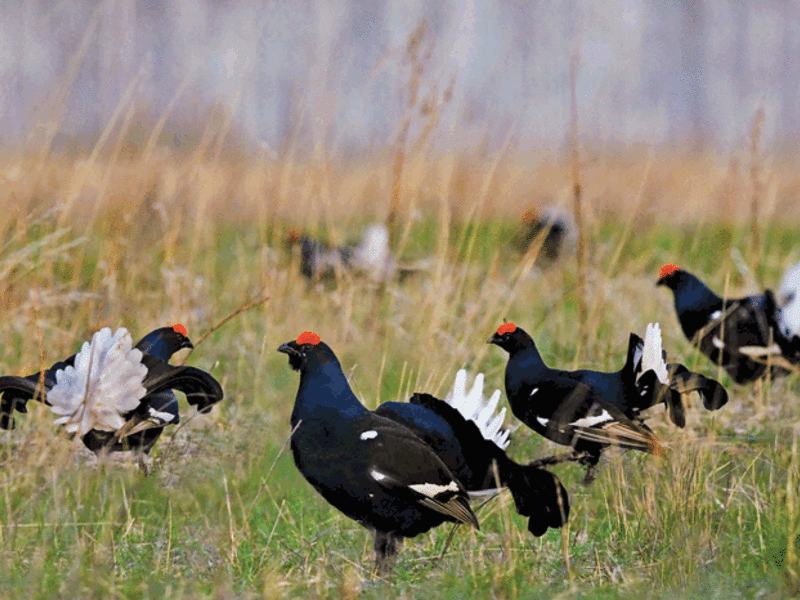
 In the second half of April it begins active mating periodTo do this, males select a territory and defend it from competitors. A lekking site can be a forest clearing, a meadow, a raised bog, or, in early winter, an ice-covered lake.
There are several black grouse per male. Having chosen a territory and settled in, an hour before dawn the black grouse begins to hiss loudly, then switches to babbling. A few hours later, the females arrive, and having chosen a mating partner, they fly to the center of the lek.
During the excitement, which lasts for about an hour and a half, the males murmur loudly, jump, spread their tails, stretch their necks, and circle in place. Conflicts between the black grouse are quite common. start chasing each other and even engage in combat. The fights are fierce, but nothing results in wounds or injuries. The mating activity subsides after sunrise.
After mating, the black grouse's role in reproduction ends. It does not participate in nest building, incubating eggs, or feeding the chicks.
The nest is a depression in the ground lined with last year's grass, twigs, leaves, and feathers. It can be located under the cover of nettles or bushes at the edge of a forest, or in an open clearing or meadow.
 A clutch can consist of 5-13 eggs, which are light ochre in color with brown or tan speckles. The eggs hatch after approximately 25 days. chicks covered with thick downThey leave the nest immediately, following the female. The first few days are the most dangerous for the young. During this time, the female guards them, listening for every sound. If danger threatens, she screams, and the chicks scatter in different directions. Until the danger has passed, they sit quietly in the grass. After 10 days, the young begin to flutter, and within a month, they can fly.
During the breeding season, males remain solitary or in small groups. During this time, they undergo a molt, temporarily losing their ability to fly. This makes the birds especially shy and silent.
In Russia, black grouse are very popular among hunters. Knowing their behavior patterns, hunters hunt with decoys in winter and with dogs in autumn. In terms of the number of birds killed, black grouse are second only to hazel grouse and willow grouse.