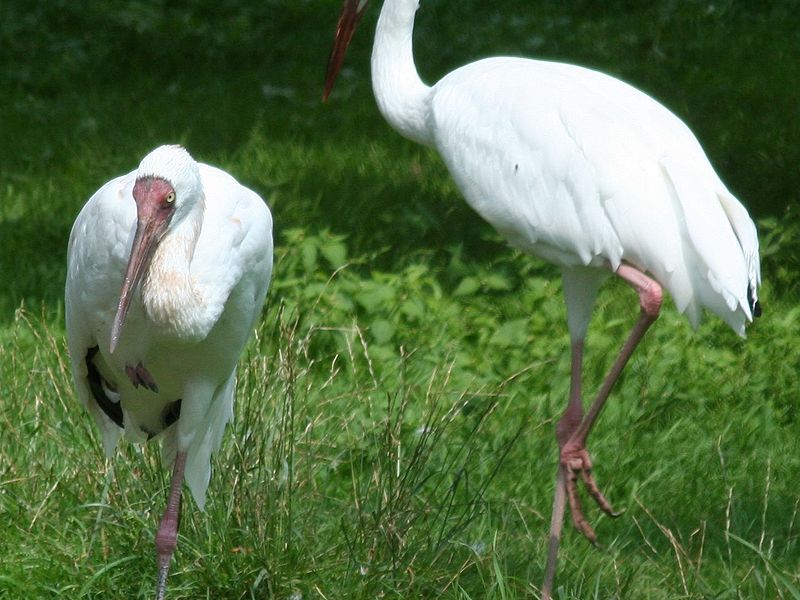
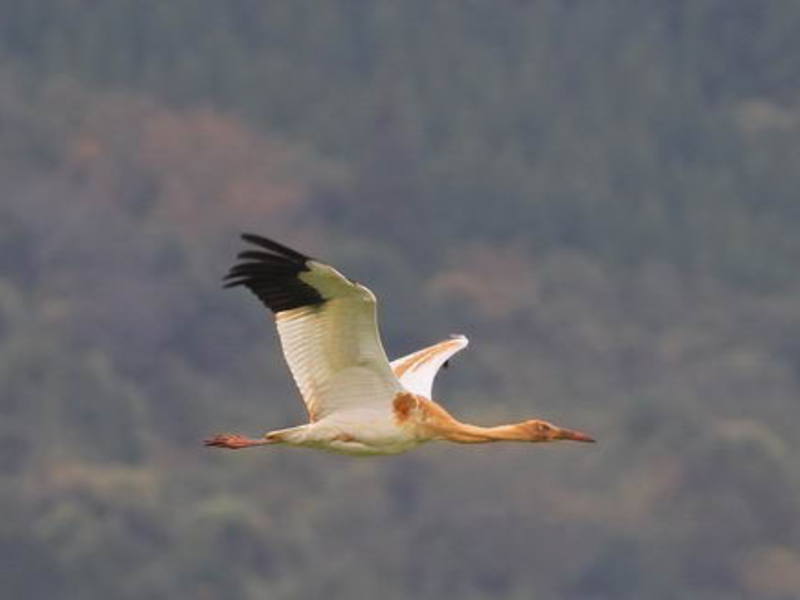
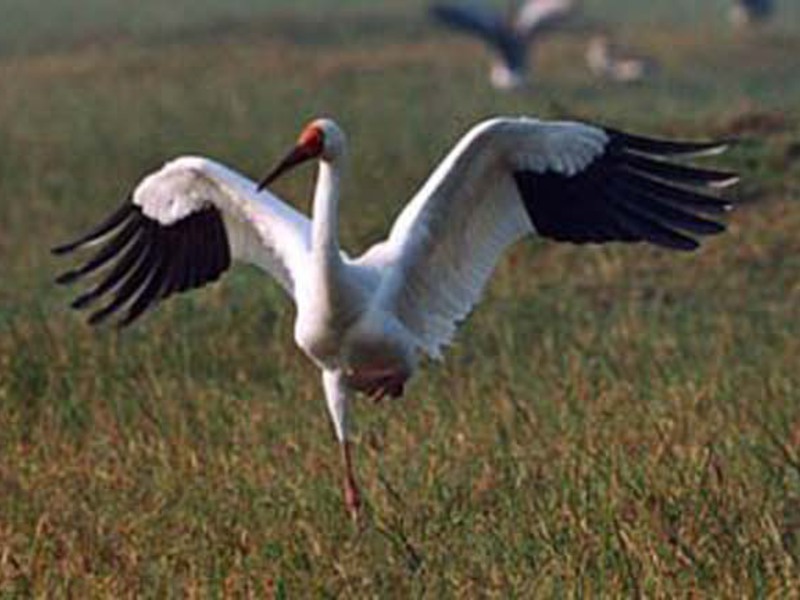
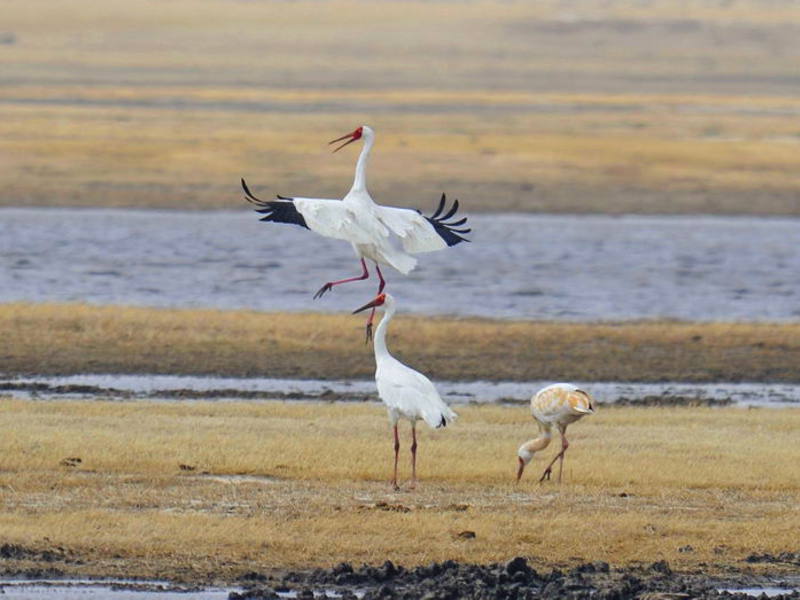
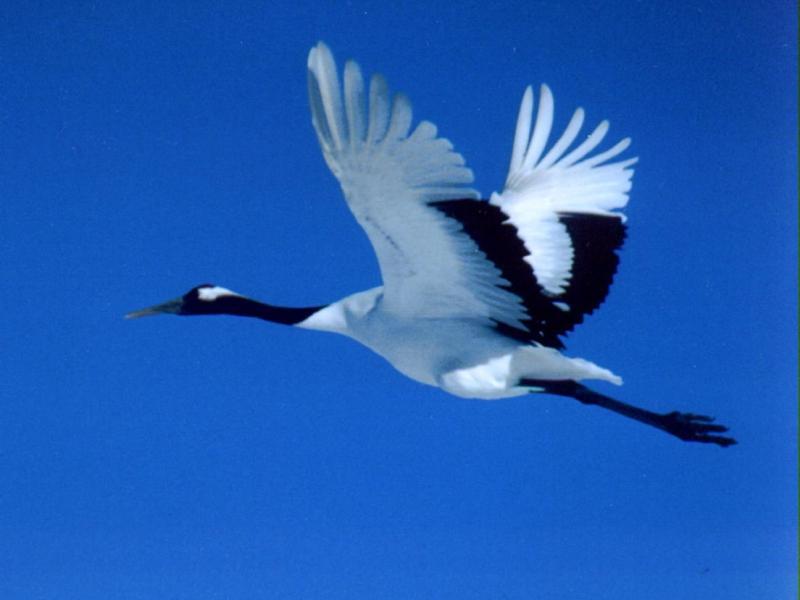
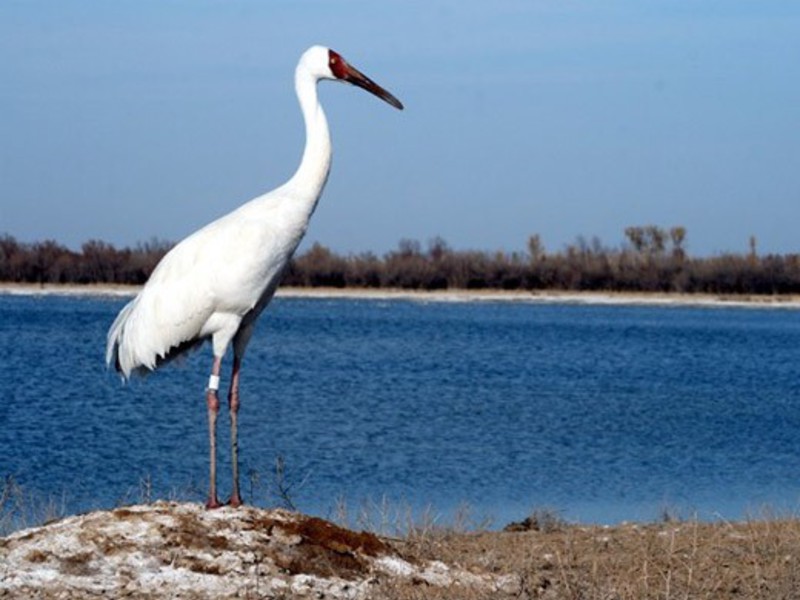
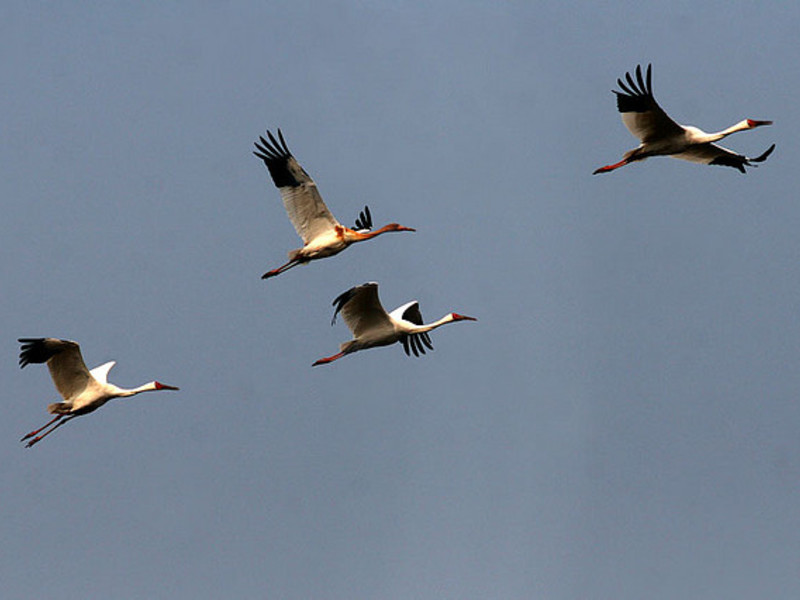
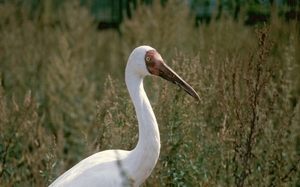
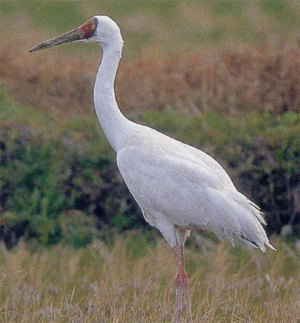
 Russia and its neighboring countries boast some of the most remarkable fauna. Where else in Europe or Asia can one find such a diversity of species? One of the most captivating and memorable birds is the white crane, or Siberian crane. This species reaches a height of one and a half meters, with a wingspan of just over two meters. Its beak stands out against the snow-white feathers with a dazzling red color. All this combined makes cranes one of the most memorable birds.
Content
Habitat of the Siberian Crane
The white crane is rightfully considered a symbol of Russia, as this country is the main habitat of these creatures. This type of dispersal is called "endemic." In other words, it occurs when a specific species or genus of animal lives strictly within a specific geographic area. In Russia, two main populations of Siberian cranesThe first flock lives in the Arkhangelsk region. The second lives in northern Yakutia. These birds spend the winter in the marshy areas of India or China. Incidentally, it is in China that one can find a large number of crane depictions in art.
According to current data, the bird population is under serious threat, as its numbers are approaching critical levels. This is particularly true for the West Siberian flock. Its habitat extends from the Arkhangelsk Region to the Komi Republic, encompassing the Yamalo-Nenets Autonomous Okrug. Currently, only twenty individuals have been spotted in this area, an extremely meager number.
As for nesting sites in Yakutia, between 300 and 3,000 birds are reported there. This is also a critical number. Both flocks share a common habitat selection, which includes various bodies of water and marshy areas. Despite global urbanization, cranes continue to live beyond human reach.
Siberian cranes travel vast distances to winter. Their main wintering grounds are China, Iran, and India. It's noteworthy that these birds are rightfully won the hearts of Asian peoples. That's why images of cranes can be found on household items.
What does the bird look like?
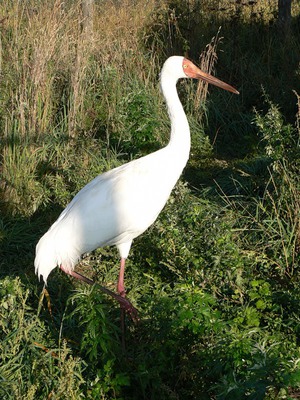 It's precisely because of its memorable appearance that the crane has such a lasting impact on people's hearts. It's hard to miss such an exotic companion in nature.
- The bird is large, reaching a height of 140 cm;
- The wingspan is more than two meters;
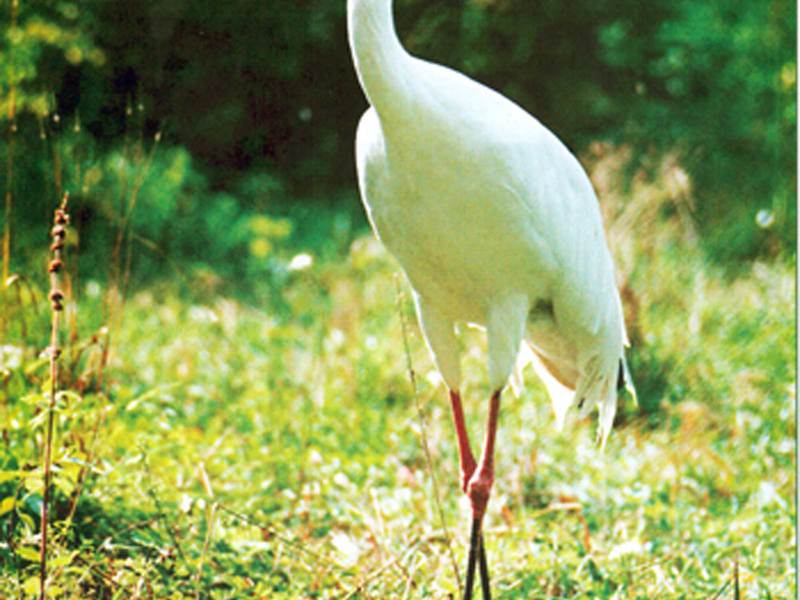
- All white plumage;
- The beak and muzzle are red;
- There are no clear differences between males and females;
- Long red paws;
- The bird's weight reaches nine kilograms;
- The chicks are reddish in colour when hatched;
No less remarkable is the croaking of cranesIt immediately attracts attention and makes people look up to the sky, searching for a wedge of cranes. The cranes' special dances, which they perform when searching for a partner to build a nest and incubate their eggs, are also memorable.
Features of the habitat
Given that Siberian cranes live in a limited geographical area, the question arises: why is this? The fact is that Siberian cranes are more demanding of their habitat than any other bird. Their unique body structure, with long legs and a large beak, favors living in bodies of water. And not in flowing rivers, but in marshy ponds. These legs allow them to easily navigate sticky bottoms.
They are afraid of humans and may abandon their nests upon seeing one. Therefore, nesting sites are protected and human presence there is prohibited. Siberian cranes have a distinctive call. Its silvery, clear, and drawn-out sound can be heard over large areas.
Nutrition
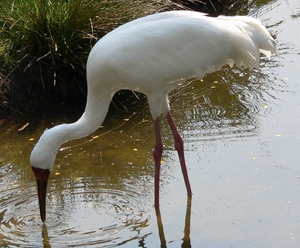 As a rule, Siberian cranes eat throughout the day. They consume both animal and plant foodTheir long legs don't get stuck in the marshy bottom, giving them maneuverability. The structure of their heads allows them to easily submerge themselves underwater and collect plants. They use their beaks to strain seeds from the water. They also eat tubers, rhizomes, and berries.
During the mating season, like other birds and animals, Siberian cranes feed on protein. During this time, they catch rodents, frogs, insects, and small birds. Interestingly, Siberian cranes rarely eat fish. During winter, they eat mainly plant matter.
Interestingly, cranes never fly into agricultural fields. This makes them a favorite among villagers.
Reproduction of Siberian Cranes
 Bird reproduction is full of curious features. A distinctive feature is monogamyBirds form pairs at six to seven years of age. It is at this age that individuals reach sexual maturity. Another unique phenomenon: the Siberian crane's mating dances.
Two birds perform high leaps and runs in unison with outstretched wings. Watching this phenomenon is an incomparable pleasure. If the female and male agree to mate, a sort of "engagement" begins. The two birds stand side by side, heads thrown back, and sing a unique song. The male always spreads his wings, while the female keeps them folded. Then the pair begins another dance, with bows and tossing twigs and flowers into the air.
Choosing the right location for the future nest is also important. It is built directly in the water. It must be difficult to access. This is how the cranes protect their future offspring from predators. An additional requirement is ideal visibility in a good area. The most common locations preferred are in the taiga or tundraThe nest itself is built at a depth of up to forty centimeters, rising 15 centimeters above the surface. Sedge stems are used as construction material. Remarkably, both the male and female participate in nest construction. The stems are simply piled up and compacted tightly, then a depression is made for the eggs.
Typically, a Siberian crane pair lays two eggs. They are gray with small speckles. They are laid a couple of days apart. Under unfavorable conditions, only one egg may be laid. Incubation lasts approximately 28 days. During this period, the female sits on the nest, while the male protects her and brings her food.
Unfortunately, the extreme aggression of the chicks is one of the reasons for the critical numbers of Siberian cranes. Typically, the stronger chick simply kills his weak brotherIncidentally, nature has come up with an excellent solution to this problem. The first chick is taken by one of the parents and raised for a month, after which the family is reunited. By this time, the birds' aggressiveness subsides.
There is no detailed data on the Siberian cranes, as observing them is very difficult.
Threats to white cranes
What is the reason for this? small number of species? A number of factors.
- Low percentage of individuals fit for reproduction;
- Fratricide of chicks;
- Parental anxiety. At any danger, they may abandon the nest and leave their chicks to the mercy of predators;
- Drainage of swamps and oil extraction, which degrades the habitat;
- Although hunting these birds is prohibited in Russia, it is permitted in other countries.
 Without government action, white cranes risk becoming extinct. Therefore, since the early 1990s, a number of conservation and population-increasing measures have been undertaken. One of the most well-known projects Flight of HopeUsing special hang gliders, it was planned to send the Siberian cranes to winter in other countries. It was also planned to pair them with Eurasian cranes, but unfortunately, the latter did not accept the "outsiders."
Additionally, artificial breeding of Siberian crane chicks has been introduced. Data has shown that 20% of these individuals eventually successfully become part of the wild Siberian crane population. Some might consider this a small number, but considering that only 30% of chicks initially survive, it's not so bad.
Esotericism and the Siberian Crane
Due to its unique appearance, the Siberian crane has long been part of art and mythologyThe image of dancing cranes gave rise to a large number of sacred beliefs. For example, many ancient peoples believed that the sterkh's union signified a marital union and an improvement in family life. Therefore, depicting them on household items became a valuable tradition.
By the way, a fun fact: during the nesting period, the Siberian crane sleeps for a maximum of two hours.
The Siberian crane is especially revered in China. It is considered a messenger between Heaven and Earth, and its snow-white plumage embodies Yang energy. It is believed that the Siberian crane carries the soul of the deceased to Heaven on its back. Taoist monks were especially honored. After death, they transformed into cranes.
Incidentally, it's believed that "firebird" originally referred to the Siberian crane. It was a good omen to see cranes flying in the spring. It was also considered very lucky. see their dancesThanks to its long beak, the Siberian crane is rightly considered a phallic symbol.