 Birds are the most mobile of all living creatures on earth. Thanks to their wings, they can easily migrate long distances due to changing weather conditions or environmental degradation. Birds are divided into two broad groups based on their migratory ability:
- wintering:
- sedentary (never leave their inhabited territory);
- nomadic (constantly on the move: moving from place to place, wanting to get food);
- migratory (make constant movements depending on the time of year).
Migratory birds – an introduction
These birds seem to live in two homes: their wintering grounds and nesting sites are different and can be located at a considerable distance from each other. Migration is frequent. takes place in several stages, between which the birds take a break to rest. The list of such birds is quite extensive.
Birds begin to leave their permanent habitats at different times: for example, orioles, nightingales, and swifts begin to pack up their nests in late summer, even though the days are still warm and food is abundant. Waterfowl (swans and ducks) leave their ponds very late, waiting for the first frost.
Reasons for flights
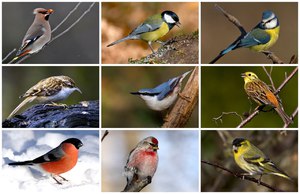 Birds are generally heat-loving creatures, with a high body temperature (often exceeding 40°C). However, their feathers provide good protection from the cold, so they can certainly survive in the cold conditions of a harsh winter. But for this need more foodAnd during the snowy season, food is hard to come by! That's why birds have to leave their nests and fly to distant lands where food is plentiful.
As a rule, tundra and taiga inhabitants are more prone to migration, as the natural conditions are harsher and food is extremely scarce in winter. A pattern has also been identified: insectivorous and carnivorous birds migrate most frequently, while grain-eating birds migrate less frequently. The reason for this is obvious: grain can be found in winter, but even the sharpest beak cannot reach insects from under the snow. A large number of migratory birds are also found among temperate zone inhabitants.
List of migratory birds
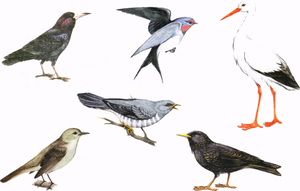
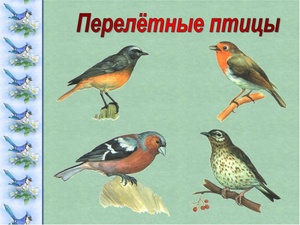
Since there are so many of them, let's imagine list of the most famous representatives feathered world:
- martin;
- lark;
- landrail;
- song thrush;
- wagtail;
- rowan;
- lapwing;
- nightingale;
- oriole;
- robin;
- cuckoo;
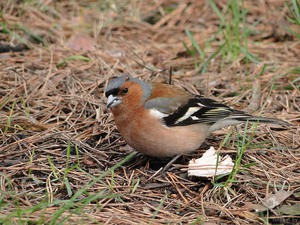
- finch;
- heron;
- woodcock;
- Spotted flycatcher.
It is these birds that leave their nests closer to autumn, in order to return in the spring for breeding.
The buntings are of interest: they used to be sedentary and We ate in the stables all winterHowever, due to the development of urban life and the gradual decline of rural areas, stables are becoming increasingly rare, forcing the birds to adopt a migratory lifestyle. The situation is the opposite with ducks: thanks to humans, urban waterways now have ample food, so they can spend the entire winter there, becoming hibernating ducks.
Types of migratory birds
Among the migratory birds we can highlight two main types:
 Instinctive:
- warblers;
- swallows;
- warblers;
- flycatchers.
- Weather:
- thrushes;
- starlings;
- robins;
- oatmeal.
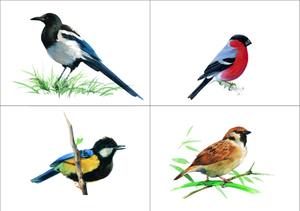 Instinctive:
Instinctive ones are usually insectivorous birds, who leave their nests early, before the cold weather sets in. They seem to instinctively sense the approach of autumn, even though the days are still warm. The shortening daylight hours let them know it's time to set out.
Weather-dependent birds are most often granivorous or have a mixed diet. They migrate when the weather deteriorates significantly, for short distances and short periods.
Why do they come back?
There is no clear answer to the question of what motivates birds to leave warm, food-rich places and return, covering huge distances, to abandoned nests. Scientists have put forward several hypotheses.
- The extended daylight hours cause discomfort to the bird, so it seeks a place with its usual routine.
- In hot countries, despite the abundance of food, conditions are not ideal: due to the warm climate and humidity, birds are attacked by parasites.
- In the tropics, mid-latitude birds have difficulty finding a place to nest and raise chicks.
Crossbill
Many people are interested in the question: is the crossbill migratory? No, it is nomadic species, which is proven by the following signs:
- he makes movements that are not related to seasonality, but in search of food,
- migrations do not occur along a specific route, but in a chaotic manner;
- The nesting area directly depends on the amount of food: pine, spruce, and larch seeds.
Cedar pine grouse, waxwings, and pine grouse behave in a similar manner, which is why they are also nomadic representatives of the bird world.
Black grouse and crow
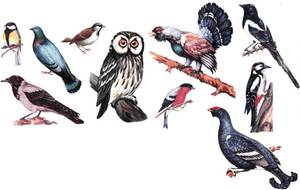 Is the black grouse a migratory bird or not? Despite the harshest cold and food shortages, this bird remains in its habitat and does not migrate. Special adaptations help this wintering bird survive the cold: burrow into the soft snow and warm themselves, as the air in the resulting hole is heated by breathing. For food, the black grouse uses berries and buds previously hidden in its crop.
What about crows? These birds are winterers. They don't migrate, preferring to live in urban environments, feeding on carrion or garbage dumps, and making a living by raiding nests and hunting small rodents. Thanks to their thick plumage and unpretentious diet, crows survive the winter cold quite easily.
Owl
This wise bird leads a sedentary lifestyle, not migrating. During cold weather, the forest provides ample food for the owl, so it easily copes with the challenges of winter. Thanks to this predator's has tenacious claws, the owl can catch small rodents, which are most often in its diet during cold weather.
The world of migratory birds is rich and diverse, many of which lead entirely unique lifestyles. However, sedentary birds are also fascinating due to how they adapt to adverse conditions and survive the hungry winter. One can only marvel at nature's logic and thoughtfulness!