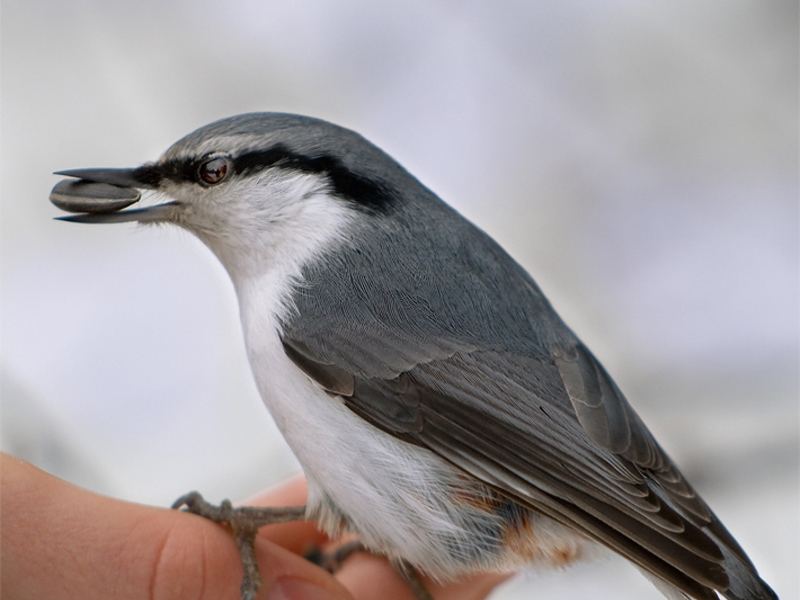
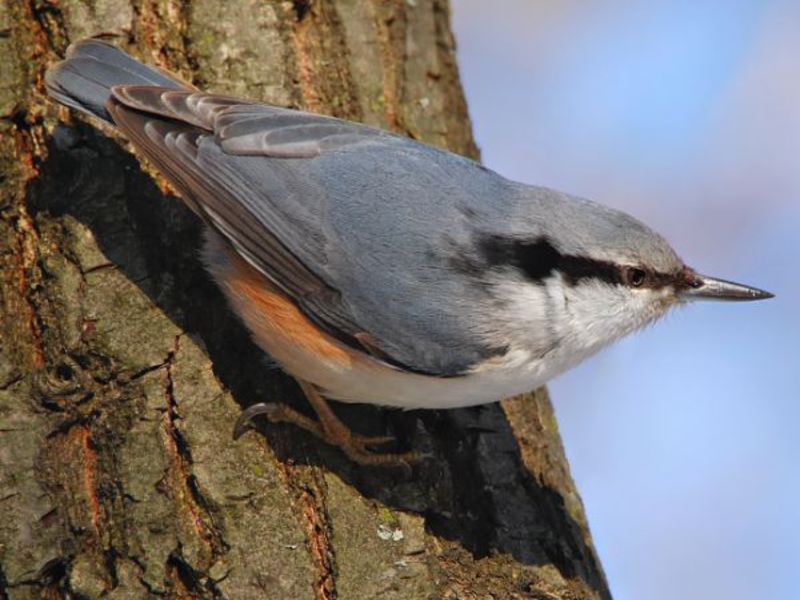
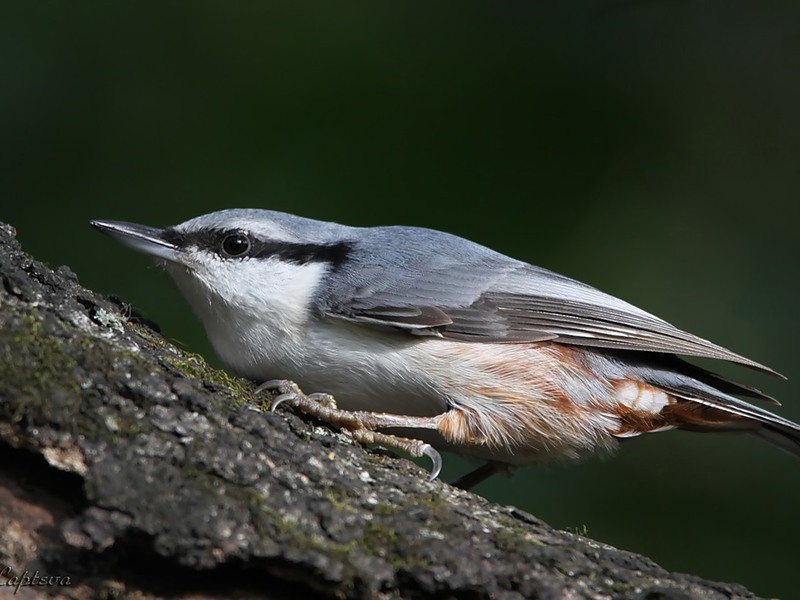
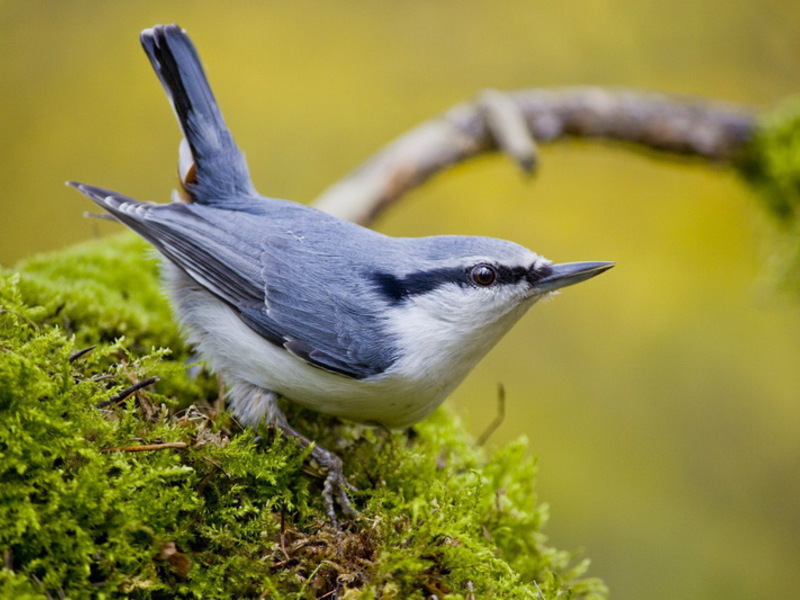
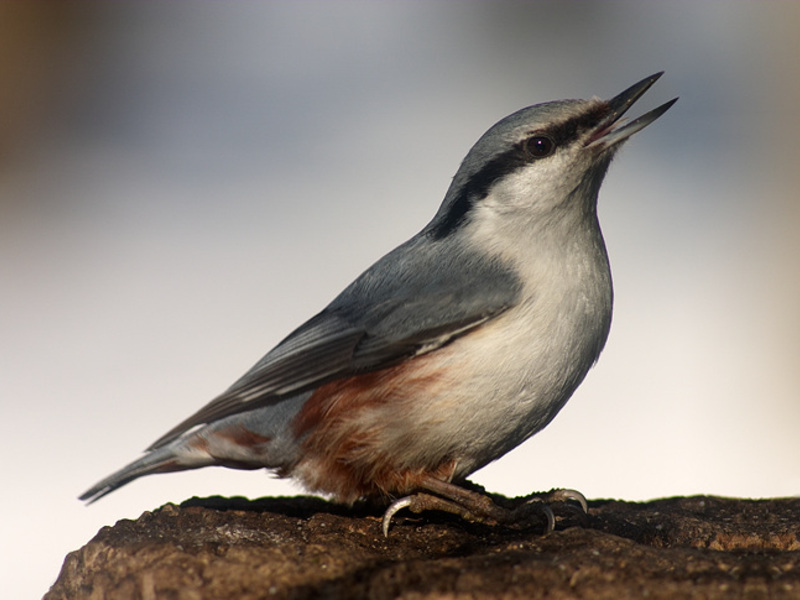
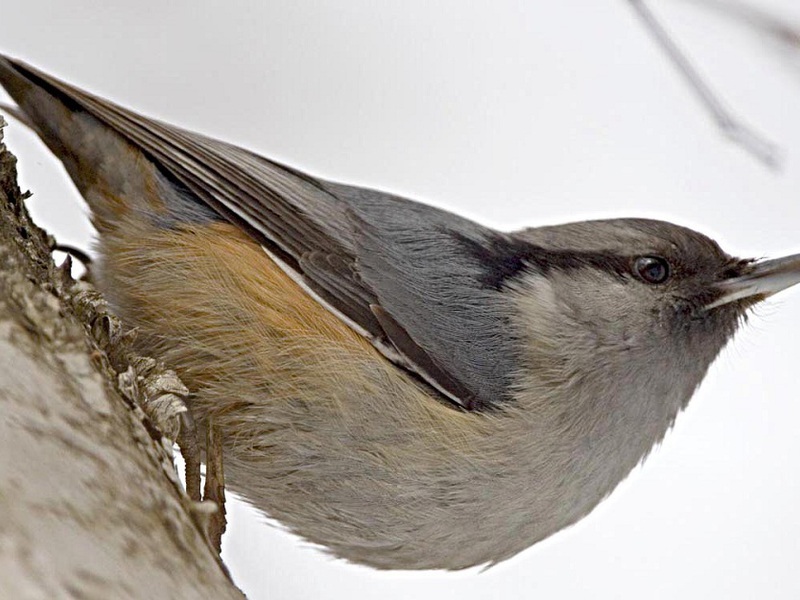
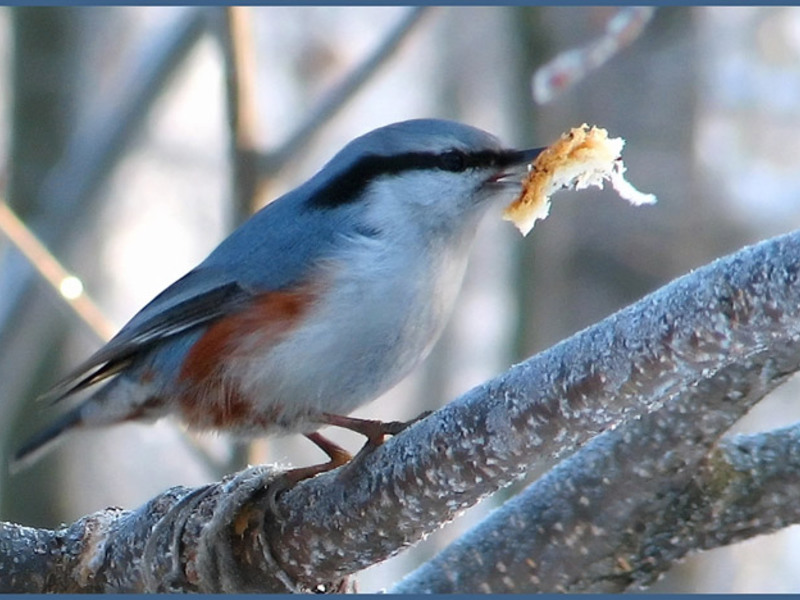
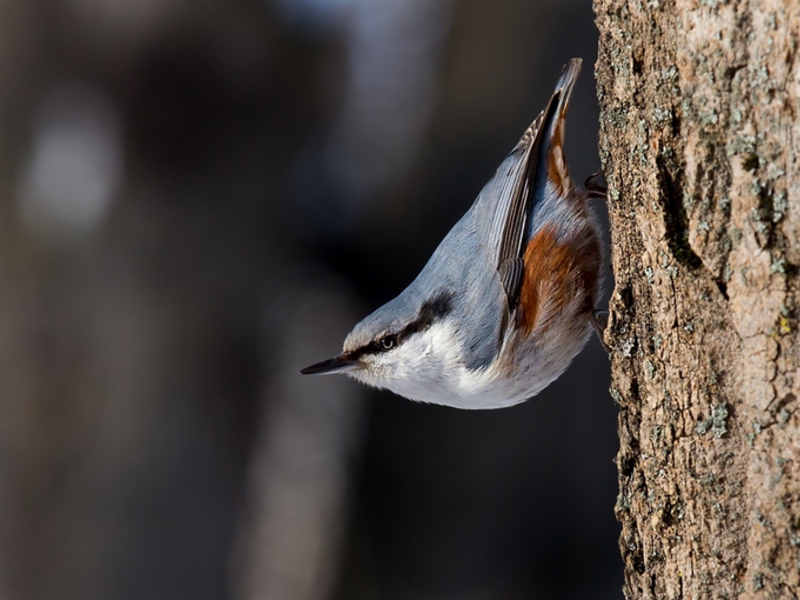
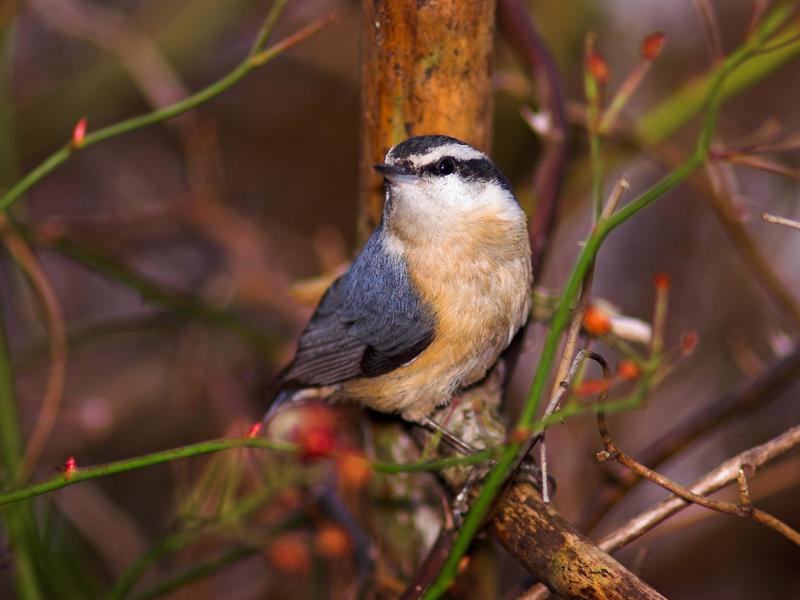
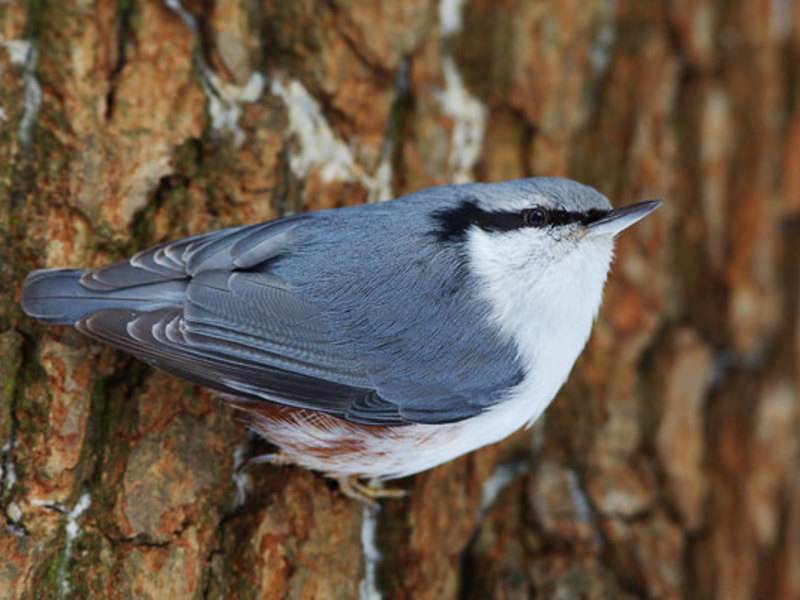
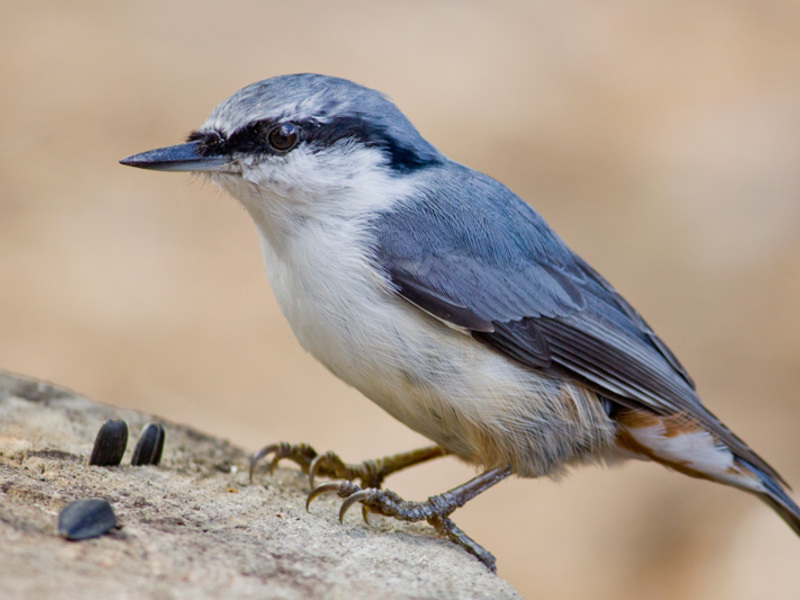
 The common nuthatch, or coachman, belongs to the nuthatch family—small birds native to most of Europe, except for Scandinavia, Scotland, and Ireland. Nuthatch are also found in China, Japan, and Korea. Some species live in North Africa. The nuthatch is often seen in the north, central, and south of Russia. Its general range extends from the Atlantic to the Pacific coast. A distinctive feature of this bird is its ability to quickly move upside down along tree trunks and branches.
External characteristics
Description:
- body length – 11-15 cm;
- wingspan – 22-27 cm;
- weight – 20-25 g.
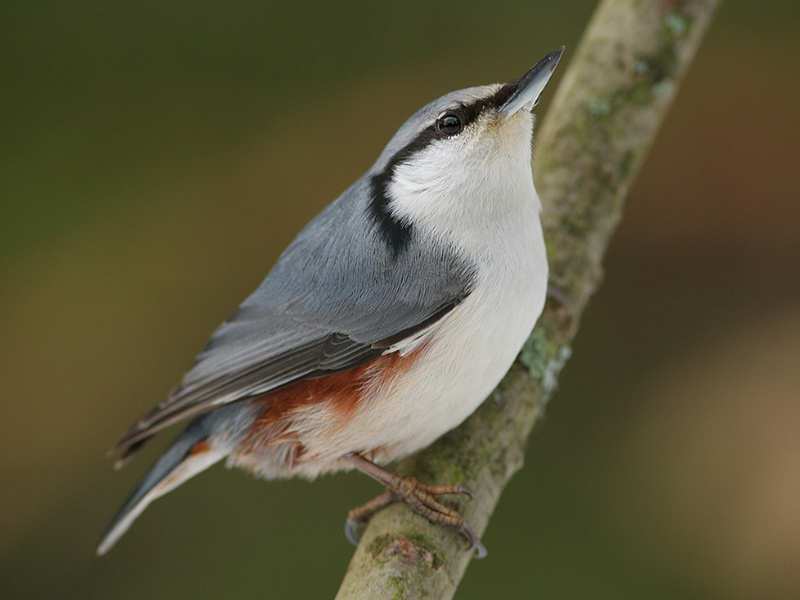
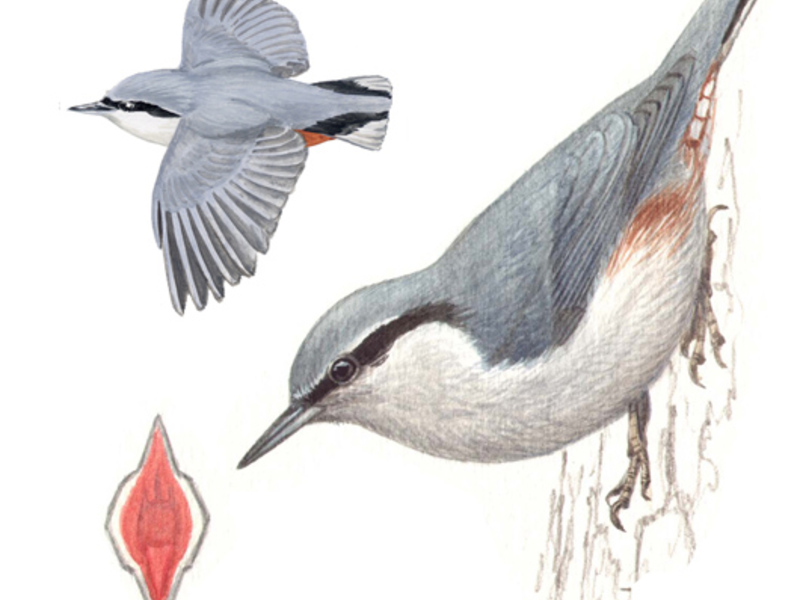
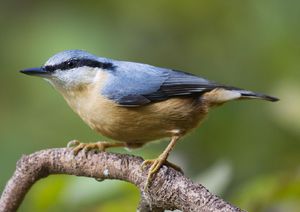
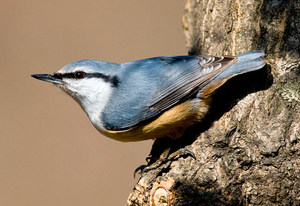
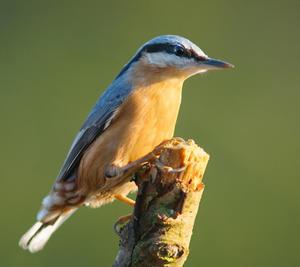
The bird's body has length from 11 to 15 cmThe giant nuthatch, a species common in China and Thailand, has a body length of 19.5 cm. Its wingspan ranges from 22 to 27 cm. It weighs approximately 25 g. The bird has a large head, a stocky body, and a short tail. The bill is straight, medium in length, and dark gray. Plumage color varies depending on the habitat. In northern Europe, the belly is brown and the neck is white. The upperparts range in color from gray to blue.
Nuthatches, which inhabit the forests of Western Europe, Western Asia, and the Caucasus, are distinguished by their rufous underparts and white necks. In the northern parts of their range, the belly is typically white, with rufous-brown sides and a brown undertail with white speckles. A species of bird native to eastern China has a completely bright brown underparts.
In the Far East, subspecies of nuthatches have white color of the breastsThe outer tail feathers are always marked with white speckles. A narrow black stripe runs from the base of the beak to the neck on both sides of the head. The feet are gray-brown, with long, sharp claws. The external difference between the male and female is the body size: males appear somewhat larger. There are no other external differences.
Habits and food
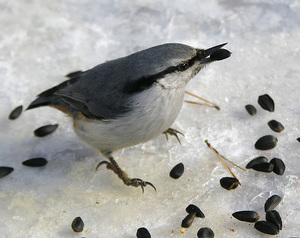 The most common habitats are deciduous, coniferous, and mixed forests, parklands, and gardens. For nesting, the birds choose tall, old trees. They do not leave their nesting sites. Nuthatches are not migratory. The exception is species from northern regions, which migrate to the southern parts of their range for the winter. Nuthatches live exclusively on its territoryWhile not trespassing on the property of other birds, they do not allow strangers into their territory. During the cold season, they may join flocks of other birds. However, they do not form flocks themselves.
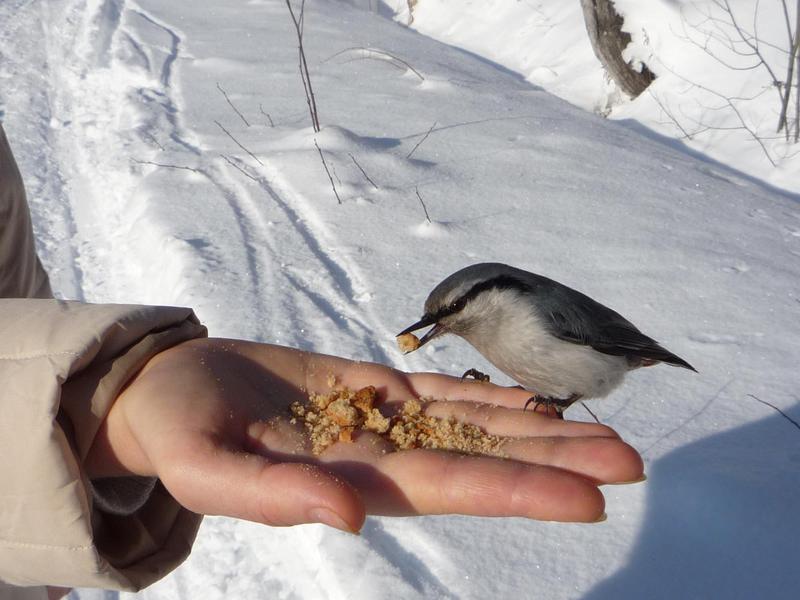
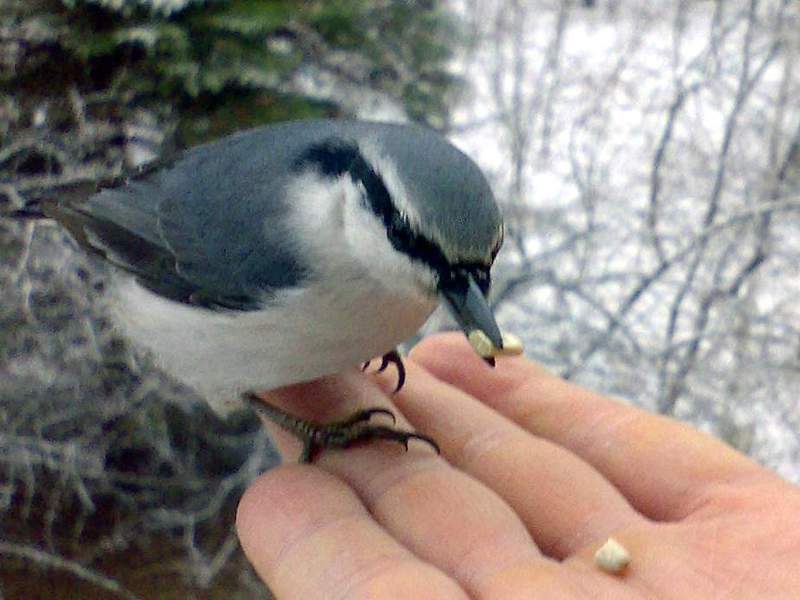
In the wild, nuthatches can move quickly along tree trunks, upside down and upside down. This ability is enabled by their long, prehensile claws. Nuthatches often live near humans. The bird is easily tamed. People build birdhouses for nuthatches to live and nest in.
Nuthatch song varies in frequency. Despite their small size, nuthatches produce loud sounds and have a wide range of melodies, including whistles, bubbling trills, and other melodies. Their song during the mating season is typically simple, reminiscent of a call but longer. When searching for food, nuthatch produces multiple calls. short whistling sounds "tew-tew-tew", occasionally simply "tcit" or the longer "tci-it", for which he received the nickname "coachman".
When the bird is excited, a loud "t'och" or "t'teg" is heard, often repeated with short pauses. It can also produce trills of varying frequency, sounds like "t'uy-t'uy-t'uy." The nuthatch becomes most vocal just before the breeding season—in late winter and spring.
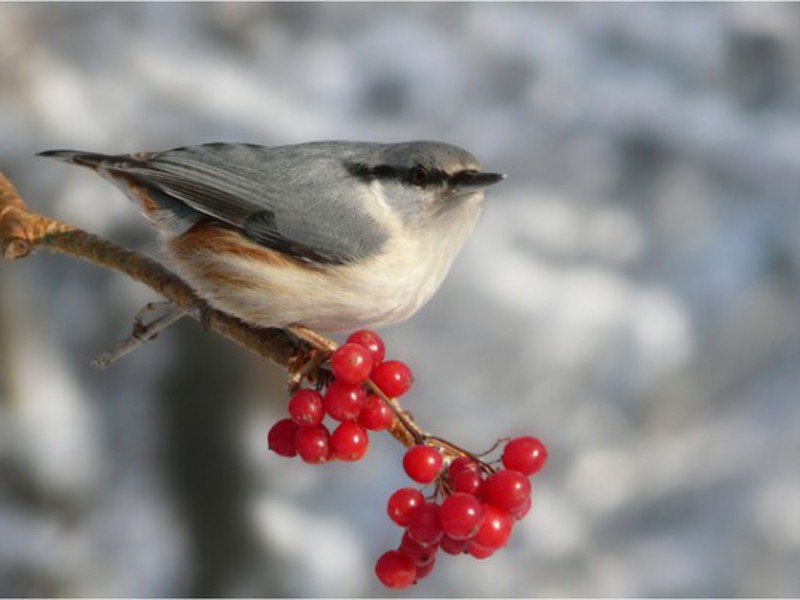
The nuthatch's diet consists of both plant and animal matter. Insects such as butterflies, flies, beetles, and bugs are common food sources. In the summer and fall, the nuthatch forages for fruits, seeds, nuts, and acorns. During the warm season, it stores food for the winter in tree bark, covering the cache with lichen or a piece of bark. In cold weather, the nuthatch will also feed on human-made feeders.
Reproduction and lifespan
Basic information:
 sexual maturity – from 1 year;
- the breeding season is from April to May;
- incubation – 1-2 times per season;
- eggs in a clutch – 4-12;
- incubation period – 2.5 weeks;
- feeding chicks – 5-5.5 weeks;
- lifespan – 10-11 years.
 sexual maturity – from 1 year;
The timing of nuthatches' nesting season depends on the region they occupy. The nesting season lasts from April to May. Nuthatch are monogamous and mate for life. They nest in tree cavities, usually abandoned woodpecker nests or natural hollows in tree trunks.
Nest sites are located at a height of 3 to 8 metersThe nest entrance hole is typically 3-4 cm in size, but can be reduced in size with clay if necessary. The bottom is lined with leaves and small pieces of bark.
 The clutch size is limited to 4-12 eggs, but 6-8 eggs are more common. The matte shell is white with small reddish-brown speckles. Only the female sits in the nest and will only leave the clutch in cases of immediate danger. When flying away from the nest, she covers the eggs with bedding. Incubation lasts for 2.5 weeks. The bodies of the hatched chicks are covered with long down.
Both parents feed their young. After hatching, the nuthatch chicks receive food up to 5-5.5 weeksAfter 22 days, the grown chicks are already capable of flight. Most young birds have already chosen a home range by the end of summer, but the final choice of a nesting site and mate does not occur until the following spring. The lifespan of birds in the wild is 10-11 years.