 A member of the crow family, the jay is a beautiful and colorful bird. Its very name comes from the Old Russian verb "to shine."
The bird can reach 34-40 cm in length and stand up to 15 cm tall. It typically weighs approximately 140-200 grams. Its wingspan slightly exceeds 50 cm.
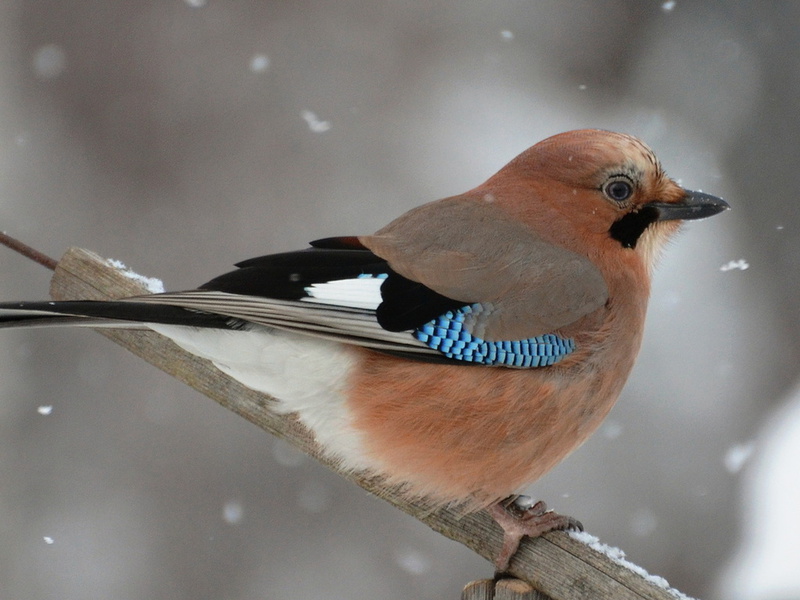
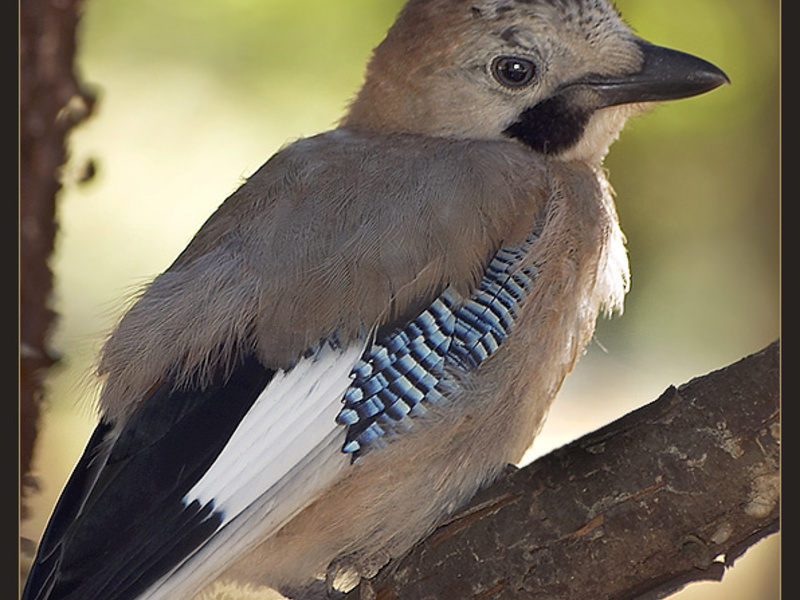
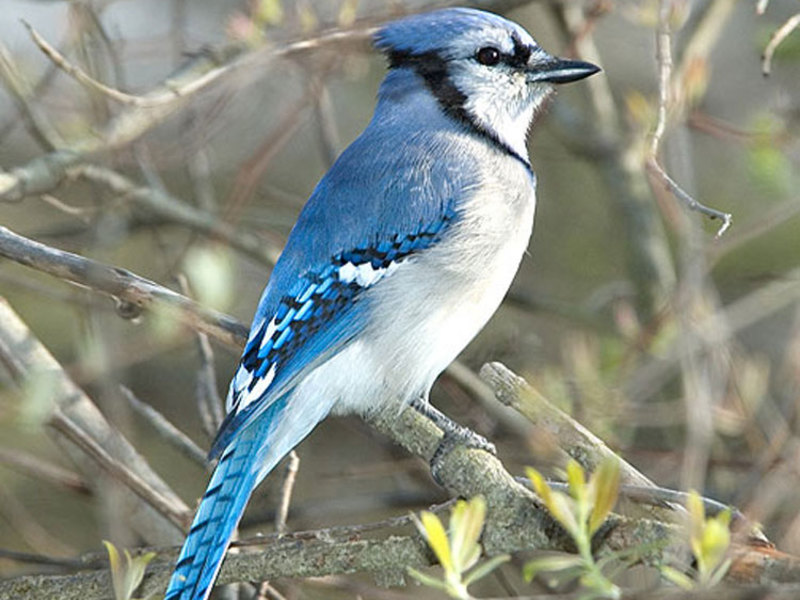
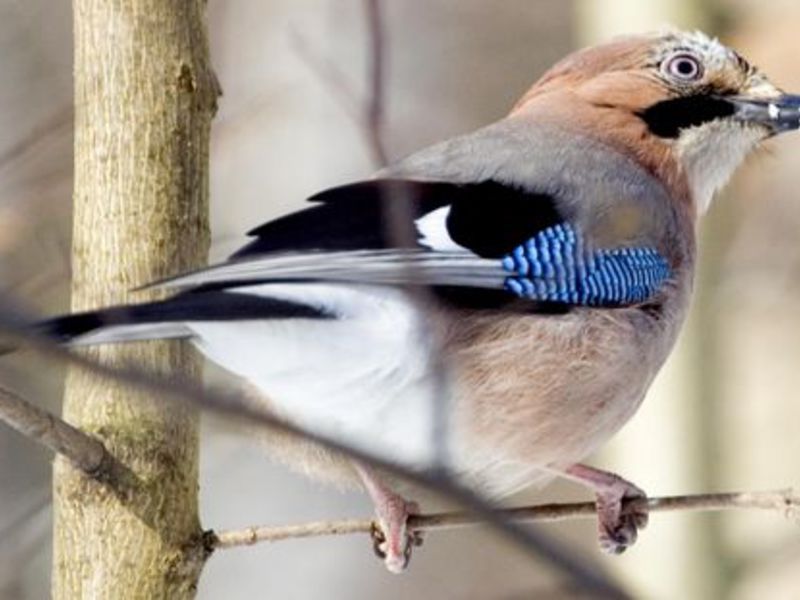
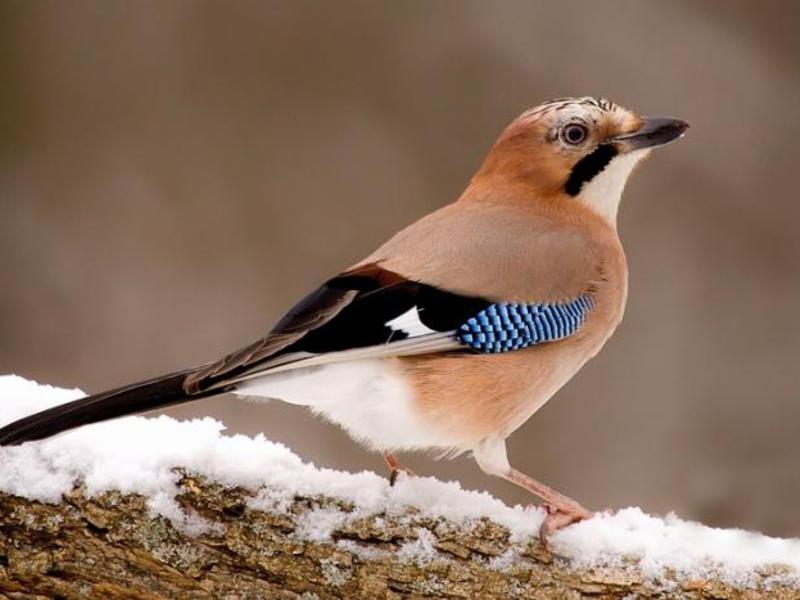
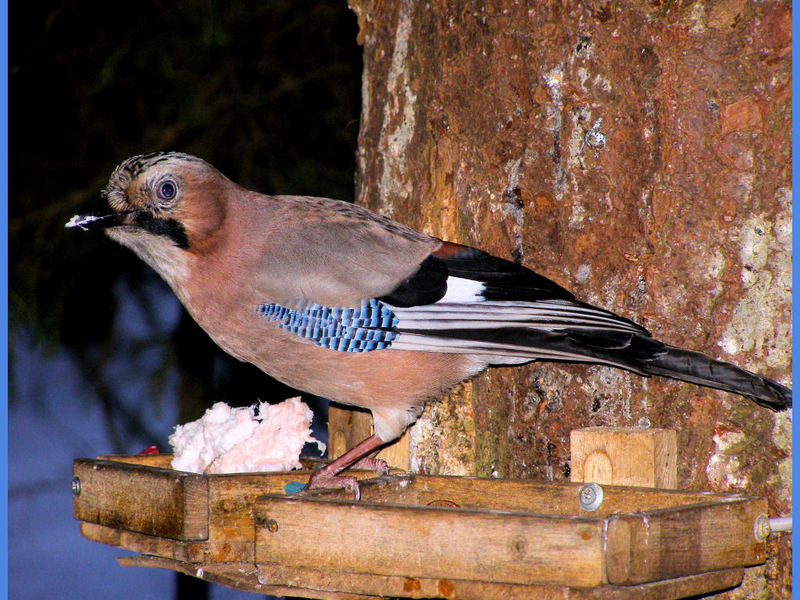
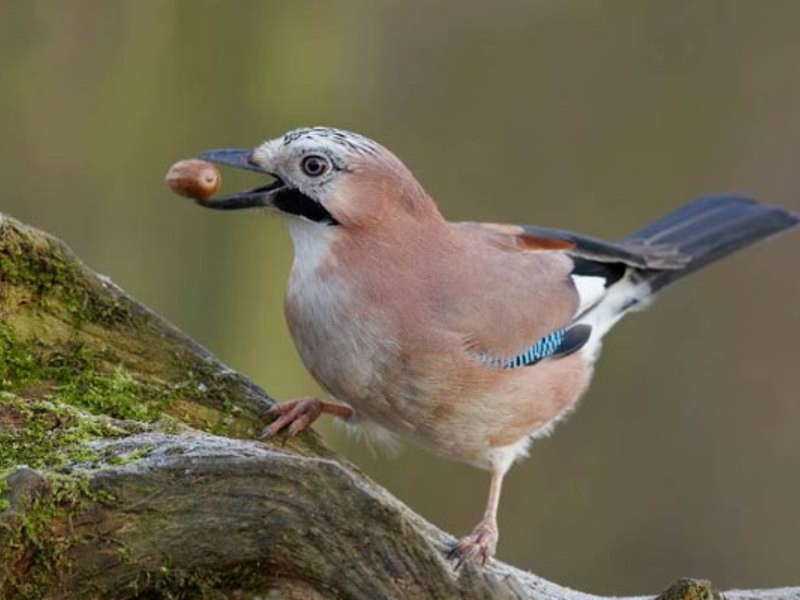
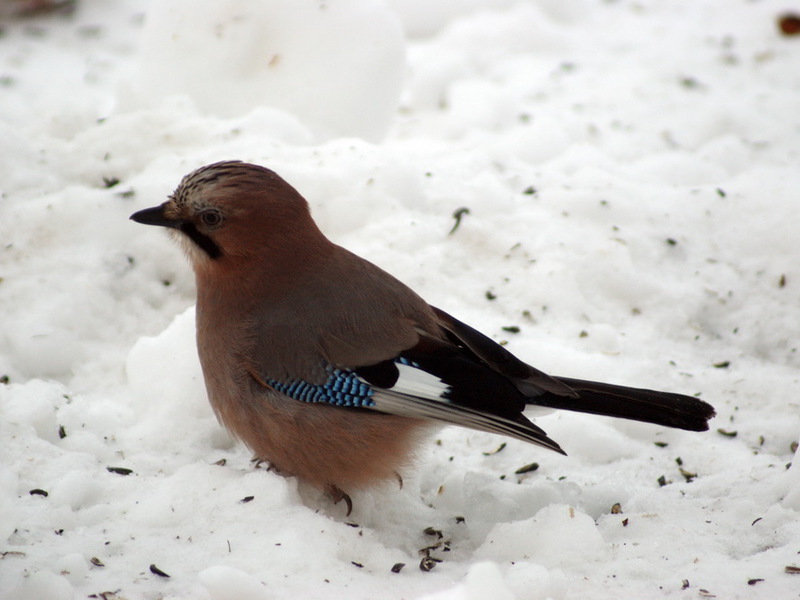
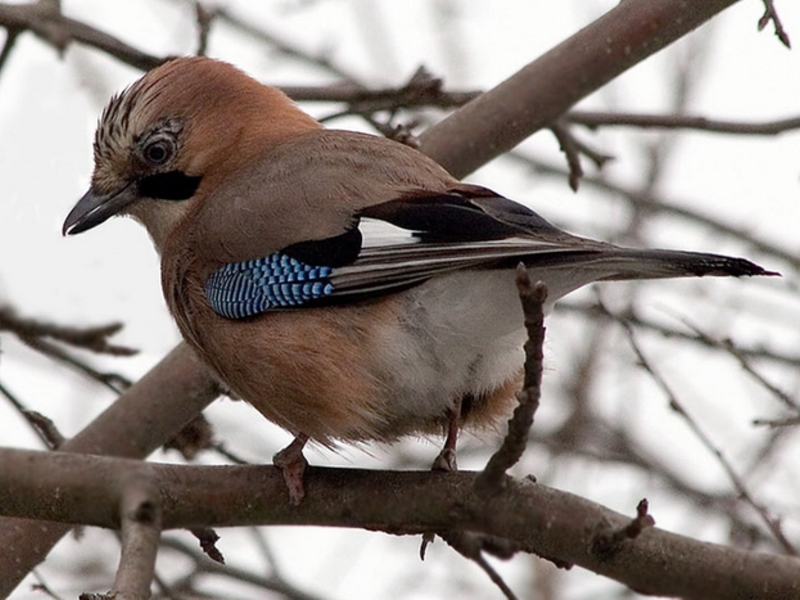
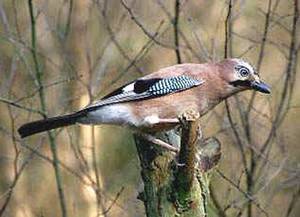
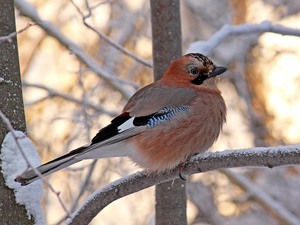
The body color is light brown, closer to beige, sometimes sandy. The tail and wings are black at the tips, and the tail is snow-white on the underside. The wings have beautiful blue spots with black stripes. The crown has white and black feathers. The chest and throat are lighter than the rest of the body, with black lateral stripes running from the beak. The irises are a beautiful soft blue; the eyes themselves are large, round, and slightly convex.
On a small head - graceful round crestThe tail is long (up to 15 cm), the brown-red legs are firmly built and distinguished by their tenacity. The beak is short, with pointed edges, and the wings are rounded, up to 17 cm long.
The color of the bird's head feathers can vary depending on the region where it lives. Jays from Europe have light feathers with brown speckles. Asian birds have light brown crowns, while jays from Asia Minor and the Caucasus have dark black feathers. Siberian jays have bright rufous crowns.
The jay, whose photo and description are easy to find, is a very elegant and beautiful representative of forest fauna.
Habitat zone
The Eurasian jay has a fairly wide range. It can be found in Europe, China, Korea, and Japan. These birds are also frequently encountered in North Africa, Siberia, the Caucasus, Sakhalin, and Crimea. The range is very extensiveRepresentatives of this species can even be seen in the Himalayas. They prefer to live in forests, especially oak forests, but can also inhabit other deciduous and coniferous forests.
Habits
These are sedentary birds, not migrating even during harsh winters. Occasionally, they migrate fairly short distances to find food.
They are known for their timid nature and hide when threatened. The jay's crest is most noticeable during these periods: the feathers on the crown of its head fluff up considerably.
The jay is diurnal and inactive at night. Prefers a varied diet:
 berries;
- seeds;
- nuts;
- acorns;
- grains;
- insects;
- worms;
- eggs of other birds;
- a small mouse or frog.
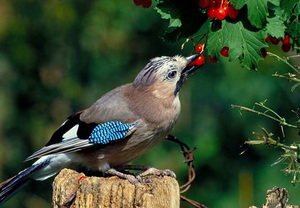 berries;
The jay is known for its thrifty nature and stashes some of its food "for a rainy day": it's not uncommon to find unique pantries—hiding places under fallen leaves, moss, and underground in tree roots. Sometimes, a single bird manages to make very impressive reserves! They come to the rescue when food becomes scarce. In winter, snow makes it difficult for the jay to reach its cherished hiding place. But nature has a plan: sensing food, hungry squirrels dig up the hiding place, and then everyone—animal and bird—is satisfied. A remarkable symbiosis!
In the fields, jays resourcefully collect small potatoes left after harvesting and also hide them in secluded places.
It flies with a slight heaviness, flapping its wings frequently, but this does not reduce its speed. It moves along the ground or from branch to branch by leaping. In bad weather, it skillfully hides in the branches of spruce trees.
It is distinguished by its restless nature: upon noticing danger, it begins to make sharp sounds that are unpleasant to the ear.
It is also interesting because it is remarkable mimics previously heard voicesWikipedia provides a very detailed description of this unique bird, offering the opportunity to learn the species' full name, characteristics, and interesting facts, and even listen to its call.
Natural enemies
In nature, a bird cannot feel safe due to the following “enemies”:
- owl;
- marten;
- crow;
- goshawk.
Humans also pose a threat to these woodland mockingbirds: not only hunters, but also farmers who poison the environment with pesticides and fertilizers lead to a decline in numbers.
Interesting facts
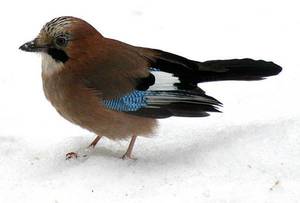 This bird has a unique way of fighting parasites: it perches on an anthill and allows the insects to climb on it. Industrious bugs kill parasites with their acid.
Hunters often kill these birds unjustifiably, considering them to be nest robbers.
By storing food, jays contribute to the spread of oak trees: if a bird buries an acorn in the ground and doesn't return to its larder, an oak tree may grow!
The average lifespan of birds is 5 to 7 years, but among jays there are known cases of longevity: 16-20 years!
When forming pairs, they prefer to live separately, but in the winter cold they gather in small flocks (up to 30 birds).
Reproduction
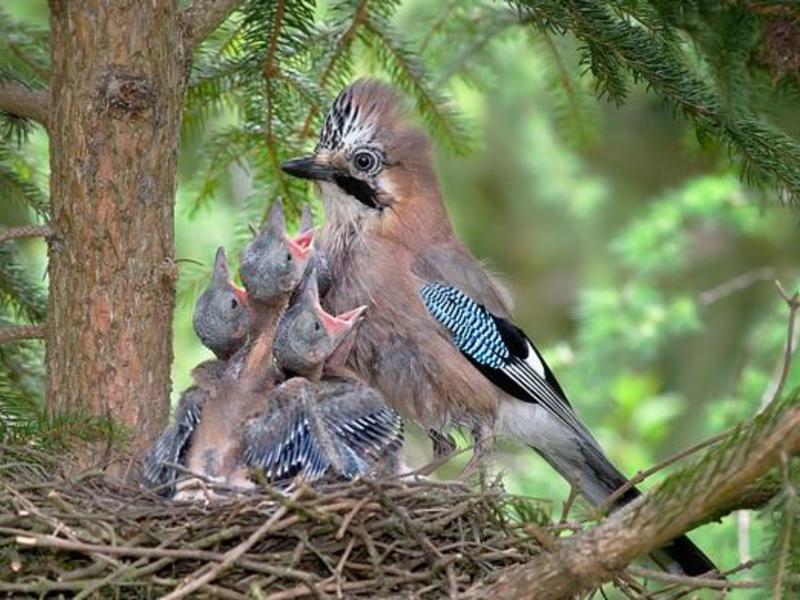
 The mating season begins in early spring. At this time, jays pair off: the male jumps around the female, fluffing up her feathers and crest, if she agrees, she approaches. This signifies mating. They will build a deep, large nest together, quite high off the ground. It is constructed from thin twigs, branches, and dry grass, and is insulated inside with wool and grass. Nests are extremely rare in tree cavities.
The eggs are laid in groups of 5-7, and they are quite picturesque: green with black speckles, each about 3 cm long. Both the male and female incubate the eggs. After about two weeks, the blind, naked chicks hatch. The male will now forage for them, and the female will constantly be with the young, keeping them warm and protected.
After about 20 days, the chicks leave their parent's nest for the first time to roost on branches. They gradually learn to fly and forage for food. Being very caring parents, the jays they watch over their offspring until the end of summer.
Jays are interesting and beautiful birds, and observing them will bring genuine joy to both the novice naturalist and the experienced ornithologist.