 The swallow is a small, fragile bird that spends its entire life in flight, only rarely landing on the ground. It feeds on insects it catches in flight, making it a valuable resource, as it consumes a large number of them over the course of a season.
Types of swallows
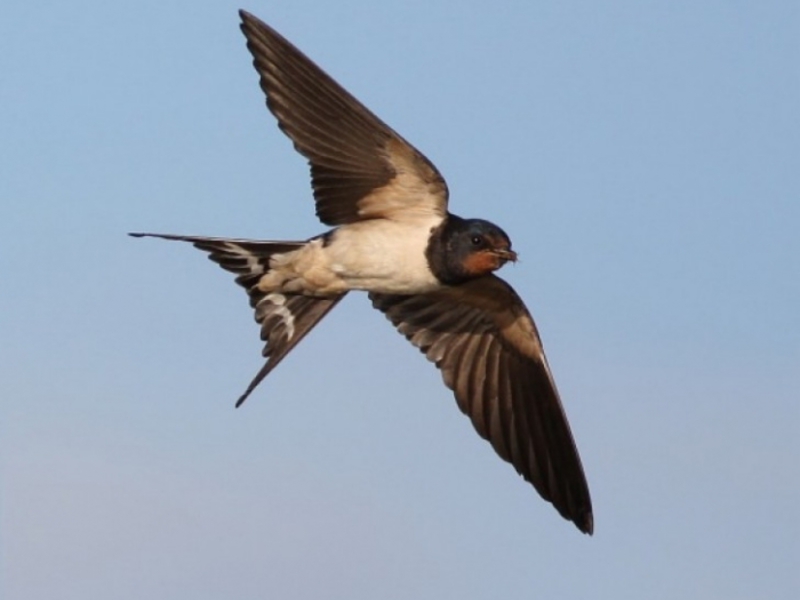
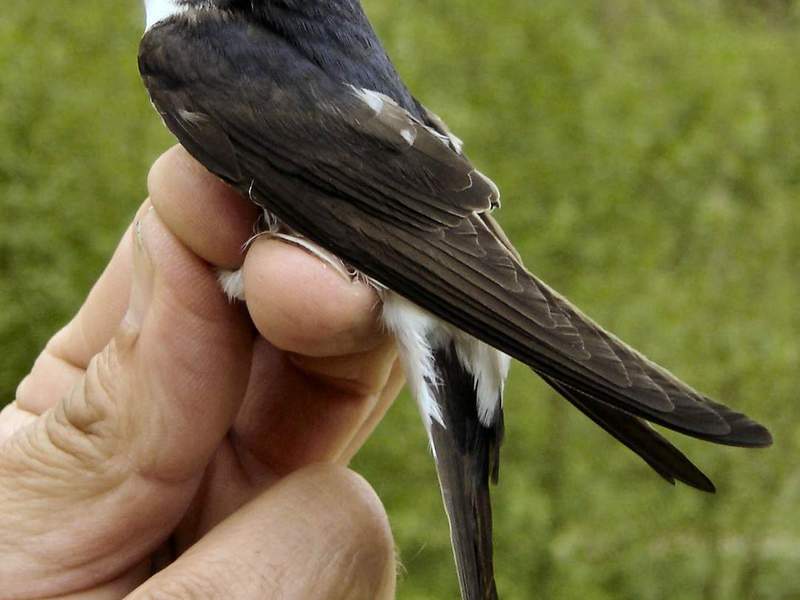
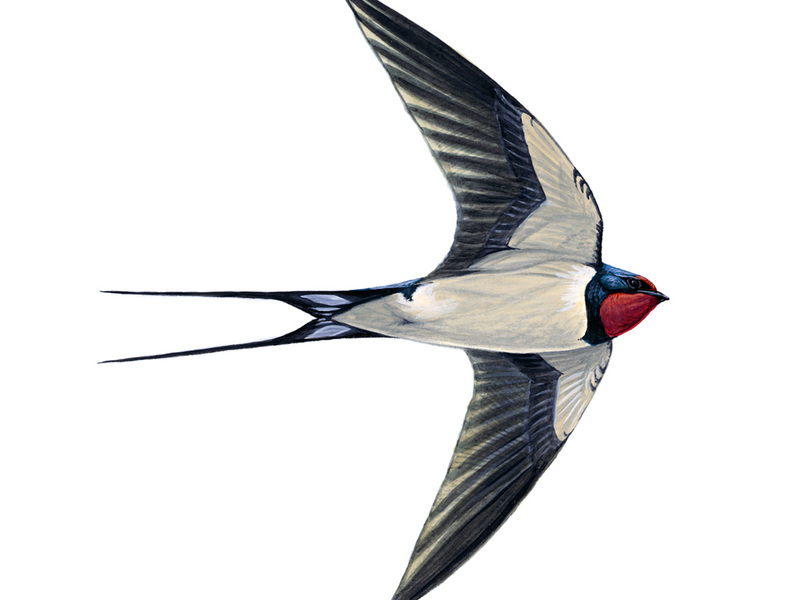
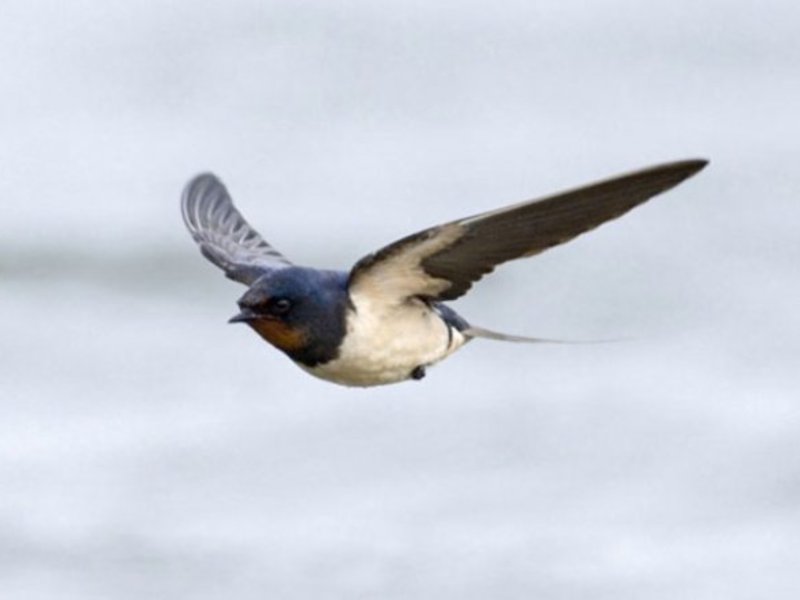
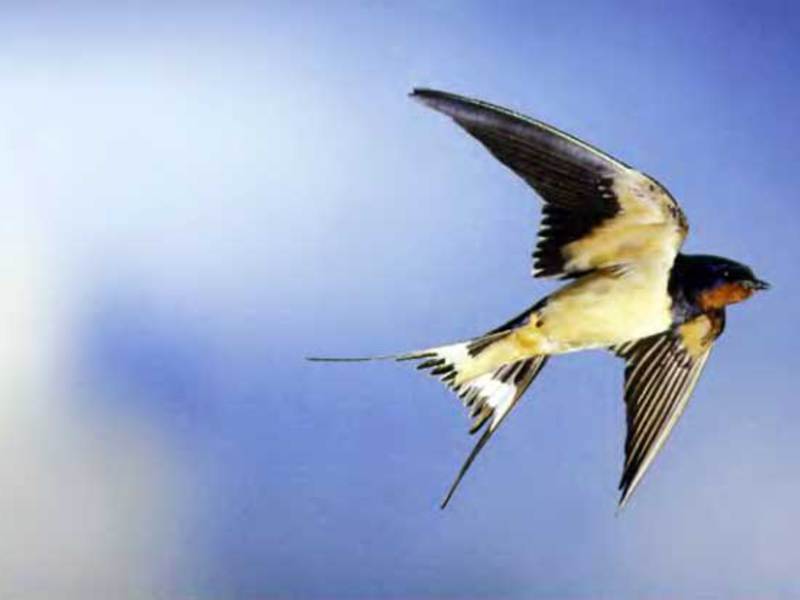
In flight, the bird is beautiful, swift, and agile. Its body is elongated, its wings are narrow, and its tail has a notch that makes it easily distinguishable from other birds. Some consider it a relative of the swift, which has a similar tail, but this is incorrect. The swallow is a representative of a separate species. a family of up to 100 species.
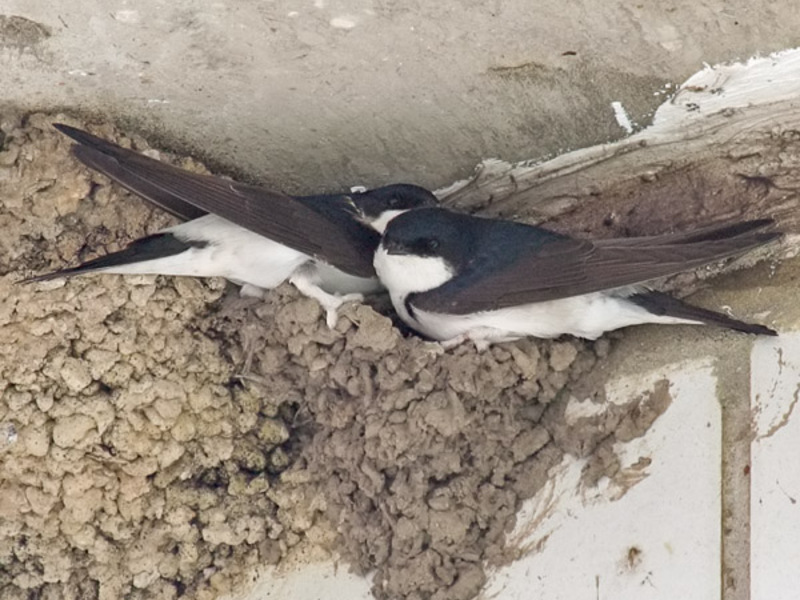
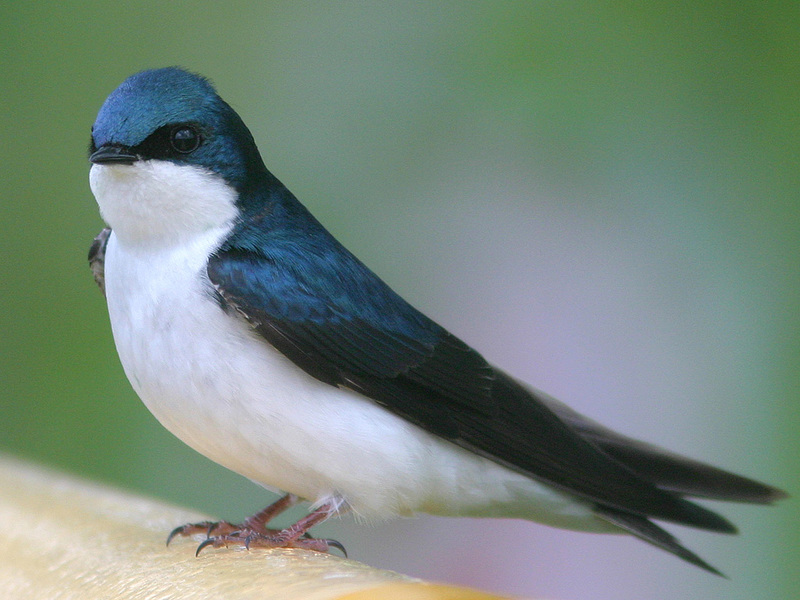
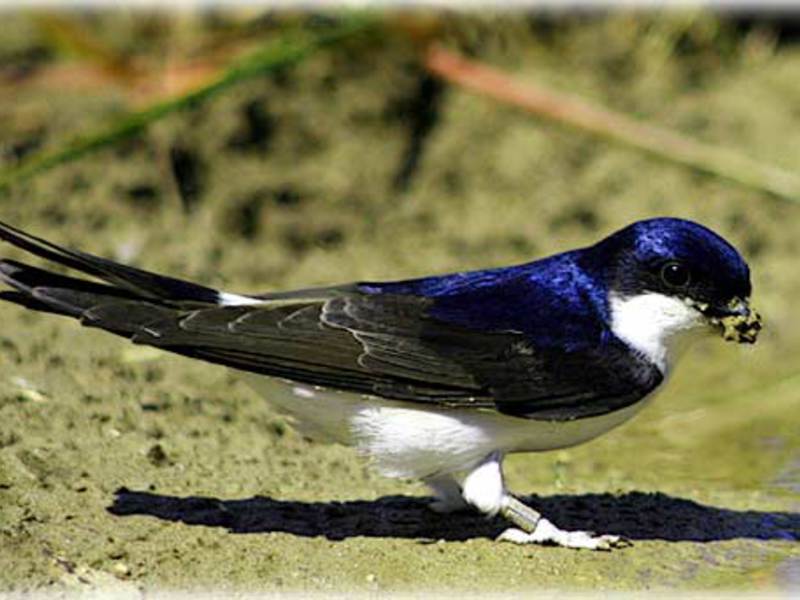
In Europe, two species are most common: the house martin and the barn martin. The house martin is distinguished by its preference for building its nest outside buildings, and it prefers nests of other pairs to be located fairly close. The barn martin builds its nest separately from its relatives, inside buildings. In flight, the house martin flaps its wings more frequently and hovers a lot.
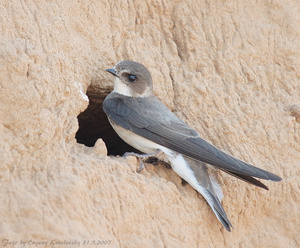
Other bird species choose cliffs or buildings as nesting sites. The sand martin, however, prefers a burrow. In the wild, these birds live for about five years.
Where do they live?
 The swallow inhabits almost the entire globe except the far north. This migratory bird, despite its miniature size, is capable of cover huge distances twice a yearUntil the 18th century, naturalists believed that swallows hibernated at the bottom of lakes to spend the winter; it was so difficult to believe.
This bird is beloved in Russia; its image is popular and has always been used in folk tales. The migration of swallows, their departure for warmer climates in winter and their return in spring, was associated with the cycle of life and death in nature.
Barn swallow
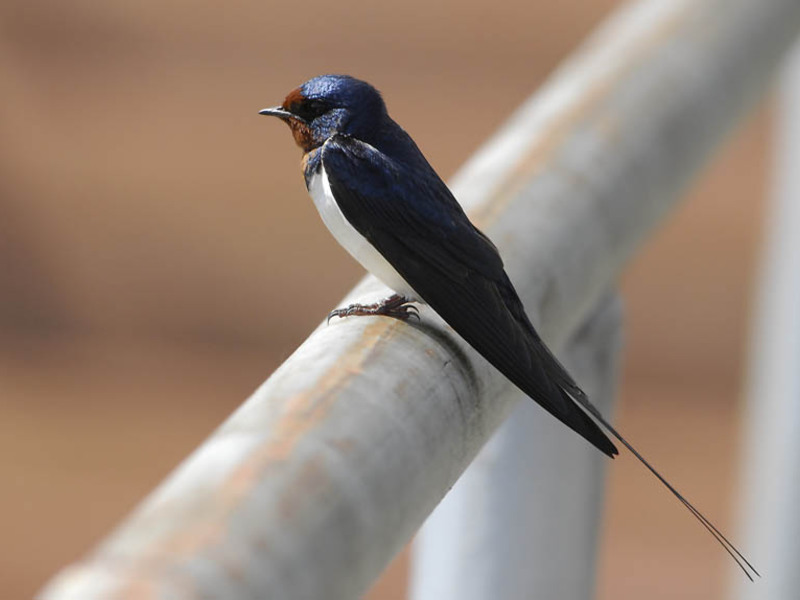
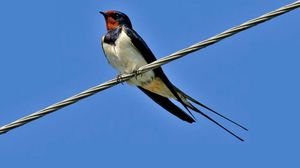
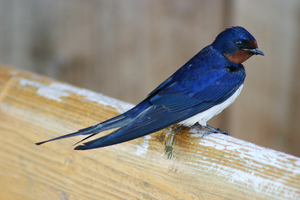
This bird species chooses small towns, villages, and hamlets as its nesting sites. It can sometimes be seen in the rocky terrain of the Caucasus. The barn swallow's plumage is black and white. The back is dark blue with a metallic sheen, and the belly is white. The forehead is reddish-brown, and a dark stripe runs transversely across the throat. The plumage above the tail is dark or rufous.
Nest building
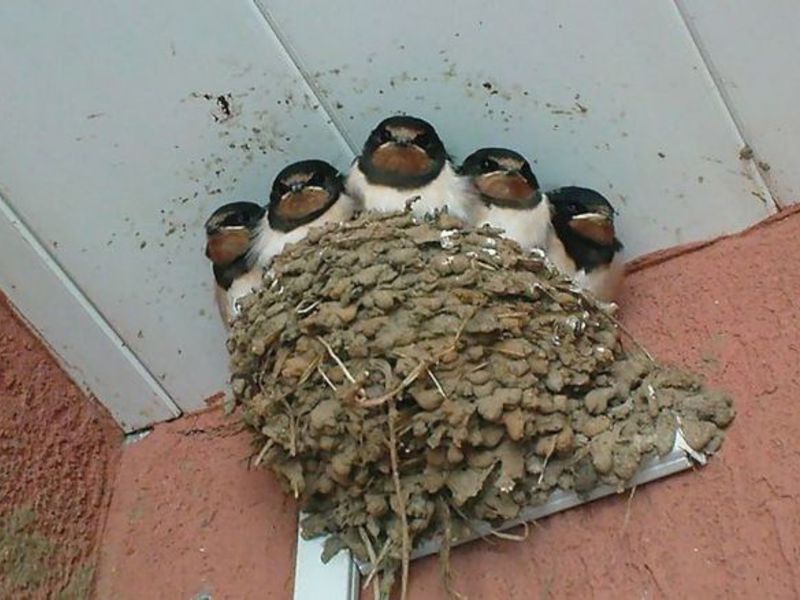
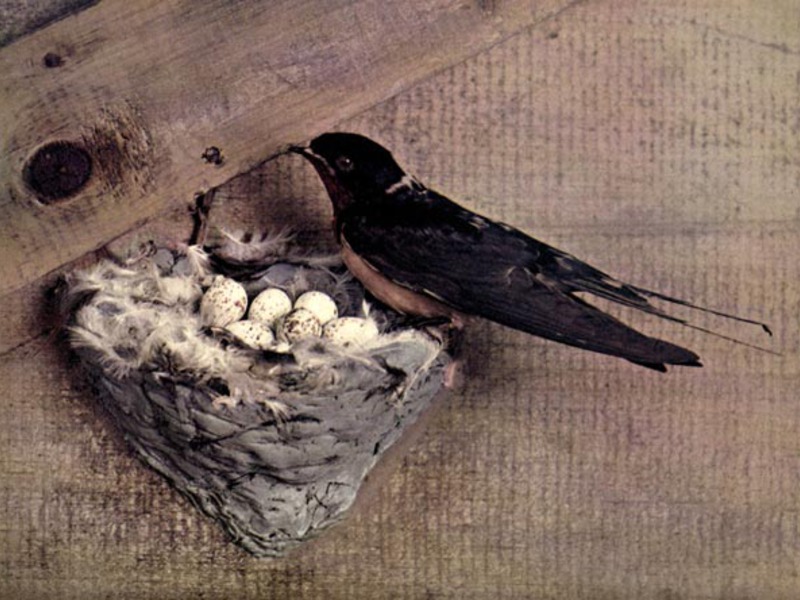
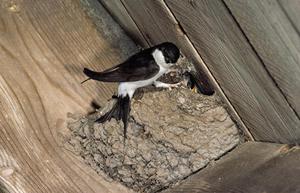
Nests are built in residential buildings, typically wooden ones, directly under the roof of a building, barn, or bridge. The nest is constructed using uses lumps of silt, silty sand, or clay lumpsHe connects them using saliva, which has adhesive properties. He also uses additional material to give the structure strength:
- hair,
- plant stems,
- stubble.
The barn swallow lines the inside of its nest with feathers. The nest is cup-shaped, with the entrance at the top. The barn swallow attaches its nest to planks or beams under the roof. The nest is typically 8 cm high, with a diameter of 8 to 14 cm.
In the western part of Russia, the construction of swallow's nests begins in the second half of May.
Reproduction
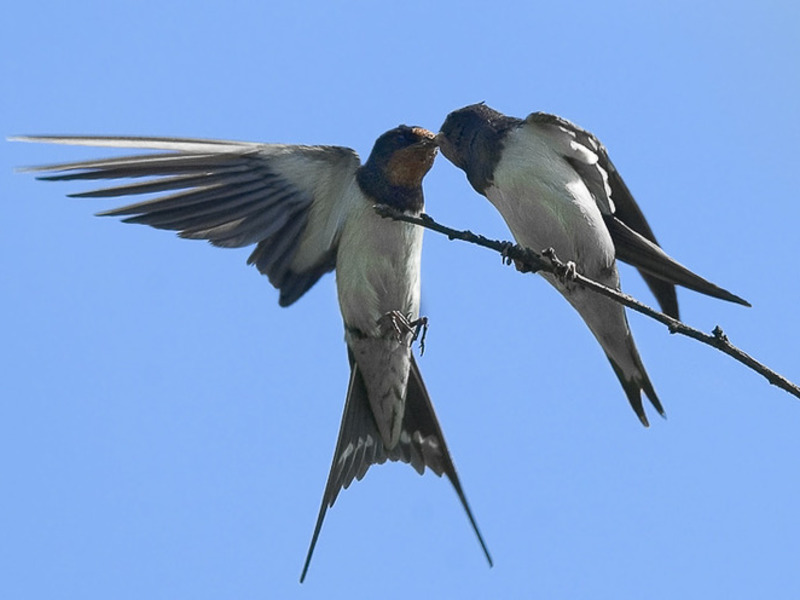
 Mating season begins after the cold weather ends, as soon as the weather stabilizes. To attract a female, the male displays his beauty: spreads its wings and sings songsA pair bond is formed once and lasts for life. From May to August, the female can lay three clutches.
The barn swallow lays five eggs, which are mottled brown and red. Incubation lasts approximately 13 days, and both parents share the responsibility. After two weeks, the chicks hatch, completely defenseless. They are cared for for approximately three weeks after hatching, but by the 22nd day, they are already capable of flight, and they begin to forage for themselves within a week. Some help their parents feed the chicks from the second brood.
With the arrival of autumn in early September, the birds leave their homeland and fly to their wintering grounds, returning again in early May. winter in South and Central Africa, as well as in India.
What does a swallow eat?
The barn swallow's main diet consists of insects, which it quickly catches mid-flight. This characteristic is often used by people to predict the weather. However, in reality, it has no connection with rain. These birds typically hunt at low altitudes, while house martins and swifts fly high in search of food, and then descend closer to the ground in the late afternoon, as insects are abundant at that time.
In the diet of the barn swallow small insects:
- Beetles,
- Flies,
- Mosquitoes,
- Horseflies,
- Midges,
- butterflies,
- Grasshoppers,
- Spiders.
Venomous insects, such as bees, are rarely touched. They swallow their prey whole, despite the tough shell of some beetles, due to their intense digestion.
Natural enemies
 For these birds the greatest the kestrel poses a dangerLike them, they are fast and agile, so they stalk their prey in the air. Thanks to their exceptional flying abilities, barn swallows manage to avoid encounters with other predators. However, they become vulnerable to attack when they approach a body of water in search of nesting material, so they fly in groups.
Evidence of crossbreeding between the barn swallow and the house swallow occasionally appears. The frequency of such reports suggests that these two species of passerine are more closely related. close genetic relationship, than expected.