 Those fortunate enough to own a garden plot often try to raise not only various plants but also animals. The most popular farm animal is, of course, the chicken. Hobby poultry farmers show equal interest in both layers and broilers, as both chicken meat and eggs are healthy and nutritious foods that are essential in a healthy diet.
Raising chickens is quite a fascinating endeavor and not as easy as it seems at first glance. However, with a little effort, you'll soon be proudly serving your friends delicious home-cooked meat and eggs.
Content
Where can I get chickens?
Exists There are three main ways to get chickens:
- put a hen on the nest;
- use an incubator;
- buy at a poultry farm.
Each of the above methods has its own advantages and disadvantages, which we will now consider.
Hen
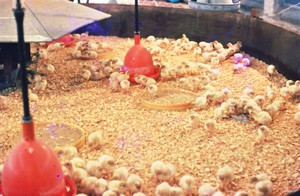 This method is suitable for those poultry owners who already have chickens, or who can borrow a broody hen from kind neighbors or relatives. If the hen spends all her time in the nest and makes characteristic sounds (clucking), she's ready to broodThe brooding instinct is most strongly developed in laying hens.
The broody hen should be given a separate, comfortable spot, away from the other hens, and eggs should be placed under her. It's best to use fresh eggs, no more than three days old, otherwise the chances of hatching will be greatly reduced. The number of eggs depends on the hen's size, but experienced poultry farmers recommend no more than 20.
You can expect the birth of fluffy little balls in about 20 daysSome hens don't even leave the nest to eat during this entire time. In this case, the hen needs to be removed and force-fed every two days, otherwise she will simply die of exhaustion.
Since not all chicks hatch at the same time, it's possible for a hen to abandon the remaining eggs and go for a walk with the hatched chicks. To prevent this, chicks should be removed as they hatch and placed in a separate box.
On the 23rd day, the family can be reunited and placed in a specially designated area. The main advantages of raising chicks with a mother hen are that she will protect the chicks from predators and dangers, keep them warm, and teach them how to choose food and navigate their surroundings.
Incubator
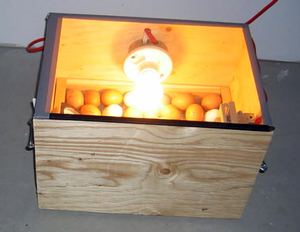
For home use, it is best to buy an incubator. capacity of 30-50 eggs, maximum – 100. The main problem with this method of raising chickens is power outages. To avoid hypothermia of the eggs and the death of the embryos, consider models with a battery or a water heating element that can be filled with hot water, and the heat released will last for 8-10 hours.
Before placing eggs in the incubator, you need to set the correct temperature. During the first week, this is 38.5 to 39 degrees Celsius. The thermometer should be positioned exactly in the middle, and only when it shows the correct temperature can you place the eggs. Incidentally, if you're using the incubator for the first time, experts recommend double-checking the temperature with a regular medical thermometer.
One side of the egg Before bookmarking, mark with a pencilThis is done to avoid confusing the sides when turning. A hen can turn each egg dozens of times a day. Naturally, a human won't spend the entire day over the incubator, but turning each egg at least five times is necessary.
And not only do you turn them over, you'll also have to swap the eggs once a day, moving them from the center to the edges and vice versa. This is because the temperature at the edges is usually slightly lower than in the middle. You shouldn't touch the eggs during the first day, but on the second day, it's absolutely necessary.
Around day 19, the chicks begin to peck. Now you can stop turning them, and bring down the temperature to 37.5Hatching ends on the 22nd day, and experts do not recommend further incubation of unhatched eggs.
Buying chickens from a poultry farm
For those trying their hand at poultry farming for the first time, it's best to avoid using a broody hen or an incubator and instead buy pre-hatched chicks for breeding. This will save you a lot of hassle. a few simple tips, which will help a beginner choose healthy and strong birds.
 It's best to buy chickens from a reputable poultry farm. There, you can be sure you're getting the exact breed you were looking for, and not just layers instead of broilers, or vice versa. Furthermore, at poultry markets, inexperienced buyers can easily be sold sick chickens.
- Hence the next piece of advice: ask a friend who already has experience in raising poultry to help you with the purchase.
- It's best to buy chicks in the winter. This saves money and ensures healthy chicks, as winter chicks are considered the strongest. However, this should only be done if you can provide the chicks with a safe, warm home.
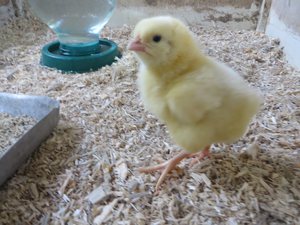
- When choosing chicks, pay attention primarily to their appearance. Soft, clean, shiny down, clear eyes and beak, wings held tightly to the body, and a soft but not saggy belly—all these are sure signs of a healthy chick.
- Little chicks are quite active. If a bird sits gloomily in the corner of a box, it's best not to buy it.
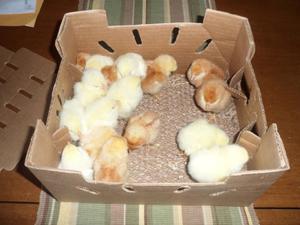 It's best to buy chickens from a reputable poultry farm. There, you can be sure you're getting the exact breed you were looking for, and not just layers instead of broilers, or vice versa. Furthermore, at poultry markets, inexperienced buyers can easily be sold sick chickens.
How to care for chickens?
From the very first day the chickens appeared in the house need proper care, good feed, and adequate space. The combination of these three factors greatly influences the health of future hens.
Chicken housing
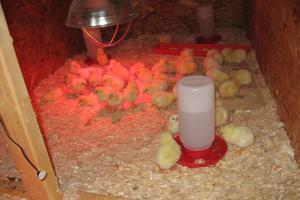
Immediately after purchase or hatching, baby birds are usually placed in a box. The bottom of this "temporary home" is lined with wood shavings or hay. However, they can only be raised in such conditions for a few days before being moved to a coop, as the babies need space to move around.
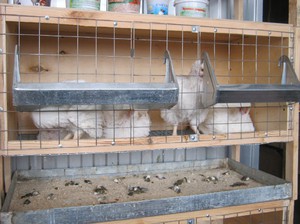
A chicken coop can be built specifically for the purpose, or an existing building can be adapted. The main thing is that it should be dry, spacious, and warm. And if its inhabitants are future laying hens, it would be a good idea to do so right away. include nesting sites in the design, so that later you don’t have to collect eggs from different hidden places.
Before introducing chickens to a new room, it needs to be disinfected. A special solution, available at any veterinary pharmacy, is used for this purpose. If no solution is available, slaked lime can be used.
It's crucial to install a heating device in the coop. For the first seven days, chicks require warmth, and the temperature shouldn't drop below 30 degrees Celsius. Afterward, it should be gradually reduced to 20 degrees Celsius. Using lamps for heating is not recommended, as they disrupt the daylight cycle, leading to nervous exhaustion and cannibalism.
As for the density, laying hens are housed for rearing at a rate of 10/1m2, and broilers You can settle them even more densely 12/1m2.
How and what to feed chickens?
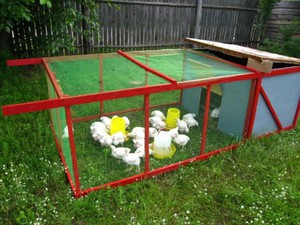 Feeding is an important aspect of healthy chick development. There are significant differences between feeding layers and broilers, and it's crucial to follow these guidelines even at home.
When breeding and feeding broilers, experts recommend using specially formulated feed. It contains all the necessary proteins and vitamins, and with its help, meat-breed chickens will already at 2 months will weigh more than 1.5 kg.
After 1.5 months, they can be transitioned to a homemade mixture consisting of wheat, peas, corn, barley, millet, and sunflower seeds. This may take a bit longer to grow, but the result will be tastier and healthier meat.
When feeding formula, muscle mass often grows quickly, but bone mass doesn't keep up. As a result, the chick can "fall on its feet," but homemade formulas virtually eliminate this possibility.
When raising layers, you can also use dry feed, but it's best to combine it with homemade feed. Experienced poultry farmers recommend using dry feed for the first feeding. They recommend using a boiled eggGradually add cottage cheese, semolina and chopped greens.
On the 10th day, boiled potatoes, zucchini, and carrots are added to the chicks' diet. It's also a good idea to add chalk or crushed eggshells. On the 20th day, the birds can be fed anything, including fish and meat scraps, fermented milk products, and ground grain, as long as the food is fresh and unspoiled.
Here are some more helpful tips for raising future chickens at home:
- Never feed chickens from the floor.
- The drinking bowl and feeder must always be clean.
- The water needs to be changed regularly.
- Dry and cooked food are given in different feeders.
- After boiling the food, the feeder is thoroughly washed.
- When the chicks grow up, they should be given a bowl of sand or gravel, which they will peck at as needed.
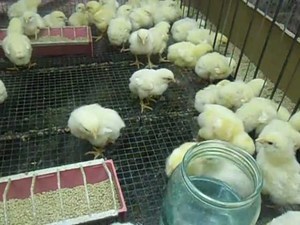 Never feed chickens from the floor.
Raising healthy chickens at home – it's quite a troublesome matter, but with sufficient desire and diligence, even a beginner can handle it.