 Large, massive Big 6 turkeys are a relatively new arrival on the market. These true heavyweights successfully compete with other broilers and are becoming increasingly popular among poultry farmers. They are very profitable to raise, producing not only a large amount of meat but also eggs, feathers, and down. Raising and raising Big 6 turkeys has its own unique characteristics, which you can learn about in our article.
Content
Characteristics and performance indicators
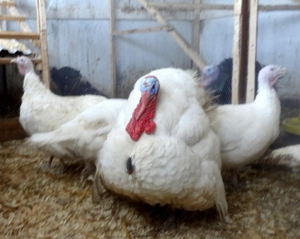
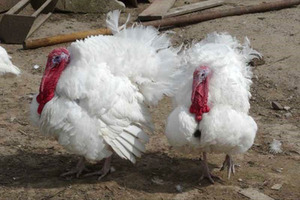
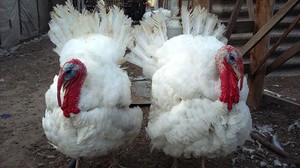
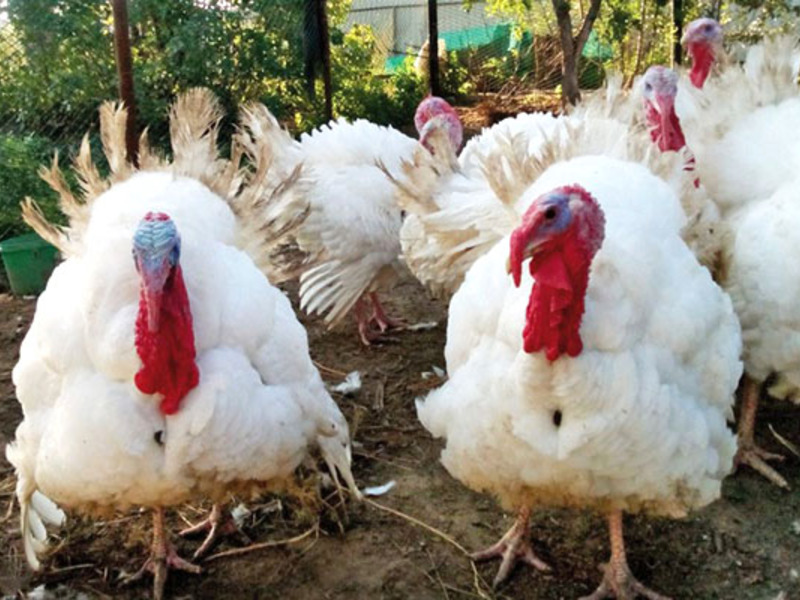
Big 6 turkey breed was bred in 2008 In England, it is distinguished by its massive, stocky body, white plumage, and small head. The bird's anatomical features include:
- large wings;
- thick legs;
- protruding chest;
 red earrings and beard;
- decorations on the head and neck of the male.
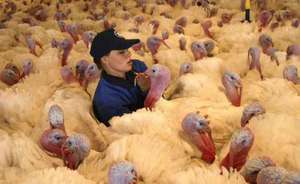 red earrings and beard;
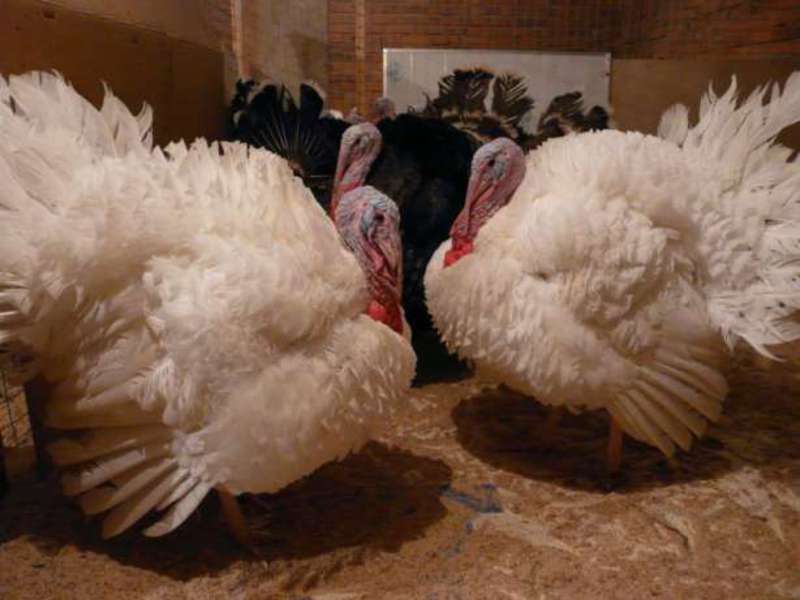
The live weight of an adult turkey can range from 11 to 25 kg. The bird's feathers are highly prized for their lightness and softness. When a turkey fluffs them up, he resembles a fluffy ball.
Crossbreeding productivity
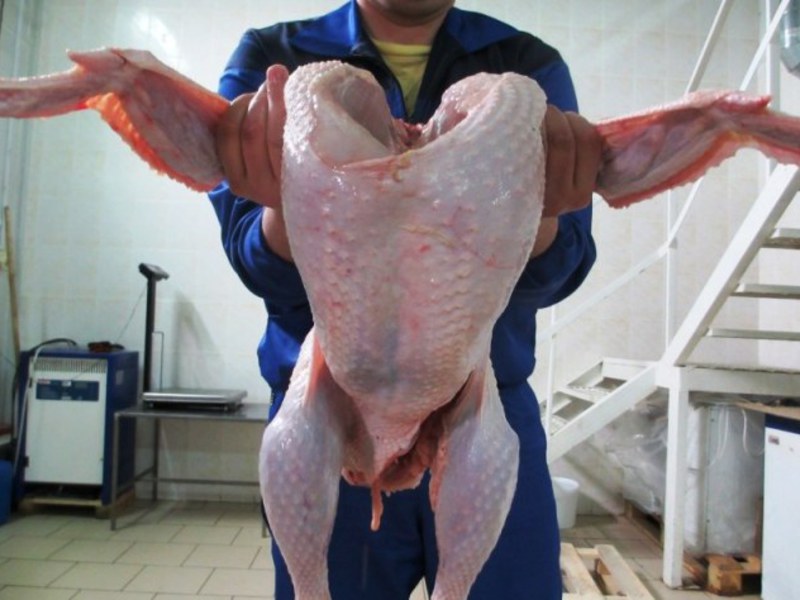
Big 6 is famous for its productive body weight output for poultry farming, which accounts for 80%. Of this, 30% is the brisket. The young turkeys gain weight rapidly, and by three months of age, they weigh about 5 kg. At five months, turkey poults reach a live weight of 11 kg. The bird stops growing completely at 100 days of age. At this time, they are usually sent for slaughter.
The breed also boasts a fairly high egg production rate. Females can produce 105 eggs per year, which have excellent taste.
Turkey breeding technology Bik-6
Many poultry farmers who want to engage in breeding and raising Big-6 crossbreeds for meat, are you wondering whether to buy chicks or hatching eggs? Since this breed is not yet widespread in our country, finding and purchasing chicks is quite difficult. Therefore, farmers most often buy hatching eggs, which have a hatchability rate of 73–85%. This is a very good percentage, indicating a profitable investment.
Peculiarities of raising chickens in an incubator
For raising turkeys for the New Year holidaysEggs should be placed in the incubator from June to August. To identify clear eggs, they should be candled after a week. The subsequent incubation process is essentially the same as for chicken eggs.
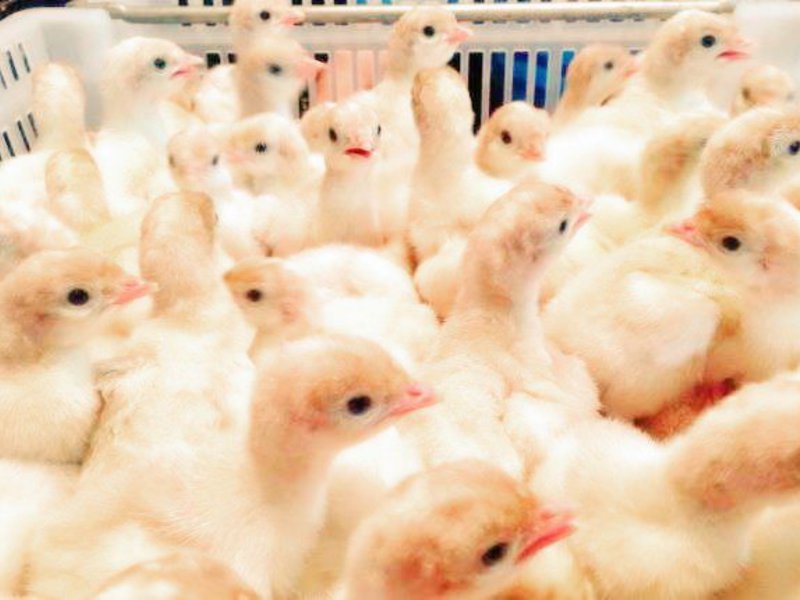
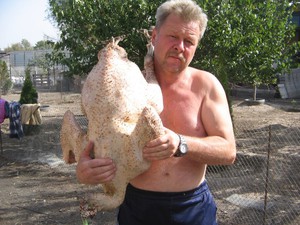 The technology for growing young animals is quite simple, but at the same time all rules must be followedTemperature control must be particularly strict. From birth until seven days of age, chicks are kept at a temperature of 32–35°C. The temperature is then maintained at 29–32°C for a week, and during the third week of life, it can be lowered to 27–29°C.
The most troublesome when raising turkey poults at home are kept for the first two months. To ensure their proper growth and development, they are kept separately from adult birds and from individuals of other breeds.
To raise turkey poults, it is necessary to create certain conditions:
- The room where the chickens will be kept is pre-treated with slaked lime, formaldehyde vapors or iodine cones.
- There should be no drafts or dampness in the poultry house.
- For the first four weeks, chicks are kept in boxes. From the first to the fifth day of life, the bedding should be rags, which are subsequently replaced with wood shavings, chopped straw, or dry hay. It is not recommended to use sawdust, as the birds may peck at it, thereby clogging their digestive tract.
- You cannot feed young animals with expired feed.
- At the age of 6 to 11 days, chicks are given antibiotics as a preventative measure.
- Vitamin D3 should be included in the diet of week-old turkeys. The vitamin intake is repeated after another fifty days.
- Turkeys are highly susceptible to aspergillosis, which can be protected against by nystatin. It is added to the feed of 15-day-old birds.
Feeding chickens
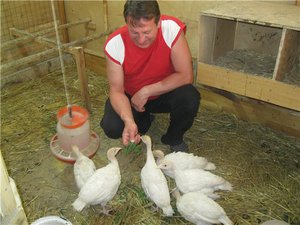
Daily allowance Chickens can only peck food from a specially adapted feeder Or from a sheet of plywood. Over time, they are accustomed to regular feeders for adult birds. The mash for young birds should not be too wet. Very wet mash can clog the chick's crop, which can lead to health problems.
In the first days of life turkey poults are fed with starter feedAt two weeks of age, they can be introduced to mixed feed, greens, boiled eggs, and yogurt. At 20 days of age, the young can be transitioned to a mash consisting of the following ingredients:
- meat and bone meal and fish meal;
- dandelions;
- garlic leaves;
- green onions or other greens;
- nettles;
- chalk.
 meat and bone meal and fish meal;
It's recommended to feed greens in the first half of the day, otherwise the chicks will suffer from thirst at night. Sour milk should be fed separately from the mash. This type of feeding will keep the turkeys safe from any illnesses. However, preventative measures should still be taken.
Peculiarities of keeping adult birds
At home, Big 6 turkeys are kept under certain conditions that must be strictly followed:
- Poultry houses must be ventilated. This should be done when there are no birds in them. In winter, choose windless days for this.
- Dry bedding is important for turkeys and should be changed every two weeks.
- Perches should be provided for the birds. Each bird requires 40 cm of free space.
- The room is equipped with special boxes for the ash-sand mixture in which the turkeys will clean their feathers.
- The poultry house must have a sufficient number of feeders and drinkers with fresh water.
- It is necessary to remove uneaten food and keep the water clean.
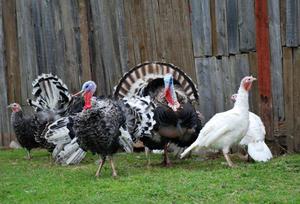
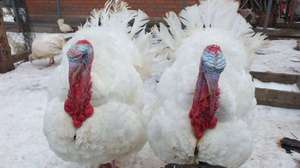 In the summer season, turkey breeds Big 6 needs to be let out for a walk.For this, they need a large area. If the plot is small, a solarium can be installed. It should have a cement floor. A net is stretched around the solarium, two meters high. It should be cleaned daily.
Basic The diet of Big 6 turkeys consists of The same feed as other breeds of this bird species. The diet should be complete and varied. The diet should include mixed feed with chopped potatoes, corn, silage, carrots, greens, and grains. The mash can be moistened with additional food products, including meal. To improve the turkeys' appetite, you can feed them chopped onions.
To ensure that adults gain weight well, they are fed four to five times a day in spring and summer, and three times a day in winter.
Peculiarities of keeping laying hens
To breed birds, you can purchase adult turkeys and form a flock from them. Ideally, a flock should consist of one turkey cock and six to eight hens.
Turkeys begin to lay eggs at the age of 7 to 9 months.Nests for them are placed higher and lined with plenty of straw and raised edges. It is always recommended to leave the first egg on the lining, so it is marked with a marker. Since turkey hens are caring mothers, they incubate their eggs faithfully. From time to time, a male turkey, who also has a brooding instinct, may take over for the female.
The turkey poults will appear in 26-28 days. The chicks are immediately removed from the nest., and keep them in a warm place until all the brood have hatched. They are then returned to the brood nest. The same process is followed for raising Big 6 turkeys from the incubator. For a large turkey family, free-range rearing is best, as it reduces the hassle and will also save significant feed.
Big 6 breed - one of the best among heavyweightsIt boasts lean meat and delicious eggs. The quality of turkey down and feathers is comparable to that of waterfowl. This makes raising and breeding the Big 6 cross a promising and profitable business.
Reviews
We really like the Big 6 cross. We buy two-week-old birds from a large farm that's more like a turkey farm. We raise them until they reach 6-7 kg dressed weight. I'd really like to have my own breeding flock, but it's not working out yet because the male can't fertilize the female on his own. I've heard that artificial insemination is necessary, but I don't know how yet.
This is my first time keeping Big 6 turkeys. So far, I'm very pleased with them. I sampled 10 of them, which are now three months old. They're all alive, growing well, and flightless. Raising them isn't difficult. You just need to create warm, dry conditions right away. For the first month, I kept them on deep litter placed on an infrared heated floor. This ensured the litter always stayed dry. Good ventilation and lighting are also essential.
My turkey poults are one month and 12 days old. I haven't hung them yet, but they've grown quite a bit since I bought them and look quite large. I've been letting the birds out into the yard for a week now, where they're happily wandering around, nibbling on grass, and trying to fly. It's fascinating to watch my pets' behavior—they're quite funny.