 Recently, more and more farmers have begun raising turkeys, which are becoming increasingly popular due to their excellent meat production. There are many turkey breeds, all of which differ in appearance, productivity, and adaptability to specific conditions.
Choosing the right poultry for your farm from the wide variety available can be challenging. The choice should be based not only on personal preferences, but also on the goals and methods of keeping the birds. This can be made much easier by studying the descriptions and characteristics of popular breeds.
Content
White broad-breasted turkey breed
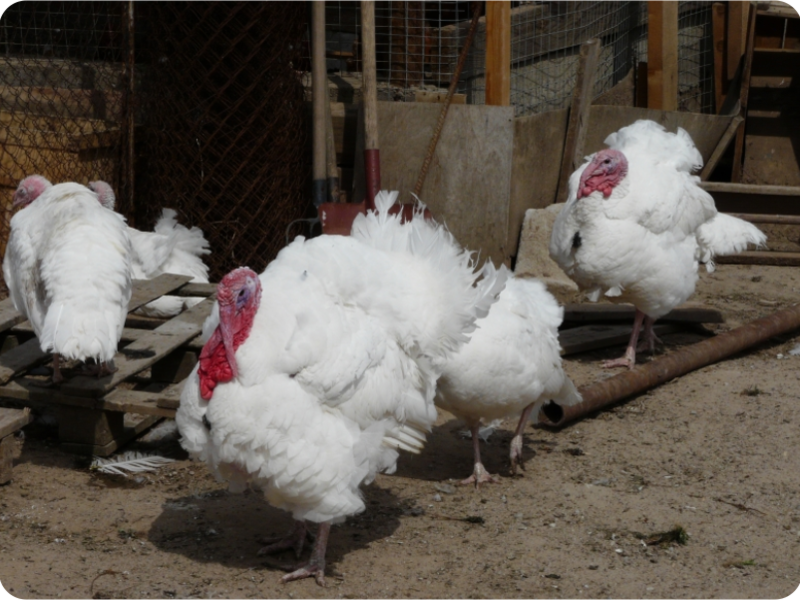
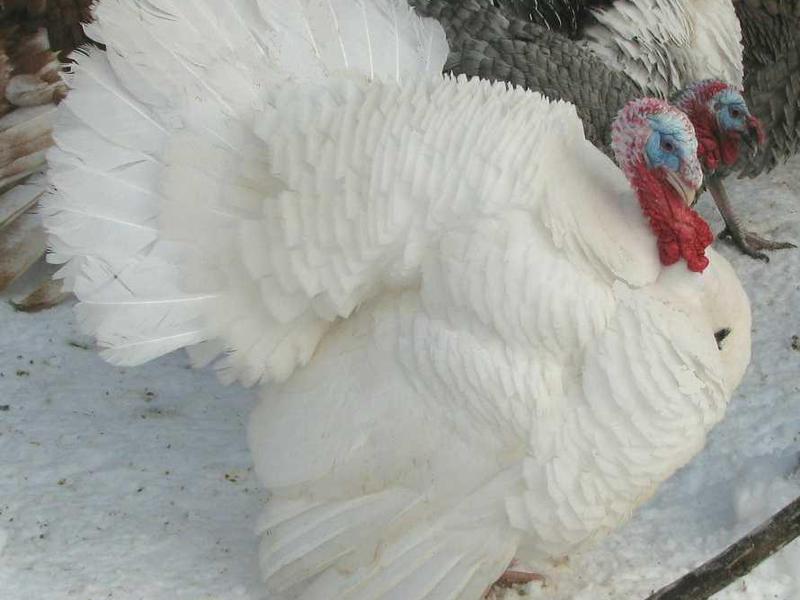
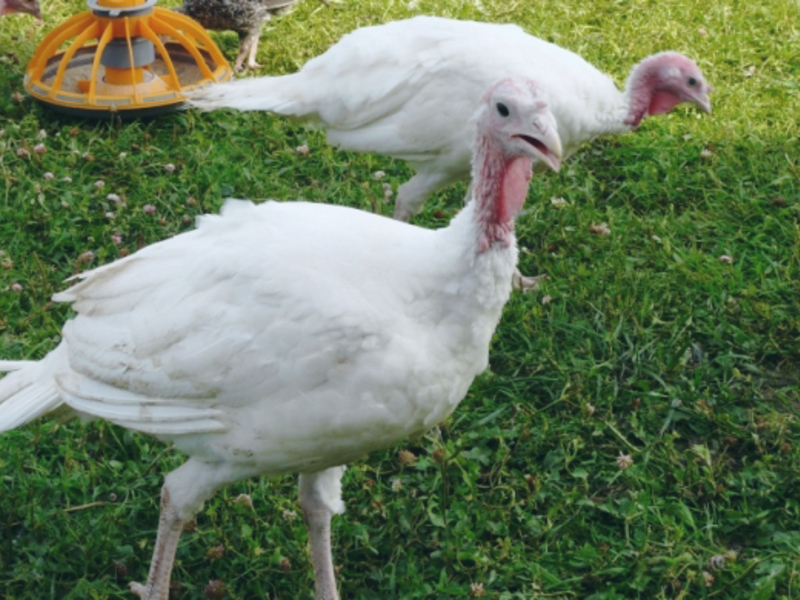
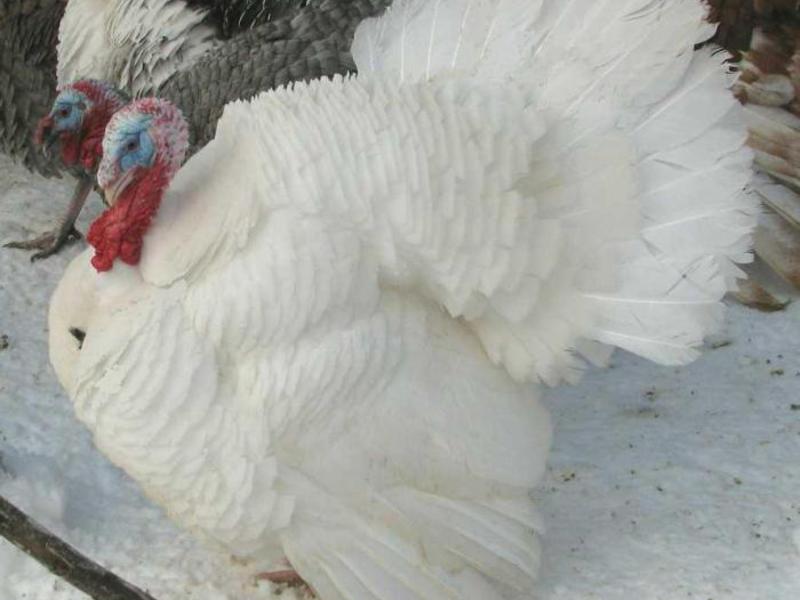
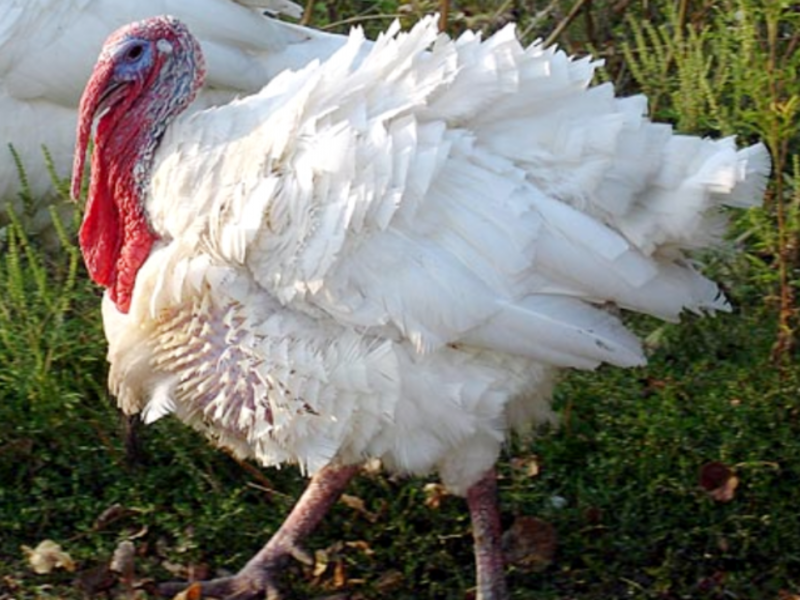
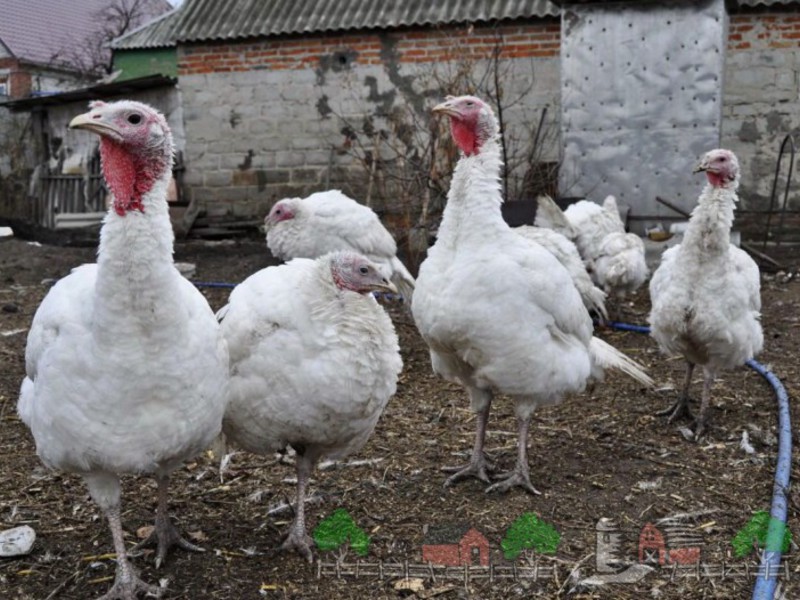
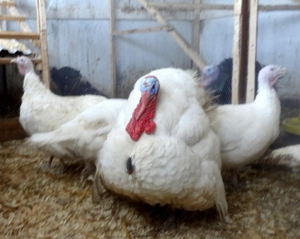
This is a very common breed of turkey. was bred in the USAIt is distinguished by good fertility, egg production, and early maturity. White broad-breasted hens have a very beautiful appearance:
- snow-white plumage with a tuft of black feathers on the chest, which looks like a medallion;
- convex wide chest;
- very dense constitution;
- slightly oval vertical body;
- wide-set, powerful legs;
- well developed fingers.
Today there is Three groups of white broad-breasted turkeys:
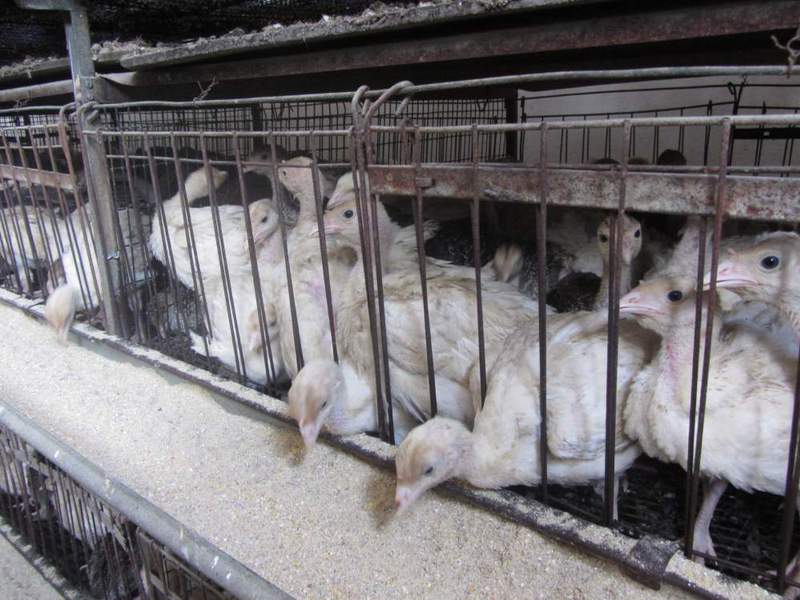
- Lightweight. Males in this group weigh no more than 9 kg, while females weigh no more than 5 kg. Birds in this group are mainly bred commercially and kept in cages.
- Average. Average-sized turkeys weigh around 7 kg for females and no more than 15 kg for males.
- Heavy. Larger birds can weigh up to 24-25 kg (males) and about 10-11 kg (females).
The peculiarity of turkeys of this breed is that after a year and a half they stop growingThat's why they are most often sold for meat at this age.
Many breeders claim that white broad-breasted cats are fussy about their living conditions and demanding in terms of feeding. However, these shortcomings are offset by the breed's advantages:
- the bird is undemanding to climate;
- gains weight quickly;
- has good egg production;
- has good meat qualities;
- used to improve other species;
- produces good offspring.
White broad-breasted hens begin laying eggs at 9-10 months. During the 6-8 months during which the productive period continues, the female is capable of producing more than 100 eggs Weighing 70 grams each, turkey poults grow quickly and by 8-9 weeks of age can weigh over two kilograms. By 20 weeks of age, turkey poults are well-feathered, weighing 14 kg for males and 8 kg for females.
When raising turkeys of this breed, it is important to know that they require high-quality nutritious feed, green pasture, and love to roam freely.
Bronze Broad-Breasted Turkeys
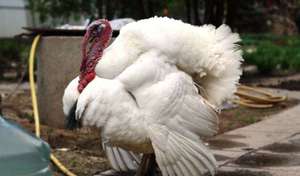 American breeders have developed the largest domestic turkeys – the Bronze Broad-Breasted. An adult male can weigh 19 kilograms or more. Under good conditions and feeding conditions, You can grow a bird weighing 20-21 kg.
The appearance of this breed of turkeys fully lives up to its name. The Bronze Broad-Breasted is distinguished by:
- broad chest;
- long body;
- a broad head and neck, which are covered with slightly bluish warty skin;
- with legs set wide apart;
- dark feathers with a noticeable bronze tint.
Male turkeys differ from female turkeys in that they have a fan-shaped tail, while female turkeys have coverts with a narrow white border on their neck and shoulders.
The breed's egg production is very high. A female can produce around 120 eggs per year. The young are very viable. Turkeys begin laying eggs at 10 months of age and have very good maternal instincts.
The Bronze Broad-breasted was originally bred for industrial production only, so it's not suited for outdoor feeding. It's recommended to keep it in an enclosure.
Moscow White Turkeys
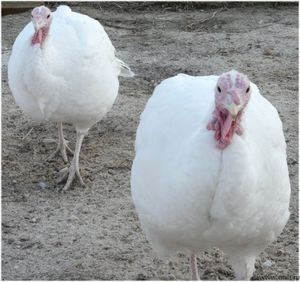 Developed in the Moscow region, this breed is a true achievement of Russian breeders, who crossed Beltsville, White Native, and White Dutch turkeys. The result is a viable and adaptable bird suitable for breeding in various regions.
The breed's appearance is different:
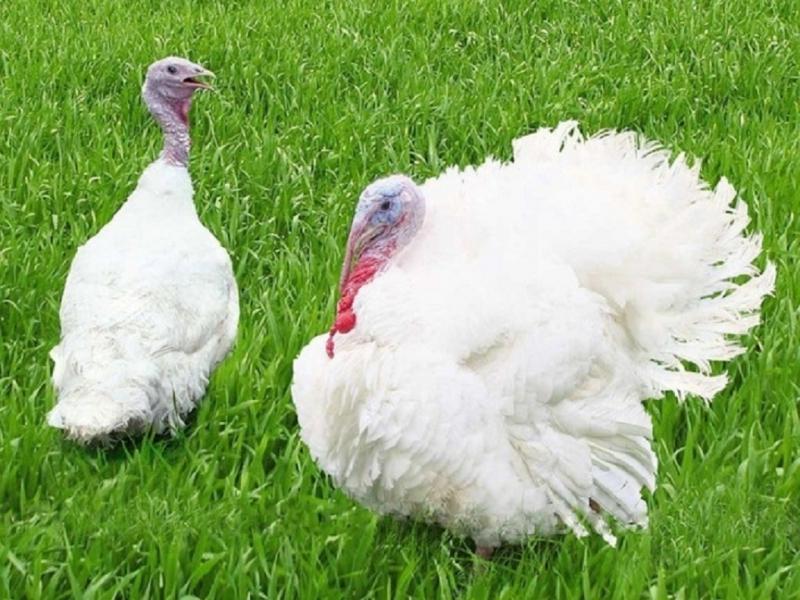
- absolutely white plumage;
- strong body;
- powerful and strong chest;
- moderately long legs;
- wide wings;
- moderately long neck.
Unlike turkeys, males have a wide, long head with protuberances. Females, on the other hand, have a well-developed brooding instinct and can incubate eggs from birds of completely different breeds and species.
The weight of males of the Moscow White breed about 12-13 kgFemales can weigh 5-7 kg. Poults weigh 5 to 6 kg at 17 weeks of age. A female turkey can produce 100 to 120 eggs per year.
North Caucasian bronze turkeys
Turkeys bred in the North Caucasus were created by crossing the Bronze Broad-Breasted turkey with local breeds. The resulting bird boasts high productivity, excellent breeding qualities, and increased activity. It adapts well to virtually any environment.
From other breeds North Caucasian bronze is distinguished by:
- small size;
- wide and long body;
- growth above the beak;
- long legs;
- deep chest;
- bronze plumage, which has a green and gold sheen;
- black feathers with dark brown stripes on the tail;
- practically bald head.
Unlike males, females have a well-feathered neck and greyish breast plumage with a white border.
Despite their small size, males of the North Caucasian bronze breed weigh reach 13 kgYoung animals at the age of 3 weeks weigh about 4 kg.
Females of this species can produce up to 80 eggs per year. They begin laying eggs at 10 months of age. Their light fawn eggs with white speckles weigh 80 grams each. The young are very active and mobile, and have a high survival rate.
The disadvantage of the North Caucasian bronze breed is the unsightly appearance of the carcass, which has a bluish tint.
Moscow bronze turkeys
Developed in the Moscow region, this breed was created by crossing the Bronze Broad-Breasted turkey with local bronze turkey breeds. The resulting birds quickly adapt to virtually any climate, are easy to feed, and are undemanding in their housing conditions.
Their appearance differs:
 convex, broad chest;
- oval long body;
- quite large, wide head;
- long neck;
- broad back;
- well developed legs;
- with a very curved long beak.
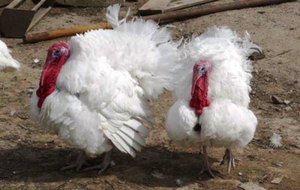 convex, broad chest;
The Moscow Bronze is a fairly large breed. The average adult male turkey weighs 15-18.5 kg, while females weigh from 8 to 9.5 kgYoung turkeys of this breed are raised for meat for 150 days. At this age, their average weight is 4 to 6 kg.
A female can produce up to 80-90 large eggs weighing 85-90 grams per year. Poults are viable and grow quickly. It is recommended to raise Moscow Bronze turkeys in pasture conditions.
North Caucasian silver turkeys
Developed in the North Caucasus, this breed was produced by crossing white broad-breasted and Uzbek fawn turkeys. These birds are easy to care for and feed, making them ideal for backyard farming.
Distinctive features of the breed include:
- broad back;
- small breasts;
- dark pink legs and powerful wings in males;
- silvery plumage that lies close to the body.
Due to the fact that turkeys of this breed have light plumage, their carcasses have an excellent commercial appearance.
The live weight of an adult male reaches 12-16 kg, females weigh about 7 kg. At the age of 17 weeks The young weigh from 3.5 to 5 kgFemales begin laying eggs at the age of 10 months and produce 90 to 110 eggs per year.
Keeping North Caucasian silver turkeys requires insulated premises in which the birds will easily survive even the harshest winters.
Black Tikhoretsk turkeys
As a result of extensive selective breeding, a turkey breed belonging to the light type was developed in the USSR in 1957. It possesses high production qualities and can be kept both in cages and on pastures.
Appearance of Black Tikhoretsk turkeys differs:
- dense body constitution;
- convex chest;
- dense, wide body;
- medium-sized head.
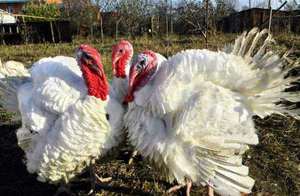 The birds have very beautiful plumage. The tail has a distinctive bronze sheen. Turkeys have black thread-like feathers that descend from the neck.
Males weigh up to 9-10 kg, while adult females weigh between 4.3 and 5.3 kg. Over the course of a year, turkeys capable of producing 80-90 eggsThe young have a good survival rate and reach a weight of about 4 kg by 17 weeks of age.
Keeping turkeys on your own farm involves proper feeding, regular inspection of the birds, systematic cleaning, and monitoring their growth. Only with proper care and maintenance will you be able to regularly produce delicious, nutritious meat, plenty of eggs, and, consequently, a good profit.