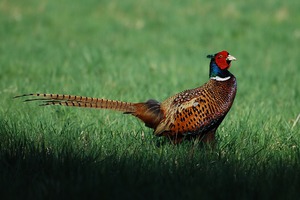
 Many of us have heard of the pheasant, and this bird is often associated with hunting or the consumption of exquisite dishes. This is understandable, given that pheasant meat is considered a delicacy and is prized, in part, for its flavor and other qualities. This explains why dishes made from this bird were often featured on the tables of kings and nobles.
But few realize that raising this bird at home is actually quite simple. And after learning this, many people are considering starting a pheasant breeding business.
Content
Choosing the most suitable breed for breeding
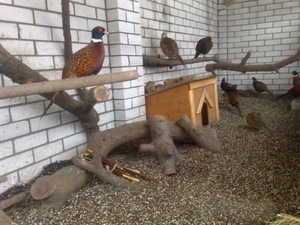
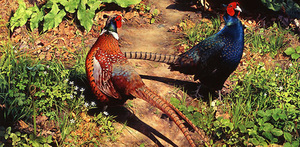 Pheasant breeding business at home has a lot of advantagesBesides providing themselves with dietary meat, a farmer can also reap a considerable profit by selling not only meat but also other products, such as feathers, eggs, and so on. This is often the reason people decide to start raising this bird. However, the key is to take your time and first understand all the pros and cons of this business. A host of issues must be addressed, and, most importantly, which pheasant breeds are best suited for keeping in a summer house.
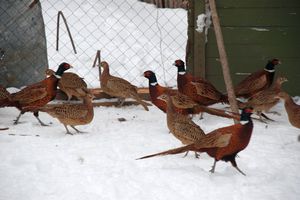
Hunting steppe pheasant
This representative of the family is found in the steppes of Russia, Ukraine and other countries, located in temperate climates. Their usual habitats are forests or plantations, as they are accustomed to spending the night on the branches of large trees. This breed is ideal for home pheasant breeding due to the following advantages:
- High resistance to diseases and temperature;
- Rapid weight gain;
- High egg production;
- Unpretentiousness to food.
This breed can be bred in our country's climate. Besides meat, it can be offered for sale. feathers, eggs, and chicks, which, despite their low price, are very popular on the market.
Diamond Pheasant
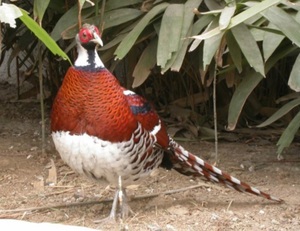 This breed was developed in the highlands of China. That's why it has so many shortcomings. Its only advantage is its attractive appearance. Therefore, buyers choose this breed not for starting a pheasant breeding business, but mainly for using it as a decorative element in a yard or poultry house.
Some people might like this breed. for making a stuffed animal, as well as a decoration for an elite hunting lodge. The process of raising this breed of pheasant is burdensome and fraught with many difficulties. An owner attracted to this business must create favorable temperature conditions:
- in the warm season, the room temperature should be maintained within the range of + 5 to + 30 degrees;
- In winter, it must be protected from severe frosts, as temperatures dropping to -25 to -30 degrees Celsius can seriously harm the pheasants. Therefore, heating must be provided in the poultry house.
This breed is also very demanding in terms of food - its diet should include vitamins, greens, and fish oil, which will help replenish the deficiency of microelements that the bird normally receives. when using exotic plantsThis breed weighs no more than 1 kg, and raising specimens heavier than this is quite rare. A bird can lay up to 30 eggs in a single season, provided the female is checked regularly. Otherwise, the number does not exceed 4-5.
Golden Pheasant
This breed is quite small, weighing approximately 1.2 kg. It is considered an ornamental breed, making it a popular choice for those seeking decoration rather than for a pheasant farming business. This breed has a low egg production rate—with proper harvesting, a maximum of 25 eggs can be obtained per season. The meat is not particularly valuable, and its flavor is no different from that of game pheasant.
This breed does not tolerate low temperatures well, so you need to make sure that the room temperature didn't drop below -20 degreesYou should also ensure there are no drafts in the coop. Pay close attention to the feed: the diet should definitely include greens, as in the wild this breed feeds on grass, shrub leaves, and tropical plants. The bird should be provided with all the necessary minerals and microelements, so it should receive fish oil, vitamins C, B6, and B12.
Silver Pheasant
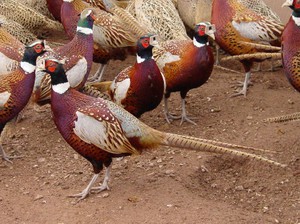 This species is quite popular among farmers for home breeding. In the wild, the bird is found in the highlands of China, but it can also thrive in our country. Its dense plumage allows it to easily withstand temperatures as low as -30 degrees Celsius.
The disadvantage of this breed is high sensitivity to draftsTherefore, if the coop isn't protected from the wind, pheasants can become ill. Typical specimens weigh 4-5 kg, but some weigh up to 6 kg, and their bodies can reach 90 cm in length.
This breed is known for its high egg production—it can lay up to 50 eggs per season. However, to achieve this, you'll need to regularly check the female's eggs, leaving a maximum of 5-6 to encourage further laying.
Silver pheasant
They are also among the breeds ideal for home breeding. These birds are ideal for those who want to raise pheasants for meat, as well as for decorative purposes. Their feathers are a valuable product, suitable for crafts and stuffed animals for decorating elite hunting lodges. The beak, from which produce souvenir products.
Keep in mind that when choosing a pheasant, it's important to focus not on appearance but on care requirements. Typically, birds with brighter plumage and an attractive appearance present more challenges in care, as these species inhabit tropical latitudes in the mountainous regions of China or southern Russia. If you're starting a pheasant farming business for the first time, it's best to choose a game pheasant. This breed is found in the steppes of Russia, Ukraine, Kazakhstan, and other countries with a temperate climate.
This breed is preferable because it doesn't require any special housing conditions and gets along well with other chickens in the coop. This bird is also undemanding in terms of food - you can give it grain, turf, corn and other products, which are available in your garden.
How to properly equip a poultry house?
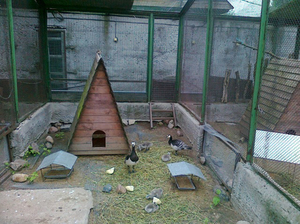 If you've chosen a local pheasant breed for your business, you won't need to build a special coop, as they can be kept outdoors. Just make sure there's no wind, otherwise the birds may catch a cold. However, if you're planning on providing shelter, it will only benefit the pheasants.
For exotic species, a dedicated shelter is essential, and a coop alone won't provide sufficient protection from frost. Heating is essential. To better understand how a pheasant coop is built, let's take a detailed look at a sample diagram for building a pheasant shelter in your backyard.
Stage 1. Preparing the supports.
Once the supports are ready, it's recommended to concrete them to extend their lifespan. It's best to use 150-200 mm thick wooden beams, which are driven 40-50 cm into the ground and filled with concrete around the perimeter. This structure will last at least five to six years. However, there's a slightly different approach.
First, a 30-40 cm columnar foundation is made, and after the concrete is poured, a plinth is constructed into which the supports are installed. For a better connection, the structure can be secured to the concrete with anchors. This will ensure the poultry house remains stable throughout the entire construction process.
Step 2. Making the top trim
At this stage of construction, all the supports need to be secured at the top with an 80 x 80 cm square, and the rafters will be attached to it if you decide to make a gable roof, or directly to the sheathing if you decide to make a single-pitched roof.
Step 3. Making the sheathing or rafters.
If your poultry house is planned to have a gable roof, you'll first need to measure the ridge using a tape measure, and then install 60 x 60 cm rafters at 90 cm intervals. Once you've determined the approximate height of the top sheathing, you'll need to make notches at 4-5 cm intervals to ensure the rafters are securely fastened in place.
Next, take a standard cordless screwdriver and secure the rafters to the frame with 15-20 cm screws. For the sheathing, you can use 20 x 200 mm boards; it is recommended to install them at 80 cm intervals. This will ensure the structure fits perfectly to the dimensions of the future slate sheet, eliminating the need for adjustment.
Stage 4. Wall paneling
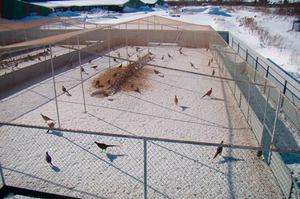 It's advisable to insulate the structure during the construction phase; this will avoid significant costs and will also save you significant heating costs in the future. For this work, you'll need an OSB sheet, which should be installed against the supports on one side. Then, take a similar OSB sheet and install it on the inside.
The end result should be two walls with 120-130 mm of free space between them. Mineral wool or special insulating paper should be placed there. An alternative would be regular 10 cm thick foam plastic, which is attached to the wall, and then the second wall is installed on the other side.
Stage 5. Insulating the ceiling and finishing the room
To cover the ceiling, you can use foam or mineral wool mats. These are installed between the rafters, and then OSB or fiberboard sheets are installed on top. For finishing the walls and ceiling, you can choose from a variety of options, including plastering, painting, or creating a moisture-resistant coating.
This completes the construction of the poultry house. If you followed all the recommendations, you can be sure that even in winter temperatures of -35°C, your birds will remain warm, as this design can maintain a temperature of 5-8°C even in the most severe frosts. However, if any difficulties arise and the internal temperature proves insufficient, you can additionally equip the poultry house with a 0.3 kW heater. This will be sufficient to maintain the temperature inside at 10°C. This will help prevent weight loss in your pheasants.
Breeding and keeping at home: winter feeding considerations
In summer, pheasants can be fed the same food as a regular Muscovy duck or Italian goose. But in winter, you should make some adjustments. certain changes in the diet of pheasantsKeep in mind that golden, diamond, and silver pheasants are exotic members of the family and are accustomed to eating greens year-round. Therefore, you need to provide them with vitamins and nutritional supplements.
 Fish oil. Without access to a variety of herbs, birds develop vitamin B6, riboflavin, and B12 deficiencies. This leads to weakened immune system, dull feathers, and decreased appetite. Fish oil can help solve this problem; adding 2 grams daily to the bird's water bowl is sufficient.
- Ascorbic acid. With the arrival of winter, pheasants lose the ability to obtain vitamin C from their favorite fruits and berries. This deficiency can be remedied by adding a small amount of ascorbic acid to their feed and water.
 Fish oil. Without access to a variety of herbs, birds develop vitamin B6, riboflavin, and B12 deficiencies. This leads to weakened immune system, dull feathers, and decreased appetite. Fish oil can help solve this problem; adding 2 grams daily to the bird's water bowl is sufficient.
Conclusion
Poultry has always attracted people who saw it as an opportunity make a profit from the saleAmong these, the pheasant is a very popular breed, as raising it in a backyard isn't all that difficult. All you need to do is choose the right breed and learn the ins and outs of pheasant keeping at home. This business is within anyone's reach, provided you approach it wisely and meticulously follow every step. By paying close attention to your pheasants, you can expect them to reward you with increased weight gain and high egg production at the end of the season.