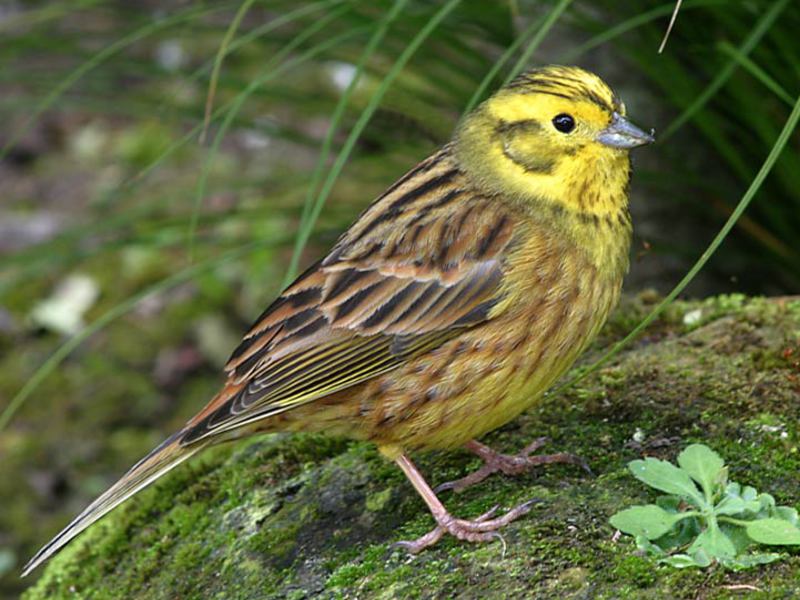
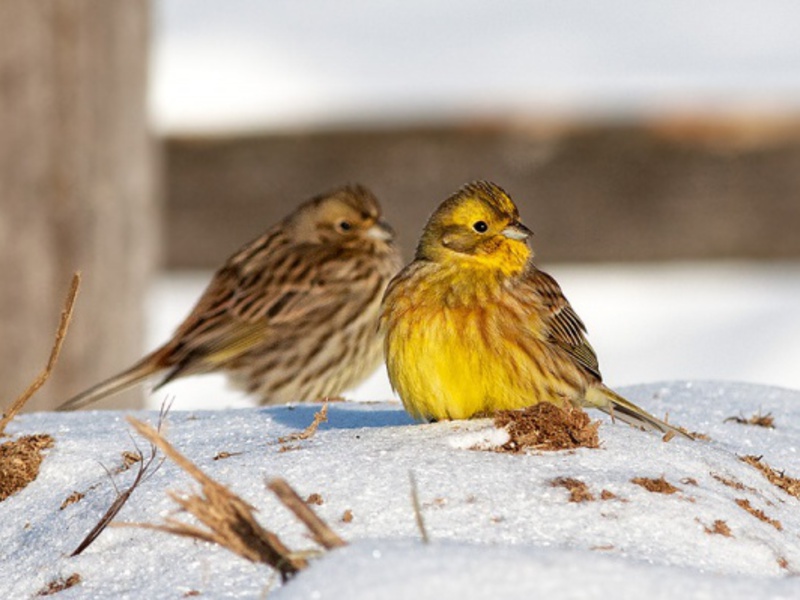
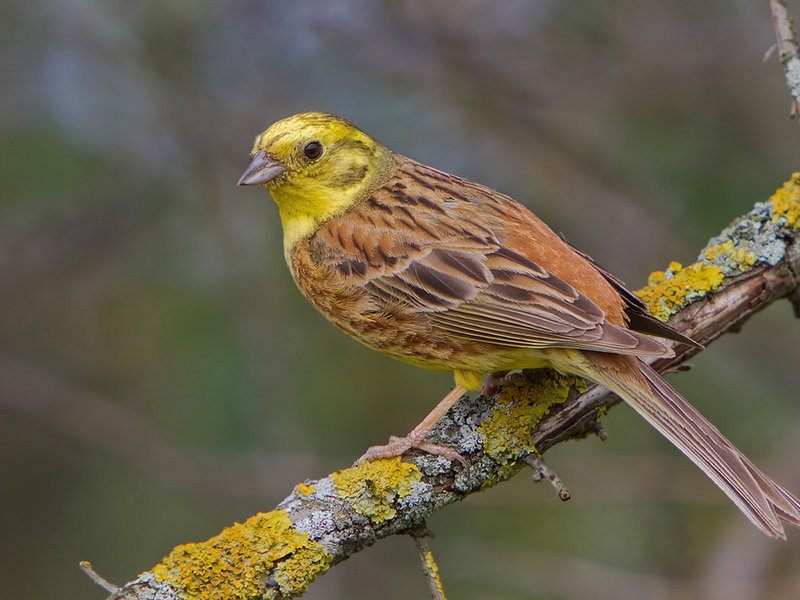
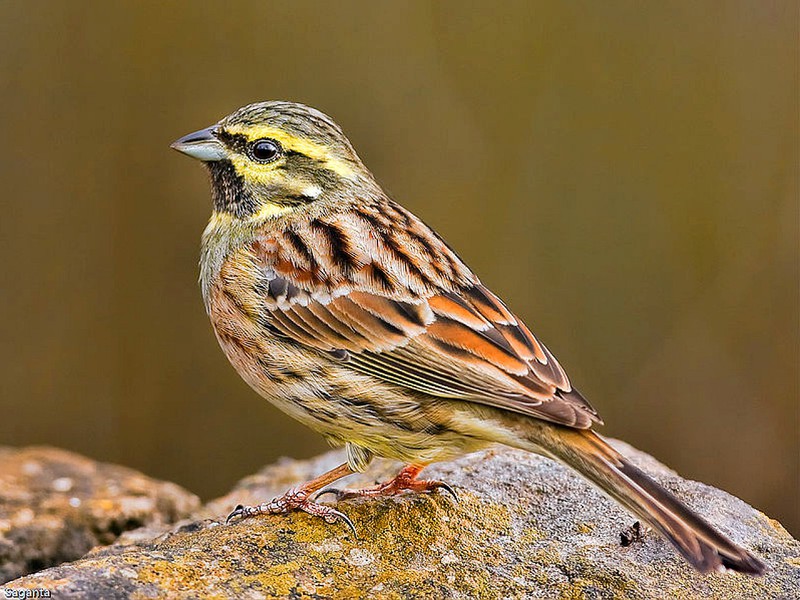
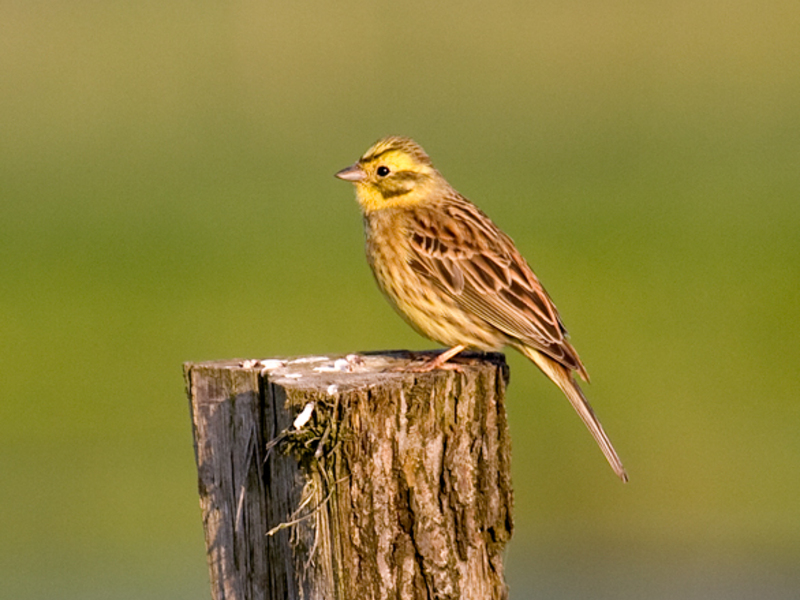
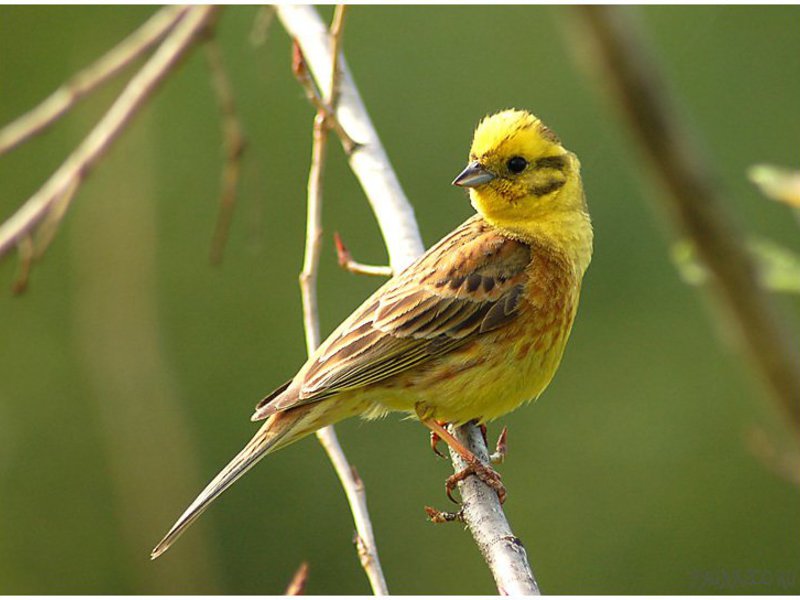
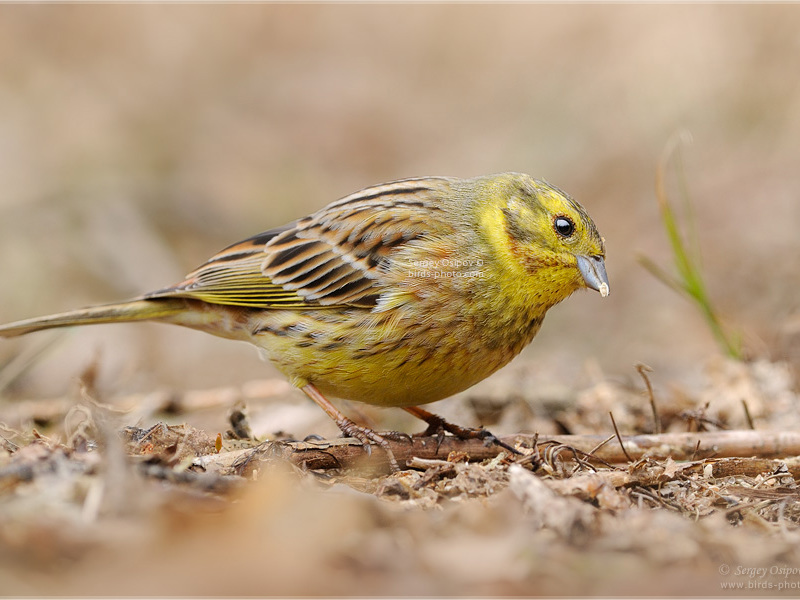
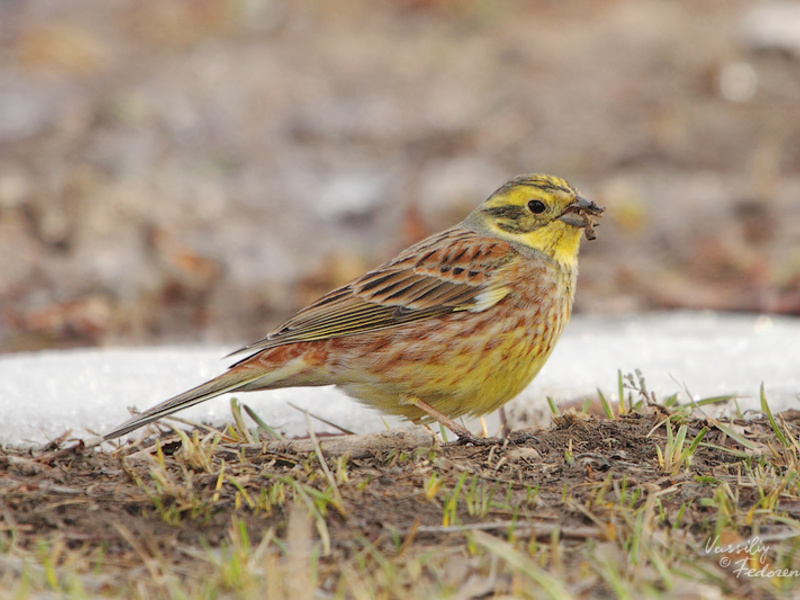
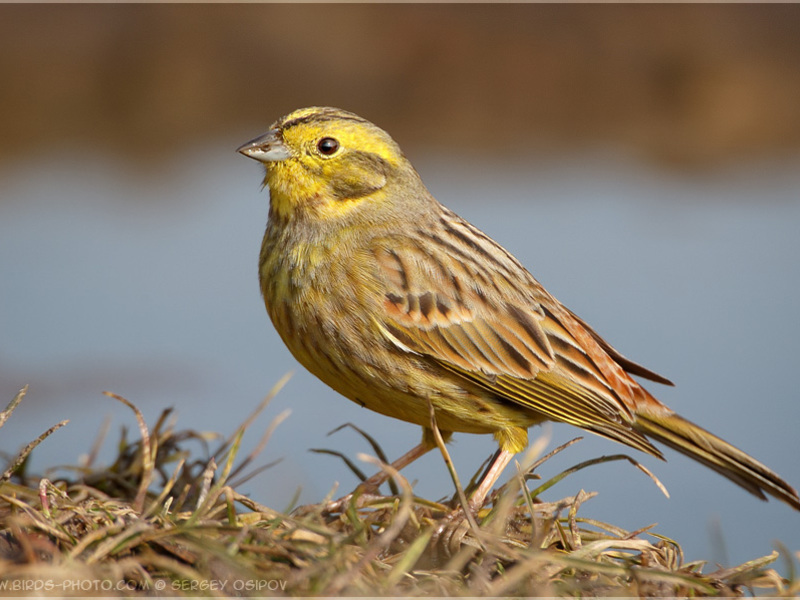
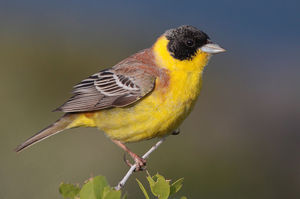
 A small bird from the bunting family, the yellowhammer is easily recognizable by its golden-yellow plumage on its chest and head. It is common in temperate regions of Asia and Europe, where it can be sedentary or migrate to warmer climates for the winter. The yellowhammer has also become a naturalized bird in New Zealand, where it was introduced by humans. Distinguished by its grace, elegance, and resonant song, it can even become a striking addition to any home.
Content
Appearance – photo
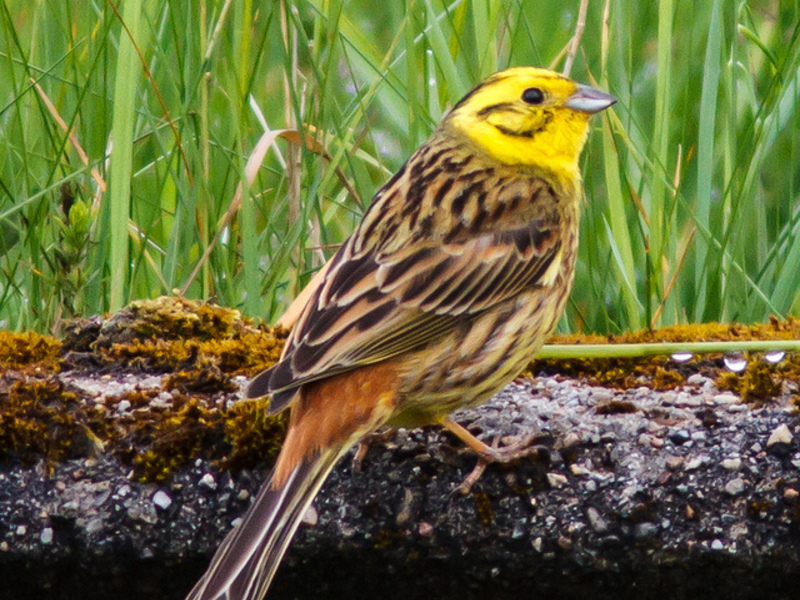
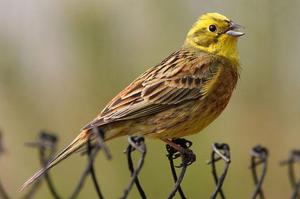
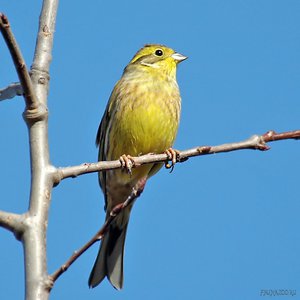
A bird the size of a house sparrow weighs about 30 g, and reaches 18 cm in length. During the mating season, the male of the common bunting is distinguished by:
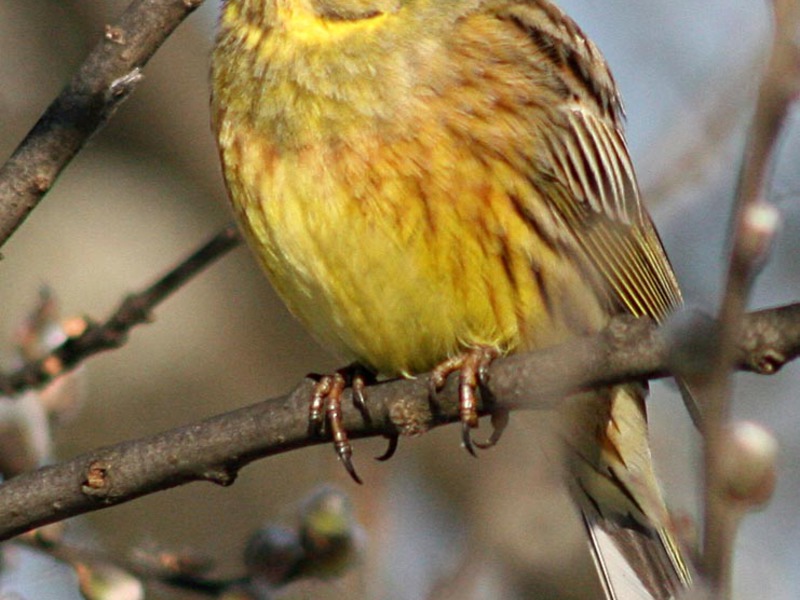
- a large number of golden-yellow feathers on the belly, chest, chin, cheeks and on the top of the head;
- numerous longitudinal streaks on the chest and crop;
- greenish-olive pattern of transverse stripes on the cheeks, sides of the head and forehead;
- grayish-chestnut with dark speckles on the back;
- dark brown wings;
- chestnut uppertail and lower back;
- long tail.
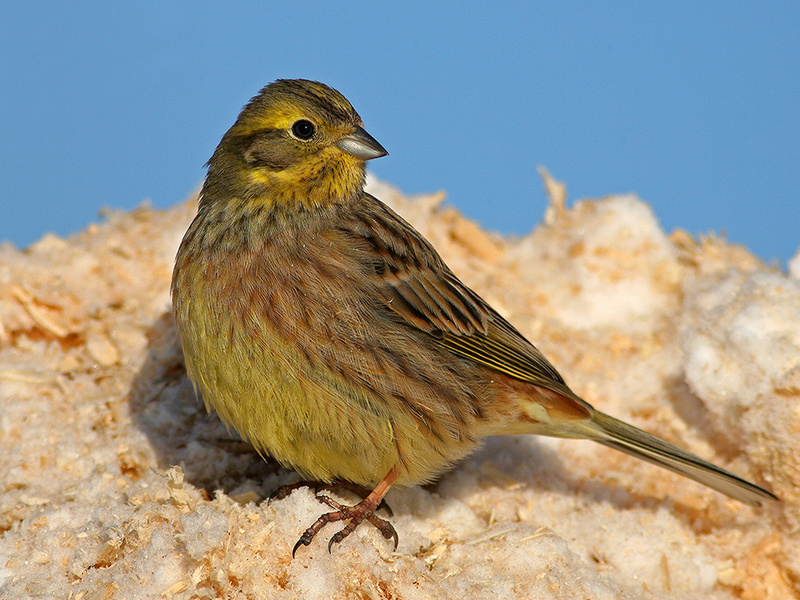
The female's feathers are duller. The faded yellow tones have a greenish tint, and the brown feathers are replaced by fulvous brown. The young, regardless of sex, are similar in color to the female.
With the onset of autumn, birds shedding begins, and then the yellow feathers give way to darker plumage. Only barely noticeable blotches remain on the belly and throat. At this time of year, it is almost impossible to distinguish males from females. By spring, the brown feathers wear away, and yellow plumage resurfaces.
Habitats
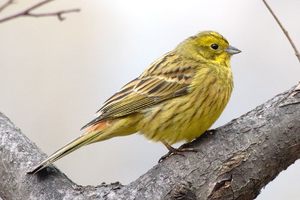 Yellowhammers readily inhabit clearings, forest edges, and clearings. They often choose open trees and bushes along roads as their nesting sites. In open landscapes, they can spot enemies early and fly away. These birds are not afraid of people, so under suitable conditions they can even live in cities. In winter, they live in harvested gardens and fields or on the outskirts of populated areas. Yellowhammers can also be found in the mountains, where they ascend only to the subalpine zone.
Migratory birds fly away for the winter to the Mediterranean countries or to Western EuropeThey return to their homeland in March or April. At this time, buntings form large flocks with sparrows, finches, and other small birds and set out in search of food.
What does the common oatmeal eat?
The bird's diet is based on plant foods. Oatmeal buntings prefer cereal grains and the seeds of various grasses:
- plantain;
- yarrow;
- cornflower;
- dandelion;
- forget-me-nots;
- clover;
- peas;
- yaskolki;
- stinging nettle;
- fescue;
- bluegrass.
During the breeding season, birds need protein, so they begin to eat small invertebrates:
 woodlice;
- spiders;
- sawyers;
- caddis flies;
- lacewings;
- Hemiptera;
- earwigs;
- cockroaches;
- grasshoppers;
- mayflies;
- springtail.
 woodlice;
The chicks are fed with mixed feed, with half-digested food being brought to them in their crops.
Features of reproduction
In common buntings, sexual maturity occurs at the age of one yearThey begin nesting in mid-spring. Males are the first to return from the warmer climates where they spent the winter. They find a nest site, perch nearby on the top of a bush or tree, and begin singing for a long time. This is their way of announcing the nest site's occupancy and calling for females.
Ten days after the males, the females arrive and after some time begin to build the nest.
Bunting nests
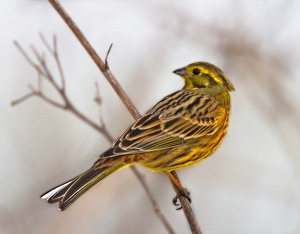 The birds choose forest edges or young coniferous stands for their nests. They don't settle in forested areas, as these small birds have many enemies there.
During the breeding season, buntings choose a suitable depression among the bushes, and begin to build a nestThey spend a lot of time building their nest. To ensure a sturdy nest, the birds use leaves and dry grass stems as building material, adding a small amount of lichen and moss.
To camouflage their nests from prying eyes, buntings use the crushed stems of large herbaceous plants, which they add to the nest structure. The ends of these plants are left unwoven, making the nest virtually invisible among the bushes.
Particular attention is paid to the bottom of the nest. It is carefully lined with horsehair or small rootsIf nest construction occurs during a rainy season, the birds try to lay as much hair as possible on the bottom. The chicks will feel very comfortable in such a nest.
The bunting nest is a small bowl-shaped nest, measuring 80 mm in height and 130 mm in diameter. To provide adequate protection for the chicks, the nest should be at least 50 mm deep. This will prevent the chicks from falling out.
Nesting and chicks
The yellowhammer lays eggs twice per season. The first clutch is laid in mid-spring, and the second in early summer. Each clutch contains two to six plump eggs. They can be a wide variety of shades—pink, light purple, bluish-gray, or rusty brown. The eggs may have dark patterns such as spots, speckles, commas, and swirls. The largest egg measures 23 mm, and the smallest 15 mm.
The female sits on the nest after laying eggs. the penultimate or last eggThe female incubates the eggs alone. The male does not assist her, as he is responsible for providing food, flying off to fetch it.
After twelve to fourteen days, the chicks hatch. They are covered in thick grayish-brown or reddish down and have a raspberry-red or pink oral cavity.
Both parents feed the young. But after a while, when the young have not yet left the nest, the female leaves them with the male while she begins building a new nest for the next clutch. The young leave the "parental home" on their twelfth or thirteenth day of birth.
The behavior of a mother hen when an animal or person approaches is very interesting. She flies up to a branch of another tree and begins emitting alarm calls in the form of a short, staccato clicking sound or a long, high-pitched whistle. If the chicks have already hatched, to distract a potential enemy from her nest, parents fall into the grass and, pretending to be a wounded bird, they begin to crawl away.
In autumn, birds of all ages gather in flocks and seek habitat in open areas where food is more readily available. The average lifespan of a yellowhammer is about three years.
Keeping oatmeal at home
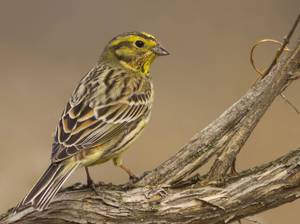 The best time to catch small birds is in the spring. This is when they begin to sing, and you can choose the best singer for your bird corner. You can catch them using a decoy female or by feeding them.
For the first two weeks after capture, buntings are kept in a cage or enclosure covered with a thick cloth. During these days, the bird sings loudly, so changing the location of its new home is strictly prohibited. Otherwise, the bird will remain silent until the following spring. The bunting's home should be spacious. In cramped conditions, they sing less loudly or not at all.
Songbirds can be kept in any number. However, each bird should be kept in a separate cage of length at least sixty centimetersInitially, the bottom of the cage is filled with sifted and washed sand. Over time, this can be replaced with paper bedding.
Meadow and steppe dwellers require good lighting in captivity. To achieve this, the bird's cage should be regularly taken outdoors and placed in a sunny spot. Insufficient light causes feathers to fade, turning a dirty yellow. Whitish spots appear on the wings and tail.
The oatmeal needs to be provided with fresh drinking water and daily bathing, for which the cage is equipped with a drinking bowl and a wide container of water.
Feeding
 The healthiest treats for birds include rapeseed, millet, oatmeal, canary grass, and weed seeds. Sunflower seeds and other fatty seeds should be avoided. They really love mealworms, so they can also be included in the diet.
During molting, birds require animal proteins, which are found in various grain mixtures and insectivorous bird feeds. In addition, oat buntings should be fed fresh greens, sprouted grains, and mineral feeds.
The beautiful songbird, the yellowhammer, is a great asset to agriculture. It destroys weed seeds and insect pests. And if properly cared for, a pet bird will delight you with its magnificent song each spring.