 Legends abound about this bird. You may not believe the tales, but the unusual nature of these small birds, the size of a large sparrow, is intriguing to anyone with an interest in the natural world.
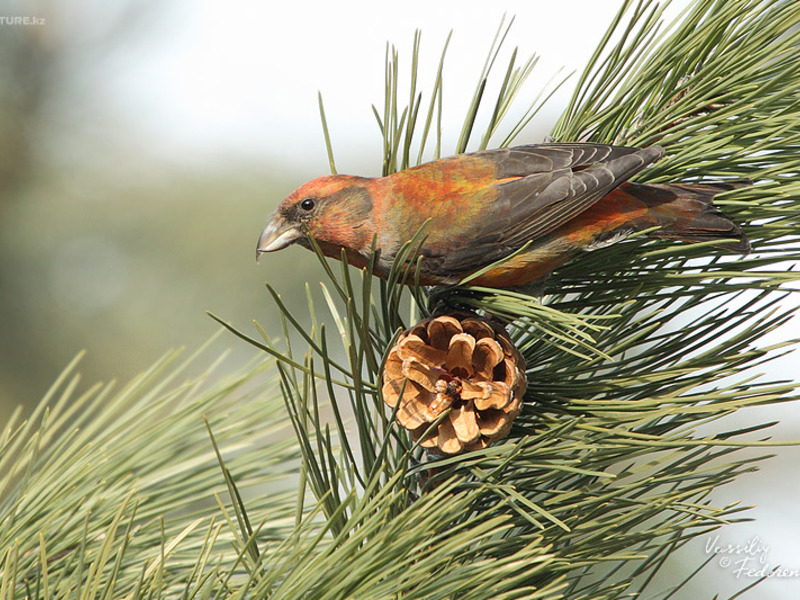
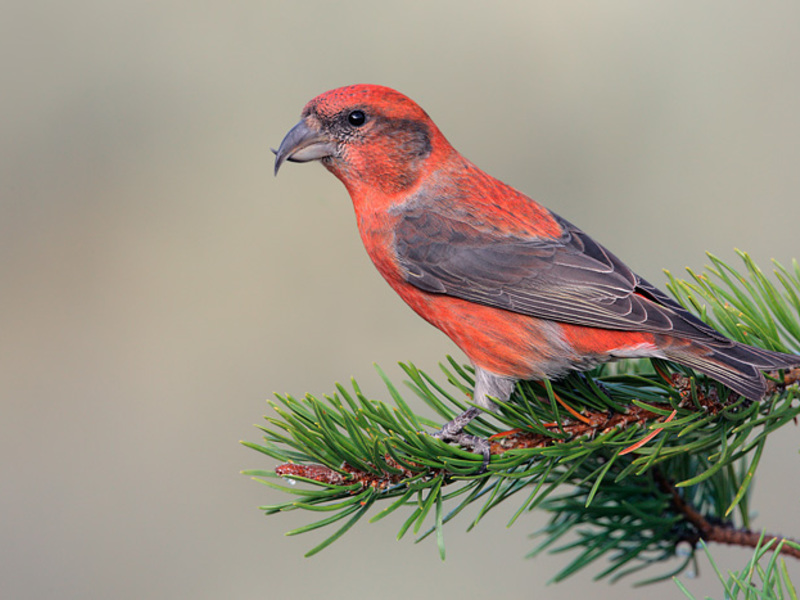
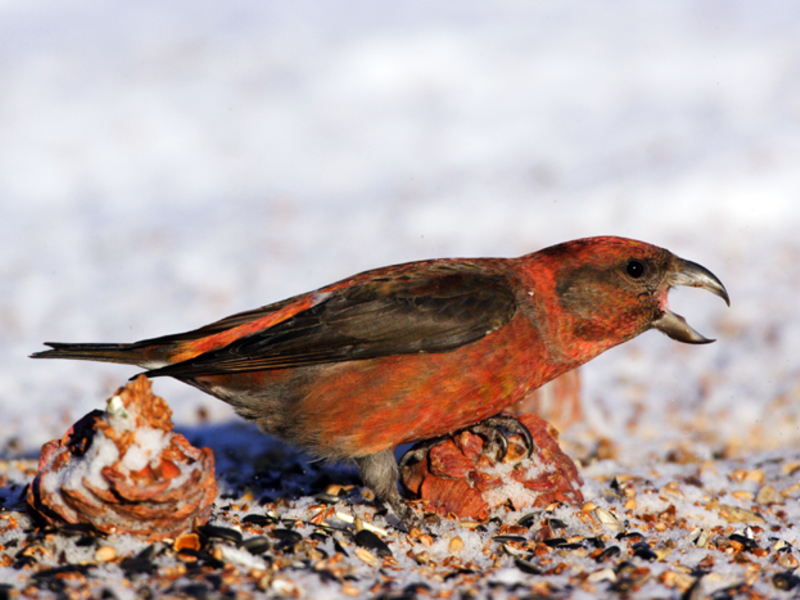
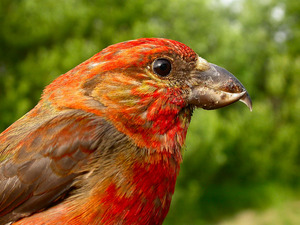
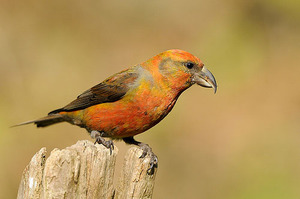
A small bird, up to 20 cm long, belonging to the passerine order, with a stocky build, a forked tail, and an unusual beak. Its halves are curved and diverge, forming a cross. This beak is ideal for shelling seeds from cones. Nature has adapted it well for foraging.
Bird of Christ
During Christ's terrible suffering on the crucifixion, a bird flew to Him and tried to pull the nails from His body with its beak. But the fearless little creature had very little strength, only mutilating its beak and staining its chest with blood. The Lord thanked the intercessor by endowing her with unusual powers. It was a crossbill, and Its unusualness lies in three things:
- cross-shaped beak;
- born on Christmas Eve;
- incorruptibility.
Description
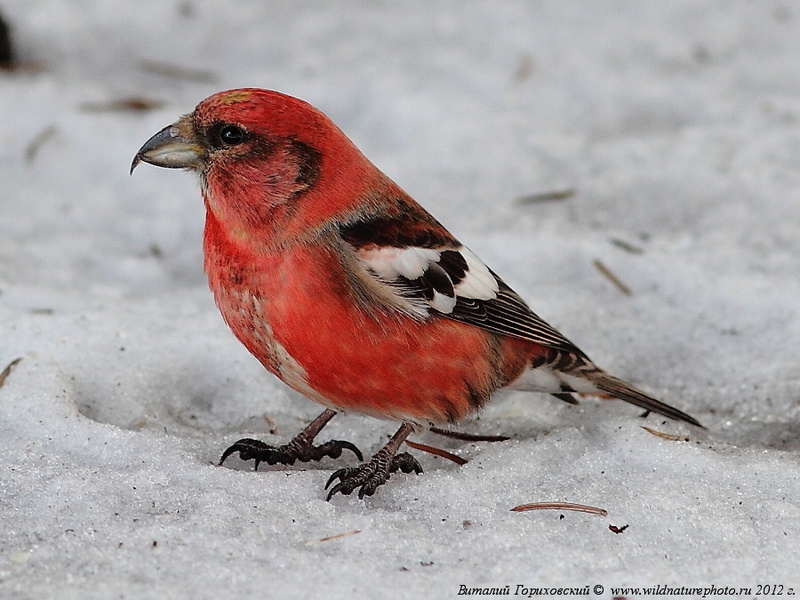
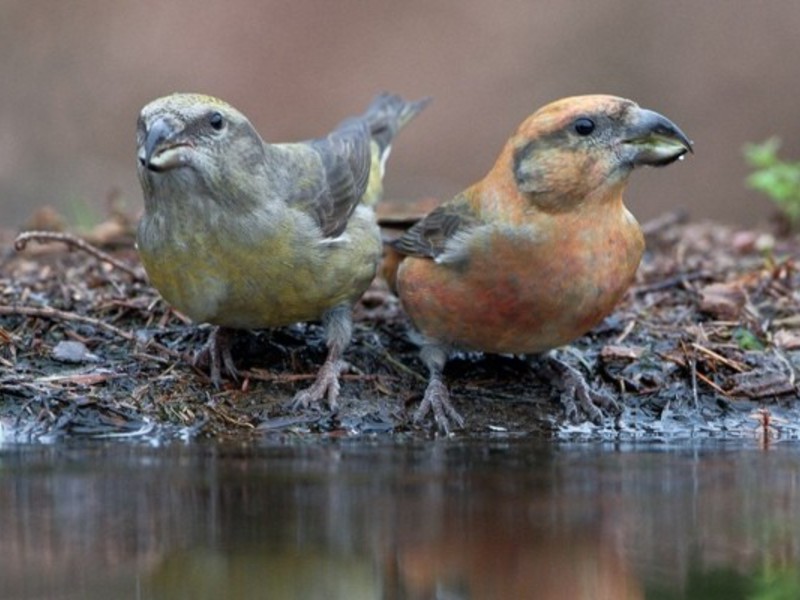
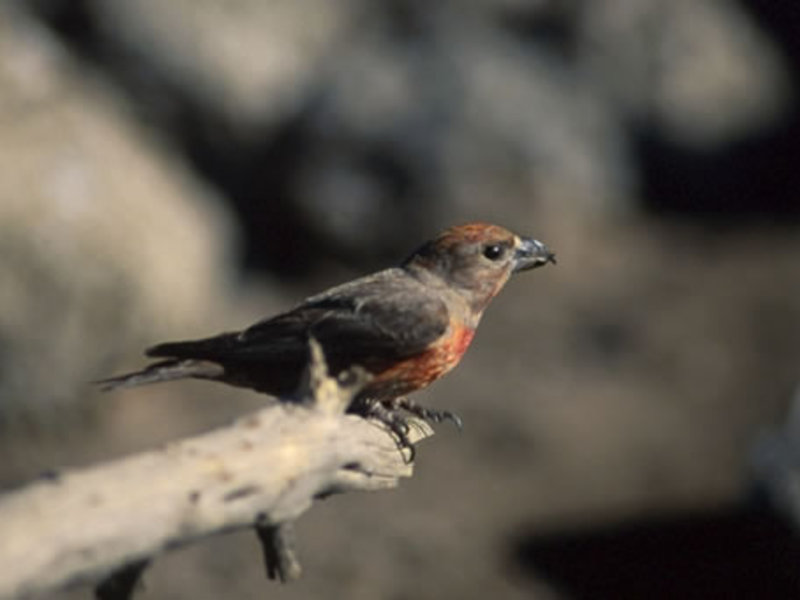
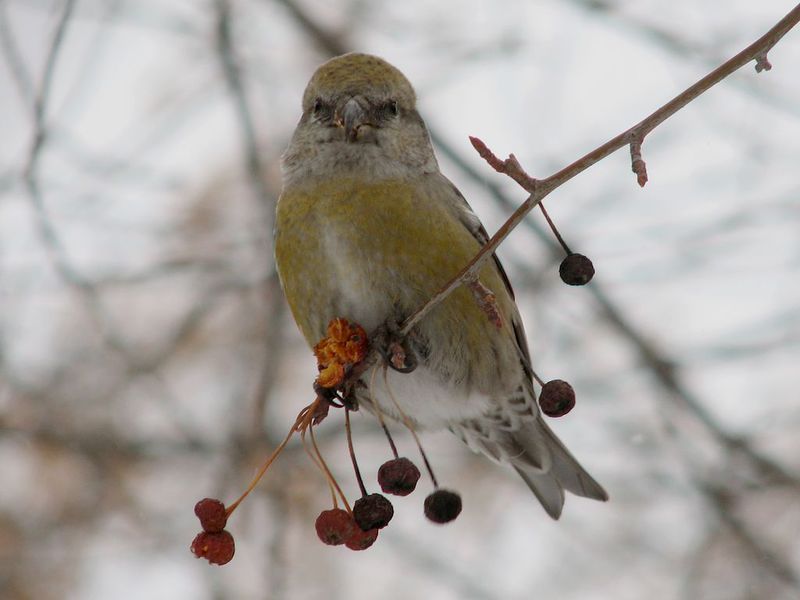
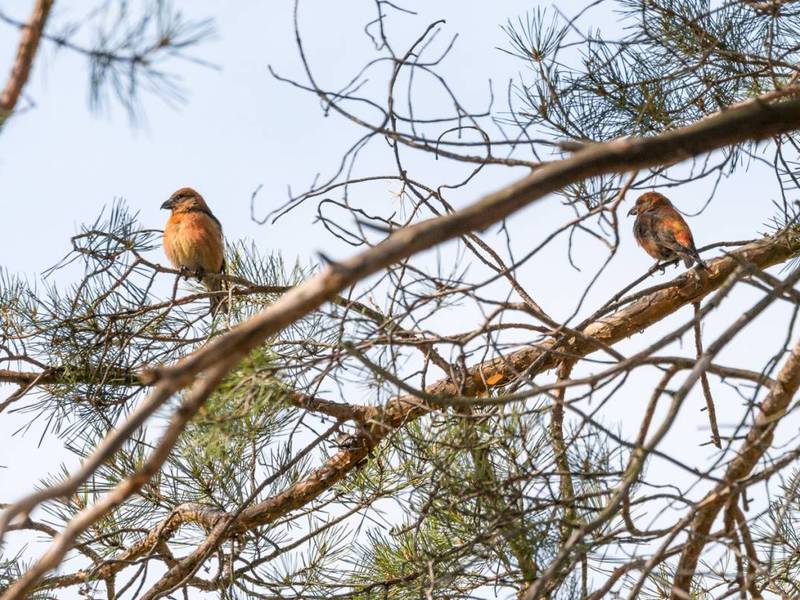
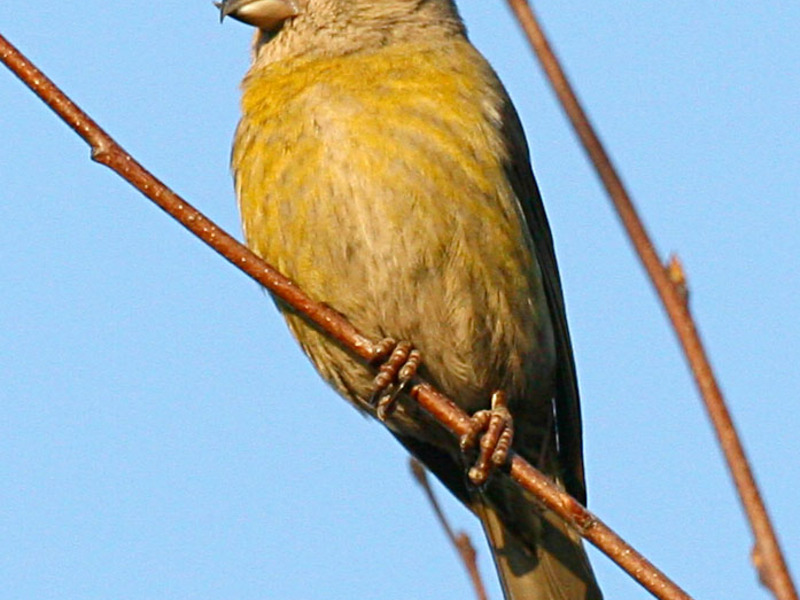
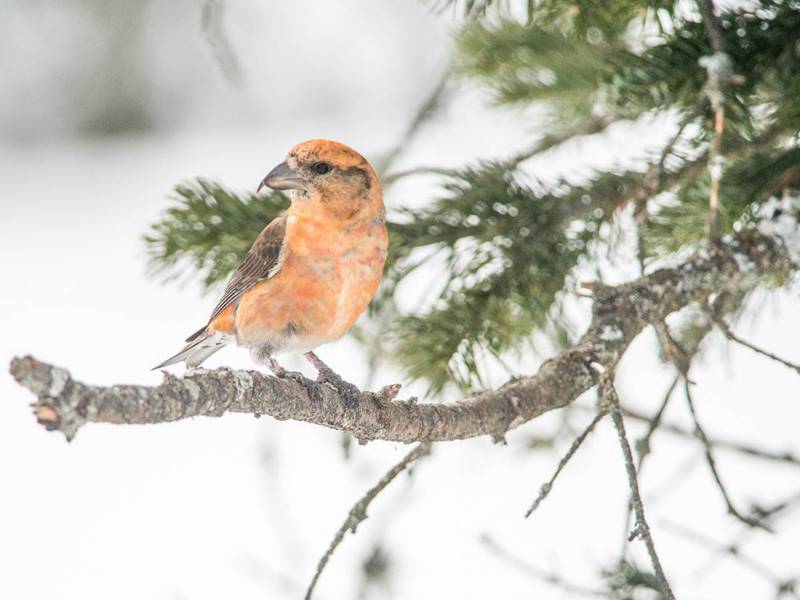
The tenacity of their feet allows the bird to climb trees, hanging upside down from a pine cone. The breast of males is crimson, while that of females is greenish-gray. The tails and wings of these birds fade to a gray-brown color. Crossbills' song is high-pitched, reminiscent of a chirp with a whistle. This is observed during migration. On branches, the birds are silent.
They highlight several species of birds, three of which are the main ones and inhabit the vast expanses of Russia:
- Crossbill;
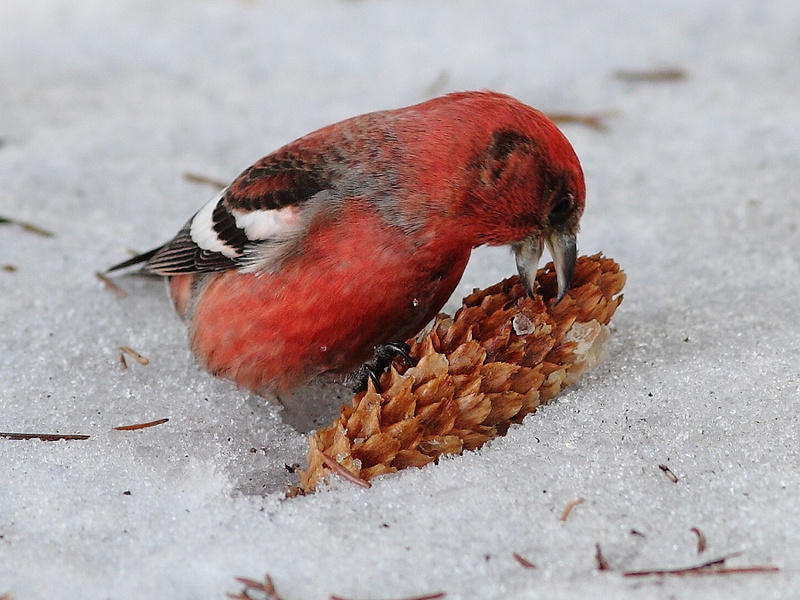
- White-winged;
- Pine crossbill.
They share similar habitats and diets. Their names reflect the species' preference for coniferous forest species and the presence of white feathers.
Habitat
 The ancestors of modern crossbills are quite ancient, dating back 7-9 million years. The main population of crossbills originated in the coniferous forests of the Northern Hemisphere. Their dispersal directly depends on the harvest of cones, which are the birds' primary food source. Therefore, crossbills inhabit both the tundra and forest-steppe, migrating long distances to areas rich in food. There have been cases where they have been found 2,000 km from their nesting sites.
In Russia, they inhabit pine and spruce forests in mountainous areas in the southern and northwestern regions of the country. The bird can be found in forests dominated by spruce. The common crossbill does not live in cedar forests. This bird has virtually no enemies. This is explained simply: by eating conifer seeds, the birds embalm themselves during life, making them too bitter for predators. After a natural death, they mummify, a process facilitated by their bodies, which contain a high concentration of coniferous resin.
Crossbills fly well, but it's impossible to say whether they are migratory or sedentary. They are more likely to be nomadic birds. Their migrations are closely linked to the harvest. In areas rich in food, the birds endlessly climb treesFortunately, the crossbill's beak shape allows it to do this effortlessly, like a parrot's. It is this ability and the vibrant color of their feathers that earned them the name "northern parrot." They rarely descend to the ground, and they feel perfectly comfortable on branches, even upside down.
Nutrition
It would be wrong to think that the crossbill feeds solely on conifer cone seeds, although they are its primary food. The bird's beak tears off the scales, exposing the seeds, but only a third of the cone is used for food. The bird leaves behind the hard-to-reach seeds, making it easier to find another cone. The excess falls to the ground and becomes food for mice, squirrels, and other forest creatures.
The crossbill may additionally feed on spruce or pine buds, especially when cones are scarce, and will gnaw off the resin along with tree bark, as well as other seeds, insects, and aphids. In captivity, it will also eat mealworms, oatmeal, rowan berries, hemp seeds, and sunflower seeds.
Reproduction
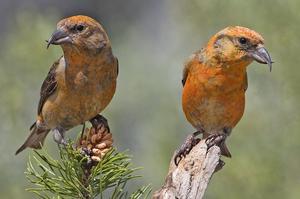 Crossbills, unlike other birds, hatch their chicks in winter, often at Christmas, as a blessing from the Almighty, according to legend. Food reserves contribute to this. The female builds the nest at the top of conifers or under spreading branches, providing shelter from rain and snow. Nest construction begins with the first frosts and is carried out with all the harsh conditions in mind: with a warm lining of moss, animal hair, lichen, and bird feathers.
The nest walls boast exceptional strength: woven twigs form several layers, an inner and an outer layer. The nest is often compared to a thermos, maintaining a constant temperature. Despite the freezing temperatures, the crossbill remains active in winter, providing for its offspring.
Incubation of a clutch of 3-4 eggs lasts on average 15 daysDuring this time, the male courts the female, feeding her seeds softened in his crop. The chicks leave the nest between 5 and 20 days old. Their beaks are initially straight, so the parents spend a month feeding the young.
Once the beak has acquired its proper shape, the chicks begin to master the art of extracting seeds from cones and, with their new beak, begin to live independently. Crossbill chicks don't immediately develop beautiful, colorful plumage. Initially, their plumage is spotted gray. Only after a year do the birds change into their adult plumage.
Home care
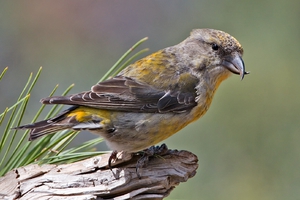 The crossbill is an incredibly interesting and socially active bird. It quickly adapts to life in changing conditions. trusting and sociableThey constantly move around the cage and can escape from it by using their ingenuity. Many bird owners know what a mockingbird is like: it easily imitates the calls of other birds it hears.
In ancient times, traveling musicians trained crossbills to retrieve lucky tickets or participate in fortune telling. Easy training in simple tasks makes these birds ideal pets. If a crossbill is kept in a cage without proper nutrition and ambient temperature, it loses its crimson coloring, turns pale, and eventually dies. Keeping the birds in suitable conditions helps them maintain their vibrant coloring and live for up to 10 years. In captivity, birds reproduce successfully. provided that acceptable nesting conditions are met.
Breeders of new bird breeds strive to achieve a wide variety of color and vocal variations, making it clear how a crossbill suddenly acquires the voice of a canary or the appearance of a bullfinch. Studying and breeding crossbills is a fascinating activity that brings the joy of interacting with these ancient birds of the wild.