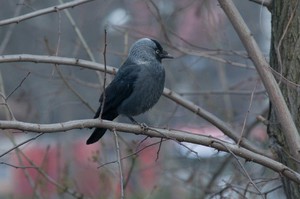
 City dwellers are accustomed to seeing jackdaws feeding alongside pigeons. However, not everyone is aware of the interesting characteristics of their behavior and character. These birds, however, deserve attention, if only because they have lived alongside humans for hundreds of years. Moreover, they are not without intelligence and can be tamed.
The jackdaw is a close relative of the crow and the rook. These birds share a common family, the Corvidae, a passerine order. The jackdaw differs from its relatives in its smaller size.
Appearance
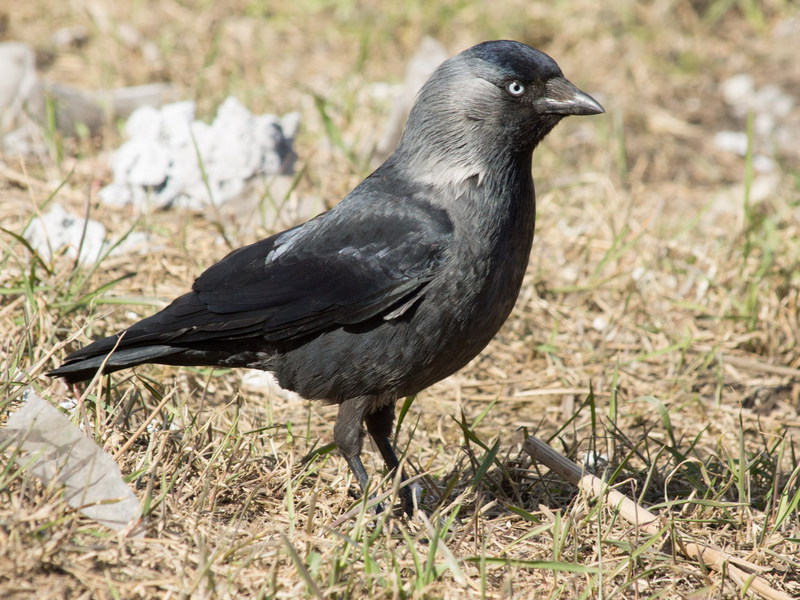
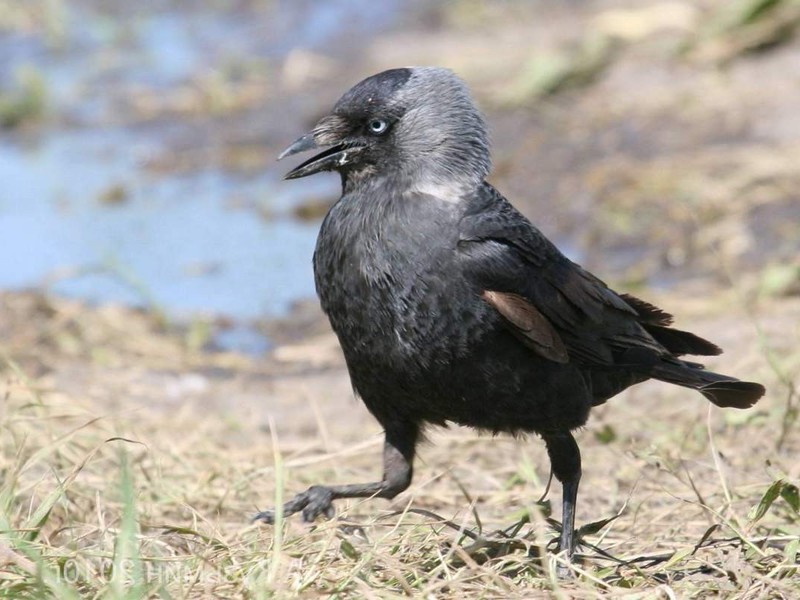
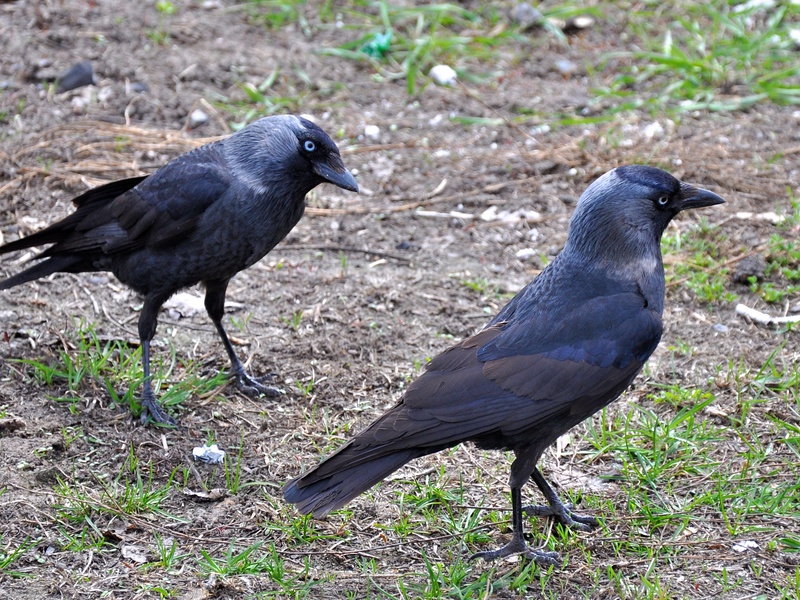
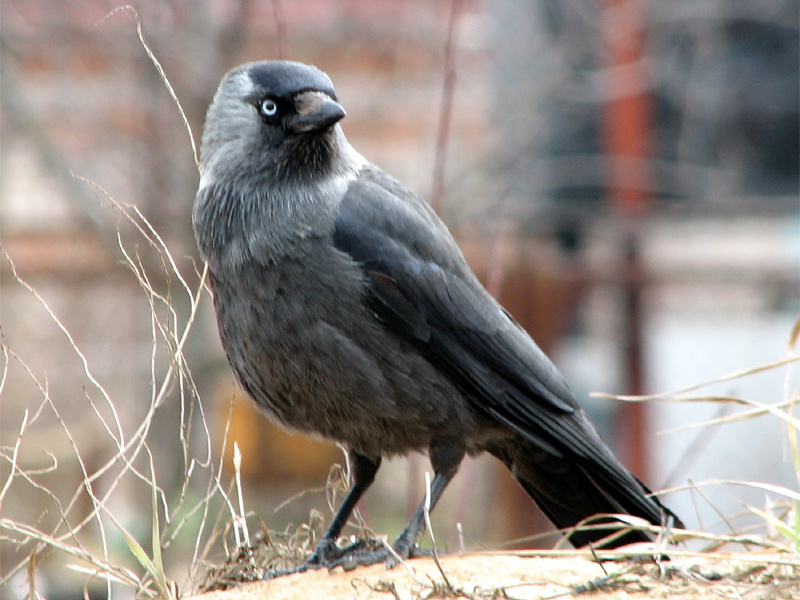
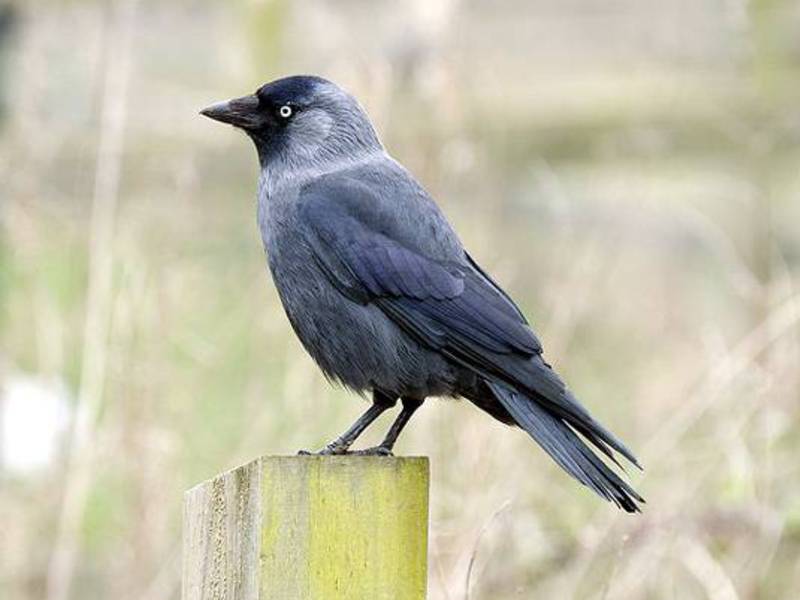
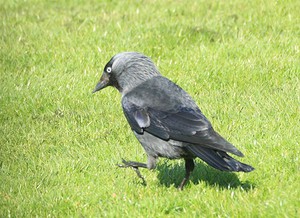
What does a jackdaw look like? It's the size of a pigeon, with a body length from the tip of its beak to the tip of its tail of 34-39 cm. The bird's weight varies. within 175-280 grams, in males it is slightly larger than in females. There are no other differences in appearance between the sexes.
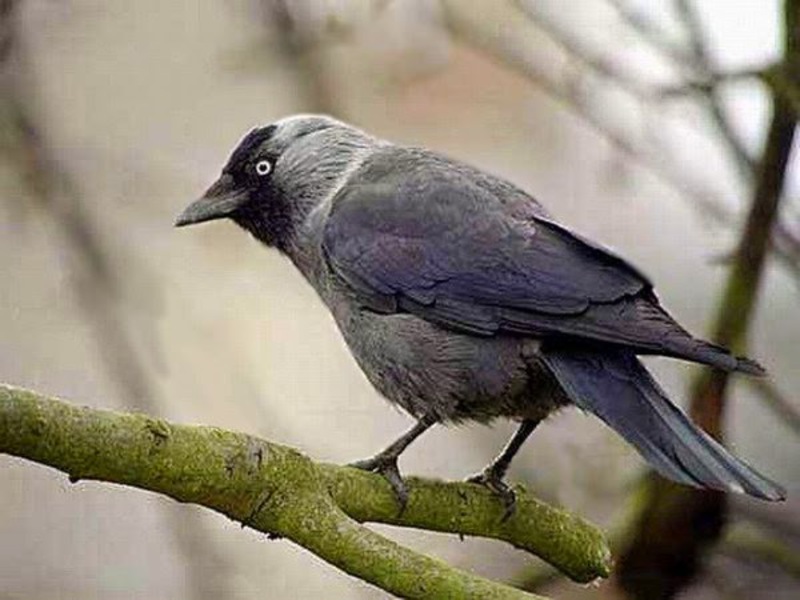
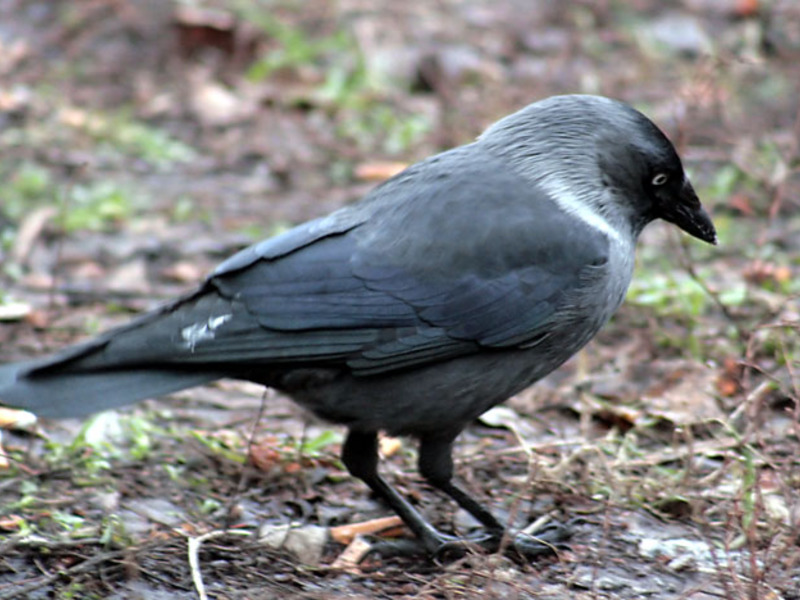
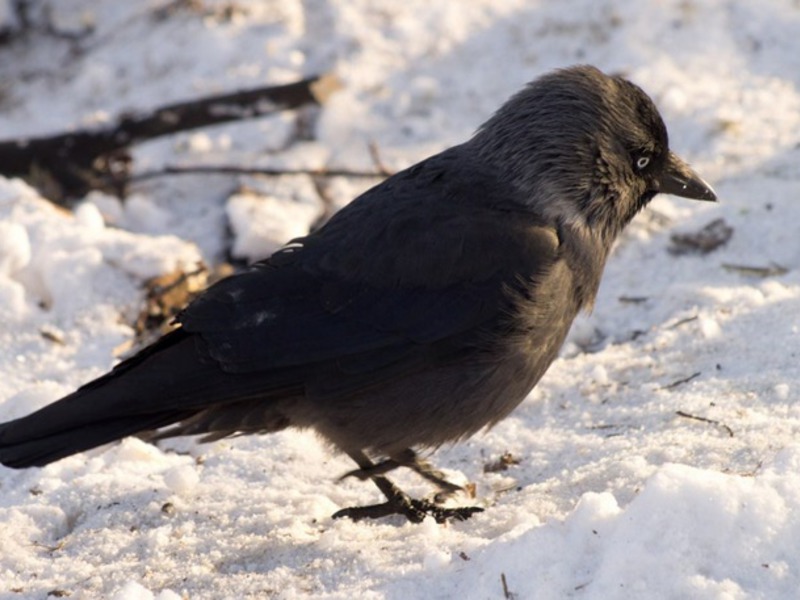
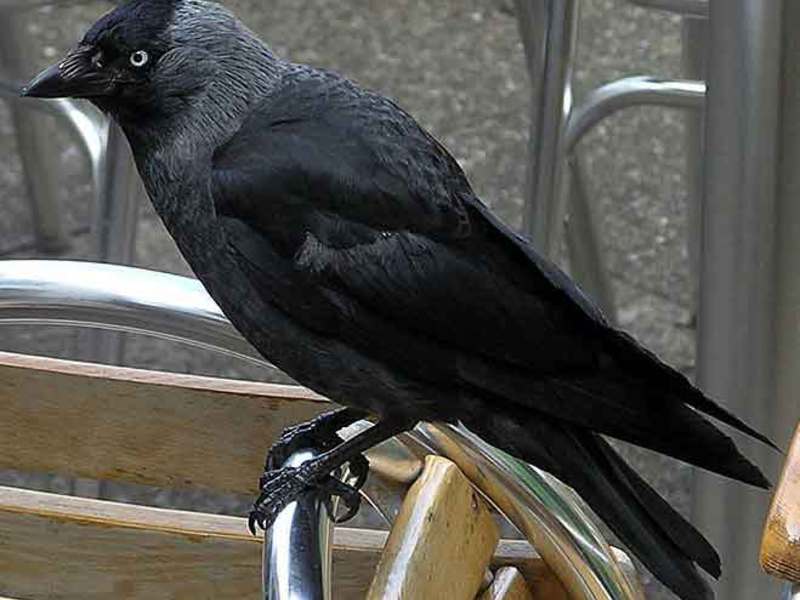
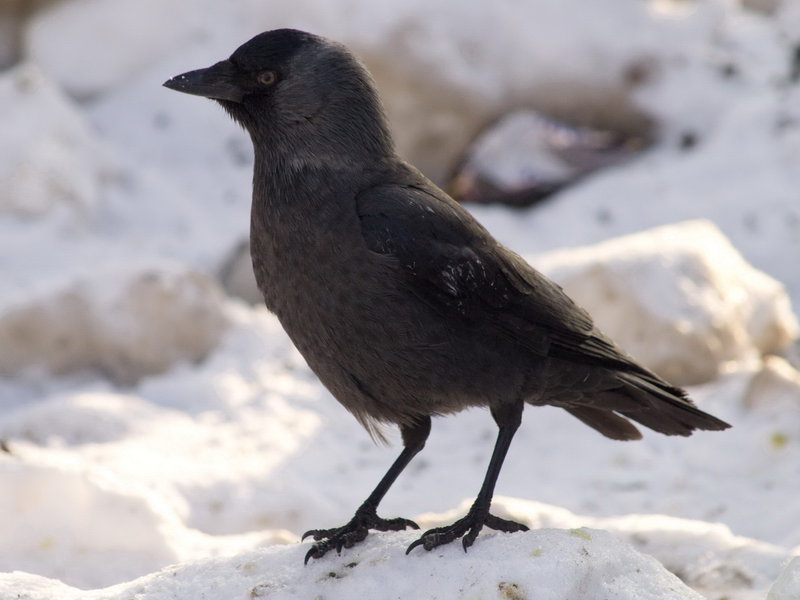
The jackdaw has a stocky, robust body. Its beak is relatively small but strong. Its plumage is modest and lacks a variety of colors:
- the plumage is almost entirely black;
- the lower part of the body is black-gray (slate) in color;
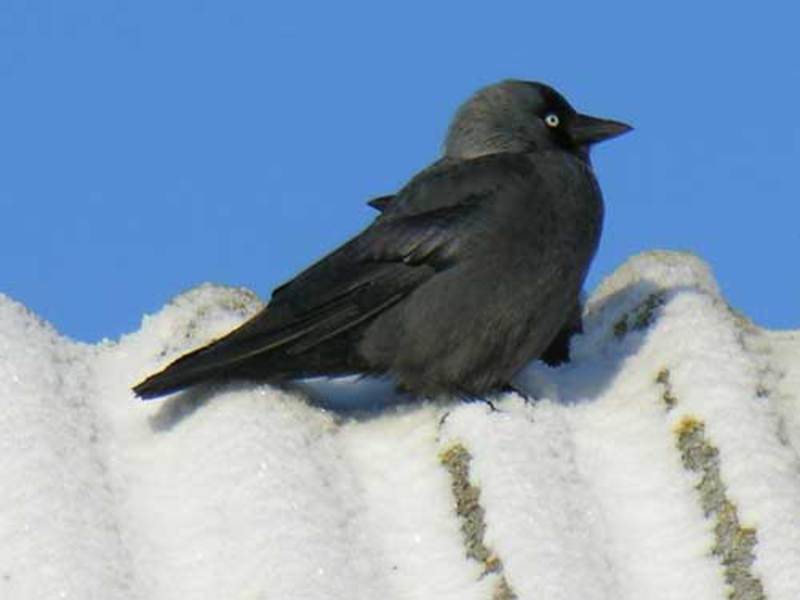
- the back of the neck, the sides of the head and the back of the head are ash-gray:
- the cap on the head and the “face” are black;
- the beak and legs are dark
In the sun, the back has a silvery sheen, and the wings and tail have a bluish metallic hue.
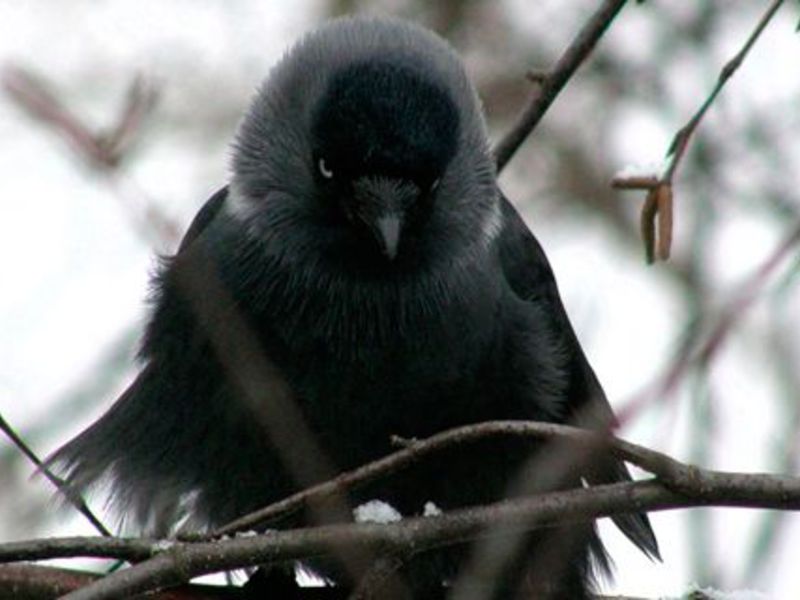
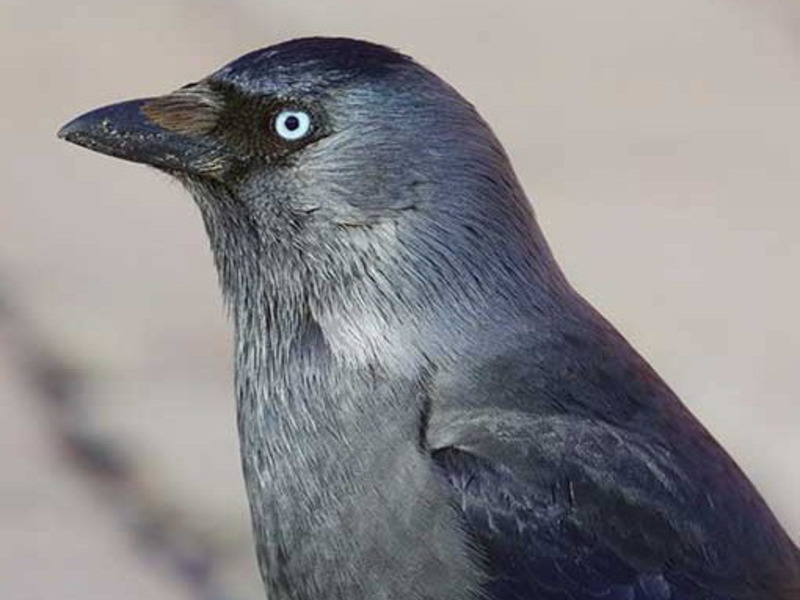
In this inconspicuous appearance, the bird's eyes stand out—their attentive gaze is directed directly at a person's eyes. This is rare in the animal kingdom—most fauna avoid direct eye contact. Sometimes it seems as if the bird is eager to pose for a photo.
Iris of the eye Jackdaws typically have white eyes, but some have blue and even green eyes. Photos of these birds provide a clearer picture of their appearance.
Young birds have a smoky gray plumage, dull, and lacking luster or shimmer. But in the fall, the first molt occurs, and the young begin to resemble their parents.
Spreading
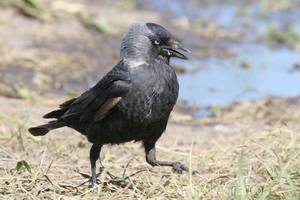 The jackdaw is a widespread bird. Its range covers all of Europe and Western Asia, with the exception of the northern regions. The bird can also be found in North Africa.
In the north and east of the range, the birds are migratory for the winter are moving to its southern regionsMost older individuals do not fly south for the winter, but remain in their nesting areas, especially if there is enough food there.
It's worth noting that the common jackdaw, instead of its close relative, the Daurian jackdaw, is found in East Asia. These two species have similar appearance and voices.
Their population is stable, reaching 15-18 million individuals. Therefore, these birds are not currently in danger of extinction.
Nesting sites
Jackdaws are flock birds. They settle in one place in several families at once, forming coloniesIn this respect, they resemble rooks, but unlike them, they choose nesting sites with shelter. These may include:
- hollows of old trees;
- niches and crevices in the rocks;
- attics of buildings, chimneys, ventilation openings under the roofs of houses;
- billboards, store signs, water towers;
- burrows, old nests of other birds.
In the wild, jackdaws live on rocky coastlines, steep banks, and in sparse forests with old trees.
Jackdaws are attached to humans and therefore often nest in populated areas. However, they prefer cities with older buildings. In the same city, there will be more birds in areas with "Khrushchev-era" buildings or two-story wooden housesIn modern areas with panel and block buildings, there are no suitable nesting sites, so jackdaws are few in number.
Jackdaws also live in city parks and groves, finding shelter in the hollows of old trees. They often build their nests between rook nests—this way they protect their young from predators.
Behavior in the natural habitat
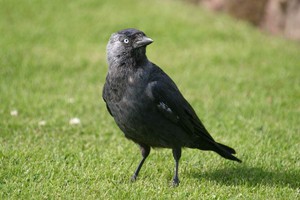 Jackdaws live in flocks, not alone, but in pairs. Birds only live outside flocks during nesting season. Young birds that have not yet found a mate are solitary.
Jackdaws' flight is light, decisive, and maneuverable. They are active and agile, yet quite cautious. Their voice is a distinctive feature: they produce ringing, "chattering" sounds, quite melodic.
Birds are not afraid of the cold Thanks to their thick plumage, they perch on a ledge or tree, squatting so that their paws sink into the fluff on their bellies, thus keeping warm.
Jackdaws have an excellent memory: they will remember for the rest of their lives a person who has destroyed a nest in their childhood, and if that person approaches, they will warn the flock of imminent danger with a loud cry.
Nutrition
Jackdaws are omnivorous, feeding on anything and everything. They search for insect larvae in tree bark and readily consume earthworms, butterflies, beetles, and other insects. They also enjoy human waste—the birds are often seen at city dumps.
Jackdaws are aggressive, attacking small rodents and small birds, and eating bird eggs. If they live near the sea, they feed on crayfish, fish, and various mollusks washed ashore at low tide. They also enjoy plant food, such as berries and seeds.
These birds are causing considerable damage to fields and gardensThey're not averse to munching on pea and bean sprouts. In orchards, they don't miss the opportunity to feast on their favorite plums and cherries. And in melon fields, they peck at melons and watermelons, getting to their juicy flesh.
However, despite the damage they cause, birds also serve humans well by eliminating harmful insects and rodents. So it's entirely possible that the benefits of jackdaws outweigh the harm.
Reproduction
Birds find a partner while still young; pairs form once and last for life. The relationship between the mates is quite tender: the birds show care for each other, preening their feathers. It's not uncommon to see the male feeding his mate.
The mating season begins in March. In April, the birds begin building nestsJackdaws' nests are rough and flat, made of twigs, leaves, paper, and rags. They use clumps of earth and animal droppings to strengthen them. The nest floor is lined with soft materials such as grass blades, wool, down, and feathers.
Jackdaws take a meticulous approach to nest construction, as they may use their nests for several years. Both males and females contribute to the construction of new nests and the repair of old ones.
In late April to early May, the jackdaw lays 4-7 light blue or greenish-blue eggs with brown speckles. The incubation period lasts 17-20 days. The hatched chicks are naked and blind. Both parents feed the young. After a month, the young birds are able to fly, but the pair continues to feed them for about two weeks.
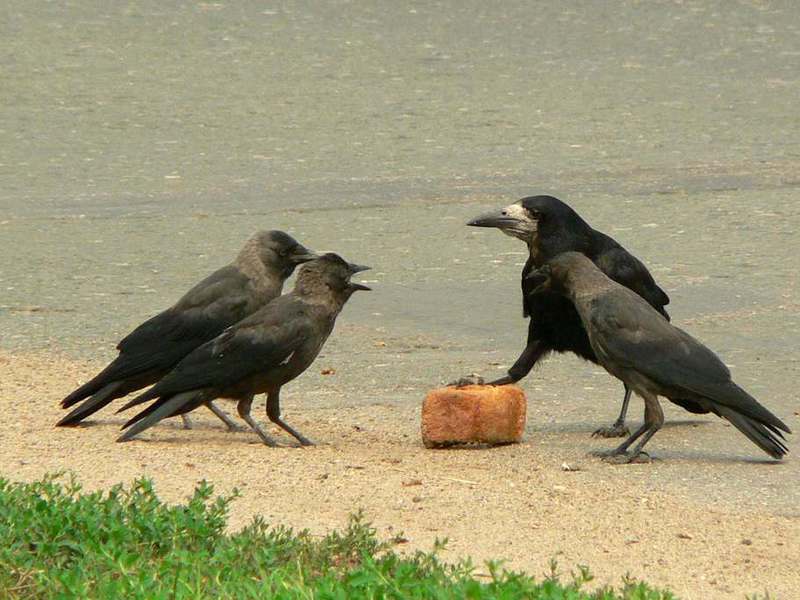
Only when the young jackdaws' plumage is fully developed do they begin their independent lives. The birds form flocks, sometimes of enormous size (several hundred individuals). Jackdaws often mingle with rooks.
Jackdaw and man
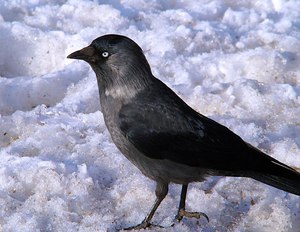 Since ancient times, jackdaws have lived side by side with humans. The bird is easily tamed if raised as a chick. The jackdaw is sociable and very becomes attached to a personBut an adult individual will not be able to adapt to life in captivity because it knows what it is like to fly freely across endless expanses.
If you take a blind chick into care, it will become so accustomed to humans that it will not even consider other jackdaws as relatives and will always strive to communicate with its owner.
Caring for a jackdaw chick requires a certain amount of effort. It requires frequent feedings, every two hours, beginning early in the morning and continuing until late in the evening. Chicks are unable to swallow food, so parents push it down their throats with their tongues. Humans, however, must use their fingers to do this.
The bird needs a lot of space — to maintain activity and, consequently, physical fitness. Therefore, it's best to keep a jackdaw not in an apartment, but in a dacha or country house. Here, it's worth setting up an enclosure for it, the size of a small closet.
If you regularly train a bird, repeating the same words loudly and clearly, it can learn to speak. And it will do so just as well as a parrot.
In the wild, the lifespan of jackdaws is 8-10 years, and in captivity 15-17.
 Vadik Mikirtumov
1 comment