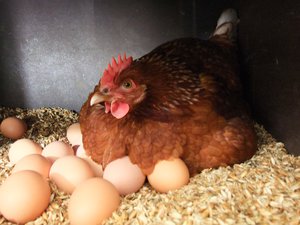
 Home-raised eggs have always been prized over store-bought ones, as they are considered much more environmentally friendly. They are visually distinguished by the color of the yolk. Home-raised eggs have a rich orange yolk, while store-bought ones are rather pale and less tasty. Many people raise poultry specifically for their eggs, but unpleasant surprises sometimes occur during collection. For example, an egg might be pecked. Why do hens do this? Let's try to figure it out.
Reasons
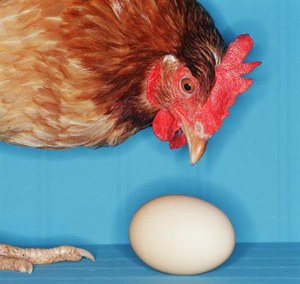 If a hen starts pecking her eggs, why does this happen? This behavior often indicates that something is wrong with the bird's body. lack of calcium, and thus, it replenishes its supply by eating eggshells. To prevent this, calcium supplements should be added to their diet. Lump chalk is commonly used for this purpose, leaving it in the bird's feeding area. You can also crush the eggshells and serve them as a "dessert." However, this option has a significant drawback: constantly adding eggshells to a chicken's diet can lead to addiction, and it will continue to peck at its own "products."
Why does a chicken start eating its own eggs? Pay special attention to the area where these birds spend all their time. It's possible they simply don't have enough space. It's believed that in this case, the chicken becomes "offended" and may start pecking at its own eggs. To solve this problem, expand the yard and improve its appearance by planting fresh grass.
There are some breeds of chickens that constantly peck at their own eggs. These birds are very aggressive and they are completely impossible to keep in the usual way. Therefore, these chickens undergo beak trimming.
Some farmers claim that poultry may begin to eat their eggs because they enjoy the taste of the whites and yolks. If a hen accidentally tastes an egg once, she may later do so quite consciously.
What to do?
How can I stop a chicken from pecking eggs? There are many answers to this question. The most effective option is to feed the bird:
- wood ash;
- river sand;
- dried nettles;
- with chalk.
Besides this, there is also the “old-fashioned method”: take flour and salted water, knead a stiff dough, roll it into a ball, giving it an egg-shaped form, the size of a chicken egg. After this, dry the dough ball in a warm place and, once it hardens, place it in the nest. After unsuccessfully pecking at the dummy a few times, the hens will never attempt to attack the eggs again. Another way to make a dummy egg is to carefully remove the contents from a whole eggshell using a syringe and needle, dry it, and fill it with mustard, vinegar, or hot pepper.
What else can be done to wean a chicken off eggs? If only one bird is causing harm, it's best to isolate it or slaughter it. It's fairly easy to spot it—there might be a bit of yolk left on its beak. If there are several such pests, they should be isolated from the others as quickly as possible for two weeks. During this time, they should be feed with special additives with calcium and vitamins.
Proper arrangement of the nest
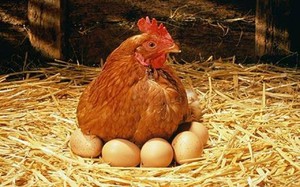 Why do hens spoil their eggs? If it turns out that this is due to poor living conditions, it's time to reassess them. To ensure a cozy coop, you should build comfortable nesting boxes. Pay special attention to lighting, ensuring it's dim and not blinding the birds. If you can't darken the room, you can half-cover the lamp with burlap or a curtain. The perches shouldn't be too high. Nests should be spaced well apart from each other, otherwise the hens will start pecking at the eggs next to them. If the space is too tight, the hens will be forced to step on the eggs, and they'll inevitably try to eat the one that breaks.
Maintenance and feeding
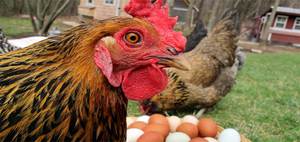 In winter, chickens do not receive the required amount of food ultraviolet irradiation, emitted by the sun. This causes a decrease in vitamin D, which plays a vital role in phosphorus-calcium metabolism. The strength of a bird's eggshell and bones depends on the balance of phosphorus and calcium. If calcium levels drop, the hen begins to limp, moves with difficulty, and lays eggs with very thin shells, or even without them. Without vitamin D, calcium provides no beneficial effect to the bird's body, as it is poorly absorbed. What can be done in this case? Installing a UV lamp in the coop will solve the problem.
Why do chickens peck their eggs? A protein deficiency in their diet may be the cause. In spring and summer, chickens eat insects and worms to supplement their diet with natural protein. However, this isn't possible in winter. The plant-based protein in their feed isn't sufficient to meet the bird's protein needs. During the winter, laying hens requires 5-6 grams of protein per day, therefore, it is essential to add the following to her diet:
- fish or meat and bone meal;
- fortified minerals;
- low-fat cottage cheese.
In addition, to prevent chickens from spoiling their eggs, the following is added to their diet:
- vitamin hay from grasses;
- green grass;
- beets;
- carrot;
- cabbage;
- pumpkin;
- potato.
Such products contain a large amount of carbohydrates and vitamins.
"Pasture"
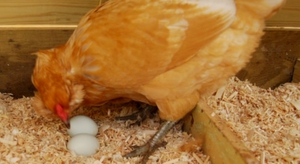 Many farmers believe that chickens begin to spoil their eggs because of the cramped confines of their outdoor run. They should be allowed to roam in a large area with grass and sand mixed with small pebbles. Layers should be able to peck at grass in a spacious lawn, not crowded together in one area.
So, chickens can peck their eggs for a variety of reasons. What should the owner do in this case? the root cause should be identified, which, if eliminated in a timely manner, can ensure that such an unpleasant situation will not happen again.