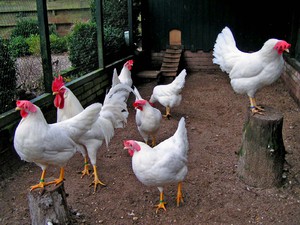
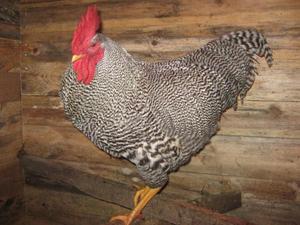
 The emergence of new poultry breeds is due to the painstaking work of breeders. Crossbreeding has resulted in numerous chicken and other domestic animal breeds. This article will discuss the Striped Plymouth Rock. A detailed description and photos will provide information about this breed that will be of interest to many interested in raising chickens at home.
Description of the breed and photo
The Plymouth Rock striped breed first appeared in America, as early as the 19th century. Scientists spent a long time trying to achieve positive results through complex crossbreeding of many breeds. Finally, they succeeded, and in 1910, the Plymouth Rock striped breed was officially recognized. by crossing several breeds of chickens:
- Javanese;
- Cochin;
- Langshan;
- Dominican.
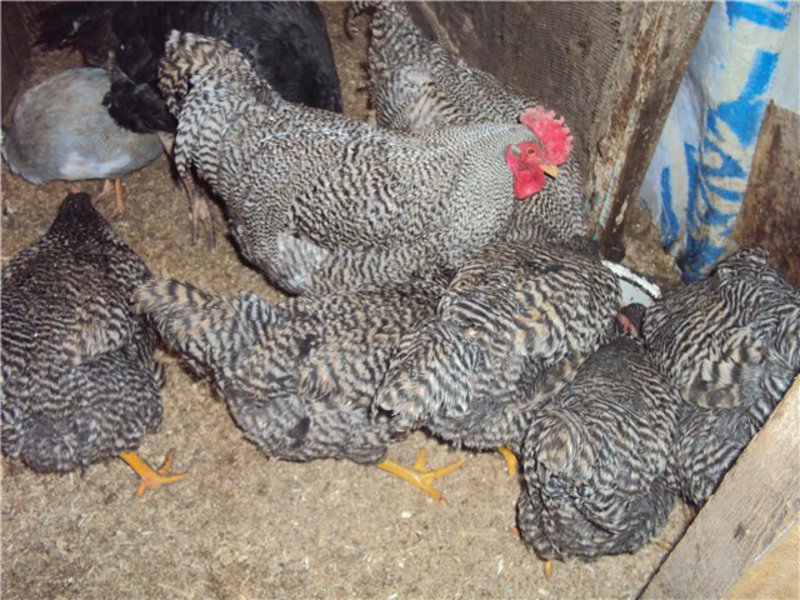
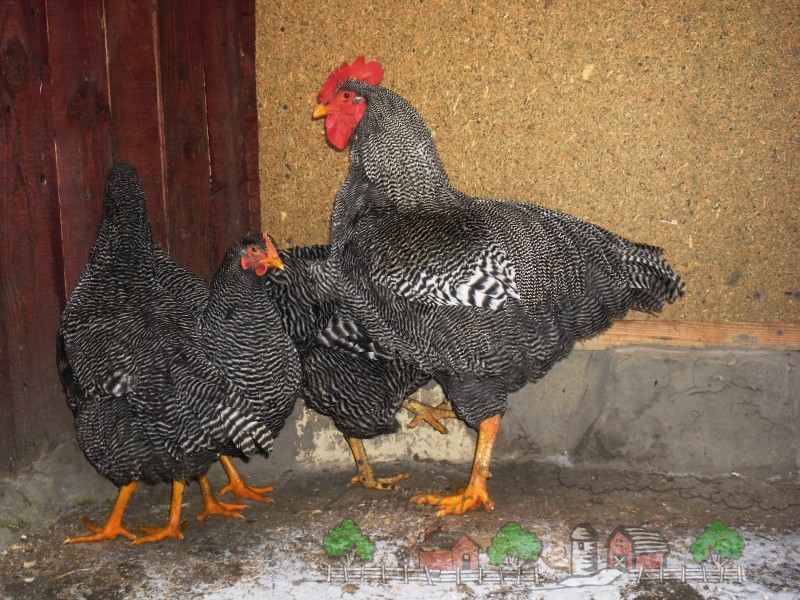
The hens were crossed with black Spanish roosters, resulting in a new category of poultry. There are two types: American and English Plymouth Rock The latter is distinguished by its more impressive form. This representative belongs to the meat and egg breeds. An adult rooster weighs approximately 4 kg, and a hen, 3 kg. The following external characteristics are distinctive exterior standards:
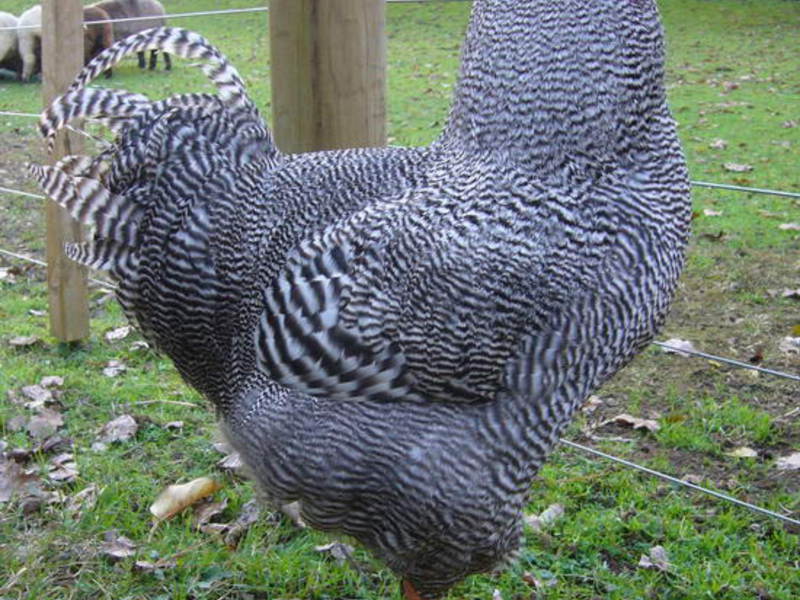
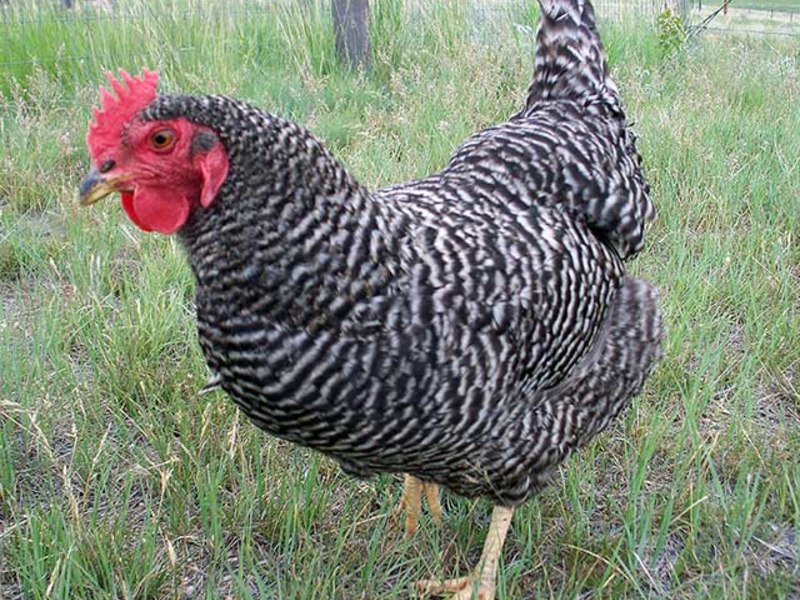
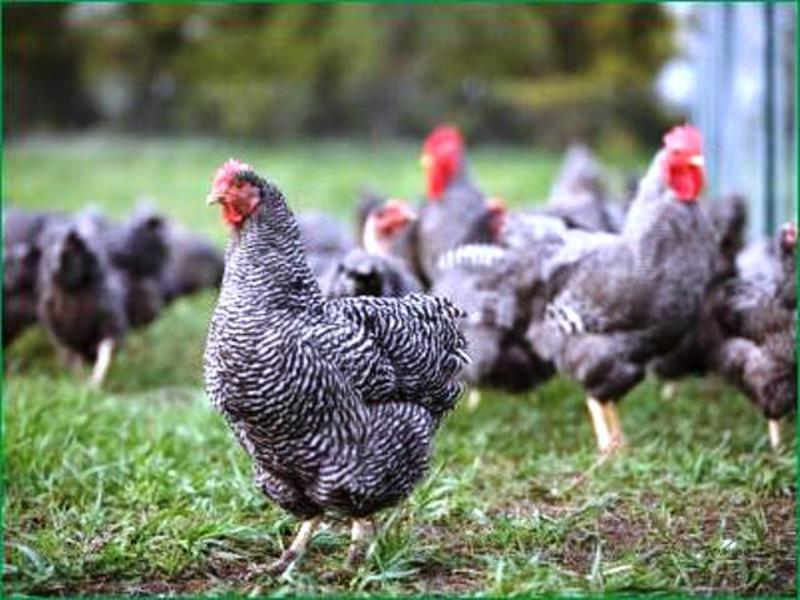
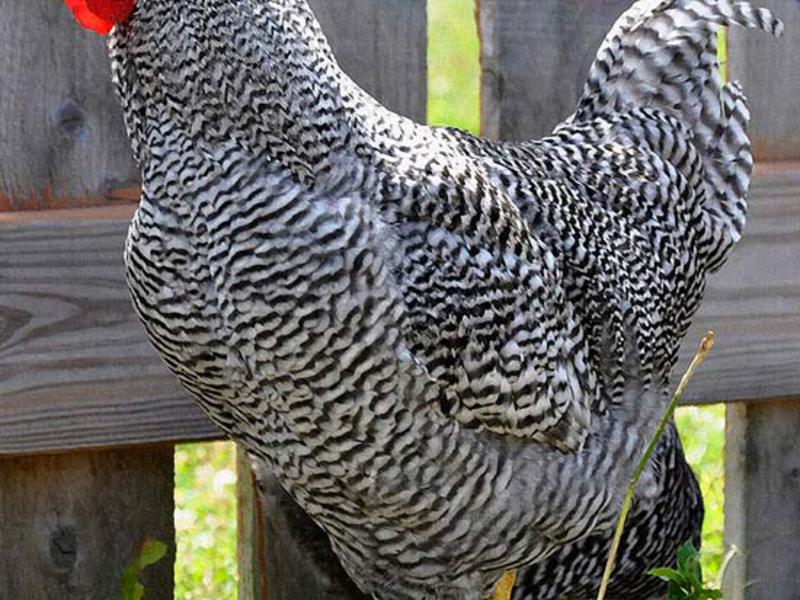
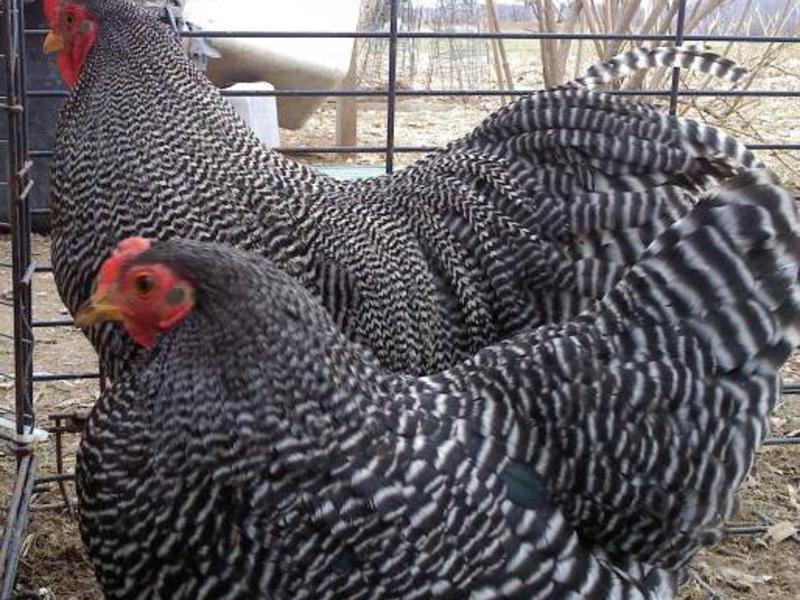
- striped color;
- stripes of equal width located across the feather;
- the stripes should alternate with each other throughout the bird's body;
- two types of lines appear - white and black with a lilac tint;
- The dark color should be at the ends of the feathers.
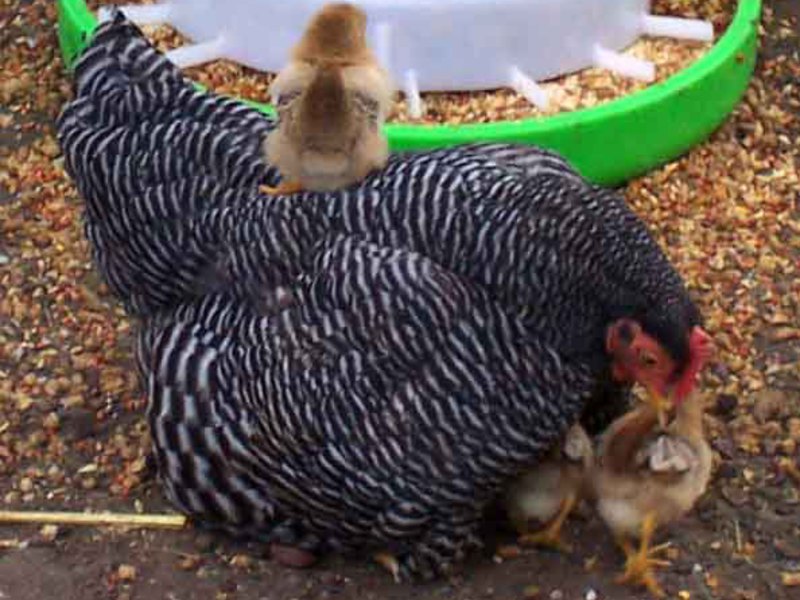
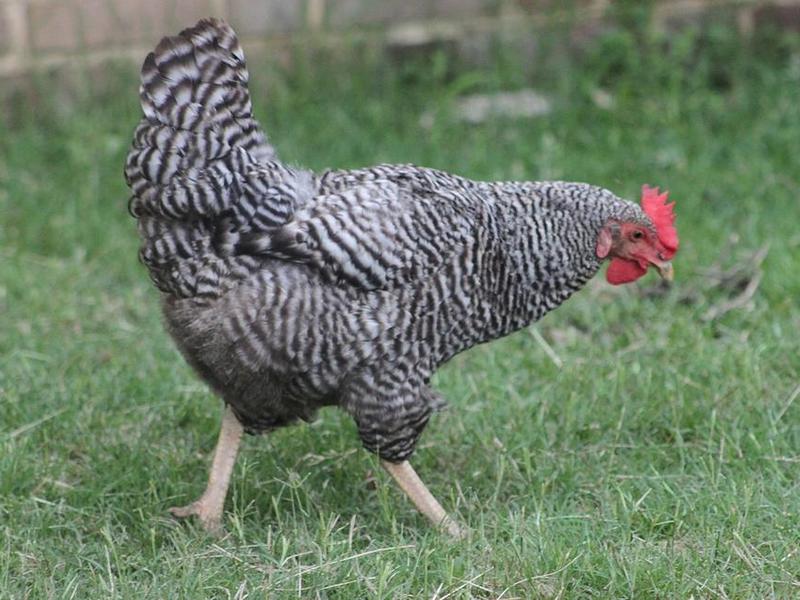
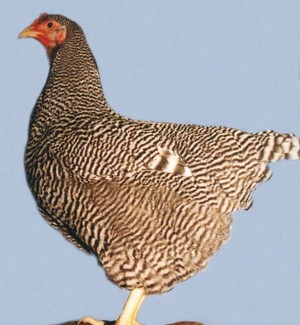 Plymouth Rock hens and cockerels differ in color. They have narrower black and white stripes on their lower back and neck. This makes the pattern appear lighter than that of the hens. Roosters have a more prominent pattern on their flight feathers. In photos of hens, you can see that the stripes on their feathers are of equal width. Hens should also have a smaller head, which is one of their distinguishing characteristics.
In the Plymouth Rock breed strong and short beak Yellow in color. The orange-red eyes must be sparkling. Another distinctive feature is the low, leaf-shaped comb with five teeth. The small ears have bright red lobes. The earrings are oval and medium in size. The face is smooth in texture and red in color.
The Plymouth Rock has a broad, densely feathered neck and a slightly raised, forward-projecting chest. The wings should be small and tightly held. The medium-length, fairly wide back should be horizontal and slightly raised toward the tail. The thighs and wings are always densely feathered, with moderately long plumage. The metatarsus is yellow, and the nails are light yellow.
Characteristics of the Plymouth Rock breed
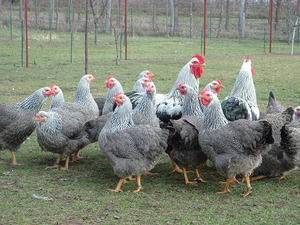 Bird breeders are always happy to breed these striped beauties. The breed is considered a meat and egg breed.They are actively raised for their eggs and meat. Their meat is considered tender and healthy, although gourmets disagree. They find Plymouth Rock meat to be yellowish in color.
The bird is characterized by sedentary behavior. They easily adapt to various climatic conditions. The breed is resistant to various diseases. A distinctive characteristic of the Plymouth Rock is its rapid maturation. Hens begin laying eggs as early as six months. On average, they produce eggs within one year. can lay up to 190 eggs, provided they are properly cared for and fed. Each egg weighs approximately 60 grams, with a cream-colored shell. These birds possess consistent pedigree traits and retain their breeding characteristics remarkably well. Because Plymouth Rock chickens are known for their calm demeanor, they are excellent for breeding.
Hatching chickens
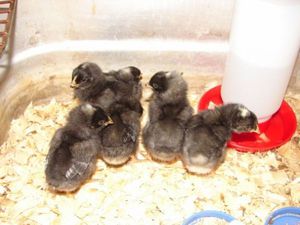
Plymouth Rock chicks grow rapidly after hatching, but their feathers don't appear as quickly. They can be fed the same food as adults, but the chick food must be ground. This is primarily for chick nutrition. use the following products:
- finely chopped boiled eggs;
- corn flour;
- cottage cheese.
It's a good idea to add chopped greens to their food daily. At two weeks of age, you can add compound feed to the young birds' diet. They should also be given yogurt and a mixed feed made from different types of flour.
From 5 weeks of age, chicks can be allowed to roam outside. After 1 month of age, flour should be replaced in the chicks' diet with coarse grainsAfter a week, it is recommended to feed whole grains.
At 6 weeks of age, the chicks have fully developed feathers, and at 6 months, the hens can lay their first egg.
Maintenance and care of adult Plymouth Rocks
When chickens reach six months of age, they are considered adults. Laying hens begin laying their first eggs. Although this breed is low-maintenance, it requires a proper coop. It should be:
- light;
- spacious;
- dry.
Their daily diet is not much different from that of other chicken breeds. For proper development, the following feeding schedule is recommended: 2/3 of the diet should be grain and 1/3 should be food scrapsTo ensure productivity, laying hens should be given calcium, and young chicks should be given bone meal.
Birds need access to a natural environment to browse on fresh grass. Freshly cut grass is also a good source of food.
Problems with care and illnesses
 The Striped Plymouth Rock breed is known for its hardiness and quickly acclimates to a variety of conditions. Due to their sedentary nature, the birds almost never fly outside the fenced area. For them, it's sufficient to provide medium-height fence.
Layers are distinguished by a strong brooding instinct, making the breed very attractive for small farms. Incubators are not required for hatching. These hens are not shy, so they respond well to people and can eat from your hand.
Plymouth Rocks have excellent immunity, but despite this fact, they are still susceptible to illness. Experts recommend paying close attention to your pets and separating them from healthy chickens at the first sign of illness. Most often, chickens and young animals are sickDiseases may include:
- injuries;
- infectious diseases;
- parasitic infestation.
If there are signs of illness, it is better to show the bird to a veterinarian, isolating it from healthy chickens.