 Among all meat breeds, Brahma chickens are distinguished by their truly gigantic size and their unique appearance. When developing the breed, the primary focus was on the bird's appearance, not productivity.
Content
Description of the breed
Today there are several varieties of brahma, which are real giants of exotic appearanceThe breed was obtained as a result of long-term crossbreeding and careful selection.
Brahma chickens were first officially registered in the 1880s. The crossbreeding was between Cochin and Malayan chickens. It is believed that the entire breeding process was carried out by local priests in numerous Asian temples.
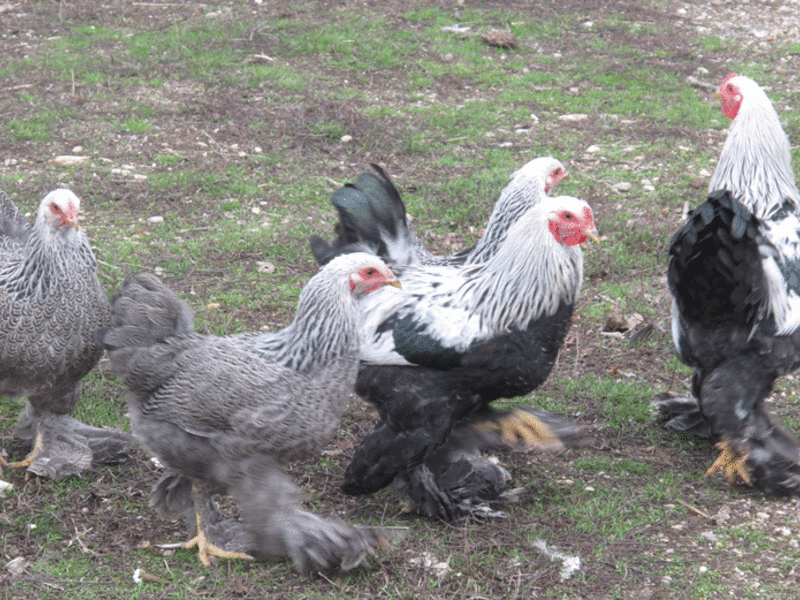
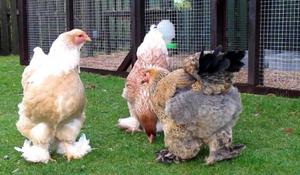
Representatives of this breed vary in plumage color: some are light, others dark. The former have an ash-gray base color with stunning silvery-white feathers. Dark Brahmas have black stripes and a dark tail. Initially, the breed was noted for its outstanding meat qualities. Adult roosters could weigh as much as seven kilograms, and some were so heavy that they could barely stand upright. Meanwhile, Brahma chickens had very high growth rate.
Since breeders placed the main emphasis on the external decorative features of the breed, productivity was relegated to the background, the main task was to preserve and improve the lush plumage of the body and legs.
Varieties of the breed
Brahma chickens differ not only in their external characteristics, but also in their productivity levels.
Pale Brama
This breed is a meat-producing type of Brahma. It was developed in the 1850s by crossing Malayan Game and Cochin cattle.
Characteristic
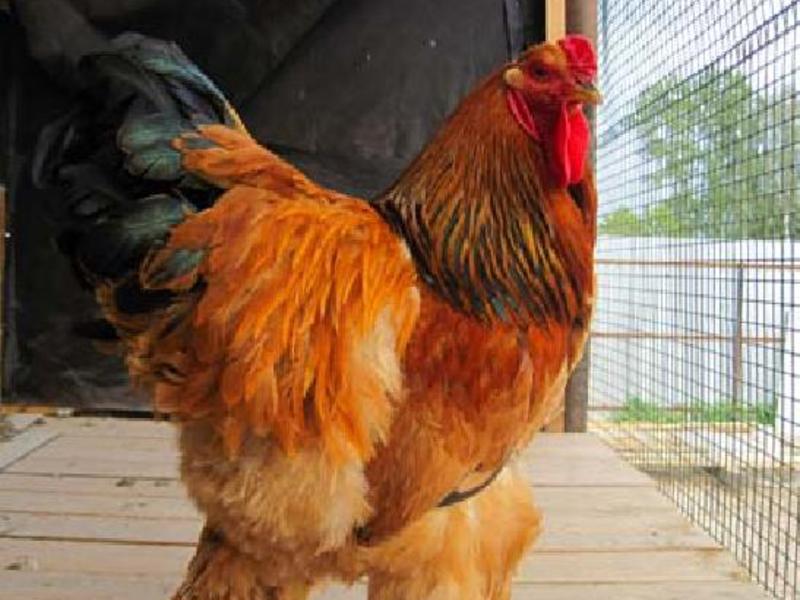
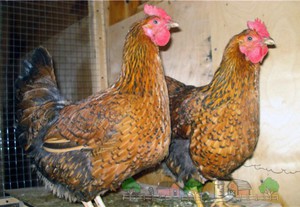
 The Brahma fawn has golden or light brown plumage with a black necklace on the neck and a tail of the same color;
- In cockerels, the mane is a darker color than the main color of the feathers;
- eyes are red-brown;
- earlobes are red;
- the skin has a yellow tint;
- the bird's head is small;
- the neck is long;
- pea-shaped comb, divided into three grooves;
- the skeleton is distinguished by a wide but short back, relatively small wings and tail;
- chest full and wide;
- The legs are thick and high.
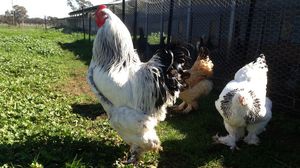 The Brahma fawn has golden or light brown plumage with a black necklace on the neck and a tail of the same color;
Today the weight of cockerels of this breed reaches 3.4-4 kgFor hens, the weight ranges from 2.4 to 3.6 kg. Each year, the bird lays approximately 150 eggs, each weighing 60 grams. The shells are cream-colored.
The survival rate of adult chickens is about 90%, and for young individuals - up to 70%.
Poultry farmers value Brahma chickens for the following qualities:
- calm, balanced character;
- the hens make excellent brood hens;
- Representatives of the breed tolerate changes in climatic conditions (cold, dampness) well.
Svetlaya Brama
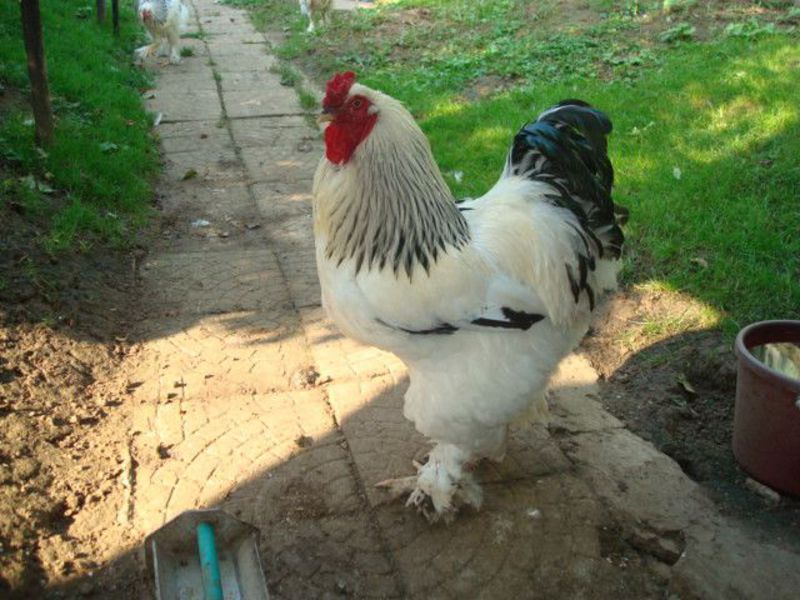
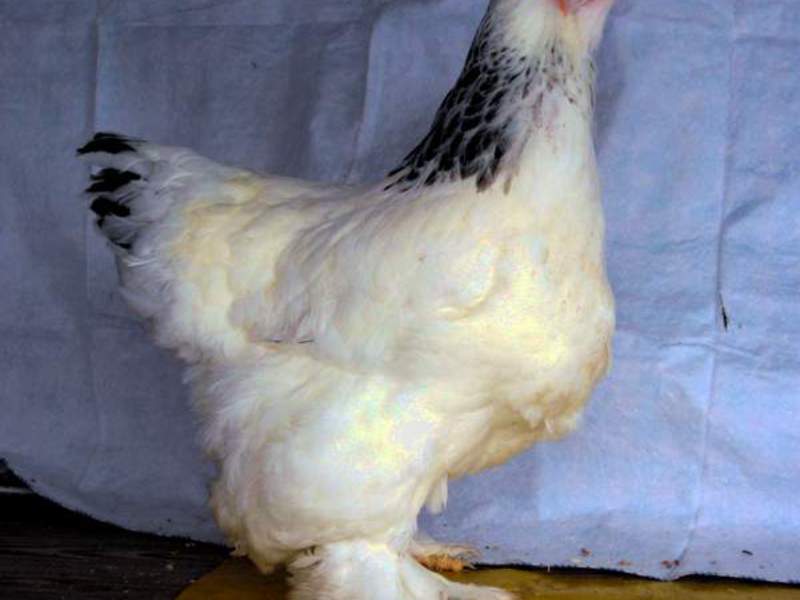
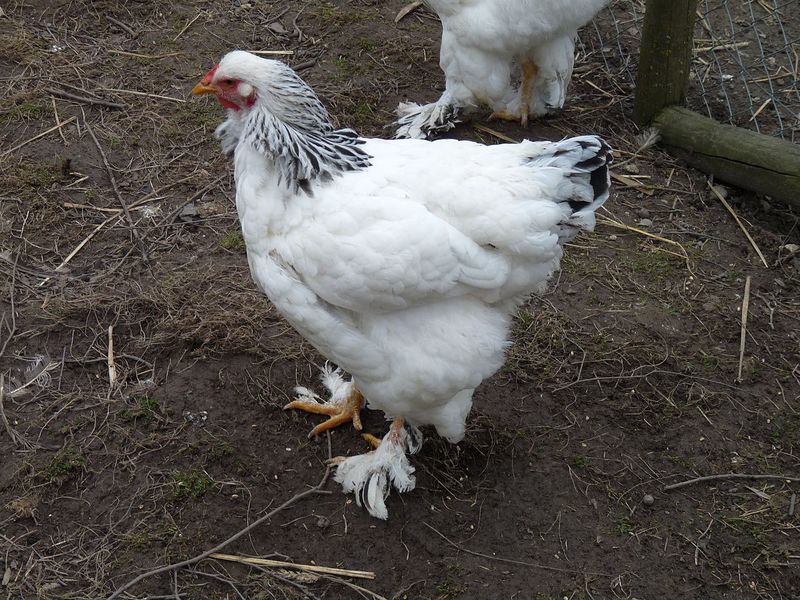
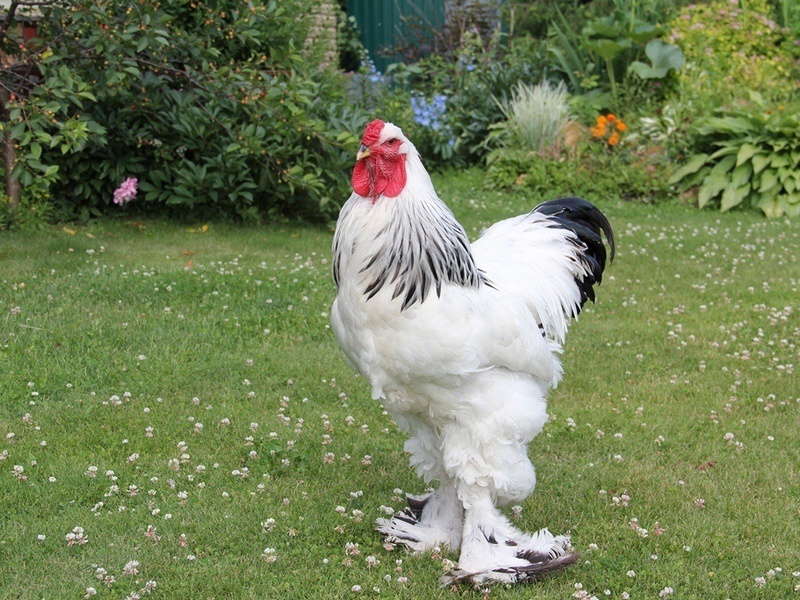
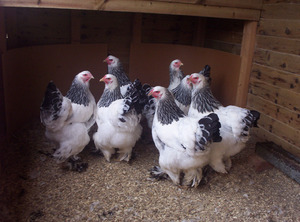 The basic plumage color of this species is silvery-gray, with the neck collar and tail being a rich black with green highlights. The metatarsus and toes have a central feather with black stripes. The comb, face, and earlobes are bright redThe bird's shoulders are covered with a luxurious mane, and the lush feathering of its legs gives it a stately and heavy appearance.
Brahma chickens are distinguished by their proud posture. The head is small with clearly defined brow ridges, and the neck is long and luxuriously feathered. The beak is powerful and yellow (sometimes with black stripes). The face is thin-skinned and smooth. The comb is pea-shaped, relatively small, with three distinct dividing stripes. The eyes are red, large, and deep-set. The tail is short, set straight, and fan-like.
These chickens are distinguished by their powerful, full chests, short, broad backs, and small, tightly fitting wings. Although the Brahma breed has a thin frame, its body is square and quite massive. The birds' feet are thick and well-feathered, with yellow metatarsus and toes. The outer and middle toes are feathered.
Chickens start laying eggs in the winter, producing up to 120 cream-colored eggsEach weighs 60 grams. Cockerels typically weigh up to 4 kg, while hens weigh up to 3 kg.
The light gate has the following positive qualities:
- excellent decorative properties;
- trustfulness and a tendency to tame;
- survival in cold climates;
- balanced disposition.
Flaws:
- late egg production;
- the meat is not of very high quality, rather coarse.
Dark Gate
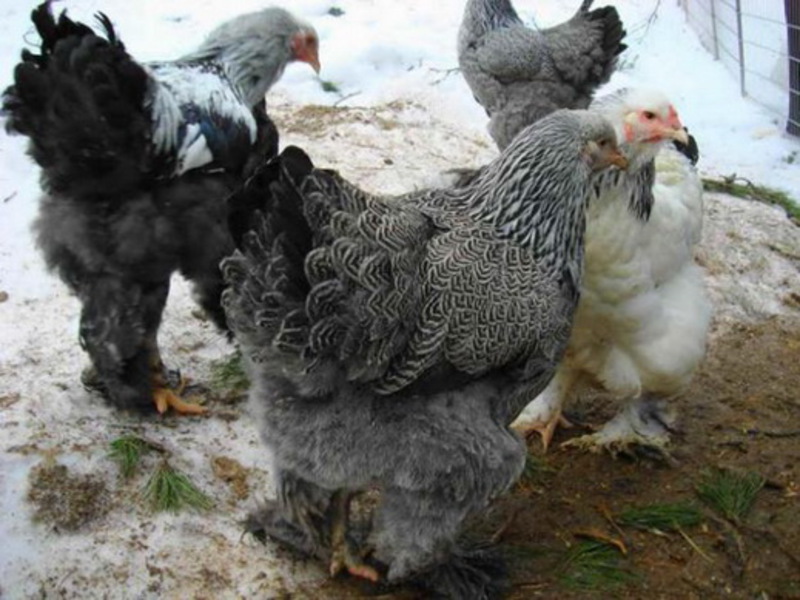
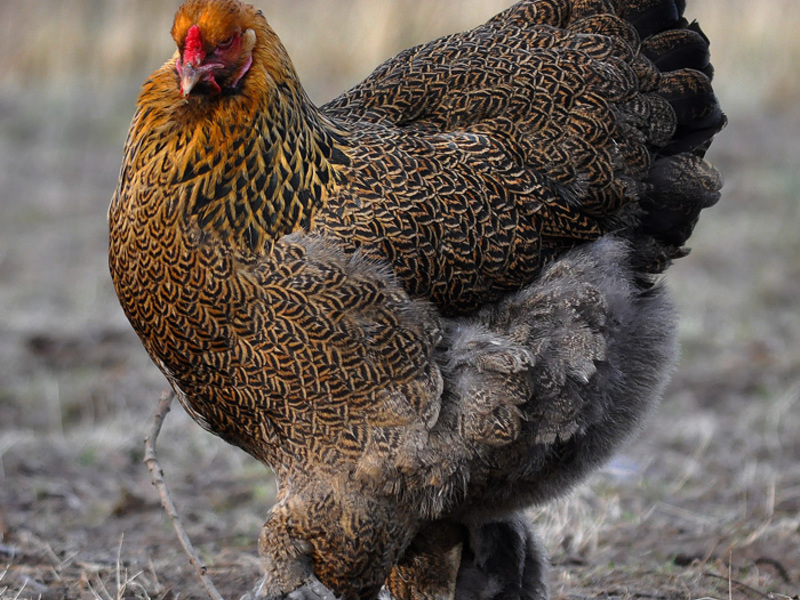
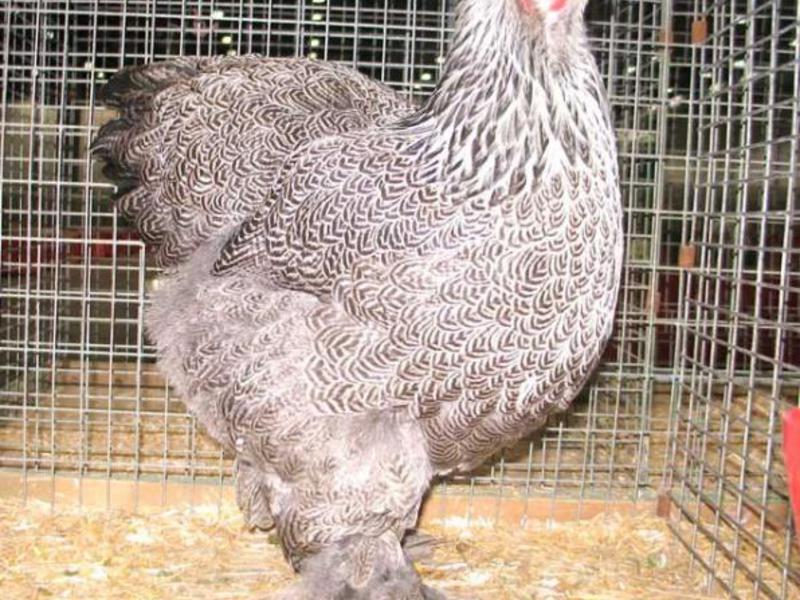
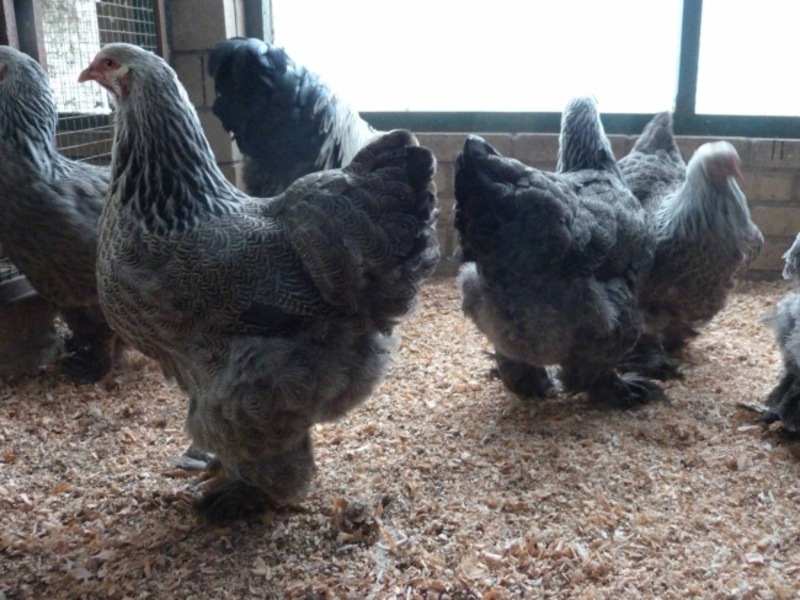
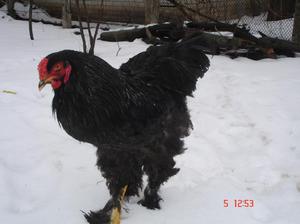 These chickens are distinguished by their dark plumage with a pattern. Most Brahma chickens of this variety have gray plumage. Their heads are silvery-white, and the feathers on their necks are black with a white edge. The body is gray with black stripes running parallel to the feather outline. The pattern resembles a crescent moon.
Roosters are predominantly silver in colour with a silver-grey head and a silver-white mane and neck. with a black stripe running down the middleThe back and shoulders are also silvery-white. The rest of the plumage is greenish-black. The skin is white-pink.
Dark Brahma chickens are distinguished by their long necks, small heads, and prominent foreheads. They have a small, pea-shaped comb, clearly divided into three sections. Their beaks are short and curved, yellow with black stripes. Their eyes are reddish-brown. Their tails are short and set straight. Their legs are yellow, tall, and thick. Their chests are full, and their backs are short and broad.
The dark Brahma lays 120 eggs per year, weighing 60 grams. Their shells are cream-colored. The survival rate for chicks reaches 67%, and for adults, up to 83%. Hens weigh approximately 3.5 kg, and roosters up to 4.5 kg.
Dark Brahma chickens have the following positive qualities:
- Conflict-free. Birds get along well with other breeds.
- Unpretentiousness to living conditions.
- Calm disposition.
- Excellent egg production: they can lay eggs even in winter.
- The broody instinct is well developed.
- They do not require large walking areas.
- Unpretentious about the quality of feed.
Care and maintenance features of Brahma chickens
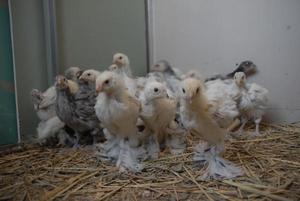 However, despite the positive characteristics of Brahma chickens, some peculiarities of these birds should be taken into account. Chickens are characterized by slow growth, and therefore, it is not recommended to allow evacuation later than June. Furthermore, it is recommended that chickens over 4 months of age keep separate from adults, as well as from the young generation of other breeds.
Brahma hens begin laying eggs quite late, at around 8-9 months. Although these hens are considered excellent brood hens and typically hatch their eggs to full maturity, it's still recommended to use other breeds for this purpose. This is because adult hens reach a weight of 3.5 kg, and some eggs may be crushed during hatching. It's best to use a cross between Brahma hens and another egg-laying breed. This broody hen retains all her maternal instincts, but weighs 1.5-2 kg less.
Regardless of the purpose for which Brahma chickens are purchased (as a meat bird or an exhibition bird), they must be provided with certain feeding and living conditions.
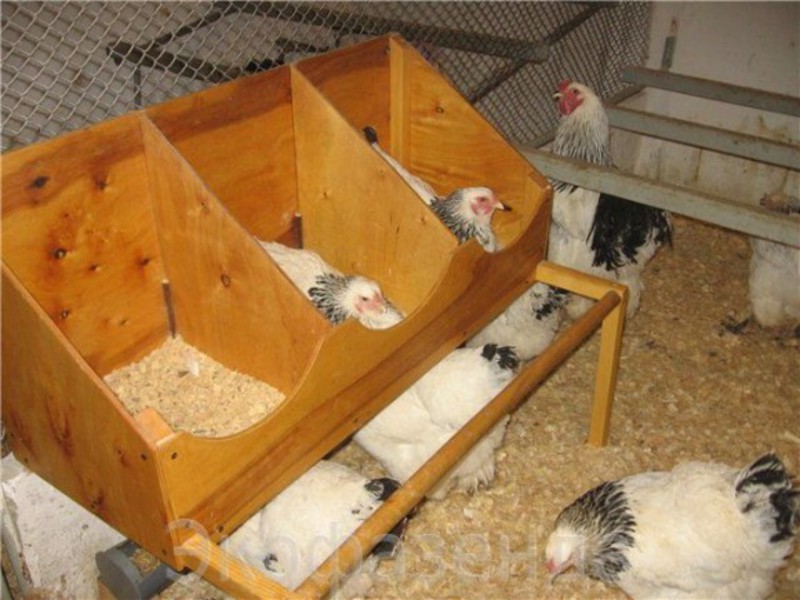
The chicken coop must be equipped drinking bowls, perches, nests and feedersTo maintain the purity of the breed, it is advisable to provide a separate room from other birds. This room should be sufficiently clean, dry, and well-ventilated. To increase egg production, the coop should be equipped with additional lighting.
It's best to make concrete floors with dry bedding, at least 6 cm thick in summer and about 8-9 cm in winter. Temperature in the coop is monitored using thermometers.
Judging by the size of this breed, it's easy to guess they enjoy a good meal. Although Brahma chickens are not picky eaters, to maintain their luxurious appearance and high productivity, they need a balanced diet that includes fresh, high-quality feed, proteins, fats, carbohydrates, and vitamins.
Brahma chickens should be fed according to a strictly established regimeIn the morning, the birds are fed a grain mixture; after lunch, they should receive a wet mash, and in the evening, whole grain. To encourage the young to be more active and mobile, an additional 15% of the feed can be added to the grain.
The chicken coop should always have plenty of clean, fresh drinking water available; during cooler months, warm water is best. The coop should also be disinfected regularly, and watering bowls should be provided.
Feeders are placed slightly above the hen's chest to prevent food from spilling. Drinkers are best placed at chest level. The chicken feeder should be equipped with mesh, as there's a high chance the rooster will want to try the hen's tasty feed. Rooster feeders are placed at head level.
Avoid overfeeding your birds, as excess weight can negatively impact their appearance and health. Therefore, it's best to transition your pets to a low-calorie food or slightly reduce the food intake.
So, have you decided to become a farmer or just want to replace your regular chicken breed with Brahma chickens? Before embarking on this exciting endeavor, it's worth carefully studying the basics of feeding, housing, and caring for Brahma chickens to avoid disappointment later.