 In stores, you'll notice that chicken eggs are constantly becoming more expensive, and it's practically impossible to do without them in the kitchen. Eggs are used in salads, baked goods, omelets, and other dishes. They're also a rich source of vitamins and other nutrients.
When possible, people keep chicken coops at home and raise chickens for both meat and eggs. When pullets start laying eggs and the specifics of this process are discussed below.
When do pullets start laying eggs?
If a person has the opportunity start a household, then raising chickens is one of its most important components. Birds don't require a lot of feed, but once they reach a certain age, they will regularly supply their owners with fresh eggs.
If you have purchased young chickens, you'll need to wait a while for them to mature, as they won't start laying eggs right away. For a bird to begin laying eggs, you'll need to wait several months until it reaches pullet age, and this depends on the breed of the chicken.
Age, toWhen pullets start laying eggs depends on the breed 30 percent and 70 percent of how you maintain them. The following factors are very important here:
 proper care of chickens;
- spaciousness of the chicken coop;
- availability of space for walking;
- quality and quantity of feed.
 proper care of chickens;
If for birds all conditions have been created, they will lay eggs very quickly. Hens reach sexual maturity when their weight reaches at least 75 percent of their adult weight. This is when they begin laying eggs.
When do pullet hens start laying eggs depending on the breed?
There are several breeds of birds, and ages, when do they start laying eggs, depend directly on them:
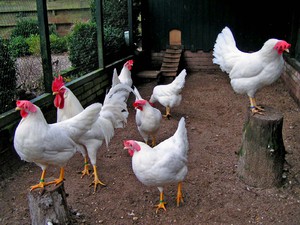
- Egg-laying breeds – pullets reach maturity very quickly in their first year of life. They begin laying eggs as early as 17–20 weeks, so the first eggs should be expected in about 5 months;
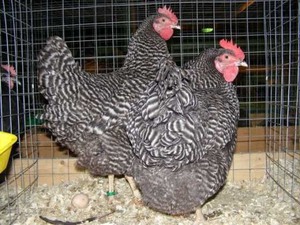
- meat and egg breed - these individuals begin to produce eggs at 20-24 weeks of age (at 5-6 months), the maximum period is 6.5 months;
- Meat breed – keeping this breed solely for eggs is completely unprofitable, as they only start laying at 7–8 months of age. If you buy medium-sized individuals, they can reach maturity at around 6 months.
When pullet hens start laying eggs earlier than expected, this is also not good. If a hen lays her first eggs too early, she may have health problems later. It is not recommended to speed up the egg-laying process unless absolutely necessary, even if you know how. Many farmers know ways to prevent pullets from laying eggs prematurely. Premature laying also occurs when the birds are of an artificially bred breed.
The quantity and quality of eggs from different breeds
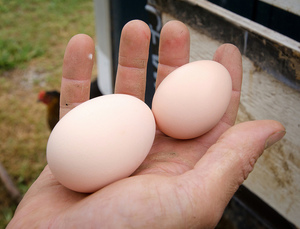
If you are used to eating only store-bought eggs, natural eggs from pullets will taste a bit unusual. They are also unusual in size, weighing on average around 45 grams. However, their quality is in no way inferior to others, and the yolks of these eggs are distinguished by their rich flavor. Don't worry about the size of the eggs; over time, the birds will begin to lay larger eggs – up to 60 grams.
Many people are interested in the question, How many eggs does one chicken produce? And how long does it take her to lay one egg? At birth, a hen acquires a large supply of eggs, enough to last her entire life. The egg doesn't immediately develop into an egg; it takes about 20–25 hours, and the number of eggs depends on the breed of the bird:
- Egg-laying hens can lay eggs for 10 months straight, producing approximately 170–240 eggs per year. Some egg-laying breeds are capable of even more; for example, Leghorn hens can produce approximately 340 eggs per year.
- Meat and egg hens produce about 170 pieces during the year;
- Meat breed chickens produce even fewer eggs—up to 120 per year. They molt quickly, just 7 or 8 months after they stop laying. Their eggs are larger than those of other breeds.
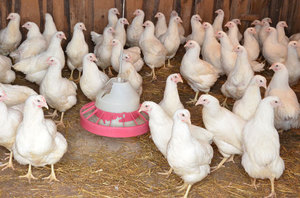 Egg-laying hens can lay eggs for 10 months straight, producing approximately 170–240 eggs per year. Some egg-laying breeds are capable of even more; for example, Leghorn hens can produce approximately 340 eggs per year.
Why might the frequency of the tub decrease?
If at the right time you no eggs were found in the chicken coop nest, then it's too early to sound the alarm and slaughter the bird for meat. Domestic chickens lay eggs to hatch their young; it's their natural instinct, and if a hen sees that the eggs are constantly disappearing, she'll simply change the location of the tub. Look for hidden spots in the coop, and you'll find a new tub.
A number of farmers associate the reduction in the intensity of the tub with the passivity of the roosterThis mistake is often made by gardeners without agricultural experience. However, it's also important to know that a rooster is only needed for fertilization and has no effect on the egg laying rate.
The reasons for reducing the tub are as follows:
- A sudden change in your hen's diet – when you switch her to a new feed, carefully monitor its composition; it should contain all the necessary vitamins and calcium. Without this, good laying is impossible;
- Insufficient lighting and heating in the coop – monitor the temperature in the coop and the length of daylight hours in the room. If the room is poorly heated, the hens will not lay eggs, and the lights should be on for at least 12 hours a day;
- the presence of rats that can steal eggs from the hen house.
How long can a chicken lay eggs?
Before you get chickens, You need to know how long a chicken can lay eggs.In theory, a hen can produce eggs for fifteen years, as she has an average of 4,000 eggs in her body. However, in practice, hen's lifespan isn't that long, and after just one year, her ability to produce eggs declines by an average of 15 percent, and declines further each year.
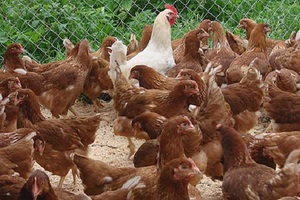 Once a bird reaches five years of age, it produces no more than two eggs per week. Therefore, hens are rarely kept until this age, especially since their meat is not very tasty and is quite tough.
Large farms and factories change birds on average once every two years, and sometimes even more frequently. They are usually slaughtered or resold to private owners. In private farms, hens are generally kept for up to four years, sometimes longer, especially if the hen was a good brood hen. There are cases where hens lived on average for about 15 years and continued to lay eggs.
How can the masonry be improved?
In those cases when Have you noticed a decrease in your pets' productivity?, and they began to produce fewer eggs, then you need to try the following:
- Extend the daylight hours in the coop; you can keep the lights on 24/7. This will improve laying rates, but you'll need to quickly replace the entire flock, as the birds quickly become exhausted under this regime.
- Feed your hens a balanced diet. Dry feed shouldn't be given for long periods of time, so combine it with wet mash, and feed them cottage cheese and other dairy products.
- Try artificially molting your chickens. To do this, don't feed them for several days, only giving them water. Stress will cause them to molt, and at the very beginning of the process, the hen will need extra nutrition, which will quickly improve their laying.
- You can try replacing the flock with younger ones. It's best to replace the chickens en masse; it's recommended to replace up to 80 percent of the coop's inhabitants at a time.
Now you know, when do pullets start laying eggs and what it depends on. This knowledge will surely help you manage your household, especially if you haven't had any previous experience.