Everyone has heard about ticks since childhood: parents warn about them when sending their children on school trips or vacations to the countryside, and the media persistently warns about them as spring and summer approaches. To understand all the nuances, it's important to know the timing and life stages of ticks.
Content
How ticks live and bite
Ixodid ticks are specialized blood-sucking parasites of animals and humans, the largest members of their genus. They are the ones who begin their "hunt" during the warm season—from early spring to early fall.
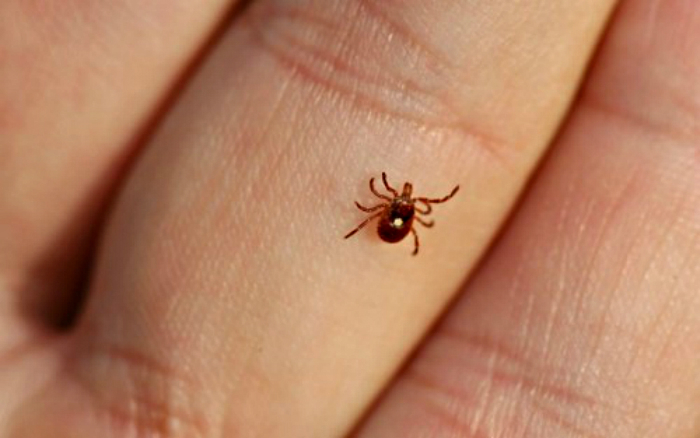
Ticks are active and bite people and animals from spring to autumn.
Many people believe that ticks can only be found in forests, but this is not true. The parasite can be brought into urban areas by flowers, brushwood, and domestic animals (such as dogs or cattle). There are also numerous known cases of tick attacks in public gardens and parks. Ticks inhabit animal habitats, pastures, pens and wait for victims there. The parasite prefers to hunt in bushes, grass, and other low vegetation—this way it can easily, and most importantly, quickly, climb onto its prey at the first favorable opportunity.
Having settled in ambush, the tick waits for a prey for quite a long time: in the spring, after winter hibernation, it begins hunting; if there is no prey during the warm period, with the onset of cold weather, it again goes into "hibernation" until spring, after which it "wakes up" and continues hunting.
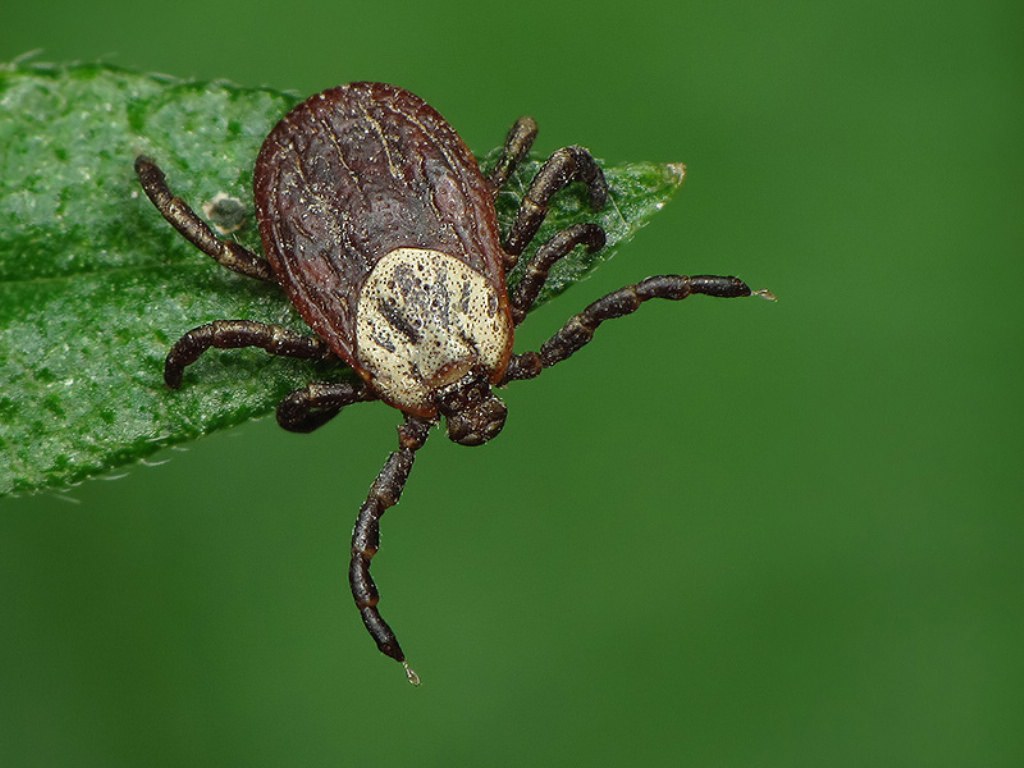
A hungry tick can spend days, weeks, and months waiting for a victim, falling into suspended animation during the winter.
Thanks to its highly developed sense of smell, it detects the approach of a potential host from up to 10 meters away by ground vibrations, warmth, and smell. Upon sensing "prey," the tick extends its forelimbs forward like antennae to accurately detect the direction of the victim's movement and latch on when it approaches.
Once they get on the “host”, the ticks search for a long time, sometimes for hours, to find a place to attachTheir mouthparts are shaped like a head protruding forward, adapted for cutting skin and securing a strong, long-lasting hold on the host's body.
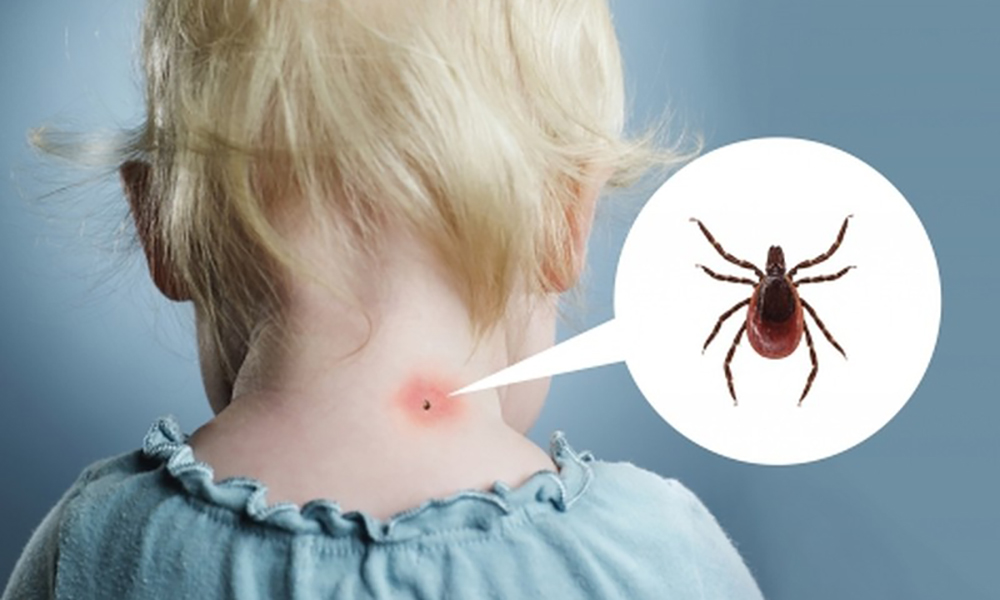
The tick does not bite immediately; it can spend 1–2 hours choosing the most tender place to bite.
Thanks to the natural anesthetic in their saliva, bites are painless. Adult ticks feed for 1 to 12 days. The duration of the bite will be influenced by a number of factors: the tick's developmental stage, its sex, and how long it will bite the skin.These nuances are discussed in more detail below.
There are reports that it burrows through the skin for the first 12 hours and doesn't yet suck blood. However, it's important to understand that this information is inaccurate, not least because skin thickness varies across the body, and a child's skin will generally be thinner than an adult's. Therefore, it's best to have checkups as often as possible.
One to two days after the bite, a slight nagging pain occurs as a local inflammatory reaction develops at the site of the bite, sometimes accompanied by suppuration. The bite wound heals slowly and is intensely itchy.
Life cycle of a tick
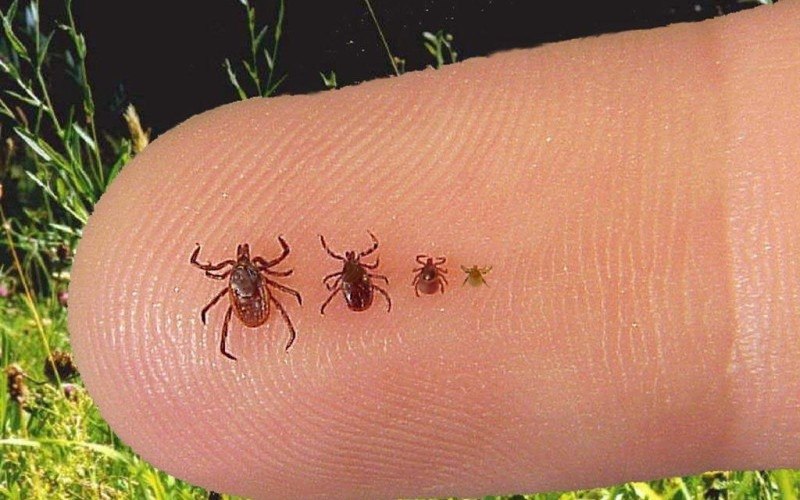
The tick goes through several stages of development and changes three hosts during its life.
The life cycle of a tick goes through four stages:
- Egg.
- Larva.
- Nymph.
- Adult: male, female.
Whether the parasite will go through all stages of development in one warm season depends on the following factors:
- successful “hunt” - the tick needs to change three hosts to move to the next stage of development;
- climate conditions in the region - during the cold season, the parasite slows down its vital processes and remains in a state of suspended animation.
At all stages of development, ticks feed exclusively on the blood and lymph of animals and humans.
Larva
If a female tick satiates herself with blood, she will produce a clutch of 2,000–3,000 eggs between late spring and early summer. Larvae will emerge from these eggs within 2–4 weeks.
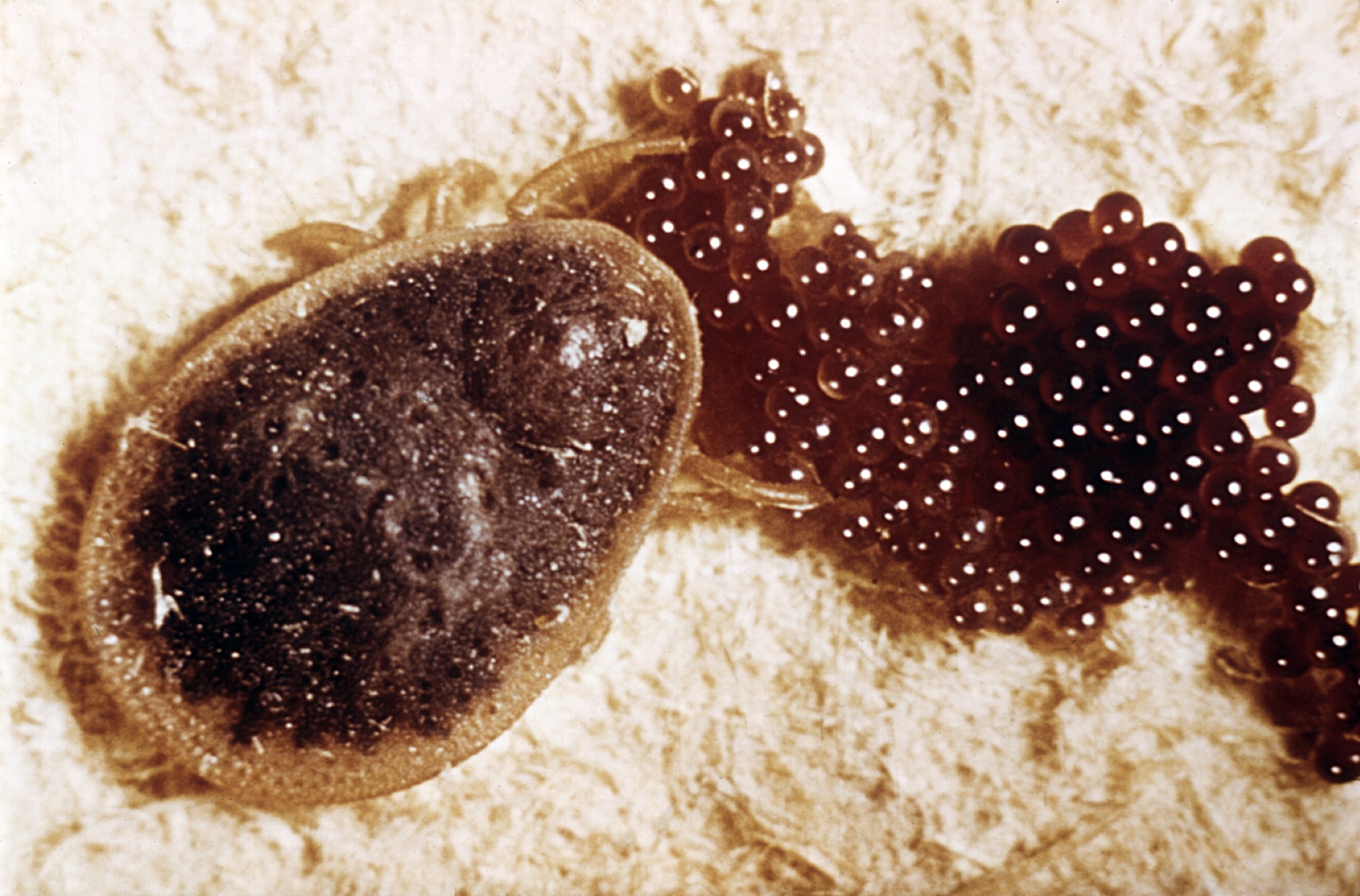
The female tick lays eggs
The larva's body coverings are not yet formed, the shell is thin and translucent, there are three pairs of limbs, however, already at this stage of development all the outlines of an adult are present.
The larvae are no larger than 0.5 mm. They have difficulty climbing high, so they hunt small terrestrial animals such as voles, rats, and hedgehogs. Once they have selected a prey, the larvae climb onto it, attach themselves, and begin feeding.
The duration of blood sucking by the lichen is from 2 to 6 days, until complete saturationThe satiated larva does not live on the host; after its meal, it detaches and falls into the soil for further development. This begins the metamorphosis into a nymph.
If no prey is encountered by the end of the warm season, the tick will overwinter as a larva. A harsh winter, with temperatures of -5°C and below, can kill the larva. If the winter was relatively warm, it will return to the hunt in spring.
A hungry larva can live up to 2 years while waiting for food.
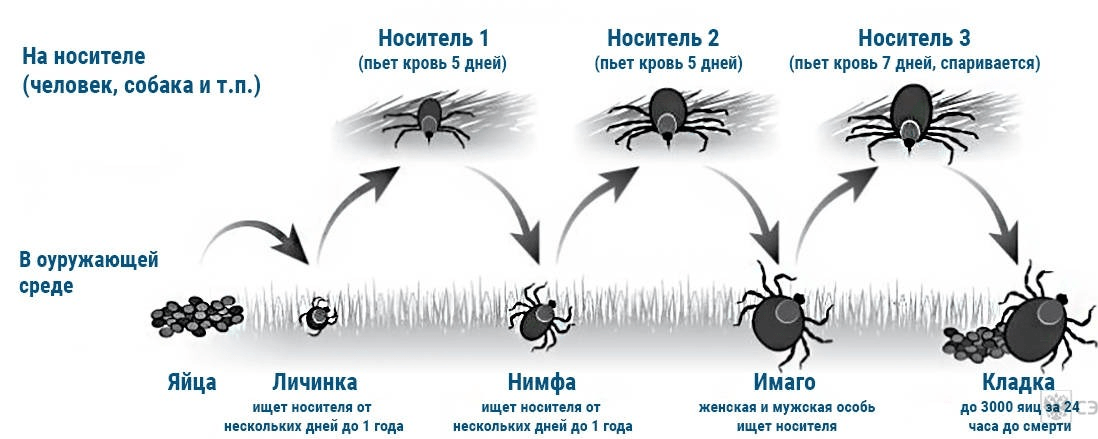
The tick's life cycle lasts several seasons.
Nymph
A nymph is an intermediate stage of a tick's development, something like a teenager – no longer a larva, but not yet an adult.
The parasite increases in size—its length now reaches 1 to 2 mm—and adds a pair of limbs, making it four in total. This allows the nymph to move much faster than the larva and allow it to hunt larger animals, such as hares.
Already at the nymph stage, ticks show aggression towards humans and will try to attack them if they encounter them.
To satisfy its thirst for hunger, a nymph needs to “eat” for 3 to 8 days.After full feeding, it detaches from the victim and falls away. With the help of the blood it has drunk, a new stage of development begins—transformation into an adult.
Like the larva, the nymph can be killed by severe frosts, but if this does not happen, its hunt will continue in the spring. In a favorable environment, a nymph in a hungry state is viable for up to 2–3 years..
Adult
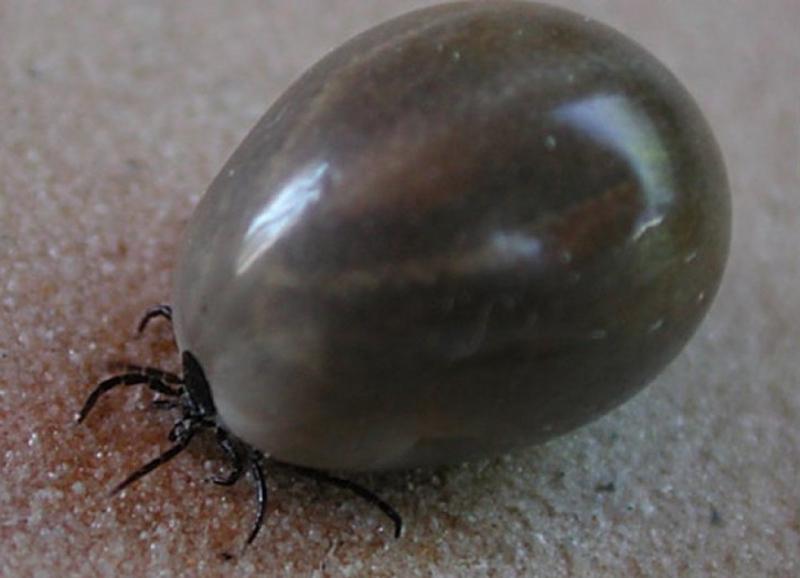
When sucking blood, the tick swells to gigantic proportions.
Ticks become male and female only when they reach adulthood. A hungry tick's size reaches 3–5 mm and depends directly on its sex—females are larger than males. The adult tick's primary goal is reproduction. Ticks prey on large animals and humans.
If a tick attacks a person, the duration of the blood sucking period will depend on the sex of the parasite. Females need to suck 5-7 times more blood than males to lay eggs and produce healthy offspring. Adult female ticks are capable of sucking blood for up to 12 days.The female's body is designed in such a way that the hard shell covers only half of it, while the other half is a sort of sac that can swell and hold 300-500 times the tick's own body volume. This is essential for a successful egg laying—only after fully "satiating her hunger" can the female lay eggs.
The male's body is completely covered with a hard shell - it does not swell when sucking blood, therefore the amount of blood he drinks will be much less, and the "meal" will be modest and quick. The male tick drinks blood for 1 to 3 days..
Adults are quite hardy—severe frosts are unable to kill them; during the cold period, they simply hibernate; with the warming weather, they wake up and go hunting.
The external manifestation of the tick's life cycle is the transformation of the body into a soft, voluminous sac that can stretch and swell when sucking blood.
Ticks do not use animals or humans as a permanent host for life and reproduction; they prefer the forest litter. From the victim they only need a sufficient portion of blood, having received which they immediately detach themselvesCases of reproduction on the host are extremely rare. Typically, ticks seek out each other in the wild.
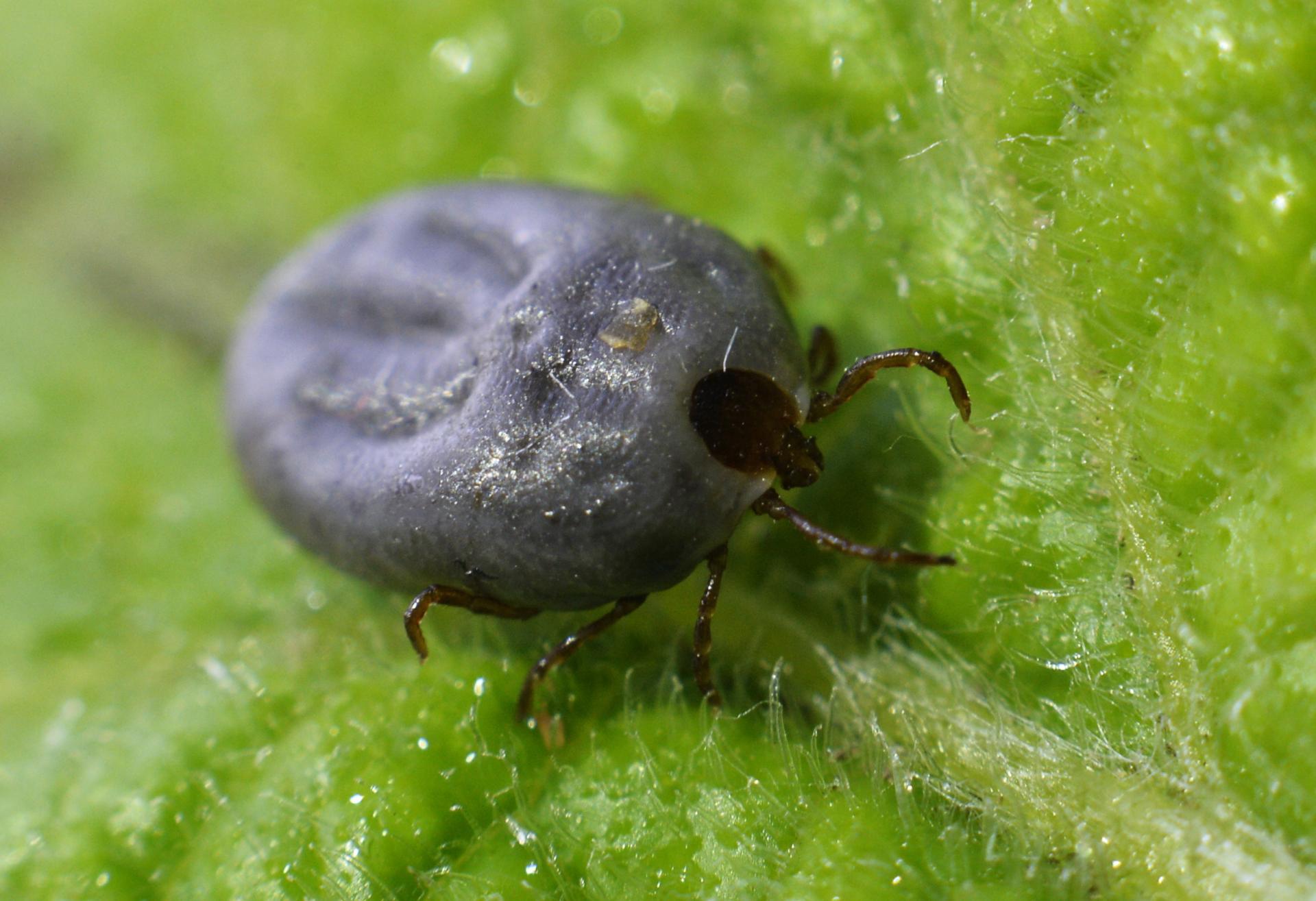
When a female tick is full, its body turns into a soft, voluminous sac.
How long do ticks live?
The main, and indeed the only, goal of this parasite, which is very simple in structure, is to find a host, suck blood for further development, become an adult and continue the species. The female dies after laying eggs, the male after fertilizing 1-2 femalesIn a favorable year in a warm southern climate, ticks can produce two offspring in a single season. After reproduction, they die.
Nature has endowed the tick with endurance: in conditions of famine and favorable climatic conditions, it can survive for up to 2–3 years.
The high fertility of ticks compensates for the significant mortality caused by a shortage of hosts.
Why is a tick dangerous?
When a tick changes hosts, conditions are created for the transfer of pathogens. The virus acquired from wild animals accumulates in the tick's body and penetrates the salivary glands. The duration of the bloodsucking process directly affects the continued growth of the glands and the number of viral particles reproducing within them. With prolonged blood sucking, more viruses enter the bloodstream, so if you find a tick on your body, it is important to immediately remove it and send it to a laboratory to test for the presence of viruses..
Ticks are carriers of dangerous microbes and can transmit dangerous diseases such as:
- borreliosis (Lyme disease);
- tick-borne encephalitis;
- tick-borne relapsing fever;
- ehrlichiosis;
- babesiosis;
- tularemia;
- spotted fever.
These diseases are dangerous for both animals and humans, as they can lead to disability and even death.
Goats are the most susceptible domestic animals to encephalitis. Humans can become infected with tick-borne encephalitis through raw goat milk.
Video: Ticks – What They Are, Why They Are Dangerous, and How to Protect Yourself
Ticks are resilient and dangerous parasites. When they land on a victim, they don't immediately attach, so frequent preventative inspection of your body while in forested areas and taking precautions can help protect you from attack.