The ladybug is perhaps one of the few insects that doesn't evoke disgust or fear in women. It's not only in Russia that it's given this amusing name. In Bulgaria, it's called "God's beauty," in France, "God's little hen," in Germany, "Mary's beetle," and in Tajikistan, "red-bearded grandfather."
Many legends, proverbs, and songs are associated with the ladybug. Some interesting facts about the beetle's life further demonstrate its uniqueness.
That's how wings are
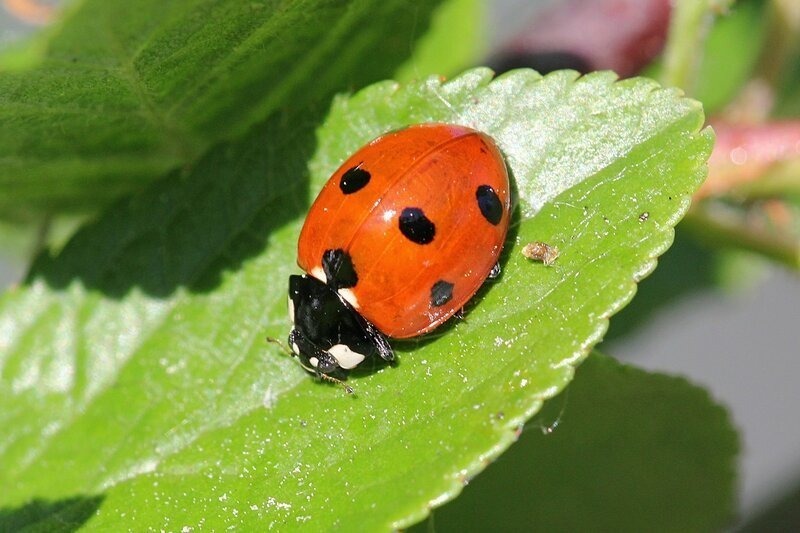
An insect's wings aren't the pretty red, spotted elytra we see from above. These are hard elytra, and underneath them are the actual wings.
Despite their delicacy and transparency, they are quite powerful. A ladybug can beat them 80-85 times per second. And the bright, hard elytra keep the delicate wings secure.
There are many of them
There are many species of these cute creatures around the world—around five thousand in total. And they're not just the red ladybugs we're used to seeing. There are also pink, yellow, orange, white, and even black beetles. Some of them don't have spots at all.
They are found throughout the world except Antarctica. But each species has its own habitat. Some live only on grass, others in trees, some settle only in areas where aphids are found, and the long-legged ones are found on reeds and aquatic plants.
She is our friend
This cute insect is a ferocious predator. A single beetle can consume 50 to 200 aphids per day. They also eat the larvae of whiteflies, leaf beetles, and mites.
For this reason, ladybugs are called natural pesticides. In some countries, such as America, the bugs are bred on special farms, sold in gallons, and used to protect orchards. One such container contains 135,000 insects.
What a sly one!
To stay alive, the ladybug uses a trick. When in danger, the beetle rolls over onto its back and feigns death.
Many predatory insects and spiders don't eat dead insects, so the ladybug has a chance of survival. The ladybug will lie motionless for a while, and then "come to life."
Mysterious spots
The idea that spots on the back indicate the insect's age is incorrect. The number of spots varies among species. The seven-spotted ladybug is most common in Russia, Asia, and Europe. However, other species also exist.
For example, there's a 28-spot ladybird that damages potato crops. A spotless variety of beetle is quite rare. They are brownish-yellow in color, lack any spots, and are covered in hairs. The insect's spots, as well as its bright coloration, serve to deter predators.
Ladybugs have always been considered good luck. In some countries, killing them is even prohibited.