The issue of cockroaches in the home and elsewhere was a hot topic many decades ago, and, unfortunately, remains no less relevant today. Almost everyone has encountered the problem of cockroaches in their homes and the need to get rid of them. Let's explore what cockroaches are, where they occur in our lives, and how to deal with them.
Content
Cockroaches - appearance, habitat, what they eat, reproduction
Cockroaches, regardless of species, are very similar in appearance and behavior. The main body parts of a cockroach are the cephalothorax, abdomen, and head. However, when viewed from above, only the head is visible, as the body is covered by wings. A very important part of the cockroach's body are the antennae, which allow them to receive information about the outside world and communicate with each other.
Female cockroaches are slightly more heavily built than males, making them appear larger and heavier. Their size varies depending on the species, ranging from 1 to 10 cm. A red color is typical for almost all species, though brown and black species also occur in the wild. Their lifespan ranges from 4 months to 10 years, depending on the species.
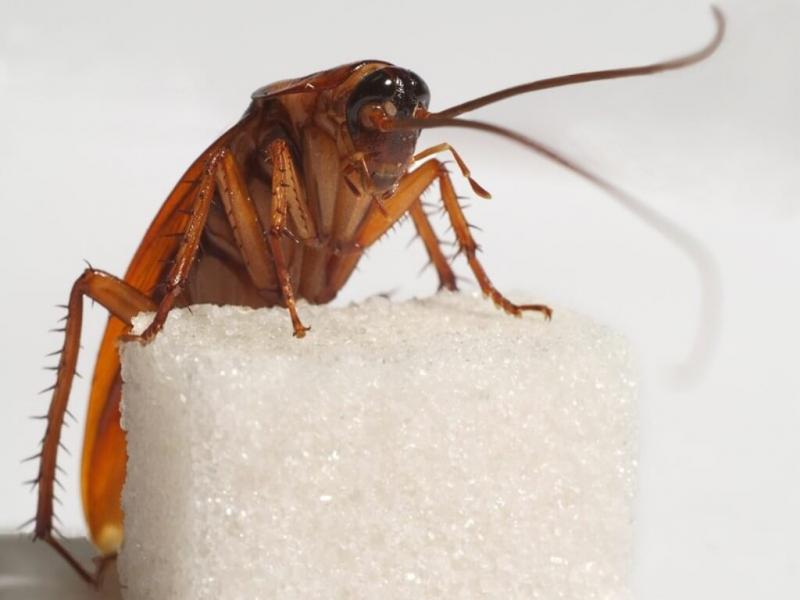
Cockroaches are primarily nocturnal. These insects are found throughout the globe, with the exception of Antarctica and the Far North. They are most common in tropical and subtropical regions. Indoors, they prefer heated spaces, as temperatures below -5°C (23°F) are fatal. Indoor cockroaches feed on food, particularly baked goods and sugar. In the absence or shortage of food, cockroaches can easily feed on houseplants, the glue on postage stamps, and books. Cockroaches are very resilient insects, and can survive for up to a month without food and for several days without water.
In the wild, cockroaches prefer to nest in areas with high humidity: under rotting grass or tree bark, and prefer locations near bodies of water. In homes, cockroaches often choose ventilation shafts, sewer lines, and hidden spots in apartments (behind baseboards, in trash storage areas, etc.).
To reproduce, a female cockroach must mate with a male at least once in her life. Cockroaches reproduce sexually and parthenogenetically, with the male's gametes remaining safely within the female for a long time after mating, meaning she doesn't need to mate with him again to reproduce. A female lays 30 to 40 eggs at a time, with an incubation period of 2 to 5 weeks, depending on the species. The female carries the eggs in an ootheca located at the end of her abdomen. A female can lay 4 to 90 oothecae over her lifetime. Most cockroaches are ovoviviparous, but some are viviparous.
Cockroaches have an incomplete development cycle, which consists of three periods:
- egg,
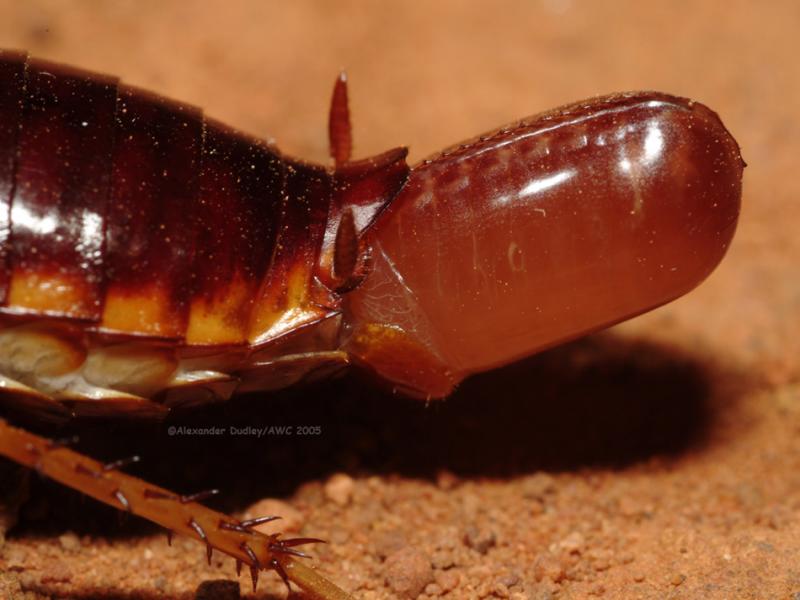
appearance of a cockroach egg
- larva (nymph),
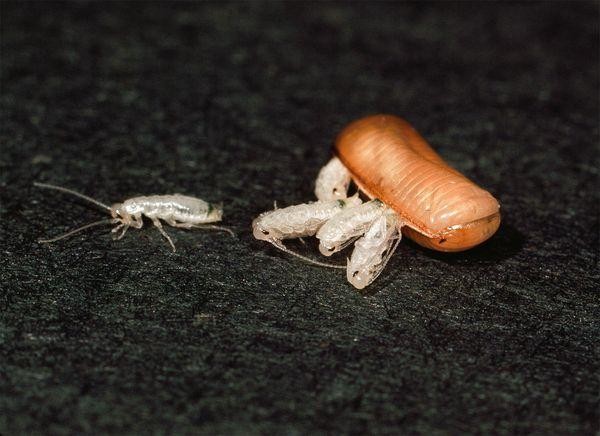
appearance of a cockroach larva
— imago (adult individual).
In nature, cockroaches serve as food for certain species of scorpions, centipedes, tarantulas, frogs, lizards, hedgehogs, and others. Ants feed on dead cockroaches. Chickens love them at home, and cats also enjoy eating them.
Types of cockroaches
The current classification lists 500 genera and includes over 4,640 species of cockroaches. Let's focus on the most common ones.
Domestic cockroaches
Currently, some species of ubiquitous cockroaches live next to humans in homes and other premises.
Red cockroach (commonly known as Prusak)
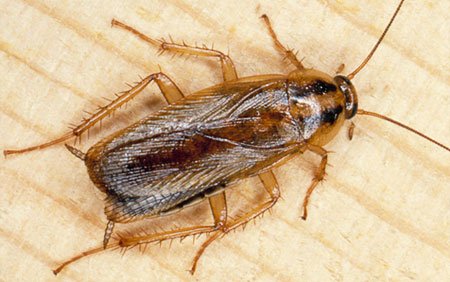
appearance of the red cockroach
German cockroaches are the typical species of the entire vast suborder of cockroaches. Their name, "Prusak," stems from a popular belief that these cockroaches were brought to Russia from Germany during the Napoleonic Wars. However, in reality, they arrived in Europe, Africa, Australia, and the Americas from South Asia. The population of German cockroaches living indoors significantly exceeds that of those living in the wild.
German cockroaches range from 1 to 1.6 cm in length and have a lifespan of approximately 10 months. During her lifetime, a female German cockroach can produce 4 to 10 eggs, thus giving birth to approximately 250 new individuals. Due to their small size, low maintenance, and rapid reproduction, German cockroaches have "conquered" vast territories and are the most widespread species worldwide.
German cockroaches are virtually defenseless against their enemies and can only escape by fleeing, so they choose the most secluded places to live (behind baseboards, cabinets, and in various crevices). They are primarily nocturnal. They feed primarily on waste, so if they manage to settle near a food and water source, they can consider themselves in a paradise. However, if a German cockroach can't find a food source, it may well consume soap, paper, glue, and dead skin cells.
Despite their seemingly defenseless appearance, German cockroaches are not as harmless as they might seem. As they move from garbage chutes and waste disposal sites to food sources, cockroaches carry extremely dangerous bacteria and mold on their legs, which can cause diseases such as tetanus, dysentery, tuberculosis, gastroenteritis, meningitis, salmonellosis, infectious hepatitis, and others. They also carry parasites (helminths, tapeworms, pinworms, whipworms, etc.).
German cockroaches cannot bite or fly. When falling from a height, they actively flap their wings and glide, creating the illusion of flight. Experiments have shown that German cockroaches are extremely resistant to radiation, making it safe to assume they would survive a nuclear war.
Due to their large numbers and the fact that German cockroaches are fairly versatile insects, they are currently actively used for various scientific experiments, so it can be considered that German cockroaches participate in scientific and technological progress.
Black cockroaches
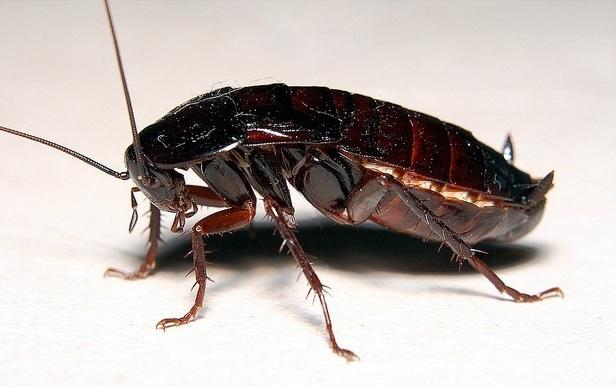
appearance of a black cockroach
Black cockroaches were once a fairly common species, but over time their population has declined significantly due to the rapid spread of German cockroaches, for whom black cockroach oothecae are a food source. Currently, black cockroaches are rarely found in city apartments, as they prefer to nest in basements and sewers. In apartments, black cockroaches prefer to nest near sewer pipes, in the bathroom, and behind the refrigerator. Indoors, black cockroaches are found only in cold climates; in warmer climates, they prefer to live outdoors, nesting under rocks and in other secluded areas.
Black cockroaches grow from 2 to 5 cm in size. A distinctive feature of black cockroaches is their pungent and unpleasant odor. Their hard, chitinous shell is blackish-brown or resinous-brown with a metallic sheen. Males and females are distinguished by their longer elytra. Like German cockroaches, black cockroaches cannot fly, but they are very fast runners.
The lifespan of black cockroaches reaches up to 4 years, and during this period, a female black cockroach is capable of laying 2-3 oothecae with 16 eggs inside.
Black cockroaches are extremely harmful to human health, as they primarily live in extremely dirty places, and are carriers of the most dangerous diseases.
White cockroaches
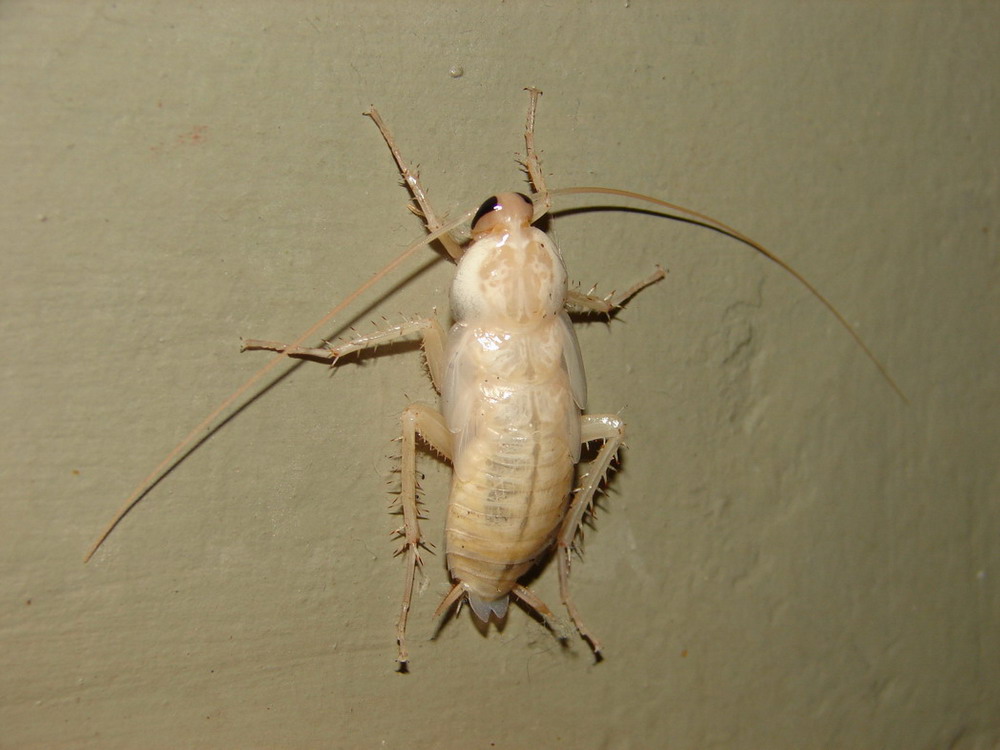
appearance of an albino cockroach
People also encounter albino cockroaches in their homes, and many believe they are a new species. In fact, they are still the same cockroach—the Prussian cockroach, or black cockroach—that is in the process of shedding its chitinous shell, before it has acquired its natural color. Cockroaches can also turn white as a result of pest control and exposure to chlorine.
Furniture cockroaches
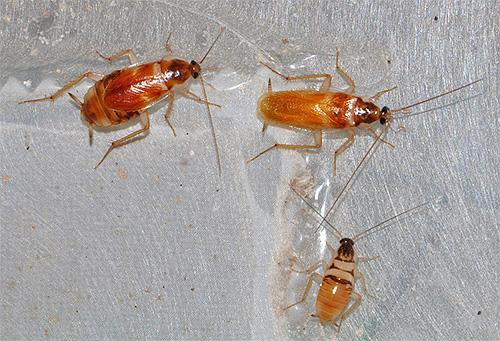
furniture cockroaches in the house
In appearance, furniture cockroaches are very similar to their cousins, the German cockroaches. As a distinct species, furniture cockroaches were recorded in the last century. They reach a length of no more than 12 mm. Furniture cockroaches can be distinguished from German cockroaches by their size, the redder color of their chitinous shell, and two stripes on their abdomen. Furniture cockroaches are less dependent on water than German and Black cockroaches and readily inhabit books, under wallpaper, and other places where there is plenty of paper and starch for food, warmth, and high humidity.
Heat-loving cockroaches
In warm countries there are very interesting species of cockroaches.
Vietnamese cockroaches
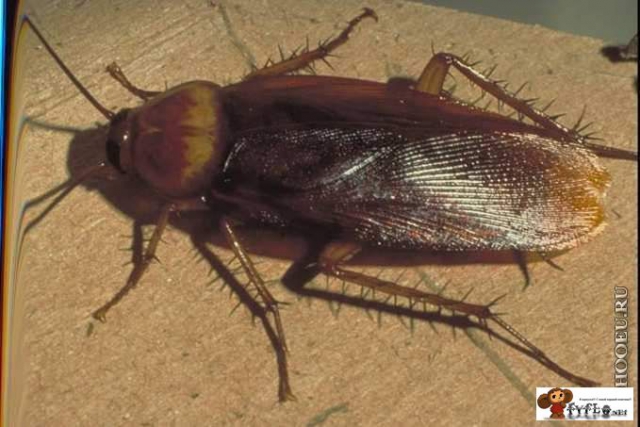
appearance of the Vietnamese cockroach
Vietnamese cockroaches are close relatives of the American cockroach; in Russia they are also known as the "Turkestan cockroach" or "Central Asian cockroach."
This cockroach is found in southern regions, has a small population, and lives primarily outdoors. Vietnamese cockroaches prefer to nest near landfills or livestock. Adults grow up to 2.5 cm and can jump far using their wings. The Vietnamese cockroach is yellow-brown in color.
Egyptian cockroaches
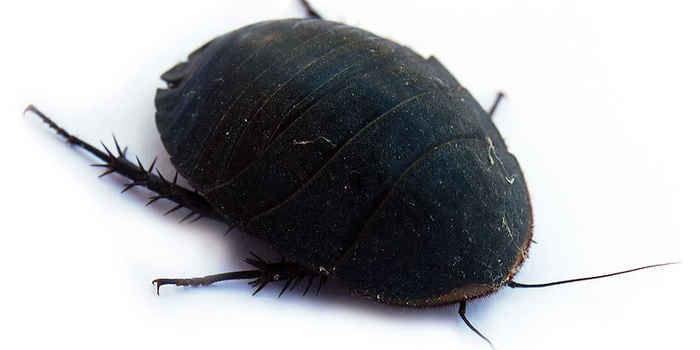
The appearance of the Egyptian cockroach turtle
The Egyptian cockroach resembles a turtle in appearance, with a shiny black chitinous shell with transverse stripes. An adult reaches 4.5 cm and has a lifespan of up to 4 years. This species is native to Asia and the Caucasus.
The Egyptian cockroach feeds on animal remains and feces, and likes leaves.
Egyptian cockroaches are bred as ornamentals and kept in insectariums by hobbyists. Maintaining a temperature of 28-30°C is crucial, and moist sand mixed with soil is used as a substrate.
Large cockroaches
Large cockroaches have long been a favorite among exotic pet lovers, who breed them at home.
American cockroach
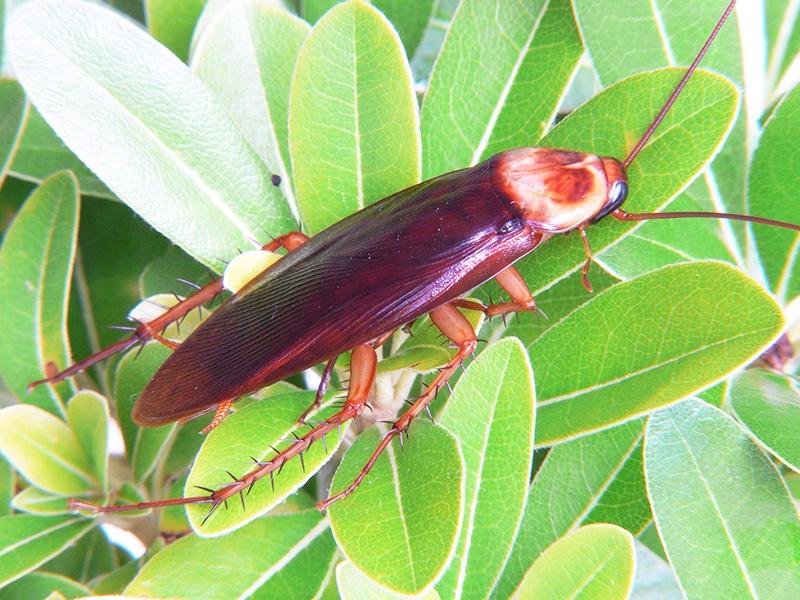
appearance of the American cockroach
The American cockroach is native to Africa. As early as the 17th century, the ubiquitous cockroaches arrived on the new continent along with slaves, gold, and other goods brought from Africa to the Americas. They then spread to Europe and quickly spread there. Their primary habitats are human dwellings, sewer systems, and ventilation systems.
American cockroaches can grow up to 5 cm. Their chitinous shell is shiny red or chocolate brown. These insects feed on any organic material, including food, paper, and fabric. They also feed on garbage, soap, and leather goods. American cockroaches are flying and biting insects.
During their lifetime, females can lay up to 90 oothecae with 12–16 eggs, and the lifespan of American cockroaches is approximately 4 years.
Given the rapid reproduction of American cockroaches, lovers of lizards and other amphibians breed them to feed their pets.
Madagascar cockroach
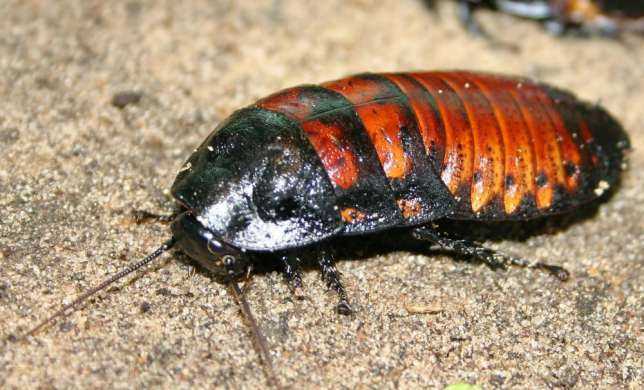
appearance of the Madagascar cockroach
The largest cockroach in the world is the Madagascar cockroach. Their primary habitat is the islands of Madagascar. Biologists have currently identified 20 subspecies of Madagascar cockroaches. Their average lifespan in the wild is 1.5 to 3 years, and in captivity, they have been recorded living up to 5 years.
Their distinctive feature is the ability to produce a hissing sound. Individuals can reach up to 10 cm in size. Madagascar cockroaches range in color from black to light red, with the older the insect, the lighter the color. Madagascar cockroaches are the only ones in their order that are viviparous. Gestation lasts up to two months. The female can give birth to up to fifty babies, each up to 5 mm in size. While the babies grow, the parents care for and train them.
Madagascar cockroaches can eat any organic matter, but they prefer fruits, leaves, and plant remains.
Fans of unusual insects breed Madagascar cockroaches in insectariums, as they prefer to live at temperatures of 28–32 C.
Exotic species
Exotic species of cockroaches differ so much from their relatives in their aesthetic appearance that, looking at them, it is difficult to even imagine their relationship with the annoying insects that often live in human homes.
Australian rhinoceros
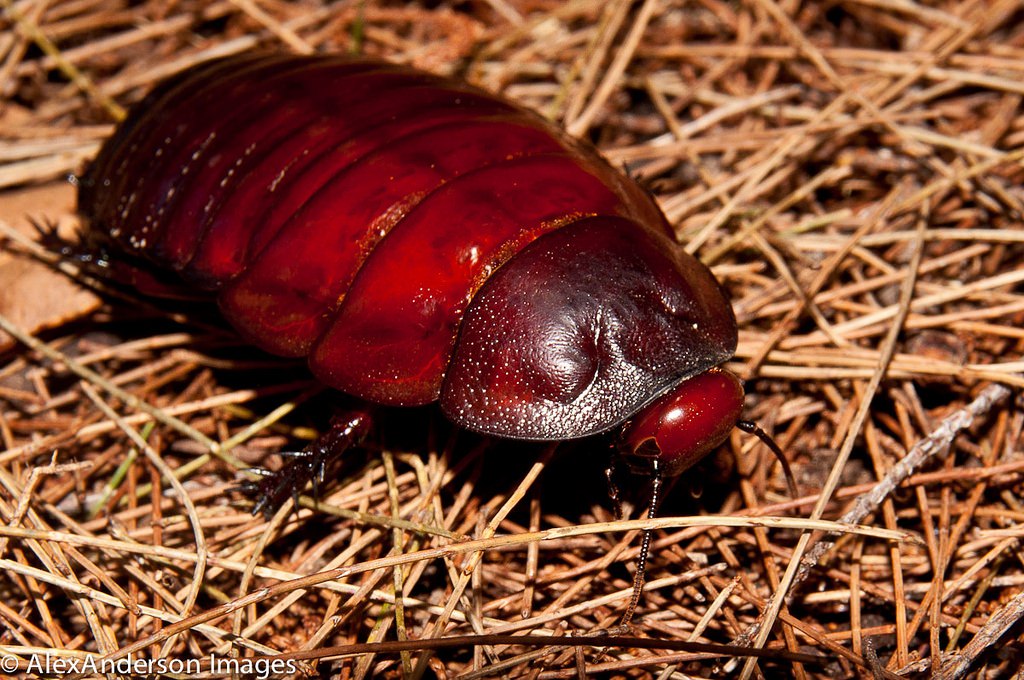
The appearance of the Australian rhinoceros cockroach
The Australian rhinoceros is one of the most unusual species. Although not the largest cockroach in the world, it is the heaviest, reaching up to 8 cm in length and weighing 35–37 grams. This insect can live up to 10 years in the wild. Its chitinous shell is brown or chocolate-colored, and it lacks wings.
Their primary habitat is North Queensland, Australia. They prefer to live in eucalyptus forests, on the leaf litter, which serves as both food and shelter. The Australian rhinoceros is renowned for its ability to dig long, deep tunnels.
These cockroaches reach sexual maturity only at 3-4 years of age. A female can produce up to 40 larvae per year, and the young cockroaches continue to live with their mother for the first nine months.
Chess cockroach
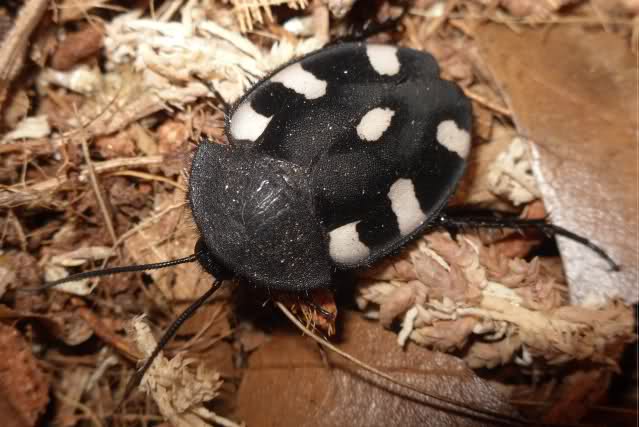
appearance of the chessboard cockroach
The checkered cockroach has a black chitinous shell with seven white dots. It has a round, flat body and short antennae. It reaches only 2–2.5 cm in size. Its average lifespan is 4–5 years.
The chessboard cockroach is native to India. During the day, they prefer to hide under rocks or leaf litter, becoming active only after dark. These cockroaches are distinguished by the fact that when threatened, they emit a foul odor similar to gas.
Insect lovers often keep these cockroaches as ornamental pets. They are recommended for beginners.
Cockroach - little car
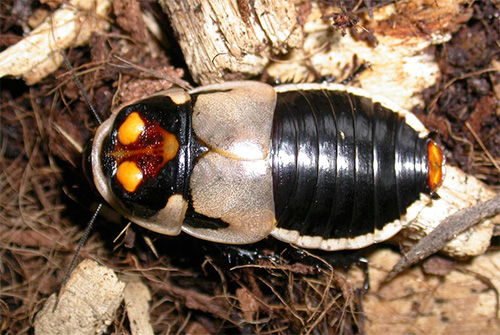
the appearance of a cockroach car
The car cockroach is native to Colombia and Venezuela. The car cockroach is one of the most beautiful cockroach species, making it a sought-after pet by many hobbyists, despite the difficulty of breeding them. These insects have a striking coloration, with bright orange "headlights" on the anterior portion of their backs. This distinctive feature is present only in males of this species. The elytra are short and dirty yellow, and the abdomen is black with a light stripe. Their lifespan is 2–3 years.
The car cockroach loves to burrow into leaf litter during the day and can only be seen traveling through trees in the evening.
Insects feed mainly on fruits; at home they like to eat bread and carrots.
Death's Head Cockroach
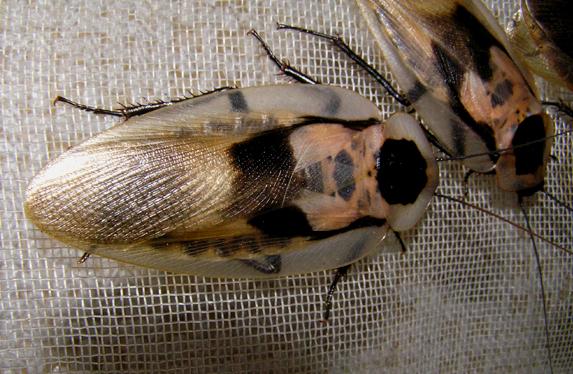
The appearance of the Death's Head cockroach
This cockroach is native to Central and South America. Of all cockroaches, it is the most "earth-dwelling," preferring to live burrowed into moist soil, leaf litter, or in tree canopies.
A distinctive feature of this species is the head pattern on the front of the back.
This insect has almost entirely black wings. The head pattern is clearly visible on the pronotum. Adults live in tree canopies, while larvae live in leaf litter. These insects feed on plant and animal matter. When kept at home, they require an insectarium with substrate and specific conditions. The optimal temperature is 26–30°C.0, humidity around 60%. Active at dusk, it is better to place the terrarium in a shaded place.
Forage species
There are a number of species of cockroaches that, due to their high protein content, have long been consumed as food by both humans and animals.
Marbled cockroach
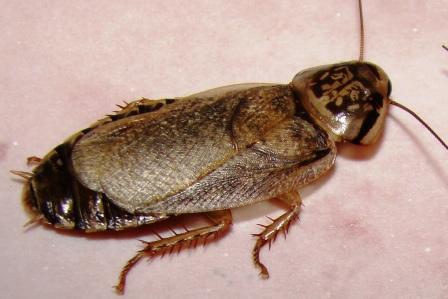
appearance of the marbled cockroach
The marbled cockroach has several names. It is also known as the ash cockroach and the naufetta. It gets its name from the color of its chitinous shell. However, the marbled cockroach is virtually indistinguishable in appearance from its other relatives.
The marbled cockroach was once native to tropical countries and later spread throughout the world. It is extremely undemanding and requires little care. Given these characteristics, as well as its high fertility, animal lovers love to breed marbled cockroaches as food for their pets.
These insects reach approximately 2.5 cm in length and live for about 10 months. At two months of age, brown marmorated cockroaches become adults and are ready to reproduce. They are viviparous insects, and a female can produce 15 to 24 small cockroaches at a time.
When breeding this species of cockroach, it's important to separate the young from the adults promptly, as they may be eaten if food is scarce. Marmorated cockroaches are practically omnivorous, but when feeding them, it's best to prioritize protein-rich foods.
It should be noted that the well-known red cockroaches and American cockroaches are also excellent food species for cockroaches.
In conclusion, it should be noted that cockroaches are truly amazing insects. They have lived since the Paleozoic and Mesozoic eras and have survived successfully to this day. Along with scorpions, they are the only ones that can survive a nuclear war without harm. They are currently being actively studied, and new species are being discovered. Besides the harm that domestic cockroaches can cause, there are many beneficial species. Due to their high protein content, dried cockroaches have long been successfully consumed as food in Asian countries. Exotic lovers breed and keep cockroaches as pets, and even organize cockroach races. Several cockroach species are listed on the IUCN Red List of Threatened Species, and some are already on the verge of extinction.