 Fish are aquatic vertebrates that breathe through gills. They can inhabit both fresh and salt water. They can be found in a variety of bodies of water, from mountain streams to the deep sea. Many are familiar with the impressive list of marine fish from childhood. These include capelin and herring, pollock and cod, halibut and hake, as well as many other small and large marine fish, some of which you can explore in this article.
Cod fish – photos, names
The cod family inhabits not only saltwater but also freshwater bodies of the Northern Hemisphere. Besides burbot, All codfish are marine species.They are distinguished by:
- mustache on the chin;
- 1-2 anal fins;
- 2-3 dorsal fins;
- very small scales;
- about 1% fat content of meat;
- approximately 7% of liver fat stores.
Cod. A bottom-dwelling fish with a light-green, elongated body that feeds on small fish. It is distinguished by numerous dark spots on its sides and back, and lighter spots on its belly. It has dense white meat, rich in protein and low in muscle bone. It is prized for its nutritional value and is a good source of fish oil.
Navaga. A marine schooling bottom-dwelling fish., which is divided into two types:
 The common navaga inhabits the Red, White, and Barents Seas. It is distinguished by its elongated brown body, with brown streaks on the sides and back, and silvery streaks on the belly. It can weigh up to 700 g and reach a length of up to 45 cm.
- The Far Eastern navaga inhabits the Sea of Okhotsk, the Sea of Japan, the Bering Sea, and the Chukchi Sea. It is large in size, but its meat is not as tasty as that of the common navaga. It is distinguished by its silvery-white belly and dark olive back with a purple tint.
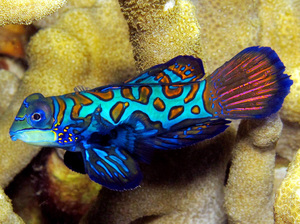 The common navaga inhabits the Red, White, and Barents Seas. It is distinguished by its elongated brown body, with brown streaks on the sides and back, and silvery streaks on the belly. It can weigh up to 700 g and reach a length of up to 45 cm.
Haddock. A ray-finned fish., found in the northern seas of the Arctic and Atlantic Oceans. Average weight is about 3 kg, length from 50 to 75 kg. However, larger specimens are also found. It is distinguished by a relatively high body, slightly flattened laterally, and a lilac or violet back. The belly of the haddock is silvery or milky white. The fish has very tender and tasty meat, rich in minerals.
PollockThis family is a benthic species, found in the coastal waters of many northern oceans. They can weigh around 1.5 kg and reach up to 55 cm in length. They are distinguished by their elongated body and a caudal fin with a small notch. Pollock meat contains about 2 percent fat and is rich in vitamins and minerals.
Scombridae family – photos, names
The family includes ray-finned fishes, which are characterized by:
- additional finlets behind the anal and soft dorsal fins;
- a laterally compressed, thin caudal peduncle with 2 or 3 keels;
- spindle-shaped long body;
- bony ring around the eyes.
The names of the fast swimmers of this marine family include tuna, marel, sardine, bonito, wahoo, Azov-Black Sea, Atlantic, Kuril, and Far Eastern mackerel. Their meat usually lacks small bones but is quite fatty and tender. It contains plenty of vitamins D and B12, as well as omega-3 fatty acids.
The flounder family – photo, name
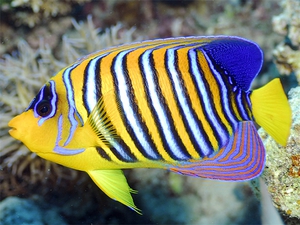 Right-handed flounders They belong to the ray-finned fish family, with eyes located on the right side of their heads. They have symmetrical pelvic fins, and their eggs do not contain a fat droplet. While swimming, they develop in the water column or surface layer.
The most common species are the halibut or flounder. In total, there are approximately 500 flatfish species found in the deep sea.
Flounder
Another name for this type of fish is guinea chickenIt has white, boneless meat with a fat content of 1% to 5%. The North American species of this marine fish are the most well-known. Flounder meat is rich in vitamins D and A, as well as selenium.
Halibut
Among these marine fish, the most popular varieties are Pacific halibut, Black Sea halibut, and Blue Halibut. Their meat contains between 5% and 12% fat. It is rich in vitamins B12 and B6, phosphorus, selenium, potassium, and magnesium. Halibut can be used to reduce venous resistance, improve blood flow, and prevent arrhythmia and atherosclerosis.
Herring fish – names, photos
Marine fish of this species are distinguished by the fact that they have there is not a single scale on the headThey have very small teeth and either no lateral line or a very short lateral line. The most important commercial herring species are:
- European sprat;
- European sardine;
- Pacific herring;
- Atlantic herring;
- Atlantic menhaden.
Sea herring meat contains a large amount of protein, polyunsaturated fats, and vitamin A.
Formidable sea predators sharks
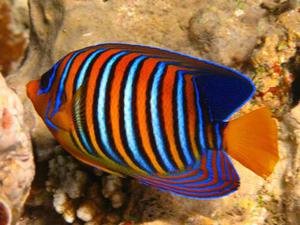 The most ancient representatives of these individuals already existed about 420 million yearsThere are currently over 450 species. The smallest shark measures 17 cm. The whale shark is the largest fish, reaching up to twenty meters in length.
Sharks are primarily predatory fish, but some feed on small fish, squid, and plankton. These include the megamouth, basking, and whale sharks.
Despite some reports of mercury accumulation in shark meat, some cultures still use it as food. Shark fins are used in Asian cultures to make delicacy soups. And shark liver contains vitamins B and A, and is used to make various medicines.
Sargan family – photo
This is another type of predatory marine fish. Garfish are distinguished by:
- needle-shaped body;
- small teeth;
- long jaws;
- weighing 400 g;
- 95 cm long.
Garfish live in the White, Barents, and Baltic Seas, where they swim along the coast, pursuing schools of fish. Garfish meat is very tasty.However, there's one thing to be aware of when cooking it: the fish bones turn green when boiled, which is nothing to worry about.
The article only provided a small selection of the names and photos of deep-sea fish. All of these fish are highly nutritious and are therefore often found on dinner tables. Even pets are recommended to eat sea fish rather than river fish, which are less contaminated with heavy metals and free of pesticides and radionuclides.