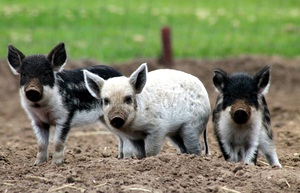
 In the former Soviet Union, pig breeds of several groups are bred. The first group includes the most common pig varieties: Ukrainian Steppe White, Large White, Estonian Bacon, Landrace, Poltava Factory, and Welsh. The second group includes the Ukrainian Steppe Speckled, Mirgorod, Large Black, North Caucasian, and Duroc breeds with red, black, and black-speckled coats.
Content
Differences and characteristics of breeds
All breeds belonging to different groups are distinguished by a specific body type. Based on body type, pigs are classified as:
- bacon (Estonian and Landrace);
- universal (large white);
- predominantly lard (Ukrainian steppe and Mirgorod);
- meat and lard (steppe white).
All names define the basic performance of the product.
For the meat group The following external signs are characteristic:
- light ham and small breast volume;
- lightweight front end;
- significantly elongated body.
The chest size of these animals is much smaller than the body size.
Sebaceous species are distinguished by the following external features:
- quite heavy front end;
- large chest volume;
- very wide and deep body;
- heavy and fleshy ganaches;
- meaty and plump ham.
The chest circumference is significantly greater than or comparable to the torso size.
The universal and meat-fat varieties occupy an intermediate group between the fat and meat types.
Description and photos of popular species
Landrace
 This breed was developed in Denmark in the mid-19th century. A rather rigorous selection process was carried out among these animals. The main emphasis was placed on such characteristics as fleshiness and early maturityAs a result of extensive and painstaking work, English White and Danish pigs were selected and crossed. Intensive feeding, which included a significant amount of animal protein, was also implemented.
The Landrace breed is a meat breed. Its large amount of meat and thin layer of subcutaneous fat make it a bacon breed.
Breeders discovered a very interesting feature: crossing Landrace cattle with other breeds produced remarkable offspring. What's unique is that during fattening of offspring weighing up to 100 kg, the lean meat content increases by 4-5%.
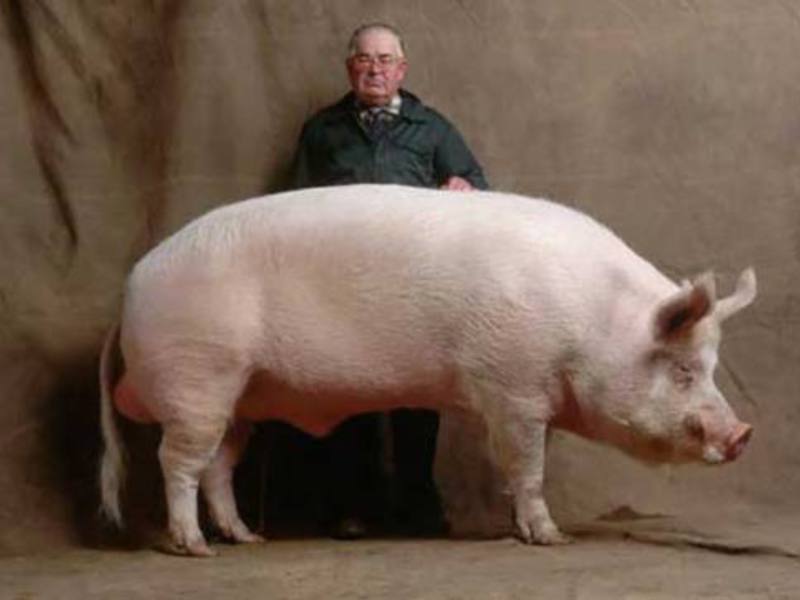
External description of the landrace:
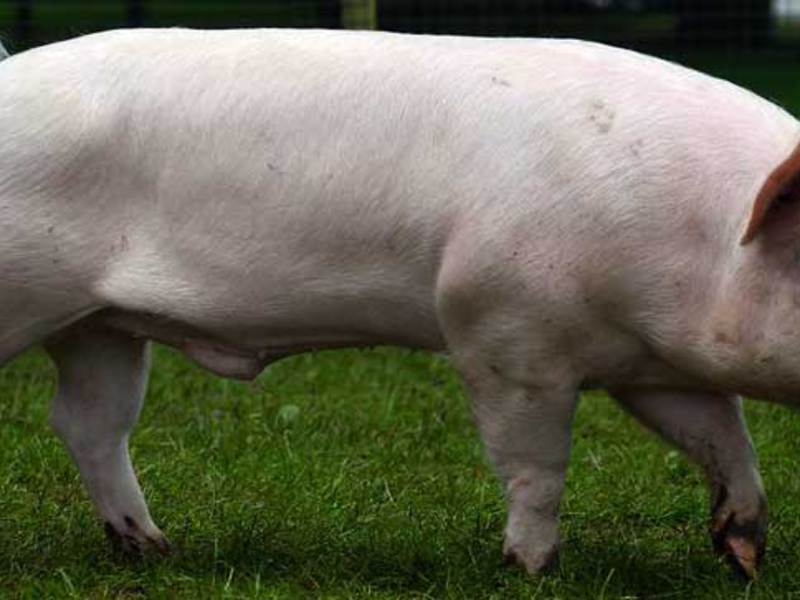
- long ears hanging down over the eyes;
- elongated body;
- the hair is not thick and light;
- thin skin.
Breeding Landrace sows is quite complex. This is because sows and young animals are demanding in terms of care and housing conditions. Even minor deviations in the fattening process or housing conditions negatively impact fertility, litter size, and many other parameters.
For boars of this breed of pigs bred in our country, the average body weight is about 300 kgThe body circumference can reach up to 182 cm, and the chest circumference is approximately 164 cm. Sows can weigh 280-290 kg, with a body circumference of approximately 168 cm and a chest circumference of up to 150 cm. Landrace sows are highly prolific, producing up to 9 piglets per litter. The average daily weight gain for this breed reaches 709 g. In 190 days, animals of this breed gain approximately 100 kg of live weight.
The main characteristics of the Landrace breed include exceptionally high development and growth rates, agility, and endurance. The Landrace breed produces the finest quality bacon.
Disadvantages: weak sides, wagging and rear-footedness, does not tolerate stress well.
White breed
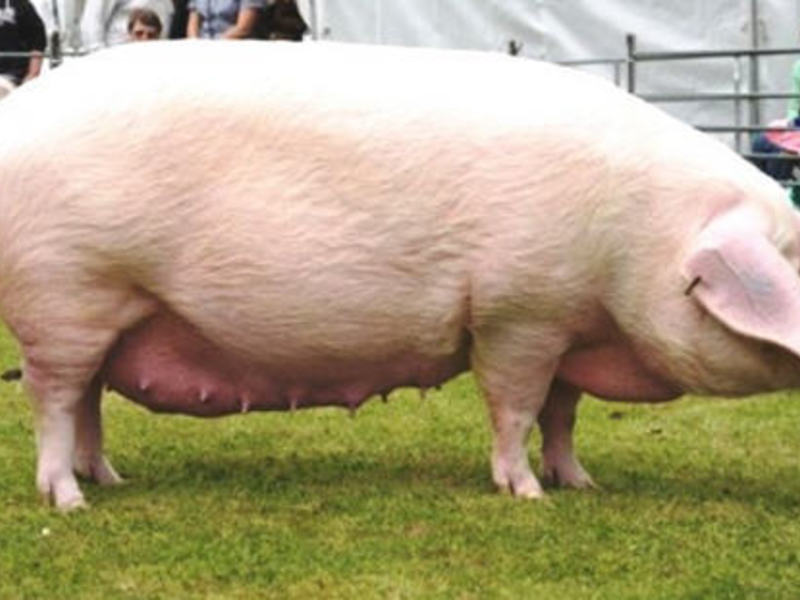
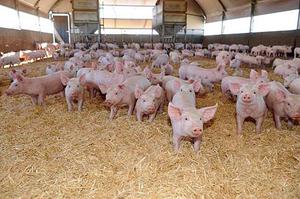
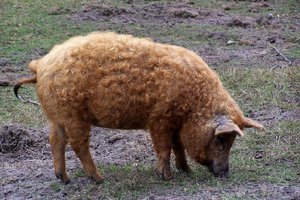 Today, the most popular breed in our country is the large white pig. This breed's popularity in our country is due to its qualities. Pigs of this breed have adapted well to the feeding and climatic conditions. But they do not tolerate extreme cold and heat wellThe white pig was brought to our country from England. Thanks to extensive breeding and genetic work, as well as extensive acclimatization, the white breed is now successfully bred in Europe, America, China, Canada, Japan, Ukraine, and Belarus.
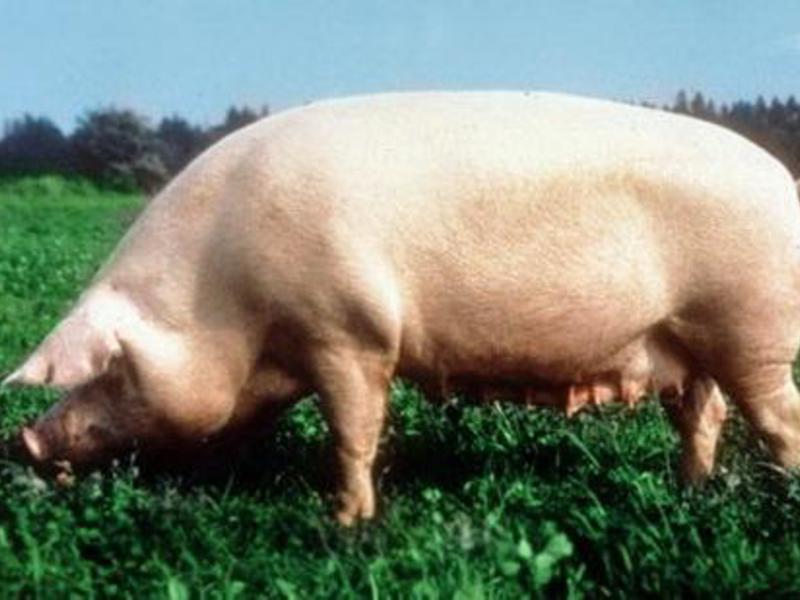
Large white pigs can be fattened to produce a carcass rich in meat, bacon, or fat. Pigs of this breed are distinguished by a harmonious and not coarse build, white coat, and strong build.
The body size of boars reaches 190-195 cm, and that of sows 150-160 cm. The head is large with a high forehead, and the neck is thick and long. The ears are not thick and large, tilted slightly forward but not drooping.
Back: Long and broad, without a gap behind the shoulder blades. Chest: Deep and massive. Loin: Broad. Rump: Not sagging and wide. Round hamsWhite pigs are short in stature and have strong legs with even and wide hooves.
The skin is elastic and dense, without folds. The bristles, which are densely distributed over the entire body, are thin and smooth.
Sows have excellent fertility. They produce up to 14 piglets per litter, with a milk yield of approximately 55-65 kg. Piglets can reach a live weight of approximately 22-27 kg after two months. In 170-185 days, piglets reach the target weight of 100 kg.
The distinctive feature of the large white pig is its good and rapid adaptability to feed and climate conditions. It has a flexible genetic structure, high fertility rates, and early maturity.
Flaws: high tendency to obesityNot a very attractive appearance: poorly defined ham, drooping rump. They do not tolerate extreme heat and cold well.
Duroc
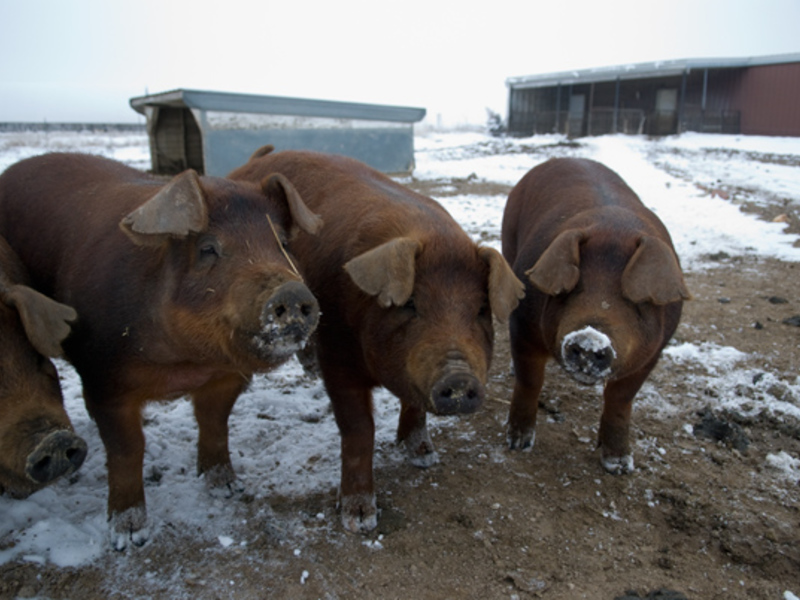
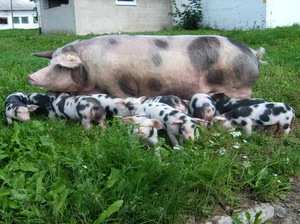 This is a red-colored breed. Developed in the mid-20th century in the United States, it is now popular worldwide. What makes this breed unique is that the Duroc was originally bred as a tallow breed, but the high demand for meat changed its production focus. Durocs are quite hardy and adapt well to pasture conditions.
Duroc pigs are typically used in breeding to develop purebred hybrids. The meat of these pigs characterized by good quality.
This breed is characterized by a compact build and large size. The body is medium-sized, wide, and deep. Boars measure approximately 182-187 cm, while sows measure approximately 173-188 cm. The ears are long and droop forward. The back is arched, the legs are strong and high, and the haunches are clearly defined. The skin color ranges from golden to deep red.
Duroc sows are not very fertile. In this respect, they are inferior to the White and Landrace breeds. A sow produces approximately 8 piglets per farrowing. Duroc sows are calm and nurse their piglets well. Daily weight gain is approximately 770-900 grams. Duroc is a precocious breed. in 160-175 days they gain 100 kg of live weight.
Traits: good adaptability to pasture maintenance and endurance, uniformity of carcasses, calm animals, stable and high meat production.
Disadvantages: low fertility, susceptible to diseases with atrophic rhinitis, highly dependent on the amount of protein feed.
Pigs on the grill
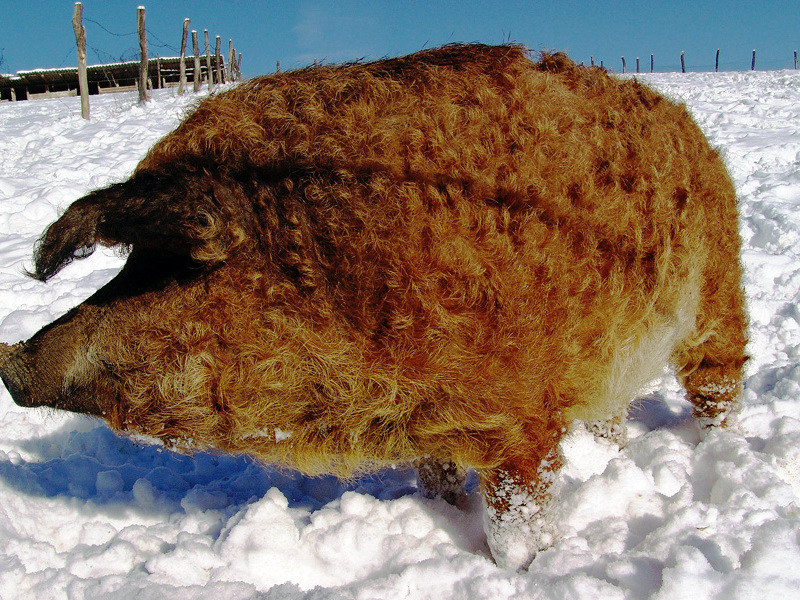
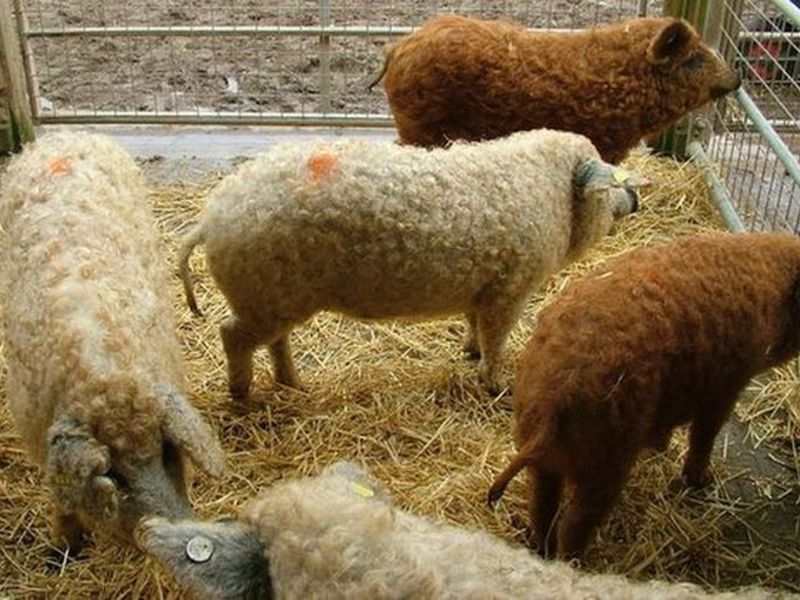
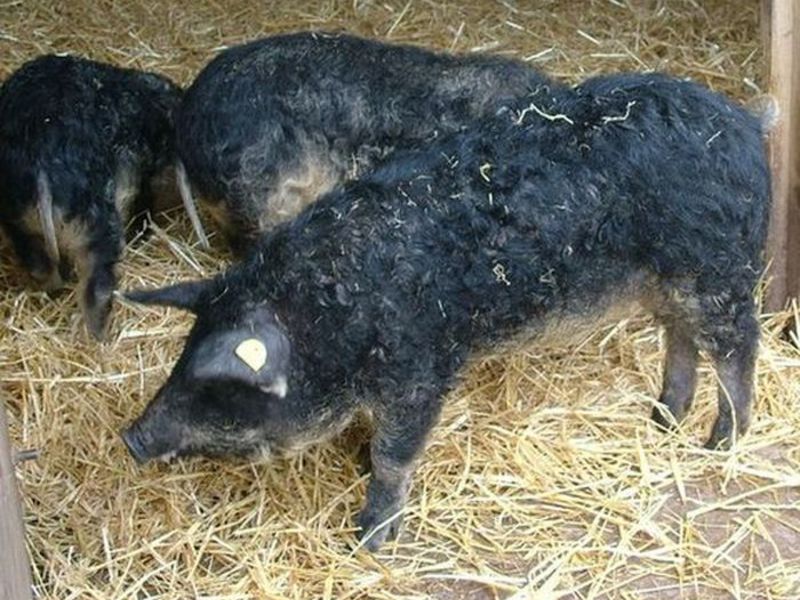
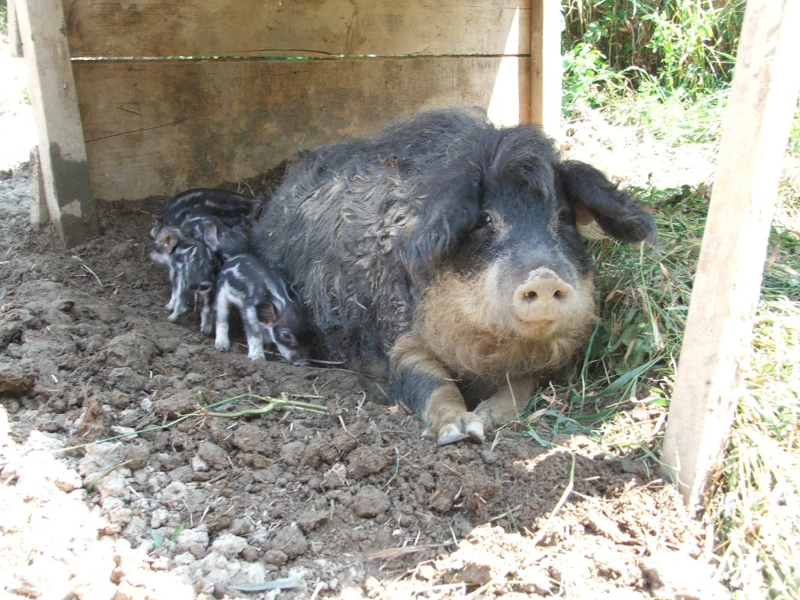
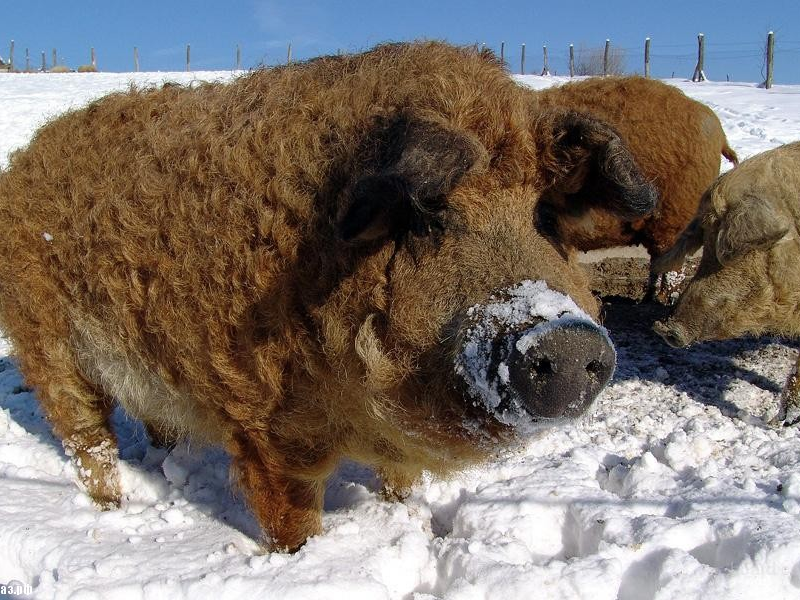
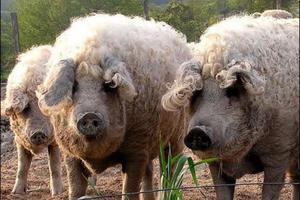
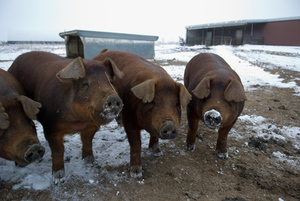 In the 19th century, a unique breed of pig, the Mangal, was developed through selective breeding. This breed's distinctive feature is its thick, curled coat, reminiscent of karakul.
Initially, the Hungarian Mangalitza and the British Lincolnshire breeds were developed. They differed only in coat color. These breeds disappeared from the market completely in 1971, as they were unable to compete with the fast-maturing and fast-growing breeds. Today, only one remains in the world. Hungarian breed of these pigs.
The unique characteristics of their fur allow pigs to easily survive the winter and escape various insects in the summer. They are also commonly known as "sheep pigs." Based on their fur color, mangal pigs are classified into four types: white, red, black, and mixed. The black variety is critically endangered.
Mangalitsa pigs do not require any special conditions for keeping or caring for them: they eat a variety of plant foods, do not require insulated premises, and do not require vaccinations.
The meat is considered a delicacy. Neither the animals' beauty, nor various prohibitions, nor the small population size deter lovers of manglitza meat. Today, there are relatively few of these pigs in the world.
At the first farrowing a sow gives birth to about 3-6 piglets, and in subsequent farrowings, the number of piglets increases. Within six months, the piglets are fully formed.
Vietnamese pigs
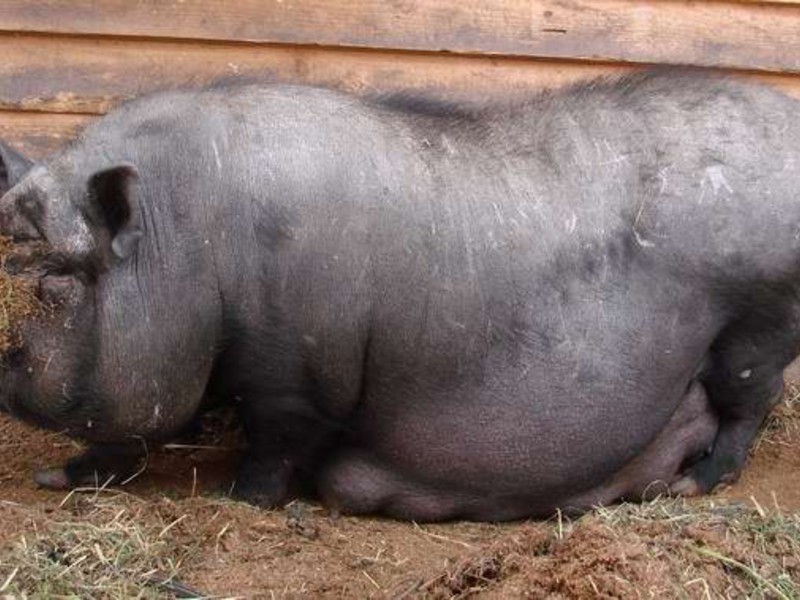
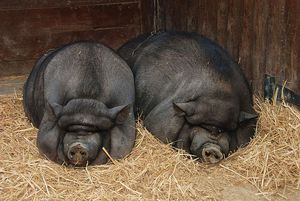
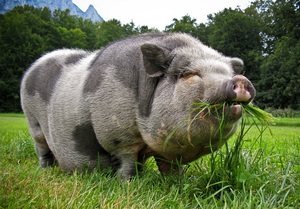 This pig breed quickly became popular on farms and in backyards. Pot-bellied pigs were brought to Canada and Europe from Vietnam in 1984.
The Vietnamese pig is a bacon breed. High-quality meat, low fat content, and a distinct flavor compared to other breeds make them attractive for breeding.
A sow of this breed can reach 110-125 kg, and a boar 160 kg. The meat yield is record-breaking in 74-85% of live weightThe Vietnamese pig is highly prolific and matures early. Pigs reach sexual maturity after five months, and six months later, the sow produces her first litter of 15-18 piglets at a time. A sow produces approximately 25 piglets per year, and this pattern continues for 15 years.
At six months of age, when the pigs reach a live weight of approximately 74-81 kg, they are slaughtered. The high-quality meat, with its low cholesterol content, sells quickly.
The high quality of their meat is due to the excellent processing of plant matter by these pigs. Their diet consists of approximately 60% roughage. Raising this breed of pig on pasture significantly reduces feed costs. Specially formulated balanced feed, a variety of root vegetables, and green fodder are the staple diet of Vietnamese pigs.
Pot-bellied pigs are very clean.If free range is possible, pigs will defecate in one area. At night, when free range is not possible, the animals will defecate until morning. The area will be kept dry and clean at all times. In the summer, especially in hot weather, fresh water should be provided.
Due to their high fertility and low cost of feed, breeding Vietnamese pigs is a rather profitable business.
Distinctive features of the breed: strong immunity to various diseases and early maturation time, calm disposition, unpretentiousness, omnivorousness.
The above-described pig breeds are among the most productive. For a private farm, it is advisable to choose the Vietnamese, large white or early maturing meat breedThese are the most prolific, largest, and most low-maintenance pigs. Raising them requires minimal investment, and the results are guaranteed to be excellent.