 Keeping piglets and fattening them for meat at home is very profitable, but quite labor-intensive. Omnivores gain weight quickly and are inexpensive to maintain. To achieve good results, it's important to understand the different types of feed and choose a balanced diet.
Content
Selection of piglets for fattening
Pigs can be fattened at home to produce a variety of products. Piglets from a domestic sow are raised on their mother's milk. grow faster and stronger, and the taste of their meat is much higher.
If a piglet is selected on a farm, the breed of the animal must correspond to the purpose for which the animal will be fattened:
- to obtain lean meat, the choice should be made in favor of the Siberian or Lithuanian breed;
- If the meat is to be used for making various smoked products, the pig must be of the Landrace bacon breed, in which the fat has layers of meat;
- The young animals raised to "fat condition" can be of the Black-and-White or Mirgorod lard-meat breed, which is capable of quickly gaining weight.
Many people buy month-old piglets mainly because they are cheaper. But young animals that are fed mother's milk up to two months of age, gives better weight gain, gets sick less often and develops faster.
A young piglet should be lively, have strong legs, and a dry, curled tail. Its back should not be sagging. It's important to listen to the piglet's breathing; it should be clear. If the animal has lung problems, it's not suitable for fattening. Sometimes piglets have problems with chewing, so pay attention to how they chew their food. If the piglet simply suckles, it will be impossible to fatten the animal on roughage.
Fattening young animals for meat begins at 2.5 months. Knowing the right feed and supplements for this purpose allows you to achieve good results at a low cost.
Depending on the goal and the type of breed chosen, the method of fattening pigs at home is selected. Types of fattening:
 Meat fattening. Pigs are fattened for meat up to 100 kg live weight, which they usually reach by seven months of age. During this period, the edible portion is approximately 70%. If a piglet is fattened to 130 kg, the edible portion will be 85%.
- Bacon fattening. Fat-laden meat with a distinctive aroma and flavor is achieved through a carefully formulated diet. To produce bacon, piglets must have strong hams, a broad back and chest, and an elongated body. By three months, they should weigh 25 kg. A pig raised for bacon should weigh no more than 100 kg.
- To fattening. Since the goal of fattening is to produce high-quality backfat, even culled sows can be selected for this purpose. Although the meat should be fatty, the quality of the animals' feed is still monitored. At slaughter, the backfat thickness should be 10 cm, and its content should be approximately 50% of the live weight. This fattening method is often used at home.
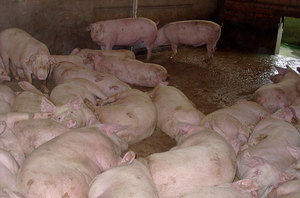 Meat fattening. Pigs are fattened for meat up to 100 kg live weight, which they usually reach by seven months of age. During this period, the edible portion is approximately 70%. If a piglet is fattened to 130 kg, the edible portion will be 85%.
To ensure the result meets expectations, you should adhere to precise fattening technology.
Fattening pigs: the most effective methods
To obtain meat or meat products at home, various fattening methods are used.
Fattening piglets for meat
To produce high-quality meat, young animals of any body type are selected. There are two ways to fatten pigs for meat:
- Low-intensity method. In this case, the piglet's daily weight gain is not very high, so the animal gains the required weight over a relatively long period of time. Low-intensity feeding is only used if sufficient quantities of low-nutrient, inexpensive feed are available.
- Intensive method. This is the most popular and profitable method, achieving good weight gain and high-quality meat in a relatively short period of time. Three-month-old piglets weighing 30 kg are fattened for four months until they reach 90 kg. Sows raised for meat should gain 650 grams per day.
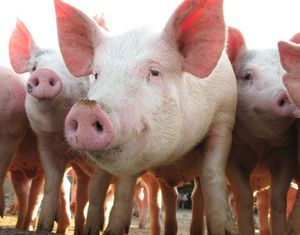 Low-intensity method. In this case, the piglet's daily weight gain is not very high, so the animal gains the required weight over a relatively long period of time. Low-intensity feeding is only used if sufficient quantities of low-nutrient, inexpensive feed are available.
Since the intensive method of feeding piglets is the most popular, let's look at it in more detail.
To receive large daily increaseThe young pigs must be crossbred from different pig breeds. Furthermore, the animals must be kept in a warm, dry environment and fed the correct diet.
Pigs are fattened for meat in two periods:
- The preparatory period is longer and should occur in the spring or summer months. During this period, each animal should gain 500 grams of weight per day. Pigs are fed green feed, such as fresh grass, melons, root vegetables, and legumes. If pigs are raised for meat in winter, grass meal, mixed silage, and root vegetables are used instead of green feed.
- Final period. Shortly before slaughter, feeds that negatively affect taste should be eliminated from the pigs' diet. These include millet, bran, soy, fishmeal, fish, and fish scraps.
Balanced nutrition At home, pigs gain weight well. It should contain 150 grams of digestible protein per feed unit. If there's not enough protein in their feed, pigs begin to gain weight, which results in poor meat quality.
During the preparatory period, don't forget to add vitamin and mineral supplements to the animals' diet. Piglets need B vitamins, vitamins D, and vitamin A. The amino acid tryptophan, methionine, and lysine are also essential.
Pigs intended for meat production must be fed twice a day. Fresh water must always be available in the animals' drinking bowls. During the final months of fattening, shade the room and reduce the amount of exercise.
Fattening pigs for bacon
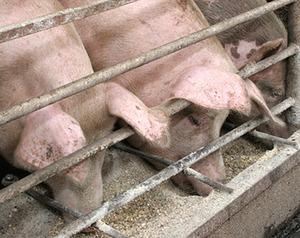 Raising piglets for bacon involves two balanced meals a day and active walks at any time of year. After walks in the fresh air, animals' appetites increase, feed is better digested, fat deposition decreases, and muscle tissue and skeletal structure develop well. This is especially important when fattening pigs for bacon, as the result should be tender and juicy meat with even layers of fat.
Piglets should weigh 25 kg at 2.5 months of age. Boars are castrated.
Approximate daily diet:
- two kilograms of root vegetables;
- one and a half kilograms of concentrates and skim milk;
- three kilograms of green fodder;
- twenty grams of salt;
- special additives.
When raising pigs for bacon at home, it is necessary to ensure that at the beginning of fattening, the daily gain is about 450 grams, and in the last three months - from 500 to 600 grams.
In the last months of fattening piglets exclude products that degrade the quality of meatThese include fish scraps, bran, soy, etc. Barley is essential in the animals' diet, as it gives the lard a pleasant taste, a white color, and excellent density, while the meat has good quality characteristics.
Features of fattening to fattening conditions
Piglets raised to fattening condition should weigh 100 kg. Proper fattening should result in a pig's live weight reaching 200 kg. Meat should account for approximately 40% of the pig's total weight.
Piglets are fed carbohydrate-containing foods, including various root vegetables, corn, etc. During the preparatory period, the piglets' diet should include corn and wheat, and during the final period, these are replaced with barley and millet, which improve the taste of the lard.
Use of feed additives
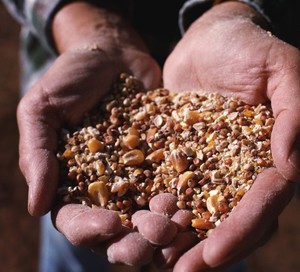 It is possible to increase the average daily weight gain while reducing financial costs for feed. with the help of special dietary supplements, which are introduced into pig diets. Feed additives not only improve meat quality and make piglet rearing more profitable, but also strengthen their immune system.
Vitamins and amino acids added to the pigs' diet increase the percentage of digestible protein, thereby enhancing the nutritional properties and leanness of the meat. To improve the normal formation and taste of fat, balanced premixes are added to the feed, containing the necessary amounts of minerals and vitamins for the growth and growth of piglets.
A large number of various microelements contained in lake siltHowever, it's not always available, and its shelf life is limited to four days. Complete feed for pigs contains various beneficial additives, micro- and macroelements, and vitamins. Feeding them with complete feed can increase daily weight gain by approximately 30%.
It is recommended to include in the diet of young animals and animals that are lagging behind in growth or are sick special growth stimulants:
- Monosodium glutamate helps food to be digested well and absorbed quickly, and also improves the taste of meat.
- Azobacterin contains nitrogenous substances and vitamin B12 necessary for piglets.
- Betazin allows to reduce feed consumption and increase growth rate.
- Etonium increases the biological value of meat and promotes higher slaughter yield. After using this supplement, lard will contain essential fatty acids. A pig needs 0.5 ml of etonium per kilogram of live weight per day. This is enough to reduce feed costs by 7% and simultaneously increase growth by 8%.
- Amylosubtilin GZK is a water-soluble enzyme. It increases fat deposits and daily gain in animals. Feed costs are reduced by 12%.
- Glutamic, citric and succinic acids have a positive effect on growth stimulation.
Growth-promoting antibiotics
To increase weight gain and at the same time improve piglets' resistance to various lung and gastrointestinal diseases, you can use growth-promoting antibioticsThese drugs include:
- streptomycin;
- penicillin;
- flavomycin;
- icin;
- kormogrisin;
- biovit;
- hygromycin;
- Grizin.
 streptomycin;
They can be add to compound feed and premixes, and also used in combination with vitamin supplements. Growth promoters for raising piglets should only be used in compliance with all recommended dosages, which should be verified with a veterinarian or experienced farmer.
By following all the rules and recommendations for fattening piglets at home, you can achieve rapid results, good weight gain, and high-quality meat. However, it's important to note that once adult pigs' daily weight gain drops below 500 grams, their maintenance becomes unprofitable, and feeding them for rearing can be discontinued.