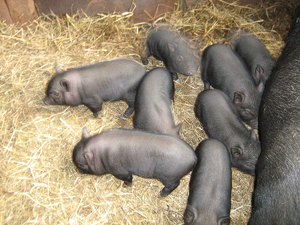
 Recently, the Vietnamese pot-bellied pig breed has been gaining popularity in our country. These fascinating pigs originated in Southeast Asia and have been highly prized by many farmers. However, since the breed is still relatively unknown, many people wonder how to choose and raise a Vietnamese piglet. By learning all the intricacies of raising and breeding piglets and watching video instructions, you can provide your family with tender meat and earn a handsome profit from its sale.
Content
Main characteristics of Vietnamese pot-bellied pigs
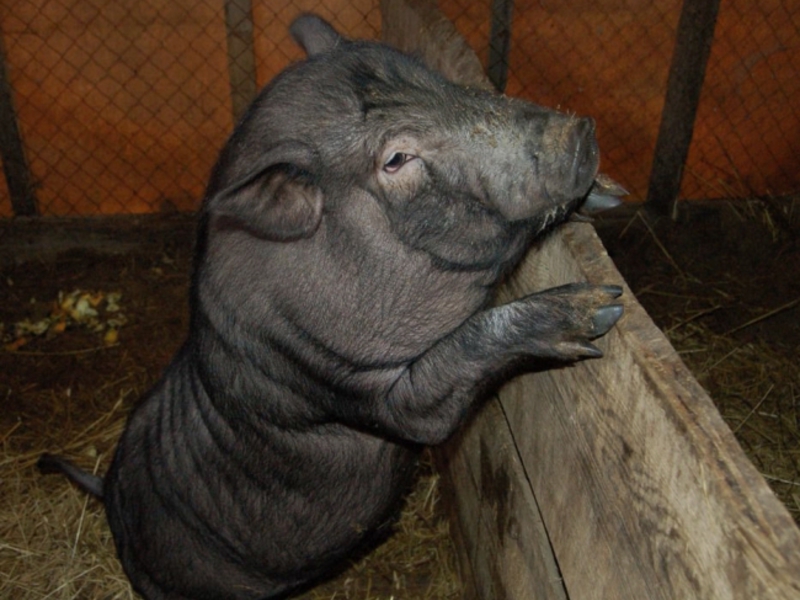
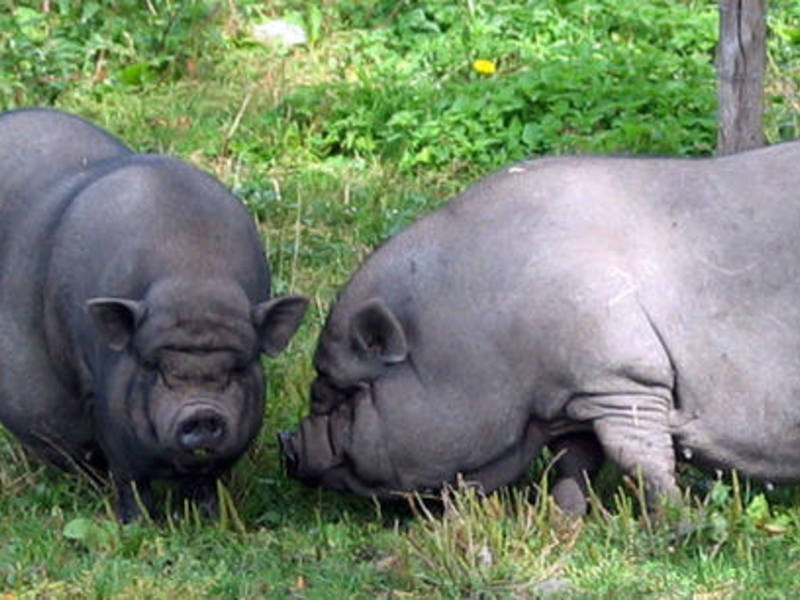
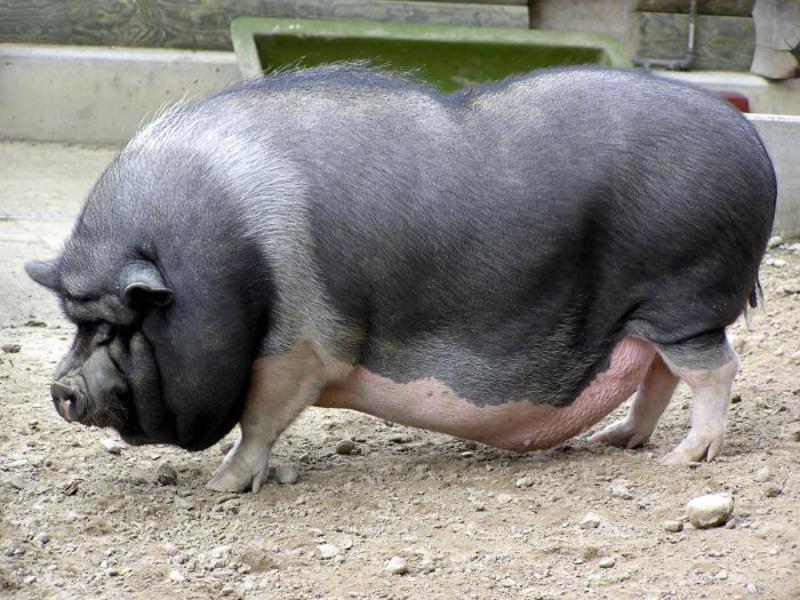
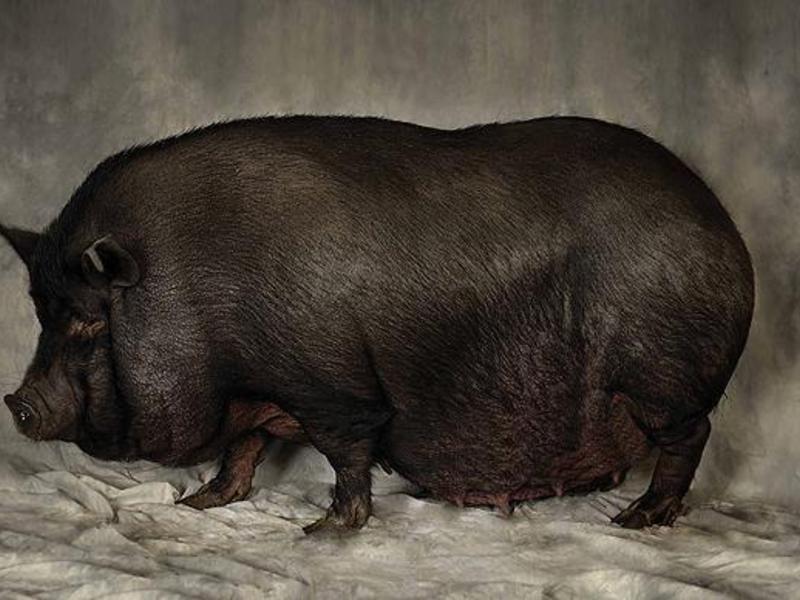
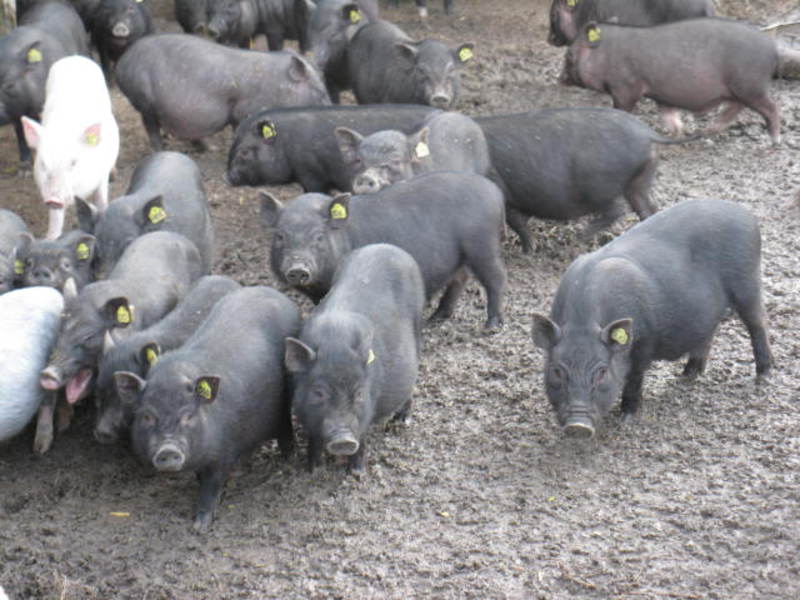
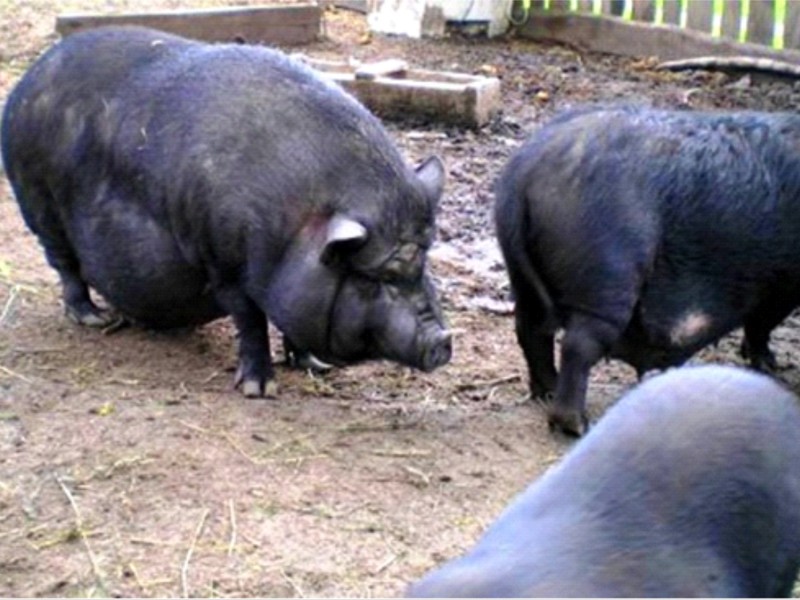
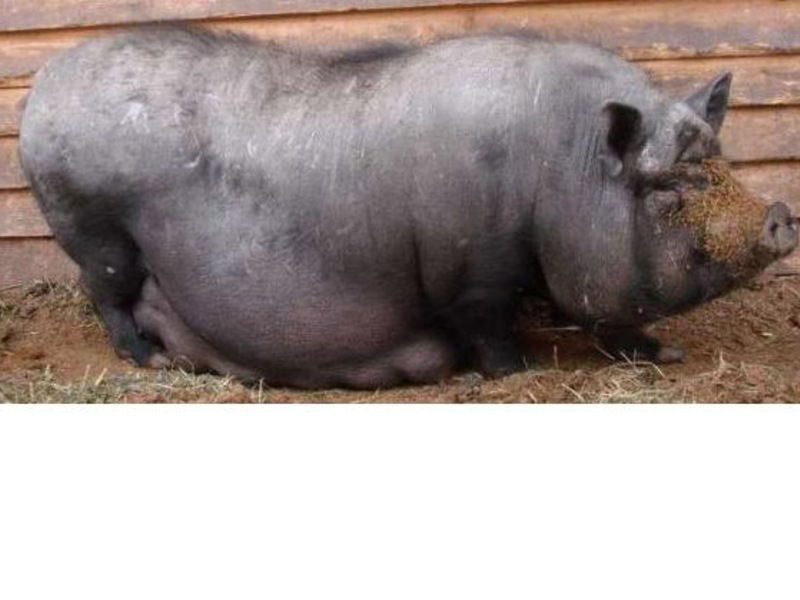
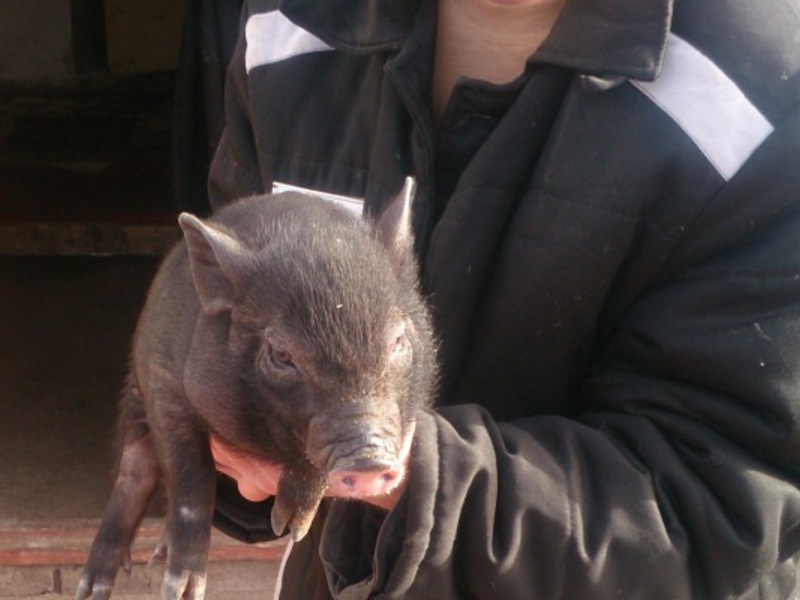
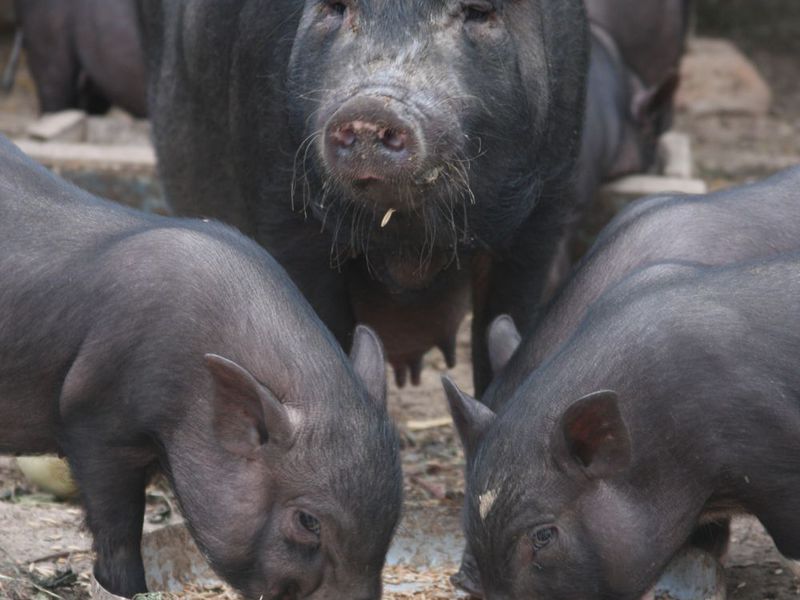
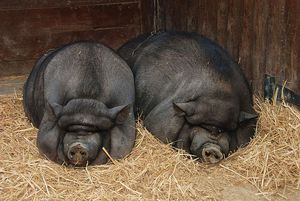
You can recognize a Vietnamese piglet at first sight. An animal with a flattened body The black pig, with its small ears and charcoal-colored tail, has a squat, barrel-shaped body, small legs, a sagging belly, and stiff bristles. The animal is most often black, but red, gray, and white piglets are sometimes found. This medium-sized pig breed can weigh up to 150 kg. Females weigh much less, ranging from 80 to 90 kg.
The advantages of the breed include::
 Early maturity. Females reach sexual maturity and are ready to reproduce at four months, while male pigs reach sexual maturity at six months.
- Strong immunity. Despite their tropical origins, these animals easily adapt to any climate.
- Piglet care is simple. Sows, with their well-developed maternal instincts, pose no obstacles to the farmer's intervention.
- Disease resistance. The Vietnamese pig breed requires no specific vaccinations and is virtually immune to common pig diseases. They are only susceptible to helminth infections, for which there are simple preventative measures.
- Simple feeding. Animals of this breed eat relatively little, but often. Their diet consists primarily of green fodder.
- Cleanliness. Vietnamese pigs and sows clearly distinguish between their "toilet" and "bedroom." This characteristic makes cleaning the room much easier.
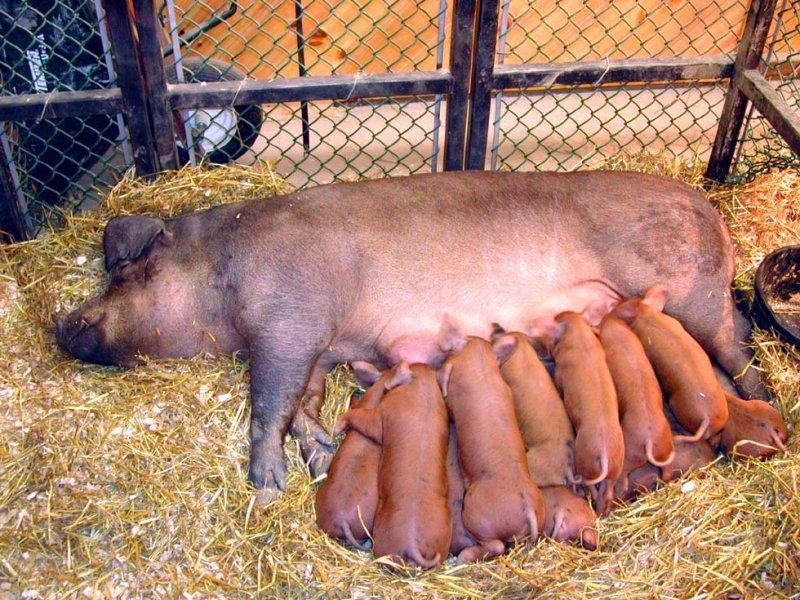
- Fertility. The average litter size is 12 piglets. A sow can produce approximately 24 piglets per year.
- Delicious meat. Pot-bellied pigs produce very juicy and tender meat, considered a delicacy. The fat, no more than 2-3 fingers thick, also has excellent flavor.
- Genetic memory. Thanks to this trait, neither piglets nor sows will eat various poisonous plants.
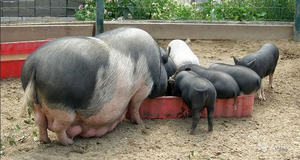 Early maturity. Females reach sexual maturity and are ready to reproduce at four months, while male pigs reach sexual maturity at six months.
But to achieve all the above mentioned positive qualities, you need to choose the right piglets and provide them with appropriate care at home.
Choosing a piglet
When purchasing young animals, you should buy them from a reputable farm or a trusted seller. If the animals are being selected for breeding purposes, they should be selected from different litters, or even better, from different sellers.
Externally, piglets should have:
- developed muscles;
- strong limbs;
- "pug-like" head;
- with shining eyes;
- knocked down body;
- smooth black fur;
- good appetite;
- active mood.
 developed muscles;
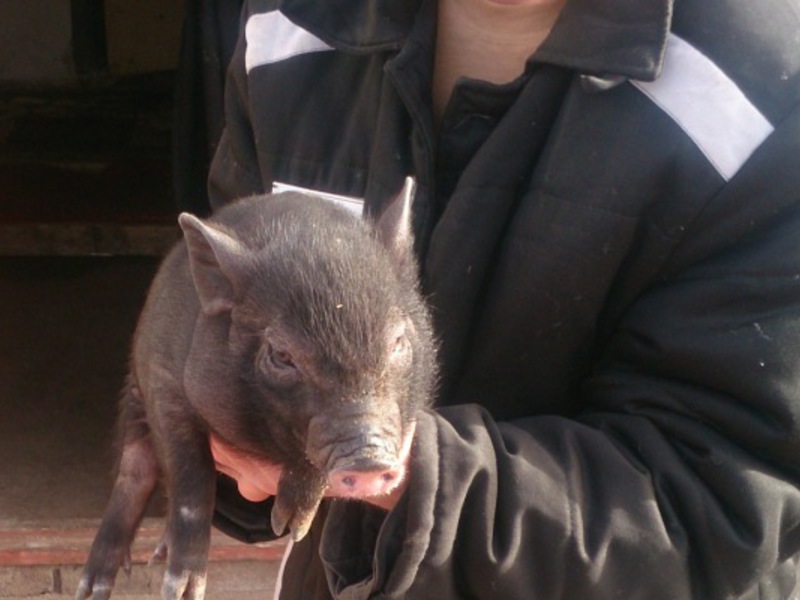
You should ask the seller what kind of feed the piglet is used to, find out its birth weight and development rate. It is imperative look at the baby's parentsIf the sow is thin and has drooping milk lobes, the piglet is only a month old. Such a piglet should weigh between 3 and 4 kg.
Content Features
Pot-bellied pigs are relatively easy to care for and can be kept in a small space, turning it into a real pig farm. For long-term housing, a building made of aerated concrete blocks or bricks can be constructed. For convenience and ease of cleaning, a concrete floor is recommended. Wooden boards should be laid in the animals' sleeping areas to protect them from frost in winter.
Indoors we need to equip pens, which must be separated by metal or wooden partitions. Each pen, measuring 4.5-5 square meters, houses two pigs or a sow with her piglets. There must be a wide passage between the pens, allowing for the free movement of a manure cart.
The room should be draft-free, but have a good ventilation and heating system. During the winter, it's essential to provide the sow and piglets with a comfortable, above-zero temperature. Otherwise, the Vietnamese pig and her entire litter may die.
Raising pot-bellied pigs requires grazing during the warmer months. A designated area near the pigsty is allocated for this purpose. At least one hundred square meters of land is required per adult animal. If the grazing area is sunny, a shelter is required. Vietnamese pigs love to wallow in the mud, so a mud pool can be provided to protect them from the heat and blood-sucking insects.
Basic feeding rules
Keeping Vietnamese pigs requires providing herbivores with special feed. This requires adhere to the following recommendations:
- In summer, 80% of the diet should consist of succulent feed and grass, and in winter – vegetables and hay.
- In summer, 0.6 kg of dry feed is added to each animal's diet, and in winter, the amount increases to 0.8 kg of compound feed per day. Also in winter, chopped succulent feed and 2 kg of hay should be fed.
- The feed should be steamed, and barley is the best dry food. Rye and wheat can be fed, but they are less digestible. Corn and peas are added to the feed, making up no more than one-tenth of the total weight.
- Vietnamese pigs thrive on succulent feeds such as carrots, zucchini, pumpkin, and various fruits. Beets, which are high in fiber, should not be given to piglets because they are difficult to digest.
- Instead of some of the compound feed, boiled potatoes can be introduced into the animals’ diet.
- It is not recommended to feed Vietnamese piglets straw, as it contains a lot of coarse fiber.
- Piglets' food must be supplemented with vitamin supplements, such as fish oil.
- In summer, piglets should be fed their main diet in the morning and evening, with supplementary feeding during the day, usually 0.5 kg of succulent feed or alfalfa. In winter, animals should be fed at least three times a day.
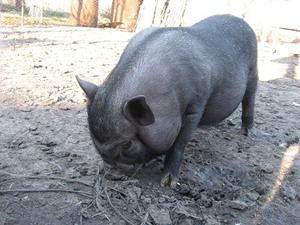 In summer, 80% of the diet should consist of succulent feed and grass, and in winter – vegetables and hay.
Pot-bellied pig in summer can be kept on pasture, providing her with a pasture. Following all the above recommendations will guarantee high weight gain.
Breeding Vietnamese piglets
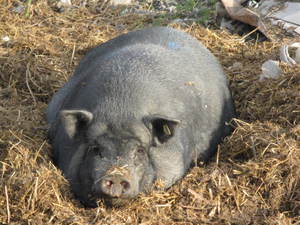 The breed is distinguished by its ability to reproduce quickly and easily. Pigs are ready for mating at three months of age, but it is not recommended to breed them until they weigh 40 kg.
When breeding and keeping pigs, it is necessary to study the main signs of estrus:
- The pig freezes when pressure is applied to the croup.
- The vulva swells and turns red. Discharge is observed from it.
- The animal raises its head, sniffs, begins to behave restlessly and may even refuse food.
If these signs are present, a boar is allowed into the pen with the sow for one day. In most cases, re-mating is not required. Under no circumstances You cannot mate related animals, which will produce weak and poorly developing offspring. Keeping such pigs will not produce the desired results.
A sow's pregnancy can be determined if she hasn't gone into heat within three weeks. Pregnancy lasts approximately 115 days. Toward the end of pregnancy, the sow should be examined by gently laying her on her side. If the fetuses are clearly palpable at the level of the last teats, preparations for farrowing can be made.
Features of Vietnamese pig farrowing
Farrowing at home requires careful preparation. To do this, clean the pen and lay out clean ground bedding made of sawdust, hay or strawA separate corner is set aside for the piglets, where the air temperature should not drop below 28°C. It can be heated with a red lamp. The following items are prepared for farrowing:
- scissors;
- clean soft cloth;
- a strong thread with which the umbilical cord will be tied;
- cotton wool;
- brilliant green or iodine.
Since the sow loses a lot of fluid during farrowing, the prepared pen should be There must be a bowl of clean waterIn its absence, the animal may begin to eat its offspring.
About 4-5 days before the sow's babies are due, she begins to become restless and prepare the nest. Her belly drops, and colostrum begins to drip from her teats.
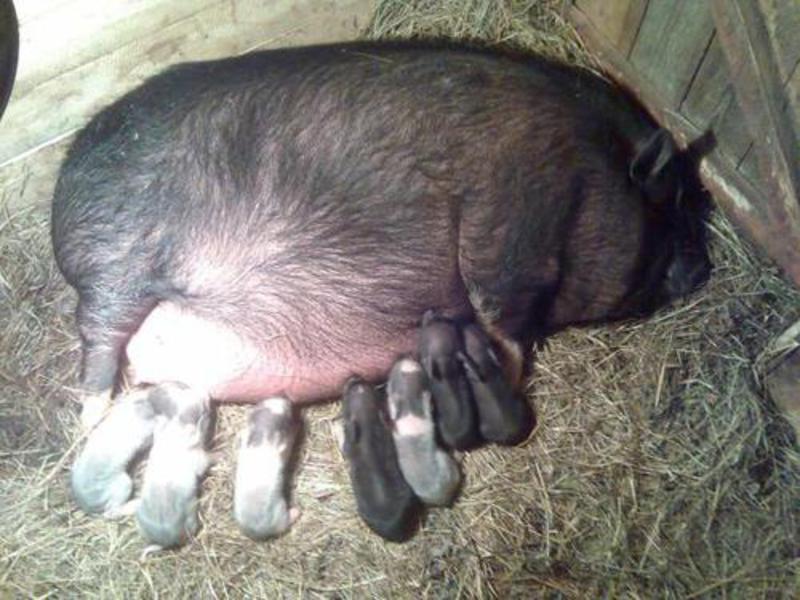
During the farrowing of a Vietnamese pig, a human must be present. This is because piglets of this breed are born very small and need to be fed with their mother's milk within the first hours of life. Otherwise, they may die from a lack of nutrients.
Labor usually lasts 2-6 hours.Each piglet born should be wiped with a soft cloth, cut, bandaged, and coated with brilliant green. If there is a membrane on the piglet, it must be removed immediately. As soon as the placenta, which consists of two parts, is expelled, it must be removed immediately, otherwise the sow may begin to eat it.
Growing piglets up to 1 month
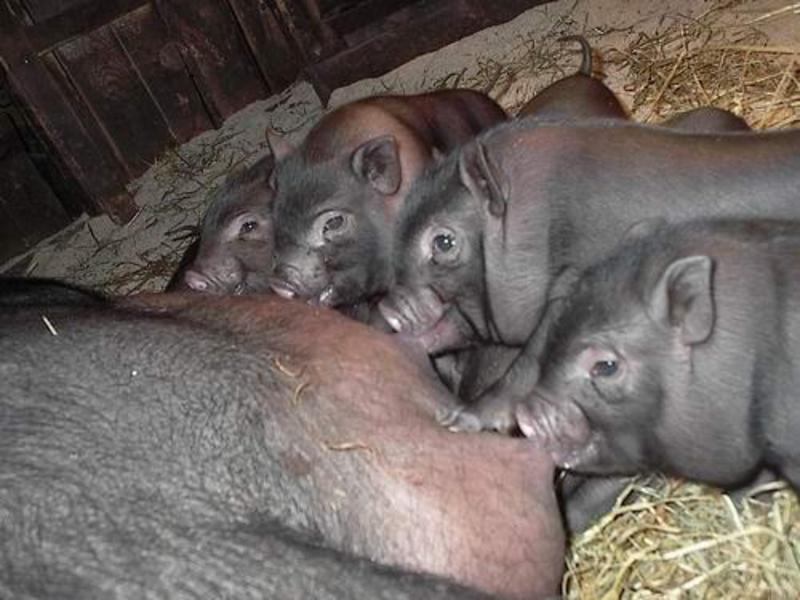
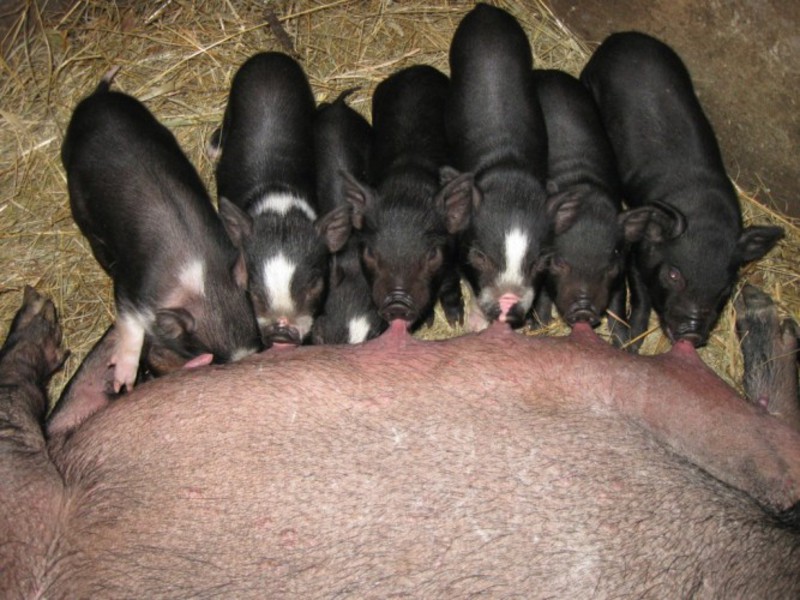
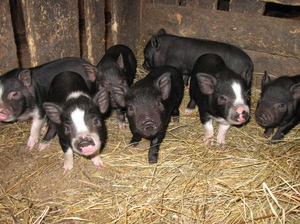 During the first few days of life, piglets feed exclusively on their mother's milk. However, this milk lacks iron and copper, so piglets are given injections containing these substances to replenish them. A veterinarian should recommend this supplement.
When the piglets are 10 days old, they begin to feed with roasted barley and water to drink. Charcoal, clay, and chalk are given as supplements. At this age, babies should weigh at least one kilogram.
At two weeks of age, thick porridge is introduced into the diet, supplemented with special compound feed or premixes. Each piglet should weigh between one and a half and two kilograms.
By the time the piglets are one month old, they should be able to feed independently, and weaning begins. To avoid stressing the sow and preventing mastitis, this should be done gradually, over the course of a week. Rapidly weaning the piglets from their mother's milk can cause digestive upset. One-month-old piglets should weigh about three kilograms.
In the first week, piglets weaned from their mother's milk should eat well-cooked porridge, Milk or kefir is added. Steamed dry food is then introduced into the babies' diet.
With minimal investment and proper care and feeding, an individual can reach a weight of 100-110 kg within a year. This suggests that raising Vietnamese pigs is very profitable and rewarding. This is why these herbivorous animals have become so popular among Russian farmers.