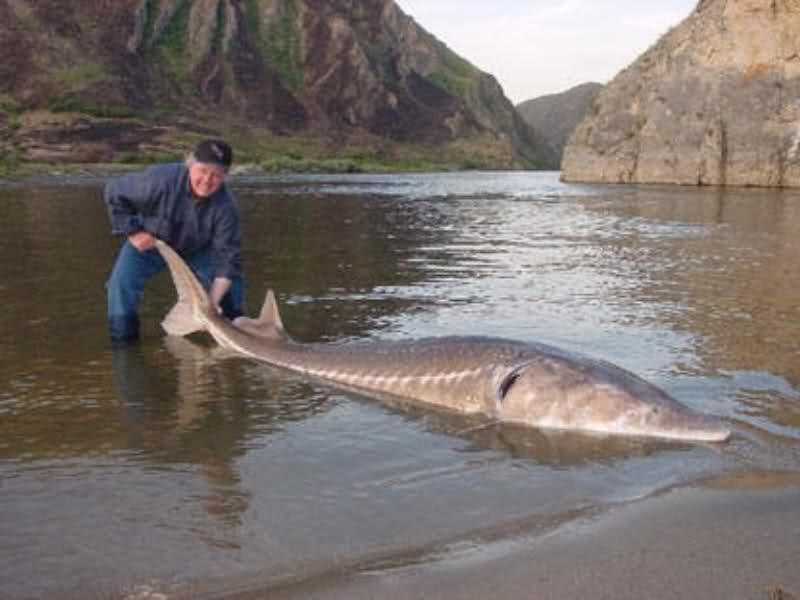
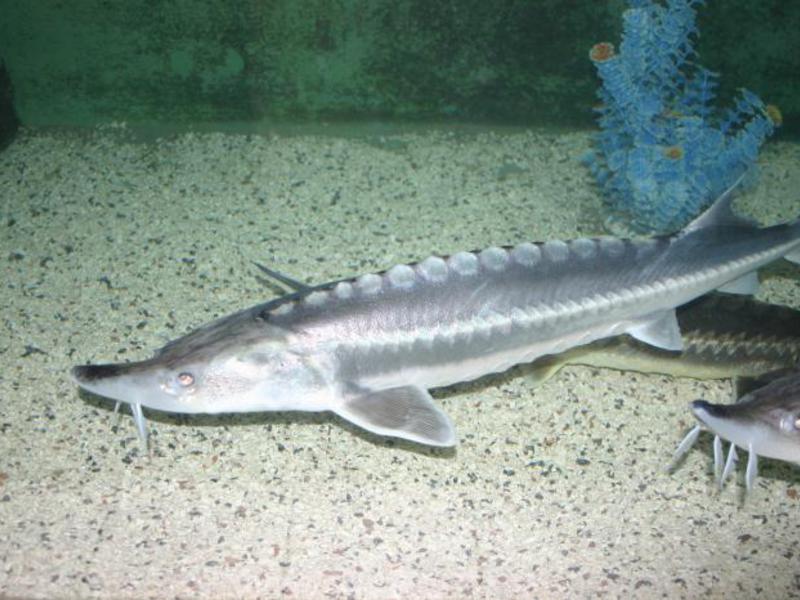
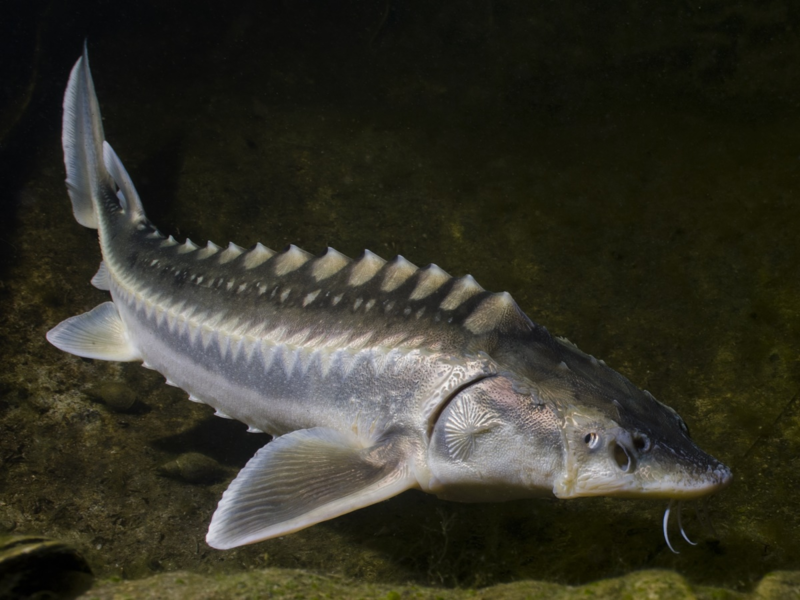
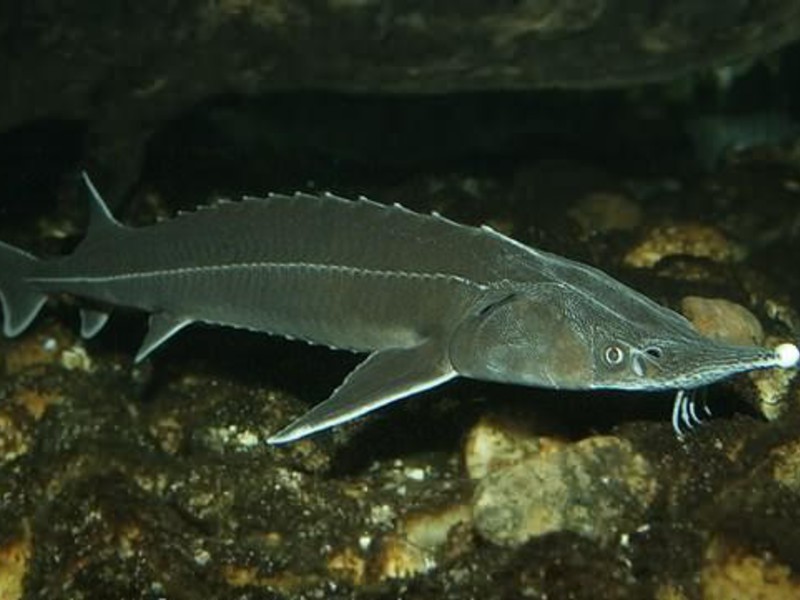
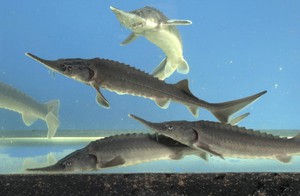
 Sturgeon species live primarily in saltwater and migrate to freshwater to spawn. The smallest sturgeon species are members of the sterlet family, averaging 35 to 100 cm in length and weighing 0.5 to 5 kg. The largest sturgeon is the beluga, which can weigh up to 3 tons and measure up to 10 meters in length. Sturgeon fishing is currently the largest commercial fishery. Besides its meat, sturgeon is also prized for its caviar.
Content
Structure and characteristics
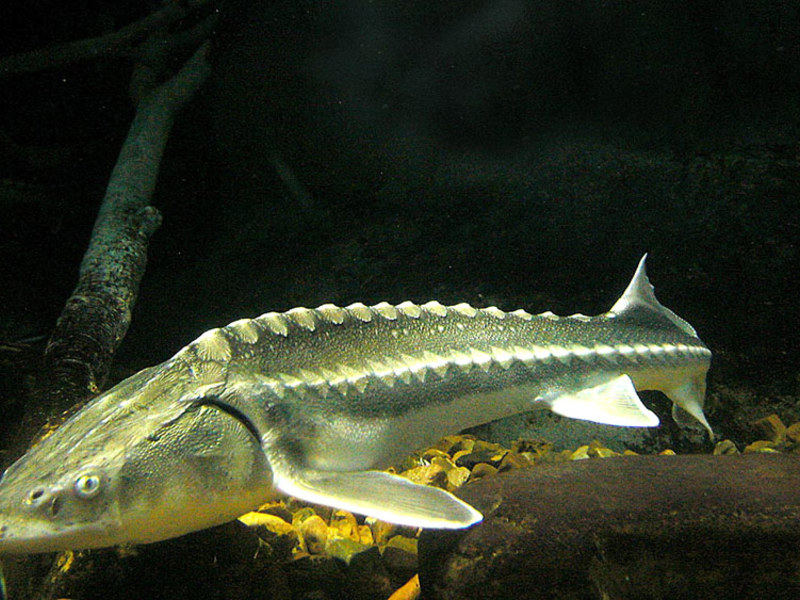
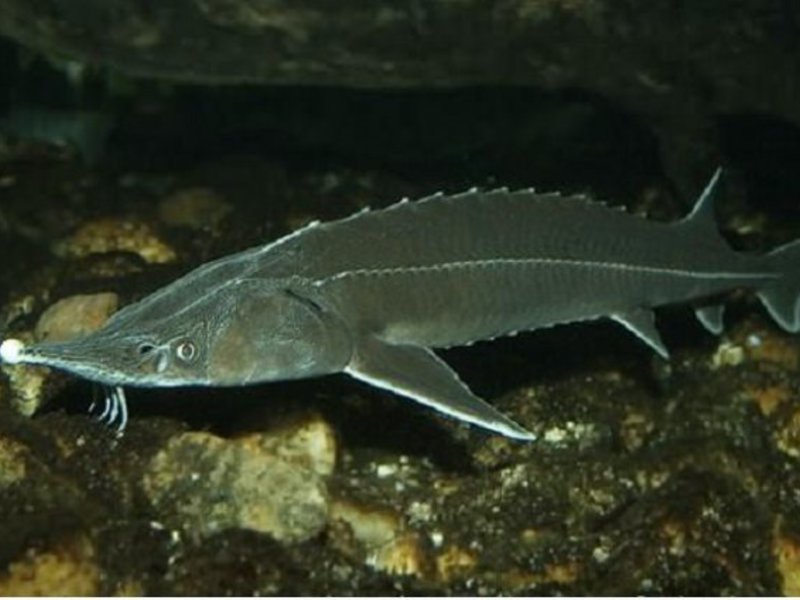
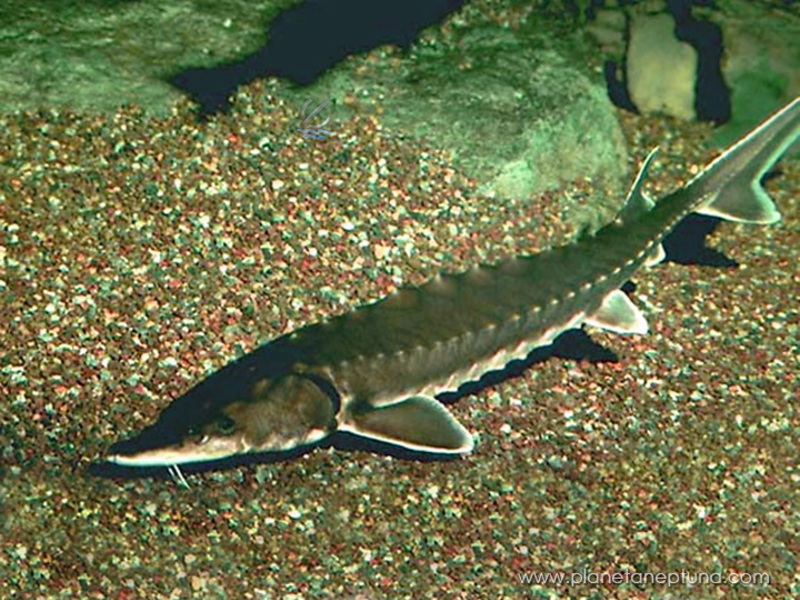
The sturgeon family is one of the largest species of fish in the waters. has an elongated body, covered with 5 rows of bony spikes: two on the belly, two on the sides and one on the back, between which there are bony plates.
The sturgeon is a fish with a cone-shaped, elongated snout resembling a shovel. At the base of the head are fleshy labia, flanked by four barbels. The jaw is toothless and retractable.
The pectoral ray fin has a large, spine-shaped thickening, while the dorsal fin is slightly protruding backward. The swim bladder is located at the base of the spine, connecting to the esophagus. The bony skeleton is composed of cartilage and an invertebrate structure, resembling a notochord. The membranes of the four gills are attached to the pharynx and join at the throat, and there are also two accessory gills.
General information
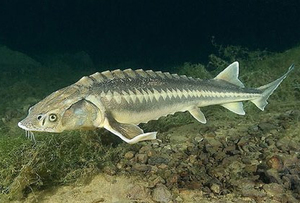 As a rule, all varieties of sturgeon migrate to shallow freshwater bodies during spawning season. The sturgeon population is quite prolific, so large and adult sturgeons can produce up to 1 million eggsSpawning most often occurs in the spring. It's worth noting that some sturgeons, in addition to spawning, migrate to freshwater rivers for wintering. Most sturgeons live on the bottom of bodies of water, feeding on worms, small fish, insects, and mollusks.
Puberty
The sturgeon group, which includes approximately 20 species, is generally long-lived. The time it takes for sturgeons to spawn varies, depending on the species and habitat. Sexual maturation, like growth, is quite slow. Some sturgeons can reproduce only at the age of 15.
- Females reach maturity after 10-20 years;
- In males, after 7-15 years.
Regarding weight, it's worth noting that sturgeons are the fastest-growing river dwellers. Sturgeons in the Don and Dnieper rivers reach sexual maturity the fastest, while those in the Volga rivers mature much later.
Spawning
Not all female sturgeon spawn annually. Only sterlets spawn annually. Sturgeons spawn in spring and summer in freshwater bodies with strong currents. The eggs have a sticky shell, so they adhere well to pebbles or flagstones.
Fry
The fry that hatch from the eggs have a yolk sac, which is due to the endogenous feeding period. The larvae can feed independently only after the endogenous sac is completely resorbed. This is when the exogenous feeding period begins. After this period, the larvae may remain in river bodies, but most often they go to sea.
The first food for sturgeon larvae is zooplankton, most often daphnia. The fry then begin to feed on various crustaceans:
- mysids;
- chironomids;
- Gammarids.
The only exception is the predatory beluga fry, which lack a yolk sac and begin feeding independently while still in freshwater. Sturgeons subsequently develop into adult sturgeons in marine waters, reaching sexual maturity.
Anadromous sturgeon species are divided into winter and spring varietiesThe latter typically enter freshwater rivers in the spring. Spawning occurs almost immediately. Winter sturgeon enter the river in the fall, survive the winter, and spawn in the spring.
Classification of sturgeon fish
Initially, two types of the sturgeon family were classified:
- scaphirine;
- sturgeon.
In total, there were approximately 20 species of fish, native only to temperate regions: America, Europe, and Asia. But over time, many sturgeon populations became extinct.
List and photos of popular sturgeon fish
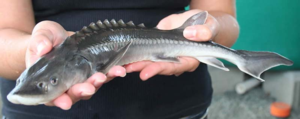 Sturgeons are the most popular species in the fishing industry. It is currently known about 20 species of these fishThe most popular are these sturgeons.
Beluga The beluga is the oldest species of freshwater sturgeon. Its life cycle can reach up to 100 years. Beluga sturgeons can grow up to 10 meters in length and weigh up to 3 tons. Their torpedo-shaped bodies are covered in five rows of bony protective plates, white underneath and gray on top. At the base of their snout are a sickle-shaped mouth and barbels, which aid in the fish's sense of smell. Females are larger than males. Beluga sturgeons are predatory fish that typically feed on gobies, anchovies, anchovies, Caspian roach, and herring. Females spawn in the spring, once every 3-5 years.
KalugaThis is a freshwater fish of the beluga family. Kaluga can reach up to 5.5 meters in length and weigh up to one ton. Its mouth is large and crescent-shaped. This fish is common in the Amur River basin and can also be found in the Sungari, Shilka, and Argun rivers. Kaluga can be classified as fast-growing, estuary, or anadromous.
Russian sturgeonIt has a spindle-shaped body with a small, blunt snout. The barbels are located at the end of the mouth. Typically, the Russian sturgeon is blackish-gray on top, with brownish-gray sides and a white belly. The fish reaches a maximum length of up to 3.5 m and can weigh up to 120 kg. Its lifespan can be up to 60 years. In the wild, sturgeon can crossbreed with beluga, sterlet, stellate sturgeon, and barbel sturgeon. This is uncommon, but these hybrids do occur. Habitat: Black, Caspian, and Azov Seas.
ShovelnoseA freshwater fish weighing up to 4.5 kg and measuring up to 140 cm. It is distinguished by a flattened and rather long caudal peduncle with bony plates. The caudal filament is small or completely absent, the eyes are small, and the swim bladder is large. It is native to the tributaries of the Amu Darya River.
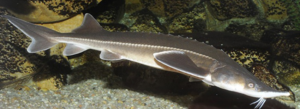 Siberian sturgeonThe body of this species of sturgeon is covered with multiple bony plates and fulcra, the mouth is retractable, and it lacks teeth. Four barbels are located anterior to the mouth. It is found in the Ob, Yenisei, Kolyma, and Lena river basins. Sturgeon reach a maximum length of 3.5 m, weigh up to 150 kg, and have a lifespan of up to 50 years. Spawning typically occurs in July. The fish feeds on organisms that live on the reservoir's bottom: amphipods, mollusks, chironomid larvae, and polychaete worms.
ThornIt has a general appearance typical of sturgeons. Of the 5 rows of bony spines, the dorsal has 12-16 scutes, the ventral has 11-18, and the lateral has 51-71. The first gill arch has 22-41 gill rakers. It is native to the Aral, Caspian, Azov, and Black Sea basins.
Stellate sturgeonThe stellate sturgeon inhabits the Caspian, Black, and Azov seas. This species of sturgeon can be either spring or winter sturgeon. Its elongated body is characterized by a weakly developed lower lip, a convex forehead, a long nose, and smooth, narrow barbels. The top and sides of the sturgeon's body are densely covered with bony scutes. The sides and back are blue-black, and the belly is white. Stellate sturgeon can reach a length of up to 6 m and weigh up to 60 kg.
SterletThe smallest fish in the sturgeon family, the sterlet can reach a length of up to 1.20 m and weigh up to 20 kg. It has long barbels reaching the mouth, a narrow, elongated snout, a lower lip divided into two, and scutes that touch on the sides. In addition to the typical sturgeon body plates, the sterlet has closely touching scutes on its back. Sterlet color varies depending on its habitat, but its back is typically grayish-brown and its belly is yellowish-white. All fins are gray. Sterlets can be either sharp-nosed or blunt-nosed. This fish is found only in northern Siberia.
Delicacy fish
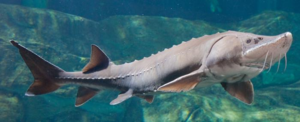 Sturgeon can be found for sale live, frozen, smoked, and chilled. Sturgeon are used to make balyk (sturgeon meat) and various canned products.
The sale of salted sturgeon is prohibited. This is due to the risk of the meat containing a pathogenic anaerobe, botulinum, which causes severe poisoning.
Once upon a time, only sturgeon was considered red fish. This included varieties such as beluga, sterlet, stellate sturgeon, and osetra. However, these species were prized not for the pinkish hue of their flesh, but for their excellent taste and nutritional propertiesThis generalized name has now been adopted for salmonids as well. Thus, the term "red" also refers to Atlantic salmon, pink salmon, and chum salmon.
There is a specific culinary and commercial classification of this fish. The first group includes sturgeons, native to the Caspian and Black Seas. These include species such as beluga, sterlet, ship sturgeon, and stellate sturgeon. The second group includes salmonids, such as Atlantic salmon and trout, pink salmon and chum salmon. The last group includes white salmon species (white salmon and coho salmon, nelma, and taimen).
The value of red fish is explained by its high content in meat vitamins A, B, E, PP and D, zinc, phosphorus and calcium, fluorine and iodineBut the most important fatty acid for the human body is considered to be the polyunsaturated omega-3 fatty acid. This acid is essential for normal brain function, immune support, and improved memory. Scientists have proven that people who regularly include red fish in their diets are less likely to experience depression and also reduce their risk of hypertension and cancer by three times.