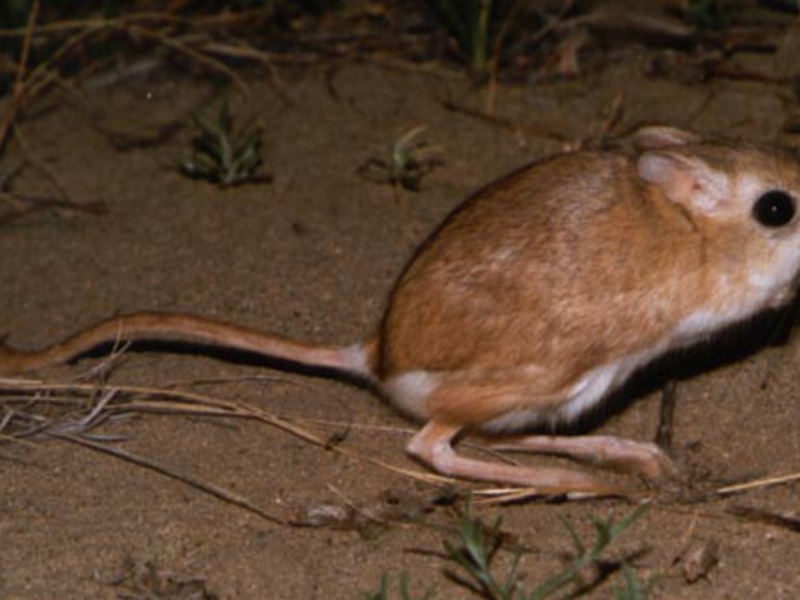
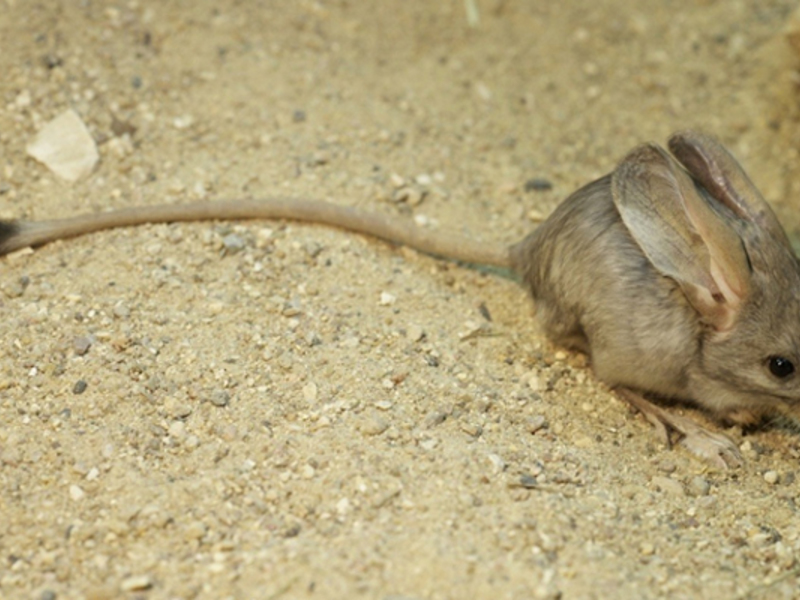
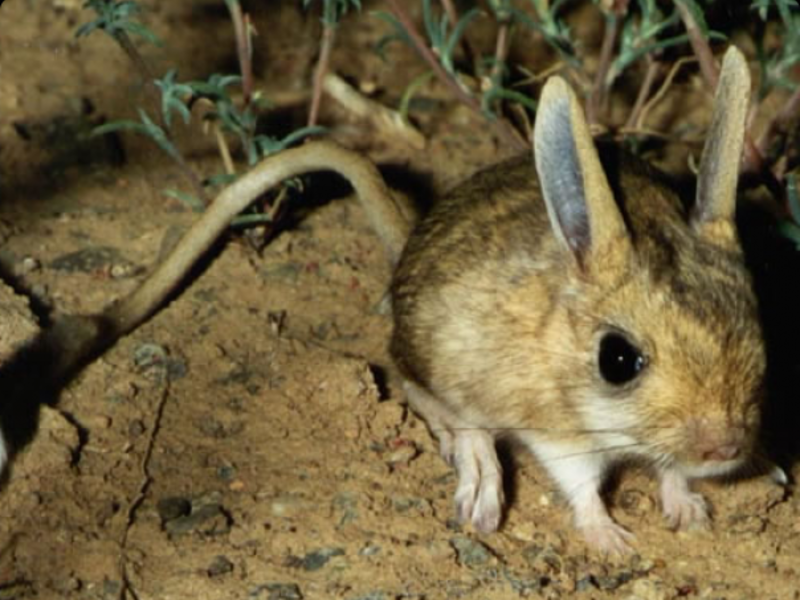
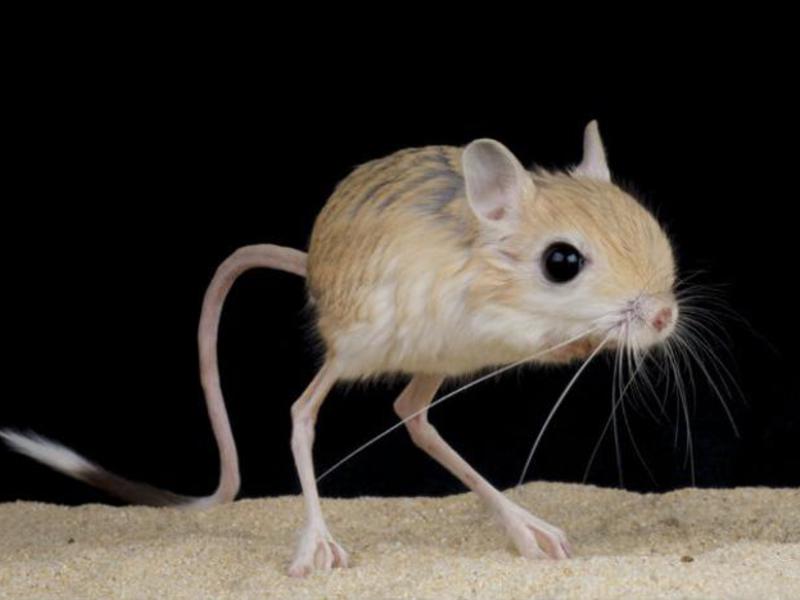
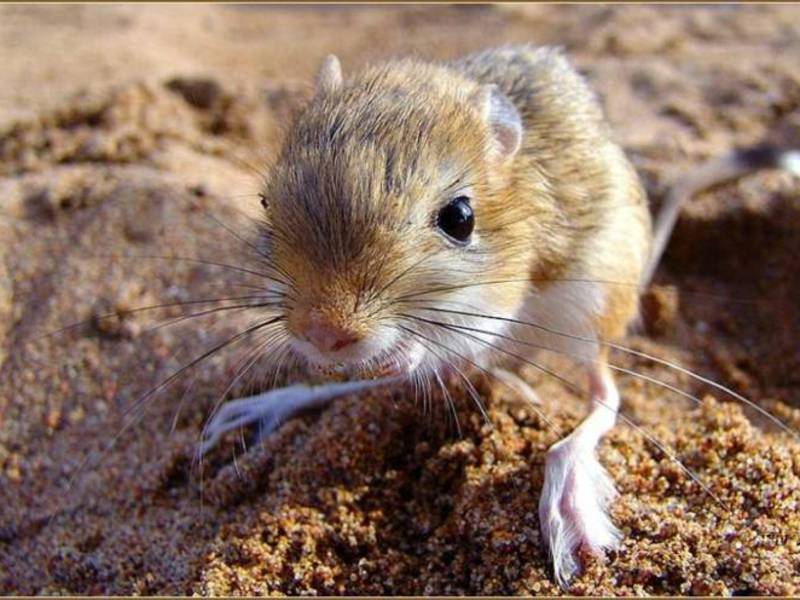
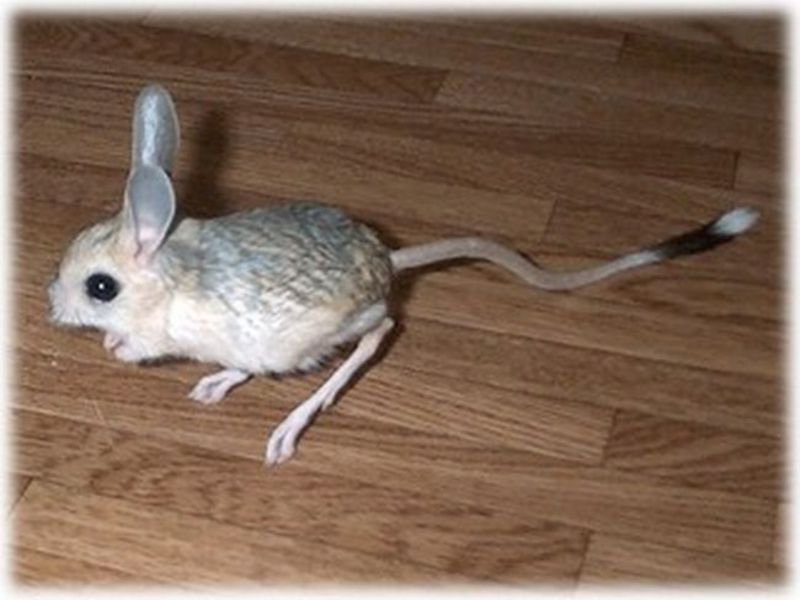
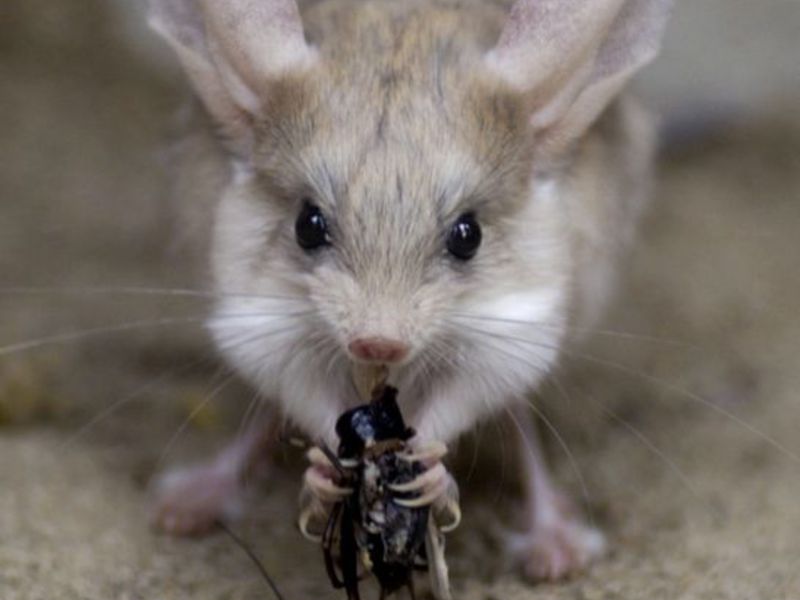
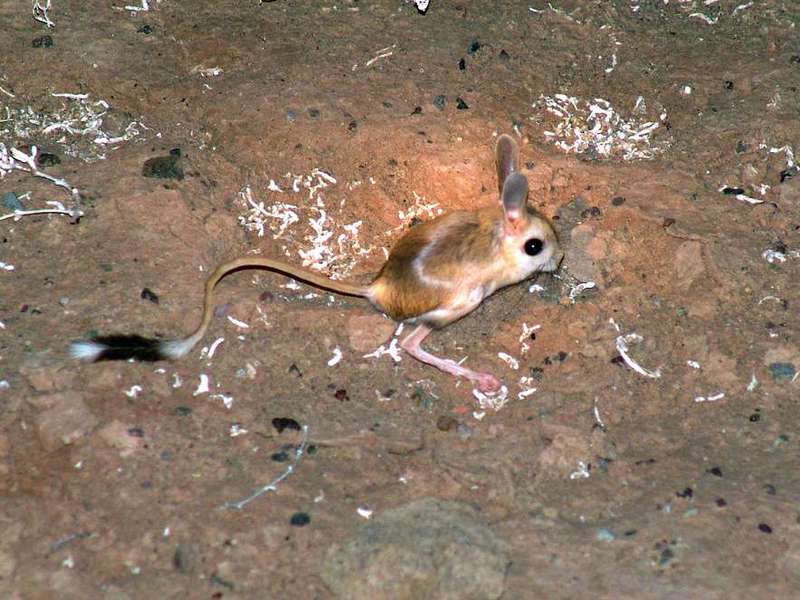
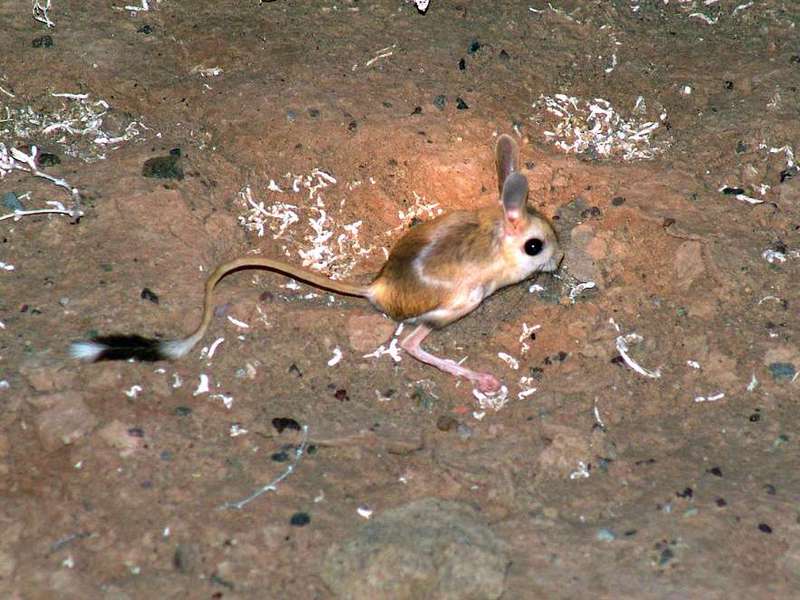
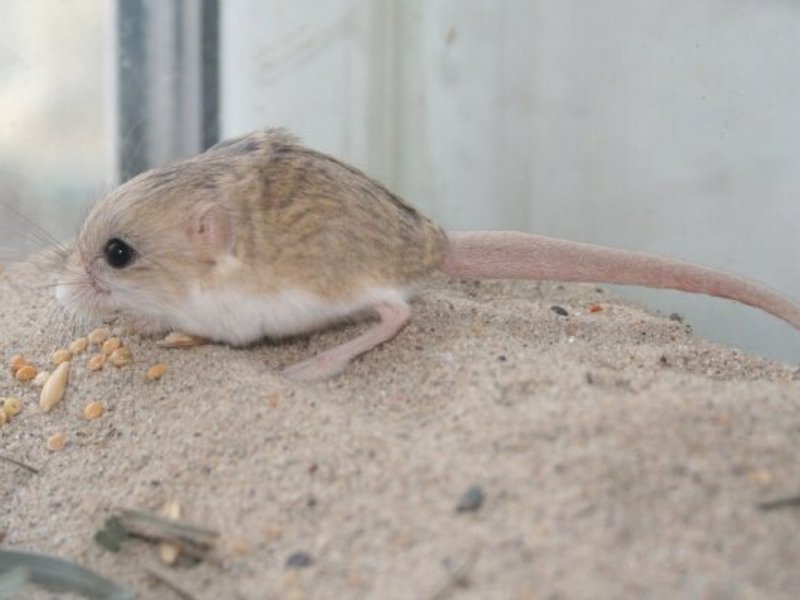
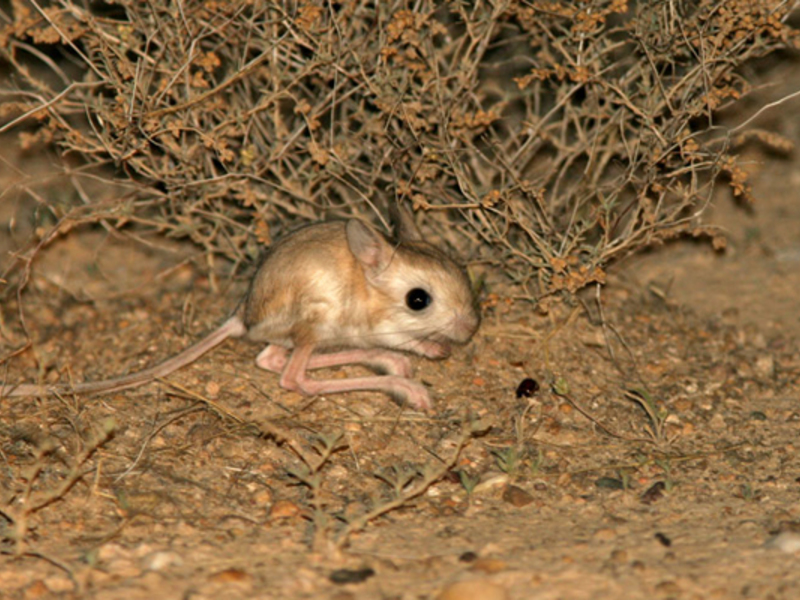
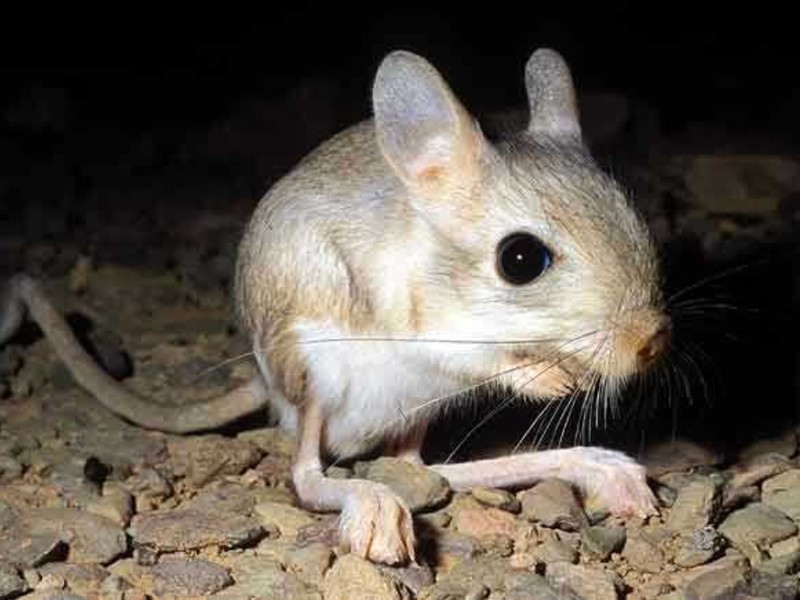
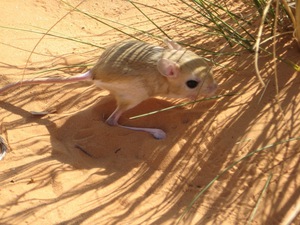
 Inhabiting steppe, desert, and semi-desert regions, these unusual jerboas look very much like mice in pictures and photographs. However, this rodent is distinguished by its large ears and short forelimbs. This amusing representative of the largest order of mammals lives on virtually every continent and has 26 different species.
Description, photos, and varieties of the jerboa rodent
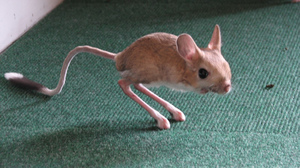
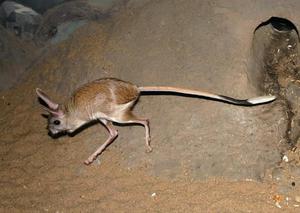
Depending on the species, the jerboa may have body length from 5 to 30 cmThe animal has a short, dense head, thin legs, and a long tail. Jerboas are also distinguished by:
- short body;
- flattened muzzle;
- rounded, unusually long ears;
- big eyes;
- almost invisible neck;
- long, strong hind limbs with elongated feet;
- black and white tassel at the end of the tail;
- thick and soft yellow-gray fur.
Jerboas move by jumping, folding their short front legs across their chests. This locomotion is very reminiscent of a kangaroo's hopping. The rodent uses its tail, which acts as a rudder, to steer.
The animals have 16 or 18 teeth.In addition to using their incisors to crush food, they also use them to loosen the soil. They then dig into the loosened soil with their limbs.
Types of jerboas with photos
These rodents inhabit the territory of Russia semi-deserts and steppes of southern SiberiaThe most interesting representatives of the jerboa family are the following species:
 The large jerboa, or ground hare, is the largest representative of this mammal species, distinguished by a body length of 26 cm, a long, teardrop-shaped tail, and light-brown fur. The ground hare is recognized as the northernmost inhabitant, as it can be found in southern Siberia, the Crimean steppes, and along the southern tributaries of the Oka and Kama rivers.
- The five-legged pygmy jerboa. This tiny animal, measuring 5-6 cm in length, was always considered a Gobi Desert inhabitant. However, in the 1960s, this species was discovered in the southern part of the Republic of Tuva. This pygmy rodent is distinguished by its small ears, large eyes, and an 8 cm-long tail. Its hind legs are very well developed and have five toes.
- The long-eared jerboa. This 9-cm-long animal lives in northern China and southern Siberia. Its main distinguishing features are its very long ears, a long tail with a rounded tuft at the end, antennae, and gray fur with a reddish tint. The animal's belly and sides are white, and the tuft on its tail is black.
- The emuranchik. Growing up to 12 cm, this animal lives in gravelly deserts and clay steppes. It is rarely found on sandy soils. This rare species is found near the Irtysh River, in the southern Volga region, in the Dnieper region, and in the steppes of Kazakhstan.
- The Eurasian Jerboa. This fairly large animal, growing to 19-22 cm, inhabits the sandy deserts and steppes of Central Asia. It can live in the mountains, reaching altitudes of up to two kilometers above sea level. The Eurasian Jerboa is distinguished by its yellowish-gray or ochre-brown fur. It feeds on insects, bulbs, green plant parts, and seeds.
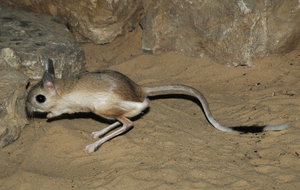 The large jerboa, or ground hare, is the largest representative of this mammal species, distinguished by a body length of 26 cm, a long, teardrop-shaped tail, and light-brown fur. The ground hare is recognized as the northernmost inhabitant, as it can be found in southern Siberia, the Crimean steppes, and along the southern tributaries of the Oka and Kama rivers.
Lifestyle
Large eyes and the size of the ears indicate that jerboas are nocturnal inhabitantsThey leave their burrows about half an hour after sunset and spend the entire night searching for food. They can travel up to five kilometers to do so. Before dawn, the animal returns to its burrow, where it sleeps all day.
In jerboas There are four types of minks:
- The permanent burrow has several entrances. The main entrance is sloping, while the others are almost level with the surface and serve as backups. The main entrance leads to a living chamber, where the animal uses crushed grass blades to create a "bed" for itself.
- Temporary daytime burrows. These dwellings range from 20 to 50 cm in length. To maintain humidity and coolness, the entrance is sealed with a sand or earth plug.
- Escape burrows. These are simple passages where the animals hide. They are 10 to 20 cm deep.
- Wintering burrows. These dwellings contain a wintering chamber and underground storage areas at a depth of 1.5-2.5 meters.
In the winter season, many species of jerboas hibernateThis occurs around October and lasts for four months. If the weather suddenly warms up in winter, the animals may awaken for a short time.
Jerboa nutrition
 Rodents are omnivorous, but prefer plant matter. Their diet consists primarily of seeds, roots, and shoots of various plants. They also enjoy the seeds of cereals, melons, and watermelons. If a jerboa can't find any plant food overnight in the desert, it will catch and happily consume any insect or its larvae. Jerboas don't drink water at all; the sap of the plants they eat is sufficient for them.
Lifespan and Reproduction
As soon as jerboas emerge from hibernation, they the breeding season beginsThis period usually begins in mid-March or early April and continues until autumn. There are 1 to 3 litters per year.
A female's pregnancy lasts approximately 25 days. A litter of one to eight young can be born at a time. The young live with their parents for two months, after which they begin their independent lives. Young rodents reach sexual maturity at two years of age.
In the wild, jerboas live just over three years. Their lifespan here depends on their natural enemies. Rodents should be afraid of:
- birds of prey;
- large mammals;
- reptiles.
If the animal lives in captivity, its lifespan increases significantly.
Jerboas at home
 If you decide to get such a pet, you need to create conditions in your home that are close to natural. It is recommended to keep jerboas in large cages or enclosures. However, it's important to remember that these animals capable of jumping to great heightsRodents are aggressive towards each other, so several individuals cannot be kept in the same cage.
The bottom of the shelter should be filled with sand or covered with turf. The bedding should be soft. Another advantage of turf is that it allows for burrowing, which is essential for desert dwellers. Sand should also be readily available, as rodents require sand baths.
The cage must be equipped with:
- drinking bowl;
- food bowl;
- material for the nesting house in the form of dry grass, roots, sticks.
Since jerboas are very clean creatures, they will groom themselves and have a designated area for their toilet. Therefore, it's essential to clean their cage regularly.
Rodents have a hard time adjusting to humans. Contact with humans causes stress in nocturnal animals, which can lead to the daily routine is disruptedAnd even if after some time the pet loses its fear of its owner and even goes into their arms, it will still remain a wild animal. This is why it is not recommended to let a jerboa out of its cage, as it will escape at the first opportunity.
Seeing a jerboa in the wild is quite difficult. They are very shy and are even listed as endangered, as they are among the rarest animals on our planet. Pictures and photos of various jerboa species can be seen in our photo gallery.