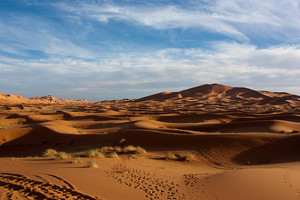
 Living conditions in the desert can be summed up in one word: extreme. Everything here is oversaturated with extremes. Some things are practically nonexistent, while others are strikingly abundant. But the greatest challenge for desert dwellers is the lack of moisture. Annual precipitation does not exceed 200 mm. For months on end, the scorching sun scorches the air and ground daily, yet not a drop of rain falls from the sky.
The desert boasts an abundance of sun and warmth. Typical desert temperatures hover around 50°C. In some areas, they reach 60°C. In such heat, the ground surface is scorching, reaching 90°C in places.
Such "hellish" conditions leave no chance for survival for many plants. Only a couple of months a year You can see a light green carpet in the desertThis occurs during the short rainy season. The change in weather and the appearance of greenery is a period of revival for all insects, reptiles, birds, and mammals. At this time, offspring are born, eggs are laid, and nests are built. The desert is filled with life.
Home is always good
But how do animals survive the rest of the year? Is it really possible to adapt to such temperatures and dryness? What animals live in the desert and how?
Only the most cunning live in the desert. You can't adapt here; you can only learn to survive. Every inhabitant of such an inhospitable and hostile environment has its own tricks for survival. Many animals and insects switched to a nocturnal lifestyleJerboas, beetles, sand boas, and geckos spend the day quietly hiding in very deep burrows with a comfortable temperature. But at night, when the desert temperature changes dramatically, they emerge from their burrows, no longer risking sunstroke.
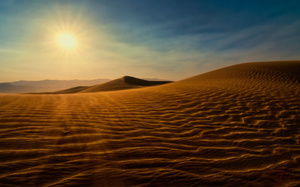 However, not all desert animals can bask all day in the cozy cool of a burrow. Diurnal animals wake up very early, before the sun turns into a hellish blaze. They have only a couple of hours to find food, reproduce, feed their young, escape predators, and much more. When their morning time comes to an endBy now, the sun will have risen and begun to warm the ground. Within an hour, the surface will resemble a blazing frying pan. Until then, all daytime dwellers should find a cool shelter.
Lizards seek refuge in rodent burrows or burrow into the sand. Mammals and birds can only find shade from bushes and rocks. Small birds build their nests under the nests of larger birds, such as golden eagles or ravens. This "neighborhood" provides them with shade and coolness.
In a completely dry area stretching for thousands of kilometers, everyone has learned to find moisture:
- Birds fly to the watering hole, even though they have to fly tens of kilometers each time.
- Other animals, incapable of such long and distant movements, obtain moisture from succulent plants.
- Predators have enough moisture that was in the bodies of their victims.
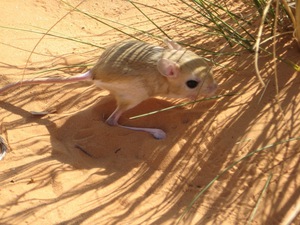
- The jerboa is able to live without water, feeding on insects and getting moisture from their bodies.
- In addition, each inhabitant is physiologically adapted to extremely economical use of water.
Each one has their own skill?
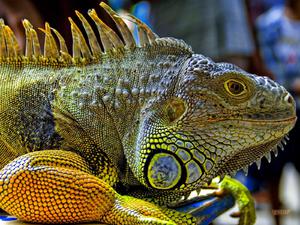
- Navigating shifting sand is no easy task. The reticulated lizard, like many other lizards, has scales on its feet that form brushes. These pads provide support when running across the sand. Upon close inspection, the reticulated lizard's feet are covered in ridges of horny scales.
- The jerboa's paws are covered in thick down. It darts across sand dunes with lightning speed, never sinking into the sand.
- The flat, wide soles of a camel's feet allow it to literally "swim on a sea of sand." This heavy ship of the desert, under normal conditions, will outrun even a light, frisky horse, whose narrow hooves would sink into the sand.
- The African tailed viper is easily distinguished from the common viper. The desert sand forces the snake to move sideways rather than forward. This movement allows the snake to avoid getting stuck in the sand and catch fast prey.
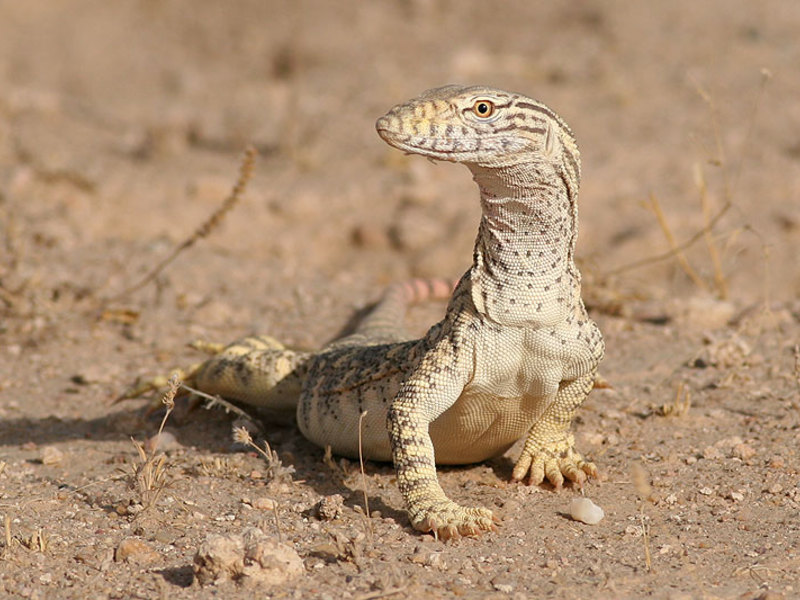
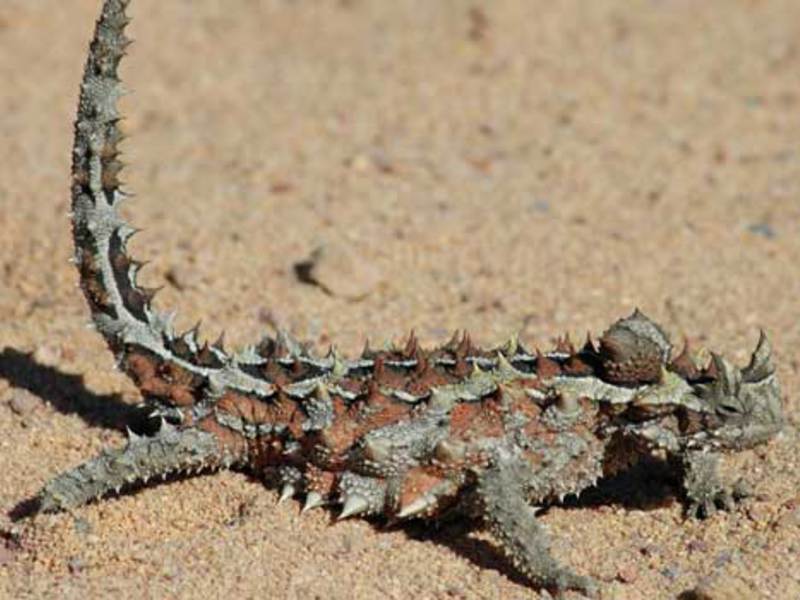
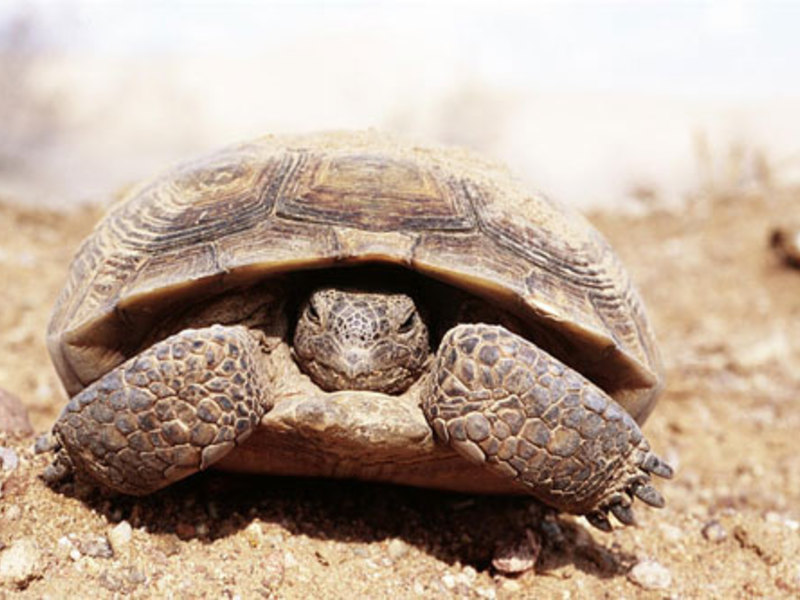
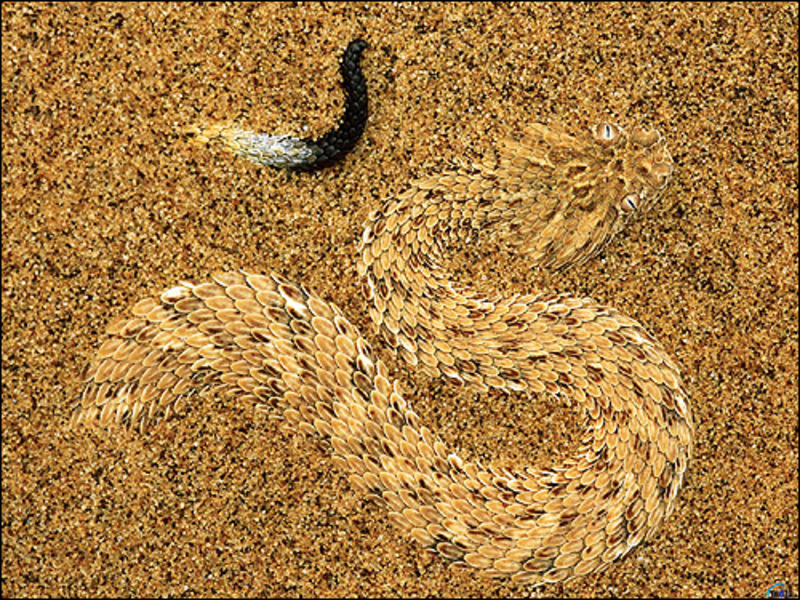
Reptiles
The sand rhinoceros is a difficult prey for any predator. It has learned to use the unfavorable environment to its advantage. Seeing persistent pursuit, a lizard sprawls on the sand, vibrates its entire body and literally in a second “sinks” and disappears under a layer of sand, leaving predators in complete bewilderment.
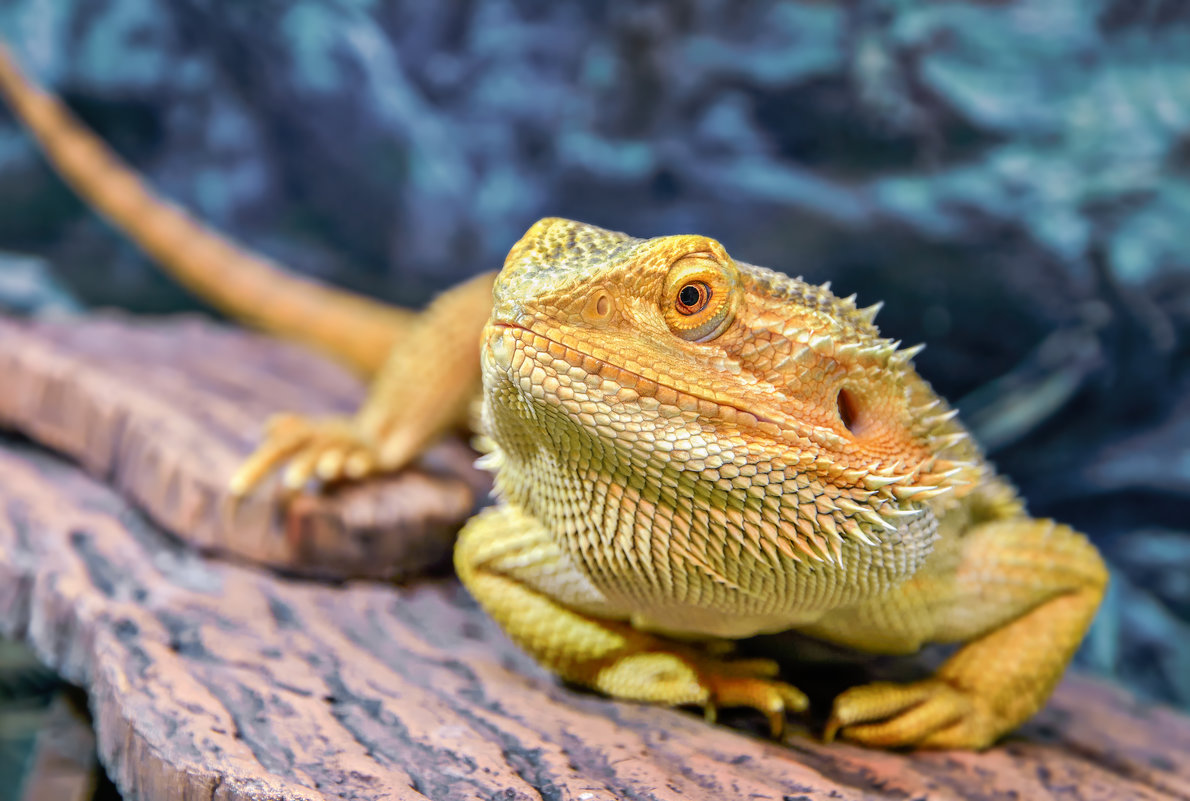
A relative of the sand roundhead, the long-eared roundhead hides from predators in a similar way. However, its head remains above the surface, allowing predators to find it. Then, it begins an active defense. The folds at the corners of the lizard's mouth straighten out and fill with bloodThe mouth appears three times larger than it actually is. The photo shows how terrifying this seemingly harmless lizard looks. In extreme cases, the lizard will even bite its attacker with its sharp teeth.
The largest desert lizard, the monitor lizard, hides in burrows over two meters deep. This 1.5-meter-long, scaly creature eats both snakes and its own kind.
The web-footed gecko has surpassed many others by developing webbing between its toes. And this not in case a river appears in the desertThis adaptation allows it to maneuver across sand dunes faster than others.
One of the most cunning lizards is the moloch. It has developed skin that absorbs moisture. After rain, this lizard's weight more than doubles. The accumulated moisture is then gradually released.
Spiny-tailed bats have a similar survival mechanism. They have special sacs on their bodies that store water. During particularly difficult times spiny-tailed bats use this supplyThese lizards got their name from their spiked tail, which they use as a deadly mace when threatened.
The arrow snake is distinguished by its incredible attack speed. When attacking its prey, the snake stretches out and shoots like an arrow from a bow. The arrow's tip is venomous. Its prey's chances of survival are slim. However, this snake poses no threat to humans or larger animals.
As darkness falls, the sand boa goes out to look for its prey. Its eyes are located at the very top of its head, which allows him to "lie in ambush" in the sandIt suffocates its victims with its body, curling into a coil. Its favorite food is small animals sleeping peacefully in the sand during the day.
Insects
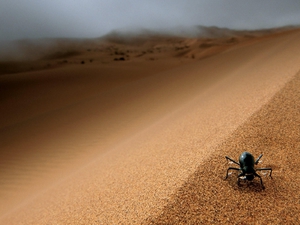 The main insects in deserts are beetles. Darkling beetles, the main pests of crops, are active at night. They can't fly, but they can run easily and quickly on the sand.The desert is also rich in fascinating beetles. Large white beetles, called snow beetles, flock to the light of a flashlight at night. Jewel beetles, beautifully colored in black and greenish-gold, inhabit the shrubs.
Ants build nests underground, and only the entrance to the nest is visible. Tropicbirds scurry back and forth on their long legs.
Even in such conditions, there's no escape from blood-sucking insects. During the day, they hide in burrows, and as dusk falls, go out in search of warm-blooded animalsThey bother rodents the most.
Mammals
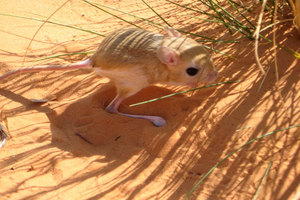
The main representatives in this area are jerboas and gerbils. Gerbils have a restless life: their holes are constantly occupied by lizards, snakes, and insectsGerbils live in colonies. These rodents serve as food for most predators.
Jerboas emerge from their burrows only at night. Their large eyes and ears indicate superbly developed vision and hearing. Their long hind legs and tail allow them to leap quickly and nimbly across the twilight desert sands. Without jerboas, as without gerbils, most desert predators would not survive.
Larger animals are not so easy to find and see. Caracals, goitered gazelles, and other gazelles inhabit such conditions.
Birds
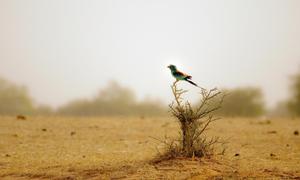 At first glance, it seems that birds avoid this unfavorable region entirely. But you can also encounter white-winged woodpeckers, owls, and sparrows here.
Jays serve as a signal of danger for animals: upon seeing a predator, they fly around the area and they chatter loudly, reminiscent of a familiar magpieDesert sparrows and saxaul jays have adapted to exist without water and do not fly to watering holes, living deep in the desert.
Sand grouse often fly to the watering hole, carefully wetting their breast feathers. Upon arriving at the nest, they feed their chicks with the water left in their feathers.
The desert is majestic and mysterious. Humans have not yet succeeded in settling there and exploiting the rich natural resources of these seemingly harsh places. Many animals remain unstudied. And who knows, perhaps this is for the better?