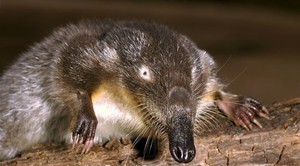
 The Russian desman is among the rare and amazing animals. This animal has inhabited planet Earth for over 30 million years. The Russian desman is currently listed in the Red Data Book of Russia as a critically endangered species. Learn about this animal, its appearance, and its habitat in this article.
Description and photo of the desman
The animal belongs to the class of mammals of the mole family and to the order of insectivores. In the wild, there are two species of desmans:
- Russian;
- Pyrenean.
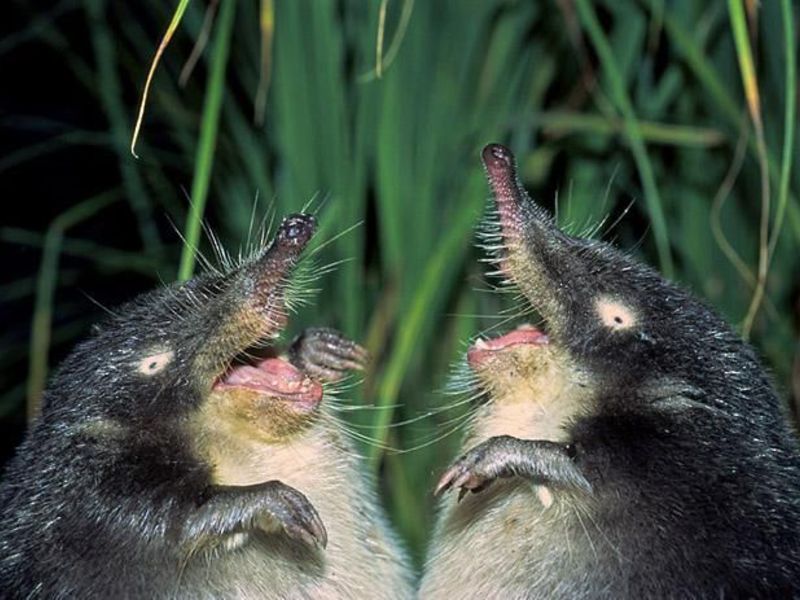
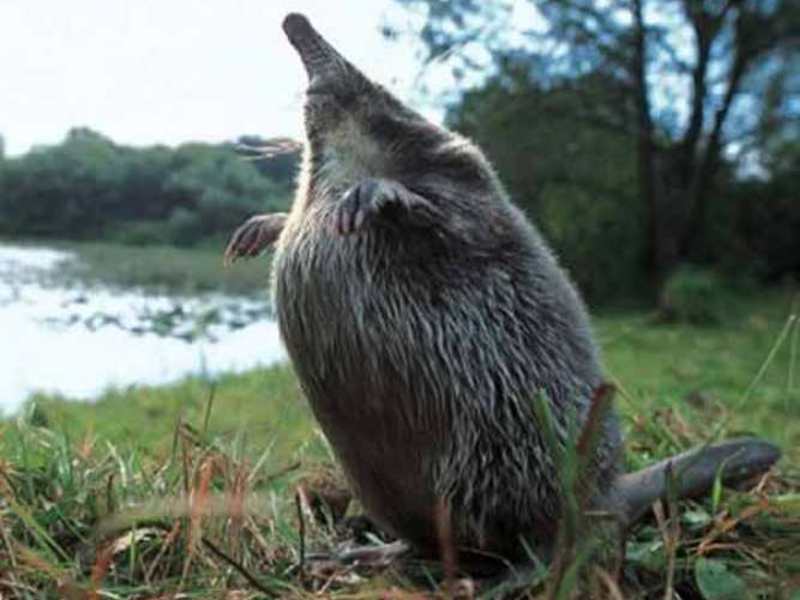
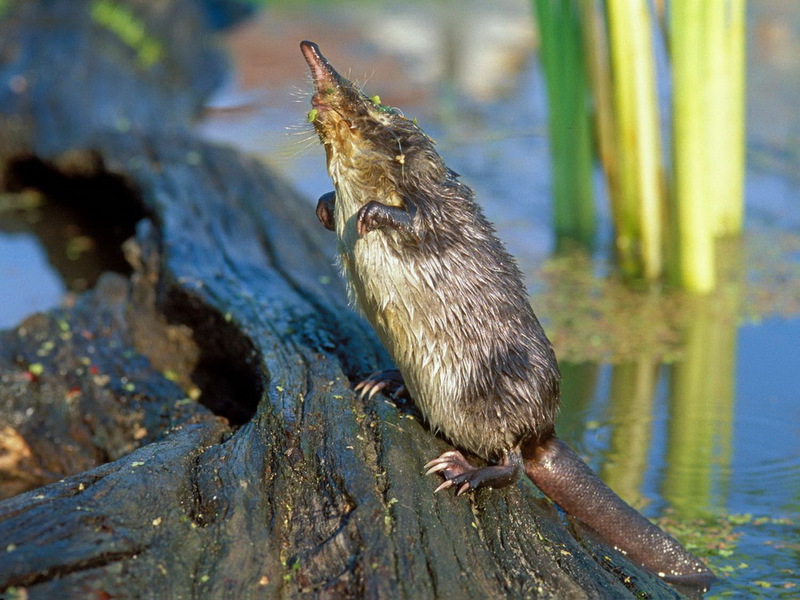
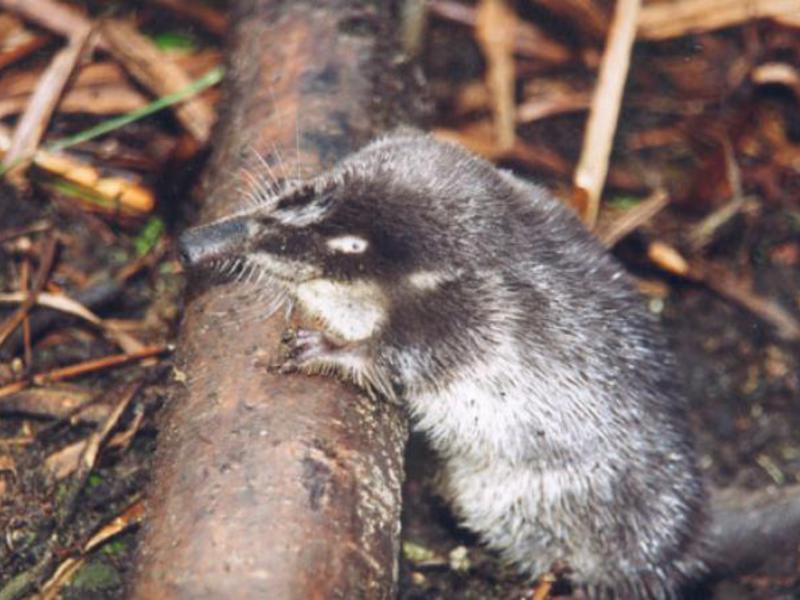
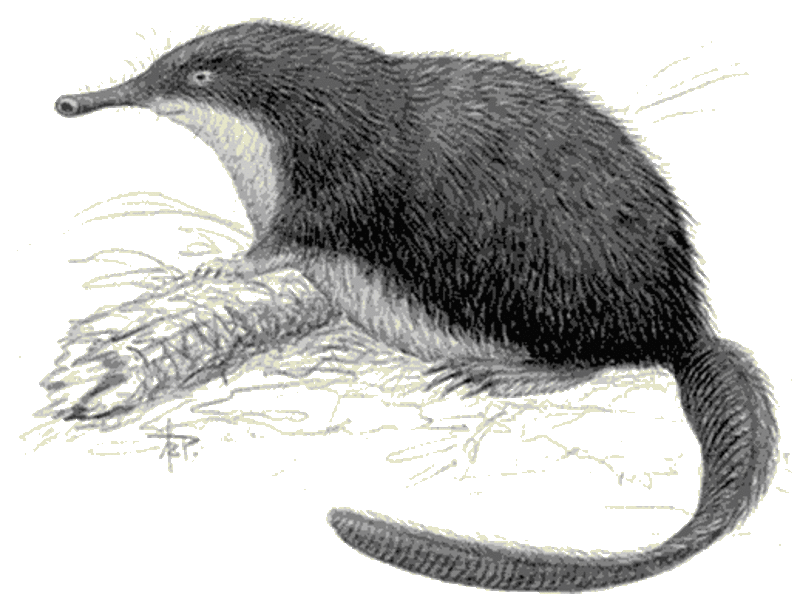
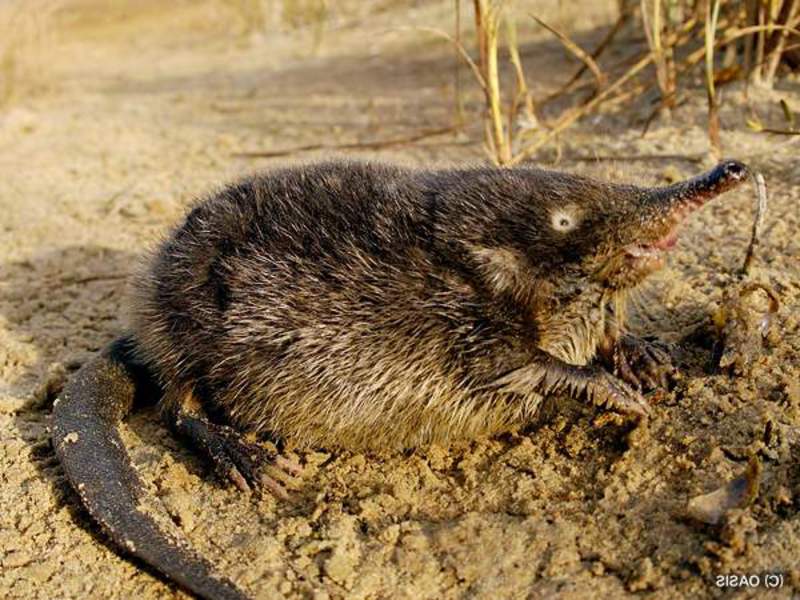
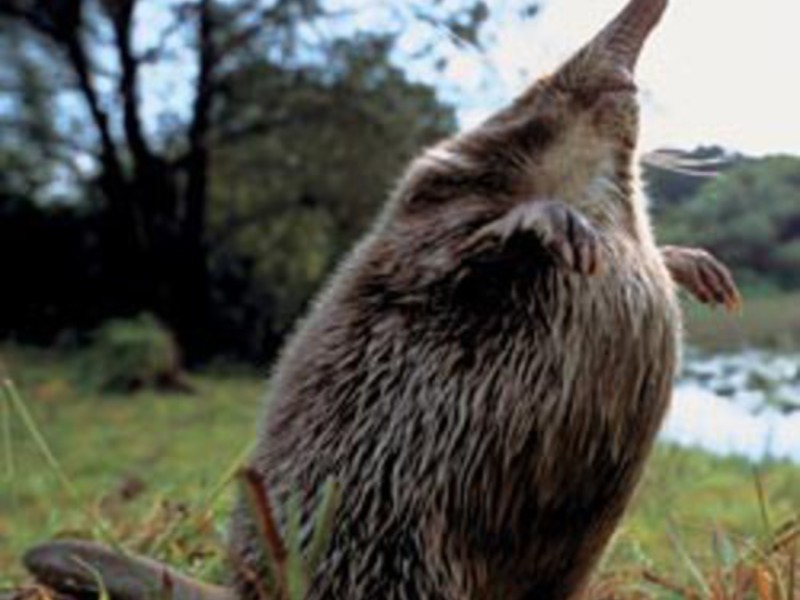
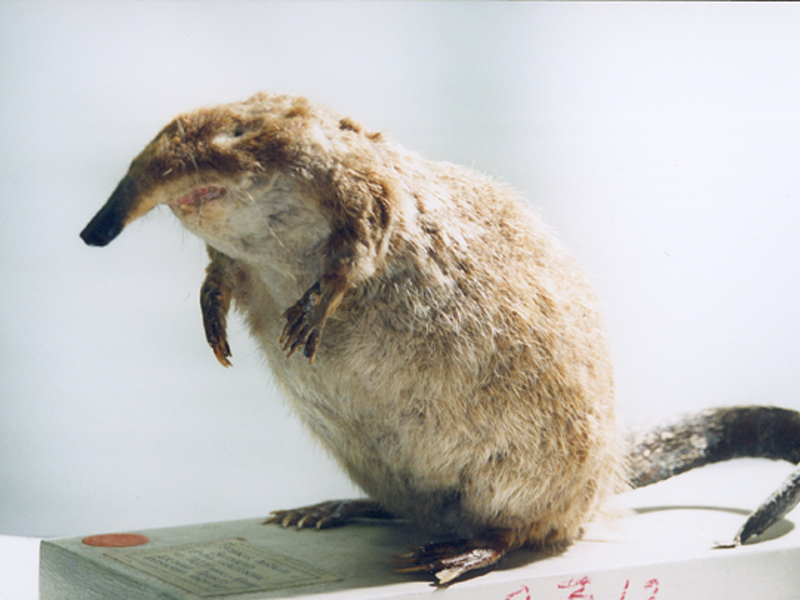
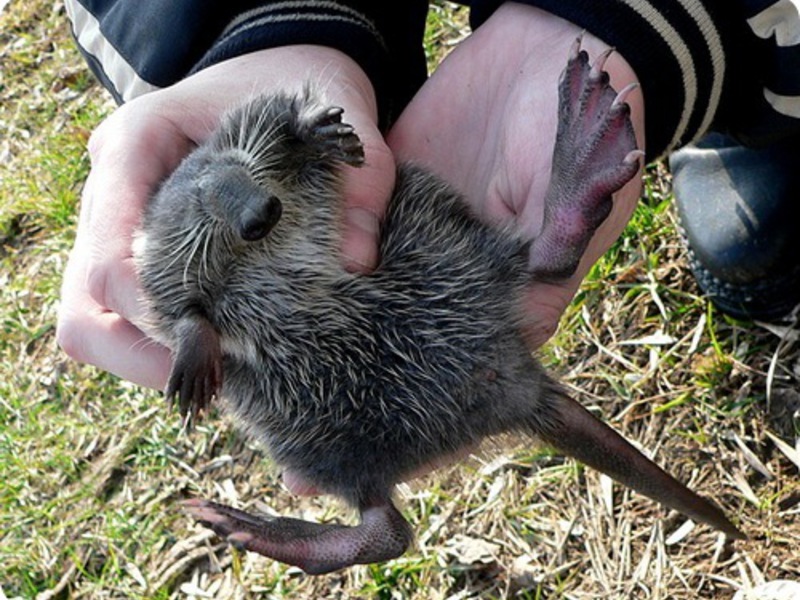
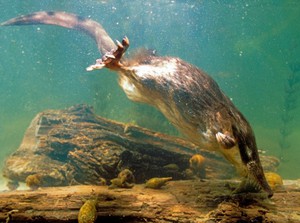 The animal is also popularly known as the water mole, due to its excellent swimming and diving abilities, as well as its ability to dig long tunnels and burrows in the ground. The photo shows the animal's distinctive appearance. Looking at the desman, one can immediately determine that it is native to aquatic habitats.
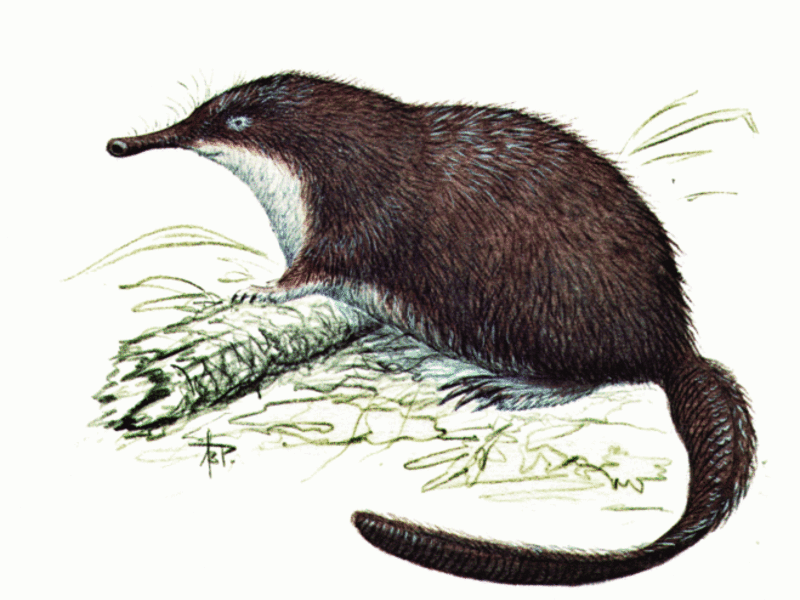
Animal body length reaches 18-22 cm in lengthThe animal can weigh up to 520 grams. The desman's tail is the same length as its body and is completely covered with horny scales. The top of the tail is also covered with bristly hairs, creating a keel. In this respect, the animal resembles birds, but in birds, the keel is located on the chest. The tail is smallest at the base and has a pear-shaped thickening at the very beginning. This area of the tail contains specialized glands. The thickenings extend downwards, containing numerous openings that release an oily musk with a distinctive aroma. Immediately after the thickening, the tail tapers sharply on both sides.
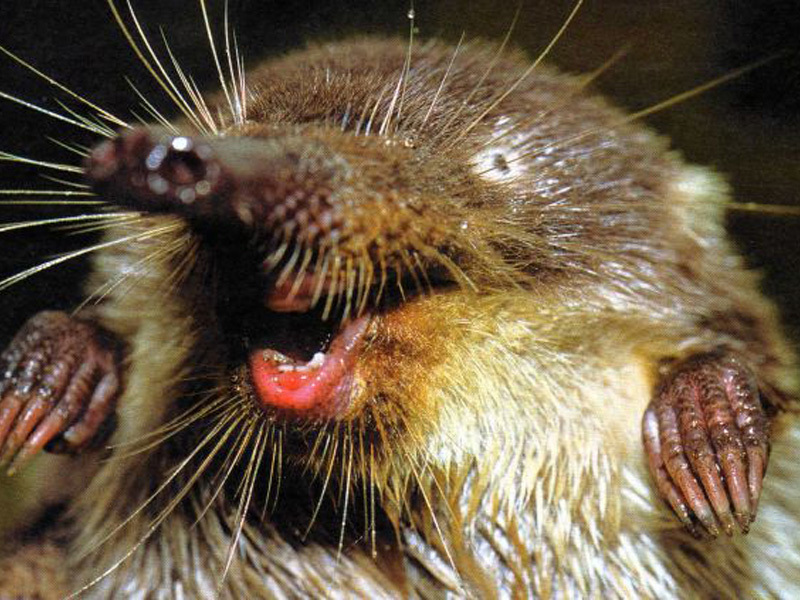
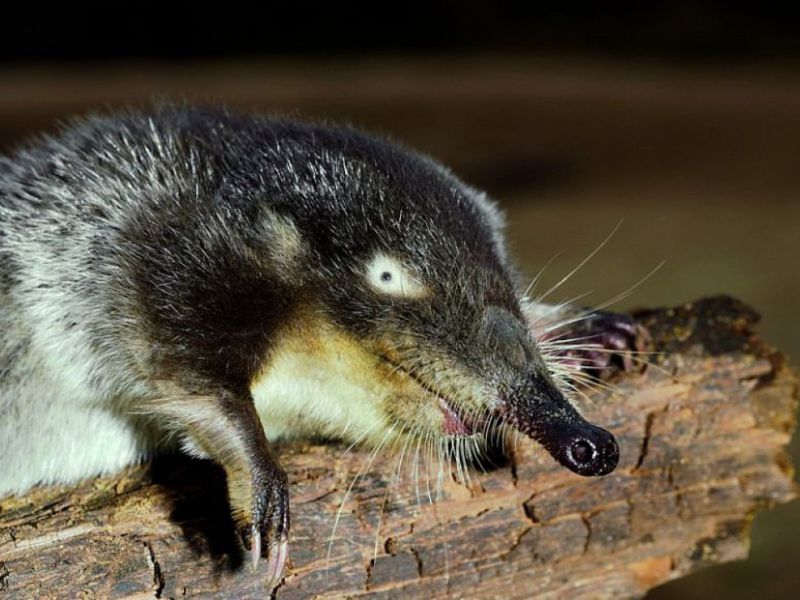
The desman narrow, elongated muzzle The desman has an elongated nose (trunk) equipped with a special valve. When submerged, the valves close the nostrils. The animal has long and very sensitive whiskers. The desman has short limbs, with the hind legs much larger than the front ones. The five-toed feet are equipped with webbing that covers the paws all the way to the claws. The claws are long and almost straight. The edges of the paws are covered with stiff hairs, which help increase the contact area with the aquatic environment.
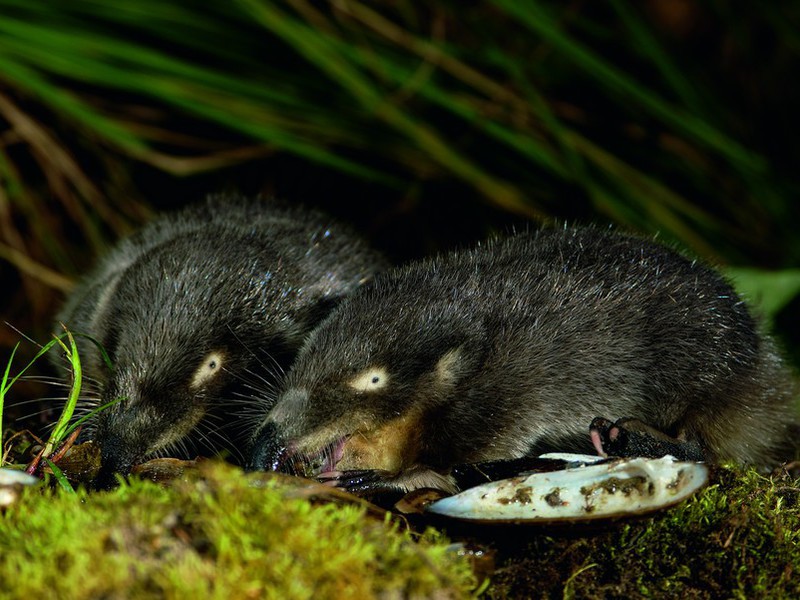
The photo clearly shows the desman's thick, velvety fur. The fur on the sides and back is dark brown, and can also be dark gray. The lower part of the animal's face, belly, and neck are much lighter. These parts of the body are light gray or off-white. The fur is excellent at trapping air, which helps the desman stay warm on harsh winter days. The animal has poor eyesight, so it navigates using its excellent sense of touch and smell.
Habitat, lifestyle
The Russian desman is significantly larger than the Pyrenean desman and this species lives mainly in the basins of many large rivers:
- Don;
- Dnieper;
- Volga.
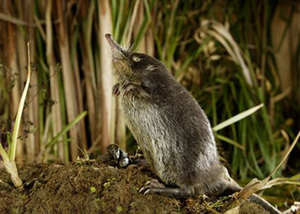 The animal is also found in the Southern Urals and northern Kazakhstan. It is also found in Belarus and Lithuania. The Pyrenean desman lives near the Pyrenees Mountains, along the border between Spain and France, and in some areas of Portugal. Its favorite habitats are lakes and mountain rivers.
The animal leads a semi-aquatic lifestyle, and the most pleasant place to live is considered to be closed floodplain reservoirsThese are typically bodies of water up to 1 hectare in size and up to 5 meters deep. The animal also prefers nearby dry areas with low, steep banks. It enjoys an abundance of aquatic vegetation.
The animal spends most of its life in a burrow with only one exit. It hides underwater, and the largest section of its tunnel, located above the waterline, extends almost horizontally for 3 meters. The tunnel is equipped with several expanded chambers. When the spring floods begin, the animal leaves its burrow because of the water. It lives on floating trees, in leaf and branch mats. They can also construct a shallow burrow in a flooded area for temporary residence.
With the onset of summer, desmans live mostly alone, rarely in pairs or families. During the cold season Up to 12-13 individuals can live in one burrow, of any gender and age. Each animal visits temporary burrows, which are spaced 20-30 meters apart. A desman can dig this distance underground in just one minute. The animal spends little time underwater; its maximum stay in the water is 4-7 minutes.
Underwater, in a bottom trench, the desman exhales air, filled into its lungs, in the form of bubbles. These bubbles then escape through the surface of the water and through the animal's fur. In winter, these bubbles form voids of varying sizes in the ice. These voids become porous and fragile near the trench.
Air bubbles above the bottom trench are very attractive to mollusks and leeches. They enjoy the musky smell of the trench area, where their prey is drawn. The animal is considered very industrious because builds more than one burrow for livingHe lives permanently in one of them, and uses temporary burrows to dry out after diving and rest. The bottom of the main nesting burrow is lined with leaves and grass. The lifespan of desmans is about five years.
Nutrition and reproduction
The animal has a good appetite and, despite its small size, eats a lot. It is believed to be the largest insectivore on the planet. The desman mainly feeds on:
- insect larvae;
- mollusks;
- crustaceans;
- leeches.
The animal cannot move quickly on land, so it is forced to fear enemies. Among them:
- foxes;
- ferrets;
- otters;
- wild cats and dogs.
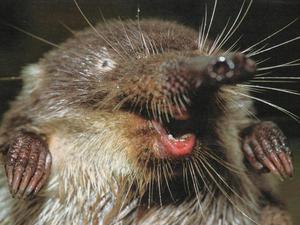 Desmans are also attacked by birds of prey, such as kites. They are forced to move onto land in the spring. during the flood period and for reproductionIn spring, mating season begins for these animals. Females produce melodic sounds, and males chirp. Fights over females sometimes occur among males.
Females give birth to litters of five cubs twice a year. This occurs in early summer and fall. Males are always nearby, actively participating in feeding the family and raising the offspring, and guarding them reliably. The cubs are born weighing only 2-3 grams, blind and naked. After just 2-3 weeks, their bodies become covered with hair. Around 3 weeks after birth, they begin to explore the world around them.
The desman is remarkable in that unlike other animalsThis strange little animal has now become rare, and its population is being restored in nature reserves and sanctuaries.