Some traditional Japanese fish dishes are no longer surprising. Sashimi, rolls, and sushi have become firmly established on the menus of Russian gourmets. The only danger from them is overeating. But some Eastern delicacies are prepared with deadly fish. This primarily concerns the pufferfish, better known as the fugu or pufferfish. It is this deadly dish that has made pufferfish famous worldwide, but this is not the only reason they are so interesting.
Content
The History of the Fugu Fish
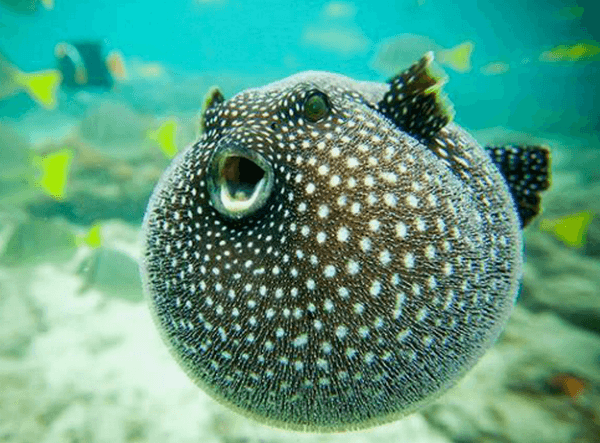
The fugu fish is one of the oldest fishes.
The exact time when the highly toxic dish appeared on the menu is unknown, but it is at least 2,300 years old. This is the age of the oldest pufferfish remains found during historical excavations in Japan. The first historical records date back to the 17th-19th centuries and concern a complete ban on the preparation of fugu throughout the territory controlled by the Tokugawa shogunate.
The Japanese reacted to the ban in their own way—instead of completely rejecting the product, they simply became more cautious. This led to the development of methods for cutting and preparing fugu with minimal risk of poisoning. These same techniques remain in place today. In the western regions of the country, the shogunate exercised the least control, and it was there that chefs became particularly skilled in preparing fugu.
During the Meiji era, the ban became more stringent, but was still violated. In the late 19th and early 20th centuries, only the emperor was forbidden to try the forbidden dish, while ordinary citizens secretly prepared it and persistently consumed it.
In 1958, the issue was finally resolved. The compromise required chefs to have a separate license to prepare fugu. Currently, obtaining this permit requires several years of training in special courses and passing an exam. The exam includes both theoretical and practical components: the chef identifies, prepares, and eats the fugu. Only a third of applicants pass the test. The remaining students, of course, don't lie breathless in the exam room. The committee is simply very, very strict and doesn't overlook even the slightest hint of error. Thanks to these precautions, you can order pufferfish dishes in Japanese restaurants virtually risk-free.
Appearance
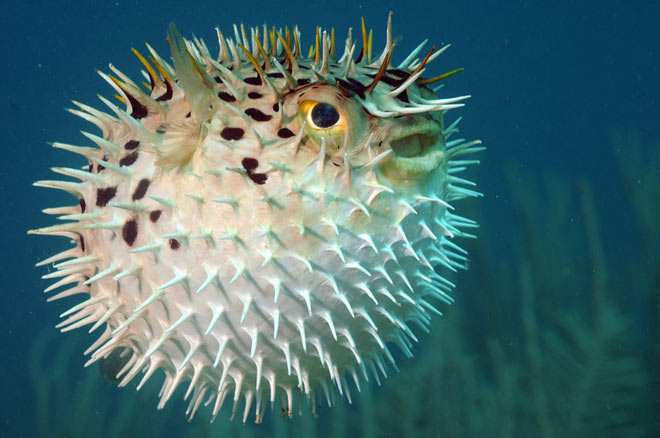
The long lifespan of the fish is explained by the fact that predators are rarely interested in it, for them it is dangerous
The brown puffer is a fish of the pufferfish family. Belongs to the ray-finned fish family, the genus Takifugu (which translates as "river pig"). The body is large, significantly thickened at the front, averaging up to 50 cm in length, with specimens reaching 80 cm or more. The fish's rear end is narrow, and the tail is small. The body is brown, with black spots bordered by white on the sides behind the fins.
The teeth are fused, resembling powerful incisors on both top and bottom. The body has almost no bones, not even ribs.
The main external characteristic of all fugu is the absence of scales. Instead, the skin is covered with sharp spines. When at rest, these spines are flattened, but in times of danger, they provide almost complete protection from predators. When threatened, the cavities in the stomach area instantly fill with air or water, inflating the fish like a balloon. It becomes three times larger. Sharp spines protrude in all directions, making it impossible for anything to swallow such a creature. If this happens, the predator will die very quickly: the fugu's main defense mechanism remains venom.
Habitat
Fugu is a bottom-dwelling fish and is found at depths of up to 100 m in subtropical climates. A low-boreal species native to Asia. Main habitats:
- Southeast Asia;
- Pacific Northwest;
- Far East (both ocean and river waters);
- Sea of Okhotsk.
Found in large numbers in the Yellow, South China, and Seas of Japan (primarily in the western part). It also inhabits the waters of Lake Chad and the Nile, Amazon, Congo, and Niger rivers.
In summer it can even be found in the Russian part of the Sea of Japan.
The common belief that fugu is an exclusively Japanese delicacy isn't entirely accurate. It's also eaten in other countries, including China, Thailand, and Korea. In some regions, non-toxic pufferfish is bred, but most true connoisseurs of the dish avoid this option. Often, the thrill of danger is more valuable than the taste when eating fugu.
The fish is non-migratory; adults often inhabit bays, while juveniles inhabit the brackish waters of river estuaries. The older the fish, the further out to sea it inhabits. Before storms, pufferfish move closer to the coast.
Lifespan and lifestyle
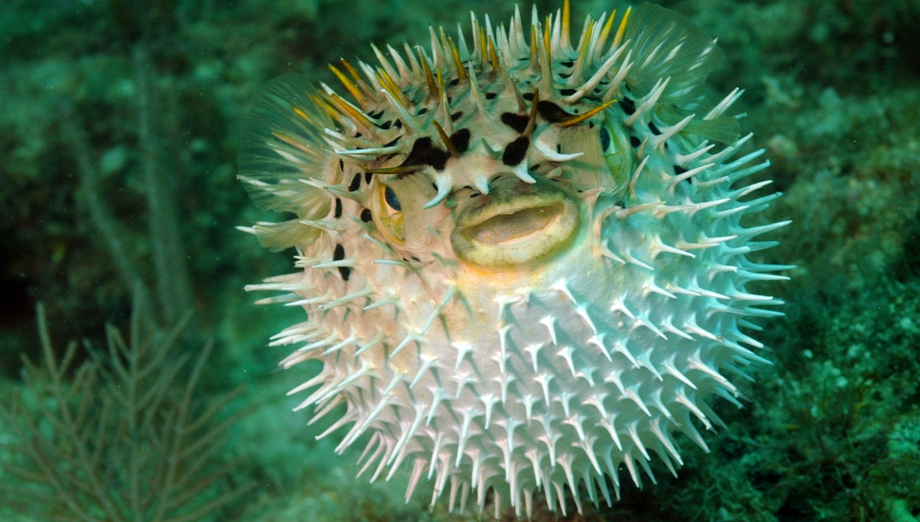
The puffer fish is still poorly studied, so there is not much information about its lifestyle.
Scientists' attempts to better understand the pufferfish's lifestyle have been largely unsuccessful. Researchers have discovered that the pufferfish is unable to swim at high speeds due to its aerodynamic body structure. However, it exhibits excellent maneuverability: it moves both forward and backward, swims sideways, and can turn quickly.
Despite its small eyes, the pufferfish has excellent vision. It has an excellent sense of smell thanks to the numerous receptors located on its tentacles with nostrils beneath its eyes.
The average lifespan of a brown puffer in the wild is 10–12 years.
Nutrition
The fugu is a predator; its diet consists of the strangest and most unappetizing inhabitants of the underwater world. These include marine worms, mollusks, starfish, and sea urchins. They also feed on corals. Some scientists claim that the pufferfish's exceptional toxicity is a consequence of this diet. Researchers still cannot explain why the pufferfish itself is immune to the poison, despite the toxins accumulating in large quantities in its eggs, intestines, liver, and other body parts. The fillet and skin are free of poison.
Reproduction
In the pufferfish family, the father is the more responsible parent. During spawning season, the male courts the female, circling her. He uses a special dance to invite her to descend to the bottom. If the female is also interested, the two swim along the bottom for a while until they find a suitable rock. The female lays her eggs on them, and the male immediately fertilizes them.
After laying her eggs, the female swims away, leaving the male to protect the brood. He stands on a rock and covers the clutch with his body to prevent the numerous other fish from eating the eggs.
After the tadpoles hatch, the father digs a hole in the bottom, transfers the fry there, and remains to guard them. Only when the offspring begin to feed independently does the male leave them, having fully fulfilled his parental duties.
The dangers of fugu fish
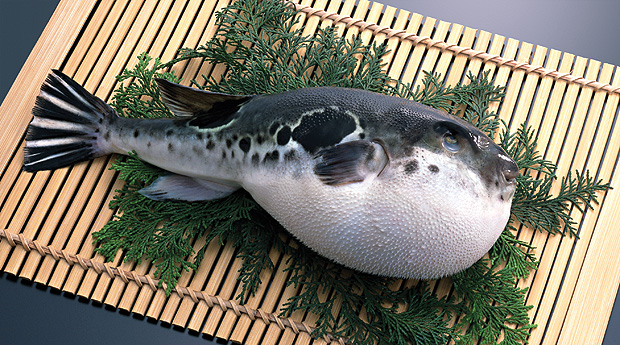
Fugu is the most dangerous and expensive dish in Japanese cuisine.
It's hard to find a more dangerous and expensive dish in all of Japanese cuisine. A single fish costs around $300, and a set meal including this component can cost $1,000 or more.
The extreme toxicity is due to the huge amount of tetrodotoxin in the tissues of the fugu. Just one individual can cause fatal poisoning of 30 people.
Tetrodoxine is 400 times more toxic than strychnine, 160 thousand times more toxic than cocaine, and an order of magnitude more toxic than curare poison.
The first symptoms of poisoning appear within 10–15 minutes. The lips and tongue become numb, salivation begins, and coordination is impaired. More than half of those poisoned die within the first 24 hours; 24 hours is considered the critical period. Diarrhea, vomiting, and severe pain may occur. Death occurs from respiratory arrest due to paralysis of the muscles involved in breathing.
Tetrodotoxin is not a protein; it works by blocking nerve impulses. It blocks the passage of sodium ions through cell membranes without impeding the passage of potassium ions. This highly specific interaction with cellular structures is why tetrodotoxin is already available as an excellent pain reliever in Japanese pharmacies.
There is no antidote, but tragedy can be avoided. To do this, breathing and circulation must be immediately facilitated by placing the victim on a life support machine.
You can die without eating the fish, but just by touching the poison-soaked insides with your bare hand.
It's hard to complain about the high price of fugu, given all the risks. Selling a dish named one of Time magazine's top ten most poisonous foods in the world at low prices is unacceptable. It's not the relative rarity of fugu, but the difficulty of its preparation that drives its cost.
To prepare the puffer, a licensed chef removes the liver, roe, and all the entrails. A small amount of poison remains on the surface of the fillet—just enough to cause symptoms of poisoning but not death. Numbness of the palate, tongue, and extremities, along with a feeling of mild euphoria, is a sign of the chef's exceptional skill. This state is akin to a mild drug intoxication.
Aquarium maintenance
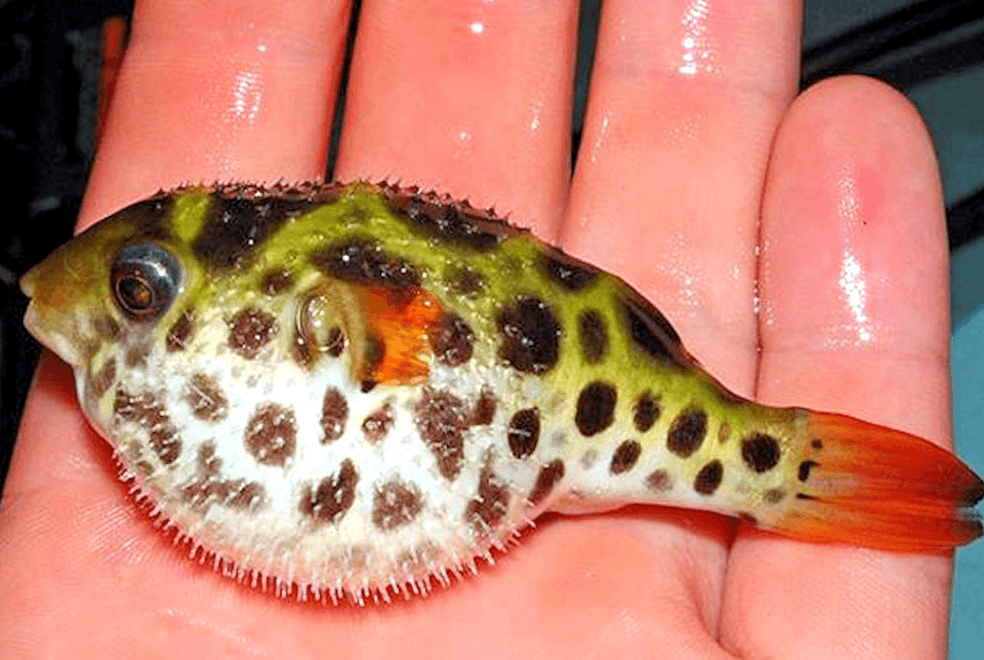
Aquarium tetraodons can be toxic, but their venom is not lethal.
Aquarium tetraodons are a whole range of both marine and freshwater needletails. The most daring aquarists keep poisonous pufferfish, but the non-toxic pufferfish will also be a beautiful addition to any aquarium. While home-raised pufferfish won't be as deadly, all of them can still be toxic.
To avoid poisoning, aquarium tetraodons should not be fed by hand, and especially not handled with bare hands!
These fish are very beautiful and unusual, but caring for them is extremely difficult, as is the pufferfish's temperament. If you decide to breed these pets, you need to think about their diet right away. It should include snails with hard shells to wear down their rapidly growing teeth.
As with breeding other aquarium inhabitants, the main factors for success will be:
- container of the correct size;
- healthy diet;
- compatible neighbors.
Their lifespan in an aquarium is half that of the wild. Your pufferfish can live from 5 to 10 years. The average length of an adult aquarium fish is 15 cm.
Aquarium
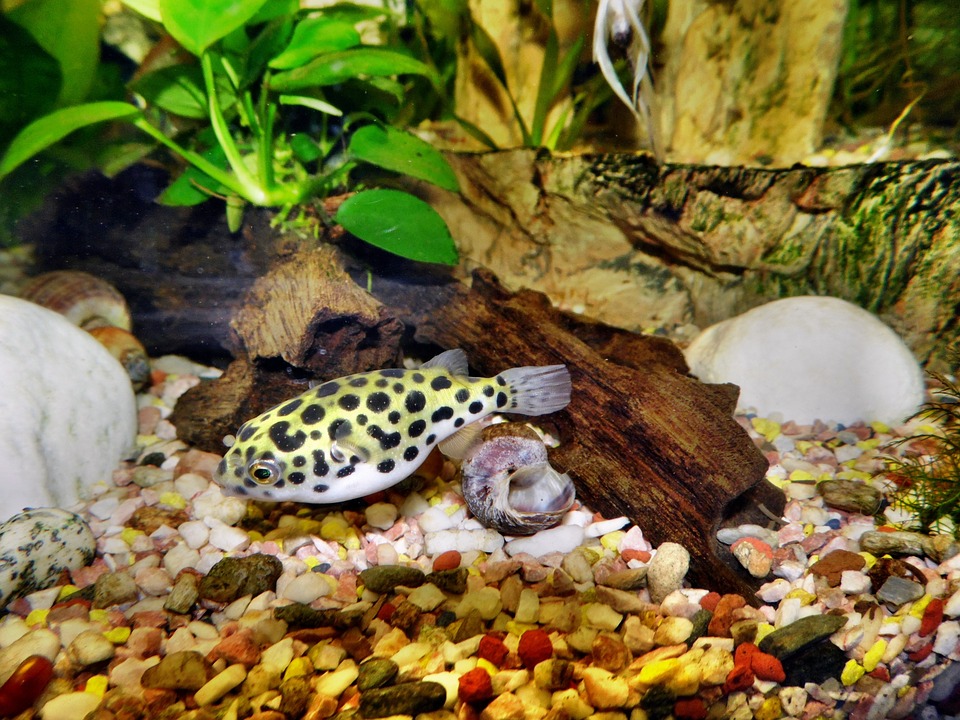
The main thing in keeping an aquarium tetraodon at home is to provide it with a comfortable bottom
Young specimens can be kept in tanks of about 50 liters; as the fish grow in size, they should be moved to an aquarium of 150 liters or more. If more than five adult specimens are kept at a time, the tank volume should be increased. If there is only one pair of adults and a few fry, a 100-liter tank will be sufficient. A large group of tetraodons will feel comfortable in a 300-liter tank.
The water needs aeration and filtration. Freshwater is salted with table salt: 1 tablespoon per 20 liters of water. Juveniles tolerate freshwater well, but they may develop diseases later.
The bottom must be wide enough to allow such a large bottom-dwelling fish to swim freely. Tetraodons love shade, so various-sized stones are placed on the sand to create it, and the remaining area is densely planted with aquatic plants.
Care and feeding
The comfortable range of water temperature is 25–28 degrees.
Recommendations from experienced fish farmers for caring for puffer fish:
- mandatory aeration and filtration;
- daily replacement of 1/10 of the water in the aquarium with fresh water;
- separation of freshwater and marine tetraodons into different containers;
- isolating the fry in a separate container.
Healthy foods for adults:
- bloodworms, worms;
- shellfish and fry;
- hard-shelled crustaceans;
- tubifex worms;
- corethra.
Ground beef, liver, and heart are also suitable for these predators. Tetraodons are not interested in green food, and dry food is contraindicated.
Diet for fry:
- ciliates;
- daphnia;
- Artemia nauplii;
- Cyclops;
- egg yolk.
Neighbours
The older the pufferfish, the higher the risk that other aquarium inhabitants will seem quite appetizing. Therefore, the compatibility of these large predators with tankmates should be considered in advance. A separate tank for the pufferfish is ideal. If this is not possible, African or Malawi cichlids are ideal tankmates. It's advisable to select tankmates of a similar size and avoid keeping fish with long fins and tails. In the latter case, there's a risk that adult predators will nibble on these extravagances.
Reproduction in an aquarium
At the age of 1–3 years, fish are ready to reproduce. For this purpose, a pair of tetraodon or a male with several females are placed in a separate aquarium. The female differs from the male in having less vibrant spots and is smaller. The most successful spawning is achieved with dense vegetation, most commonly Cryptocoryne and Hornwort.
During the preparatory period, the water temperature should be increased and the fish should be fed intensively with crustaceans and meat. Courtship behavior is clearly visible, appearing as the male persistently pursuing the female and even nipping if ignored for too long. If the pair sinks to the bottom, the female's response is positive, and they will find denser clumps together. Eggs are laid within a minute, sometimes remaining free-floating. It's best to collect all the eggs and transfer them to another container with the same water composition. Milky-colored eggs should be removed immediately; they are not viable.
After 8-9 days, the fry appear, which need to be fed egg yolk for 2-3 days, after which they can be transferred to a normal diet for babies.
Interesting facts
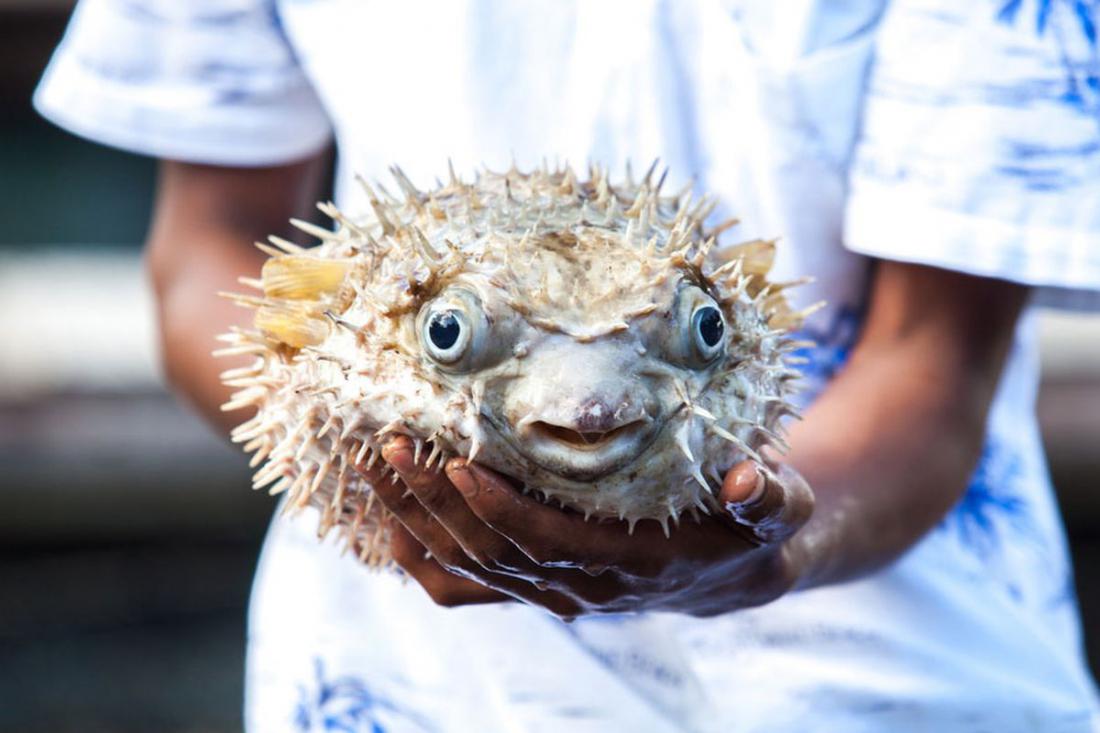
Despite unprecedented precautions in preparing fugu dishes, an average of 20 people die from it every year.
With the highest concentration of poison in fugu liver, it is this product that is consumed by the most daring thrill-seekers. The most high-profile death from paralysis after eating fugu liver occurred in 1975. The entire country was shocked by the death of the "national treasure," the legendary kabuki actor Mitsugorō Bandō.
Two Russian tourists died after eating fugu fish soup in 2010.
In ancient times, there was an unofficial law: if a person in a restaurant died from eating fugu, the cook must also commit suicide – seppuku.
In many countries, catching and selling fugu is strictly prohibited.
One of the first descriptions of fugu poisoning was made by James Cook, who was served the unfamiliar dish for dinner. Because Cook and his companions barely touched the delicacy, they survived, despite experiencing severe numbness and weakness.
The underwater world is full of amazing, little-studied creatures. The pufferfish is one of them. It has a unique appearance, characteristics, and a complex personality, and seems the least suited to coexisting with us.
This hasn't stopped humans from consuming and even breeding this arguably most poisonous marine creature for over 2,000 years. For those who enjoy mystery, unearthly beauty, and thrills, this fish makes a wonderful companion—either as a pet or as an exotic dish. In both cases, it's important to recognize that this creature is the embodiment of danger and to take all necessary precautions.