 Recently, such an exotic creature as the axolotl has become a familiar addition to home aquariums. What are axolotls? This rare animal originates in Mexico. From there, it spread throughout the world, becoming an aquarium pet. The axolotl is the larval stage of the tiger salamander. Under favorable conditions, the larva may not develop into an adult. However, if the water level and air temperature are lowered, the metamorphosis into the salamander will occur.
The body length of an axolotl can be from 90 to 350 mm from head to tail tip. Males typically have a larger body than females. Ambystomes exist in two forms. The first is a neotenic larva with external gills, found exclusively in water. The second form is a terrestrial adult. Adult, reproductive axolotls can grow up to 450 mm in length, but typically reach 230 mm. Individuals longer than 300 mm are rare. These lizards grow much faster than other neotenic larvae and reproduce approximately one year after hatching.
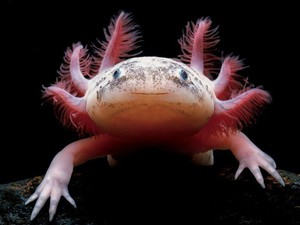
The axolotl's most distinctive feature is its large external gills, which are shaped like appendages and located on the sides of its head. It also has small teeth. These are not suitable for chewing; their purpose is to hold prey in the mouth. Body color varies greatly—from white to black, various shades of gray, and dark brown. It has been observed that light-colored larvae are rare in the wild, as they are less viable.
In the body of an axolotl there are practically no bones, especially in young individuals. The base of the skeleton is formed by cartilage, and the outer covering of the body is very delicate and thin. Therefore, you should avoid handling the lizard unless absolutely necessary. If you need to catch your pet, use a net made of soft, durable fabric with small holes or a plastic container.
The average lifespan of this creature is twenty years. In captivity, it lives no more than ten years.
Basic information:
 homeland: Mexico;
- classification: amphibians, family Ambystoma, species - Ambystoma mexicana;
- body length: 230−300 mm;
- life expectancy: 10-20 years;
- water parameters: acidity (pH) — 7−8; hardness (dH) — 6−16º;
- water temperature: 18−24ºС;
- aquarium volume: from 50 l;
- Behavior: calm, sedentary.
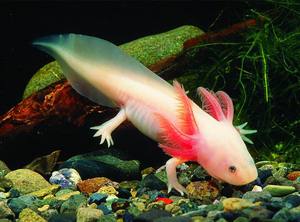 homeland: Mexico;
Care requirements
Keeping such an exotic animal at home isn't particularly difficult, but there are factors that determine their lifespan. The main (and most important) factor is water temperatureThe axolotl is a cold-blooded creature, so warm water is very stressful for it. It seems odd that animals native to Mexico can't tolerate high temperatures. The explanation is quite simple. The reason is that the axolotl's habitat is at high altitude, where it is much colder than in the rest of the country.
Prospective lizard owners should be aware that water temperatures above 24 degrees Celsius (75 degrees Fahrenheit) are unsuitable. If an axolotl is kept in water at this temperature for an extended period, it can cause illness and even death. A temperature below 21 degrees Celsius (70 degrees Fahrenheit) is considered the most suitable. If you are unsure of your ability to provide the necessary conditions for an axolotl, it is best not to get one.
Aquarium soil
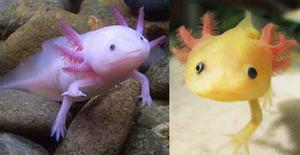 Another important requirement for keeping an axolotl is substrate in an aquariumAquarium keepers often choose the color, shape, and size of the substrate based on their personal preferences. However, this factor is especially important for the axolotl. Without substrate in the aquarium, the pet feels very uncomfortable. This causes stress and can even lead to sores on the tips of its paws. Gravel is also unsuitable, as the animal can ingest it. This can cause gastrointestinal blockage and death. Sand is considered the best option. This material allows the axolotl to move freely along the bottom.
Aquarium size
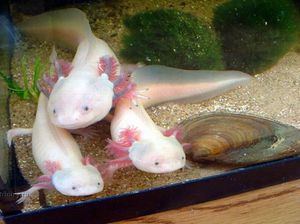
This is usually a matter of the owner's taste, although some requirements should be followed. Small-sized individuals contained in 50-liter vesselsMature lizards require a larger tank—100 liters. If you want to keep several axolotls, each tank should hold 50-80 liters of water.
Aquarium decorations should be free of sharp corners and edges, as they could injure your pet. Also, provide it with an adequate number of hiding places. There should be more hiding places than there are fish in the aquarium.
Water quality
Cleaning the water in an aquarium for these amazing animals is different than for aquarium fish. This requires a powerful filter and a slow water flow. An internal filter with a built-in scrubber is best, as it is powerful enough and does not create a strong current.
How often should water be changed? Caring for an axolotl involves partial water changes every weekSince it eats protein-rich food, it's quite sensitive to aquarium cleanliness. Therefore, it's important to remove any leftover food promptly and avoid overfeeding, so that excess food doesn't float in the water and pollute it.
Nutrition
An axolotl doesn't require a wide variety of food. The main thing to remember is that it's a predatory animal that needs protein. The type and amount of food depends on the individual's preferences. For example, sinking foods designed for predatory fish are ideal; they come in tablet or granule form. Furthermore, lizards can be fed such food, How:
- fish fillet;
- crushed worms;
- shrimp meat;
- frozen food;
- mussel meat;
- live fish.
 fish fillet;
Be careful with the last option, as the fish may be a source of infection, to which the amphibian larvae are very susceptible.
There are no special feeding rules. They are the same as for fish: don't leave food particles in the aquarium, as protein-rich foods will quickly rot and pollute the water. Also, avoid feeding mammalian meat, as axolotls are unable to digest this type of food.
Price
The price of such an extraordinary pet depends on several factors: age, color (light-colored axolotls are more expensive), and length. In Russia, the animal is available for purchase. from 450 to 2500 rublesThe average price in Ukraine is from 60 to 120 hryvnia per individual.