As children, many loved looking at anthills and imagining what was going on inside them. A homemade ant farm is a unique structure that can become a home for ants. By introducing these creatures into the structure, you can satisfy your curiosity by observing the lives of these tiny insects.
What does an ant farm look like and how is it structured?
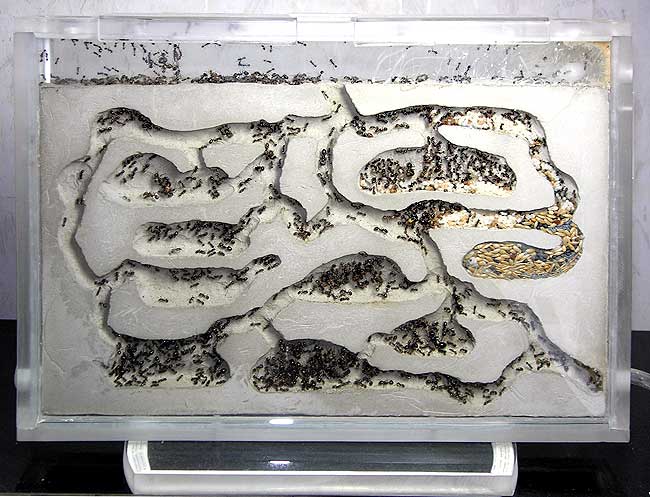
There are many types of ant farms, so everyone can find something to suit their taste and needs.
The farm is an artificial anthill. A structure with multiple passages, tunnels, and paths for movement, most often made of plaster, acrylic, and a special gel. They can be horizontal or vertical, three-dimensional or flat.
The main thing is that it's suitable for life, so a small amount of soil should be added inside. This environment will allow the ants to feel at home, as if they were in the wild; they'll create their own passages and burrows.
It's important to remember that ants need oxygen. They breathe atmospheric air through spiracles—holes in their bodies that allow air to enter. To allow them to breathe, small holes need to be made in the structure of the lid, which is usually placed on top of the farm.
Main types
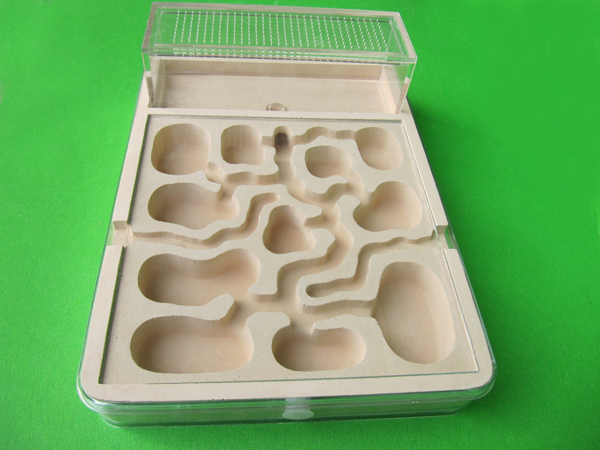
A horizontal ant farm is inconvenient because it takes up more space than a vertical one.
These structures come in several types:
- Horizontal. These are "lying" farms, in which the main plate is located horizontally, as in natural anthills.
- Vertical. The main slab does not “lie down” but is in a standing position, imitating the tiered dwellings of ants.
- Complex. It combines several types at once: inside there are both nests and an arena, they are larger in size, reminiscent of an ant town.
- Island. The arena is surrounded by a moat, with a farm in the middle; no nets or glass are required. The main thing is to monitor the water level and keep the moat clean.
Ant farms can also be categorized by the material they are made from. Plaster, acrylic, gel, and even wood are all used.
The most common structures are made of plaster and acrylic: they are easy to build and require little maintenance. Wooden structures have fallen into disuse due to their rapid deterioration: the wood begins to rot, becomes less durable, and falls apart.
How to make a gel farm yourself
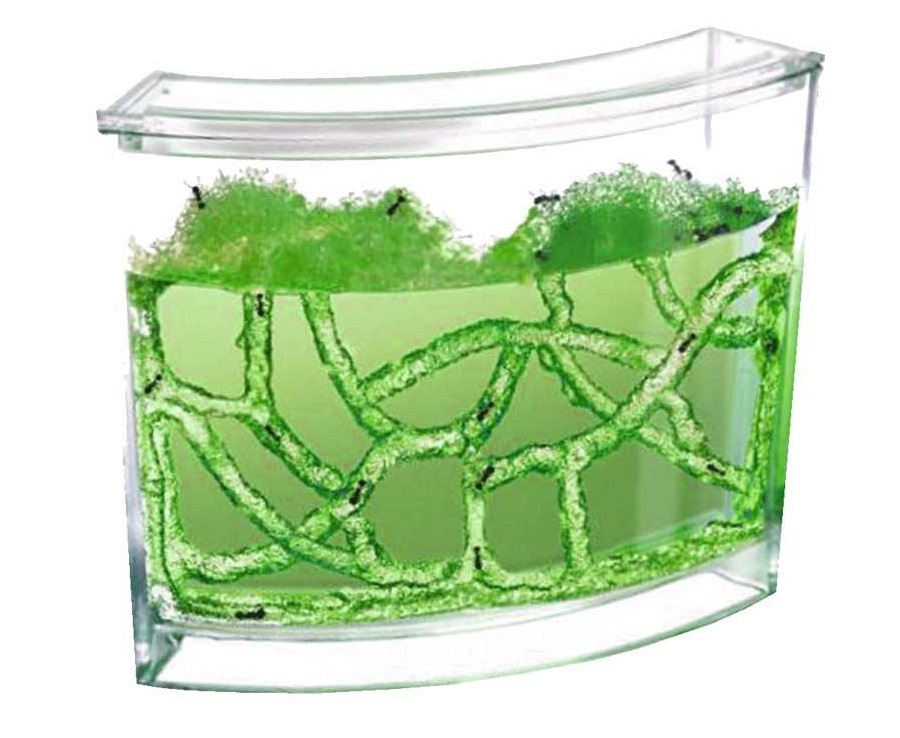
The gel farm is one of the simplest types
Necessary tools and materials
A farm with gel filler is very easy to maintain, and the material itself is a source of moisture for ants. This design resembles an aquarium, but instead of water, it contains a blue or green gel that is completely safe for insects. It provides not only a habitat but also food.
To create such a design you will need:
- glass aquarium or jar;
- special gel;
- ants.

You can also order a special gel for an ant farm online, where a wide variety of colors and compositions are available.
Creating such an anthill is extremely simple: just place the gel in a glass container and populate the anthill with inhabitants.
The gel is made from water and algae, so the ants feed on it without the need for feeding. It can be purchased ready-made at a pet store, or you can make your own. To do this, mix water and crushed algae. Allow the mixture to dry and thicken.
Step-by-step instructions for making
This is one of the easiest ways to create an anthill:
- Prepare a glass container (aquarium, jar), wash it and wipe dry.
- Then pour the gel into the container. The gel should be more than halfway up the container to ensure the farm's inhabitants don't feel crowded.
- You can introduce ants there - they will dig passages and tunnels themselves.
All that remains is to periodically ventilate the structure and add gel as needed.
Made of plaster
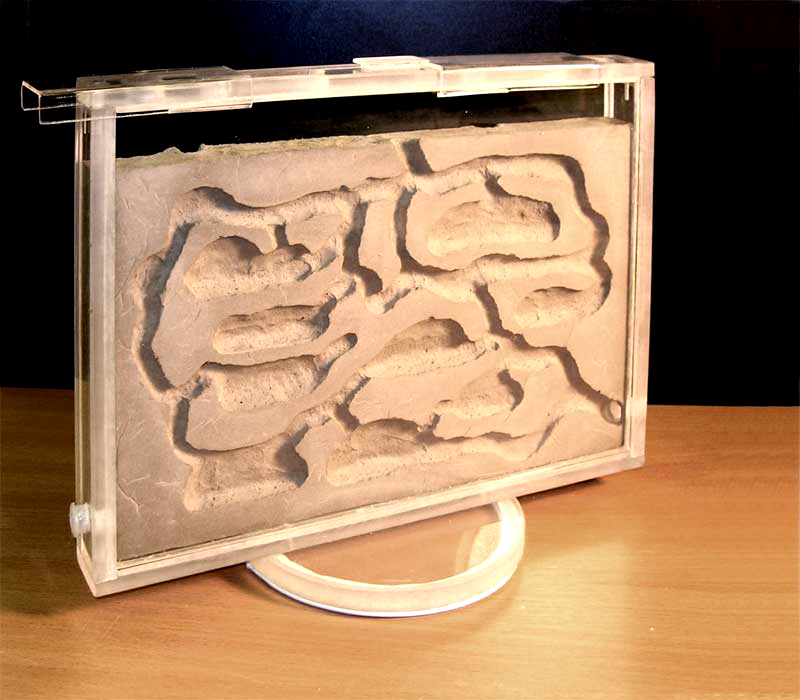
To make an ant farm from plaster with your own hands, you will have to spend more time, because you need to wait for the material to harden
Necessary tools and materials
To create a plaster truss, you will need:
- capacity;
- gypsum mortar;
- water;
- cocktail straw;
- pencil;
- drill;
- stationery knife.
Step-by-step instructions for making
- First of all, you need to prepare a container for diluting the gypsum.
- Mix water and plaster until it reaches the consistency of thick sour cream.
- Next, you need to leave it to harden for 5-7 days.
- Carefully remove the dried mass from the container.
- Use a pencil to draw future entrances and exits.
- Drill small paths, you can use a stationery knife.
- Place the finished structure in an aquarium or a jar of a suitable size.
- Make holes in the lid to allow air to enter.
- To moisten the ants' habitat and feed them, insert cocktail straws.
Acrylic
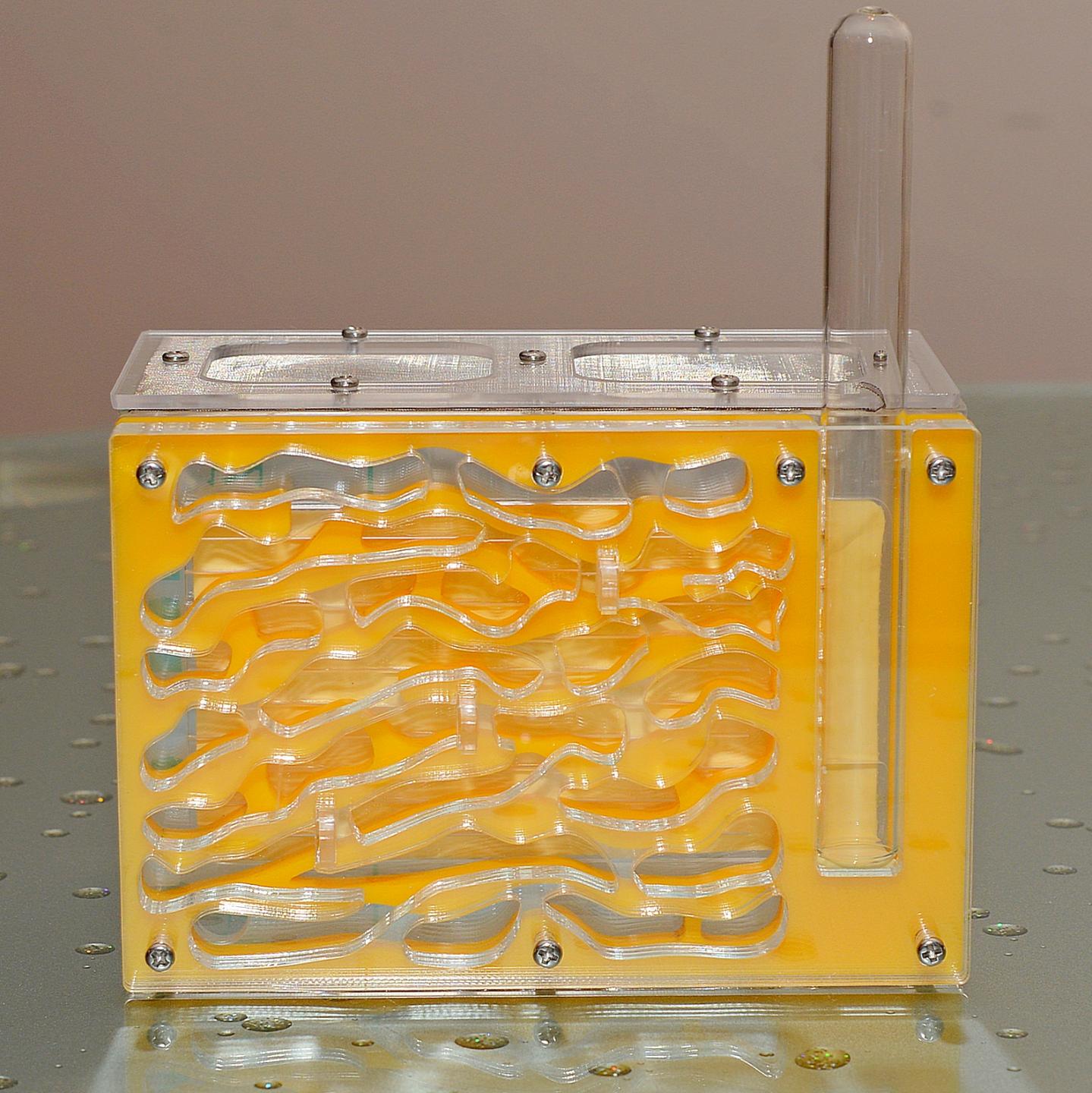
The most difficult part of an acrylic farm is forming passages and burrows for ants.
Necessary tools and materials
- pencil:
- sheet of paper;
- acrylic;
- polycarbonate;
- plastic rivets;
- cocktail straws.
Step-by-step instructions for making
- Design a future farm. To do this, draw the future structure, the approximate location of the tunnels, and the dimensions of the structure on a piece of paper.
- Take acrylic and, following the example on paper, make small holes, the so-called passages.
- When the structure is ready, fasten it to the walls and polycarbonate lid using plastic rivets.
- Before populating the farm, it is necessary to insert cocktail tubes into the structure to allow air, water and food to flow through them.
Other manufacturing options
Ant enthusiasts often create farms out of clay. These structures are quick and easy to construct. Clay is harmless to the insects and can be easily molded into any shape.
The most cost-effective option is a polystyrene truss. The material is easy to use when designing tunnels and passages. However, it is not durable and is less convenient for ants.
Ant colony
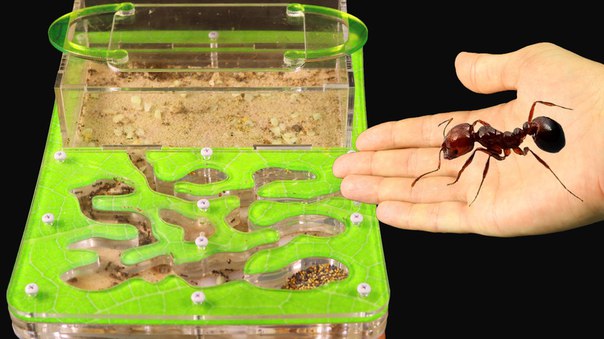
To find ants, just go outside and find a small anthill.
It is very important to remember that you cannot introduce a large number of non-insects into a new home at once.
Under no circumstances should ants from different colonies be placed in the same area—they'll fight! Furthermore, they'll gradually begin to multiply, and there might not be enough space.
How to care for an ant farm
It's important to remember that the farm is periodically filled with soil and sand to ensure the insects feel as comfortable as they would in the wild. It's also important to add a little water and food.
The glass is wiped clean, and the farm itself is ventilated. Ants require shade, so it's best to keep their habitat away from direct sunlight.
Building an ant farm isn't as difficult as it might seem at first glance. Simply read the instructions and a list of the necessary tools and materials, which are readily available and inexpensive.