The capybara is a herbivorous mammal, the largest rodent on the planet. Its name comes from the Tupi language and literally translates as "thin grass eater." It is closely related to guinea pigs and mountain pigs, and is also distantly related to the chinchilla and nutria. The species is widespread and, according to the International Union for Conservation of Nature, is not endangered.
Content
What does it look like?
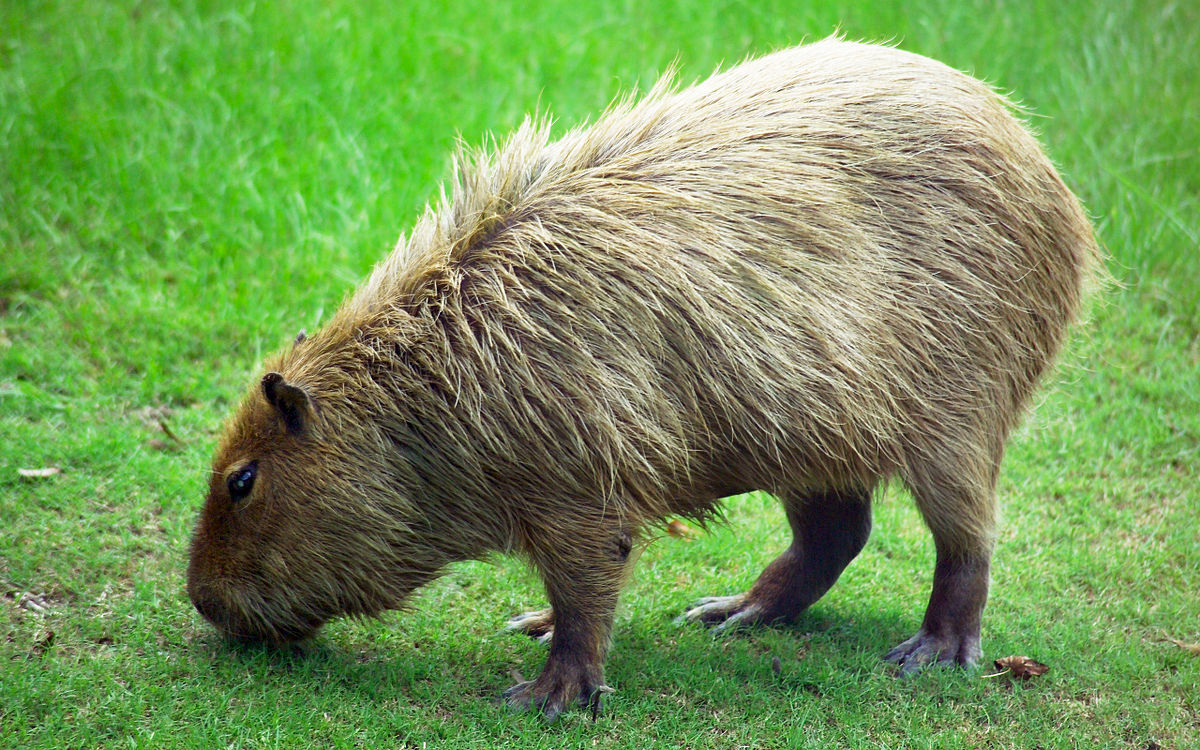
The rodent is in the same family as the guinea pig and is very similar in appearance to it. The elongated body is compactly built: the animal lacks a collarbone, and its shinbones are partially fused into one. The coarse fur, brown or grayish in color, ranges from three to twelve millimeters in length. The tail is very small and practically unused.
The animal's remarkable size is particularly noteworthy: it can reach a meter in length, and the weight of an adult, depending on sex, ranges from 60 to 65 kilograms. The animal's height is 50 to 64 cm. The modern species has significantly decreased in size over the past millions of years—paleontology confirms its existence as early as the Miocene (5–20 million years BC), except that back then it was the size of a large bear.
An animal's teeth grow throughout its life.
The mammal differs from the capybara in the size and shape of its head: it is much larger than normal, the muzzle is short and square, and the cheekbones are wide. Upon reaching breeding season, males develop a patch of skin on their muzzle with glands that produce special scent enzymes. The eyes, ears, and nostrils are set high, allowing the animal to feel comfortable in the water. The rodent has twenty teeth, rootless and with wide incisors.
Due to its shorter front legs and elongated muzzle, the animal constantly appears as if it's about to run or crouch. The structure of its feet allows it to run quite quickly: if it wants to, it can move as fast as a pony, while the webbed feet also facilitate swimming.
Where does it live?
This species of rodent is most common in Central and Latin America, in the region of the Amazon, Orinoco and La Plata rivers. Further spread is limited by air and water temperature—the animal loves heat and does not tolerate cold well.
In the wild, they are found near bodies of water, at distances of no more than a kilometer. These rodents shift their range depending on the season: during rainy seasons and river floods, they disperse, while during the dry season, they travel along the banks of large bodies of water in search of food.
Previously, the lesser capybara, which is smaller in size but is found from northern Panama to Venezuela, was classified as a single species with these animals. Since 1991, the capybara has been recognized as a separate species, despite having almost identical characteristics.
The lifestyle of a large rodent
The animal is mainly diurnal, but in case of food shortage or a large number of predators, it begins to be active at night. Thanks to the structure of its body and the shape of its muzzle, the animal swims and dives excellently.
The rodent's enemies in its natural habitat include large predators:
- wild dogs;
- crocodiles and caimans;
- large cats - ocelots, jaguars;
- anaconda.
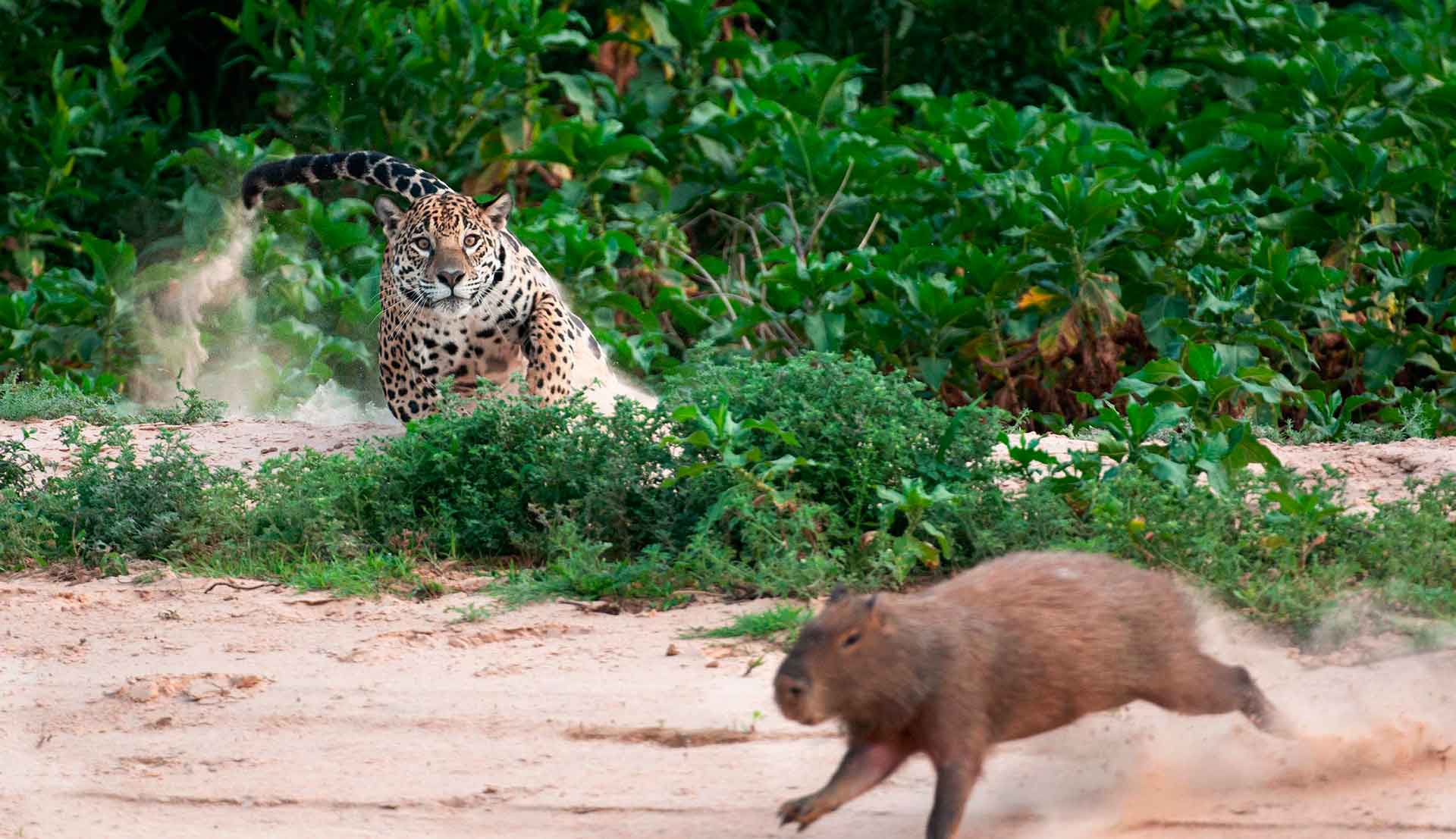
Thanks to its adaptation to living on land and in water, the animal hides from most predators by simply diving or coming out onto land.
What does it eat?
This is a herbivore, consuming almost all available vegetation: fruits, tubers, grass, aquatic plants, hay. During periods of hunger, the rodent may eat tree bark, reeds, or its own feces. Its diet varies depending on the season—summer plants lose most of their nutritional value in winter. Overall, its diet is similar to that of any herbivorous rodent.
Character
The capybara is a social animal, living in groups of up to 20 individuals. The community is divided into an alpha male, who leads the pack, several females, their cubs, and subordinate, weaker males. When intense competition arises, the alpha expels the rival from the group, and the rival lives alone for a time.
The size of a group depends on the type of terrain: the drier the terrain, the larger the flocks the animals form to ensure survival. During dry periods, up to a hundred individuals can gather near bodies of water. A group occupies an area of up to 10 hectares, although it actively uses a hunting zone of approximately one hectare. The highest density is estimated at approximately 3 individuals per hectare.
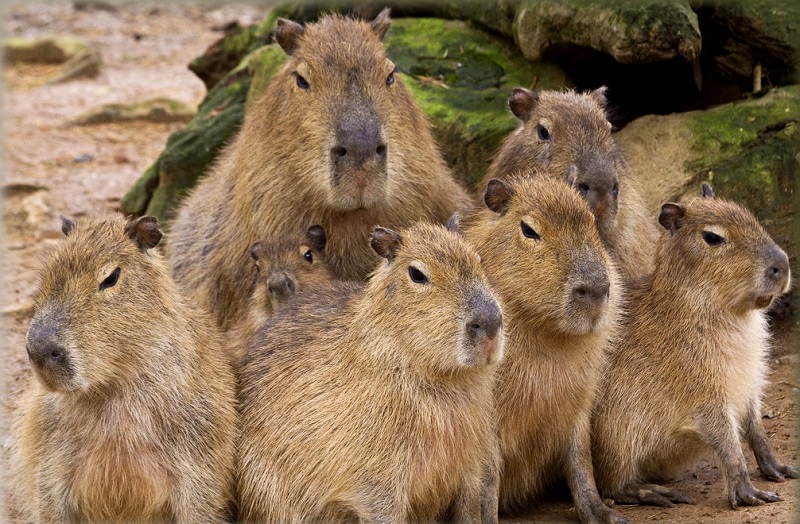
Animals communicate with each other by whistling, clicking and barking.
Large amounts of information are transmitted through scent, produced by nasal and anal glands. Their communication and intent display methods are unique to rodents: they emit loud whistling sounds when they spot a predator, while when safe, they communicate with clicks and purrs.
Due to their high body temperature and very low aggressiveness, rodents get along with almost all animals in domestic conditions.
A strong herd instinct requires it to live in a pack even when living in captivity, which makes it easy to cohabit with almost any other species that is not its direct enemy.
Diseases
Among the diseases that are significant for humans, rodents are carriers of Rocky Mountain fever. The disease is transmitted from animals to humans by ticks. Even with prompt treatment, the fatality rate reaches 7–8%. Animals themselves do not contract the fever, but are carriers.
In addition to this dangerous disease, they, like all rodents, are carriers of parasites.
Reproduction
An individual reaches sexual maturity at approximately one and a half years, weighing 30 kilograms. They reproduce year-round, but the main mating season occurs at the beginning of the rainy season, the safest time. A female can give birth up to three times a year, but this only happens under very favorable conditions; the norm for these rodents is one litter per year.
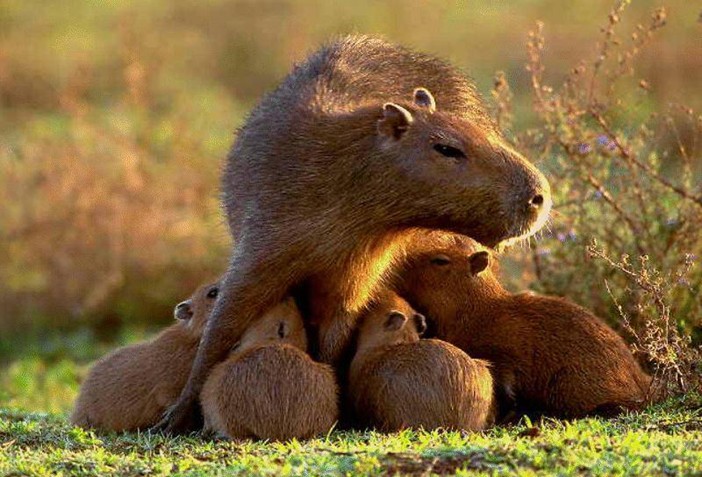
Milk feeding continues for about three months, although newborns are quite capable of eating grass from the first days
Birth occurs in a shelter on land after a four-month gestation period. The female gives birth to a litter of up to eight cubs. Immediately after birth, the babies have fur and teeth, can follow their mother, and are open-eyed.
Life expectancy
An animal's lifespan directly depends on its environment, illnesses, and injuries. In arid environments where survival is a struggle, they live for about seven years, while in relatively safe, humid regions, they can live up to ten. Domesticated animals are distinguished by their remarkable size and longevity—up to 12 years inclusive.
Capybara at home
Keeping rodents as pets depends on the laws of each country. In some countries, keeping them as pets is illegal, while in others, breeding requires a license and permission from local authorities. When purchasing a rodent, be prepared for high maintenance costs, as well as the need to provide a social animal with adequate companionship.
Necessary accessories
First of all, there should be a small body of water (for example, a swimming pool) near the home, at least four meters in size. Animal instinct requires them to spend half their time in water, and in general, the animal loves to swim and dive into water.
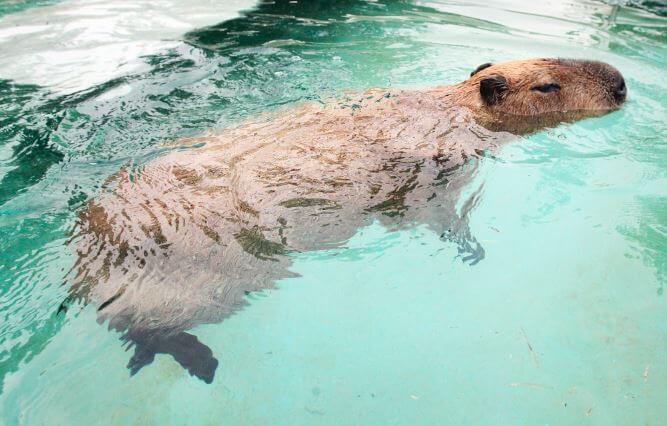
The absence of a body of water will lead to illness, bad mood and a shortened lifespan of the rodent.
Despite its size, the animal moves very quickly and agilely. It's essential to ensure it has a good fence, otherwise it will escape sooner or later. Its instinct requires a large area—one with both a large sunny and shady patch.
What does the animal eat?
The animal requires a lawn or a large field to feed. In addition to grass, the diet should include fruits, vegetables, grains, and hay to maintain a balance of vitamins and minerals. Furthermore, the rodent must constantly wear down its teeth by chewing on large quantities of sticks and twigs.
Hygiene and care
The animal is extremely clean, dislikes dirt, and spends most of its time in water. They enjoy affection and respond well to brushing and combing. Furthermore, the average specimen loves to run; there's no need to confine it to a cage or restrict its movement to a small area.
For hygiene, you can use products designed for small dogs. Essentials include coat cleansers and shine removers, eye and ear cleaning swabs, breath fresheners, and special toothbrushes.
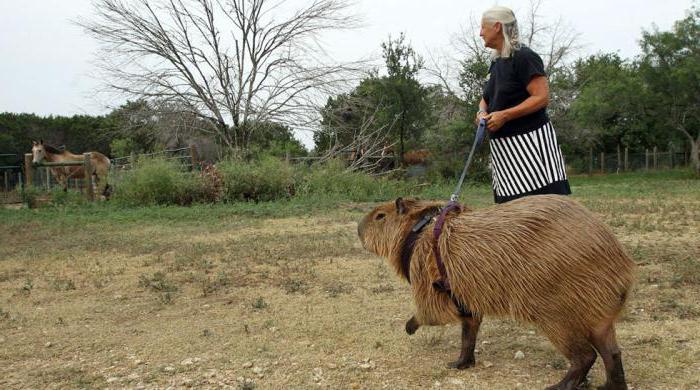
Thanks to their calm nature, the animals quickly get used to being walked on a leash, although in moments of danger to their life they can bark loudly.
The rodent itself does not pose a danger: its main behavior pattern is escape; it can only attack if its young are threatened or if it is cornered.
Breeding
The Catholic Church has recognized capybaras as an acceptable substitute for beef and pork during Lent, making their meat especially popular during the 40-day period leading up to Easter. To reduce poaching and the spread of spotted fever from contact with wild animals, capybaras are bred on special farms in most Latin American countries. Due to their unique character, these rodents have been relatively easy to domesticate.
The disadvantages include a much lower return compared to traditional breeding species (cows, pigs) and the possible transmission of diseases to other species.
In general, the animals have no significant value for breeding, and farms exist only because of the widespread inability of religious Latin Americans to eat their usual meat for a month and a half.
Interesting facts
The largest rodents have their own interesting characteristics. These include the following:
- About 300 years ago, the Catholic Church recognized the animal as a fish due to its aquatic habits. Since then, its meat has been highly prized during Lent.
- In case of danger, the animal can hold its breath underwater for five minutes.
- Capybara babies are the most independent of all rodents: they can see from birth and can chew solid food as early as four days old.
- Females do not see the difference between their own and other people's cubs.
- Animal fat is used in pharmaceuticals.
- One adult requires about 3500 grams of grass per day.
Thanks to their docile nature, trusting nature, and easy taming, capybaras are a great pet. They get along well with other animals and can be trained to perform certain tricks. They are not picky eaters, and a small pond or pool is essential for their comfortable living.