We all know: if you neglect your kitchen's cleanliness, you're bound to get "guests." But how unpleasant and frustrating it is when a tiny pest suddenly appears in a sparklingly clean room and settles in for the long haul. Why do bugs attack our cozy homes? How can we combat this scourge?
Content
What are kitchen pests?
At first glance, kitchen bugs all look the same. However, there are several different types, depending on their color and habitat:
- Bread beetles are one of the most voracious beetles, their body with hairs has a brown tint, and their size reaches 4 mm;
- large mealworms are large beetles, an adult reaches 12–18 mm, the body is black-brown and slightly shiny;
- small mealworms are small beetles with a reddish tint and short antennae, 3 mm in size;
- Red flour beetles are small, coleopterous insects, ranging from red to brown in color, with long antennae, approximately up to 2 mm;
- Surinamese flour beetles are small, black-brown beetles with a long, matte body, reaching 1.8–3.5 mm;
- Short-whiskered flour beetles are the smallest of the flour beetle order, have a yellowish color with a rusty tint, and are 1.5–2.4 mm in size;
- The granary weevil is a dark-brown beetle with underdeveloped wings, up to 4 mm in length, a distinctive feature being the elongated front part of the head with an elongated proboscis;
- grain beetles are insects ranging in size from 1 to 22 mm, have a black body with spots on the back and elytra, but the antennae, legs or other parts of the body may be lighter in color, often yellowish;
- Food moths are white beetles; unlike other species, it is not the adults that cause damage, but rather the larvae, which have a dark head and are up to 1 cm long.
Photo gallery: Types of bugs that can infest your kitchen
-
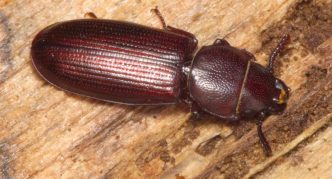
- The bread beetle lives on shelves and windowsills, in cabinets and on the floor.
-
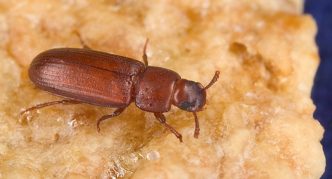
- Foods damaged by mealworms become lumpy in appearance.
-
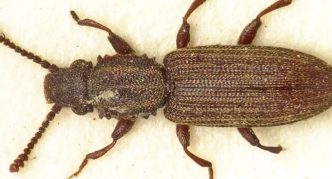
- The flour beetle can pretend to be dead in sunlight.
-
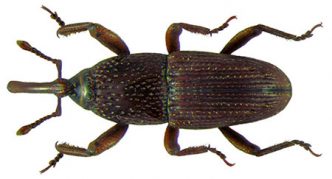
- The egg, larva and pupa of the weevil are constantly inside the sealed grain; only the adult individual emerges.
-
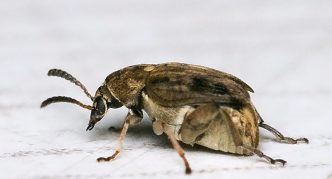
- The passages that appear in the beans are a signal of the appearance of a grain beetle.
-
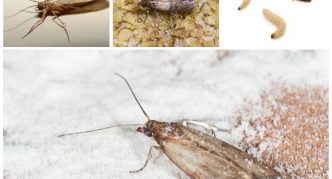
- The ideal environment for the reproduction of food moths is high humidity and poor ventilation.
Favorite habitat of insects
As their name suggests, flour beetles are very fond of flour. However, they also enjoy cereals, so these bugs are found in all types of grains: rice, wheat, buckwheat, and semolina. The most common "guest" in the kitchen is the Surinamese flour beetle, which also enjoys dried fruits, cookies, crackers, and beans.
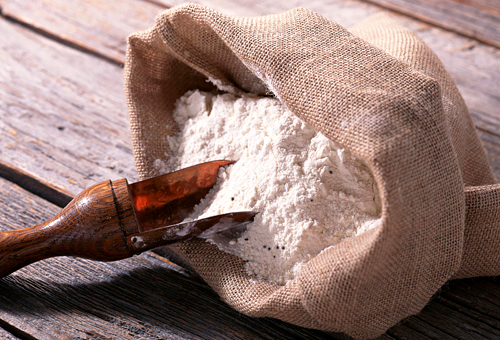
Flour is a favorite delicacy of both flour beetles and mealworms.
Bread beetles feed on flour products, pretzels, crackers, and wood. Therefore, in addition to food, they love kitchen cabinets and book pages. They also infest cereals, feed, coffee, tea, and tobacco.
Mealworms enter homes with flour or starch, then crawl through cracks into other food containers. These weevils prefer grains of rice, wheat, rye, and barley, and rarely corn and buckwheat. They are also found in pasta and flour. Despite their name, mealworms attack legumes such as beans, chickpeas, and peas, rather than grains. Food moths most often infest cereals.
Damage caused by bugs and the danger to human health
Having taken up residence in the kitchen, these "new residents" begin to leave their mark and breed in the most unpredictable places. They live in swarms and possess tremendous resilience, allowing damage to be inflicted very quickly. Besides the obvious—spoiled food—we can expect damage to rotted flour sifters, packaging and storage containers, kitchen cabinets, and even cookbooks (which are often stored in the kitchen).
Eating food contaminated with bugs can cause stomach upset, severe allergic reactions, and poisoning.
Caution! Food products are considered infested with larvae and unfit for consumption if even one pest is detected.
Reasons why insects appear in the kitchen
Bugs can choose the kitchen for various reasons, and not always dependent on the housewife's care, namely:
- violation of storage conditions and expiration dates of food products;
- bulk products purchased in bulk;
- poor quality grain processing in production;
- failure to comply with sanitary standards for storage and packaging of goods at enterprises;
- increased humidity levels in food storage areas.
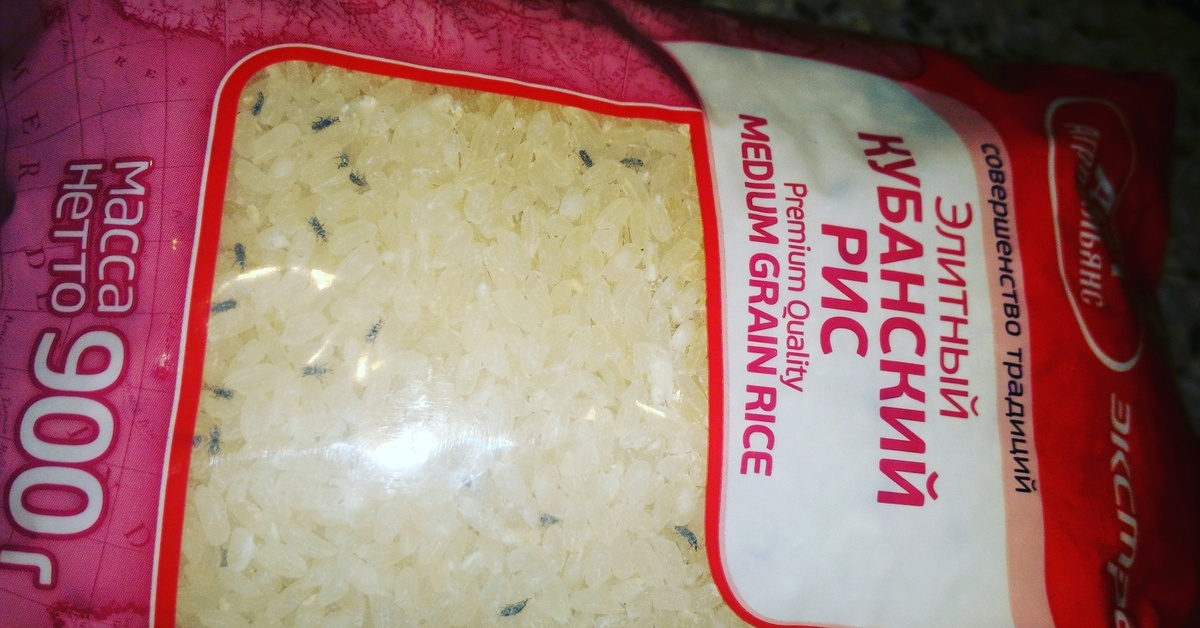
You can't trust packaged cereals unconditionally.
Sealed food packaging is no guarantee that the contents are bug-free—they can get inside directly from factories and plants.
Methods for preventing bugs in the kitchen
A few simple rules will help prevent the possibility of "unwanted neighbors" appearing on your property:
- When purchasing bulk products, you must carefully inspect the packaging for leaks and the presence of parasites inside;
- Before placing in a storage container, it is advisable to sort through cereals, especially those purchased in bulk, to ensure there are no bugs;
- adhere to the specified expiration dates, do not make huge stocks for a year in advance, it is advisable to use up products within 2-3 months;
- Store cereals in individual airtight containers, preferably glass - they are impossible to chew through, allow light to pass through, protect from moisture, and are easy to clean;

Glass containers with airtight lids are not only a reliable protector for your supplies, but also an additional decoration for your interior.
- Do not store dried fruits in the open; the best option is a refrigerator shelf;
- Conduct periodic inspection of supplies for the presence of insects;
- Keep the kitchen area clean, dry and regularly ventilated to avoid the accumulation of moisture and dirt and prevent the development of a favorable environment for the reproduction of beetles;
- wash cabinets and food storage containers at least once a month;
- Remember that the aroma of garlic, bay leaves, and nutmeg is the enemy of pests.

If small insects appear again, you need to check other rooms in the apartment and repeat the preventative procedures.
Home Pest Control Methods
Getting rid of insects that have taken up residence in your home is not easy, so be prepared for a tough fight.
The main methods of eliminating “uninvited guests” can be divided into the following groups:
- mechanical impact;
- chemicals;
- folk remedies.
Mechanical impact
Before carrying out procedures of this nature, it is first necessary to get rid of contaminated products so that they do not harm your health. Containers and storage areas should be thoroughly washed with soapy water (dishes) or vinegar solution (cabinets, shelves).
The fight against bugs involves a whole range of measures
It's also a good idea to seal all cracks in baseboards, windowsills, and furniture. Any remaining food items untouched by pests should be packaged and placed outside the kitchen for 1-2 weeks. If no bugs appear, you can use them.
When the bugs are minimal and quickly detected, you can try to save the remaining grain by heat treatment:
- heat the product in the oven at a temperature of 50 OC (for semolina and flour) or 100–120 OC (for other grains) at least 10 minutes;
- expose cereals to low temperatures (-15 OC) within 24 hours;
- Treat with ultraviolet light by placing it in the sun for several hours.
Before processing, grain products must be sorted or sifted through a sieve, and then, before consumption, soaked in salt water and rinsed.
Chemicals
It is advisable to use chemicals to kill insects only in extreme cases, when other remedies (including folk remedies) are unable to solve the problem.
The most harmless remedy that can be purchased at any pharmacy is pyrethrum powder. It's sprinkled on food storage areas. It's completely non-toxic to animals and humans (even if accidentally ingested), but it's poisonous to crawling insects.
You can clean the cabinets with a Domestos solution or another chlorine-containing solution. It's advisable to repeat this procedure several times, as a single use of this "weapon" for beetle control is not very effective.

Whether to choose chemicals over folk remedies is up to each individual to decide.
"Antizhuk" is an impregnation used to protect wooden surfaces from woodworm. It is dangerous to humans if it comes into contact with eyes or skin.
Products from the manufacturer "Lovin Fire Protection" are designed for wood treatment, but they also poison flour beetles. Neither humans nor pets should inhale them.
Rogneda products will get rid of not only bugs but also cockroaches and ants. When using them, wear personal protective equipment.
Caution! All of the chemicals listed are highly toxic and must be used strictly according to the instructions provided.
It should be noted that chemical control methods are not always the most effective. It is not recommended to treat surfaces that come into contact with food and feed with these preparations, as they can also have a number of side effects.
Folk remedies
To get rid of pests, sometimes it is enough to have the following ingredients on hand:
- vinegar;
- bay leaf;
- nutmeg;
- garlic;
- lavender;
- sagebrush;
- borax.

Strong fragrances are our main weapon
You can prepare special bait traps for bugs. On shelves or in cabinets, you need to sprinkle nutmeg on adhesive tape, put peeled garlic cloves, bay leaf, or add these spices to containers for flour and cereals, after wrapping them in gauzeAnother trap is made using sugar, borax, and dry yeast, mixed in equal parts. The resulting mixture should be spread on pieces of paper in cabinets to lure the bugs out of hiding.
It's believed that these little pests can't stand the smell of metal. Placing a nail, wire, or even just a piece of foil in a jar of cereal will help repel these pesky "visitors."
Caution! Metal corrosion spoils food, so do not use any rusty or damp metal objects.
You can clean food storage areas with a vinegar solution. Dried lavender or wormwood sprigs or essential oils are excellent pantry moth repellents.
Video: Tips for storing and protecting grains from insects
Reviews from housewives
Throw it away without a second thought. I read a long time ago that you should add a head of garlic to uncovered flour, and I've been following this advice for years. To answer any potential questions, flour doesn't smell like garlic.
If they've appeared, throw them out. Wash the cabinets and wipe them down with a cloth soaked in vinegar. Store dry foods in tightly sealed, dry glass jars and add a clove of garlic. I always roast grains in the oven, then sift them through a fine sieve and store them in the same jars.
A basic measure to prevent midges from “occupying” your kitchen is wet cleaning with soap.
I had them too; they flew around the kitchen, laying eggs in all the grains. The only solution was to throw out all the grains, tea leaves, and spices and buy glass jars with airtight lids. Wash everything, at least with soapy water... After that, they'll disappear for sure. I even had them in my parrot food, so I had to use an airtight jar, too.
It's a saying that forewarned is forearmed. Therefore, the key to preventing pests in the kitchen is a comprehensive preventative program that will allow you to forget about the problem forever. If, however, the problem persists after these measures, it's worth considering a range of mechanical, chemical, and folk remedies to get rid of these small, unpleasant "neighbors."