The presence of insects in the kitchen is a problem for homemakers. It's necessary to seal all food containers tightly, but even the most meticulous inspection can still allow ants to get in. They can also be found in grain jars, bread containers, and other places. Ants consume not only regular food but also the remains of other insects, fabrics, and even the insulation in electrical appliances. Is there a way to get rid of these pesky "neighbors" once and for all?
Content
Ants in the Kitchen: Causes and Habitats
A large number of ants is the key factor in their appearance in an apartment. If they aren't dealt with immediately, you'll soon see hordes of these tiny pests, which often move in groups. They can be found on tables, in cabinets, drawers, and even in trash bags. The situation is aggravated by the fact that they are carriers of infections and diseases.
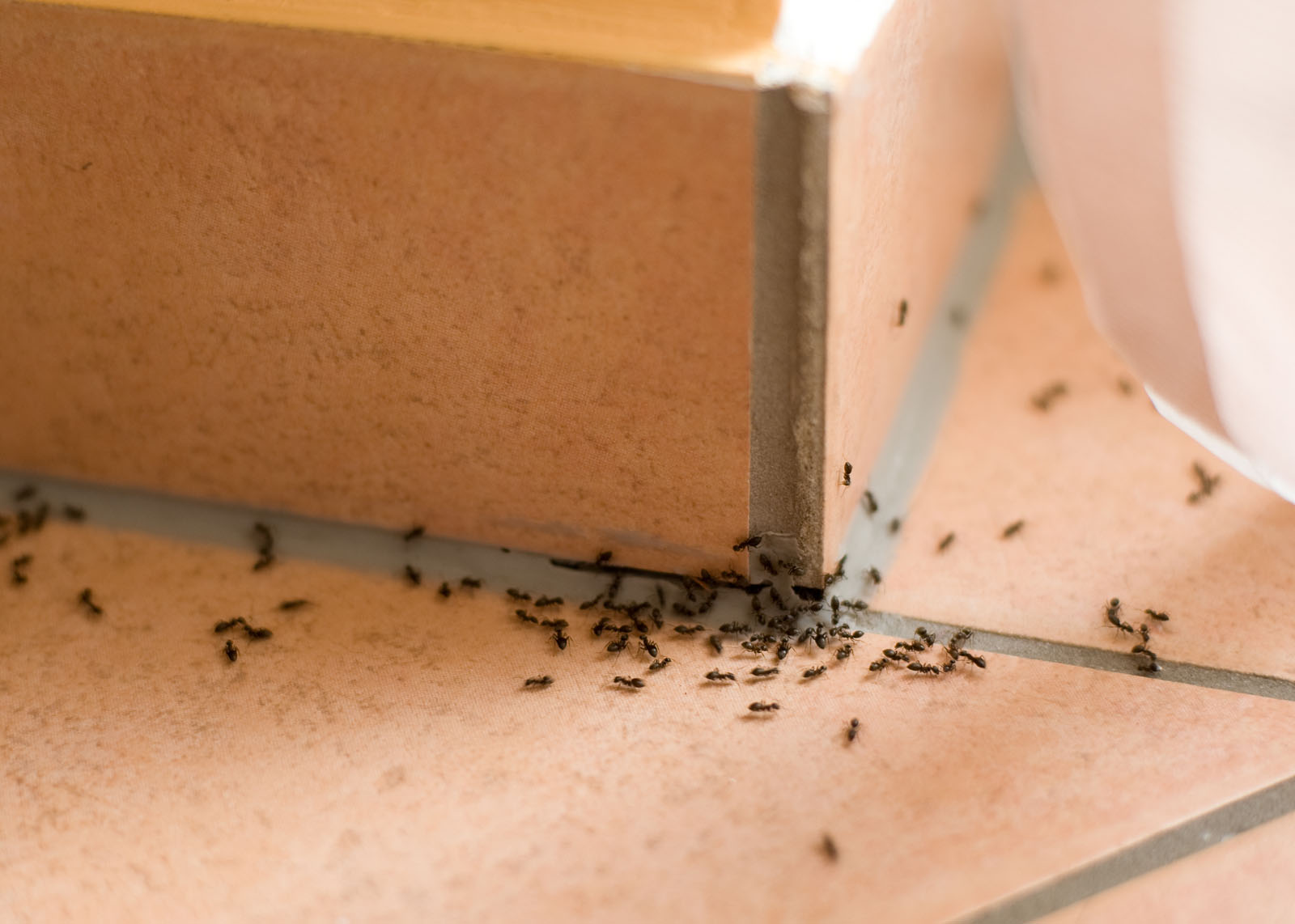
Ants reproduce quickly and are cunning: begin an active fight against them immediately.
Traces of these insects are often seen in the cracks between wallpaper in the kitchen. This is likely where they've found a passage and are heading to their nest. Worker ants typically feed the female ant, who remains in her "home" and actively reproduces. When arriving in a new home, these insects first search for food. The kitchen is the part of the apartment most favored by ants. They nest near sweet foods.
Ants enter ordinary apartment buildings from the street. They first infest basements in search of warmth, then climb up garbage chutes to the floors and end up in stairwells and apartments. They can also enter kitchens through joints in wall panels or through ventilation openings.
These insects will stay in those rooms where they can live safely, camouflage their nest and feed regularly. They are especially attracted to open garbage bags, vases of sweets, and pet food.
There are other reasons for the appearance of ants in an apartment:
- Inspection. For this purpose, scout ants enter the apartment: they select a place to live and see if they can build a nest unnoticed. Once they find a suitable area, they signal their colony, causing everyone to move there.
- Relocation from neighbors. Ants migrate from one apartment to another through ventilation systems and cracks in the ceilings.
- Accidental appearance. During breeding season, females grow wings, so they can simply fly into an apartment through an open window.
Note: Ants also linger in the bathroom. Scented shower gels and organic scrubs are particularly attractive. Furthermore, the bathroom is typically very humid.
In winter, ants move to warmer areas, which is why uninvited guests are most often spotted in November and December, when the streets and basements become colder. They prefer constant heat sources in city apartments and close access to food.
The small size of the insect's body helps it survive. Ants penetrate through small cracks into any room and feel like their rightful owners, endlessly moving from one place to another in search of food.
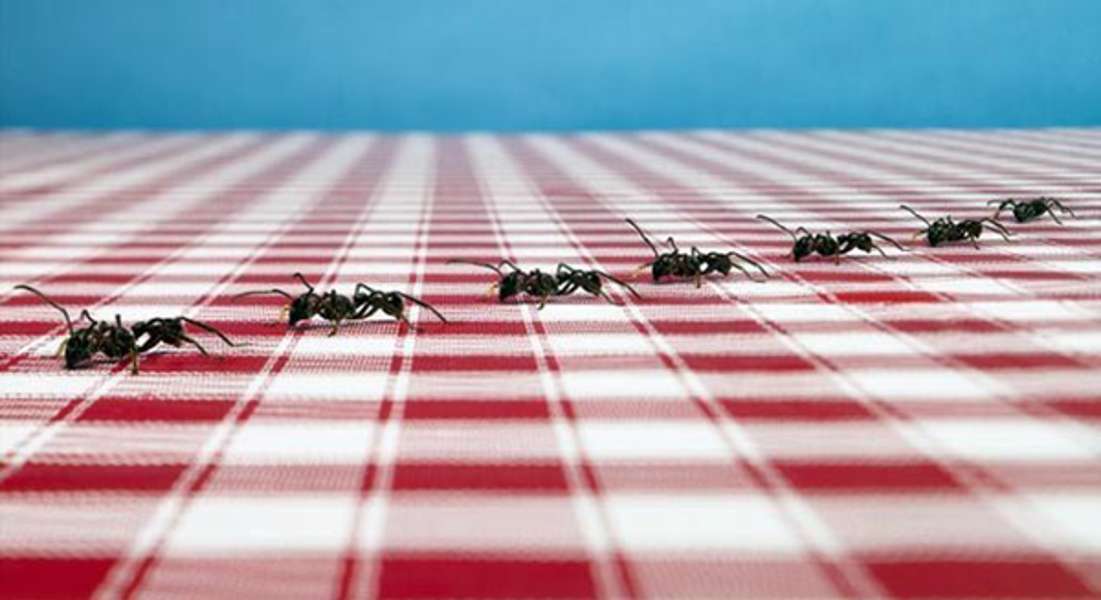
Ant colonies usually feed a fertile female: a well-planned poisoning plan will kill her too
Insect repellents
To get rid of ants, people use both natural remedies and chemicals, as well as traps. It's best to combine several methods to prevent the insects from lingering in your kitchen for long.
Chemicals
When using chemical ant control products, take precautions. Read the instructions carefully and place bait and traps out of the reach of children, cats, and dogs. Ants will ignore the poisonous substance if they have easy access to regular food, crumbs, candy in vases, etc.
Let's consider the most well-known chemical agents based on their effectiveness, production methods and use.
Gels and pastes
The main advantage of insect repellents is their ease of use. The product is applied spot-on throughout the kitchen, avoiding baseboards, wallpaper joints, and other areas where ants frequent. Gels and pastes are considered more effective than aerosols. After ingesting this chemical, ants will distribute it among their fellow ants and bring it back to the queen in the nest. This can kill an entire population of insects in a relatively short time. Gels don't kill them immediately: it takes 2–3 weeks to notice a significant reduction in the number of individuals.
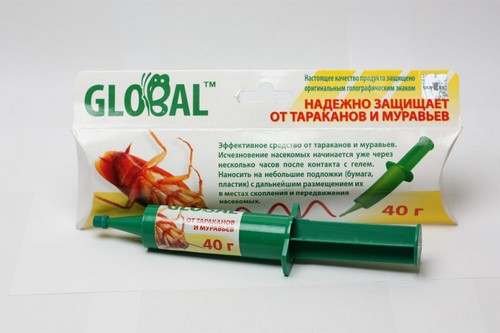
Just one drop of Global gel will be enough to destroy about 500 individuals.
The product often comes in a syringe, making it easy to apply and keeping your hands clean. Once you notice the ants have completely disappeared from your kitchen, remove any drops of the product with a damp cloth.
It's important to remember. Any gels can be harmful if ingested. Keep them out of reach of children and pets.
Let's list popular products that are available in this form:
- Global (Globol). An effective gel made in Germany that can kill ants en masse.
- Domovoy Proshka. This product comes with a syringe that allows you to measure out the required amount of substance for application. It's affordable.
- Dohloks. A viscous, oil-based gel that virtually never dries, making it highly effective. It's readily available at specialty stores at a low price.
- Deta. A product based on diethyltoluamide (DEET). This substance was developed in the United States in the 1940s as a means of controlling blood-sucking insects. Kitchen ants are also susceptible to its effects. Deta is available in various forms, but a sweet-smelling paste is more convenient for use in the kitchen. It is smeared on ant trails to repel them. Care should be taken to prevent small children and pets from licking this product, as poisoning is inevitable. Products such as Angara and Taiga are based on DEET and are also used in the kitchen to repel insects.
- FAC gel, effective for use in apartments and private homes, helps get rid of all types of ants.
- Raptor. An effective product for kitchen use. The aerosol version under this brand is less effective.
- Rubit. This gel comes in a tube and is easy to use: spray it around the perimeter of your kitchen (preferably higher up, not near the floor, to keep pets out of reach). Each drop is applied 30 cm apart. After consuming this bait, the ants die within 20 minutes, already in their nest, along with the rest of the colony.
- Absolut is a gel containing 0.5% chlorpyrifos. Place bait at a rate of 1 per 3 square meters. The effect will be noticeable within a couple of days, with complete eradication occurring within three weeks.
Video: How to kill red ants
Aerosols and sprays
In hard-to-reach places, aerosols and sprays have no equal. They are suitable for treating vertical surfaces where loose baits cannot be used, and gels and pastes do not adhere well. However, aerosols and sprays are highly toxic and less effective. These products belong to toxicity class II, so it is best to use them away from children and pets. A kitchen treated with such a product should be vacated immediately and sealed tightly. After this procedure, the room should be ventilated.
The most famous aerosols and sprays:
- Raptor. Insects die within two or three days. It's available in a ready-to-use canister.
- Raid. Kills ants and their larvae, and is economical in use.
- Combat. Contains the slow-acting poison imiprothrin. Insects carrying particles of the substance are transported back to the female ant's nest, poisoning her and other ants. The sprays have a fruity scent but are toxic. Kitchens should only be treated with open windows, food removed, and away from children and pets. Combat also kills red kitchen ant larvae.
Photo gallery: popular drugs
-
- Combat is a highly targeted, potent product designed to kill crawling insects.
-
- The drug Raid provides protection for up to 4 weeks
-
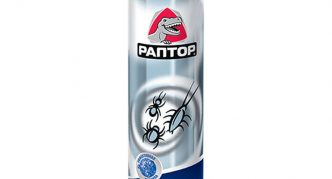
- Raptor aerosol guarantees instant effect and long-lasting action
Products containing boric acid
Ordinary boric acid can also kill ants. A mixture of this substance and granulated sugar should be scattered in places inaccessible to children and pets: under kitchen cabinets, behind the refrigerator. If you're making liquid bait, use 5 grams of boric acid, 50 grams of sugar (honey, jam, or syrup can be used instead), and the same amount of water. Pour the mixture into saucers and place them along the ant trails. After gorging themselves on the mixture, the ants manage to carry the treat to the female, thereby destroying the nest themselves. Boric acid-based traps are also available on the market.
Other chemicals
Powders, chalks and microcapsules are also worthy of your attention. They are quite easy to use and are inexpensive. The most popular remedies are:
- Mashenka Chalk. It consists of 90% chalk and gypsum, with the remaining 10% being insecticides. This time-tested remedy is effective not only against cockroaches but also against ants. The chalk is used to outline the walls and floor around the kitchen perimeter, along with ant trails. This form is the safest, but it's best to keep children and pets out of the kitchen before applying it. Wear rubber gloves when applying the chalk. Wash your hands thoroughly afterwards, even if you didn't directly touch the chalk.
- Anti-ant powder. Contains 10% borax. Open the packets and keep them out of reach of children and animals in the kitchen. Do not allow the powder to become wet, as this will cause it to lose its effectiveness. Ants that consume the powder die within a few days.
- GET microcapsules (not to be confused with Gett, a product no longer produced) contain chlorpyrifos (a broad-spectrum insecticide). The product itself is available in capsule form and, according to its manufacturers, is safe for humans and pets. However, the active ingredient, chlorpyrifos, is considered poisonous: if it comes into contact with skin or mucous membranes of the eyes, rinse the affected area immediately with water. For intestinal poisoning, it is recommended to drink several glasses of a 2% solution of water and soda. GET microcapsules are mixed with hard-boiled egg yolks. The ants gorge themselves on the treat and carry it back to their nests, thereby infecting the female and the entire colony. The drug is absorbed through the respiratory tract, blocking the nervous system.
Photo Gallery: Ant Repellent Powders, Chalks, and Microcapsules
-
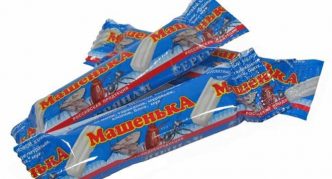
- Mashenka Chalk is an insecticidal product that quickly and reliably gets rid of ants.
-
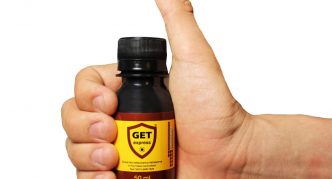
- GET microcapsules have a broad spectrum of action, destroying many crawling insects, including ants.
-
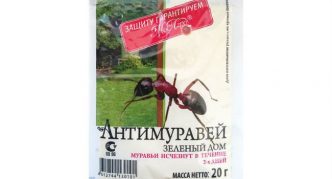
- Anti-ant powder can get rid of insects in just 2 days
Barrier traps
You can protect yourself and your kitchen from insect attacks by installing barrier traps. They are placed near ant trails and in areas where ants are likely to appear and live.
The classic trap is a plastic container with several entrances and exits. Once inside, worker ants feast on the bait and carry it back to their nestmates and the queen. Within 24 hours, the insects become infected: the ant colony suffers a significant blow. Many traps are designed to be easy to attach to both horizontal and vertical surfaces (for example, on walls, near baseboards and edges of linoleum, ventilation shafts, and other places).
The kitchen uses appliances from the following brands:
- Combat-Superattack (with active ingredient hydramethylnon);
- Deadex (with patented substance DX);
- Dohloks (based on fipronil).
It is impossible to say with certainty that traps will help achieve the complete extermination of an ant colony - everything depends on its size.
Folk remedies
If the ant population isn't critically large, you can begin getting rid of them using folk remedies that are completely safe for humans. Precautions should only be taken when dealing with animals. This method is effective in repelling insects.
It's important to remember: If there are a lot of ants, folk remedies won't completely rid your kitchen of their presence.
These kitchen insects can be repelled with certain plants and essential oils. For example, they dislike the smell of garlic, orange peel, and parsley. Clove, anise, mint, and bay leaf essential oils are also suitable. When using any folk remedy, make sure that family members are not allergic to such substances. Ants also dislike turmeric, petroleum jelly, starch, charcoal powder, chalk, and black pepper—repellent mixtures can be made using these ingredients. If you keep only these ingredients available to insects for two weeks, they will realize that there is nothing to eat in your kitchen and will leave the premises.
Other folk remedies are also suitable for getting rid of ants:
- Old lard is useful in the fight against red kitchen ants: it is used to lubricate the corners of the room, passages, and the floor around the perimeter.
- A bait made from yeast and honey has a detrimental effect on insects.
- Starch and coffee grounds cause the ants' stomachs to expand, which then kills them. Using semolina and cornmeal produces a similar effect.
Ants have a sweet tooth. Prepare deadly baits for them. Mix syrups and jams with substances harmful to insects: yeast, starch, coffee grounds, etc.
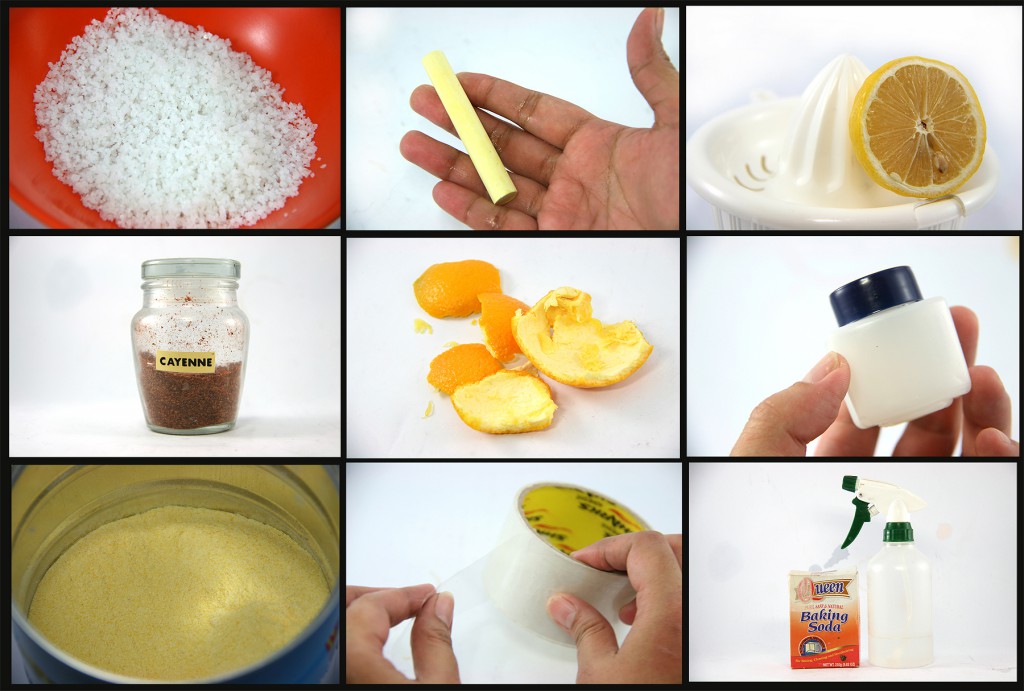
If there are few insects in the kitchen, folk remedies that are absolutely safe for humans are your choice.
Video: Getting Rid of Insects with Corn Flour
Preventing ants from appearing
The main factor preventing insect infestations is cleanliness in the home and kitchen. When fighting ants, the first step is to maintain order: if they have nothing to eat, they will retreat to other apartments until they find a culinary and warm haven for themselves and their colony. The following measures can prevent these insects from appearing in the kitchen:
- Pay close attention to your kitchen trash can: keep its lid tightly closed to prevent ants from getting inside. Don't let trash spill out—it's best to throw away a partially filled trash bag.
- Keep your entire apartment, including your kitchen, tidy. Don't leave dirty dishes in the sink, wipe up excess moisture from countertops, prevent crumbs from accumulating on countertops and floors, and store grains in jars with tight-fitting lids.
- Treat hard-to-reach areas in the kitchen with silicone to prevent insects from entering the room.
- Set up barrier traps. Place them in areas where ants are likely to appear and congregate.
- Ventilate your kitchen regularly to prevent the air from becoming stale.
Reviews: How housewives solve the problem
You can get rid of ants with vinegar. Take a cloth, soak it thoroughly in undiluted vinegar, and wipe down the areas where ants are most often found, including their paths. You should also wipe down the windowsill, baseboards, and the kitchen counter itself. It's crucial to leave the vinegar on for a while afterward. The kitchen will smell unpleasant, but it's bearable for a couple of days. Ants absolutely hate the smell of vinegar.
I'd like to recommend an effective remedy for garden and house ants—Great Warrior gel. The entire wall next to the refrigerator was covered in them. The ants kept increasing in number each day, until a local hardware store recommended this product. We applied the gel according to the instructions, and within a few days, the ants were gone.
I know an effective remedy that will help get rid of ants and cockroaches. Boil several eggs and remove the yolks. Grind the yolks with boric acid and spread them in areas where ants congregate. And that's it, you can forget about these uninvited inhabitants.
The Clean House gel for garden and house ants and cockroaches (universal formula) truly does quickly and effectively combat these insects in the home. I say this with complete confidence, as I tried it myself—on ants that had appeared out of nowhere in our kitchen and were scurrying around as if they belonged there. About an hour after applying the gel, the insects simply disappeared, and everyone in our house breathed a sigh of relief. The next day, however, a group of ants returned, but the gel again proved its mettle. Now, for good! That's the story.
Place a piece of charcoal where ants frequent, and they'll flee. You can also sprinkle a strong-smelling powder, such as naphthalene or camphor. Ants are also repelled by the scent of tomato leaves.
Ants are cunning: they will reject bait if they perceive it as dangerous. If one control method doesn't work, try another. Keep in mind that adult ants prefer liquids, while small ants (larvae) eat solid food. If none of the above methods work, call the sanitary and epidemiological service. Remember: ignoring the problem will lead to more serious consequences. Also, don't forget about measures to prevent ants from appearing in your home.