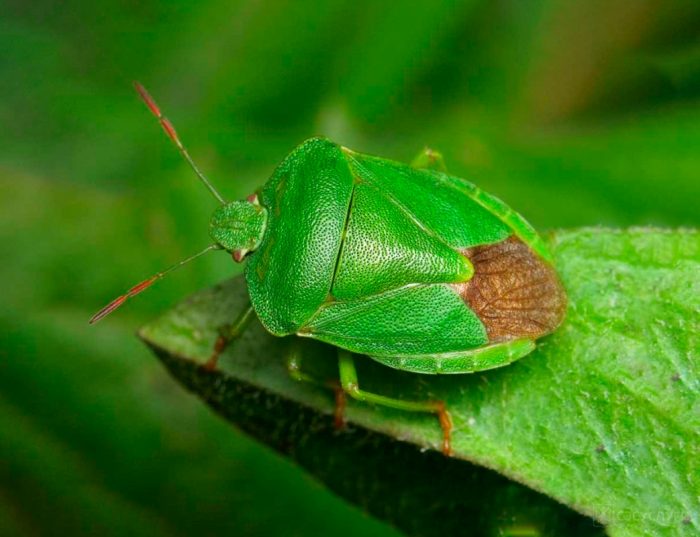
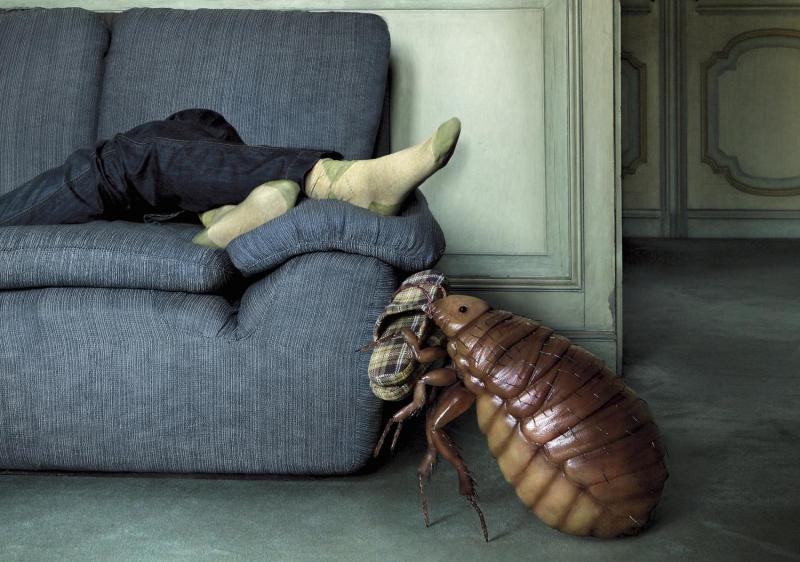
There are approximately forty thousand species of bedbugs. People encounter them everywhere: in the countryside, in the city, and, unfortunately, even at home. Some bedbugs live in grass, others burrow in the ground, and still others prefer bodies of water. What kinds of aquatic bedbugs are there, and are they dangerous to humans?
Types of water bugs
Water bugs most often inhabit stagnant or slowly moving water. They inhabit, to one degree or another, all existing climate zones. Nature created them to regulate the population of smaller insects. They are prey for fish and birds.
The following types are distinguished:
- water striders;
- smoothies;
- rowers;
- water scorpions;
- belostoma.
Generally, this species of insect is considered harmless to humans. However, if disturbed, they can bite. Let's take a closer look at these insects to understand their potential enemies.
Water striders - gliding on water
Water striders are small (up to one centimeter) elongated bugs. They live in lakes, rivers, and even puddles. These insects do not drown. They move by gliding across the surface of the water, and some can fly. They also jump over plants. Water striders have three pairs of legs: the front pair is used for capturing food and controlling their speed. The middle pair is used for walking. The hind legs help determine direction and turns, and are also used for jumping.
Water striders have good vision and transmit information by means of vibrations of the water surface.
They feed on larvae and small invertebrates. Large individuals lay eggs on plant leaves throughout the summer, arranging them in a single row using a mucous substance. The clutch sometimes resembles a cord, containing up to 50 eggs. With the onset of cold weather, they move under bark, stumps, and moss.
Smooth bugs - chirping bugs
Smooth bugs are small bugs, up to one and a half centimeters long. Their bodies resemble boats. Their coloring makes them invisible to fish. They prefer to inhabit still waters, moving through the water with their abdomen up to more easily capture prey. Smooth bugs, like water striders, have three pairs of legs. The hind legs help them quickly overcome obstacles. They can fly in search of food. Birds often miss this insect because from a flying height, it resembles a plant. Smooth bugs feed on other insects and even young fish: they inject digestive juices into their prey and then suck out the insides. They cannot remain in water for long periods; they need air. And it is at this point that they can be eaten. They lay eggs in plant tissue. When escaping danger, they can dive to depths and stay there for about 7–8 minutes. In winter they live under the bark, in the forest litter.
Greblyaki are active at any time of the year
River trout are small to medium-sized bugs (from seven millimeters to two centimeters) that inhabit shallow waters and reed-filled ponds. They live in schools. They hunt invertebrates and larvae; some species are herbivorous. They can fly.
Rowing fish are active in winter, so they are often caught when fishing in ice holes.
Water scorpions - tail-breathing
Water scorpions are medium-sized bugs (2.5 to 4.5 centimeters) that prefer to live in stagnant waters and weedy ponds, as they are poor swimmers and move slowly. Their grasping legs at the front and elongated breathing tube at the back make these insects resemble scorpions, and due to their immobility, they are often mistaken for fallen leaves. They can remain underwater for up to 30 minutes. Upon spotting a prey, they pounce with a sharp leap, grabbing it with their front "pincers," and sucking out its entrails. The bite of a water scorpion is painful. In the spring, they lay large eggs with thorn-like breathing tubes inside plants and other organic matter. They overwinter in autumn leaves, moss, under bark, etc.
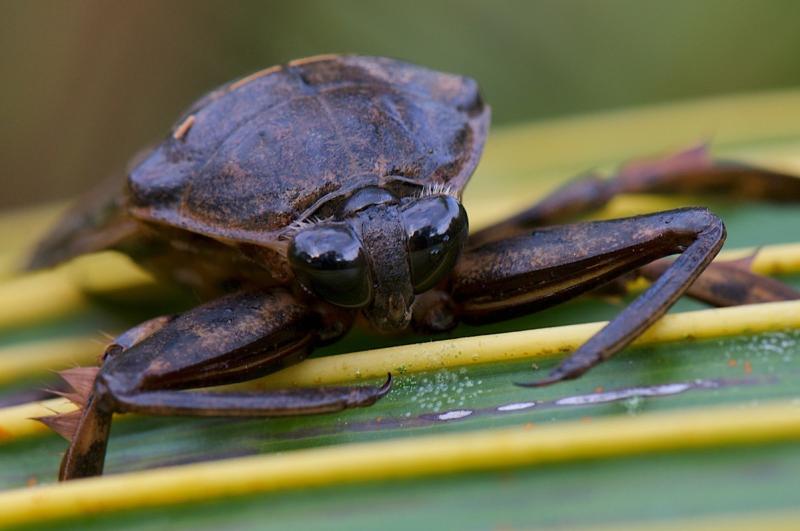
Belostomas are giant bugs.
Belostomas reach up to seventeen centimeters in size. Their forelimbs resemble scorpion claws. They are found in the tropics and in temperate climates. They can hunt fish, frogs, snakes and even turtles.
The saliva of the Belostoma contains a poisonous substance that immobilizes the victim.
Sensing danger, they pretend to be dead, emitting an unpleasant odor. In Asia, belostoma are a delicacy. They taste like fried shrimp.
Photo Gallery: What Water Bugs Look Like
-
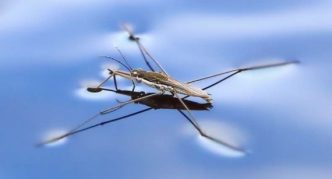
- The water strider glides through the water at incredible speed.
-
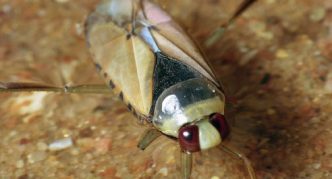
- When in danger, the smooth-tailed bat pretends to be dead or releases a substance with an unpleasant odor.
-
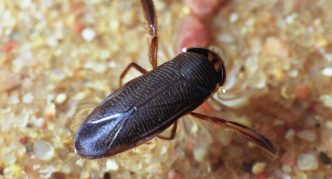
- The grubs make sounds similar to grasshoppers.
-
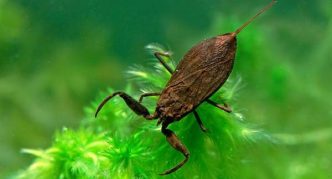
- Water scorpions grab their prey with their front pair of legs, which have pincers on them.
-
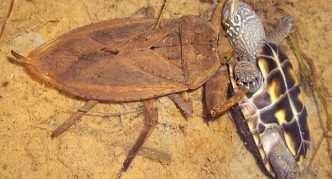
- Female belostoma lay eggs on the back of the male until there are about a hundred of them
Are bites dangerous?
If you accidentally brush against a bedbug while swimming, it may perceive this as a threat and be bitten. Water striders, smooth water striders, and water scaly-sided water striders are common in Russia, and only a smooth water strider bite can cause discomfort.
When an insect bites, it injects protein, so the wound takes a long time to heal.
The affected area will swell, become red, and itch. To speed up healing, you can treat it with brilliant green. Various mosquito bite ointments can help relieve the itching. The poison only causes painful sensations, but in fact does not cause any harm to a person. Water bug bites also do not transmit any infections.
The life of a water strider – video
Water bugs are insects that pose little danger to humans. A water bug bite is unlikely, harmless, and causes only minor discomfort.