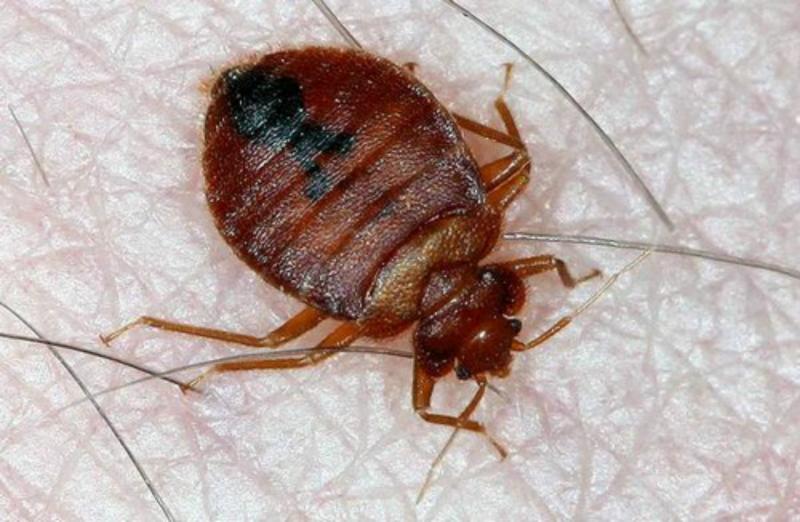
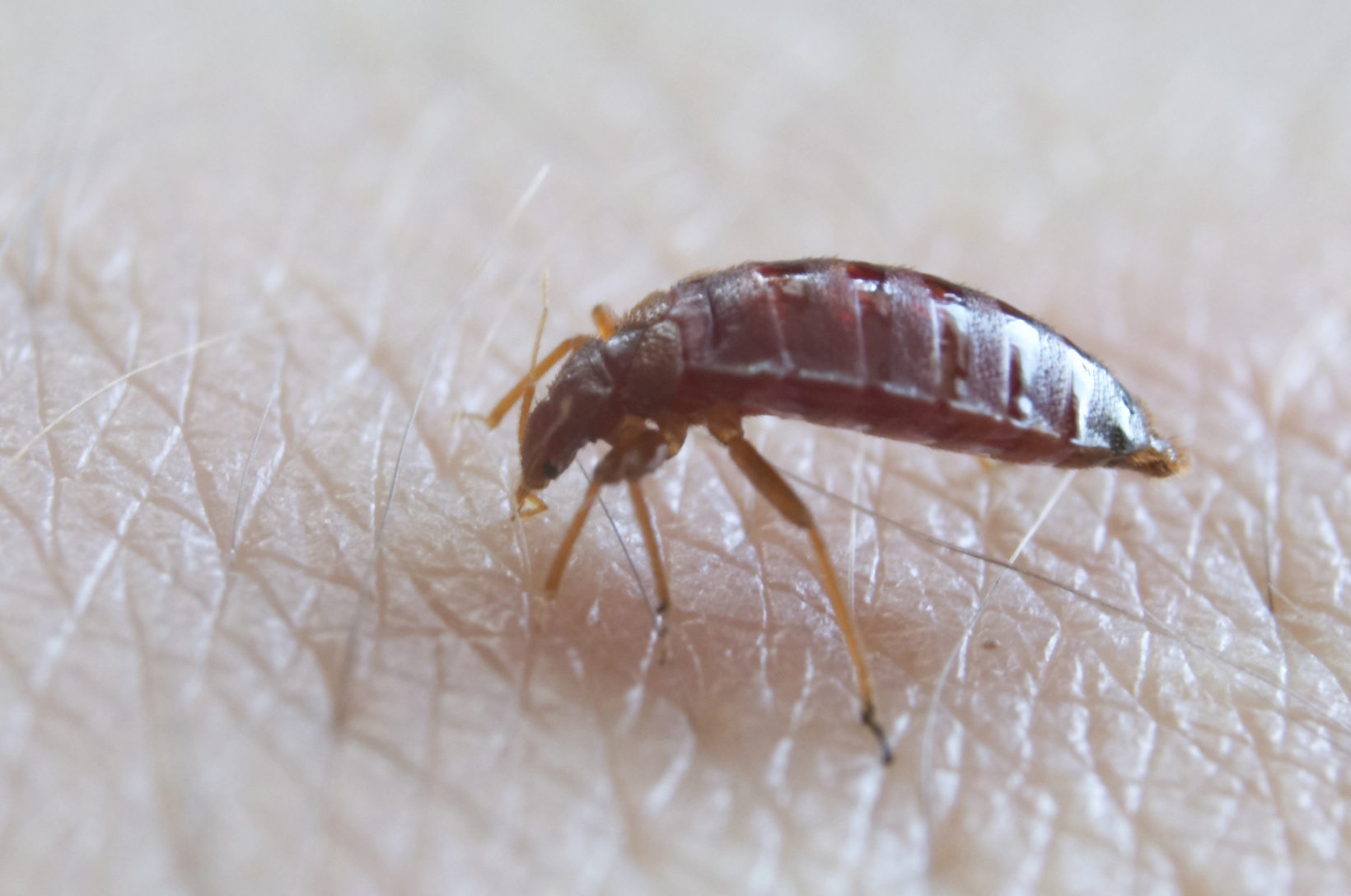
Many people think of bedbugs as a relic of some old, almost pre-revolutionary life, forever a thing of the past. However, this isn't the case, and recently, more and more people are complaining of bites from these parasites and wondering where they came from in their clean, cozy apartments. And if you think about it, where do they really come from?
Content
Where do bed bugs come from?
Once upon a time, probably even among your great-grandparents, it was commonly believed that lice and bedbugs were caused simply by dirt. And while there's a grain of truth to this—parasites are more common in cluttered, dirty spaces—they don't just appear out of nowhere. And there are many sources of bedbug infestations in your apartment.
You bring the bedbugs yourself
As outrageous as this statement may sound, it's true. Very often, you yourself—unwittingly, of course—become a convenient "transport" for bedbugs. Or not for the bedbugs themselves, but for their eggs and larvae, which makes no difference. How does this happen?
Purchases
Sometimes bedbugs come as a free bonus with any purchase. This "bonus" is most often found with furniture, especially those bought secondhand or at a market. However, new furniture from the store can also be a source of pests if the warehouses where it was stored were infested, which is quite common.
We had this (knock on wood) a year and a half ago, and it's creepy to think back... we bought it with the sofa... We called specialists and they gave us a three-month guarantee that it would disappear... And that's exactly what happened, we immediately threw the sofa out, and during that time (I was completely psychotic about it) I periodically poured boiling water and various poisons on it, whatever I could.
Bed bugs also often lay eggs inside household appliances, where they're hard to see. They can hide, for example, inside air conditioners, music and video players, and speakers. Folds in fabric are also a good hiding place for bed bugs, so be careful when purchasing bed linens, curtains, fabric, and even clothing.
I even saw a bedbug in a clothing store once!! In short, I'll remember that disgusting experience for the rest of my life)))
It is especially dangerous to buy such things at markets and flea markets – it is unknown where and how they were stored and what else might be hidden inside them.
Infected houses
Another proven way to bring bedbugs into your home is to visit a place where they're already present. Some hotels, motels, and hostels are guilty of insufficiently thorough disinfection of their premises. It's difficult to guarantee this, but generally, reputable hotels value their reputation and conduct pest control fairly regularly.
The whole world is swarming with bedbugs right now—Europe and America alike. We arrive at a 5-star hotel, and they're just like sweethearts.
But even large hotel chains have their share of problems. Meanwhile, small roadside motels suffer from parasites not just "sometimes," but very often.
Parcels
Bringing bedbugs from the post office is also possible. It doesn't really matter who you're receiving the package from—a friend or an online store. The sender may not even be aware that their apartment or warehouse is infested with bedbugs. This is especially true for fabrics, appliances, and furniture. Online clothing shopping has become increasingly popular, and receiving bedbug larvae as a "gift" is becoming increasingly common.
Trash heap
Some people, following an old Soviet habit, sometimes can't resist the temptation to bring home something useful from the trash. Indeed, discarded armchairs, sofas, stuffed toys, rugs, and chairs may look clean and safe. However, this is often only a façade—under the upholstery, they can be infested with bedbugs and other pests. Incidentally, furniture often ends up in the trash precisely because it's infested.
Bedbugs are brought in by neighbors
Even if your apartment is currently absolutely free of pests, that doesn't mean it's safe. After all, one of the most common ways bedbugs get into your apartment is from neighbors. Many pests, not just bedbugs, travel through several apartments on a floor or in a building; if one becomes infested, all neighbors are potentially at risk. How exactly they get to you depends on circumstances. For example, if you have good relationships with your neighbors and visit each other, you could either bring bedbugs and larvae yourself, or they could come to you during your friends' next visit. Even if you only asked a neighbor for help once, they could already be a source of pests in your apartment. Furthermore, bedbugs are quite capable of moving between apartments through the entrance hall, cracks in walls, doorframes, and windows, as well as through electrical outlets and ventilation systems. However, most often the neighbors from whom bedbugs come are dysfunctional families, alcoholics, and illegal hostels for migrant workers.
I have a problematic apartment on the third floor of the building where I'm registered. They've had a lot of them. My apartment is on the second floor—they didn't make it, but the neighbors down the hall had some.
Bedbugs come from the street
Just as they can come from neighbors, bedbugs can also enter your apartment from the street. After all, bedbugs once lived in the wild and only later adopted the habit of moving closer to humans in search of warmth and suitable food.
Basement and entrance
Bed bugs often nest in the basement—it's warm, dark, and humid, making it the perfect environment for these parasites. If the property management company doesn't call an exterminator promptly, the bed bugs can spread up the entire building.
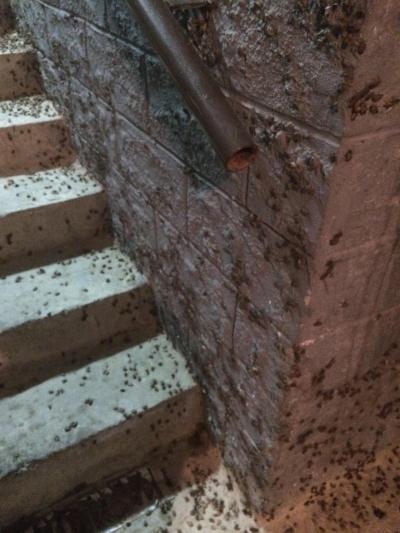
Bedbugs move freely along the stairs in the entrance hall
Naturally, the lower floors will be the first to suffer. Even if you're extremely vigilant and not a single bedbug slips through your door unnoticed, there's always the risk of bringing their eggs in from the entryway on your shoes. And if you store things in the basement, you could bring the parasites in with you.
Pipes
Central heating, water, and gas are supplied through pipes that run throughout the entire house from top to bottom. Quite often, the pockets where the pipes are installed aren't sealed, leaving a gap between the pipe and the wall. You can see these gaps around the pipes in your apartment. Bedbugs also easily crawl through them and can enter your home from neighbors or directly from the basement.
Ventilation
Ventilation shafts are one of the most well-known sources of various parasites, including bedbugs. The problem is that completely blocking them from the apartment's side is absolutely essential. Therefore, small insects can easily enter your home this way—either from the street or from neighbors.
Walls and windows
It's no secret that houses often have cracks in their walls left over from construction. These cracks can be found between panels, between blocks, or between bricks. Builders typically try to seal the walls, but sometimes small gaps remain unsealed. These cracks provide just enough space for pests to gain entry. Furthermore, renovations can sometimes leave cracks in doorways, window frames, and jambs, which can also become a hazard.
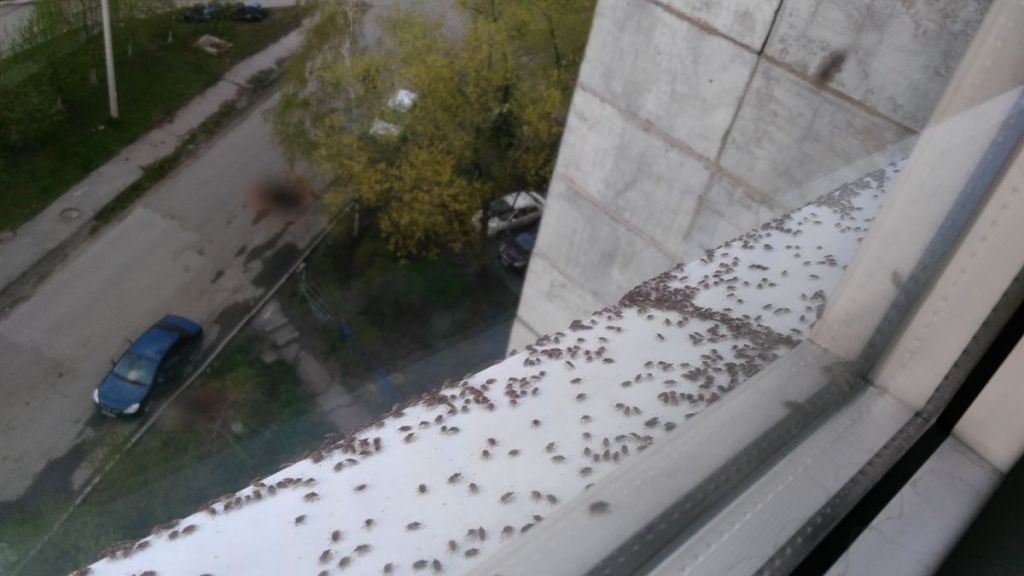
In bad years, bedbugs come in swarms through windows
Animals
While humans can be relatively vigilant and notice a pest invading their home, things are much more complicated with animals. Your pet, returning from a walk, may not even notice that something has latched onto its long fur. It's especially difficult to spot a tiny pest on a large, furry dog.
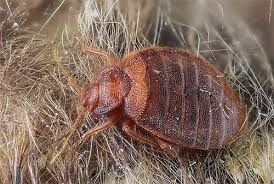
In thick fur, you won't immediately notice a bedbug with the naked eye.
In addition, the animal can also carry bedbug eggs from the entrance into the apartment on its paws.
Where do bed bugs live?
It's easier to spot bed bugs in your apartment if you have a good idea of where they typically live. These parasites are active at night, so you might not see them during the day. However, their nests are always easy to spot. They'll be found in dark, secluded places, where something is sure to conceal them. These areas are especially likely to be the curled edges of wallpaper, linoleum, and carpeting, as well as under baseboards. If you have carpets on the walls, it's a good idea to check the back of them—they can also harbor them. If bed bugs have taken up residence on furniture, they'll likely be hidden in the grooves, between furniture pieces, and under upholstery, but mattresses and bedding are also suitable for shelter.
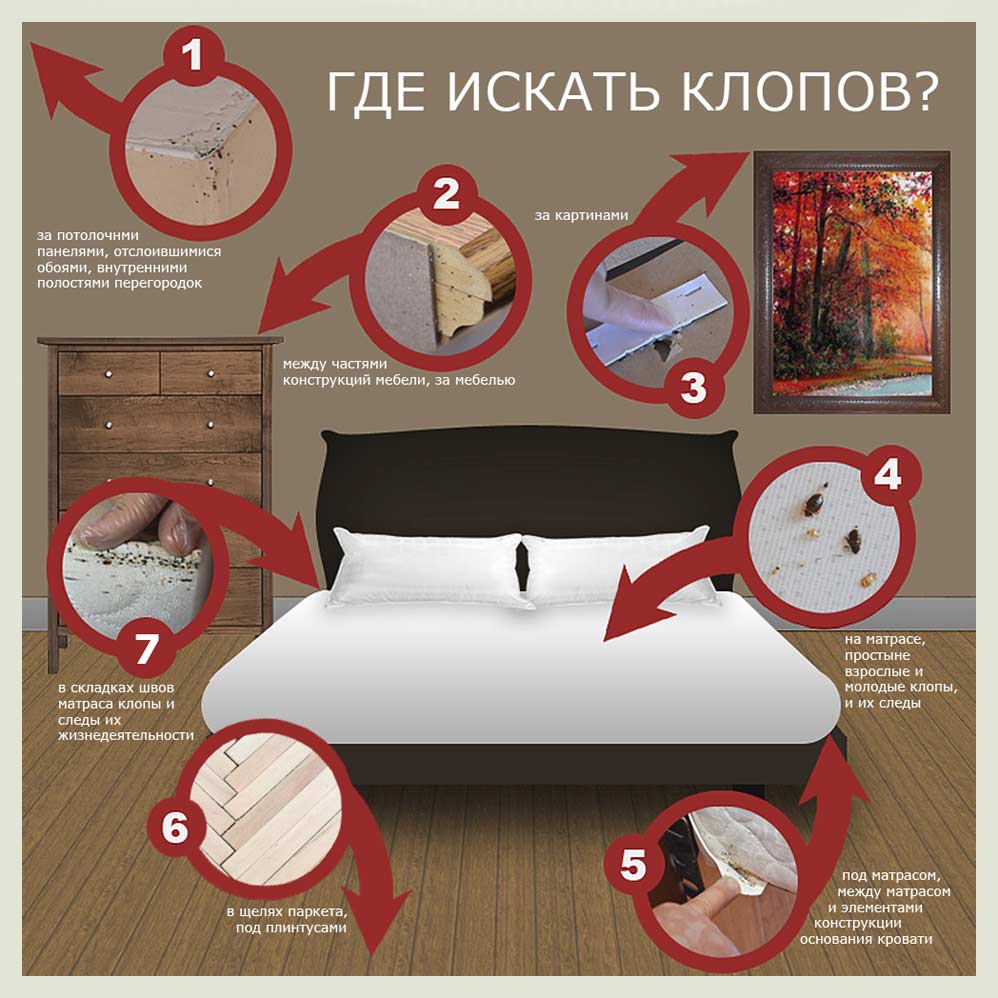
The diagram shows the locations where bed bug nests are most often found.
Parasites can also infest closets—they're especially drawn to drawers filled with old clothes and stale fabrics. Household appliances can also become a home for bedbugs—they're dark, warm, and very difficult to spot.
Prevention: How to Avoid a Bed Bug Infestation
The damage caused by bedbugs is usually very noticeable and quite obvious, so there's no doubt they need to be dealt with. The best thing you can do is take steps to prevent them from entering your apartment in the first place.
- Cleanliness. Although bedbugs don't naturally infest dirt, they prefer cluttered and filthy apartments to clean and tidy ones. Regular wet cleaning with detergents is essential to ensure most surfaces are disinfected. In addition to the apartment itself, you should also wash your outdoor shoes, and regularly wash or dry clean your outerwear. If you occasionally walk your pets, remember to wash their paws and keep their fur clean upon returning home.
- Pest control. Before moving into a new apartment, especially if there are any remnants of the previous owners, it's a good idea to perform preliminary pest control. For this purpose, it's best to call a team of professionals who—at a cost, of course—will provide long-term protection against insects. However, you can also carry out these measures yourself using insecticidal aerosols and concentrates. However, in this case, you need to ensure your own safety, so the poisons don't turn against you.
- Sealing. It's impossible to completely "batten down the hatches" in your apartment, but it's worth checking for potential cracks—walls, windows, doorways, floors, and baseboards—and sealing any gaps you find. Ventilation shouldn't be blocked, but it's worth installing a fine mesh screen over all openings into your apartment. Of course, the screen should be washed and cleaned regularly.
Essentially, when renovating, pay special attention to your apartment's air flow capacity. Seal any cracks, install fine-mesh mosquito nets on your range hoods, inspect the riser and radiators—the pipes are often tucked into sleeves, leaving a gap between them. Check to see if your electrical outlets are pass-through, and install a sealed strip there.
- Repellents. Some chemical insecticides available in stores are effective not only for direct control of bedbugs but also as a preventative measure. For example, chalks, gels, and powders can be applied to thresholds, doorframes, walls, floors, cabinets—in short, anywhere bedbugs are likely to enter the apartment. The insect will either die from contact with the toxic substance or will avoid the dangerous area altogether. Folk remedy enthusiasts also suggest washing baseboards, floors, and cabinets with a solution of vinegar, ammonia, or bleach to prevent infestations. Some also suggest diluted kerosene and turpentine, but these substances are flammable and can be dangerous. Infusions of herbs whose scents bedbugs dislike can also be effective: wormwood, tansy, and chamomile are also recommended for use during cleaning. If you don't have any herbs on hand, you can buy essential oils from the store instead—rosemary, eucalyptus, lavender, tea tree—and add a few drops of them to the water you use to wash floors and dust.
My mom told me to find their nests. Carefully remove them (I drowned them with water and flushed them down the toilet). And then thoroughly treat these places (the nests) with bleach. I did this, washing all the cracks and cracks of the walls with bleach every day, wherever I noticed them. I washed with bleach until they were gone. Thank God, there were no more.
- Vigilance. Since bedbugs can easily be brought back from a store when purchasing something, it's important to check it beforehand. This is especially true for furniture and appliances. Avoid buying such items at markets or secondhand—especially since a bedbug nest under the upholstery could be the reason for the sale. Clothing, curtains, and carpets should also be carefully inspected and washed or cleaned after purchase. This also applies to online purchases delivered by mail. Since other people's homes can also be a source of pests, try to avoid visiting infested homes and staying in suspicious hotels. If you store items in the basement, remember to sort through them periodically and clean out your closet regularly.
- Cooperation. If you live in an apartment building, it makes sense to maintain good relationships with your neighbors. This way, if bed bugs appear in your building, you'll be aware of it early and can take action. It's best if everyone works together to combat bed bugs—this will help eliminate the insects, rather than simply chasing them back and forth. You can also pool your resources for pest control if your building management company doesn't provide it.
It's easier to file a collective complaint and have the fire extinguished. Or to pool funds with your neighbors to treat them.
Of course, preventative measures can't guarantee that bedbugs will never infest your apartment. However, all of these measures will help reduce the likelihood of their occurrence.
As we can see, bedbugs have a variety of ways to enter human homes, and no one is immune to these parasites. However, knowing where to look for these pests and how to prevent them from appearing makes dealing with them much easier. Take care of your home and keep it clean, and you might never have to deal with bedbugs again!