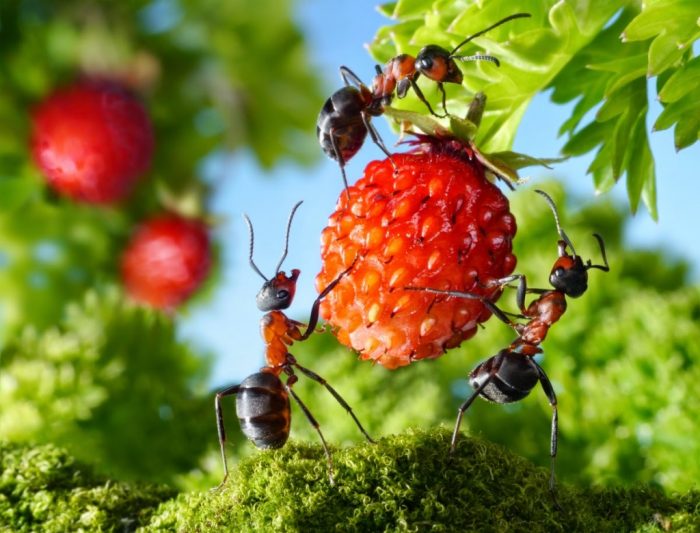
We're accustomed to considering ourselves the pinnacle of creation and arrogantly ignore the fact that real civilizations exist right next door, with their own hierarchies, multi-story cities, developed road networks, plantations, livestock farms, armies, and workers. We only notice when our neighbors intrude on our homes or signal contact with sharp, painful bites. We're talking about ants.
Content
Diversity of species
An ant is an insect belonging to the phylum Arthropoda, order Lepatoptera. This is a social insect, divided into three castes: males, females and workers. Males and females have wings, but workers lack them. The ant's body consists of three parts: the head, thorax, and abdomen, connected by a thin stalk. The insect moves using six legs equipped with claws that allow it to cling to vertical surfaces. The eyes consist of multiple lenses (facets) that detect movement but do not produce a clear image. The head is equipped with long, segmented antennae, which serve as tactile organs, and "antennae" with which the ants detect vibrations in the air. Insects defend themselves with venom, or a secretion containing formic acid; some species have stings. They also use their powerful mandibles to bite attackers.
Only the queen produces offspring. Once a year, during the flight, fertilization occurs, when the female stores sperm for life. During reproduction, ants undergo a complete metamorphosis: egg, larva, pupa, and adult. The entire cycle lasts about a month to a month and a half.
Female ants hatch from fertilized eggs, and males hatch from unfertilized eggs.
The average lifespan of worker ants is 2–3 years, males live 2–3 weeks, and queens can live up to 20 years. A queen has been known to reach 28 years of age. More than 13,000 ant species have been studied to date. They live everywhere, with the possible exception of the Arctic. About 300 species are found in Russia. Let's take a closer look at the most interesting of them.
Forest redheads
This is the most common species in the forests of central Russia. They are found throughout Eurasia, including Great Britain, the Alps, the Caucasus, and even North America. They inhabit deciduous, coniferous, and mixed forests, where they build nests up to one and a half meters high. Adults reach sizes from 5 to 14 mm, have a shiny black abdomen, a reddish-brown thorax, and the underside of the head, hence the name "redheads." They have a trapezoidal clypeus and two pairs of membranous wings. They have a stereoscopic sense of smell, allowing them to perceive odors in three dimensions.
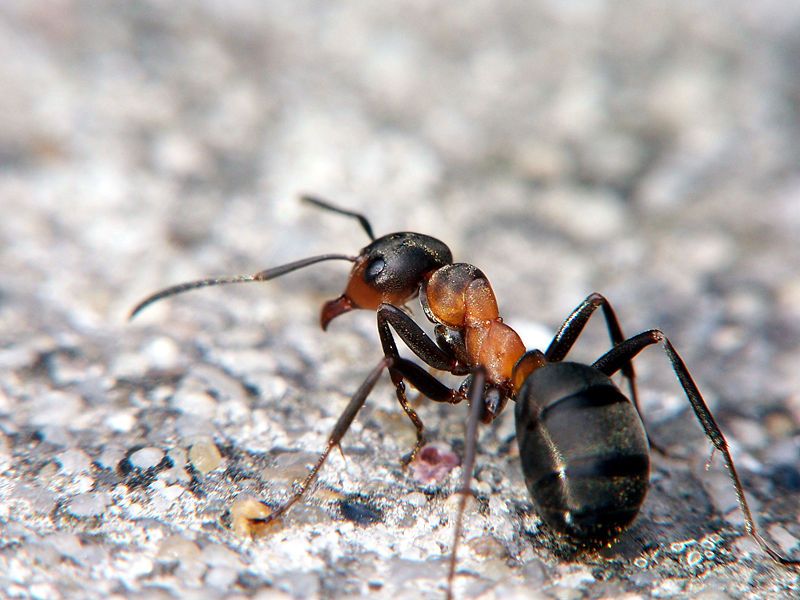
The red wood ant is the most common species in Russian forests.
The stalked part of the abdomen contains a gland that produces a special acidic secretion - formic acid. Insects are not capable of stinging, but they can spit poison. Powerful muscles eject fluid several tens of centimeters.
The appearance of males and females differs: males are black, with bright yellow or red legs, and the head, chest, and abdominal stalk of the female are reddish-brown. Males exist only until mating, after which they die; the queen can live up to 5 years.
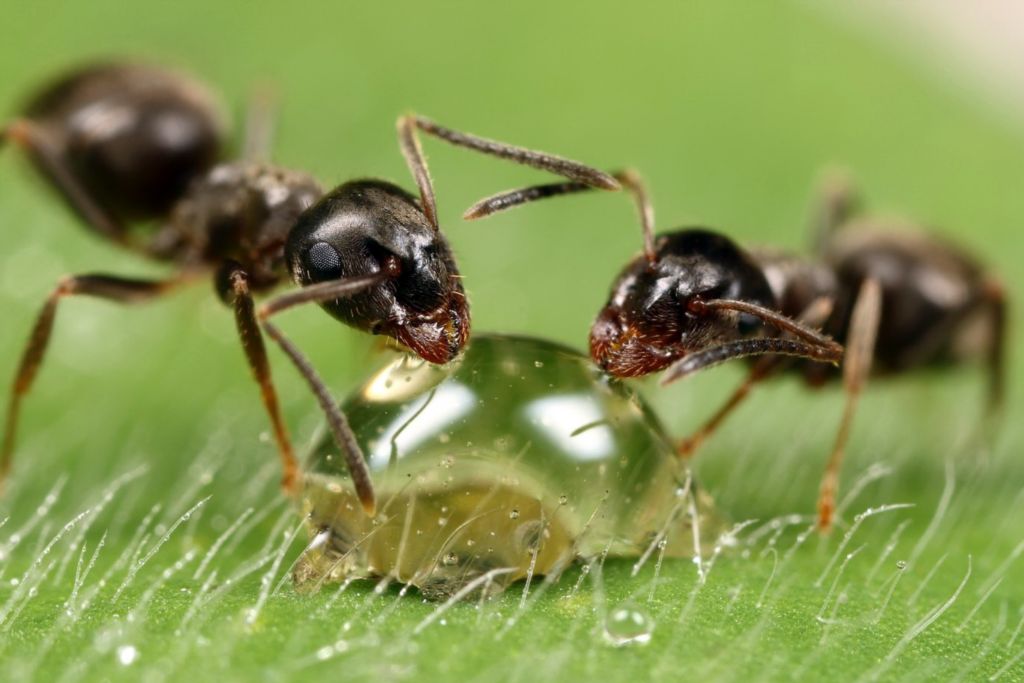
Carbohydrate food of ants - honeydew
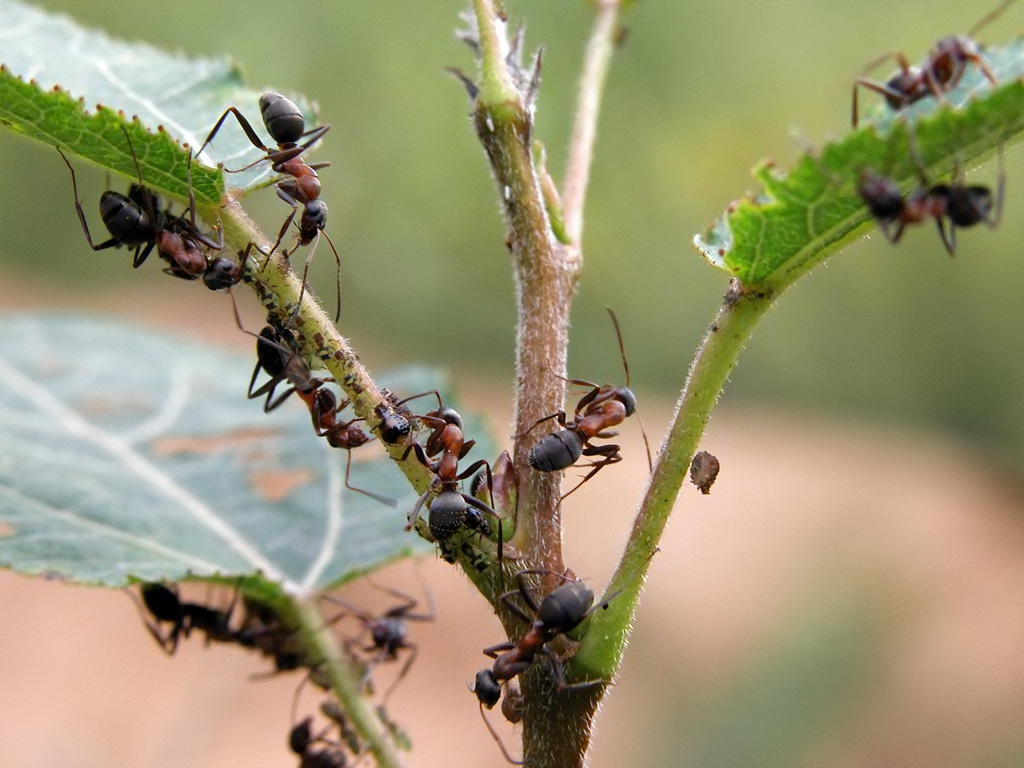
They feed on protein or carbohydrate foods. The protein is made up of invertebrates: insects or larvae; ants do not disdain their corpses either. The protein is used as food for the queen and larvae. The main source of carbohydrates is aphids, which supply the colony with honeydew and honeydew. This is food for workers who need a lot of energy.
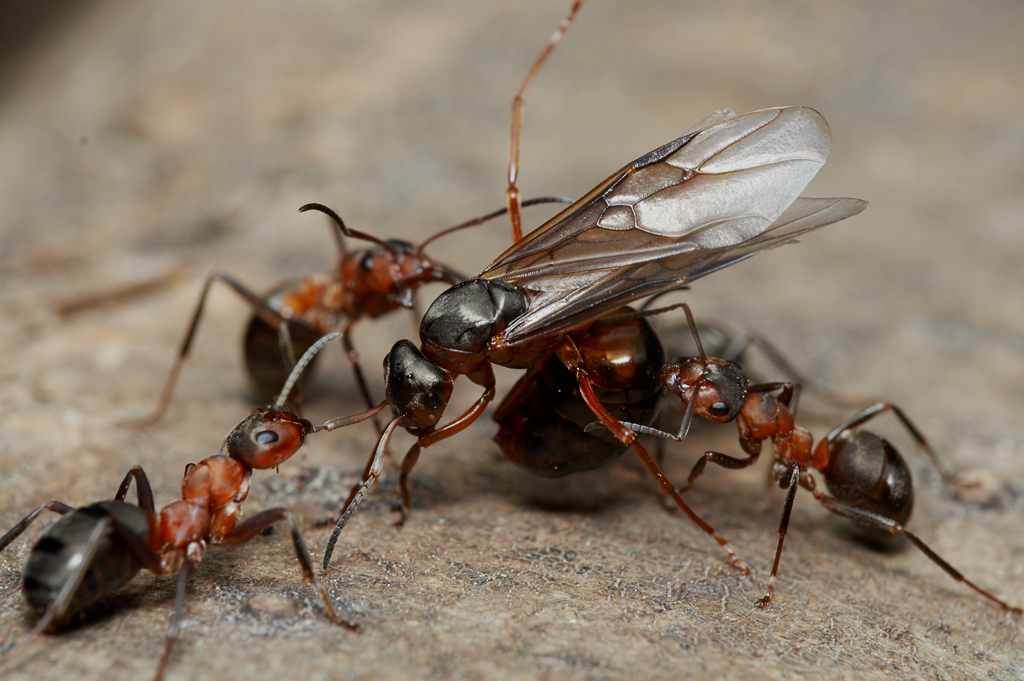
Insects are a source of protein for ants
Red ants also have natural enemies. These include birds and insectivores, as well as the beetles Lomechusa and Rove beetles. The beetles may settle in the nest, where they feed on ant brood or table scraps from the hosts. Red ants are not dangerous to humans, although their bite is sensitive. In the case of an allergic reaction, swelling and redness appear at the bite site, which disappears after a while.
After fertilization, the female bites off her own wings, using their muscles to feed until a new generation of worker ants is born.
Nomadic
This species got its name due to its restlessness. The family constantly moves from place to place, building only temporary shelters. When moving, the colony forms a marching formation: worker ants carry the larvae, while soldiers surround the "train" to protect the colony from attack. There are approximately 200 species of army ants, including Dorilus, native to Africa, and Eciton, common in South America. A colony of nomads can reach 20,000 insects.
Workers are approximately 1.5 mm in size, with males and females being two or three times larger. The queen can reach 5 mm in length. Adults have a chitinous exoskeleton that protects and supports their bodies. Soldiers are armed with powerful jaws that are larger than their heads.
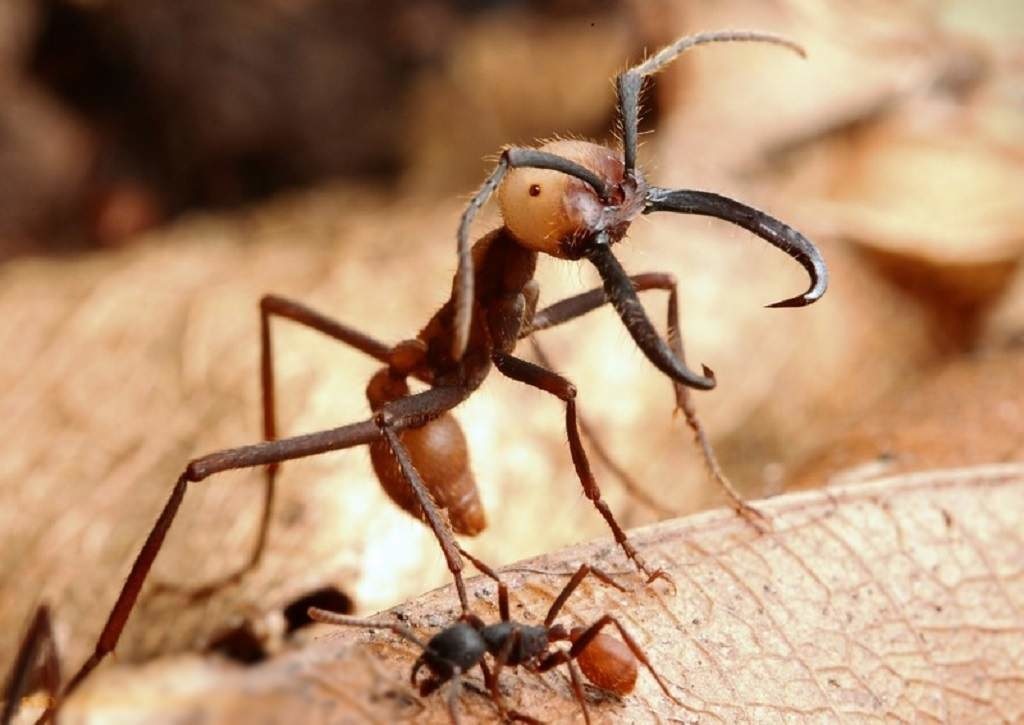
Army ants defeat their enemies with numbers
The colony stops every 7-10 days to breed. Some worker ants form a nest with their bodies, while others begin feeding the queen intensively. Her abdomen enlarges, and she begins laying eggs, up to 2,500 per week. The ants carry the eggs away and switch to feeding the larvae. During this period, the queen receives less food, decreases in size, and completes her breeding cycle. The larvae begin to hatch into newborn ants, after which the colony continues moving until the next resting place.
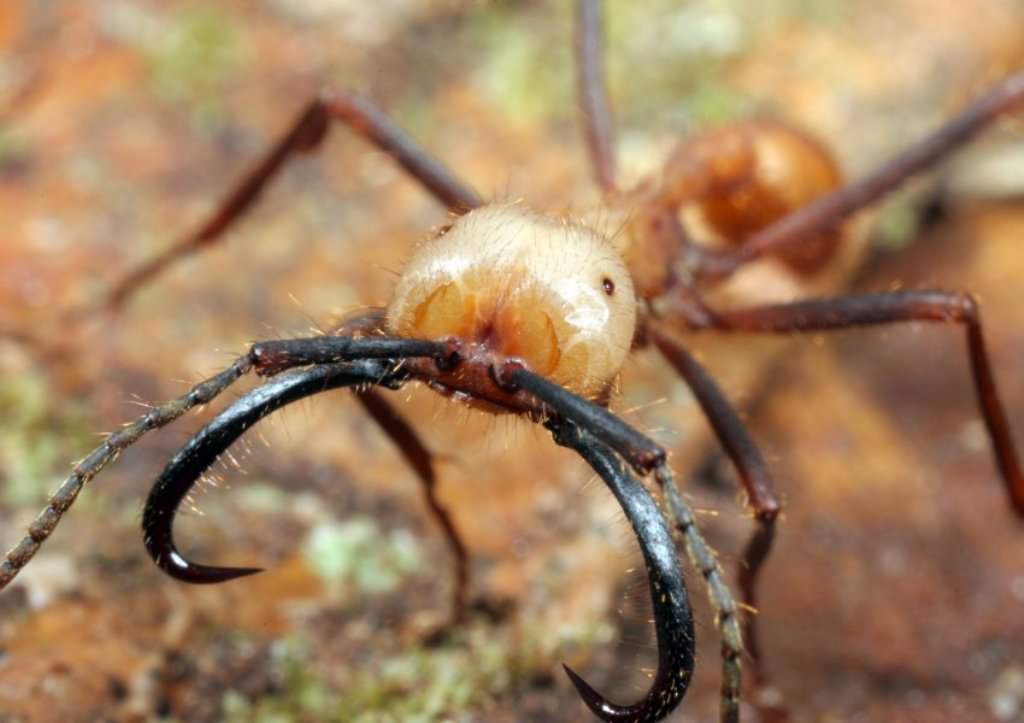
The powerful jaws of soldier ants are larger than their heads.
Nomads feed primarily on termites, wasps, and bees. They also eat small birds, frogs, and reptiles. This species of ants are true predators, destroying everything that gets in their way. They bite their prey to death or kill it with venom. They will also eat carrion, whether it's a small bird or a large animal. Predatory insects pose a danger to humans and animals – their bites are not fatal, but very painful. Residents of Africa and South America, through whose villages the column's route passes, leave their homes as it approaches, taking all their livestock with them.
Queens can settle in the nest of related ants if a female is absent. Gradually, the offspring completely displace the natives, founding a new colony.
Bulldogs
This species (Myrmecia pilosula) belongs to the order Myrmecia and is distinguished by its well-developed sting, which it uses for defense. They live in Australia and Tasmania. They are small in size, have an elongated, thin abdomen, and powerful jaws, hence their nickname "bulldogs." A colony consists of males, females, and workers, some of which also have soldiers, who are larger and protect their fellows from attack.
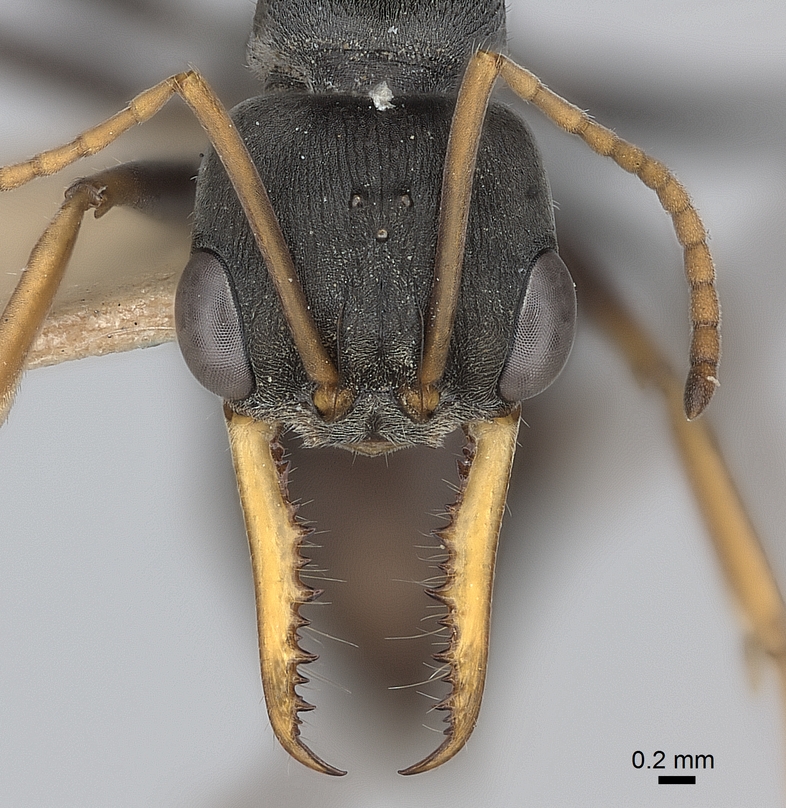
This species of ant was nicknamed the bulldog because of its powerful jaws.
Bulldog ants build their nests in the ground, under rocks, in old tree stumps, or on the surface. They are often connected by underground passages or paths. Like other ants, bulldog ants feed on small invertebrates and insects. However, they do not collect aphids or consume honeydew.
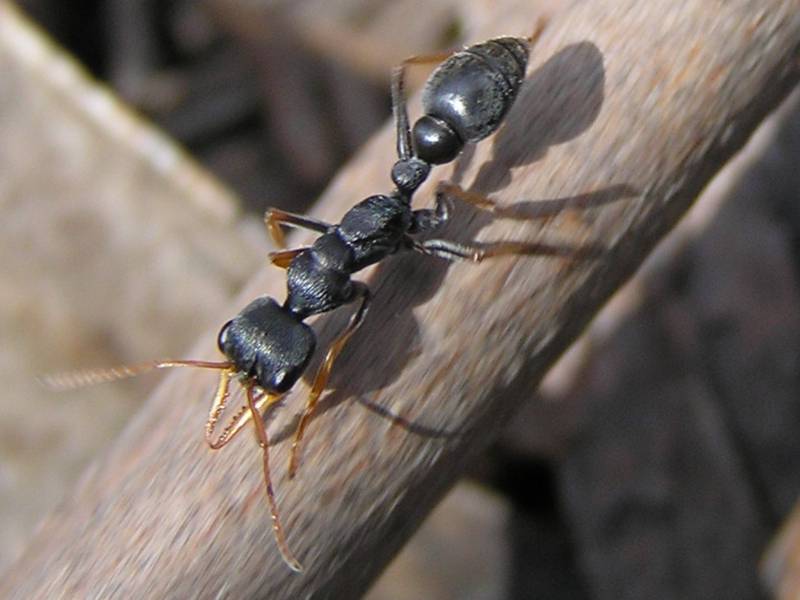
The bite of a bulldog ant is dangerous to humans.
Bulldogs pose a great danger to people. When they feel threatened, they sting their prey, injecting venom. The insect's bite is comparable in potency to a wasp sting. The venom is a strong allergen, causing redness, swelling, burning, and itching. Repeated exposure can cause anaphylactic shock, which can be fatal.
Meadow
Meadow ants (Formica pratensis) belong to the genus Formica. They are small in size, with adults measuring 5–13 mm in length. They differ from red ants in that males have coarse hair, while females lack it. The abdomen and upper thorax are black or dark gray, matte. The underparts and legs are red, and the head is blackish-red. Workers have a black spot with distinct edges on the anterior thorax. They are common in central and southern Europe, western Siberia, and the mountains of Central Asia. They nest in open areas, such as meadows, steppe zones, copses, forest edges, and clearings. They build anthills in the ground or wood, and the structure can reach 3 meters in diameter. The anthill is dome-shaped, with a flat top covered with sand. The dome's tilt can be adjusted depending on the sun's position.
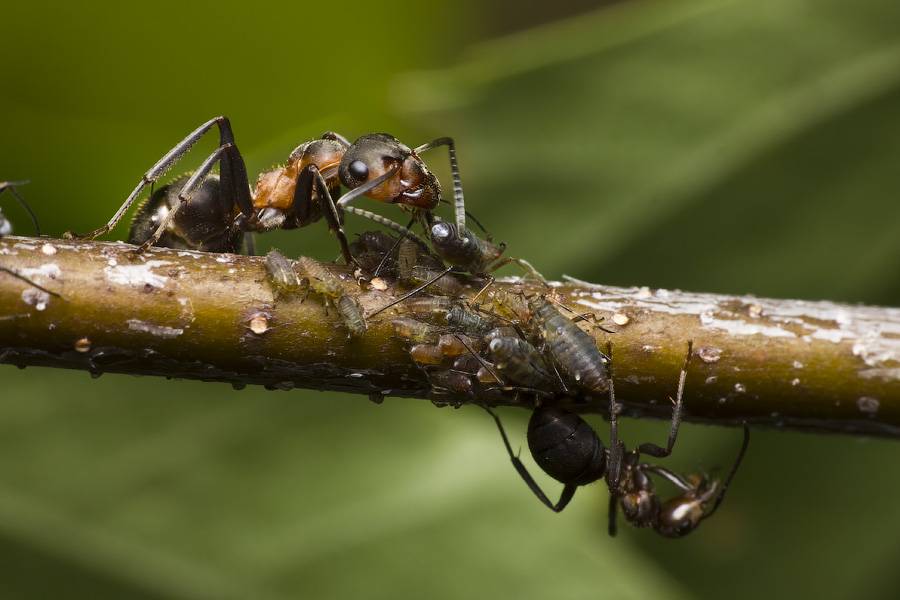
The diet of meadow ants consists mainly of insect and animal carcasses.
Meadow ants are scavengers. Their diet consists primarily of insect carcasses and honeydew. Only live insects are fed to larvae. They rarely bite people. Due to their small size and weak jaws, their bite is barely felt and is incapable of causing any significant harm.
Bullet
Belongs to the species Paraponera clavata and is one of the most dangerous insects on the planet. It has a dark brown, almost black coloration, a large head, and a sharp sting. The size of the queen and workers differs slightly, ranging from 18 to 25 mm, with a sting that can reach up to 3.5 mm in length. It is native to the humid tropical forests of Central and South America. Anthills are usually ground-dwelling, built at the base of trees, sometimes on trunks. Colonies are small, ranging from 1,000 to 2,500 individuals. They feed on arthropods (butterflies, beetles, spiders, cicadas, leaf-cutter ants), small animals, and honeydew.
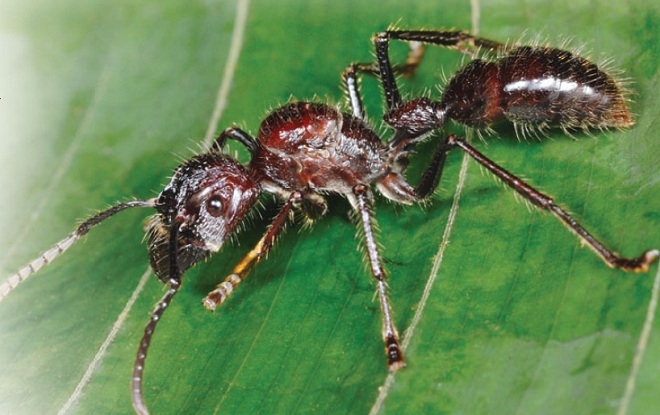
The sensation of a bullet ant bite can be compared to a gunshot wound.
They produce a very potent venom with a paralyzing effect. Their bite is painful, more so than that of a wasp, bumblebee, or hornet. The intense pain is similar to that of a gunshot wound, hence the name "bullet ant." The bite can even cause temporary paralysis, and the pain lasts for almost a day.
Garden
The black garden ant (Lasius niger) is another species found everywhere and consistently. They are distributed throughout Europe, central Siberia, and Central America. Their nests are varied, and in garden plots, they can be found in the form of earthen mounds. However, this is only the above-ground portion; the main structure is underground. They can also nest under rocks or in rotten wood.
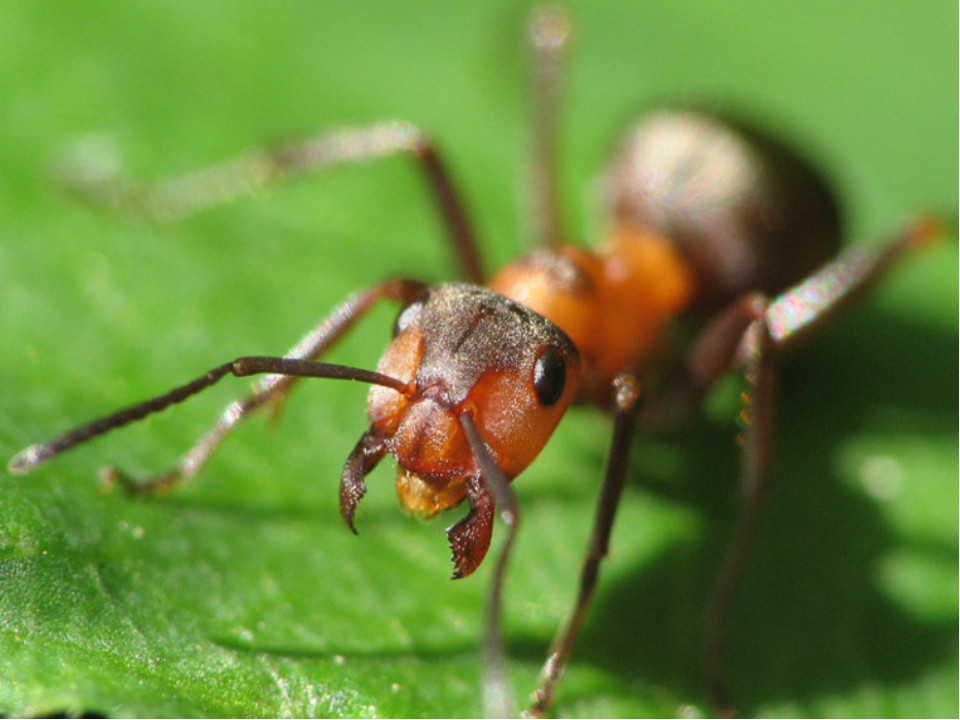
Garden ants are one of the most common species
Adult insects range in length from 3-4 mm for workers to 9-10 mm for the queen. Their coloring is black or dark brown, and their bodies are covered with short hairs. Males die immediately after mating, while the queen lives for 6-7 years, laying one egg every 10 minutes throughout her life.
They feed on insects, thereby protecting the garden from pests. At the same time, their love of sweet sap leads them to breed aphids, which damage garden plants. They pose no danger to humans, but are destroyed due to potential damage to crops.
Pharaoh ants
These are the same ants that inhabit our homes, attracted by the abundance of available food. These tiny insects, searching for food, easily penetrate any packaging, ruining the food. These ants were once thought to originate in Egypt, hence the name "Pharaoh's ants." In reality, these insects were brought from India on merchant ships; they weren't found in Russia until the 19th century.
They have a bright coloration ranging from light yellow to brownish-yellow. Workers measure about 2 mm in body length, while females measure 3 to 6 mm. The adult insect develops from the egg in 1 to 1.5 months.
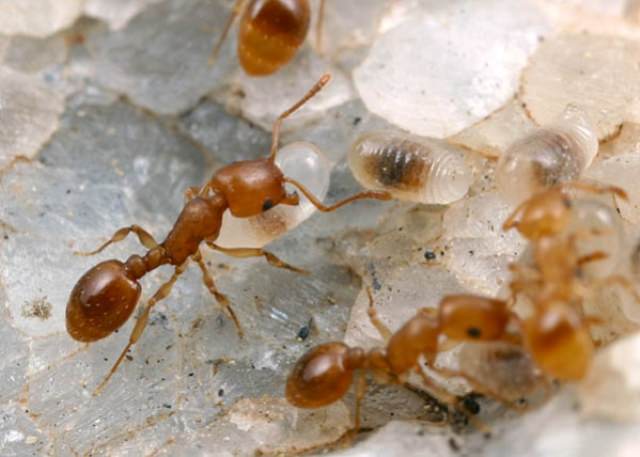
House ants settle in houses, making nests in hard-to-reach places.
Compared to other species, house ants have a short lifespan: males live 20 days, workers 60 days, and queens 275 days. This is more than compensated for by their colony size, which can reach a million. Thanks to their small size and rapid reproduction, house ants quickly colonize their chosen territory. These are typically residential buildings. They build nests in hard-to-reach places: under baseboards, in ceilings, and under floors. They easily move between apartments and floors.
They feed on food from our tables, preferring protein and carbohydrate foods: sugar, liver, sweets, honey, jam, meat and meat products, and milk. They are not averse to garbage. Their bites are not harmful to humans, but they can be a nuisance to children. In search of food, ants wander into garbage dumps, feeding on animal and insect carcasses, and can therefore become carriers of diseases. Among the most dangerous are plague and dysentery. There are also known cases of ants crawling under bandages and casts of patients with unhealed wounds, causing unbearable itching. These uninvited guests can introduce an infection into the wound.
Woodworms
This is a whole group of insects that differ in habitat, size and color. They have one thing in common: they settle in the trunks or stumps of trees, making passages in the wood, for which they received their name. There are black, red-breasted, shiny, spotted and other varieties.
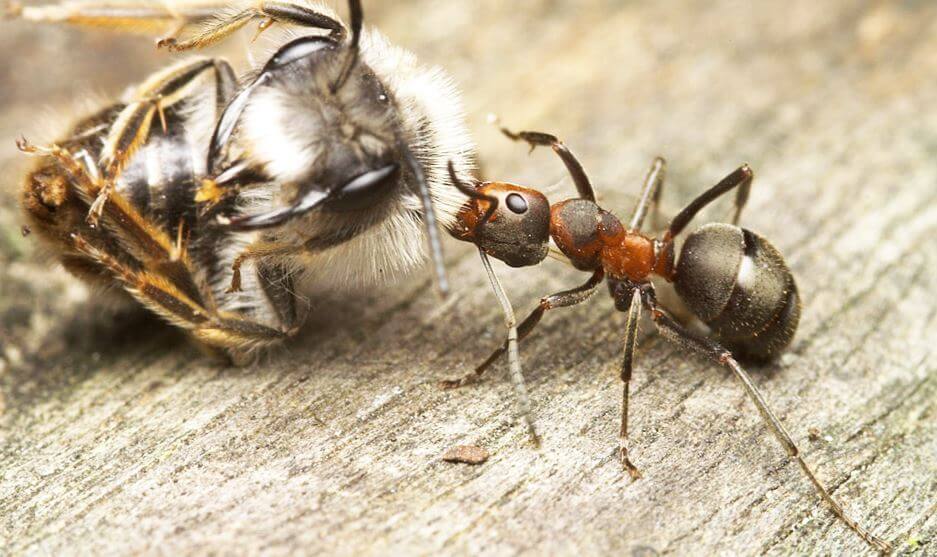
The diet of woodworms consists of invertebrates and insects.
- The black rhinoceros is common in Europe and northern Asia. It is one of the largest species in Russia, reaching a size of 15 mm. Its coat is black and glossy, with hairs on the lower edge of its head.
- The odorous ant is smaller: the worker is about 4-5 mm long, the female is 7-8 mm, and the male is 4 mm. It is black and shiny, with a heart-shaped head with a notch at the back of the head. They are found from Europe to western Siberia. They build nests from chewed wood mixed with saliva. They breed aphids.
- Shiny ants are medium-sized ants common in Europe, northwest Africa, Asia Minor, and the Caucasus. Workers measure 4–9 mm in body length, females 9–11 mm, and males 6–8 mm. Their coloration is black and shiny, with a reddish thorax.
Woodworms can be identified by their trails strewn with wood dust, similar to fine sawdust. The more wood dust on the trail, the closer the nest. There are eight species of woodworms in Russia. Larger species (black) can bite through skin, and their bite is sensitive. Woodworms primarily cause damage to buildings if they nest in wooden houses.
Video: About the life of ants
The danger of ants to humans
- The bite of some species causes acute pain that lasts up to a day.
- The bites are not fatal, but they cause discomfort: itching, redness, swelling.
- Ant venom is a strong allergen. When it comes into contact with skin, especially a wound, it can cause an allergic reaction, including anaphylactic shock.
- Ants are carriers of infections. Feeding on carrion and waste, they become carriers of dysentery, typhus, helminths, and other equally dangerous diseases.
- They also cause problems for domestic animals, infecting them with distemper, parvovirus enteritis and other infections.
- Woodworms cause damage to wooden structures and even furniture by gnawing passages in them and turning the wood into dust.
In defense of ants, I'd like to point out that they can rid your garden of pests. Formic acid is widely used in medicine, and numerous medications are made from it.
Not all ant species need to be exterminated. Learn to coexist peacefully with these highly organized and industrious insects. But don't forget about safety, so the ant colony doesn't become a nuisance. Then, your neighborhood will be peaceful and mutually beneficial.