Ticks are hardly pleasant to look at, and they cause enormous harm to both humans and animals. There are several orders of these parasites, each differing in their lifestyle and appearance.
Content
Types of ticks and their classification
It's a common misconception that ticks belong to the insect class. In fact, they are classified as arachnids. Like other members of this class, they are wingless and average 0.1 to 0.5 mm in size, with the largest ticks reaching 3 mm.
Adults have 4 pairs of legs, while immature individuals have 3 pairs of legs. Most of these arthropods have no eyes, but their highly developed sensory apparatus allows them to smell prey from a distance of up to 10 m.
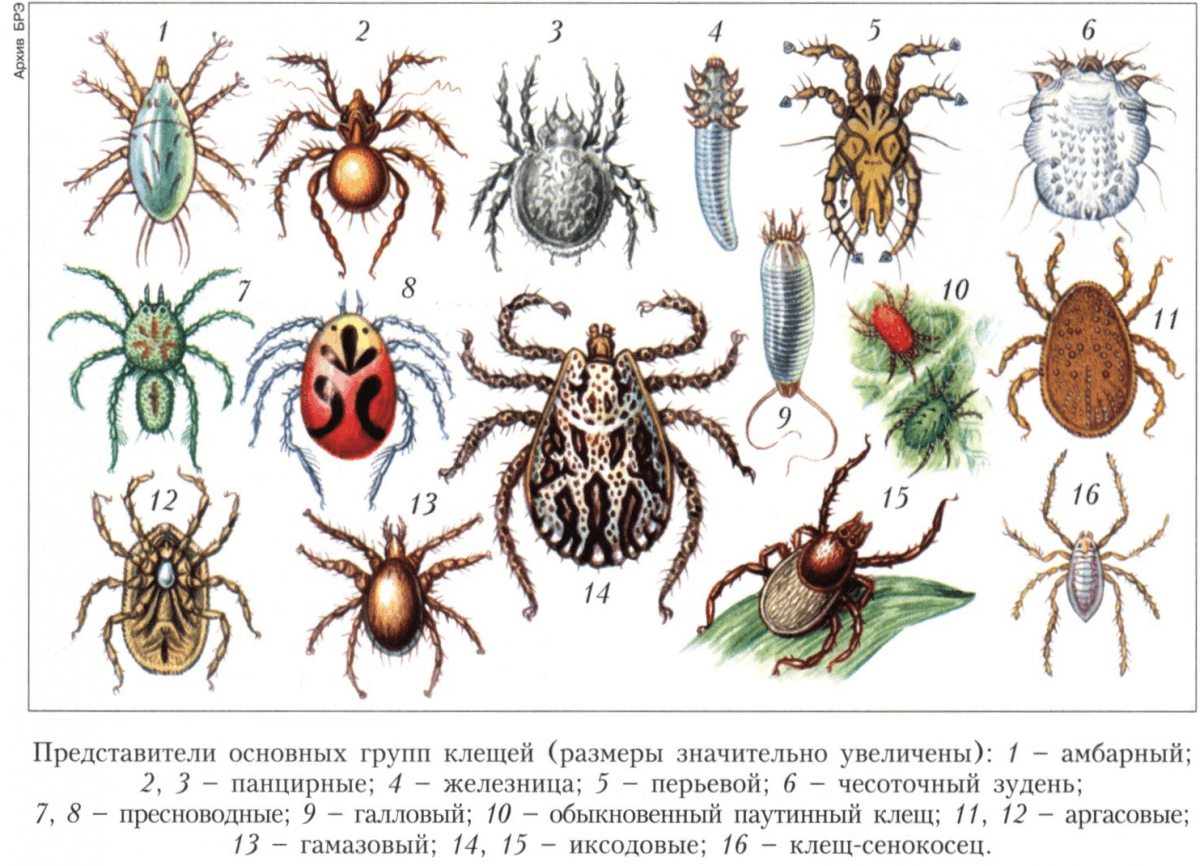
Representatives of different species of ticks have many differences from each other.
Depending on their body structure, ticks can be hard or leathery. The former have a head separate from the rest of their body and breathe through specialized spiracles. The latter, on the other hand, have a head fused to the thorax and inhale air through a trachea or skin.
There are 3 superorders of ticks:
- Parasitiformes.
- Acariformes.
- Harvestmen mites.
The first two groups include a huge number of representatives with diverse appearances and lifestyles, while the third superorder, by contrast, is characterized by its small numbers and relative uniformity. Although all tick species differ significantly from each other, all their distinctive characteristics are the result of adaptation to different living conditions.
Representatives of the parasitiform superorder
Individuals of the parasitiform superorder of ticks have their own characteristics.
The body of these parasites is solid, not divided into segments. It may be covered by a carapace, and the head is separate from the body. This arachnid has four legs. Most mites in this group are large enough to be seen without a microscope.
An individual becomes an adult by undergoing several molts, passing through several stages in turn, most often from egg to larva, and from there to nymph and adult arachnid.
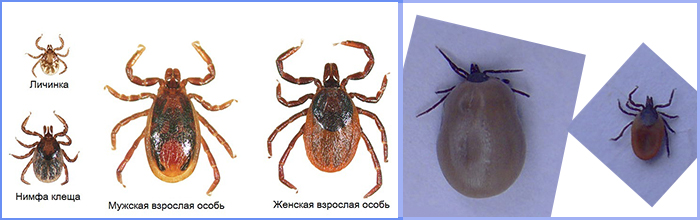
Typically, parasitiform mites go through 4 stages of development: egg, larva, nymph, adult.
Most parasitiform mites are parasites, hence the superorder's name. These arthropods require the blood of a prey—human or animal—to survive.
This superorder of arachnids consists of two families: Ixodidae and Gamasidae.
This is interesting. Among the parasitiform ticks, there is a family called Nuttalliidae, which shares characteristics with Ixodid and Argasidae ticks. However, it only contains one species, Nuttalliella namaqua, whose representatives live in South Africa and feed on the blood of lizards. This tick is an intermediate link between extinct species of these arthropods and those that exist today.
Ixodid ticks
Ticks of this family, also known as pasture ticks, are external parasites and feed on the blood of humans and animals, choosing a host only for the duration of the feeding. These arthropods are the largest of all arthropods. When fully fed, they can reach 2–3 cm.
The parasite's body resembles a flattened sac that inflates when it's full. Individual segments of this tick are impossible to distinguish. Nymphs and adults have four pairs of legs, while larvae have only three. The proboscis of the Ixodid tick has a unique shape, characterized by the presence of:
- a hard plate made of chitin, which allows it to attach to an animal or a person;
- two upper jaws designed for cutting the epithelium of the victim;
- fused lower jaws (hypostomes), which are covered with teeth that allow them to attach to the host.
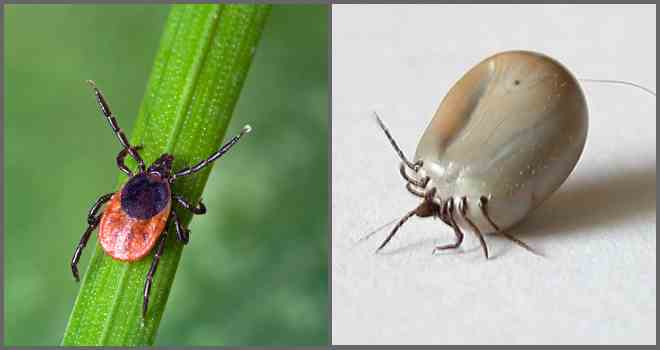
After satiation, the ixodid tick increases in size several times.
The entire body and legs of this arthropod are covered with hairs, which not only allow it to latch onto its prey, but also serve as organs of touch. Representatives of this family carry the most dangerous diseases: tick-borne encephalitis, tick-borne relapsing fever, tularemia, ehrlichiosis, borreliosis, etc. Among the ixodid ticks, the following species are widespread and dangerous to humans:
- Persian;
- shell;
- Caucasian;
- taiga;
- canine;
- black, etc.
Gamasid mites
Members of this order are primarily parasitic. Their prey typically consists of invertebrates. However, some species can parasitize humans and vertebrates. These mites have an oval body shape, and their size ranges from 1 mm. Their chitinous covering can range in color from pale yellow to bright orange.
The shape of the parasite's mouthparts depends on the feeding method of each member of the order. These include gnawing, licking, and lick-sucking. The gamasid mite's head has three eyes (one in the center and two on the sides).
Nymphs and larvae of gamasid mites do not require food; males feed only just before mating. Therefore, only females continuously feed on their prey's blood: the number of eggs laid directly depends on their satiety.
Gamasid mites primarily feed on the blood of chickens, rats, mice, and reptiles. They can live in:
- in the ears of large animals;
- in the nose or under the feathers of birds;
- in people's homes;
- in rodent burrows;
- in places where pets are kept.
Chicken, rat and mouse mites are especially common, as are parasites that feed on reptiles. Gamasid arthropods are dangerous to humans because they can transmit a variety of diseases, most often resulting from their bites, a special type of dermatitis called gamasoidosis.
Acariform mites
The Acariformes order is the most numerous, comprising over 6,000 species. This figure is very approximate, as the actual number may be even higher. This order contains two suborders:
- Sarcoptiformes - sarcoptiform mites.
- Trombidiformes - trombidiform mites.
The first group includes:
- armored;
- dust;
- thyroglyphoid mites;
- feather;
- hair;
- scabies, etc.
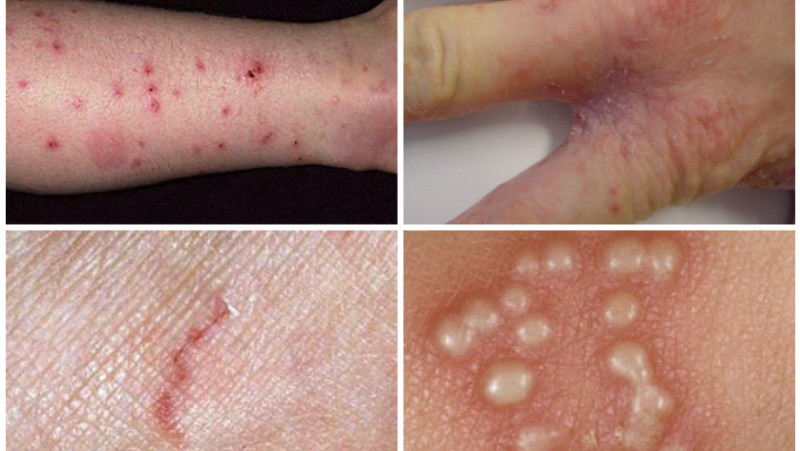
The scabies mite is one of the most common internal parasites in humans.
The second suborder includes:
- cobweb (garden, flower, felt, green);
- meadow;
- red beetles;
- granary, or flour;
- water mites, etc.
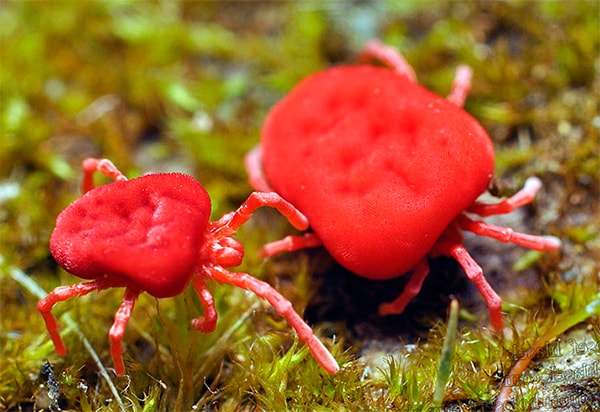
Adult chigger mites are beneficial because they eat the eggs and larvae of harmful insects.
It should be noted that the superorder Sarcoptiform mites contain quite a lot of parasites that bother people and animals. But among the trombidiform arthropods there are more pests of various green spaces and food products.
Photo gallery: representatives of the superorder
-
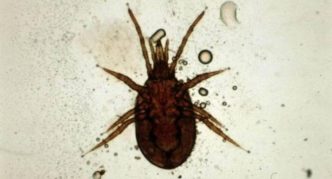
- Mouse mites spend most of their time in the nest of rodents, periodically feeding from them
-
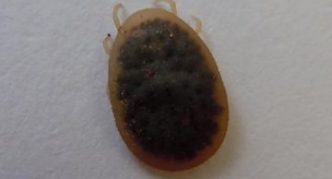
- For feeding purposes, chicken mites periodically attack domestic and wild birds.
-
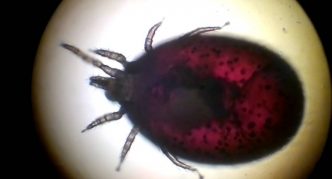
- Rat mites can get into rat nests by traveling to their nesting sites on cats.
-
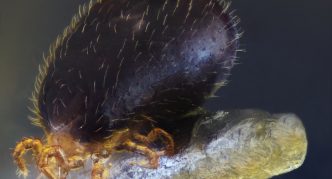
- Snake mites live under the scales of various reptiles and can even attack humans.
Distinctive features of acariform mites
Although this superorder contains a wide variety of forms, its representatives also have common features.
Anamorphosis is a characteristic of ticks that involves the ability to change their body structure by forming new parts. As an individual matures, its size increases through the appearance of new segments. This occurs without molting (metamorphosis). Other tick orders change their appearance through multiple transitions from one developmental stage to another.
The shell of the body of acariform mites contains a special substance called actinochitin. Its presence can be detected with the following experiment. A light is shone onto the tick's body, and the beam is reflected simultaneously in two opposite directions. At this point, you may feel as if you're seeing double. This phenomenon can be compared to observing a thin crescent moon on a clear night during severe frost. It appears as if there are two satellites in the sky, close together.
This superorder of mites primarily includes parasites that feed on secretions from the sebaceous and sweat glands or on skin particles from their host. This means they are very small parasites that live on, under, or within the epidermis. This lifestyle and diet typically causes the following diseases in their victims:
- demodicosis;
- scabies;
- otodectosis.
To detect such a tick, it is necessary to take a scraping from the infected area of skin, drop a dye on it, and examine the stained arthropods using a microscope.

Surprisingly, almost 98% of people are carriers of the demodex mite, which causes demodicosis, a disease that causes severe redness of the skin and the presence of numerous pimples.
Some species of acariform mites have a quite noticeable size - up to 1 mm, which makes it possible to notice them without a microscope.
Harvestman mites
Daddy longhorn mites are the smallest family of mites (scientific names: Opilioacarina, or Notostigmata), whose members resemble their own species in some features and common daddy longhorn spiders in others. These tiny arthropods reach no more than 2.75 mm in length, and their body has an elongated shape.
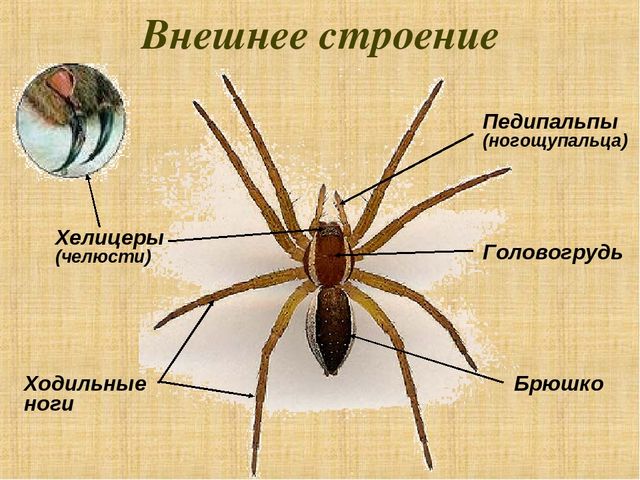
The external structure of the harvestman tick is similar to the spider of the same name.
On the upper part of the cephalothorax, the individual typically has two pairs of eyes. The lifestyle of these mites is poorly understood. They feed on live microscopic arthropods and their carcasses, plant pollen, fungal spores, and other substances. However, the specifics of their hunting method for other creatures are unknown.
Harvestmen mites undergo the same developmental stages as members of the parasitiform superorder: from egg to adult via molting. Representatives of this family can be found in subtropical and tropical zones.
The tick family encompasses an incredibly large number of different species. Not all of them pose a danger to humans, but those that do infest them and animals can transmit very dangerous diseases. Therefore, if you notice a tiny tick embedded in your skin, it's best to see a doctor as soon as possible.