With the arrival of spring, walks with your four-legged friends become longer and more enjoyable, but also more dangerous. During the warmer months, not only people and animals become active, but also various parasites, many of which are very dangerous. For example, ticks. To avoid panic or inaction in the event of a bite, it's important to know exactly what to do.
Content
Dog behavior after a tick bite
After a tick bite, symptoms can appear anywhere from an hour to up to a week later. The main difficulty is that different dogs experience different symptoms. First of all, you need to know that tick bites are very painful and cause discomfort. Animals become irritable and restless. A constant urge to scratch is also a sign of a tick bite.

After a tick bite, dogs become lethargic and inactive.
Dogs often become inactive and playful. After a tick bite, pets show no interest in walks, toys, or even their owner. After some time, they refuse food and favorite treats. Within a week, gastrointestinal symptoms such as vomiting and diarrhea may appear. The dog becomes inactive, experiences spasms and convulsions, and develops a fever.
What does a bite look like?
It is best to examine your dog after each walk during the warm season, especially in spring and autumn, as this is when ticks are most active and hungry. First of all, an examination is carried out of the skin folds in the neck, ears, groin and armpits. Carefully examine each area of the skin, moving the hair against the direction of hair growth.
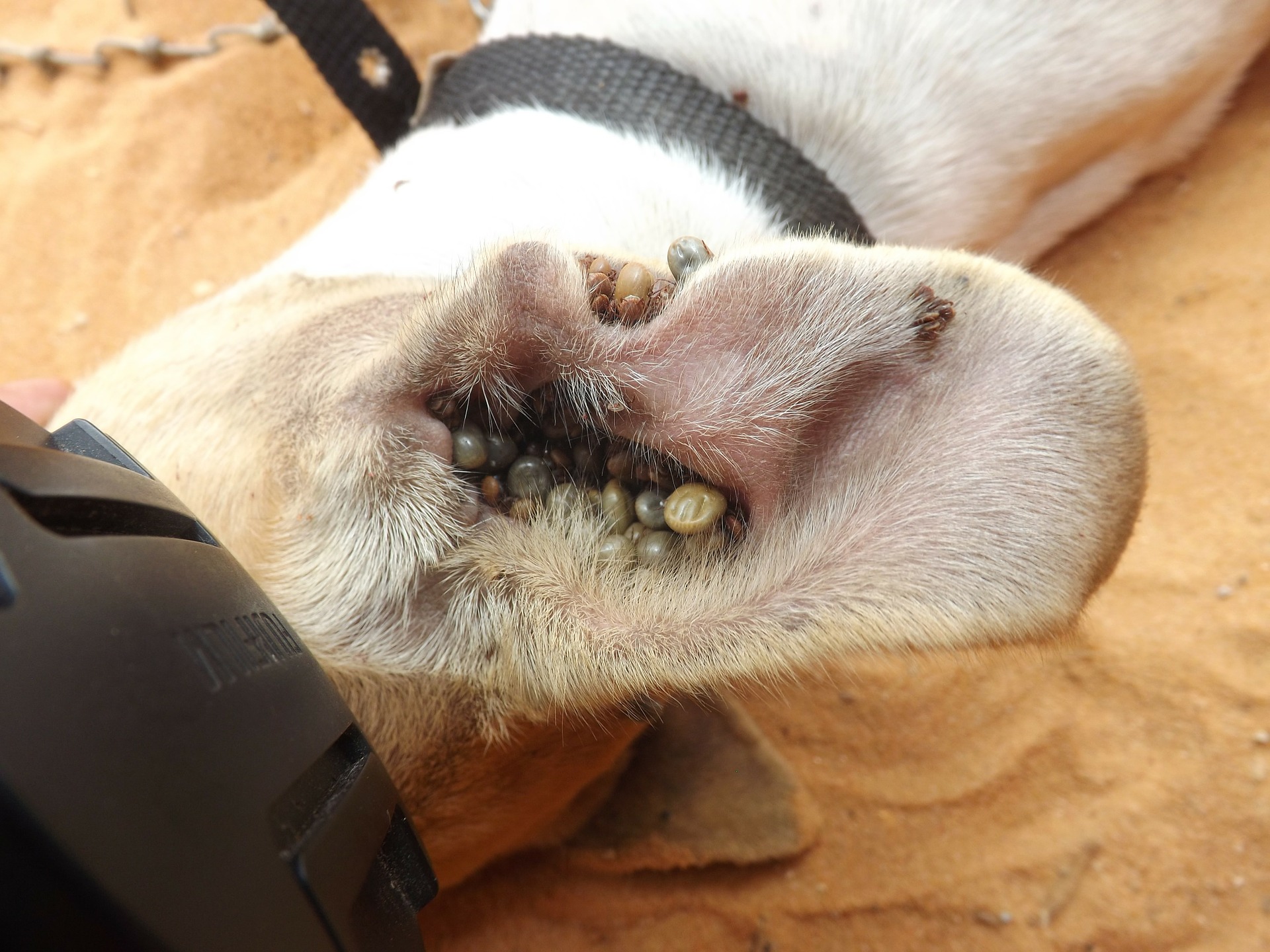
A massive tick infestation causes particular discomfort and pain to the dog.
You'll be able to feel a satiated tick with your hand. Once fed, the parasite becomes round and plump, like a pea.
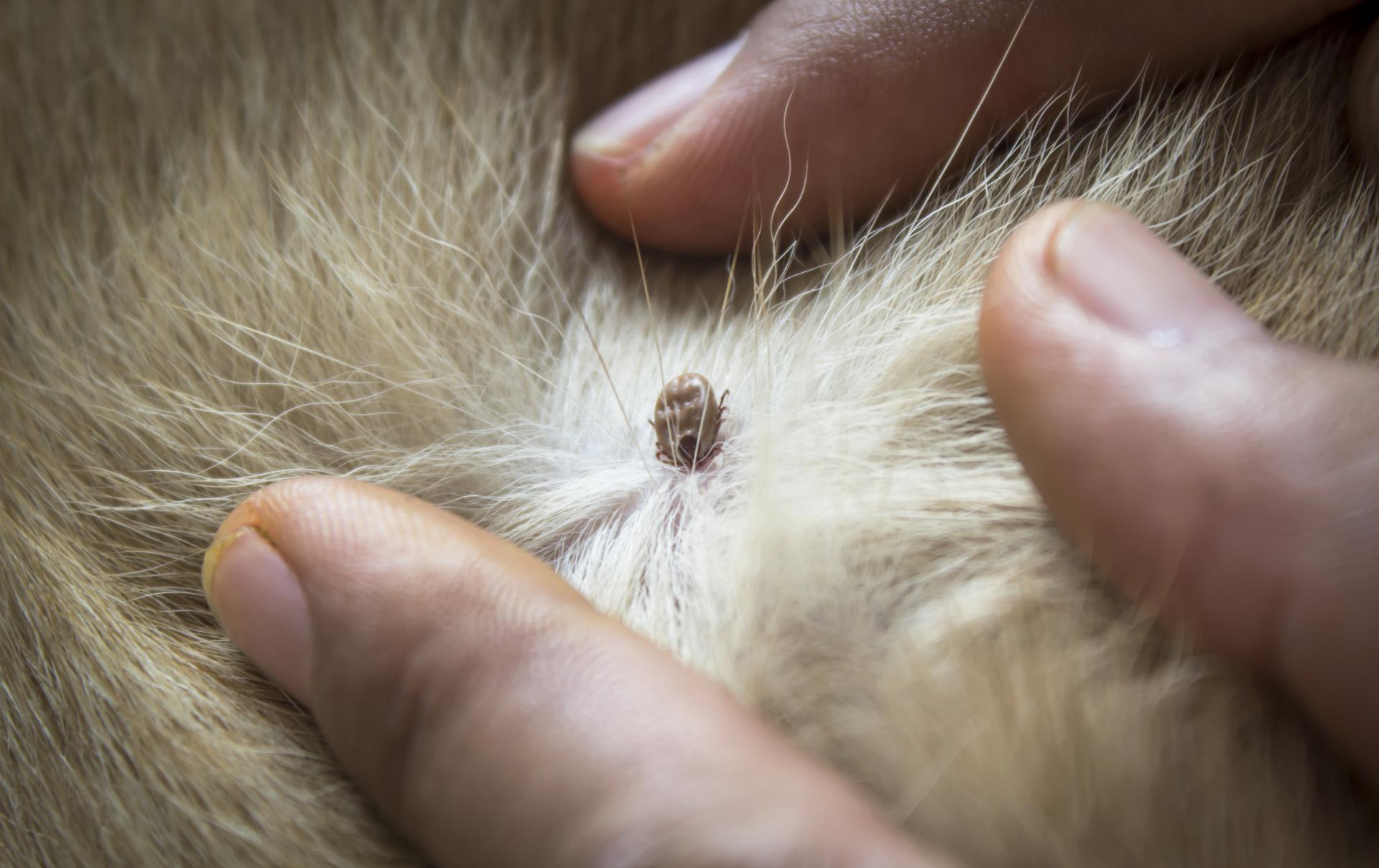
A well-fed tick fills with blood and swells.
However, ticks can remain on an animal's body and not bite for several hours until they find a suitable location. It's also known that a tick can bite a dog during a walk and then fall off, so the tick itself may not be detected during an examination. Signs appear within 2-3 hours. The severity of symptoms depends on the tick species, the duration of the bite, and the animal's immune system. Swelling, redness, itching, and a fever may appear on the pet's body.
What to do if bitten by a tick
If, during an examination, you discover a tick attached to the animal's skin, it is important to remove it and submit it to a laboratory for examination.
It's best to entrust the tick removal procedure to a veterinarian, but if that's not possible, you should do it yourself.
There are many ways to remove a tick:
- Grasp the tick's body with sterile tweezers (keep it parallel to the skin) and, using a rotating motion, pull the parasite out of the wound.
- You can make a loop out of thick thread, wrap it around the tick's head, and tighten the knot. After 15–20 minutes, when the tick loosens its grip, remove the parasite using a twisting motion.
- Every dog owner's first aid kit should include special tick removal tools. These come in the form of tweezers, spoons, lassos, and plates. They can be purchased at any pharmacy. These tools allow you to easily and safely remove the tick from the skin without squeezing or damaging it, thereby preventing the risk of infection from entering the animal's bloodstream.
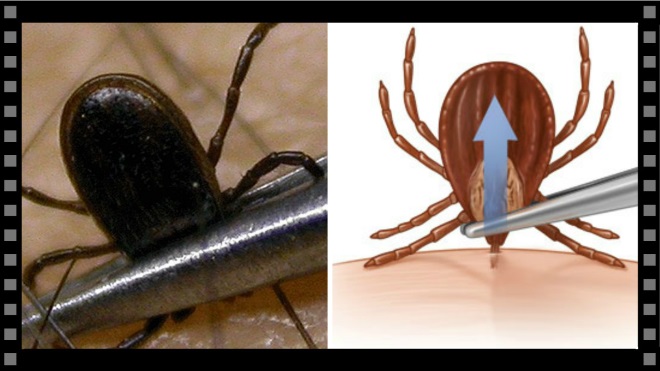
It is important to remove the tick correctly without damaging it.
If your dog has been subjected to a massive tick attack, removing them is a two-step process:
- Wash your dog thoroughly with a parasite-killing shampoo. Popular options include Gamma, Demos-Lux, and Bolfo Shampoo. Most ticks will be killed by the shampoo's ingredients and will fall off.
- Remove any remaining ticks manually using tools.
Many methods of removing ticks using improvised means involve treating the tick with oil or alcohol so that it suffocates and tries to free itself. However, veterinarians advise using this method only as a last resort—when the tick suffocates, it squirts blood and saliva back out. By doing so, you increase the likelihood of your dog becoming infected.
Although there are many ways to remove a tick at home, it's best to use specialized tools. It's important to remember that ticks can be infectious, so it's best to wear protective gloves when removing them.
Photo gallery: How to remove a tick
-
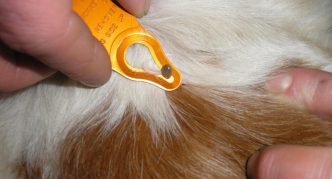
- The Tick Key plate is lightweight and compact, so you can carry it in your pocket.
-

- The most popular tick removal tool is the Tick Twister.
-
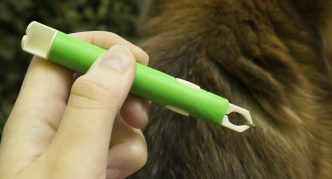
- Special tweezers for removing ticks are very easy to use.
-
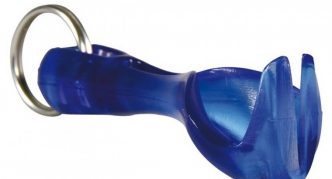
- Trixie pliers make tick removal easier
If you don't have tools to remove a tick, never try to do it with your hands. Also, when removing it, be careful and gentle. Avoid damaging the tick, crushing it, or tearing off its head or proboscis. This will minimize the risk of infecting your dog.
If you accidentally split a tick during the procedure, you need to continue the procedure:
- Find the remaining head and proboscis, they look like black dots.
- Disinfect the wound.
- Heat (burn) a thin needle.
- Remove the head like a splinter.
Sometimes tick remnants are embedded deep in the skin and are difficult to see and remove. In such cases, it's best to visit a veterinarian, where a veterinarian can remove the remnants through a small incision.
Wound treatment
Immediately after removing the tick, it is necessary to treat the wound that forms at the site of the bite. You can use any antiseptic (hydrogen peroxide, fucorcin, chlorhexidine, iodine, brilliant green) or alcohol. Apply an antiseptic to the wound to disinfect it and prevent further infections. Use alcohol-containing liquids in moderation; do not apply a compress, as this can cause a skin burn. With proper treatment, the wound will heal fairly quickly—in 3–5 days.
After the tick has been removed and the wound has been treated, you need to carefully monitor your pet's behavior and well-being.
Consequences
The biggest danger isn't the tick itself, but the infections it can infect the animal. When biting, the tick releases saliva containing tiny parasites. Once in the blood, they destroy cells, thereby causing intoxication and disruption of the body's metabolic processes. Although only 10% of ticks carry infections and parasites, it's important to take your pet's health seriously after a bite.
Diseases carried by ticks and their symptoms:
- The most common disease — Piroplasmosis. Its pathogens (Babesia) enter the bloodstream and destroy red blood cells. The main symptoms are lethargy, loss of appetite, thirst, fever, jaundice, and dark urine.
- Lyme disease is dangerous for both dogs and humans. A week after the bite, symptoms appear: loss of appetite, fever, apathy, lameness, swollen lymph nodes, and joint inflammation. Lyme disease is especially dangerous for pregnant dogs, as it is transmitted in utero and can lead to the death of the puppies.
- Bartonellosis. Symptoms include fever, joint weakness and inflammation, anemia, significant weight loss, nosebleeds, meningitis, and heart and vascular disease. Bartonellosis is also dangerous to humans.
- Ehrlichiosis. The main symptom is a prolonged fever. Intracellular bacteria destroy platelets, monocytes, and granulocytes. With monocytic ehrlichiosis, the dog begins to lose weight, develops hemorrhages in the eyeballs, blood in the urine, and anemia. With granulocytic ehrlichiosis, seizures, joint pain, and liver enlargement occur. The main symptoms may appear 10 days after infection.
- Encephalitis affects the nervous system and causes inflammation of the brain. Encephalitis causes paralysis, vision loss, and high fever.
Although these diseases can be sluggish and may not show any dangerous symptoms, they are still very dangerous. If necessary medical care is not provided, an infected animal may die. Therefore, if you notice any of the above symptoms, consult a veterinarian immediately. Only after a thorough diagnosis will doctors prescribe the necessary medication to restore your pet's health.
Prevention of infection
If you and your dog are traveling to areas where there is a risk of tick attacks, you should take preventative measures. You can visit a veterinarian, where your dog will receive an antiparasitic injection (usually an intramuscular injection of Veriben, Berinil, or Azidin). Tick vaccination for dogs is a method of short-term protection by stimulating the immune system, as well as the optimal method for mass tick control during a large-scale infestation. This method is gradually gaining popularity, but questions about the effectiveness of vaccination and the safety of your pet remain.
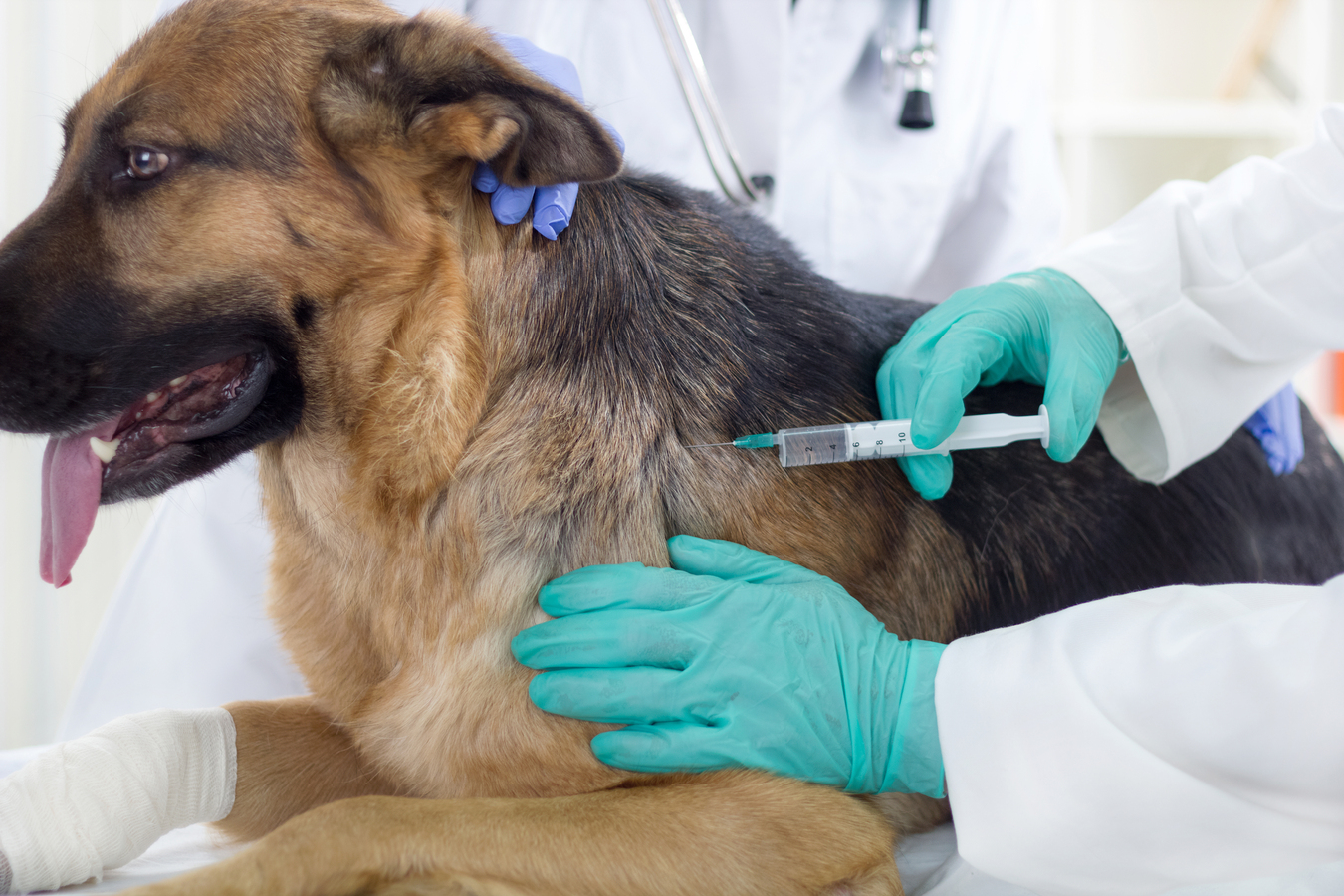
At the veterinary clinic, your pet will receive a preventative injection.
Collars, sprays, drops and shampoos against ticks can also be used as preventative measures.
Video: Dog Bite Symptoms and Treatment
Reviews from dog owners
Or maybe you shouldn't wait for any symptoms to appear and should go to a veterinarian immediately after removing the tick for an express test, rather than self-treating.... Especially considering that Beans are more susceptible to this disease than other breeds. Diagnosis and treatment should be handled by a professional, and we should keep an eye on our dogs. Sorry if I offended anyone or was too harsh, but in my opinion, the answer to the question "What to do if a dog is bitten by a tick" can be summed up as "GO TO THE VOCATION IMMEDIATELY," so you can sleep soundly and not wait for the infection to develop into a moderate or severe case. Incidentally, piroplasmosis is 100% treatable only within the first 1-3 days of treatment. By 7-8 days, the percentage drops to 10%.
We first encountered ticks and piroplasmosis about 10 years ago. Our collie couldn't be saved then—it was too late. They say forewarned is forearmed. I always thought ticks appeared when it was already warm—but no, the first ones I caught on my dog were just after the snow melted, and they remain active until the frost sets in. Their peak activity is in late April/early May and late September/October. After a tick bites, it's not always easy to find: it might fall off on its own, or the dog might scratch it off with its claws. The very first symptom is loss of coordination—the dog staggers, hesitates to go down stairs, becomes lethargic, and refuses to eat. Later, blood appears in the urine—it's best not to wait until this point—it indicates kidney problems, and the liver is also affected. If you even suspect a bite, don't delay; take it to the vet immediately.
The likelihood of finding a tick attached to your dog's skin is very high. However, the risk of contracting serious infectious diseases along with the tick is also enormous, potentially leading to death. To avoid potential consequences, it's important to examine your dog for bites and monitor its behavior and well-being. If any alarming symptoms appear, consult a veterinarian immediately, as every hour could cost your four-legged friend's life.