Hornets are among the most dangerous arthropods and winged creatures in the world. They are found throughout the world. In Russia, they are abundant in Primorye. In Japan and China, which are particularly susceptible to insect infestations, several dozen people who are not allergic to wasp stings die each year.
Content
Who are hornets?
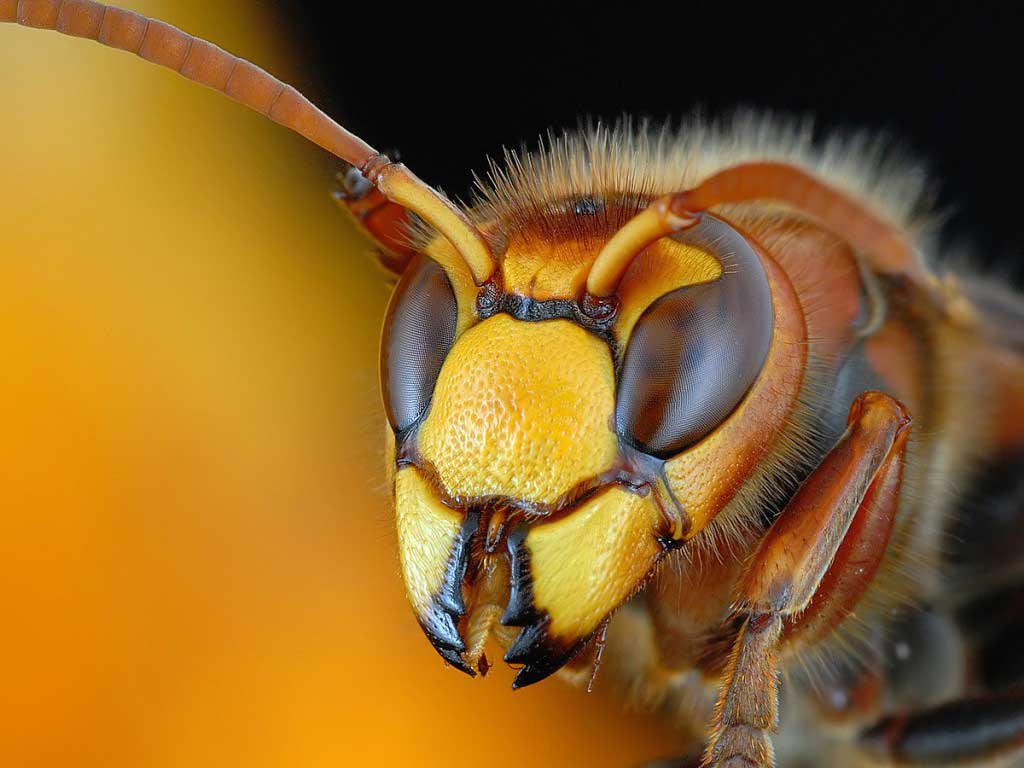
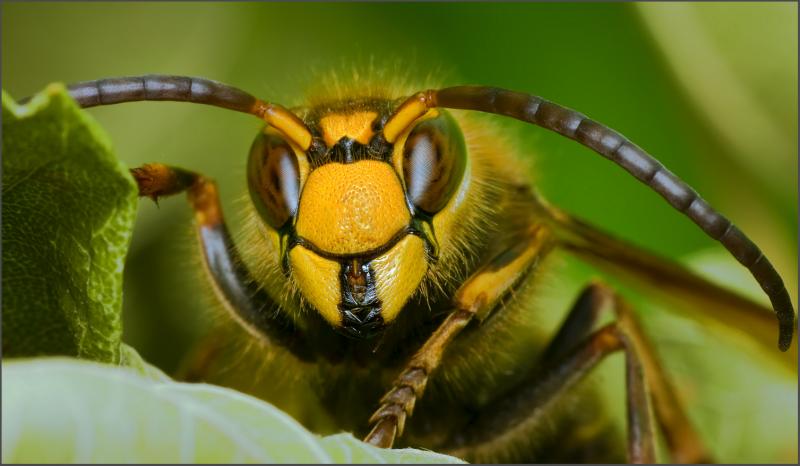
They are the largest members of the wasp family. Their distinctive feature is their size: their body length is 2–3 cm, with some individuals exceeding 5 cm, and their wingspan reaching up to 8 cm. Hornets differ among themselves in the color of their heads, which can range from yellow to orange. They live in colonies with a complex hierarchical structure, where each individual strictly fulfills its caste role. This system perfectly organizes the construction and protection of the hive, feeding, and the reproductive process.
Because of their size, hornets have received interesting names: in Japan - "sparrow bee", in Taiwan - "tiger bee".
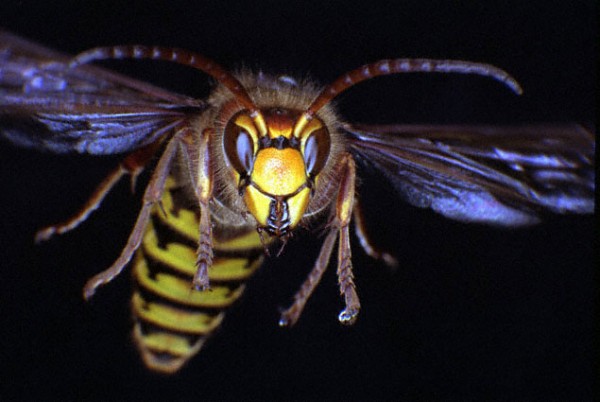
The hornet's sting is smooth and easily exits the victim's body.
Hornet sting
These predators feed on various medium-sized insects (hordeflies, wasps, bees), and they also eat dead prey. They also enjoy tree sap, nectar, fruits, and berries, but these are not their primary food, but rather a delicacy.
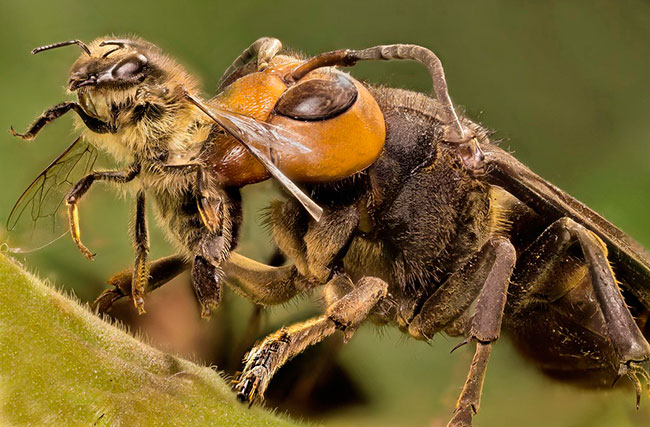
To hunt small insects, the hornet uses powerful jaws, which it uses to easily break its prey.
A hornet attacks a person when it feels threatened. At this point, it produces a special substance called an alarm pheromone. Sensing this, the entire hive will flock to its mate if it's located nearby. A single sting is simply a nuisance to a human, but multiple stings are dangerous. In the case of a large dose of poison, the likelihood of a fatal outcome increases, as anaphylactic shock occurs. According to statistics, 40 people die from hornet stings in Japan every year. This number is several times higher than the number of deaths from other insect stings in the region.
Only female hornets have a stinger containing venom. The amount and level of toxicity depend on the insect species.
When a hornet stings, a person experiences intense pain, significantly greater than that felt by a wasp or bee. This is not due to the toxicity of the substance, but to the size of the sting itself. The hornet does not die after stinging, like a bee, and can attack again, although the amount of poison will not decrease. This is precisely why they are so dangerous to humans. Avoiding a hornet sting is virtually impossible: these insects have lightning-fast reactions.
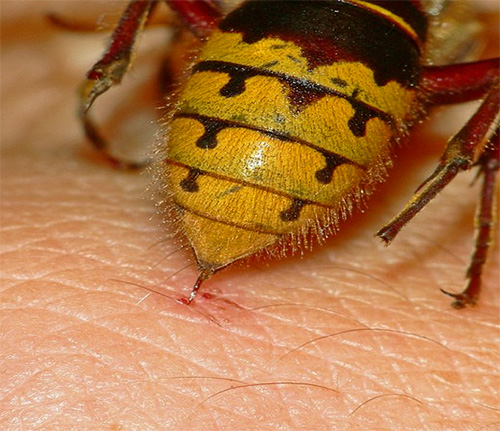
A person feels pain only after the insect stings, but not during the process
Signs of a bite
Due to the complex chemical composition of the insect's venom—histamine, acetylcholine, mandorotoxin, and other substances that have a destructive effect on human tissue and affect the nervous system—the following symptoms occur:
- redness at the bite site;
- itching;
- severe pain;
- edema;
- increase in temperature;
- increased heart rate;
- sudden change in pressure;
- the appearance of a purulent wound;
- neurosis of the skin.
If there is an allergic reaction to wasp stings, then the following is observed:
- nausea;
- vomit;
- dizziness;
- loss of consciousness - especially in children and weakened adults;
- slurred speech;
- blueness of the face, neck, ears, hands, eyelids;
- suffocation.
If you accidentally touch a hornet without noticing that it has landed on your clothes, it can sting.
Japanese entomologist Masato Ono, who was stung by a mandarinia hornet, described the pain as "like having a red-hot nail driven into my leg."
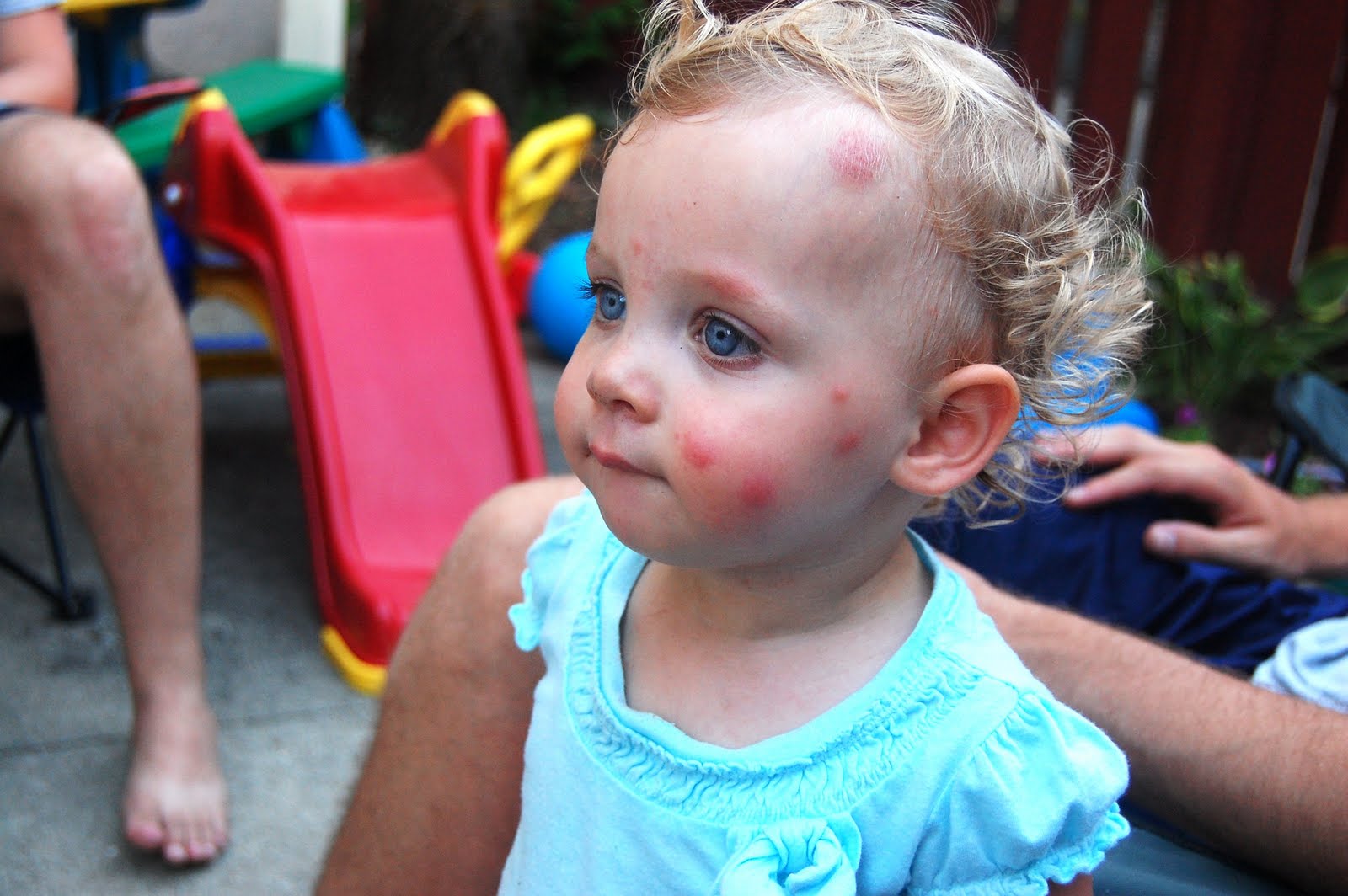
If an allergic reaction develops in the form of hives, it can develop into a very serious problem called angioedema. Facial swelling often resolves within a few hours, but can take up to two days. But if you are bitten, it is better to call an ambulance immediately, without waiting for an allergic reaction to develop.
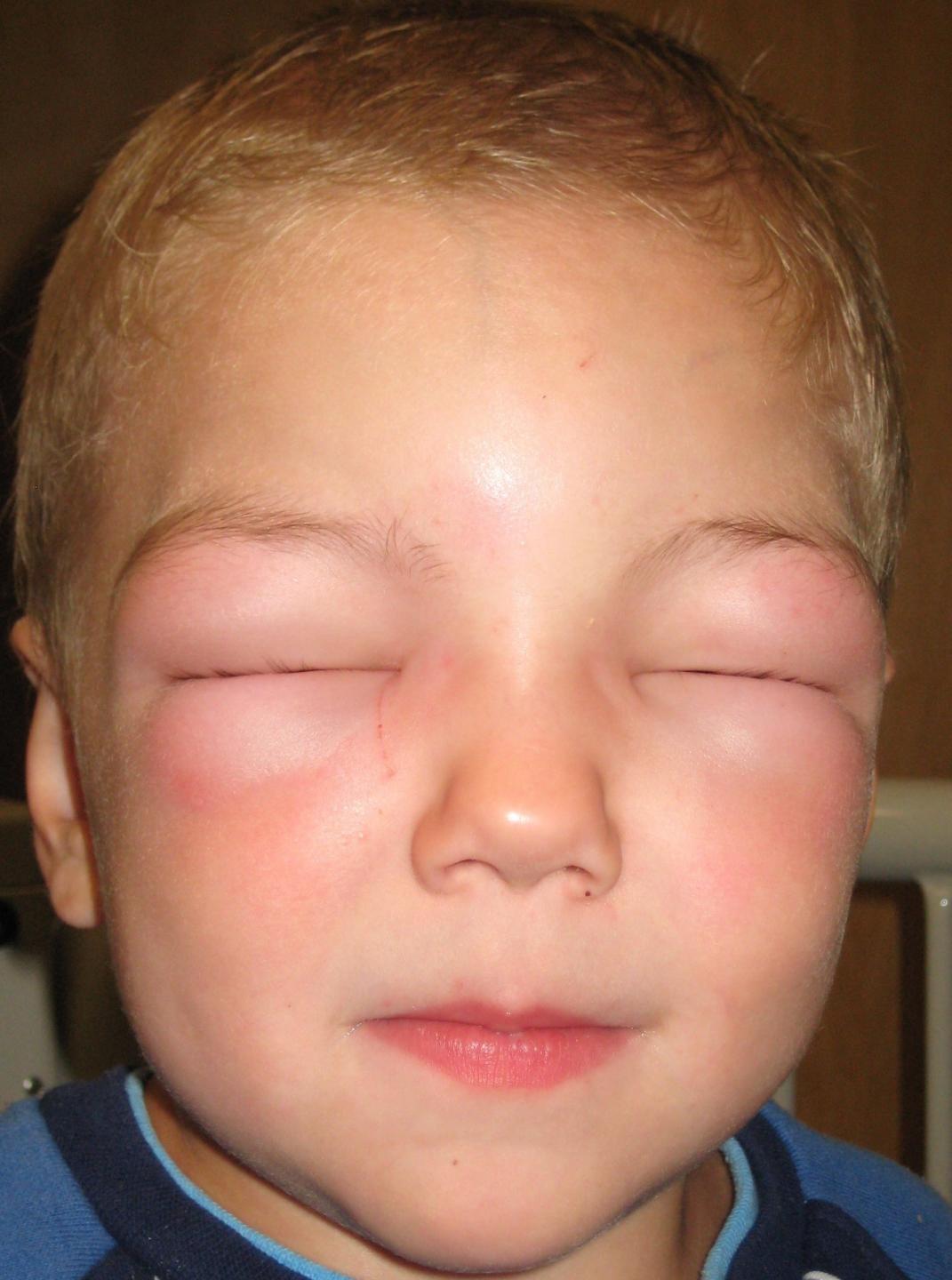
The most difficult thing when a child has Quincke's edema is to calm the baby down so that first aid can be given.
Video: All about Quincke's edema
How to recognize a hornet sting
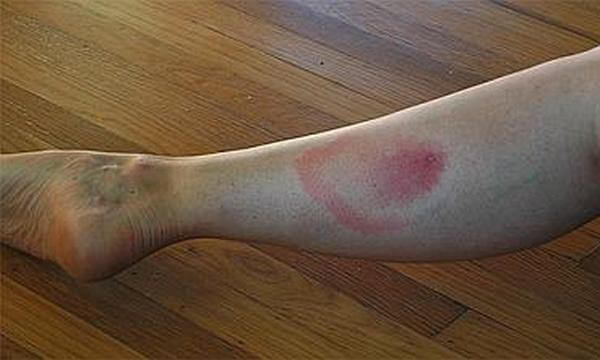
A characteristic feature is severe swelling at the bite site and a wide area around it. Insects most often bite the arms and legs, as these parts of the body are exposed. Swelling becomes noticeable within the first 60 minutes and persists for several hours. If an insect bites your hand, you can forget about using it—the pain makes it difficult to bend your fingers, although they are usually uninjured. If a leg is bitten, walking will be painful.
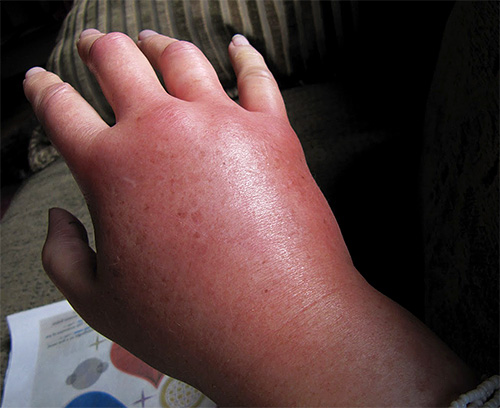
The hornet sting site increases in size and does not return to normal for several hours.
The most dangerous case is a hornet sting to the face. The venom is so toxic that the damaged area is large and often reaches the eyes. In this case, the eyelids enlarge, making blinking difficult. If one eye is damaged and the other remains normal, there is a high probability of a sharp deterioration in vision.
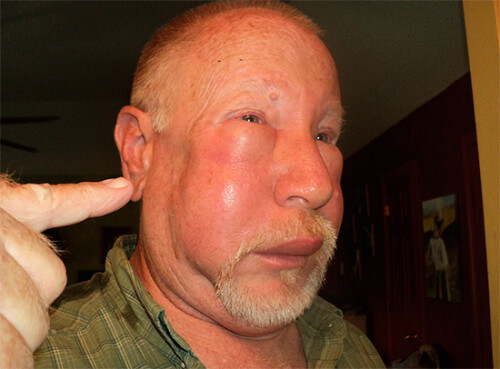
Hornets often target the human face because it is rarely protected.
First aid for a hornet sting
Do the following:
- Call an ambulance. Even if the victim appears to be doing well, complications may arise that need to be addressed by specialists, so it is important to call a doctor immediately after a bite.
- Give the patient an antihistamine—Suprastin, Loratadine, or Cetirizine. They block H1 receptors, which cause swelling.
- Calm the victim down – in this situation, nerves will only make things worse.
- Help the patient to sit up as this will make it easier to monitor his condition. If a small child is bitten by hornets, pick him up and talk to him.
- Remove any restrictive clothing from the victim to facilitate breathing. If you are indoors, open a window to let in fresh air.
- Give the patient mineral water. This will reduce intoxication.
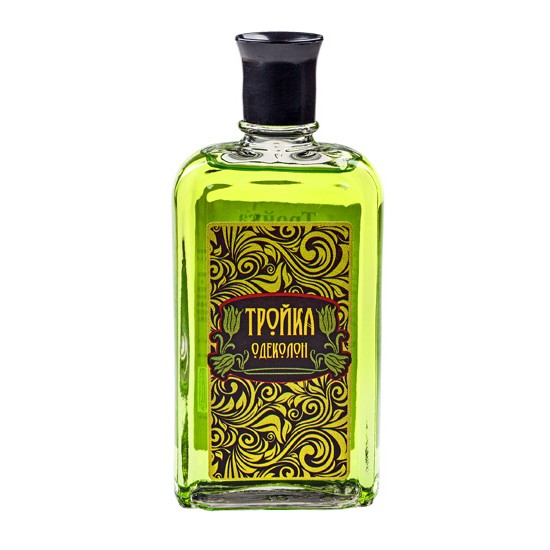
- Treat both the bite site and your hands with an alcohol-containing substance: vodka, cognac, cologne, toilet water.

Cologne is made with alcohol, so it can be used for disinfection.
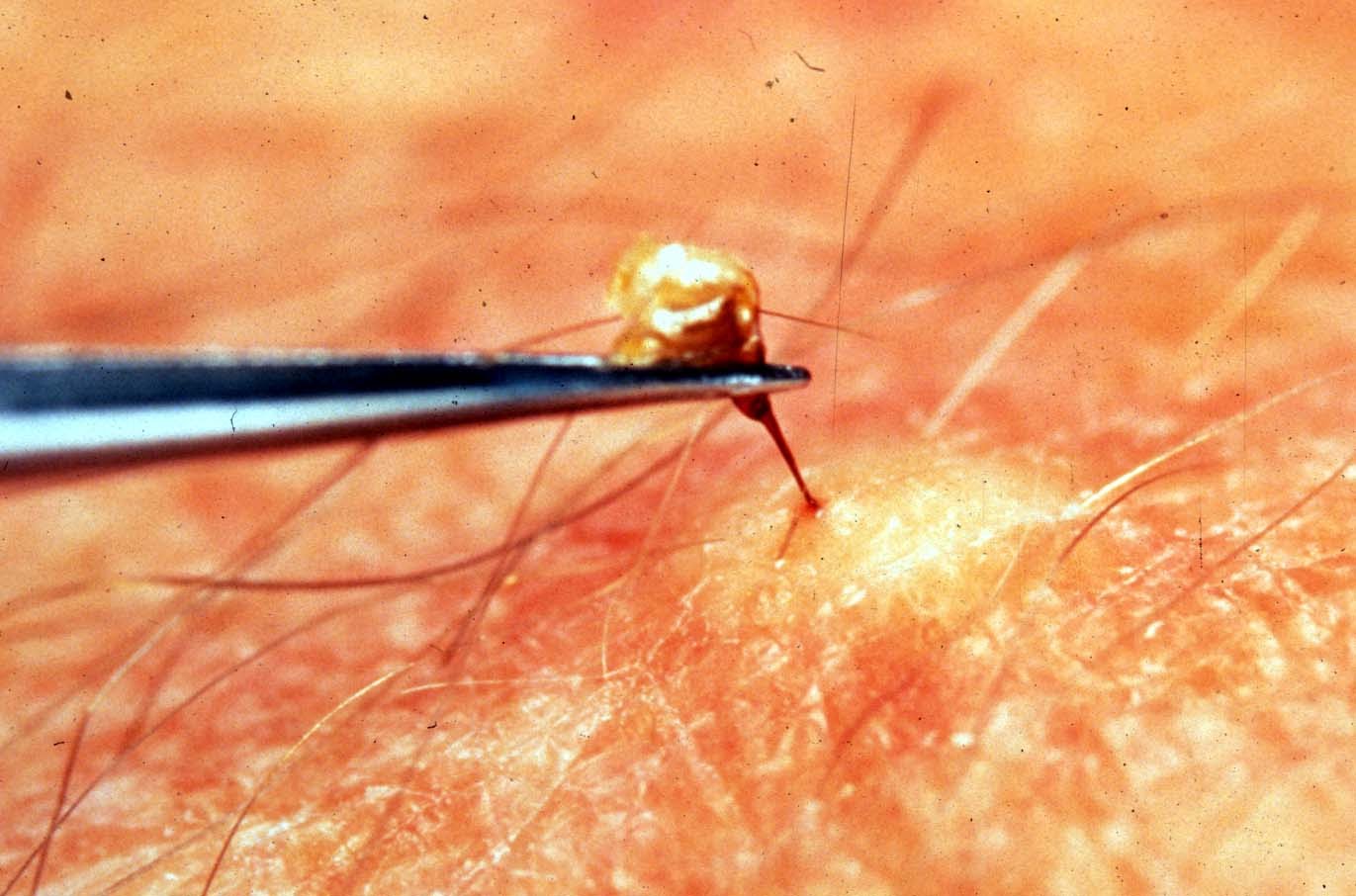
- Carefully examine the bite site for the stinger: it may break off and remain in the skin. To remove it, use tweezers to grasp the stinger close to the skin and gently pull it out. If you don't have any tools, try using your fingernails.
The easiest way to remove a hornet's sting is with regular cosmetic tweezers, but afterward it needs to be treated with alcohol.
- Apply a tourniquet above the bite site to prevent the venom from spreading throughout the body. Keep it in place for no more than 30 minutes.
- If a person is not bitten on a limb, take something cold or ice-cold and apply it to the bite site for a while.
These steps will ease the patient's condition until paramedics arrive. While waiting, ask the ambulance dispatcher what else can be done to help the victim. If he has lost consciousness, lay him horizontally with his legs higher than his head: this will increase the blood flow to the heart. Further assistance should be provided by specialists.
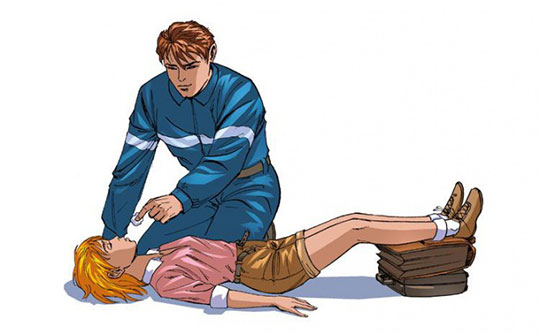
The legs must be higher than the rest of the body, so the “pillow” should be placed not under the head, but under the legs.
Pharmaceutical remedies against bites
Apply a gel or ointment to the bite site and swollen areas to reduce pain. Antipruritic and antihistamine medications are suitable for this purpose:
- Soventol;
- Fenistil;
- Advantan;
- Hydrocortisone ointment;
- Levomekol;
- Akriderm.
After this, be sure to consult an allergist.
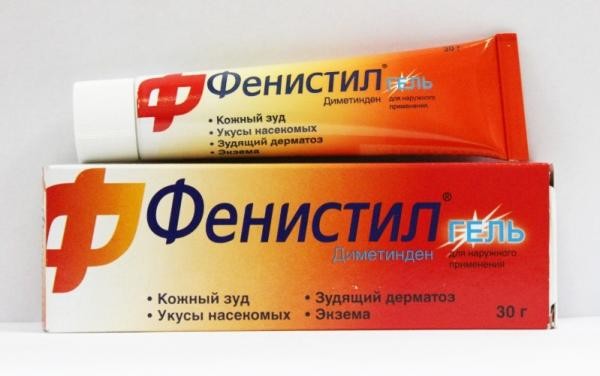
Medicines help with insect bites faster and more effectively
Traditional medicine
To reduce swelling and pain use:
- soda: dip your finger in warm water, then in soda, apply to the affected area and repeat until the entire affected area is covered in soda;
- squeezed juice of dandelion, lemon, cucumber, onion or plantain: apply and distribute evenly over the affected area to reduce itching and swelling;
- garlic, onion and apple: place the cloves on the affected area and hold for a while until it gets better.
Folk remedies are inferior in their effectiveness to medical drugs.
What not to do
The following actions are prohibited:
- alcohol consumption - alcohol promotes the spread of poison throughout the body;
- cauterization of a wound with something hot - treatment should only be with alcohol-containing products;
- warming up the injured area.
How to help a pet who has been bitten
Our pets react in the same way as humans, so failure to provide medical assistance in a timely manner can lead to the death of the animal. Remove the stinger if it remains in the pet's skin, treat the skin with alcohol, and then take the animal to the veterinarian.

Animals suffer from hornets no less than humans, but they cannot cope with the consequences of a sting without our help.
Video: What to do if you're stung by a hornet
How to protect yourself from hornet stings: preventative measures
Caution will help avoid dangerous bites:
- Avoid abandoned wooden buildings and areas in the forest that seem impassable.
Hornets like to settle in abandoned houses, where they are very difficult to notice.
- If you discover a nest near your home, call a pest control agency. Don't try to burn the nest yourself—you'll only anger the hornets and risk multiple stings. Please remember that aerosol insecticides are not effective against these members of the wasp family.
- If you see a hornet nearby, don't make any sudden movements to avoid provoking an attack. Freeze in place.
- If there is a whole hive nearby, hide before the insects discover you.

The only type of clothing that will protect you from attacking hornets is a beekeeper's suit.

A beekeeper's suit will be good protection against a hornet attack.
Tips for allergy sufferers
Follow these simple rules:
- Always keep antihistamines (preferably injectable form, but tablets are also acceptable) on hand that are effective for you.
- Communicate your allergies to everyone you interact with. Explain in advance what to do in case of an emergency.
- Carry a list of medications you are allergic to with you.
Hornets don't attack people without a reason. Be careful, avoid sudden movements, don't touch the insects, and don't damage the nest. That way, you won't have to experience their defense mechanism in action.