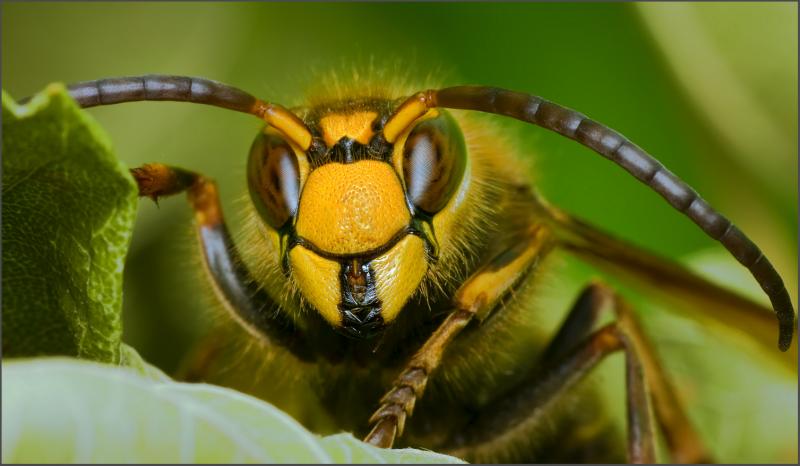
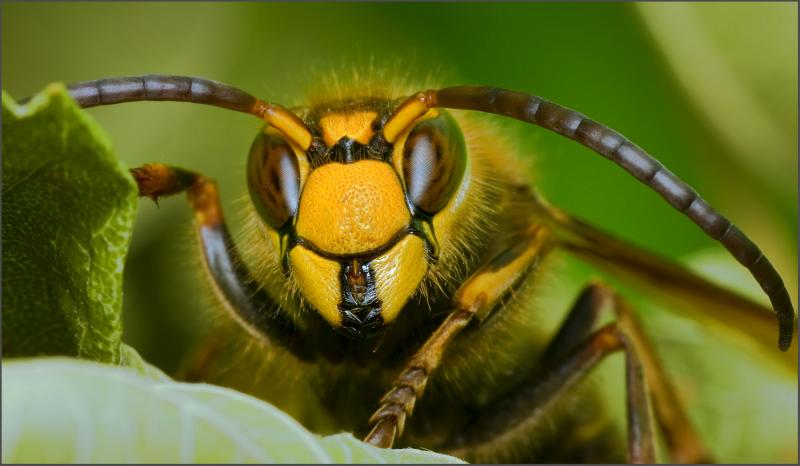
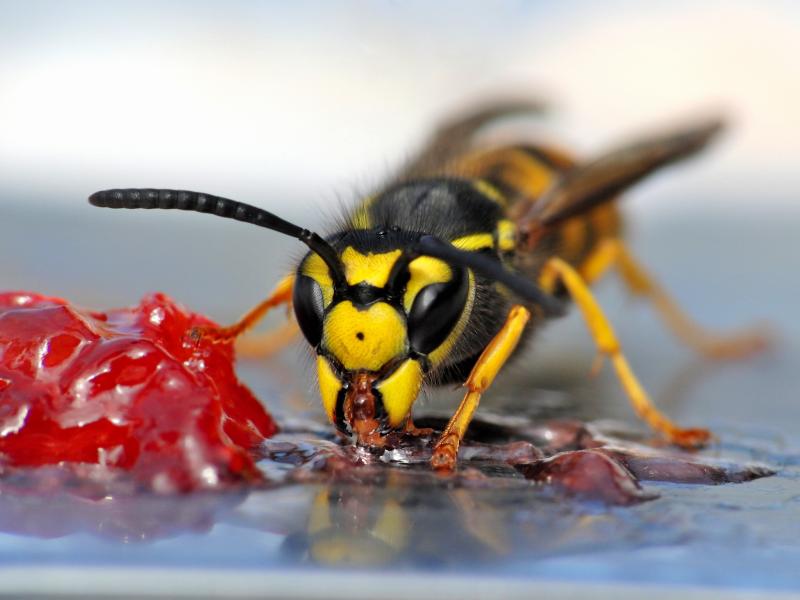
The hornet (Latin: Vespa, meaning wasp) is a social, annual insect. The discipline and caste system that reign within the hive subordinates its short life to a single rule: to do everything necessary to procreate. It is commonly believed that giant wasps are spontaneous in their aggression, but this is not the case, and for the hornet, attacking is a way to protect the nest. Often, guarding territory whose proximity a person may not even suspect, these insects attack the offender. In such situations, no matter how much one wishes to peacefully coexist, one must choose the safety of one's own family. There are several methods for hornet control suitable for both home and garden.
Content
The main reasons for the appearance of hornets on a site or in a house
The hornet's range is quite extensive, encompassing virtually the entire southern and northern hemispheres of the globe. In our country, this insect is found throughout the world, but particularly large populations live in the European part and in the south. The key factor in the hornet's emergence is the availability of a food source. In particularly dry years, the founding queen travels considerable distances in search of food. It is possible that this journey may end in a gardening area or in the city.
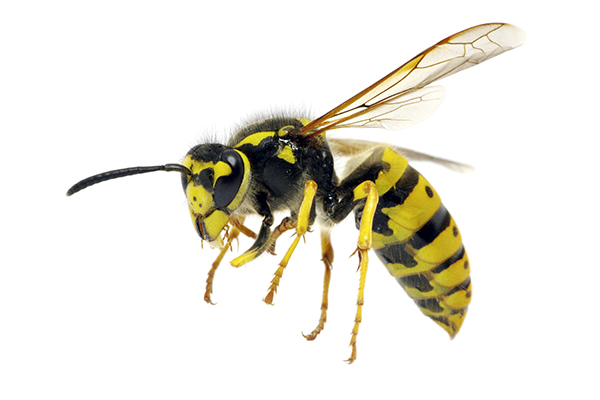
The length of a hornet is usually 1.8-3.5 cm
In human-occupied areas, insects most often build nests in remote, quiet, and dry places: attics, balconies, lofts, basements, garages, livestock and poultry buildings, uninhabited sheds, etc. In rare cases, a former birdhouse, a tree hollow, or the soil can become a home for a young swarm.
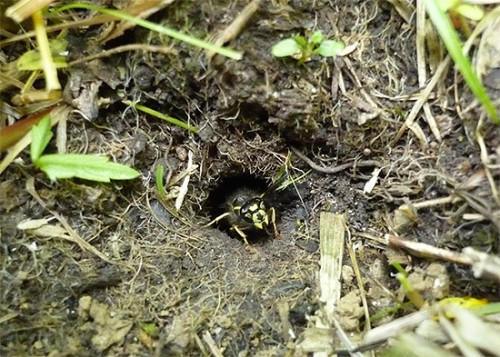
In areas with warm climates, where the upper layers of soil are well warmed, hornets build their nests in the soil.
Hornets are predators by diet, but they also enjoy plant foods, including any sugary foods, berries and fruits (including rotten ones), and flower nectar. They also enjoy feeding on tree sap, such as oak and birch, so they may fly from oak or birch groves when searching for a new nesting site. Honeybees are a particular delicacy for these giant wasps. The proximity of an apiary is a common reason for hornets to appear.
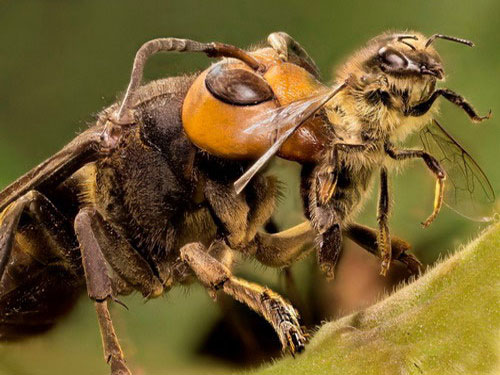
Hornets not only destroy bees, but also take all the honey, pollen and larvae to feed the growing young.
Anyone who has encountered hornets knows how tireless these insects are. There's even a popular belief that they never sleep, and that's not far from the truth. With sufficient food and the absence of enemies (and the hornet has no natural enemies anyway), a colony can grow from several hundred to several thousand individuals in one season. Giant wasps are often attracted to human dwellings by various aromas, which can include a lush flowerbed and rotting waste, such as meat or fish scraps.
So, the reasons for the appearance of the hornet are as follows:
- an unkempt garden plot with a large number of pests (a food source for hornets);
- cluttered balcony, yard, etc.;
- close location of the apiary;
- young tree branches that have not been removed in time and have been pruned;
- abundance of rotting waste: open compost pit, garbage cans without lids;
- active flowering of ornamental plants and fruit trees;
- the presence of a forest, birch grove or oak forest nearby.
Why is a hornet dangerous?
A hornet's sting is extremely painful, far more dangerous than a wasp's or a bee's. This is because the dose of venom injected into the wound is comparatively larger (approximately 2 mg, which is 2.5 times more than a bee's) and more toxic. Furthermore, when attacking, the insect can sting more than once. In most cases, hornet stings are accompanied by toxic and allergic reactions. Interestingly, away from the nest, the insect behaves relatively indifferently toward humans. However, approaching the hive provokes aggression.
When attacked or killed, a hornet releases a special alarm pheromone that quickly alerts other family members to the danger. Therefore, killing the insect near the nest is strictly not recommended.
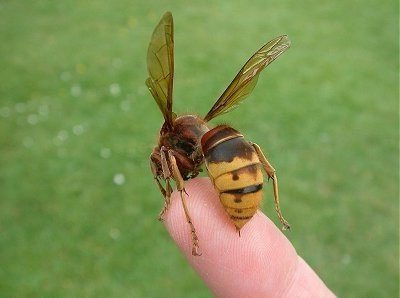
In terms of sensations, a hornet sting is usually compared to a hot nail sharply piercing the body.
How to tell if there's a hornet's nest nearby
The appearance of a hornet in your garden or home shouldn't always be interpreted as a full-blown swarm invasion. It could simply be a lost insect that has flown far from the nest in search of food, or a female scout preparing to establish a colony. To avoid provoking an attack, avoid excessive aggression by attempting to eliminate the insect with improvised means. It's safer to use a trap or insecticide spray and forget about the uninvited guest.
But if the insects' visits become regular, and several individuals move in at a time, it is worth assuming that their nest is somewhere nearby. The best solution in such a situation would be to call professionals.
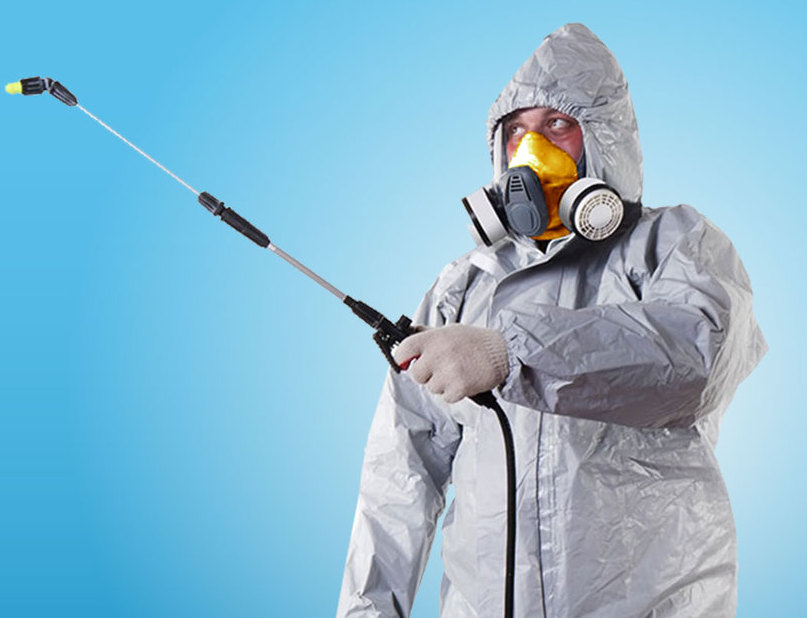
A professional pest control service will find and eliminate a hornet's nest.
How to find a nest
When attempting to locate a nest yourself, be mindful of the risks involved. Stock up on antihistamines, keep a phone handy to call emergency services, and prepare protective clothing. There's no safe time of day to search; insects remain active at night, although they are less active after sunset. If possible, postpone all efforts until cold weather sets in, when most of the colony will have died.
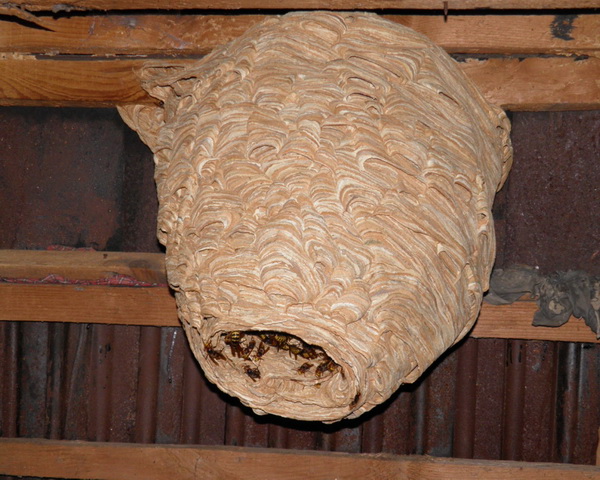
Hornet nests are typically egg-shaped and have a texture reminiscent of corrugated paper.
First, it's worth visiting all non-residential buildings on the property: sheds, attics, garages, and outbuildings. Then, inspect the surrounding area: the exterior facade, trees, logs, posts, etc. If this doesn't yield any positive results, listen carefully, as swarms tend to make a lot of noise.
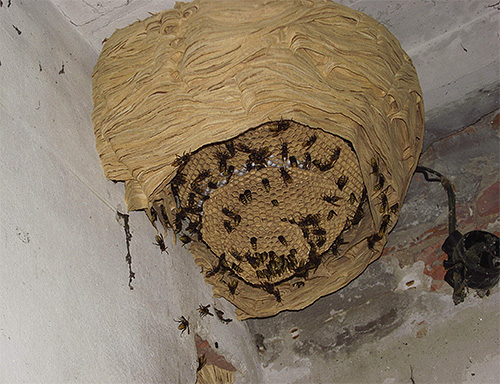
From the inside, the nest is a voluminous multi-tiered structure, where several hundred individuals can live at the same time.
Hearing can also help you locate a nest in your home, as hornets sometimes nest deep inside walls or under floors, making them impossible to see. The swarm makes a particularly loud hum in the spring while building its nest.
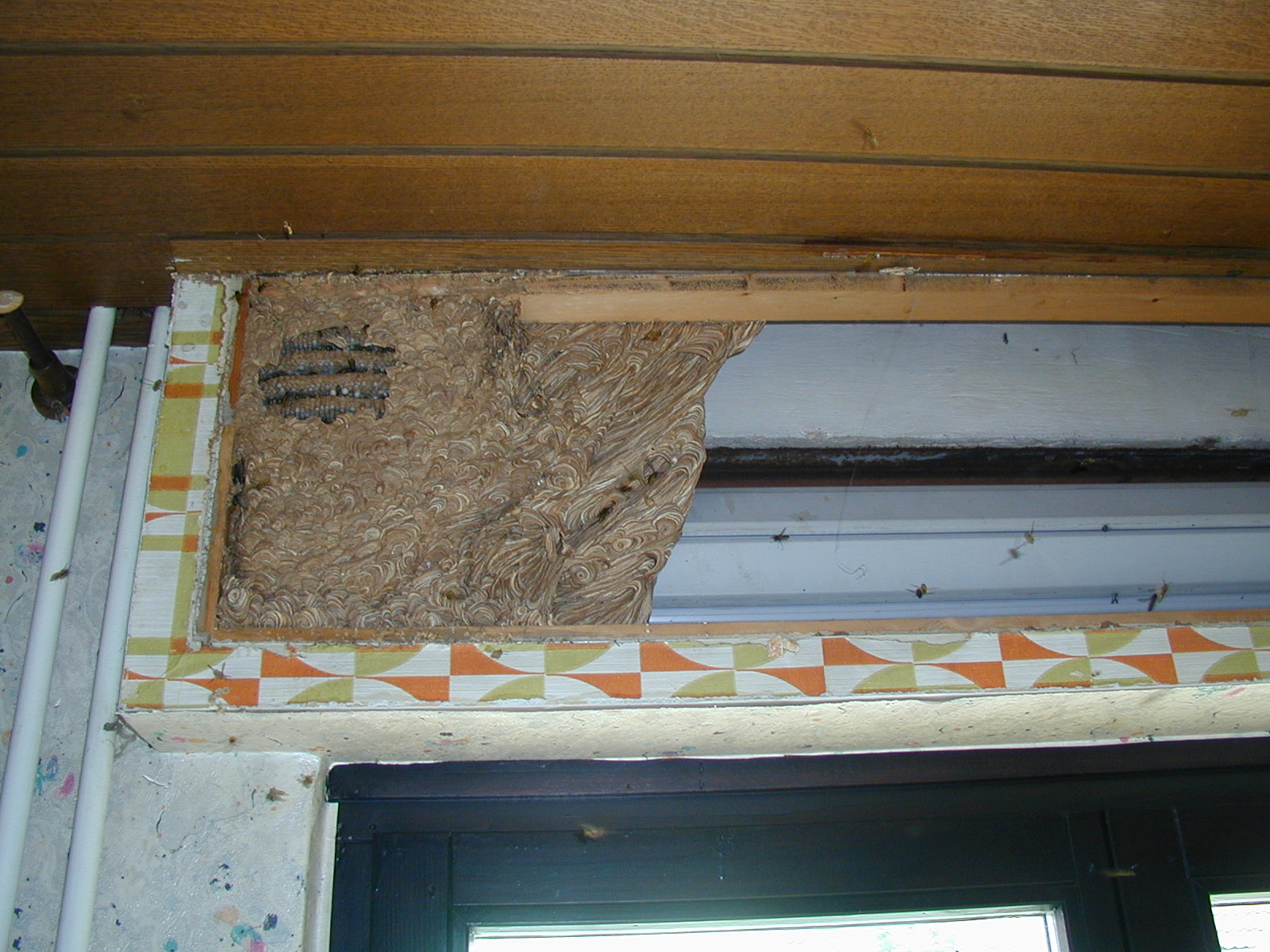
The most difficult to access nests are those located inside walls, cornices, window openings or under the floor.
As a last resort, you can track the insects. If your search yields no results, the swarm is likely located in a neighboring plot. In that case, you should share this information with the owner, and if there's an apiary nearby, with a local beekeeper, who will likely be interested in tracking down the intruders.
How to get rid of hornets
The hornet is a controversial neighbor: on the one hand, its sting, size, and unpredictability; on the other, pest control. The question of exterminating these insects usually arises in situations that pose a threat to life and health.
First of all, you need to decide on the most appropriate time to destroy the nest. Unlike bees or wasps, hornets are active most of the day. They are just as active at night as during the day, but their reaction time is somewhat slower. The least risky time to approach the nest is in the pre-dawn hours—between 3 and 5 a.m. However, this advice only applies to late summer and fall; in spring, you shouldn't attempt to control them at all. This is because nest-building occurs during this time of year, and the insects spend virtually nonstop constructing their new home. Any attempt or even hint of disruption to their plans will immediately result in aggression from the entire swarm. The safest period begins with the arrival of late fall. By this time, a significant portion of the swarm has naturally died out, and the remaining inhabitants either disperse or hibernate.
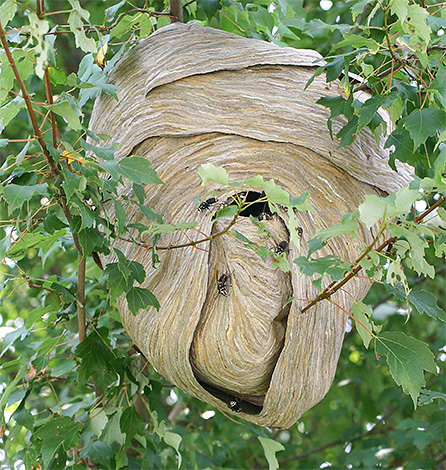
A small colony of hornets can build a nest even in the branches of a bush or a low tree.
Safety precautions when exterminating hornets
Removing a nest from a wall or ceiling on your own is extremely dangerous. Most methods used to control closely related insects (wasps and bees) will not work against hornets. For example, fumigating a swarm to reduce activity is often ineffective and even dangerous, as it is impossible to predict the insects' reaction. Repelling them with herbs, essential oils, and citrus peels is also questionable. Whatever method you choose, whether folk remedies or chemical ones, you should never neglect safety.
Safety precautions:
- preparing a protective sealed suit (a beekeeper's overalls will do), tight-fitting shoes, a respirator, and thick gloves;
- collecting a first aid kit, which must include antihistamines and anesthetics;
- careful preparation of the area: isolation of people and animals, and during insecticidal treatment, plants;
- collection of all necessary equipment and aids;
- study the instructions for the insecticide you plan to use, check the expiration date;
- Mandatory cleaning of the area after measures taken to combat hornets.
Folk methods of dealing with wasps
The choice of treatment depends on the location of the nest. For hornet nests, the most common method remains boiling water. This is a controversial measure, as without experience or if the attempt fails, aggression from the swarm cannot be avoided. The mechanism is simple: pour boiling water (5 liters is sufficient) into the hole and block the exit with stones, soil, insulating foam, or cement. It's possible that the procedure will need to be repeated over time, as it's impossible to determine the size of the nest in advance.
An accessible nest hanging from the ceiling can be submerged in a bucket of water. This method requires getting as close to the colony as possible, so the timing should be wise—pre-dawn hours (except in spring, when insect activity peaks). A suitable-sized bucket should be filled with water two-thirds full. Then, carefully place it on the nest from below, completely submerging it. Leave it there for 20-30 minutes. To avoid holding the bucket the entire time, you can prop it up with a stepladder (or boxes or a chair). This method is quite effective, as hornets die very quickly in aquatic environments, but it is also dangerous.
A more traumatic yet effective method of control is the use of fire. This is suitable for burrows and hard-to-reach nests located in stone crevices of the house or foundation. Application: spray any flammable liquid (gasoline is suitable) onto the nest and set it on fire. A blowtorch can also be used for this purpose. Cons: Attacked hornets will be extremely aggressive; failure to follow safety rules may result in a fire.
Repelling hornets with herbs (such as wormwood or pine needles) is only effective against solitary hornets. Such treatment of a colony will have no effect.
As a preventative measure, as well as for a comprehensive approach, you can make a trap with bait.
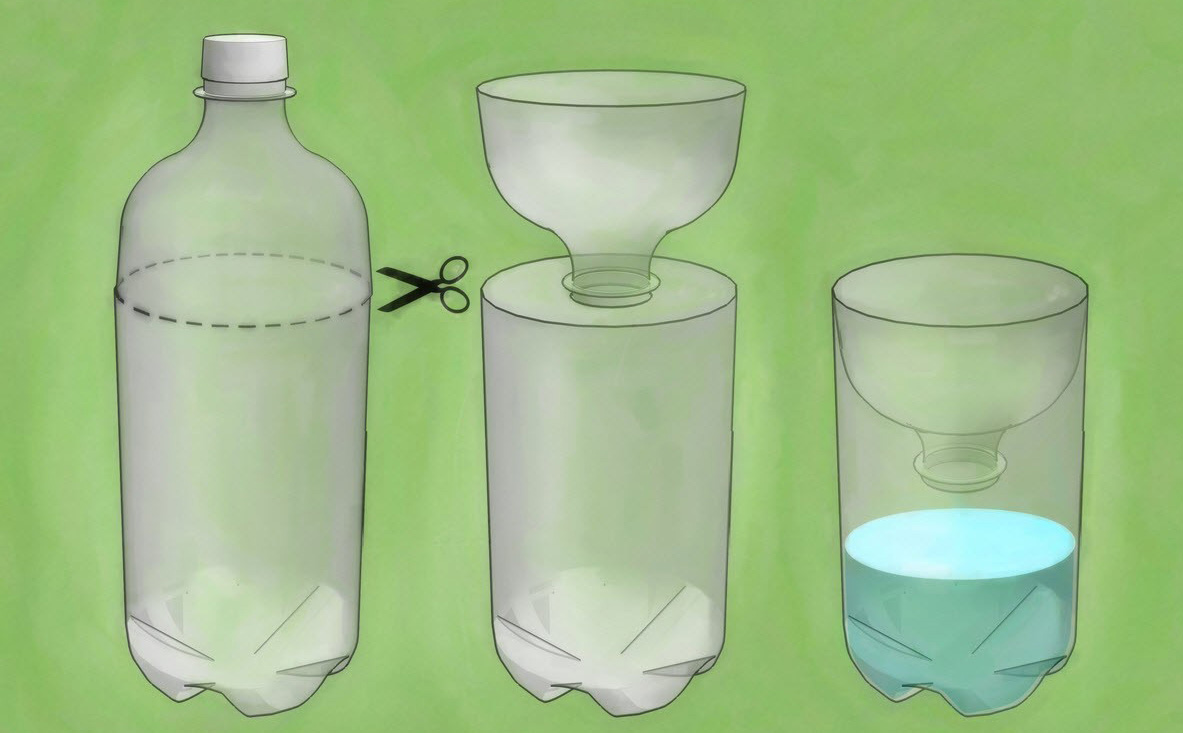
To make the trap you will need a regular 1.5 liter bottle
Stages:
- Use a utility knife or scissors to cut off the top of the bottle;
- insert the top into the remaining part with the cone facing down;
- pour liquid with bait into the bottom of the lower part;
- Using an awl (knife), make holes on both sides and thread a cord or wire through them to hang the trap.
Placing such devices in early spring will help control queen hornets by preventing them from building nests in your area. Any sugar-containing liquids can be used as bait: jam, honey, regular sugar, or beer dissolved in water (the smell of fermentation attracts wasps and hornets).
Video: DIY plastic bottle trap
Chemicals - insecticides
A hornet's nest is a cone-shaped sphere several dozen centimeters long. Most often, it's attached to the ceiling or walls, and getting rid of it is simply a matter of technique. However, there are cases where hornets nest in hard-to-reach places, such as a tree hollow or a wall. It's important to plan an access route in advance; you may need to hire a professional. And if you don't want to call a professional exterminator, chemical insecticides with a variety of action spectra are the most effective method of eliminating these giants.
Any insecticide labeled "for wasps" or "for wasps and hornets" is suitable for controlling hornets.
Smoke bombs
When dealing with hornets, smoke bombs aren't the first thing you might think of, but their effectiveness speaks for itself. This method is equally effective for treating indoor spaces (including homes) and outdoor areas (summer cottages, campsites).
Precautions:
- When using in a residential building, it's necessary to isolate not only the room being treated but also adjacent rooms, as smoke can easily penetrate them. The toxins contained in most types of fumigators negatively impact the health of people and pets, so refrain from occupying the room until the smoke has completely aired out. Houseplants, animal cages, and aquariums should also be isolated.
- People prone to allergies, those suffering from respiratory diseases, and those without minimal experience with smoke bombs are prohibited from using smoke insecticides.
- Attics, garages, sheds, basements and other utility rooms should be cleaned beforehand, and supplies and all items that do not require smoke should be removed.
- Careful study of the instructions will help you avoid mistakes.
- It is worth turning off the fire alarm in advance.
- After use, you must thoroughly wash your hands and face, gargle, and change clothes.
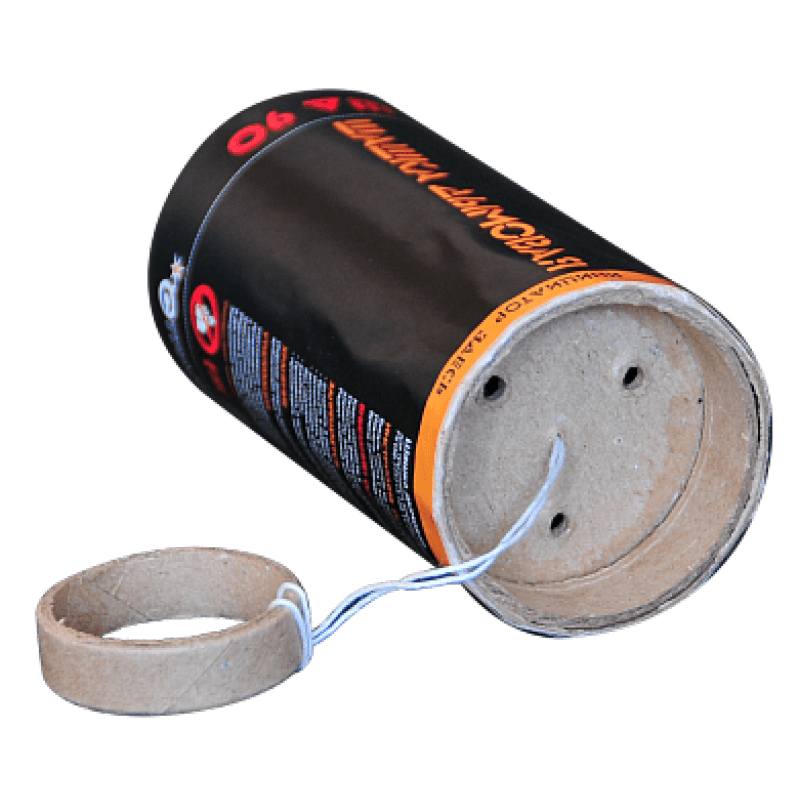
A significant advantage of smoke bombs is that you don’t need to get close to the nest to use them.
Before use, it's important to close all exit holes and seal cracks in the walls and floor, as hornets can easily hide in even the smallest crevices. Next, prepare a container of water into which to place the smoke bomb. Some manufacturers produce smoke bombs that begin dispensing smoke after being immersed in water, while others have a wick that requires lighting. Once the device is activated, evacuate the room.
To use checkers indoors, it is recommended to use two people: the first places and sets fire to the checkers, and the second monitors the process from the outside.
The most effective checkers:
- FAS;
- Mukhoyar smoke bomb;
- HELP smoke bomb;
- G-17 smoke bomb.
Aerosols for wasps and hornets
Aerosols aren't the safest option for controlling hornets and their nests, as spraying them requires close contact with the insects. However, choosing the right one is half the battle. The main thing to pay attention to when purchasing is the valve shape. Modern aerosols for hornet control are equipped with a special nozzle that allows the substance to be sprayed at a distance of 5 meters.
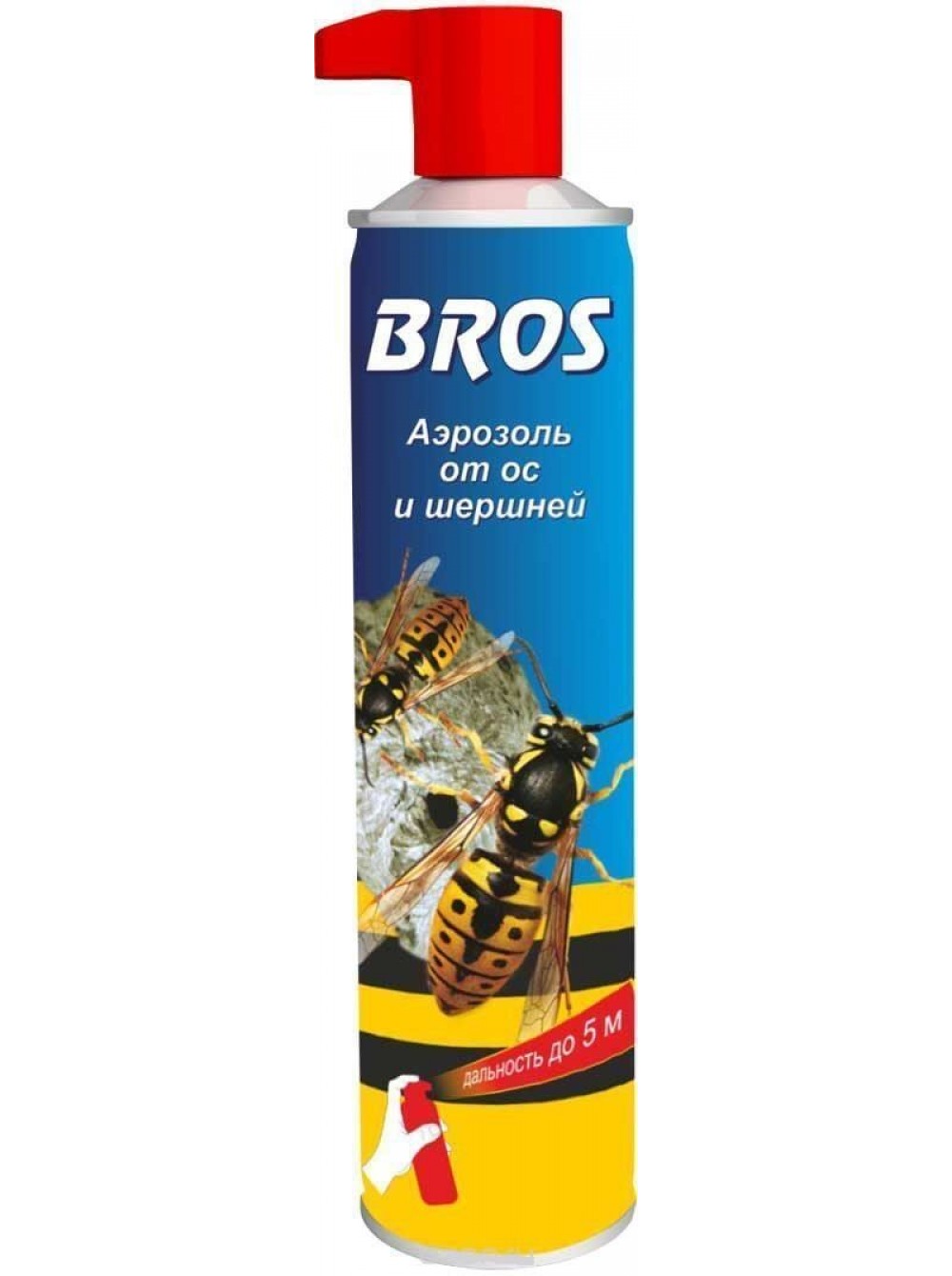
Bros insecticide is one of the most effective modern preparations
Aerosol application options:
- A nest (of any shape and location) can be destroyed using an aerosol spray with a remote valve. Before dawn, wearing protective clothing, spray the spray for 5-7 seconds in the direction of the nest (entrance hole, entire surface), then leave or isolate the area. If necessary, repeat the procedure after 24 hours. Cleaning should only begin when there is no activity in or around the nest.
- You can get rid of giants using an aerosol spray with any type of valve, using plastic film or a bag. For the latter option, it's important that the nest is isolated, has a perfect round shape, and isn't attached to multiple surfaces at once. Before dawn, carefully place the nest in the bag from the bottom up, quickly spray the insecticide into the hole formed at the top, and immediately tie or tightly wrap the base of the bag with tape. Cover the entire perimeter of the nest with plastic film, securing the edges to the surface to which it's attached with tape. Leave a small opening at the most convenient and safe corner through which to spray the product. Then close it and secure it with tape. Afterward, leave the nest for at least 24 hours, keeping the area isolated.
Types of aerosols:
- Klaus Insect Super and Dr. Klaus Fly Aerosol;
- Raid from flying insects;
- Combat PowerSpray;
- spray against wasps and hornets Wespex Quick;
- BROS aerosol against wasps and hornets;
- Super Cobra;
- Extra Killing Power and NEO Killing Power.
Aerosol insecticides have their advantages:
- ease of use;
- affordability;
- safety;
- absence of unpleasant odor;
- duration of action.
Liquid poisons and concentrates for treatment
Liquid poisons and concentrates are the largest group of hornet control products. They usually need to be diluted with water. The resulting solution can be poured into burrows and nests. It can also be added to traps as bait or sprayed into hard-to-reach areas.
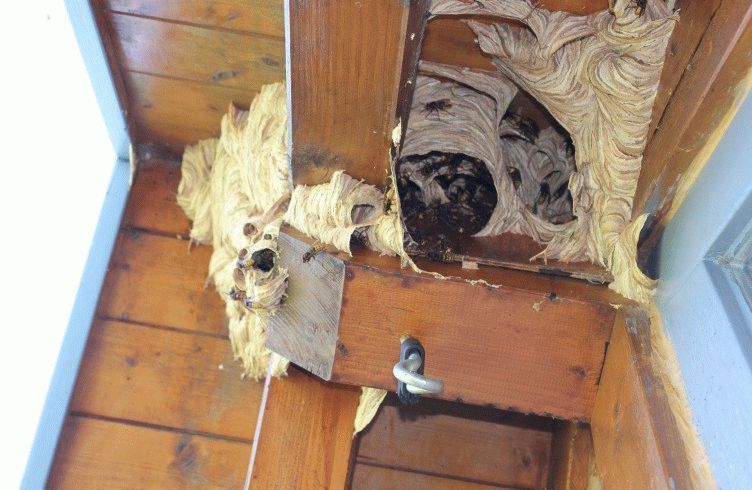
Untidy hornet nests are much more difficult to destroy due to the lack of clear contours, since it is not always clear how many exit holes they have, and where the insect might fly out from.
Making edible bait with these substances is the safest option for human health. You'll need any food scraps, such as ground meat or a rotting apple. Sugar-containing products such as jam, syrup, or honey are also suitable. Once the trap is optimally positioned, generously sprinkle it with poison and wait for the result.
The most effective types of poisons:
- Get (liquid concentrate);
- Taran (liquid concentrate);
- Delta Zone (microencapsulated suspension);
- Xulat (microencapsulated suspension);
- Dobrokhim Micro (liquid concentrate);
- Medilis Ziper (concentrated emulsion) and Medilis Super (liquid concentrate);
- Lambda Zone (microencapsulated suspension);
- Solfisan (concentrated emulsion);
- Cyfox (concentrated emulsion);
- Deltrin (microencapsulated concentrate);
- Taran (aqueous emulsion concentrate);
- Yurax (emulsion concentrate).
Almost all products provide quick results and are harmless to humans and animals.
Ultrasonic insect repellent
An ultrasonic repellent emits low-frequency waves, which trigger anxiety and panic in the insects. As a result, remaining within its range becomes impossible, and they fly away. Theoretically, the repellent can be effective against a few hornets, but it cannot be considered an absolute pest control measure.
Table: Pros and cons of ultrasonic repellers
| Positive aspects | Negative aspects |
| the device is safe for humans and animals | effectiveness has not been fully proven |
| easy to use (portable models and devices that run from a power outlet are available) | shows the lowest performance in open spaces |
| environmentally friendly | requires long-term use (the first noticeable changes are achieved after 1–3 weeks) |
| universal in use (helps against both insects and rodents) | Ultrasonic waves can be refracted by furniture, walls and other obstacles |
| does not interfere with household electrical appliances | you may have to buy more than one device |
Well-known brands of ultrasonic repellers:
- Zenet;
- Air comfort (improved version of Zenet);
- Riddex;
- Pest reject (ultrasonic and electromagnetic waves).
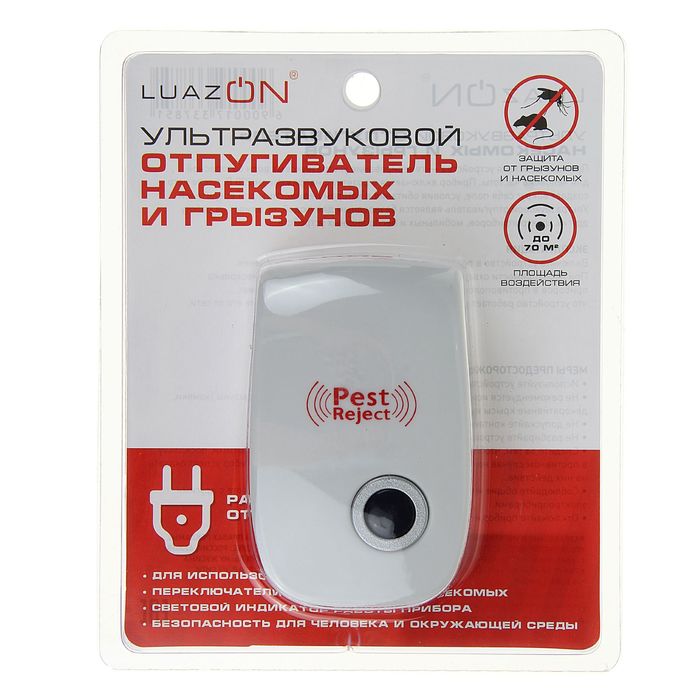
The low-frequency signal can have a negative impact on domestic rodents, so before using the repeller, you should carefully read the instructions.
Devices with electromagnetic wave emission are the most effective in this category of products, as their signal easily passes through walls. Modern household models are safe for health. It's important to remember that they require electrical wiring to operate.
Well-proven brands of electromagnetic repellers: Zashchitnik, Pest Repeller.
Insecticidal lamps
Among universal electroinsecticides on the market today, lamps are the most popular. The secret is simple: efficiency. They work thanks to ultraviolet emitters built into the housing. The emitted light waves are designed to attract insects. When a hornet approaches, it collides with an electrified metal grid, causing instant death. After death, the insect falls into a special tray located at the bottom of the device. These trays are removable, making them very easy to clean.
Due to the live grille, insecticide lamps pose a danger to children and pets. Devices should be suspended 2–3 meters above the ground.
Table: Pros and cons of insecticidal lamps
| Positive aspects | Negative aspects |
| avoid direct contact with the hornet | ineffective in well-lit areas |
| have no foreign odors | dependent on the power grid |
| the emitted light waves are safe for the human eye | UV blocks require annual replacement |
| easy to maintain | |
| portable | |
| low energy consumption | |
| large coverage area (medium power devices - 50-60 m2) |
The cost of insecticidal lamps depends on their power and configuration. Prices range from 1,500 to 15,000 rubles and up.
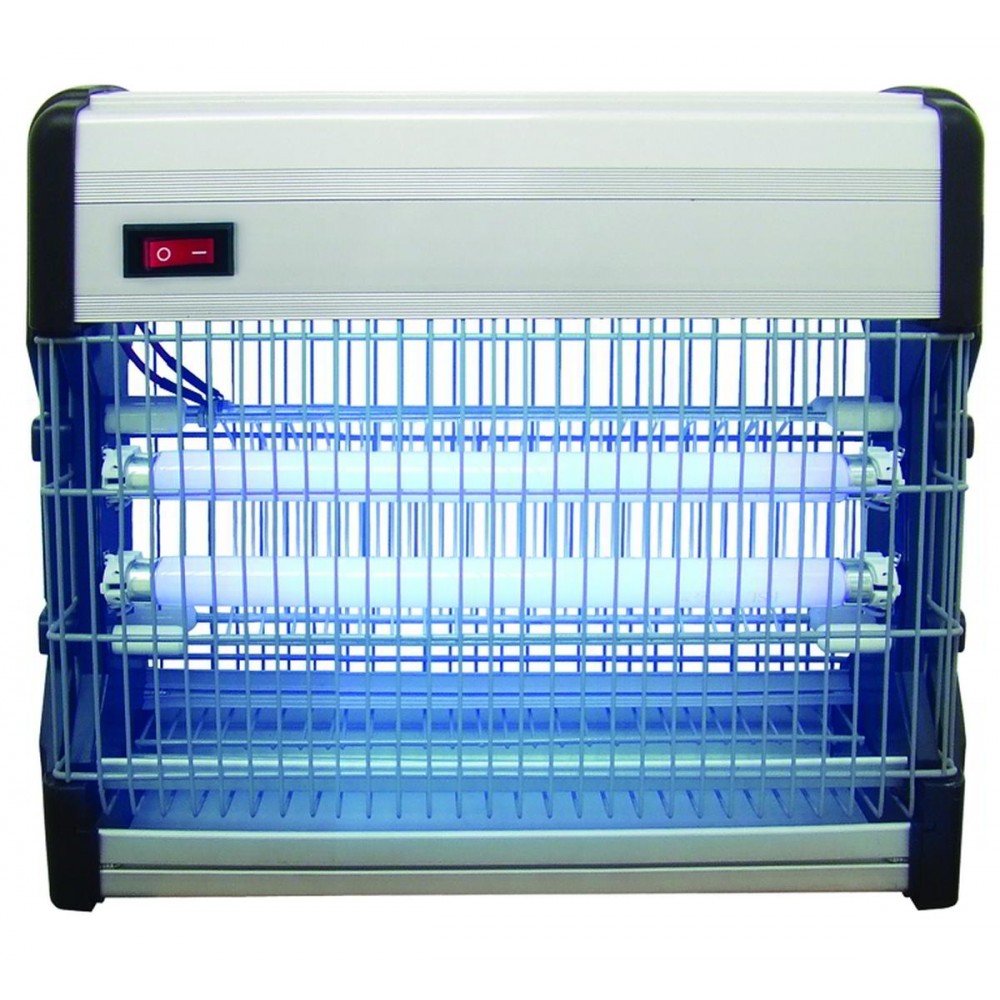
The body of the insecticidal lamps is resistant to various weather conditions and temperature changes.
Acoustic wasp and hornet repellent
Among the exciting new developments is an acoustic device that targets hornets and wasps. Completely safe for human health and gentle to the insects themselves, it triggers an instinctive fear in hymenoptera of a foreign colony, as it mimics the hum of a swarm.
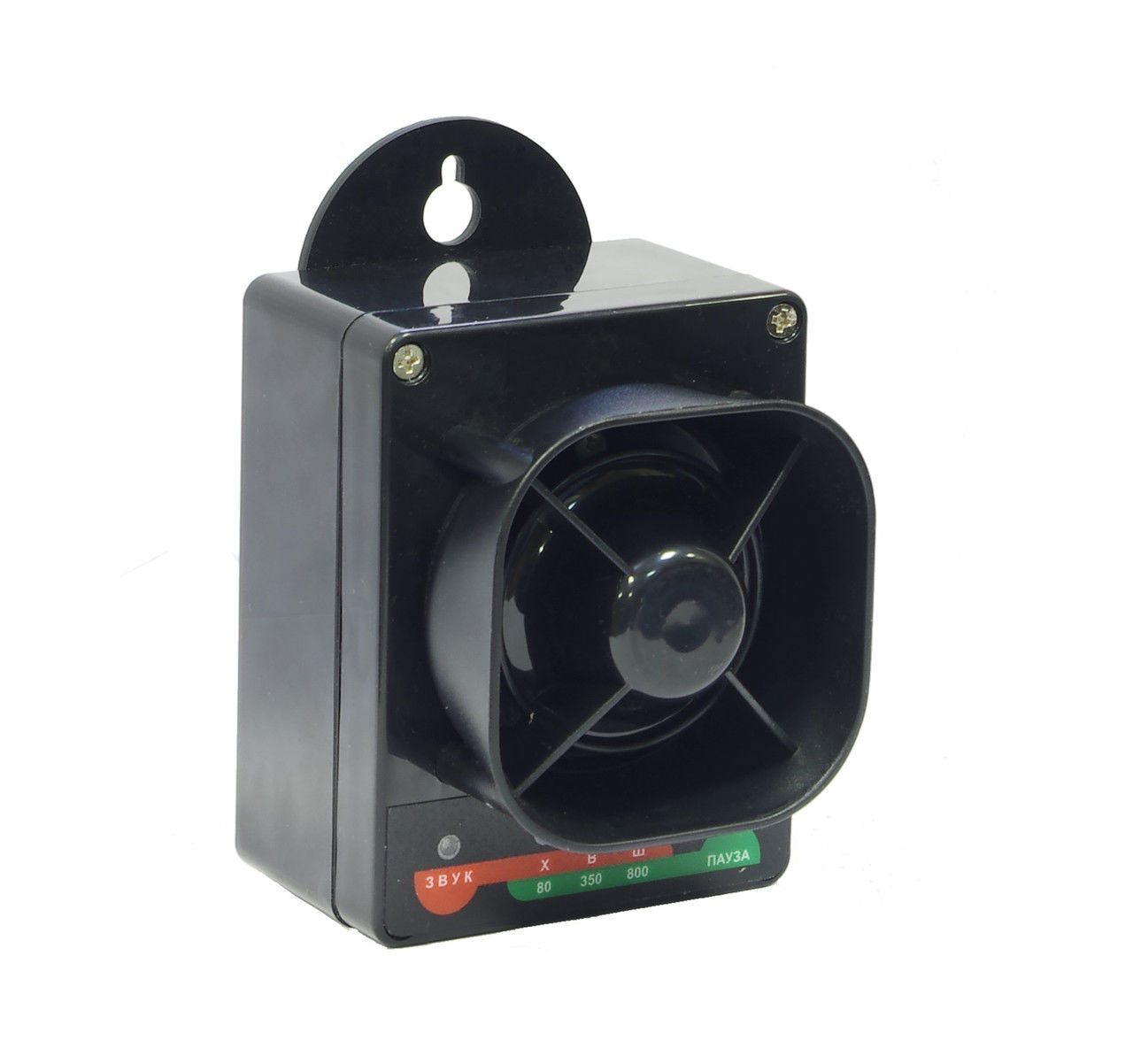
The acoustic repeller does not require additional maintenance or replacement of consumables.
Traps and baits that will work
Modern commercial traps are called "osolovkas." One might wonder how effective these devices are against hornets, as they are much larger than common wasps and most other flying insects. But don't worry, these are versatile devices designed for even the largest insects. Various traps and baits are a useful aid and preventative measure in the fight against hornets. They can be purchased at any hardware store.
Table: Pros and Cons of Traps
| Positive aspects | Negative aspects |
| variety of choice | ineffective in controlling swarms |
| affordability | Not all species are resistant to environmental conditions |
| safety for humans and pets | short-lived |
| portability | require frequent cleaning |
Photo gallery: types of traps
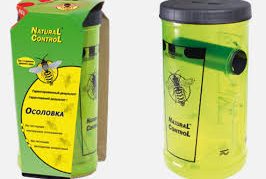
-
- The Mukhoyar trap is a homemade analogue of the bottle trap.
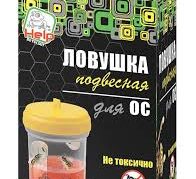
-
- SWISSINNO Wasp Trap uses a natural, long-lasting bait
-
- The Help hanging trap is a simple, all-purpose bait for flying insects.
-
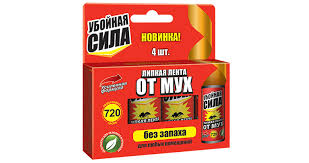
- Regular sticky tape can be a good help in the fight against hornets.
-
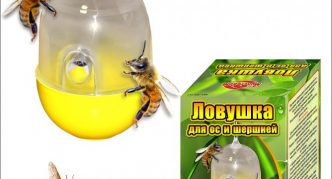
- A wasp trap is an effective way to get rid of annoying insects.
Preventing the appearance of hornets
If you're potentially dealing with hornets, the best approach is prevention. The most effective measures are taken in the spring months, when fertilized females are searching for a new home:
- The main reason insects linger within a human dwelling is the presence of food. Uncollected garbage and an open compost pit with the remains of last year's harvest are all attractive to insects. Waste (especially food) should be carefully packed in plastic bags, and containers and bins should have lids.
- Destroying old nests and birdhouses will help prevent new colonies from forming. Not all hornet species will settle in previously used hives; most prefer to start from scratch. However, the presence of another colony will signal to the insects that the area is welcoming. It's also important to monitor the condition of trees in the area, especially older ones with cracks in the trunk, remove stumps, and discard cut branches promptly.
- It is necessary to regularly carry out necessary repairs to the home, preventing the formation of cracks and holes in the façade.
- If a colony of bees lived on the site in previous years, all traces of their presence should be destroyed, otherwise hornets may be attracted by their smell.
- In early spring, you should hang up bait traps or place an insecticidal lamp.
User reviews
Hello! It's summer, and our whole family lives at our dacha. We enjoy fresh air, picturesque nature, and always fresh home-grown berries, fruits, and vegetables. However, this idyllic dacha can be instantly ruined by pesky insects—and not just pesky, but dangerous ones, like wasps and hornets. This year, hornet nests have appeared in the attic under our roof; we've never encountered them before. There's a wonderful odorless insecticide called NEO "Lethal Force" from Arnest. It comes in a red 200 ml aerosol can. My husband armed himself with this product and climbed onto the roof where the insects were emerging, blew from the can for 10-15 seconds, and then plugged the gap with a thick cloth. The insects die very quickly, but all treatments must be done quickly and avoid inhaling the aerosol. The product does have a scent, but it's not noticeable, even though the manufacturer states it's odorless. We had to carry out two such hornet control operations, and then we forgot about their existence, subsequently clearing out their nesting site. Two weeks have passed, and there's no sign of their former presence.
Two years ago, these bastards took up residence in our sauna, in the attic. We got rid of them with a silver Kombat spray, which has a trigger-operated sprayer. Nothing else works—I've tried it. I emptied the sprayer one evening, and they died right away. Good luck!
Supercobra (yellow spray) is very effective against hornets. Two years ago, I personally destroyed a huge nest in the attic (about 200 hornets) using two of these sprays. Mosquito netting, very thick clothing, and gloves are also recommended. Tape off any areas where the creatures might crawl under your clothes.
Although hornets won't attack without reason, and the benefits they provide by eliminating garden pests are very valuable, they are still dangerous neighbors. If you have any doubts about whether to exterminate them, you should seek professional advice to find a solution.